Skip to content
lcl vs fcl cut shipping is the first checkpoint buyers should lock before they approve a supplier, budget, or production slot. LCL vs FCL: Cut Shipping Costs for Temporary Fencing from China is the first checkpoint buyers should lock before they approve a supplier, budget, or production slot. How many fence panels can you actually fit in a 40-foot container? That’s the question every distributor wants to ask their supplier—but the standard answer is often too optimistic. I’ve seen a buyer anchor a $50,000 order on a packing estimate of 400 panels, only to discover the container fell short by 30 units because the factory loaded concrete feet instead of plastic. That gap isn’t just a loading error; it changes the entire cost-per-panel math between LCL and FCL shipping.
From our facility in Anping, we ship thousands of temporary fence panels weekly, and the difference between a well-packed container and a poorly planned one can swing your landed cost by 15–20%. Most temporary fencing factories can load up to 380 panels (with feet) in a 40ft HQ container, but plastic feet free up roughly 30% more space compared to concrete ones. Meanwhile, LCL rates often carry a minimum CBM charge of 3 cubic meters—enough to make small orders look affordable on the surface but much pricier per panel once you run the actual numbers. Before you commit to a shipping method, you need to know what your supplier’s container loading configuration actually looks like, and how that affects your FOB pricing when estimating CIF costs to Canada.
Why Shipping Method Matters for Temporary Fencing
LCL minimum CBM charges can make small orders cost-prohibitive; always calculate per-panel cost.
Total landed cost for temporary fencing isn’t just the FOB price. Freight costs vary significantly between LCL and FCL. LCL shipping is charged per cubic meter, and most freight forwarders enforce a minimum charge (often 3 CBM). That means if your order fills only 2 CBM, you pay for 3. This hidden floor can inflate the per-panel cost for small orders by 15-25% compared to FCL rates.
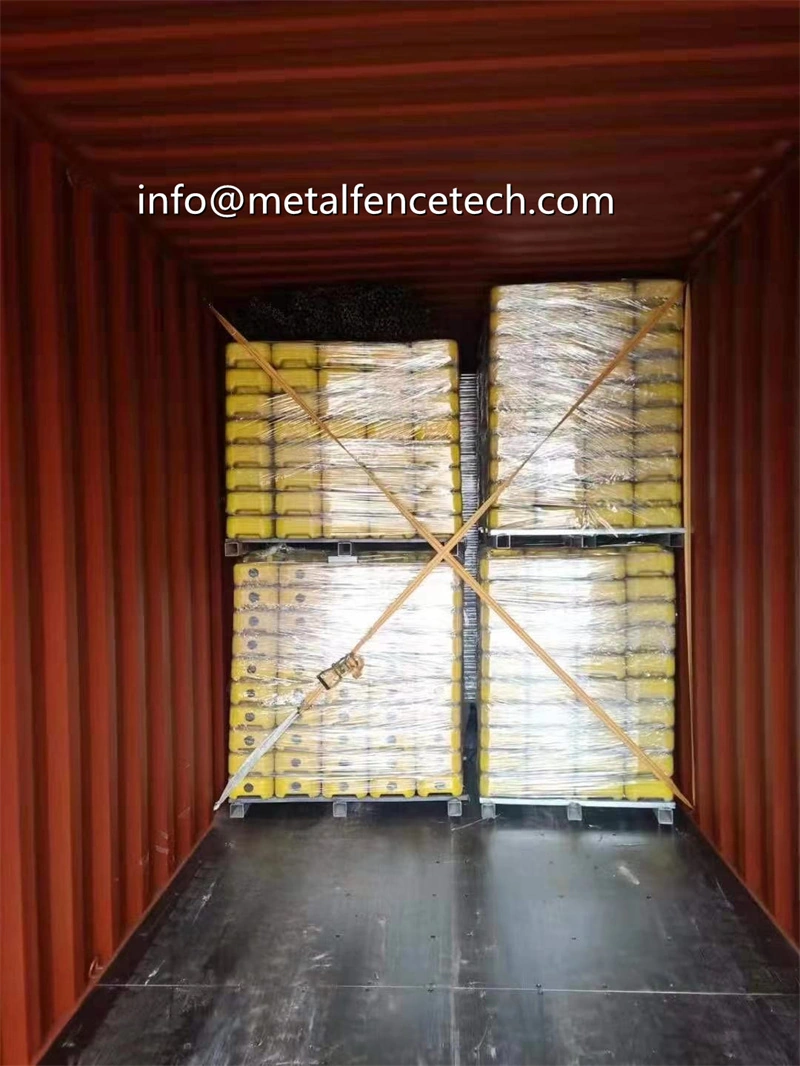
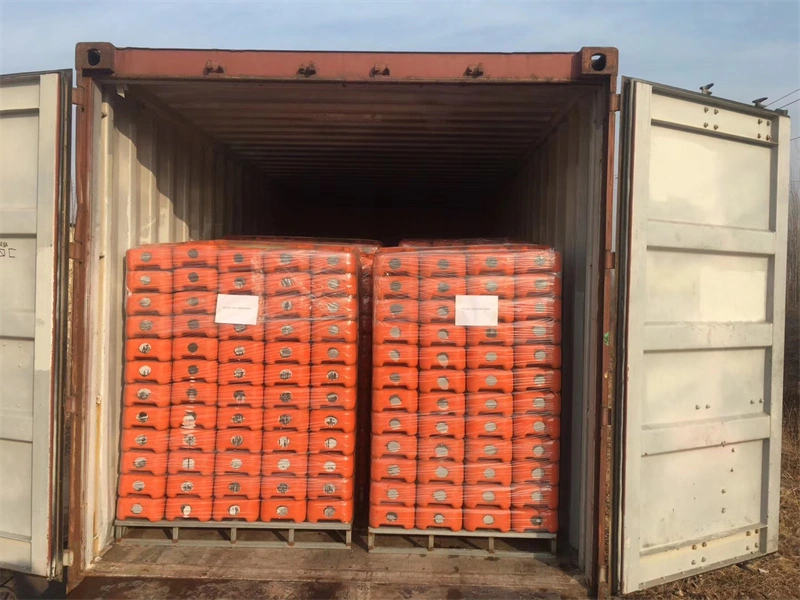
Container utilization is where the math gets interesting. A standard 40ft HQ container can hold up to 380 standard 2.4m panels with plastic feet. Concrete feet occupy about 30% more space, reducing capacity to roughly 265 panels. That 30% saving with plastic feet directly lowers your shipping cost per panel — a factor many importers overlook when comparing quotes.
- 40ft HQ with plastic feet: 380 panels (approx.).
- 40ft HQ with concrete feet: 265 panels (approx.).
- LCL minimum charge: 3 CBM minimum, even if cargo is smaller.
FCL Shipping: When to Use a Full Container
FCL is the cheapest per-panel option once you cross 150 panels.
For wholesale orders of temporary fencing, full-container-load (FCL) shipping is the default choice for any buyer ordering 150 panels or more. The cost per panel drops by 20–35% compared to LCL, and you get a dedicated container with no risk of consolidation delays or mixed cargo damage. The decision between a 20ft and 40ft container comes down to your total volume and whether you use plastic feet or concrete feet.
- 20ft Standard Container: Maximum capacity: 80–110 panels depending on foot type. With concrete feet you get ~80 panels; with plastic feet you can push to 110 panels because they nest more tightly. This size is best for trial runs, small project sites, or when your distributor wants to test a new OEM configuration before committing to a full high-cube order.
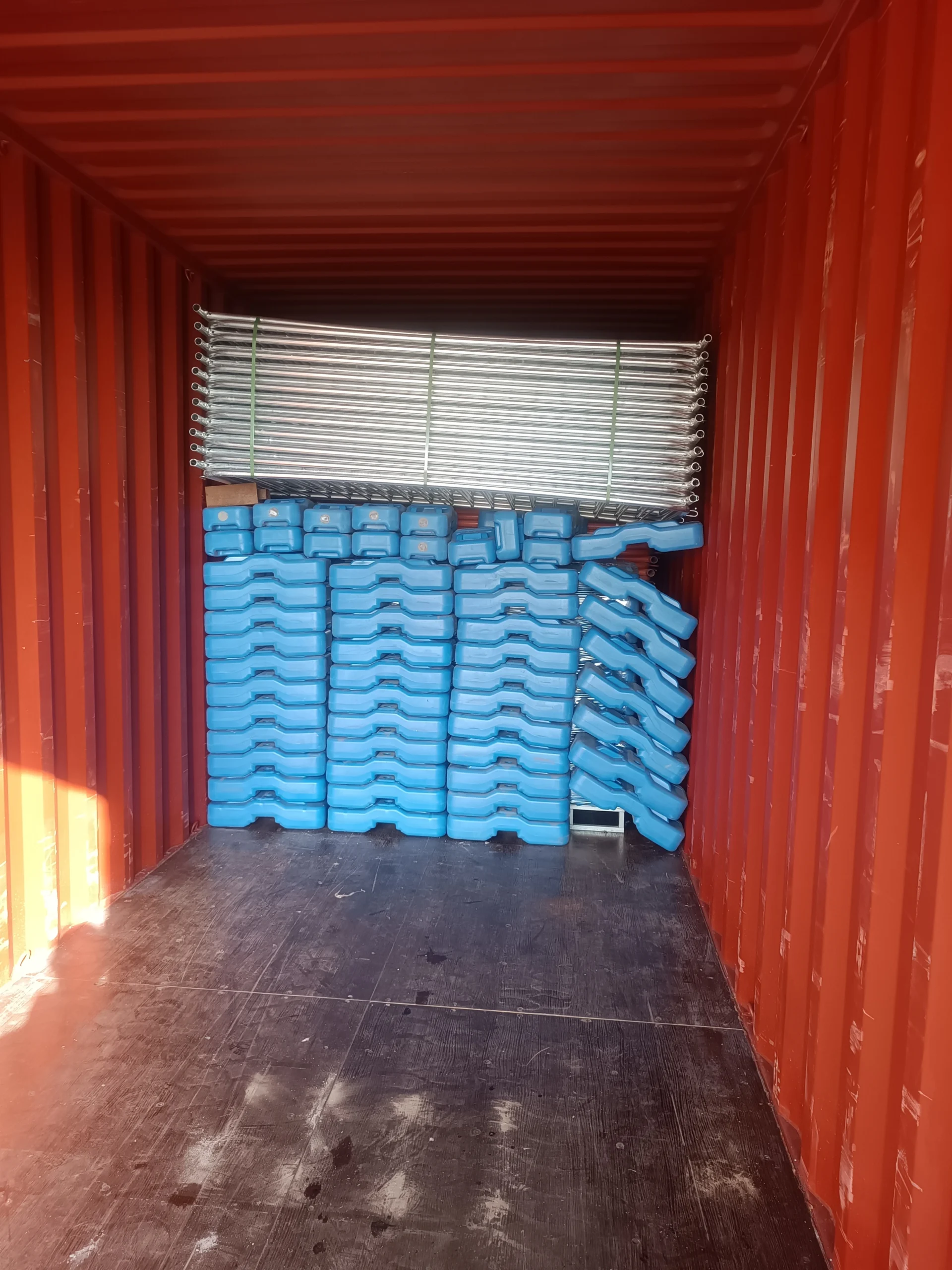
- 40ft High Cube Container (HQ): This is the sweet spot for volume buyers. A standard 40ft HQ holds up to 280 panels with concrete feet. But if your supplier offers plastic feet — as DB Fencing does with its in-house plastic feet machine — you can load 380 panels. That’s a 30% space gain. For a 300-panel order to Vancouver, for example, this can lower your per-panel freight cost by roughly 15% compared to a concrete-foot load.
Ideal order quantities for FCL sit between 150 and 500 panels. Under 150 panels, LCL may still be competitive depending on your CBM and the minimum charge; above 500 panels, you’re looking at two full containers or a 40ft HQ plus a 20ft. Every wholesaler should ask their factory for a detailed container loading configuration — request the exact number of rows, stacks, and feet placement before you book freight. That small step separates professionals who maximize container utilization from those who leave 15% of space empty.
LCL Shipping: Pros and Cons for Smaller Orders
LCL can appear flexible, but the minimum CBM charge often makes small fence orders cost-prohibitive per panel.
Less-than-container-load (LCL) seems like the obvious choice when you’re ordering 50 to 100 panels — you don’t need a full container, so you just share space. But here’s where the math gets tricky. LCL carriers don’t charge by the panel; they charge by cubic meter (CBM) with a minimum threshold. Most consolidators set a minimum of 1 to 3 CBM. A standard 2.0m x 1.0m temporary fence panel with plastic feet takes up roughly 0.25–0.3 CBM when stacked. That means even 10 panels can trigger the full 3 CBM minimum, doubling your effective per-panel freight cost compared to a 40-panel LCL shipment.
- Minimum CBM trap: If your supplier loads plastic feet, a 40-panel order might occupy 10–12 CBM. At $80–$120 per CBM from China to Canada, that’s $800–$1,440 in freight. But 10 panels could also cost $800+ due to the 3 CBM minimum — a per-panel cost hike of 300–400%.
- Foot type matters: Concrete feet take up roughly 30% more space than plastic feet inside the same crate. That extra volume pushes you into a higher CBM bracket or triggers oversize surcharges. If you’re using plastic feet, ask your factory for the exact loaded CBM per panel — it’s common for suppliers to pad dimensions.
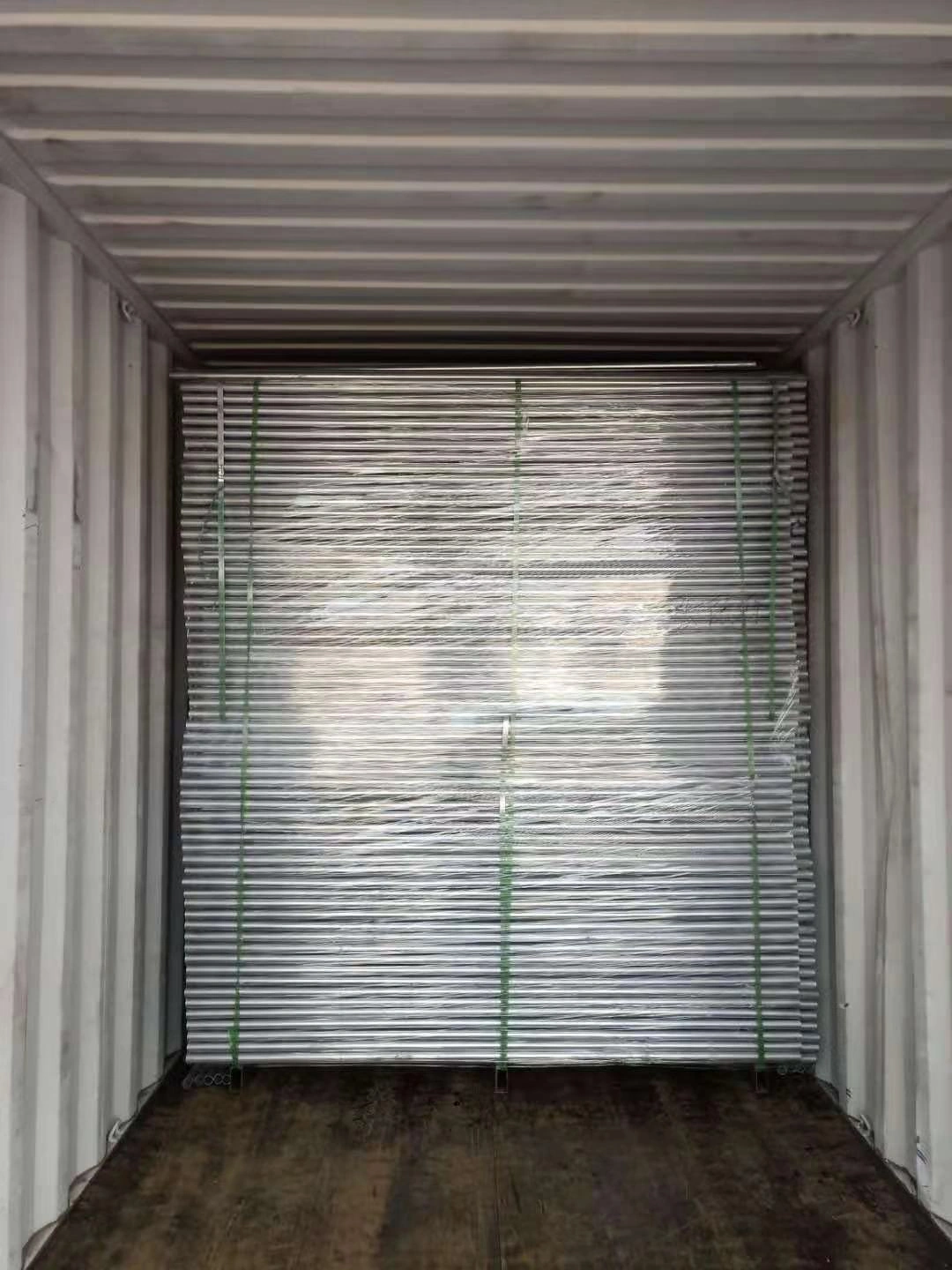
Now the risk side. LCL means your panels share a container with everything from machinery to textiles. Temporary fence panels have arrived with bent mesh because a forklift driver stacked 800 kg of steel brackets on top of them. The consolidation warehouse is not your friend — they care about filling the box, not preserving your zinc coating. Always request that your panels are loaded in the rear of the container, separated by plywood dunnage, and tightly lashed. Even then, expect a 2–5% damage rate on LCL if you’re not paying for a dedicated surveyor at origin.
Delay is the other silent killer. LCL schedules are fixed: the carrier waits until the container is full. If one shipper’s cargo is late, your entire shipment sits. A 7-day transit has been observed to stretch to 18 days because a consolidator needed two more pallets from another supplier. For event season orders (May–September), that delay can cancel a contract. Add in Canadian customs inspections — LCL cargo is more likely to get flagged because of mixed commodity codes and higher perceived risk — and you’re looking at another 3–5 working days. If your customer needs panels on a concrete date, LCL is a gamble.
Side-by-Side Comparison: LCL vs FCL
FCL cuts per-panel freight cost by up to 50% for orders over 200 panels.
The deciding factor between LCL and FCL for temporary fencing is volume. A 40ft HQ container holds up to 380 panels when using plastic feet (concrete feet eat 30% of that space). FCL gives you a flat container rate — the more panels you load, the lower the cost per panel. LCL, by contrast, charges by cubic meter with a minimum 3 CBM fee. For a 100-panel order, LCL per-panel freight can run 1.5x to 2x the FCL rate — a margin killer for wholesalers testing a new supplier. Always ask for the per-panel landed cost, not just the freight quote.
- Transit Time & Reliability: FCL: 20–25 days direct from Tianjin to Vancouver. LCL: 25–35 days due to consolidation delays and deconsolidation at destination. LCL also risks waiting for a full container at origin — it can sit for 1–2 extra weeks if the forwarder hasn’t filled the space.
- Customs Clearance Differences: Both methods require identical paperwork (AS 4687 cert, commercial invoice, packing list, certificate of origin). The difference: LCL containers mix cargo from multiple shippers, which increases the probability of a CBSA inspection. An inspection adds 3–7 days and potential demurrage fees. FCL containers are less likely to be flagged.
| Factor | LCL (Less-than-Container-Load) | FCL (Full-Container-Load) | Key Insight |
|---|---|---|---|
| Order Quantity | Ideal for 100–300 panels (Low MOQ from 100 panels) | Best for 300–500+ panels (full container utilization) | FCL lowers per‑panel cost significantly at higher volumes. |
| Cost per Panel (CIF Vancouver)* | Higher; minimum CBM charge (e.g. 3 CBM) inflates unit cost | Lower per panel; fixed container rate spread across max panels | Always calculate landed cost per panel – LCL can cost 2–3× more per unit. |
| Container Packing Efficiency | Partial space; often pays for unused volume | Up to 380 panels in 40ft HQ (plastic feet save 30% space vs concrete) | Plastic feet maximize container capacity – a DB Fencing exclusive. |
| Transit Time (China to Vancouver) | 25–35 days (consolidation/deconsolidation delays) | 20–28 days (direct sailing, no consolidation) | LCL adds 5–7 days on average due to port handling. |
| Customs & Inspection Risk | Higher risk of inspection due to mixed cargo from multiple shippers | Lower risk – single shipper, clean manifest | Inspection delays can add 3–10 days for LCL, disrupting peak‑season supply. |
| Recommended for | New market testing, seasonal event orders, low‑volume trials | Established distributors, bulk construction projects, repeat buyers | DB Fencing supports both with 24‑hour quoting and flexible MOQ. |
How to Calculate Your Optimal Shipping Mode
FOB + freight + insurance + local fees = real landed cost.
FOB pricing only covers the goods loaded at the Chinese port. To get your true landed cost, you need to add ocean freight, marine insurance, and destination charges — port handling, customs clearance, and inland trucking. For temporary fencing, the per‑panel FOB price is straightforward, but the freight component varies wildly depending on whether you ship LCL or FCL.
Here’s a practical method used by Canadian importers: start with your supplier’s FOB quote per panel, then multiply by your order quantity. Next, get an all‑in rate from a freight forwarder for the full door‑to‑door move. Divide that total freight cost by the number of panels to get the shipping cost per panel. Add insurance (typically 0.3%–0.5% of cargo value) and local customs broker fees. That gives you a reliable CIF (Cost, Insurance, Freight) estimate.
- Freight forwarder tools: Use platforms like Freightos, Shipa Freight, or Flexport to compare spot rates. For LCL, always confirm the minimum CBM charge — many carriers bill a minimum of 3 CBM even if your cargo is only 1.5 CBM. That can make small orders deceptively expensive.
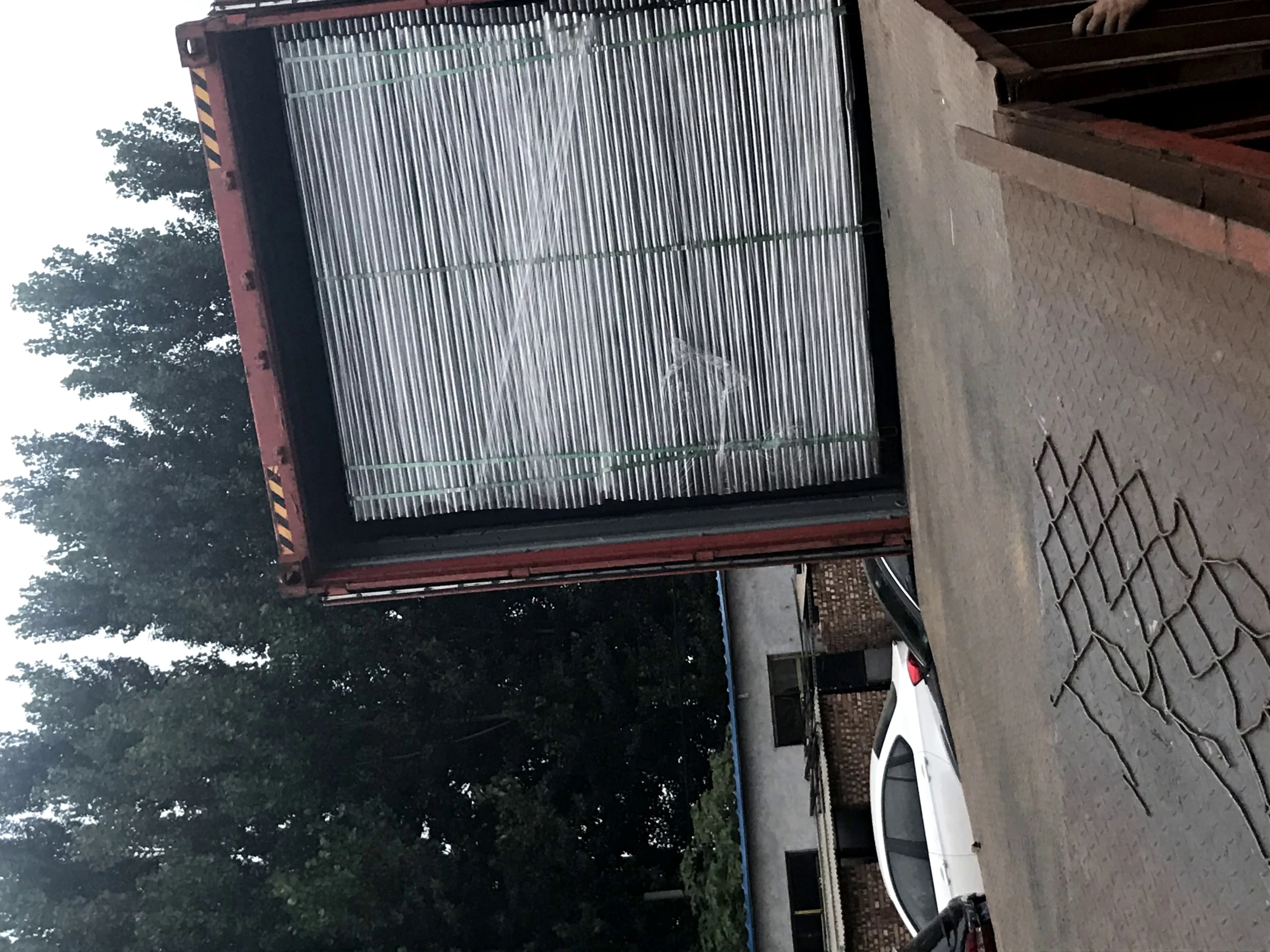
- Container loading calculator: Ask your supplier for a loading plan. A 40ft HC container holds up to 380 panels with plastic feet. If you’re using concrete feet, the count drops to roughly 260 panels due to the extra weight and space. Knowing your actual utilization lets you compare per‑panel shipping cost between LCL and FCL accurately.
- Red flags with forwarders: Watch for surcharges: peak season, port congestion, chassis fees. A quote that seems too low often excludes these. Insist on a full breakdown by line item before booking.
One insider tip: if you’re shipping to Vancouver, transit time for FCL is typically 14–16 days direct. LCL can take 20–26 days because of consolidation and deconsolidation. Factor that into your inventory planning — especially for seasonal events where timing is tight.

Real-World Example: Same Order, Two Methods
For 300 panels to Vancouver, FCL beats LCL on cost and reliability.
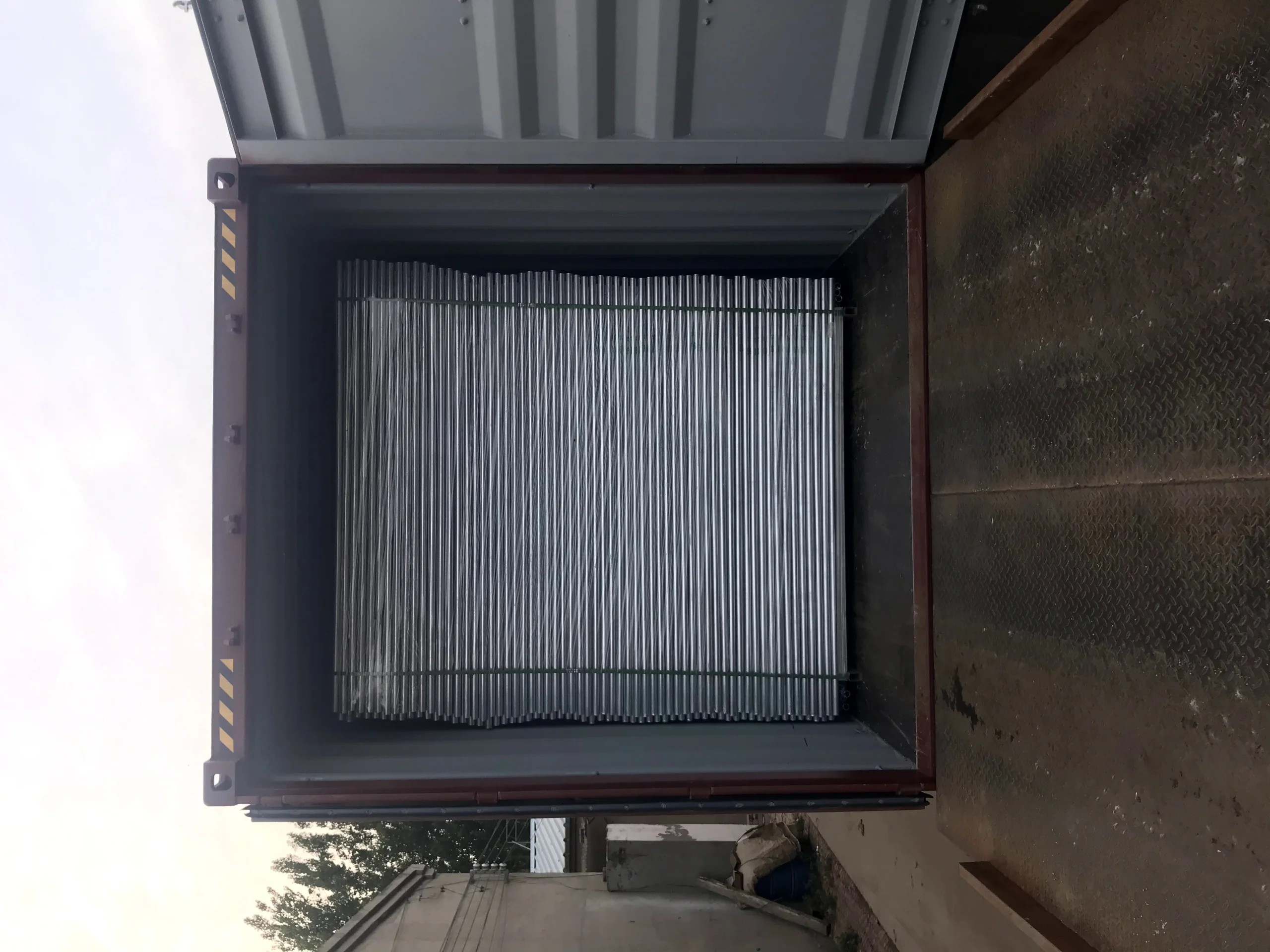
Take a real 300‑panel order of hot‑dipped galvanized temporary fencing with plastic feet, shipped from Tianjin to Vancouver. With plastic feet each panel takes about 0.15 CBM, so 300 panels occupy roughly 45 CBM. A standard 40ft HQ container holds up to 380 panels (saving 30% space versus concrete feet), meaning this order fits in a single FCL container. The LCL option would require consolidation of a volume too large for typical LCL terms — most consolidators cap at 20–25 CBM per booking, forcing the shipment to be split across multiple bookings or charged as de facto FCL with extra handling.
- FCL cost (40ft HQ): Ocean freight + THC + documentation: ~$3,200. Per‑panel shipping cost: $10.67. Transit time: 18–22 days direct, single bill of lading.
- LCL cost (consolidated): At $65/CBM with a 3 CBM minimum (irrelevant here), 45 CBM would cost ~$2,925 plus consolidation fees ($150–$300) and longer transit (25–35 days due to consolidation/deconsolidation). Per‑panel cost: ~$10.75 – $11.25. No direct container lock; higher risk of inspection from mixed cargo.
- Insider warning: For orders above 200 panels, always run the FCL calculation first. LCL carriers often apply a “full container surcharge” when volume exceeds 20 CBM, wiping out any savings. Plus, Canadian customs delays are 2–3 times more likely with LCL because of mixed commodity declarations.
Decision Matrix for Canadian Importers
Choose LCL for orders under 150 panels; FCL for 200+ panels.
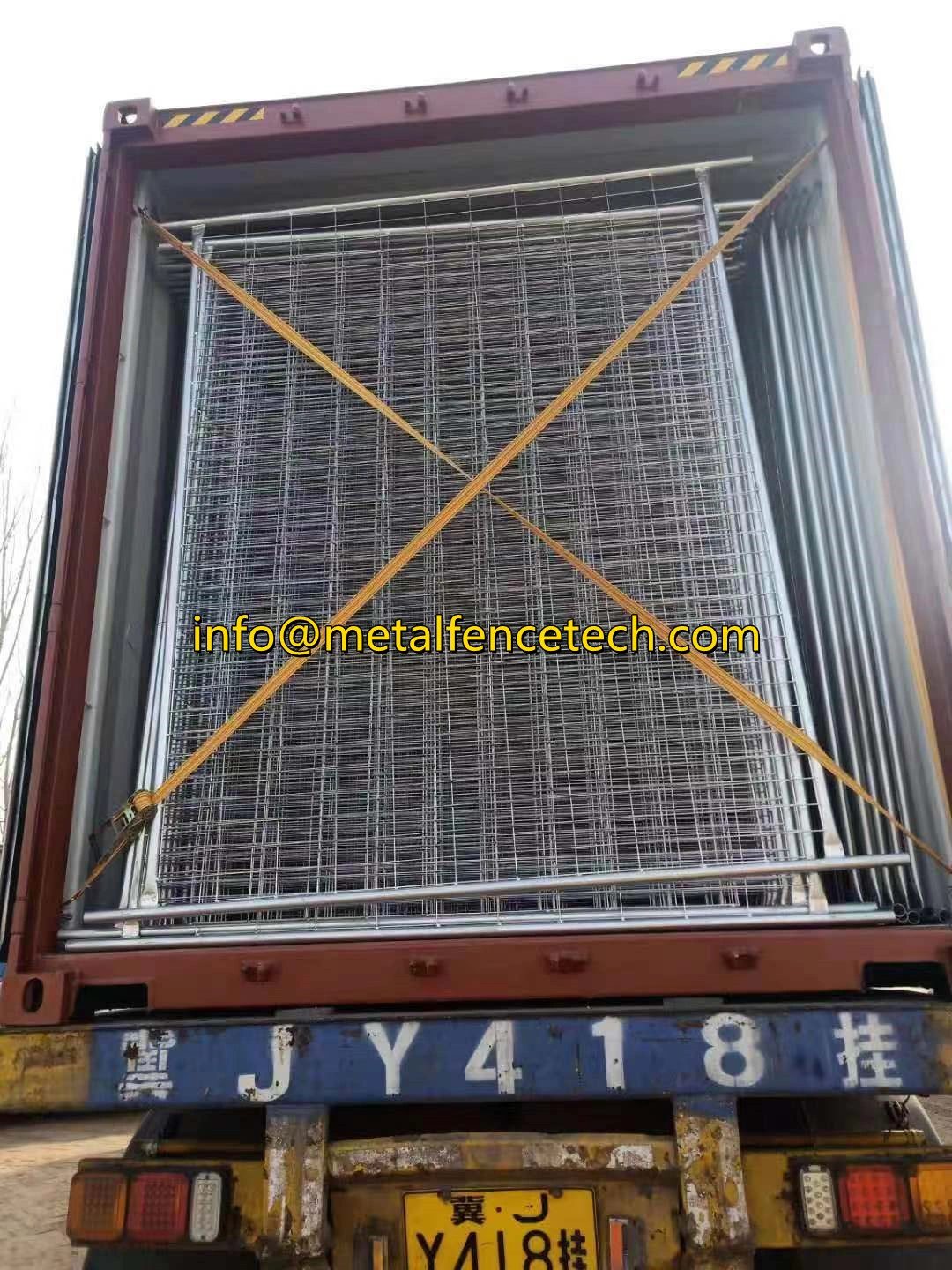
The decision between LCL and FCL for temporary fencing shipments to Canada comes down to order volume and container utilization. The key threshold is around 150 to 200 panels, depending on whether you use concrete or plastic feet. Plastic feet save 30% container space, meaning you can fit up to 380 panels in a 40ft HQ container — that’s your FCL sweet spot. Below that, LCL might seem viable, but the minimum CBM charge (typically 3 CBM) can inflate your per-panel cost above what a dedicated 20ft container would cost.
- When to Choose LCL:: Orders under 150 panels, or when you need to test a new supplier with a low MOQ (e.g., 100 panels). The per-panel freight cost will be higher, but you avoid paying for unused container space. Accept the risk of consolidation delays (typically 3-5 extra days) and increased customs inspection probability due to mixed cargo.
- When to Choose FCL:: Orders over 200 panels — especially if you use plastic feet, which let you pack more panels per container. FCL gives you control over the container seal, consistent transit times (30-35 days China to Vancouver), and lower per-panel freight cost. For 300 panels, an FCL 40ft HQ will beat LCL on both cost and reliability. Always request factory packing photos to verify the loading configuration matches your shipment.
Here’s the hard truth: if your supplier quotes FOB pricing, calculate the CIF cost using a freight forwarder’s rate for both LCL (per CBM with minimum charge) and FCL (per container). Use actual panel dimensions plus packaging — don’t estimate. One Canadian importer I advised saved $1,200 on a 250-panel order just by switching from LCL to a 40ft HQ after confirming plastic feet used. That’s the difference between a 5% margin and a 12% margin.
Conclusion
The LCL vs FCL decision for temporary fencing hinges on three variables: order volume, container utilization, and risk tolerance. Plastic feet can save 30% of container space over concrete, and LCL’s minimum CBM charge often makes small orders cost-prohibitive when calculated per panel. FOB pricing lets you isolate the shipping cost from the product cost — use it to compare the two methods honestly.
Run these three yes/no questions with your supplier before booking your next shipment: 1. Is your order volume above 150 panels? If yes, FCL likely drops your per-panel freight cost below LCL rates. 2. Are you using plastic feet to maximize container space? If yes, you can fit up to 380 panels in a 40ft HQ container — a key advantage for FCL. 3. Does your supplier provide FOB pricing that allows you to calculate true landed cost, including LCL’s minimum CBM charge? If yes, you can determine which method gives the lower total cost.
Frequently Asked Questions
How many panels fit in a 40ft container?
A 40ft HQ container can hold up to 380 temporary fence panels with plastic feet, but concrete feet reduce that to roughly 260 panels. Plastic feet save about 30% space, so your. Confirm panel and foot type to get exact loading numbers.
When does LCL make sense for fencing?
LCL works for orders under 150 panels where you don’t need a full container, but watch the minimum CBM charge—often 3 CBM—which can spike your per-panel cost. Calculate total landed cost before. Always run a per-panel LCL vs FCL comparison before ordering.
Is FCL cheaper per panel?
Yes, FCL is the cheapest per-panel option once you cross about 150 panels, thanks to lower per-unit freight and no consolidation fees. The savings grow with volume, so FCL is ideal for. Run a full cost breakdown including inland and customs fees.
Does customs clearance differ for LCL vs FCL?
Canadian customs clearance procedures are the same for both, but LCL shipments face a higher risk of physical inspection due to mixed cargo from multiple shippers. That extra inspection can add 3–7. Factor in potential delays when choosing LCL for time-sensitive jobs.
What is the minimum order for DB Fencing?
DB Fencing’s standard low MOQ is 100 panels, which works well for LCL shipments or small FCL trials. That flexibility lets you test the market without committing to a full container. Contact DB Fencing for a precise quote on your target quantity.