Skip to content
Water Barriers vs Temporary Fence Panels: MOQ, Margins, Shipping is the first checkpoint buyers should lock before they approve a supplier, budget, or production slot. You’ve just signed off on a $50,000 order for temporary fence panels. The pre-production sample looked perfect — the weld spacing was right, the feet locked in tight, the galvanized finish had that clean matte sheen you expect from a hot-dip line. Then the container lands in Sydney and your customer calls to say the panels don’t fit their base plates. Or worse, the coating starts flaking at month three. That gap between sample approval and mass production reality is where most wholesalers lose margin on water barriers temporary fence lines.
I’ve managed supplier audits across twelve countries, and Anping remains one of the few places where you can get both steel fence panels and plastic water barriers under one roof. But here’s what the glossy catalogs don’t tell you: the FOB pricing on a 1.2×2.0m hot-dipped panel looks attractive until you factor in that you can nest over 600 of them in a single 20ft container, while a plastic water barrier eats up four times the shipping cube per unit for roughly the same wholesale ticket price. That math shifts everything about how you build your product mix.

Why Wholesalers Must Compare These Two Lines
Construction buyers order panels, event buyers order barriers—the overlap is smaller than you think.
The three biggest demand segments for temporary fencing — construction, events, and municipal — buy for fundamentally different reasons. Construction sites need anti-climb security and AS 4687-2022/2007 compliance, especially in Australia where site safety auditors check panel mesh size and feet stability. Events procurement teams prioritize speed of deployment and light weight. Municipal buyers (roadworks, public gatherings) often split orders between both lines depending on whether the need is barrier or containment.
- Construction: Drives 60-70% of temporary fence panel demand. Buyers want hot-dipped galvanized panels (>42 microns) with reusable plastic feet. DB Fencing’s 100-panel MOQ aligns with typical project-quantity orders. Compliance documents (ISO9001, SGS, AS 4687) are non-negotiable.
- Events: Water barrier demand peaks in festival season. End-users pay premium for quick deployment — no tools, no stakes. But the math for wholesalers is tight: plastic water barriers (1.2m) occupy 3x the container volume of nested fence panels, raising your landed cost.
- Municipal: Often mixed orders. A city council may request 200 panels + 50 water barriers for a road closure. Wholesalers who stock both lines win the consolidated tender, but they must manage two different HS codes (7308.90 for panels, 3926.90 for plastic barriers) and the duty rate gap — typically 0-5% for steel, 6.5% for plastics in Australia.

MOQ Comparison
Panels start at 100 units factory-direct; water barriers at 50 units, but colour and hardware specs shift margins.
For temporary fence panels, DB Fencing’s 100-panel MOQ is baked into their production setup: 10 welding lines running 2,000 sets per week. That means you can mix panel sizes (1.2×2.0m, 2.0×2.0m) or hot-dip galvanized finishes within a single container without triggering re-tooling charges. Water barriers, on the other hand, typically carry a 50-unit MOQ from Chinese manufacturers. But here’s where costs escalate: custom RAL colours require a dedicated batch — your effective MOQ jumps to 50 per colour variant. And if you spec plastic with recycled content or add locking hardware (ballast caps, interlocking clips), expect a lead-time stretch and a 10–15% premium per unit.
- Temporary fence panels: 100-panel MOQ. Mix sizes and finishes freely. AS 4687 compliant. Factory-direct pricing stays consistent regardless of colour.
- Water barriers: 50-unit base MOQ. Standard colours (orange/white) ship fastest. Each custom colour adds 50-unit minimum. Hardware variations increase cost and lead time — always confirm tooling charges upfront.
| Product | Standard MOQ | Customization | Container Loading (20ft) | Container Loading (40ft) |
|---|---|---|---|---|
| Temporary Fence Panels (1.2×2.0m, Hot-Dip Galvanized) | 100 panels | OEM colors, logos, galvanizing thickness available | 600+ panels (nested high density) | 1,200+ panels |
| Plastic Water Barriers (1.2m, Water-Filled) | 50 units (color/hardware variations may increase MOQ) | Color options (orange, yellow, white); fill valve types | ~100 units (estimated, bulky when empty) | 200 units (manufacturer standard) |

FOB Pricing (Anping, China 2026)
Galvanizing thickness is the single biggest cost driver in temporary fence panel pricing — going from 40 microns to 60 microns adds.
FOB pricing from Anping for temporary fence panels and water barriers is not a fixed number — it shifts with raw material costs, galvanizing specs, and order volume. For a 1.2×2.0m hot-dipped galvanized panel, expect a baseline price range roughly 30-50% above the equivalent electro-galvanized version. The premium is justified by service life: hot-dip exceeds 42 microns and survives coastal environments for 5-8 years, while thin coatings show rust within 12 months. Water-filled barriers (1.2m plastic, typically HDPE) have a tighter price band because resin costs dominate, but color matching (e.g., orange for roadwork) and hardware inserts can add 10-15%.
- Hot-dip vs. electro zinc coating: Electro zinc is cheaper per panel but fails salt spray tests under 48 hours. Hot-dip adds 2-3 USD per panel but meets AS 4687 and passes 200+ hour salt spray. For Australian and North American resale, hot-dip is not optional — it’s the spec that prevents callbacks.
- Wire diameter and mesh pattern: Standard is 4.0mm wire with 100x200mm mesh. Going to 4.5mm wire adds weight and shipping cost plus ~8% to FOB. Conversely, a 3.5mm wire panel (common in budget imports) reduces price by 10% but often fails load tests on site.
- Water barrier wall thickness and additives: Barrier walls range from 5mm to 8mm. Thicker walls increase resin use by 30%, directly raising FOB. UV stabilizers or recycled content also shift pricing. Most wholesalers pay a 5% premium for UV-stabilized HDPE that prevents brittleness after two summers.
- Surface finishing (paint vs. plain galvanized): Powder-coated panels (e.g., green, blue) add $0.50-1.00 per panel on top of galvanizing. Water barriers with reflective strips or custom branding increase unit cost by 8-12%. These add-ons boost resale margins but tie up cash in specialty stock.
When evaluating FOB price temporary fence panels from Anping, always request a spec sheet with coating thickness certificates and steel grade. A supplier quoting 15% below market is almost certainly skipping the hot-dip or using thinner wire. DB Fencing, for example, runs 10 welding lines and sources domestic steel coils, which keeps base pricing within 5% of market while guaranteeing hot-dip >42 microns.
Container Loading Efficiency
Nesting gives fence panels a 40-50% lower shipping cost per unit than water barriers.
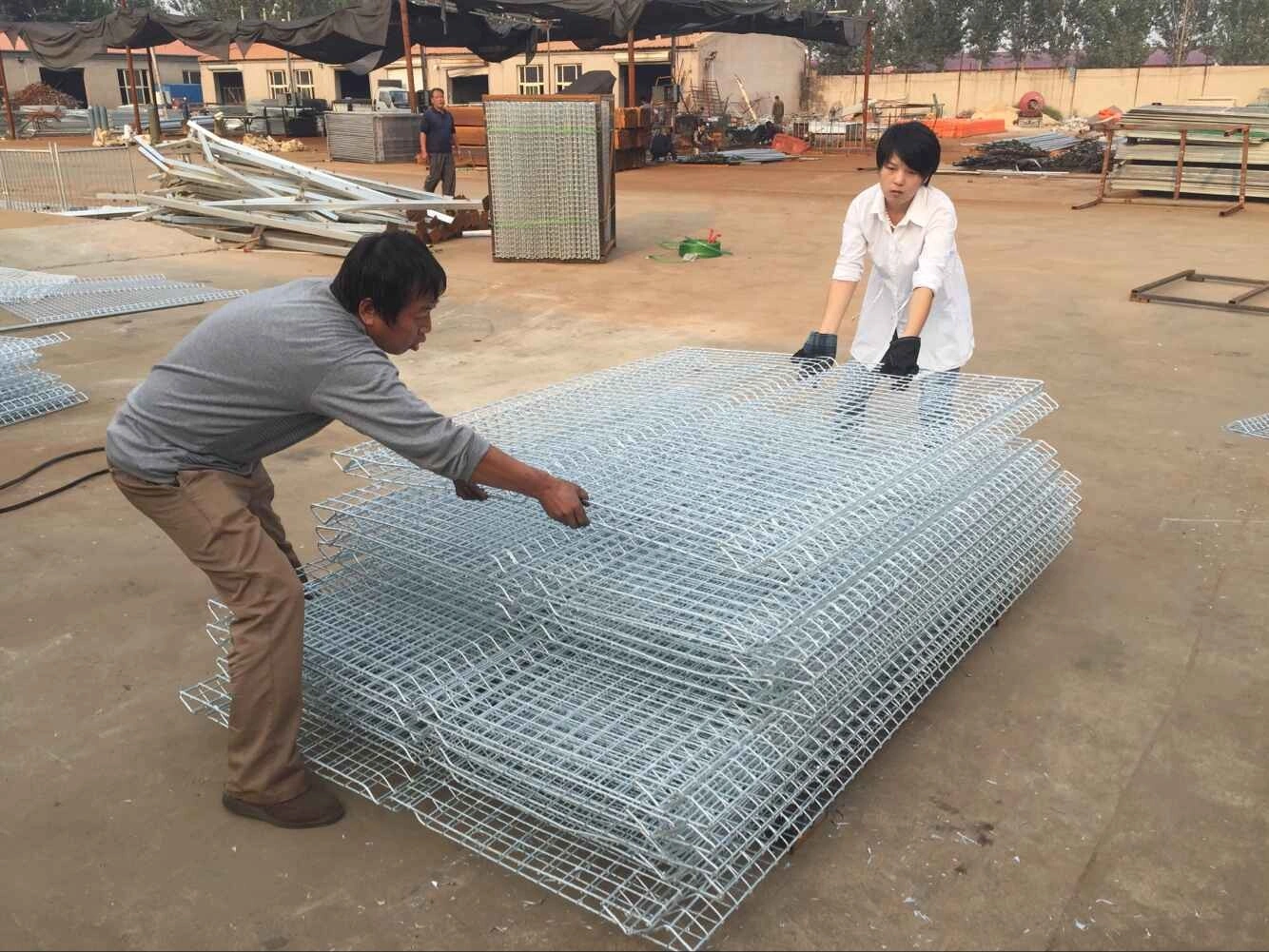
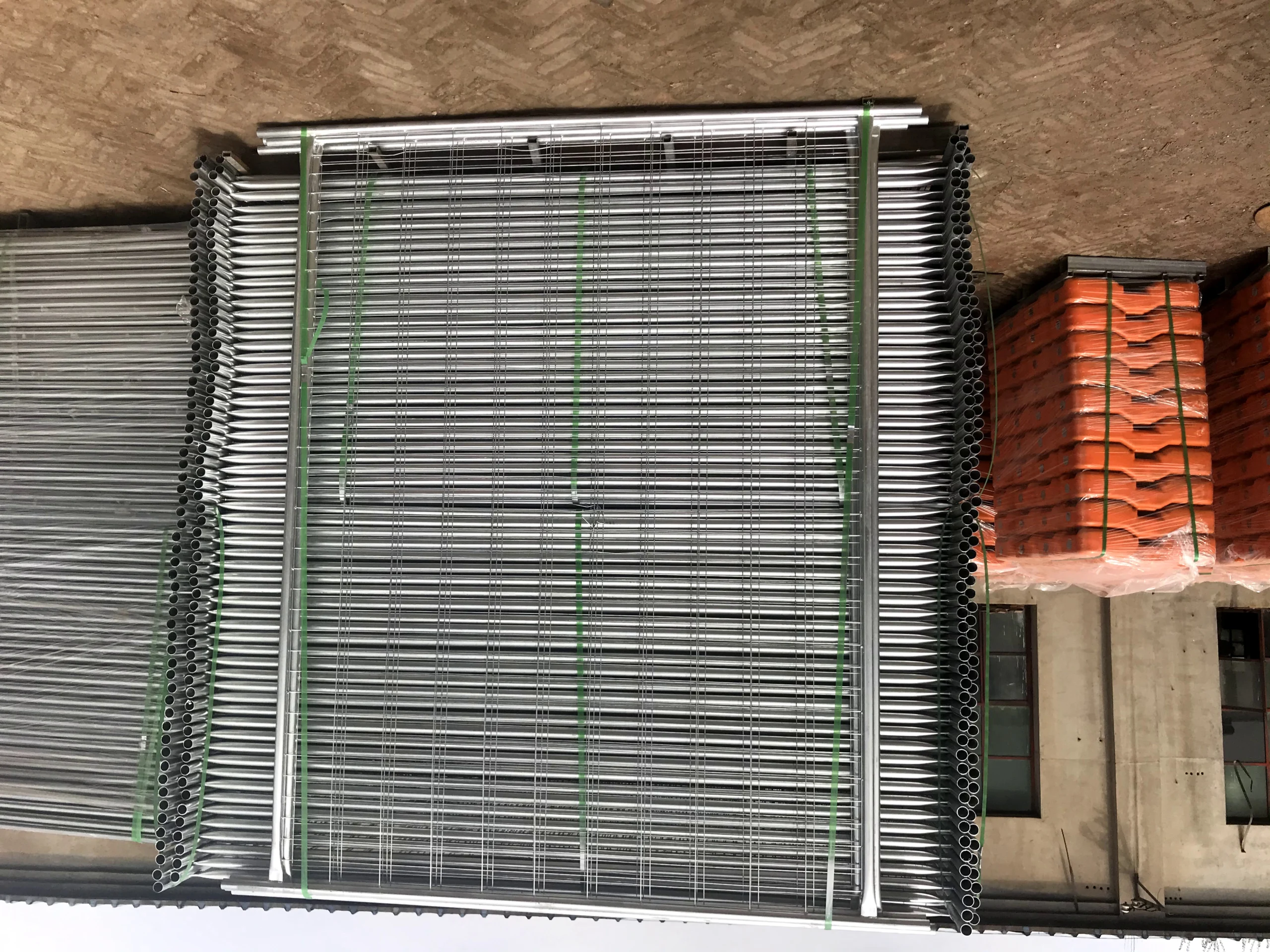
For a 20-foot container, the difference is stark. Temporary fence panels can be nested tightly — you can load 600+ panels in a 20ft container because the frames stack into each other, leaving minimal air gap. Plastic water barriers, being hollow and rigid, only fit around 100 units in the same space. That means per-unit freight for panels is about half of what you pay for barriers.
Scale up to a 40-foot container and the math becomes a decision point. A full 40ft holds 1,200+ fence panels or roughly 200 water barriers. Panels win on shipping cost per unit, but water barriers command higher resale margins — 30-50% vs 25-40% for panels. The optimal mix for profit margins? Load the container predominantly with panels to keep freight low, then add a partial layer of water barriers only if your local market pays a premium for quick-deploy barriers. That way you capture the margin upside without blowing your shipping budget.
Shipping and Duty (to Australia/North America)
Misclassifying HS codes can cost you thousands in duties.
For temporary fence panels made from steel wire mesh, the applicable HS code is 7308.90 — structures and parts of structures, of iron or steel. For plastic water-filled barriers, the code is 3926.90 — other articles of plastics. Getting these right on your commercial invoice is the difference between a smooth clearance and a shipment sitting at customs for weeks.
- Steel fence panels (HS 7308.90): Duty rate into Australia is typically 5% of FOB value, with no anti-dumping duty currently imposed on welded mesh fencing from China under this HS code. North America: US duty is generally 2.5-5% depending on origin, but anti-dumping and countervailing duties exist on certain steel wire mesh products from China. Buyers shipping large volumes should request a tariff ruling or check the latest AD/CVD orders from the DOC.
- Plastic water barriers (HS 3926.90): Duty into Australia is 5% for most plastic articles. US duty ranges from 2.5% to 6.5% depending on specific plastic type. No anti-dumping measures currently apply to these plastic barriers from China. However, if barriers include metal components (e.g., steel connectors), you risk reclassification to 7308.90 and higher duties.
- Anti-dumping risks for steel fencing: Well-known: Australia’s Anti-Dumping Commission has active measures on some Chinese steel wire mesh, but temporary fence panels (welded mesh with plastic feet) have largely been excluded because they fall under a different product description. Verify with your customs broker before placing a container order.
- Practical advice for wholesalers: Always state the exact product name and material composition on the packing list. If you source AS 4687 compliant fence panels from a supplier like DB Fencing, they can provide a certificate of origin and a detailed product description that matches the HS code — reducing inspection delays.
Resale Margins and Market Pricing
Water barriers command 30-50% margins but face shorter replacement cycles than fence panels.
Wholesale markup on temporary fence panels typically runs 25-40%, with hot-dipped galvanized panels meeting AS 4687 (>42 microns) hitting the top end. Water-filled barriers, on the other hand, sustain margins of 30-50% because end-users pay a premium for rapid deployment without securing to the ground. That margin gap is real, but it comes with a trade-off.
- Typical wholesale markup: Panels: 25–40% depending on volume and finish. Barriers: 30–50% due to convenience premium.
- End-user rental rates (Australia 2026): Panels rent for $0.50–$1.00 per panel per day; water barriers rent for $2.00–$4.00 per unit per day. The higher daily rate supports the barrier margin.
- Replacement cycles: Galvanized panels last 7–10 years in outdoor storage. Plastic water barriers degrade from UV exposure and typically need replacement every 3–5 years. Factor that into lifetime margin when choosing which line to stock.
Stocking Considerations
Fence panels store flat at high density; empty barriers waste 3x the warehouse cube.
Warehouse space costs money, and the difference between these two product lines is stark. Temporary fence panels – especially the standard 1.2m x 2.0m hot-dipped galvanized type – ship and store flat. They nest together with minimal gap, allowing hundreds of panels on a single pallet rack. A typical warehouse can hold 5,000+ panels in a 50m² floor area if stacked properly.
Water-filled barriers are the opposite. Even when empty and deflated (or solid plastic units), they cannot be nested tightly because of their molded shape. A 1.2m plastic water barrier takes up roughly the same footprint as a fence panel, but you can only stack them 3-4 high without risking damage. That means a distributor needs 3–4 times more floor space to hold an equivalent quantity of water barriers.
- Panel storage advantage: Flat stacking allows vertical storage on standard pallet racking. A 20ft container packs 600+ fence panels, but in a warehouse you can exceed that density. The low cube footprint makes panels ideal for distributors with limited indoor space.
- Barrier storage penalty: Empty barriers are bulky and often require dedicated outdoor yard space due to height and instability when stacked. If stored outdoors, UV exposure degrades plastic over time; if stored indoors, they eat into high-rent warehouse cube. Always factor 3x the storage cost per unit compared to fence panels.
The practical takeaway for a wholesaler: if your warehouse cube is tight or expensive, fence panels are far more space-efficient. Water barriers demand either cheap outdoor land or a willingness to accept higher storage overhead. That overhead directly impacts your landed cost and margin calculations – don’t ignore it.
Supplier Vetting: Factory Direct vs. Middlemen
Your supplier controlling the plastic feet mold means consistent weld spacing and lower per-panel cost.
Here’s the hard truth most wholesalers learn only after a rejected shipment: a middleman can assemble a container from four different sub-suppliers, but he cannot replicate vertical integration. DB Fencing is the only factory in Anping that runs its own plastic feet injection-molding machine. That machine supplies not only their own production line but also several other local fence vendors. When you buy factory direct, you eliminate the 12-15% margin added by the middleman on the feet alone, and you get a single quality tolerance across every weld and every base. The sample approval process becomes one conversation, not a game of telephone.
Certifications are another vetting boundary. DB Fencing carries ISO9001 and SGS factory audits, and every temporary fence panel destined for Australia is manufactured to AS 4687-2022/2007. A middleman can show you a certificate he borrowed from his supplier — but can he show you the batch traceability for a 600-panel container? Factory direct means the test report matches the production lot. For wholesalers targeting the Australian construction market, AS 4687 compliance isn’t optional; it’s the difference between a project start and a site shutdown order.
Conclusion
The core decision between water barriers and temporary fence panels isn’t really about FOB price per unit. It’s about container loading density and the end-user’s willingness to pay for instant deployment. Panels nest at 600+ per 20ft container, slashing shipping cost per unit by 40–50%. That margin advantage disappears only if your buyers are willing to absorb the premium for quick setup — and that’s a market segment you must test before committing to a full container.
Review the current product specs and pricing on the catalog page to calculate how these numbers apply to your next container order. Then you can decide which line deserves the first test run.
Frequently Asked Questions
What is DB Fencing’s MOQ for temporary fence panels?
DB Fencing offers a low minimum order quantity of 100 panels for factory-direct wholesale orders. This flexible MOQ allows new distributors to test demand without committing to a full container load upfront. Start with 100 panels to qualify the market before scaling.
How do profit margins compare between panels and water barriers?
Typical wholesale markup runs 25–40% on temporary fence panels and 30–50% on water barriers. Water barriers tend to offer higher margin potential due to lower manufacturing complexity and higher perceived value for. Test water barriers first if higher margin is your priority.
What is the best container configuration for maximizing profit?
A 40ft container can hold roughly 1,400 temporary fence panels or around 600 water barriers, but a mixed load with 70% panels and 30% barriers often optimizes freight. Request a loading plan from DB Fencing to confirm exact quantities for your order.
Why should I buy direct from a factory with its own plastic feet machine?
DB Fencing is the only supplier in Anping with an in-house plastic injection machine for feet, eliminating middleman markups on that critical component. This production control ensures consistent quality, lower per-unit cost, and. Verify factory-direct feet production before placing your first order.