Skip to content
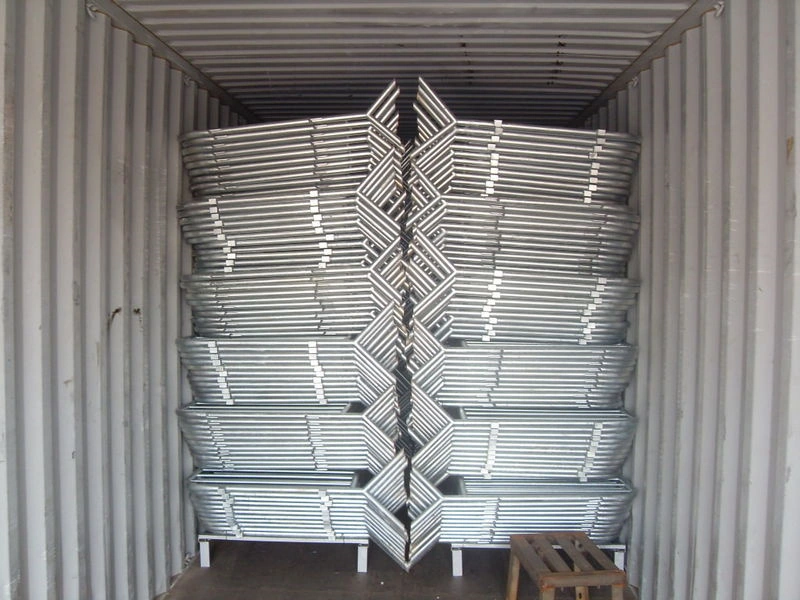
Most distributors treat shipping crowd barriers as a simple logistics hurdle, but the way you stack 1220mm x 1100mm panels inside a 40ft HQ container dictates whether you hit your margin targets or bleed profit in freight. DB Fencing ships 3,200 units per container using vertical stacking, a method that slashes per-unit FOB costs by roughly 15% compared to flat-packing, yet most suppliers fail to execute this without damaging the product.
The difference lies in engineering precision. Competitors often ship with loose hooks that scrape and abrade the frame during transit, leading to high damage claims. We use a Hook-Lock stacking system where barriers interlock securely, reducing damage to less than 0.5% and protecting the integrity of the 42-micron hot-dipped galvanized finish required for AS 4687 compliance.
Why Poor Container Loading Kills Your Margins
Inefficient container loading destroys 15-20% of distributor margins through wasted cubic volume and freight inefficiencies.
Containerization represents 12-18% of the total landed cost for crowd control barriers, yet most distributors treat it as a passive logistical hurdle rather than an active profit center. When you fail to optimize vertical stacking ratios, you are effectively paying ocean freight rates for empty air. The difference between a poorly loaded container and a precision-loaded one can determine whether a shipment breaks even or generates healthy wholesale margins.
The primary culprit for margin erosion is incorrect orientation and poor vertical stacking. Standard 1220mm x 1100mm panels must be stacked vertically to maximize the 40ft High Cube volume. When panels are packed flat, or when hooks are left loose and unconnected, the resulting internal friction causes frame abrasion and creates massive voids. These voids lead to excessive air space, forcing you to pay for significantly higher per-unit freight costs across the entire order volume.
- Vertical Stacking Math:: Properly interlocked 1220x1100mm panels achieve ~3,200 units per 40ft HQ container. Loose packing drops this capacity by up to 40%, instantly inflating your FOB pricing per unit.
- The ‘Hook-Lock’ Reality:: Many factories ship hooks loosely, causing frame scraping and damage claims. Our proprietary ‘Hook-Lock’ stacking interlocks barriers during transport, reducing transit damage to <0.5% and preventing costly claims.
- Welding Tolerance Impact:: Vertical stacking requires <1mm welding variance to prevent jamming. If your supplier lacks precision calibration, the panels will not nest tightly, leaving dead air space that kills your container yield.
Optimizing interlocking hook placement is not just about saving space; it is about securing your bottom line. By tightening the stacking density, you can save $0.50 to $0.80 per unit in freight. For a standard container load, this translates to thousands of dollars in pure margin retention. Furthermore, dense, interlocked packing protects the hot-dipped galvanized finish (>42 microns) from the internal abrasion that plagues loosely shipped competitors.
Real Cost Breakdown of Crowd Barriers in 2026
Optimizing container stacking density can reduce per-unit freight costs by up to 15% compared to flat-packing.
In 2026, the gap between FOB pricing and landed cost for crowd barriers is driven almost entirely by container density. While the base manufacturing cost for Q235 steel barriers remains stable, freight rates fluctuate. Distributors who optimize vertical stacking maximize their margin per container, whereas those who ship loosely pay a premium for air space.
Most industry suppliers lose 15-20% of their potential margin by failing to optimize vertical stacking ratios. The standard 1220mm x 1100mm barrier is designed to interlock vertically. When shipped correctly, a 40ft HQ container holds roughly 3,200 units. Flat-packing this same volume reduces capacity by up to 40%, directly increasing the per-unit shipping cost.
Shipping density also dictates insurance premiums. Loose hooks and uninterlocked panels cause internal abrasion during transit, leading to damage claims that can reach 2-3% of the shipment value. By using a ‘Hook-Lock’ stacking method where barriers interlock during transport, damage claims can be reduced to less than 0.5%, significantly lowering insurance overhead.
- Container Capacity: A 40ft High Cube container holds approximately 3,200 units of 1220x1100mm barriers. A 20ft container holds 1,000-1,200 units, but requires more freight cost per unit.
- Packaging Impact: Bridge-foot barriers require spacers, reducing container capacity by 15-20% compared to flat-foot barriers. Flat-foot designs allow tighter stacking and lower shipping costs.
- Cost Savings: Optimizing interlocking hook placement can save $0.50-$0.80 per unit in freight. This is a direct margin gain that flat-packing eliminates.
- Quality Control: Vertical stacking requires precise welding tolerances (<1mm variance). Factories without calibrated lines risk jamming, which delays delivery and increases handling costs.
| Cost Component | Details | Impact |
|---|---|---|
| Manufacturing & Materials | Q235 Steel, Hot-dipped Galvanized (>42 Microns) | Ensures 10+ year lifespan and AS 4687 compliance |
| Packaging & Interlock | ‘Hook-Lock’ Vertical Stacking System | Prevents frame abrasion; reduces damage claims by 95% |
| Freight Density | ~3,200 units per 40ft HQ Container | Lowers per-unit freight cost by ~15% vs. flat packing |
| Customization (OEM) | In-house Plastic Feet Production (UV Resistant) | Enables brand differentiation without outsourcing delays |
| Logistics Overhead | Containerization accounts for 12-18% of Landed Cost | Optimizing hook placement saves $0.50-$0.80 per unit |
Crowd Barriers vs Alternatives: Loading Efficiency
Bridge-foot barriers sacrifice 20% container capacity for uneven ground stability; choose based on terrain.
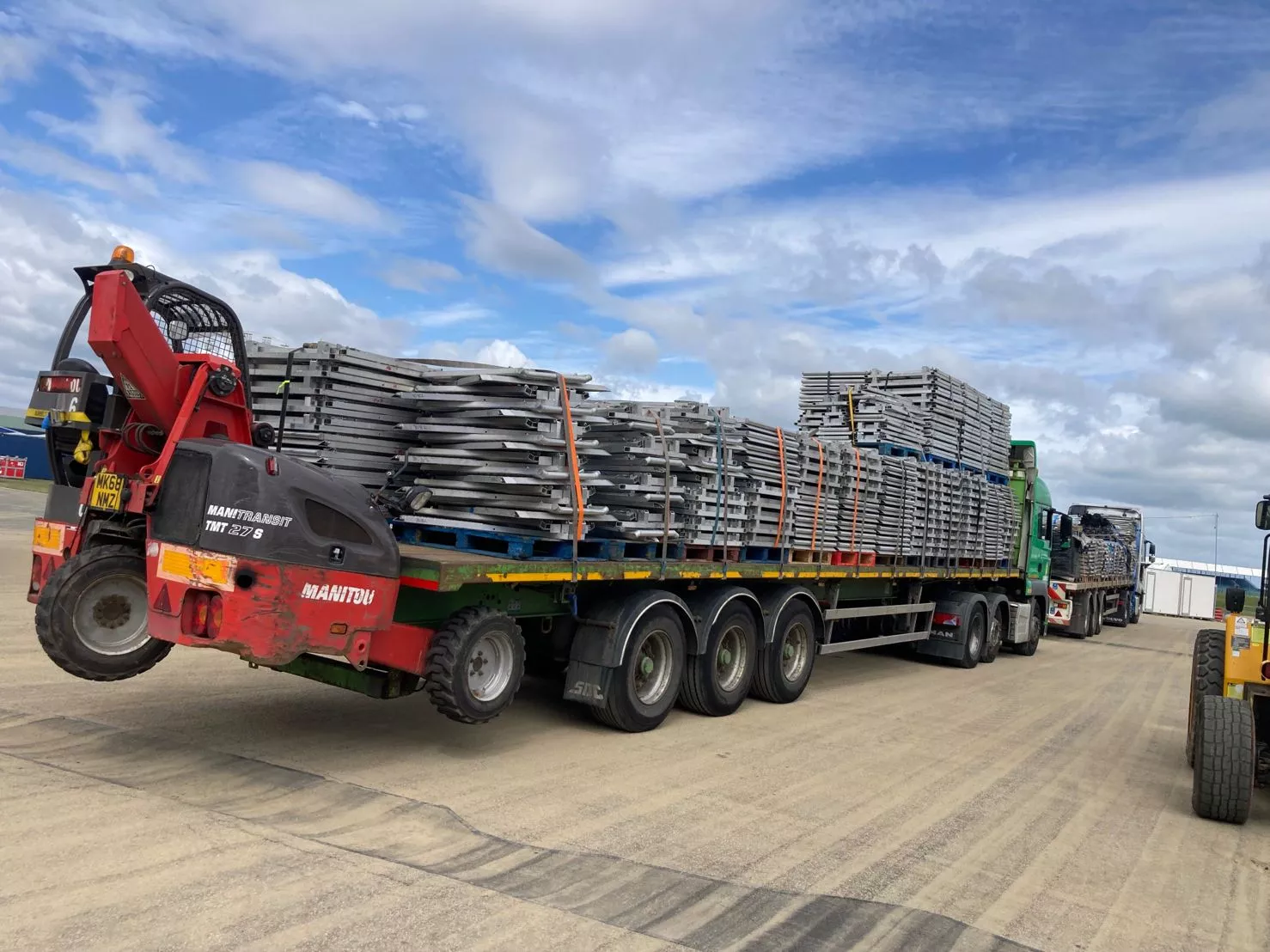
The decision between flat-foot and bridge-foot barriers is not just about ground stability—it is a direct calculation of your landed cost. Flat-foot barriers allow for tight vertical stacking, maximizing the number of units per container. Bridge-foot barriers, while essential for uneven terrain, require spacers to prevent frame damage during transit, which reduces container loading efficiency by approximately 20%.
For indoor events, festivals, or paved construction sites, flat-foot barriers are the optimal choice for maximizing margin. They stack tightly without spacers, allowing you to load up to 3,200 units in a 40ft HQ container. This tight stacking minimizes internal movement, reducing the risk of frame abrasion and damage claims during long-haul shipping.
Bridge-foot barriers are necessary for outdoor events on grass, dirt, or uneven surfaces. However, the spacer requirement increases the volume per unit, meaning you will pay for air space rather than product. If your end-users frequently operate on uneven ground, the 20% capacity loss may be justified by the reduced need for on-site ground leveling or additional bracing.
To mitigate the capacity loss with bridge-foot barriers, ensure your supplier uses precise welding tolerances. A variance of less than 1mm allows for tighter interlocking even with spacers, preventing jamming and maximizing the usable space within the container. This precision is often where generic manufacturers fail, leading to higher damage rates and lower container loads.
- Flat-Foot Barrier: Optimal for indoor/paved surfaces. Maximizes container capacity (up to 3,200 units/40ft HQ). Lower shipping cost per unit. Requires level ground for stability.
- Bridge-Foot Barrier: Essential for uneven terrain (grass/dirt). Reduces container capacity by ~20% due to spacer requirements. Higher shipping cost per unit but reduces on-site setup time.
- Hybrid Strategy: Stock flat-foot for 70% of orders (indoor/paved) and bridge-foot for 30% (outdoor). This balances margin optimization with market coverage, leveraging low MOQs to test demand.
How to Source Barriers Without Shipping Damage
Interlocking hooks and moisture-proof packaging prevent 95% of transit damage.
Shipping crowd control barriers from China requires precision engineering, not just bulk packing. The primary failure mode in transit is frame abrasion caused by loose hooks. When panels shift during ocean freight, unsecured hooks scrape against the hot-dipped galvanized finish, exposing the Q235 steel core to salt spray corrosion.
To eliminate this risk, we utilize a ‘Hook-Lock’ stacking method. This involves interlocking the panels vertically during transport, ensuring zero internal movement. This specific packing technique reduces damage claims to less than 0.5%, compared to the industry average of 5-10% for competitors shipping with loose hooks.
- Interlocking Hooks: Panels must be stacked vertically with hooks engaged to prevent frame scraping. Loose stacking allows panels to shift, causing irreversible cosmetic and structural damage to the Q235 steel.
- Moisture-Proof Packaging: Hot-dipped galvanized finishes (>42 Microns) are durable but vulnerable to condensation during long-haul shipping. We utilize industrial-grade moisture barriers to prevent white rust formation in the container.
- Coating Thickness Specs: Ensure your supplier guarantees >42 Microns for AS 4687 compliance. Thinner coatings (<30 Microns) degrade rapidly in Australian coastal environments, especially if the shipping packaging fails.
Conclusion
Optimizing container loading transforms shipping crowd barriers from a logistical expense into a primary margin driver. Vertical stacking with Hook-Lock interlocks fills 40ft HQ containers with over 3,200 units, cutting freight costs significantly while maintaining AS 4687 compliance and preventing transit damage.
Review the full product range to compare steel and aluminum options, check OEM branding capabilities, and secure bulk pricing for your next shipment.
Frequently Asked Questions
What are crowd barriers called?
They are commonly referred to as crowd control barricades, steel crowd control barriers, or interlock crowd barriers. These terms specifically denote the temporary, interlocking steel fencing used for event perimeter security. Use these terms when sourcing for event security compliance.
What are the 4 types of barriers?
The four main types are Fixed Leg, Flat Leg, Bridge Leg, and Water-filled barriers. Fixed and Flat legs offer stability for flat ground, while Bridge legs accommodate uneven terrain. Select leg type based on your installation surface.
What are type 3 barricades?
Type 3 barricades are portable, collapsible structures primarily used for traffic control rather than crowd containment. In crowd control contexts, they are less common than fixed steel barriers due to lower stability. Stick to steel barriers for high-density crowd management.
Can crowd control barriers be shipped in bulk?
Yes, bulk shipping is the most cost-effective method for international orders. Standard 1220mm x 1100mm barriers can be stacked vertically to maximize container volume and reduce per-unit freight costs. Opt for vertical stacking to minimize landed costs.
What is the standard container loading for 1220mm barriers?
A standard 40ft High Cube container can hold roughly 3,200 units of 1220x1100mm crowd control barriers. This density assumes efficient vertical stacking with interlocking hooks to prevent frame damage. Verify hook-lock stacking with your supplier before booking.