Skip to content
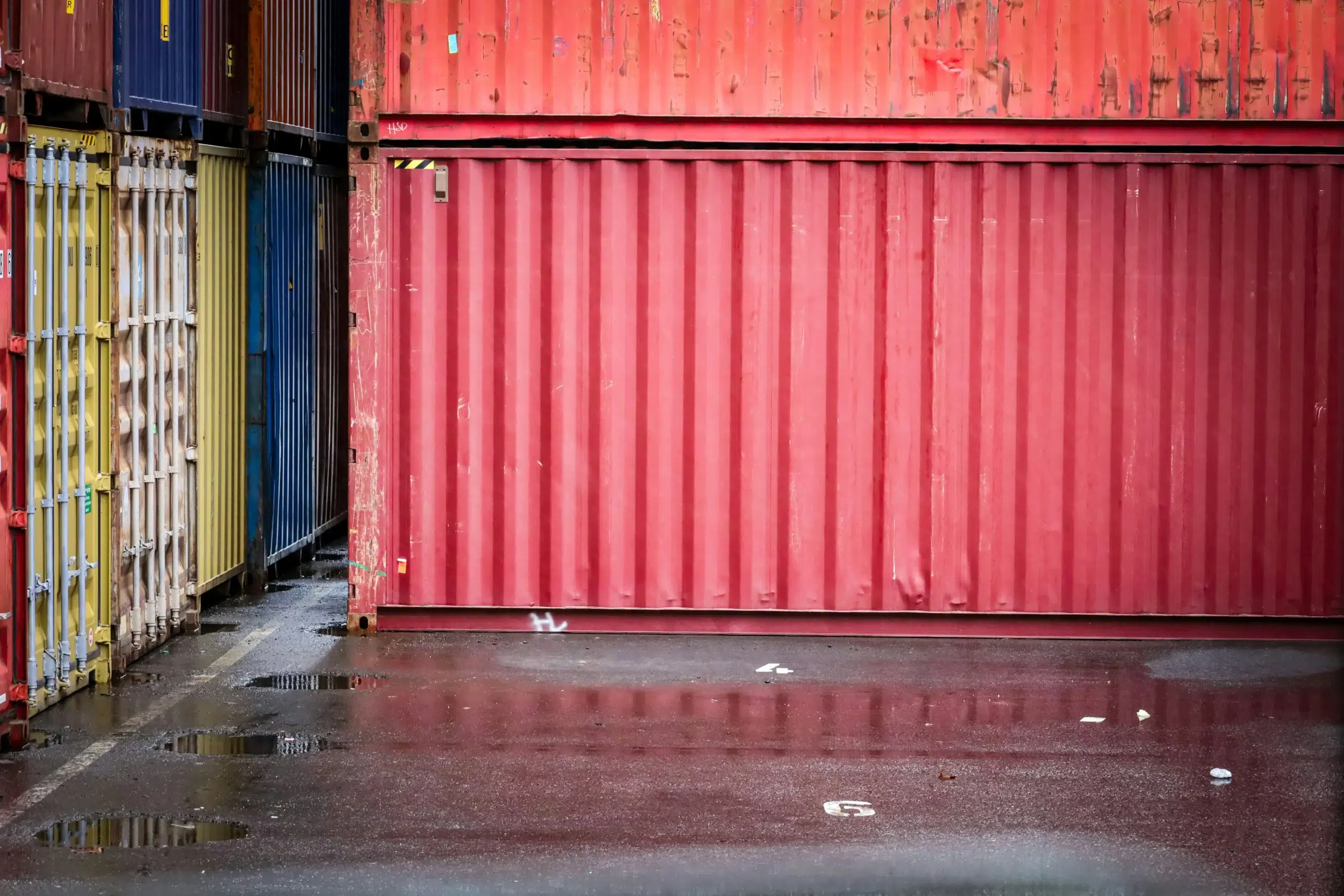
You usually calculate fence container loading capacity on a spreadsheet, but the real test happens at the port weighbridge when your 20-foot box gets flagged for being 800 kilos over the limit. Every project manager importing temporary fencing knows that specific frustration. You sit there paying daily demurrage fees while a logistics crew offloads panels onto a truck just to redistribute the weight. That delay alone ruins your per-panel landed cost math. The real culprit is never the steel panels. It is the concrete bases.
Here is the truth most suppliers will not tell you: stop trying to max out a container by weight. If you want to hit your corporate ESG targets by slashing concrete usage, you actually have to cap your container weight at around 26,500 kilos for a 20-foot unit, leaving a 1,500-kilo buffer. That buffer absorbs the wild variance in concrete density between different Chinese foundries, which fluctuates heavily depending on the aggregate mix. Once you lock in that lighter weight limit, you shift your packing strategy to load more steel panels and fewer concrete blocks per shipment. You order the remaining blocks from a local precast yard. The landed cost on the local concrete is slightly higher, but you eliminate the overweight demurrage risk entirely and significantly reduce the embedded carbon in your perimeter setup.

20ft vs 40ft Container Volume Limits
For temporary fencing, you hit the 28,800 kg payload limit of a 40ft container long before filling its 67.7 m³ volume—concrete feet turn 20% of your container into expensive dead air.
Exact Interior Dimensions and the Volume Illusion
Most procurement spreadsheets calculate container capacity using CBM alone. This is a critical error for fencing imports. The usable interior dimensions are fixed: a 20ft container measures 5.89m (L) x 2.35m (W) x 2.39m (H), yielding 33.2 m³. A standard 40ft container measures 12.03m (L) x 2.35m (W) x 2.39m (H), yielding 67.7 m³.
The payload limits dictate reality. A 20ft unit maxes out at 28,200 kg, while a 40ft unit caps at 28,800 kg. When loading standard AS 4687 temporary fence panels (2100mm x 1800mm) with concrete feet at roughly 39 kg per set, a 40ft container hits its weight ceiling at approximately 350 to 400 panels. You physically fill only 80% of the container’s volume, yet you cannot add a single extra bundle without triggering overweight penalties at the port. If you are calculating how many temporary fence panels fit in a 20ft container, expect roughly 200 to 220 by volume, but concrete feet drop that to around 180 units to stay safely under the 28,200 kg threshold.
Why 40ft High Cube Containers Rarely Help
A 40ft High Cube (HC) container increases internal height from 2.39m to 2.69m, bumping total volume to 76.4 m³. For AS 4687 temporary fence shipping dimensions, this extra vertical space is almost entirely useless. Panels stand 1.8m high, and stacking bundles beyond 1.5 meters inside any container creates a severe compliance risk.
Our engineering team documented that over-stacking panel bundles past 1.5 meters causes aggressive zinc flaking at the friction points during maritime vibration. When a 40ft HC arrives in Sydney or Brisbane with flaked galvanizing, it fails AS 4687-2022 compliance inspections on the spot. The extra cubic meters are not an asset; they are a temptation that leads to rejected shipments and project delays.
CBM Calculations and the Split Shipment Penalty
Under FOB shipping terms, the buyer owns the freight contract. If your supplier miscalculates the CBM or ignores the 40ft container fence panel load weight, you end up with a split shipment: one full 40ft container and a second partially full 20ft container. Split shipments destroy your per-panel landed cost because ocean freight for a 20ft container is roughly 75% the cost of a 40ft, despite carrying less than half the volume.
The fix is auditing your supplier’s fencing import container packing layout before production finishes. We switched to custom-nested dunnage layouts that rotate alternate bundles 90 degrees, recovering 8-12% of wasted edge space compared to the standardized flat-pack pallets most traders use. When you combine that layout efficiency with the plastic vs concrete fence feet shipping weight advantage—dropping individual panel weight from 39 kg to 21.5 kg—you maximize the 28,800 kg payload and eliminate split shipments entirely.

Temporary Fence Panel Weight Constraints
For AS 4687 temporary fencing with concrete feet, you hit the 40ft container’s 28,800 kg payload limit before filling the volume, leaving up to 20% empty space.
Container Payload Limits: The Hard Ceiling
A standard 20ft container maxes out at 28,200 kg, while a 40ft container holds 28,800 kg. The volume difference between the two is massive (33.2 m³ vs 67.7 m³), but the weight allowance barely shifts. When you load AS 4687 temporary fence panels, that 600 kg difference dictates your entire shipping economics. We see project managers calculate their container needs using cubic meters, only to get hit with overweight rejections and port demurrage fines at the weighbridge.
Breaking Down the AS 4687 Panel Weight
A compliant AS 4687 panel measuring 2100mm x 1800mm with a >42-micron hot-dipped galvanized finish weighs approximately 17 kg. The concrete foot adds another 22 kg, bringing the standard unit to 39 kg. At 39 kg per set, a 40ft container hits its 28,800 kg limit at roughly 720 individual mesh panels, assuming you ship bases and mesh separately. The moment you add clamps and dunnage, that safe number drops.
The Hidden Weight of Clamps and Timber Dunnage
Brackets and clamps add roughly 0.8 kg each. A standard deployment uses two clamps per panel connection, meaning a 400-panel order carries an extra 320 kg just in hardware. Packaging timber adds another critical variable. Our loading teams allocate roughly 200 to 300 kg for custom-nested dunnage to prevent the zinc flaking that occurs when bundles rub together during maritime transit. Traders often skip this protective timber or use standardized flat-pack pallets, which adds unnecessary weight and wastes edge space inside the container.
Manufacturer vs. Trader Weight Estimation Accuracy
Trading companies typically quote container yields using generic CBM calculators, completely ignoring the payload ceiling. They will promise you 500 panels in a 40ft container because the math works on paper, but the truck gets rejected at the port. As a factory operating 10 welding lines, we calculate yields based on verified gross weights from our own dispatch records. By rotating alternate bundles 90 degrees and using our custom-nested dunnage layout, we consistently fit 8-12% more panels per container than standard flat-pack methods, keeping the load legally under the 28,800 kg limit.
Plastic vs Concrete Feet Packing Math
Plastic and concrete feet occupy nearly identical spatial footprints per panel. The entire shipping advantage is mass-based, not volume-based.
Spatial Footprint vs Mass — Why Volume Is a Red Herring
Most procurement officers calculate container capacity using CBM. For temporary fencing, that approach is misleading. A standard 2100mm x 1800mm AS 4687 panel with a concrete base and one with a recycled plastic base take up the same cubic meters when stacked in a 40ft container. The constraint is never space — it is the 28,800 kg payload ceiling.
Our recycled plastic feet weigh 4.5 kg each. A standard concrete foot weighs roughly 22 kg. That 17.5 kg difference per panel compounds brutally across a full container load. At 350 panels, you are carrying 6,125 kg of dead weight in concrete alone — weight that does nothing but eat into your payload allowance and increase your per-panel landed cost.
The Hard Numbers: 480 Panels Under 26,500 kg
We load AS 4687 panels with our plastic feet at a bundled weight of approximately 21.5 kg per unit. At that mass, a standard 40ft container safely holds 460 to 480 panels while staying under 26,500 kg — leaving a 2,300 kg safety buffer below the 28,800 kg limit. That buffer exists for a reason. Australian ports apply overweight fines that start in the thousands and escalate quickly if the container requires repacking at the terminal.
Run the same math with concrete feet at 39 kg per panel. You hit the payload wall at roughly 350 to 370 panels. You have paid for 67.7 m³ of container space but effectively thrown away 20% of it because the weight limit stops you first. That is the freight trap most importers do not catch until the second or third order.
Testing Mixed Batches Without MOQ Penalty
We operate the only proprietary plastic feet injection machine in Anping County. Most local fabricators buy their plastic feet from us and resell them at a markup. Buying direct eliminates that margin layer and gives you access to a capability most traders cannot offer: mixed-container testing without MOQ restrictions.
Our baseline MOQ is 100 panels. Within a single 40ft container, you can split the order between plastic-foot panels for high-priority urban sites where weight and ESG reporting matter, and concrete-foot panels for rural or long-term installations where the extra mass provides wind resistance. You do not need to commit to a full container of one base type to run a real-world comparison on your next project. Test 80 plastic and 370 concrete in the same shipment, audit the handling differences on site, and let the data dictate your next bulk order.
Optimizing Fence Container Loading Layout
Traders use flat-pack pallets that waste edge space. We rotate alternate bundles 90 degrees on custom steel dunnage, recovering 8-12% more container capacity per shipment.
On-Edge Stacking with Custom Steel Dunnage
Standard temporary fencing panels (2100mm x 1800mm per AS 4687-2022) are loaded on-edge, not flat. Laying panels flat creates a wide, low profile that leaves massive vertical void space in a 2.39m-high container. On-edge orientation aligns the 1.8m dimension vertically, stacking bundles side-by-side along the 12.03m floor of a 40ft unit.
The critical variable is the dunnage separating bundles. Middlemen use standardized wooden pallets that consume 100-120mm of vertical clearance per tier and create rigid grid boundaries along the container floor. We fabricate custom 40mm steel channel dunnage in our own workshop. The thinner profile allows an extra tier in most 40ft shipments, and the steel channels lock bundles laterally so they cannot shift during maritime transit.
Our loading crews rotate every second bundle 90 degrees. This nested layout interlocks the panel frames and eliminates the rectangular dead zones that appear when all bundles face the same direction. We consistently fit 8-12% more panels per container compared to the flat-pack pallet method you will see from most Anping traders.
Protecting the >42-Micron Galvanized Coating
Maritime vibration is the enemy of hot-dipped galvanizing. When bundles rub against each other for 20-30 days at sea, the zinc layer at contact points shears off. For our panels carrying a >42-micron hot-dipped galvanized finish, this flaking is not just cosmetic damage — it exposes bare steel and immediately fails Australian compliance inspections on arrival.
We place heavy-duty corrugated cardboard separators between every panel within a bundle, not just between bundles. The cardboard acts as a sacrificial friction barrier. We also wrap each bundle in two layers of woven PP fabric with interior foam strips positioned at the frame edges where metal-to-metal contact is most likely. The cost per bundle is roughly USD 1.80. The cost of a rejected container at an Australian port is easily USD 4,000+ in demurrage, reinspection, and replacement freight.
The 1.5-Meter Stack Height Rule
We enforce a strict 1.5-meter maximum stacking height inside the container. A standard AS 4687 panel bundle of 10 units stands approximately 1.2 meters on-edge. Adding a third bundle vertically pushes the stack past 1.8 meters, concentrating over 400 kg of downward force on the bottom panels.
The bottom panels in an over-stacked load do not just bend — the weld joints at the mesh-to-frame connection points experience shear stress that permanently distorts the frame geometry. We have seen incoming quality reports from Australian projects where bottom-row panels were out of square by 15-20mm, making them impossible to join with adjacent panels on-site. Keeping stacks under 1.5 meters means using a two-tier layout in a standard 40ft container. You sacrifice a small amount of vertical space to guarantee every panel arrives within AS 4687 dimensional tolerances.
Pre-Shipment Photographic Packing Evidence
Every container we load receives a documented photographic packing record before the doors are sealed. Our QC team photographs four specific points: the bundle separation layers visible from the container door, the steel dunnage alignment under the bottom tier, the height measurement of the tallest stack, and the overall floor-to-ceiling fill ratio.
This documentation serves a specific commercial purpose. If a freight claim arises — typically friction damage to galvanizing or frame distortion from shifting loads — the photographic evidence establishes exactly what left our factory. Without these photos, you are relying entirely on the carrier’s condition report at the destination port, which is almost always ambiguous. We send the full photo set to the buyer within 2 hours of container sealing, giving you an auditable baseline before the vessel even departs Tianjin or Qingdao.

HS Codes and Container Documentation
A 200 kg weight discrepancy on your Bill of Lading can trap your fencing container at Port Botany for a week, burning AUD 3,000+ in demurrage before a single panel is inspected.
HS Code Classification for Temporary Fence Panels
The correct HS code for welded temporary fence panels shipped from China is 7308.90, which falls under “Other structures and parts of structures, of iron or steel.” We have seen Australian customs flag shipments declared under 7314.39 (woven wire mesh), and the reasoning is straightforward: a fully welded panel with a galvanized frame is a structural fencing unit, not raw mesh. Misclassification triggers an immediate hold under Australian Border Force risk profiling, adding 5 to 10 business days to your clearance window.
For plastic fence feet, the separate component code is 3925.90 (other plastic articles for construction). When we pack panels with our proprietary recycled plastic feet on the same Bill of Lading, we list 7308.90 as the primary line item with the panel count and weight, then add 3925.90 as a secondary line item for the feet quantity. Declaring the entire shipment under a single code when it contains two distinct material categories is a common mistake that importers make, and it gives customs grounds to reject the entry paperwork outright.
Weight Declaration Risks on the Bill of Lading
Australian ports now use mandatory container weighing systems under the Safety of Life at Sea (SOLAS) Verified Gross Mass regulations. Your Bill of Lading weight must match the actual gross weight within a very tight tolerance. When a supplier quotes you for 400 panels at 21.5 kg each using plastic feet, the net product weight is 8,600 kg. Add the steel pallets at roughly 180 kg per pallet, dunnage timber, and the container tare weight, and your declared gross weight on the B/L needs to reflect the true loaded figure, not just the panel math.
Where this collapses for most buyers importing temporary fencing is the gap between quoted individual panel weight and actual packed bundle weight. A supplier might quote a panel at 21.5 kg but pack bundles of 10 panels with steel banding and timber dunnage, pushing the actual bundle weight to 225 kg instead of 215 kg. Across a full 40ft container load of 450 panels, that unreported 10 kg per bundle compounds into a 450 kg discrepancy. At Port Botany or Fremantle, that discrepancy does not result in a polite adjustment. It results in the container being sidelined for a re-weigh, which triggers demurrage charges from day one of the hold.
CSC Plate Limits and Gross Weight Compliance
Every ISO shipping container has a CSC (Convention for Safe Containers) plate welded to its door. That plate lists the maximum gross weight the container is certified to carry. For a standard 40ft container, the max gross weight stamped on the CSC plate is 30,480 kg. This number is non-negotiable and it includes the container’s own tare weight of approximately 3,750 kg, leaving you a maximum payload of 28,800 kg for your fencing, pallets, and dunnage combined.
The critical compliance failure we witness is buyers or their freight forwarders calculating payload using the generic ISO standard rather than the specific CSC plate on the actual container assigned to their shipment. A used 40ft container might have a CSC plate max gross weight of 30,480 kg but a tare weight that has drifted upward to 4,200 kg due to repaired floors or added reinforcement. If your supplier loads based on a 28,800 kg payload assumption but the actual available payload on that specific container is only 28,280 kg, the container is technically overloaded. If Australian port authorities verify against the CSC plate during a random inspection, the shipment gets impounded and you absorb the fallout.
We solve this by photographing the CSC plate of every container before loading begins and calculating our exact permissible payload from that plate’s specific tare weight. We then build our packing list downward from that hard ceiling rather than upward from a theoretical panel count. This is why our packing lists consistently clear Australian customs on first submission without weight-related interventions.
Conclusion
Calculating container capacity by volume alone is a guaranteed way to trigger overweight fines. You will hit the 28,800 kg payload limit of a 40ft unit long before you fill the physical space when shipping 39 kg concrete-foot panels. Swapping to 21.5 kg recycled plastic feet eliminates that dead weight, dropping your per-panel landed cost by up to 15 percent.
Send us your current supplier’s packing list and we will audit your exact panel-to-container yield ratio. Request our standard 40ft loading layout sheet to see how nested dunnage safely fits 8 to 12 percent more AS 4687 panels.
Frequently Asked Questions
How many panels fit in a 20ft container?
A standard 20ft container can typically accommodate 200 to 220 of our standard 2.1m x 1.8m temporary fence panels based on volume alone. However, when utilizing our high-quality concrete-filled feet, weight becomes the limiting factor, safely capping the load at approximately 180 panels to remain under the 28,200 kg payload limit. At DB Fencing, our logistics team calculates these exact weight-to-volume ratios to ensure you maximize your shipment efficiency without exceeding safety regulations. This precision is especially critical for our Australian and North American construction clients who rely on strict site delivery schedules.
What is the max weight for a 40ft shipment?
The maximum payload for a standard 40ft shipping container is 28,800 kg, which is calculated by subtracting the container’s tare weight of roughly 3,750 kg from the 30,480 kg maximum gross weight, along with any necessary dunnage. For our wholesale distributors exporting livestock fencing or crowd control barriers, understanding this precise math is essential for accurately forecasting per-unit landed costs. Our 14 years of export experience allow us to perfectly balance your panel quantities and accessory weights to hit this maximum safe threshold. We provide detailed packing lists with every 24-hour quote so you know exactly how much product you are getting for your freight dollar.
Are 40ft high cube containers better?
No, a 40ft High Cube container is rarely advantageous for shipping wire mesh fencing because our standard panels are only 1.8m high, leaving the extra vertical space completely wasted. Since heavy concrete or our proprietary plastic feet make weight your primary shipping constraint rather than volume, a standard 40ft container provides the exact same payload capacity. Choosing a standard container over a high cube secures identical load limits while significantly reducing your overall ocean freight rate. This strategy aligns with our commitment to providing highly competitive factory-direct pricing to our global retail and distribution partners.
Does weight affect shipping cost more than volume?
Yes, because ocean freight for Full Container Load (FCL) shipments is priced per container rather than per cubic meter, meaning excess weight directly inflates your per-panel landed cost. If you source heavy concrete feet, you may end up paying for a full 40ft container while shipping 30% fewer units compared to lighter alternatives. To solve this, DB Fencing utilizes our proprietary plastic feet manufacturing machine—the only one in Anping—to offer durable, lightweight foot options that dramatically increase the number of panels per container. This unique production capability allows us to lower your freight costs per unit while maintaining full compliance with Australian Standard AS 4687.
How do you secure panels in a container?
To prevent damage to our hot-dipped galvanized finishes, panels must be stacked vertically on their long edge, separated by wooden dunnage, and tightly strapped to the container’s internal lashing rings using heavy-duty ratchet straps. Stacking panels flat is a critical mistake that causes the lower panels to permanently deform under the concentrated weight of concrete or plastic fence feet. As an ISO9001 certified manufacturer, our warehouse staff strictly enforces these professional loading protocols before any container leaves our Anping facility. This meticulous attention to packaging ensures your anti-climb mesh and temporary fencing arrives in pristine condition, ready for immediate deployment on construction sites or at public events.