Skip to content
A procurement manager in Brisbane ordered 400 panels last month based on a search for temp fence panel size. The supplier shipped 6ft x 12ft panels — standard in the US market. Problem is, those measure 1828mm x 3658mm. Australian standard is 2100mm x 2400mm. The panels arrived 58mm too short and 1258mm too wide. None of the clamps fit. The feet didn’t align. The whole lot failed AS 4687 inspection on day one. Site safety shut down the perimeter installation. That’s a $40,000 mistake that cost him three weeks on the timeline.
We pulled three years of factory specification data from our Australian shipments. Every dimension that passed AS 4687:2022 inspection is in here. You’ll see exactly where US-sourced specs fail. Why 3300mm maxi panels cut your installed cost per linear metre. The specific measurements to put in your next RFQ so non-compliant quotes get filtered out before you waste a single hour on price comparison.

Standard Temp Fence Panel Dimensions
Australian temporary fencing uses strict metric dimensions. US imperial panels (6ft x 12ft) will not connect to standard Australian clamps and fail AS 4687 compliance.
The Two Standard Australian Panel Sizes
Australian construction exclusively uses metric temporary fence panels. We manufacture two dominant sizes to comply with AS 4687:2022: the standard 2100mm H x 2400mm W panel and the heavy-duty 2100mm H x 3300mm W maxi panel. The 2100mm height is non-negotiable across both variants for site compliance.
- Standard Panel (2100mm x 2400mm): Mesh aperture 60mm x 150mm, wire diameter 3.0–4.0mm. Weight is 17–20kg for two-person manual handling.
- Maxi Panel (2100mm x 3300mm): Mesh aperture 50mm x 100mm (anti-climb) or 60mm x 150mm, wire diameter 4.0mm. Weight is 24–28kg, often requiring mechanical lifting.
- Frame Tube: 32mm OD (economy) to 42mm OD (heavy-duty), wall thickness 1.5mm–2.0mm.
- Galvanisation: >42 microns hot-dipped per AS 4687:2022 for coastal and outdoor corrosion resistance.
The Metric-Imperial Mismatch Risk
US suppliers list 6ft x 12ft panels as standard. Converted to metric, that is 1828mm x 3658mm. A 1828mm panel is 58mm shorter than the 2100mm Australian requirement. The 3658mm width is 1258mm wider than our standard 2400mm panel. Standard Australian clamp couplers and plastic feet are machined for 32mm to 42mm OD tubing at specific spacing. You cannot physically connect imperial-sized panels to compliant Australian stock.
Ordering 500 US-spec panels guarantees a failed AS 4687 site inspection on day one. We explicitly manufacture to 2100mm x 2400mm and 2100mm x 3300mm to eliminate this dimensional incompatibility for our Australian buyers.
Frame Tube Wall Thickness and Gauge Confusion
US suppliers frequently specify “18-gauge” frame tubing. 18-gauge equals a 1.2mm wall thickness. AS 4687 structural requirements mandate a minimum 1.5mm wall thickness. We manufacture our frames starting at 1.5mm wall, scaling to 2.0mm for maxi panels. A 1.2mm wall tube will deform under standard wind loads or minor site impacts, immediately voiding your compliance certification.
Landed Cost: Standard vs. Maxi Panels
For civil infrastructure and high-wind zones, the 3300mm maxi panel spans 38% more linear distance per unit. While the per-panel price is higher, it reduces the total quantity of clamps, plastic feet, and couplers required per linear metre. Our procurement managers calculate total landed cost per linear metre, not per-panel price, to determine the true margin advantage of specifying the 3300mm width in their RFQ documents.
| Panel Type | Dimensions (H x W) | Mesh & Wire Spec | Galvanisation | Compliance Status |
|---|---|---|---|---|
| Standard Australian Panel | 2100mm H x 2400mm W | 60mm x 150mm aperture; 3.0mm–4.0mm wire diameter | >42 microns hot-dipped | AS 4687:2022 Compliant |
| Heavy-Duty Maxi Panel | 2100mm H x 3300mm W | 50mm x 100mm anti-climb; 4.0mm wire; 42mm OD frame | >42 microns hot-dipped | AS 4687:2022 Compliant |
| US Standard Panel (Procurement Risk) | 1828mm H x 3658mm W (6ft x 12ft) | Often uses 18-gauge pipe (1.2mm wall thickness) | Varies, typically residential-grade | Fails AS 4687 Inspection |

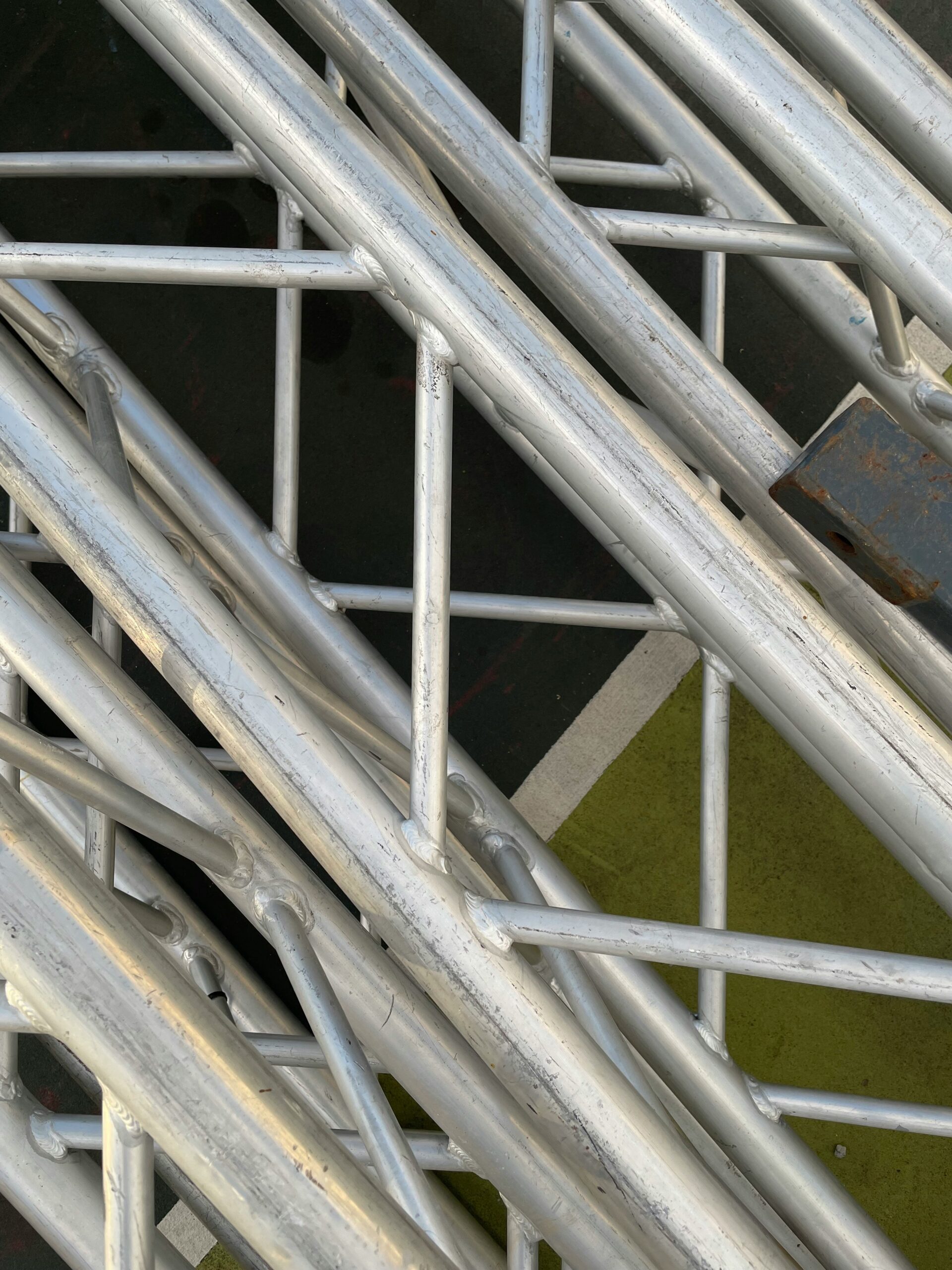
Metric vs Imperial Size Trap
US-sourced temporary fence panels listed as 6ft x 12ft are 58mm shorter and 1258mm wider than Australian standard dimensions. They will not connect with AS 4687-compliant clamps and bases.
The US-Australian Dimensional Mismatch
A procurement manager searching “temp fence panel size” from an Australian IP address will encounter US-dominated results listing 6ft x 12ft panels (1828mm x 3658mm). Some suppliers further muddy the waters with fractional imperial sizes like 6’6″ x 11’6″ (1981mm x 3505mm). Neither matches the Australian standard of 2100mm H x 2400mm W.
We see this error weekly. A buyer converts 6ft to “approximately 1800mm,” assumes it is close enough to the 2100mm standard, and places an order. The reality: a 1828mm panel is 58mm shorter than AS 4687 requires. That gap is not cosmetic. It is a compliance failure that an inspector will flag immediately on a civil or construction site.
Conversion Mismatch Issues Beyond Height and Width
The dimension trap extends into frame tube specifications. US suppliers list pipe using the gauge system—commonly “18-gauge” or “16-gauge.” An 18-gauge tube has a wall thickness of 1.2mm. AS 4687:2022 mandates a minimum 1.5mm wall thickness for structural integrity. A buyer who does not convert gauge to millimetres will purchase panels that fail the standard on a technicality, not just on dimensions.
We manufacture exclusively to metric specifications: 32mm or 42mm outer diameter tubes with 1.5mm to 2.0mm wall thickness. There is no gauge conversion required because we do not build to imperial standards. For 75% of our business serving Australia and New Zealand, this eliminates the conversion risk entirely.
On-Site Assembly Failures from Mixed Batches
The most expensive consequence of the metric-imperial trap occurs when mixed measurement systems arrive on the same site. We have been called in to replace orders where a contractor sourced 2400mm-wide Australian-standard panels for phase one, then a sub-contractor supplied 12ft (3658mm) US panels for phase two from a different vendor to cut costs.
Standard Australian temporary fence clamps have a throat opening designed for 32mm or 42mm tubes at specific spacing. A 3658mm-wide panel with US-dimensioned frame tube spacing will not align with the clamp positions on a 2400mm panel. The panels physically cannot join. Feet bases designed for 2400mm panel stability are also insufficient for the 1258mm wider span, creating a tip-over hazard in wind-load zones.
The corrective cost is brutal: the non-compliant panels are written off, the project timeline takes a hit, and the procurement manager faces an audit. The per-panel price difference between a compliant 2100mm x 2400mm panel and a 6ft x 12ft import is irrelevant when 500 non-compliant units cannot be deployed.
| Specification | Australian Standard | US Imperial Standard | Dimensional Mismatch | Procurement Risk |
|---|---|---|---|---|
| Panel Height | 2100mm | 6ft (1828mm) | 58mm shorter | Fails AS 4687:2022 inspection, creates security gaps |
| Panel Width | 2400mm (Standard) / 3300mm (Maxi) | 12ft (3658mm) | 1258mm to 1458mm wider | Physically incompatible with standard Australian clamp and base connections |
| Frame Wall Thickness | 1.5mm – 2.0mm minimum | 18-Gauge (1.2mm) | 0.3mm thinner | Structural failure under wind load, voids compliance documentation |
| Galvanisation Coating | >42 microns hot-dipped | Lighter electro-galvanized or unknown | Insufficient zinc layer | Premature rust and corrosion in seaside or harsh outdoor environments |

Mesh Aperture and Anti-Climb Specs
AS 4687-2022 ties climb-resistance directly to mesh aperture and wire diameter. Specifying anything larger than 60mm x 150mm or thinner than 3.0mm guarantees a site inspection failure.
Standard Aperture Configurations
We manufacture two primary temp fence mesh apertures for the Australian market. The standard specification is a 60mm x 150mm rectangular opening, providing adequate visibility and airflow for general construction perimeters. The anti-climb variant uses a tighter 50mm x 100mm aperture. We supply the 50mm x 100mm configuration specifically for high-security civil infrastructure projects or council-mandated zones where foot entrapment and climbing hazards must be eliminated.
AS 4687 Climb-Resistance Classification
Australian Standard AS 4687-2022 classifies temporary fencing based on its ability to resist unauthorized scaling. The standard explicitly links climb-resistance to the maximum aperture size. If a mesh opening exceeds the 60mm x 150mm threshold, the panel immediately loses its anti-climb classification. We have seen procurement managers reject entire container loads because an overseas factory substituted a 75mm x 150mm mesh to save on welding wire. For your RFQ documents, specify the exact 60mm x 150mm or 50mm x 100mm metric dimensions to filter out non-compliant suppliers before price negotiations begin.
Wire Diameter Compliance Thresholds
Mesh aperture means nothing if the wire cannot withstand impact forces. Our standard temporary fence panels use a 3.0mm wire diameter, representing the absolute minimum compliant threshold for structural integrity under AS 4687-2022. For heavy-duty applications, our engineers specify a 4.0mm diameter wire. The relationship between aperture and diameter is critical: a 50mm x 100mm anti-climb mesh concentrates more weld points per square meter than a 60mm x 150mm standard mesh, inherently increasing panel rigidity.
- 3.0mm Wire: Minimum compliant gauge for standard 2100mm x 2400mm panels. Suitable for general commercial construction perimeters.
- 4.0mm Wire: Heavy-duty specification required for our 2100mm x 3300mm maxi panels and high-wind-load civil zones.
- Sub-3.0mm Wire: A common cost-cutting measure by non-certified factories. Fails AS 4687 impact resistance and manual cutting tests on site.
Many North American suppliers quote 2.5mm wire for their temporary fencing panels. While this passes their domestic residential standards, it will fail an Australian compliance audit. When calculating your landed cost per panel, a 2.5mm wire panel is a total write-off, not a cost saving.
Wire Gauge Explained for Procurement
Wire gauge is a US imperial measurement system with no legal standing in Australian temporary fence procurement. AS 4687:2022 mandates wire diameter in millimetres.
The 9-Gauge vs 11-Gauge Problem
In North American fence supply, wire thickness is expressed in gauge numbers. Lower gauge numbers indicate thicker wire, so a 9-gauge wire is thicker than an 11-gauge wire. This is counterintuitive for procurement managers accustomed to metric systems, where a larger number means a larger physical dimension.
The immediate problem: gauge numbers communicate nothing precise without a conversion table, and the conversion table itself depends on which gauge standard the supplier is referencing.
Australian Specifications Use Millimetres Exclusively
AS 4687:2022 does not reference wire gauge at any point. The standard specifies wire diameter in millimetres. For temporary fencing panels, compliant wire diameter ranges from 3.0mm (minimum standard) to 4.0mm (heavy-duty specification). Our standard Australian temp fence panel uses 3.0mm to 4.0mm wire diameter depending on the duty rating requested.
When we quote a panel with 4.0mm wire, that is a measured, verifiable dimension. There is no interpretation involved. When a supplier quotes “9-gauge wire,” the actual thickness depends entirely on which conversion standard they apply internally.
The Gauge-to-mm Mapping Trap
There are at least three gauge systems in circulation for steel wire: Birmingham Wire Gauge (BWG), US Steel Wire Gauge, and Washburn and Moen (W&M). The same gauge number converts to different millimetre values across these systems. More critically, some Chinese factories that export heavily to the US maintain their own informal conversion tables that align with no recognised standard.
- 11-gauge (BWG): 3.05mm — marginally compliant under AS 4687
- 11-gauge (W&M): 2.77mm — non-compliant, fails minimum 3.0mm requirement
- 9-gauge (BWG): 3.76mm — compliant, approaches heavy-duty specification
- 9-gauge (W&M): 3.66mm — compliant but thinner than a BWG 9-gauge
The procurement risk is not theoretical. We have encountered Australian buyers who received panels quoted as “11-gauge” that measured 2.7mm on caliper inspection — non-compliant under AS 4687. The supplier’s internal conversion table simply differed from what the buyer assumed.
Write your RFQ documents using millimetre wire diameter only. Reject any supplier response that quotes gauge numbers without providing the corresponding mm measurement. If a factory cannot confirm wire diameter in millimetres, they cannot confirm AS 4687 compliance.
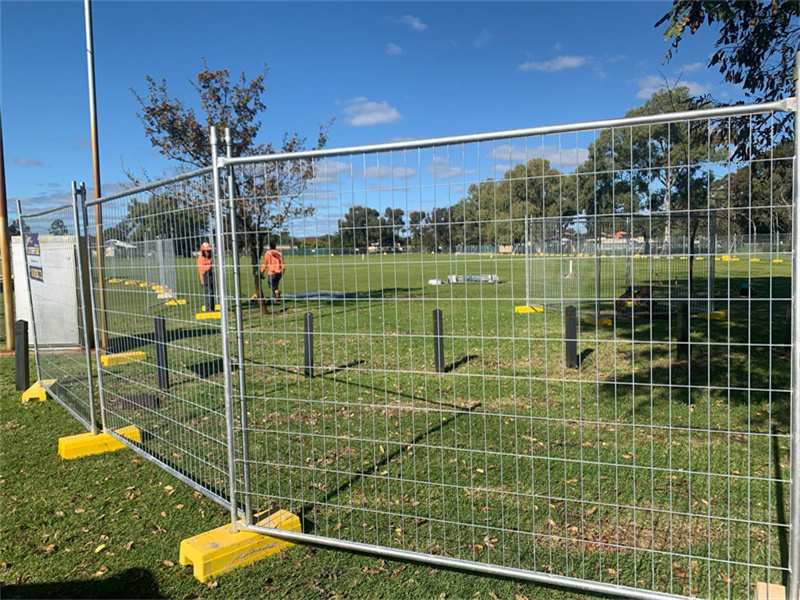
Frame Tube Diameter and Wall Thickness
Frame tube wall thickness below 1.5mm guarantees handling damage and fails AS 4687 structural requirements. We strictly manufacture within a 1.5mm to 2.0mm wall thickness range.
Standard Frame Tube Profiles
Australian temporary fencing systems utilize four standard frame tube outer diameters: 32mm, 38mm, 40mm, and 42mm. The 32mm profile typically serves light-duty or economy-grade temporary barriers. For standard 2100mm x 2400mm panels, 38mm and 40mm outer diameters are the industry baseline. When you transition to heavy-duty 2100mm x 3300mm maxi panels designed for civil infrastructure, the 42mm outer diameter becomes necessary to handle increased wind loading. Across all four outer diameter profiles, the actual structural resilience is dictated not by the outside measurement, but by the wall thickness. We manufacture every frame tube with a wall thickness between 1.5mm and 2.0mm to satisfy AS 4687:2022 load-bearing mandates.
Transport and Handling Failures in Sub-1.5mm Tubing
A common tactic to artificially lower a quote involves reducing the frame tube wall thickness to 1.2mm. Some suppliers obfuscate this by listing the material as 18-gauge pipe, relying on the imperial-to-metric knowledge gap. We have physically tested these 1.2mm profiles during our own shipping preparations. A wall thickness below 1.5mm lacks the sectional modulus to survive standard freight logistics. During container loading, forklift handling, or when panels are stacked five-high on a truck bed, the thin-walled frames bend permanently under the combined weight. For a construction procurement manager, this translates to a delivery where a measurable percentage of the shipment arrives with warped frames that will not align with standard Australian clamp connections.
The Replacement Cost Cycle
Selecting sub-1.5mm tubing based on a lower initial unit price distorts your true landed cost. A warped temporary fence panel cannot pass a site safety audit because the mesh aperture distorts and the panels fail to form a continuous anti-climb barrier. To maintain project milestones, you are forced to source emergency replacement panels from local Australian hire companies at premium retail rates. Simultaneously, you incur costs to transport and dispose of the non-compliant imported stock. We engineer our panels with a minimum 1.5mm wall thickness to eliminate this replacement cycle entirely, ensuring the cost-per-panel approved in your procurement documentation reflects the actual cost-in-ground over the project lifecycle.
Weight Per Panel and Logistics Impact
Panel weight dictates your per-unit landed cost. Ignore pallet math and margin erodes before the container leaves port.
Weight Breakdown by Panel Type
Our standard 2100mm x 2400mm temp fence panel weighs 17–20kg depending on wire diameter and frame tube specification. We use 32mm OD frame tubing with a 1.5mm wall as our baseline, producing panels around 17kg. When the spec upgrades to a 42mm OD frame with 2.0mm wall thickness, weight pushes to 20kg. This range keeps the panel within safe two-person manual handling limits on site.
The 2100mm x 3300mm heavy-duty maxi panel registers at 24–28kg. The additional 900mm of width increases mesh area and requires a third vertical reinforcing bar in our welding process. At the upper end of 28kg, manual lifting becomes a strain for a two-person crew, and site teams typically switch to mechanical handling for multi-tier stacking. We flag this on our packing declarations because procurement managers who budget standard labour rates consistently get caught out by maxi panels during installation.
Effect on Container Loading Density
Weight does not restrict container capacity for temporary fencing—volume does. A standard 20ft general purpose container offers roughly 33 cubic metres of internal space with a gross weight limit of 28,000kg. You will never approach that weight ceiling with wire mesh panels. The binding constraint is dimensional: how many pallets fit within the internal length and width of the container.
Standard 2400mm-wide panels and maxi 3300mm-wide panels stack to similar heights, but the maxi pallet footprint consumes more floor area inside the container. This directly reduces the number of pallets you can load per shipment, which is the variable most novice buyers omit from their landed cost spreadsheet.
Panels-Per-Pallet and Pallets-Per-Container Calculations
We pack standard 2100mm x 2400mm panels at 50 units per pallet on a 2.5m x 1.2m footprint. A 20ft container with internal dimensions of 5.9m x 2.35m accommodates 8 standard pallets in a two-row configuration. That delivers 400 standard panels per 20ft container.
Maxi 2100mm x 3300mm panels also pack at 50 units per pallet, but the footprint widens to 3.4m x 1.2m. This restricts layout options inside the same 20ft container, reducing the fit to 6 pallets and 300 panels per shipment. When buyers compare standard versus maxi per-panel pricing without running this pallet math, their cost-per-linear-metre calculations distort. The maxi panel’s commercial advantage comes from fewer clamps and feet required per metre of fence line, not from freight efficiency.
Conclusion
Spec the 2100mm x 2400mm panel with a minimum 42-micron hot-dipped galvanised finish for standard sites. If your civil project sits in a high-wind corridor, upgrade to the 3300mm maxi panel to cut your clamp and base count per linear metre. Never accept a 6ft x 12ft quote disguised as Australian standard—it fails AS 4687 inspection on day one.
Put the exact metric dimensions and the 42-micron galvanisation requirement into your next RFQ. When quotes arrive, cross-check the frame wall thickness in millimetres rather than accepting a vague pipe gauge. Any vendor dodging that measurement ships structural liability, not fencing.
Frequently Asked Questions
What size are temp fence panels?
In Australia, which represents 75% of our export business at DB Fencing, standard temporary fence panels are strictly 2100mm high x 2400mm wide to comply with AS 4687-2022. We also manufacture heavy-duty maxi panels measuring 2100mm high x 3300mm wide for construction firms requiring enhanced site security. While US suppliers typically offer 6ft x 12ft dimensions, these non-compliant sizes will not connect with AS 4687-compliant accessories like our hot-dipped galvanized clamps and bases.
What wire gauge do you use?
In the professional wire mesh industry, specifications rely on precise millimetre measurements rather than regional gauge systems. At DB Fencing, our standard temporary fencing utilizes a robust 3.0mm to 4.0mm wire diameter, which translates roughly to US 11.5-gauge and 8-gauge respectively. Relying on gauge numbers from US-spec suppliers risks ordering wire that fails to meet strict AS 4687 minimum diameter requirements and compromises the >42-micron hot-dipped galvanized finish we apply for harsh outdoor environments.
What is the standard fence panel size?
There is no single global standard for temporary fencing, which is why precise regional sourcing is critical for construction firms and event management companies. For our primary markets in Australia and New Zealand, the strict standard is 2100mm x 2400mm under AS 4687:2022, whereas the US uses 6ft x 12ft and the UK uses 3500mm x 2100mm. Supplying non-Australian standard panels risks failing OH&S inspections on local construction sites, which is why DB Fencing strictly manufactures to the 2100mm x 2400mm specification.
How long is a standard panel?
The standard width for Australian temporary fence panels is 2400mm, while our heavy-duty maxi variant spans 3300mm, with both maintaining a 2100mm height. Understanding this exact width is essential for global distributors and civil engineers to accurately calculate how many panels are needed per linear metre of site perimeter, as 2400mm panels require approximately 0.42 panels per metre. Because we operate 10 advanced welding production lines in Anping, DB Fencing can efficiently produce these exact dimensions at a capacity of 2,000 sets per week to meet tight project deadlines.
What panel sizes do you offer?
DB Fencing manufactures Australian temporary fence panels in two primary widths: the standard 2400mm (approximately 17–20kg) and the 3300mm maxi variant (approximately 24–28kg), both standing at a 2100mm height. For high-security construction sites, we also produce anti-climb variants that utilize these exact outer dimensions but feature smaller 50mm x 100mm mesh apertures instead of the standard 60mm x 150mm to prevent footholds. With a flexible low MOQ of just 100 panels, global fence distributors can easily stock both standard and anti-climb configurations with factory-direct OEM customization.