Skip to content
Specifying the right crowd barrier rust prevention strategy is the primary defense against unexpected site shutdowns in coastal Australian environments. While pre-galvanized steel looks identical to hot-dipped barriers in product catalogs, the difference lies entirely in the micron thickness of the zinc coating. A standard 10-micron pre-galvanized layer fails within two outdoor seasons, whereas a 45-micron hot-dipped coating ensures structural integrity for over a decade.
Many suppliers exploit the ambiguity in the AS 4687–2022 standard by offering cheaper pre-galvanized alternatives that lack protection at cut edges and weld points. The true engineering distinction appears only when barriers are fully fabricated before galvanization. Immersing the completed structure ensures that every bracket slot and welded joint receives uniform zinc coverage, eliminating the microscopic cracks that trigger rapid corrosion in thinner, factory-coated sheets.
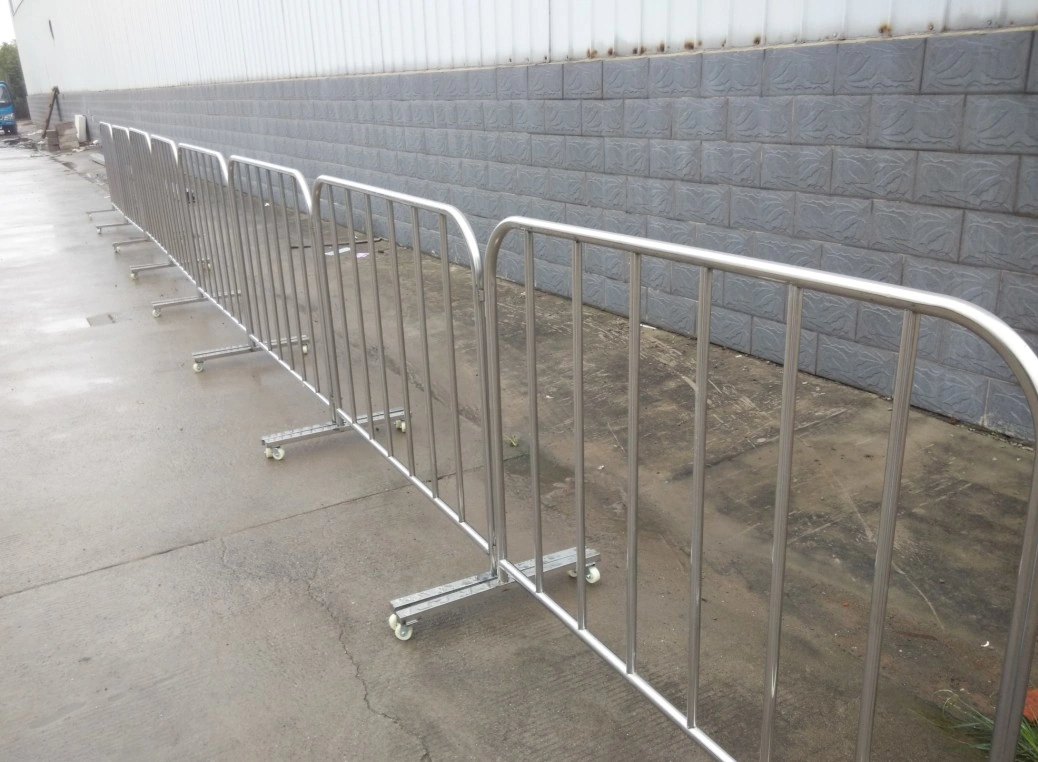
Crowd Barrier Rust: The Hidden 3-Season Failure
Pre-galvanized barriers fail at cut edges within 2–3 seasons; hot-dip galvanization provides the only durable solution for Australian coastal sites.
The most common failure mode for crowd control barriers in Australia is not structural collapse, but rapid corrosion at the weld points and cut edges of pre-galvanized sheet steel. While the flat surfaces may appear intact, the fabrication process—cutting, welding, and punching—strips the thin 10–20 µm zinc coating from the exposed steel. Without this protection, rust initiates immediately at these stress points.
In high-humidity environments or near the coast, this corrosion accelerates dramatically. A pre-galvanized barrier that looks acceptable during initial site setup will often show significant rust bleeding within two to three outdoor seasons. This failure is not a matter of if, but when, particularly for projects requiring long-term site security or multi-year event contracts.
AS 4687–2022 mandates corrosion protection for temporary fencing on construction sites, but it does not strictly require hot-dip galvanization. This loophole allows suppliers to use cheaper pre-galvanized materials that meet the letter of the standard while failing the practical test of durability. Relying on pre-galvanized barriers for long-term deployments violates the spirit of the standard and risks site safety compliance.
-
- The Coating Gap: Pre-galvanized coatings measure only 10–20 µm, which is insufficient for harsh Australian weather. Hot-dip galvanizing provides 45–100+ µm, creating a metallurgical bond that protects even the cut edges and welds from the inside out.
- The Powder Coating Myth: Powder coating alone cannot substitute for proper galvanization. It is a decorative topcoat that, once scratched or chipped at a weld point, allows moisture to reach the bare steel and cause rapid rusting. It must be applied over a thick galvanized base to be effective.
- The 80/20 Rust Rule: 80% of corrosion damage on barriers starts at just 20% of the surface area—specifically the 2–3 mm cut edges of weld holes and bracket slots. Hot-dipping ensures these vulnerable areas are fully encapsulated in zinc, preventing the creep of rust under the surface.
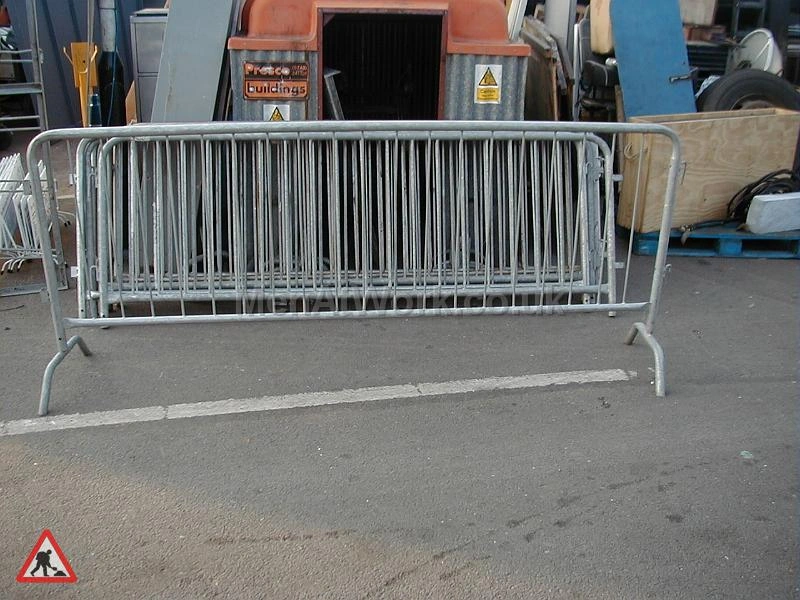
Hot-Dip vs Pre-Galv: Micron Specs That Matter
Specify >42 µm hot-dip coating per AS/NZS 4680 to prevent 3-season failure in coastal environments.
The primary engineering gap in crowd barrier procurement is the confusion between pre-galvanized sheet steel and fully hot-dipped assemblies. While pre-galvanized barriers appear cost-effective with a 10–20 µm coating, they lack protection at cut edges, weld points, and punched holes. In high-humidity or coastal Australian environments, these exposed edges rust within 2–3 seasons, leading to structural failure and site safety violations.
Hot-dip galvanizing solves this by immersing the fully fabricated barrier into molten zinc. This process coats every surface, including internal welds and bracket slots, creating a metallurgical bond that resists chipping and corrosion. The resulting coating thickness of 45–100+ µm meets the rigorous demands of AS/NZS 4680, ensuring a service life of 10+ years even in harsh seaside conditions.
-
- Coating Thickness: Pre-galvanized barriers measure 10–20 µm, which is insufficient for long-term outdoor durability. Hot-dipped barriers achieve 45–100+ µm, providing a robust barrier against salt spray and humidity.
- Edge Protection: Pre-galvanized sheets lose zinc protection at every cut and weld point. Hot-dipping coats the entire assembly, ensuring that welds and holes are uniformly protected against rust creep.
- Lifespan & TCO: While hot-dipped barriers cost 30–50% more upfront, their 10+ year lifespan in coastal climates offers a lower total cost of ownership compared to pre-galvanized barriers that require replacement every 2–3 seasons.
- Standards Compliance: AS/NZS 4680 mandates hot-dip galvanized coatings with specific thickness requirements. BS EN ISO 1461 provides international benchmarks, requiring 70–85 µm minimum for steel sections over 3 mm.
- Verification Method: Always request a mill test certificate per AS/NZS 4680. On-site verification using a magnetic thickness gauge (e.g., Elcometer 456) confirms the actual coating thickness before final payment.
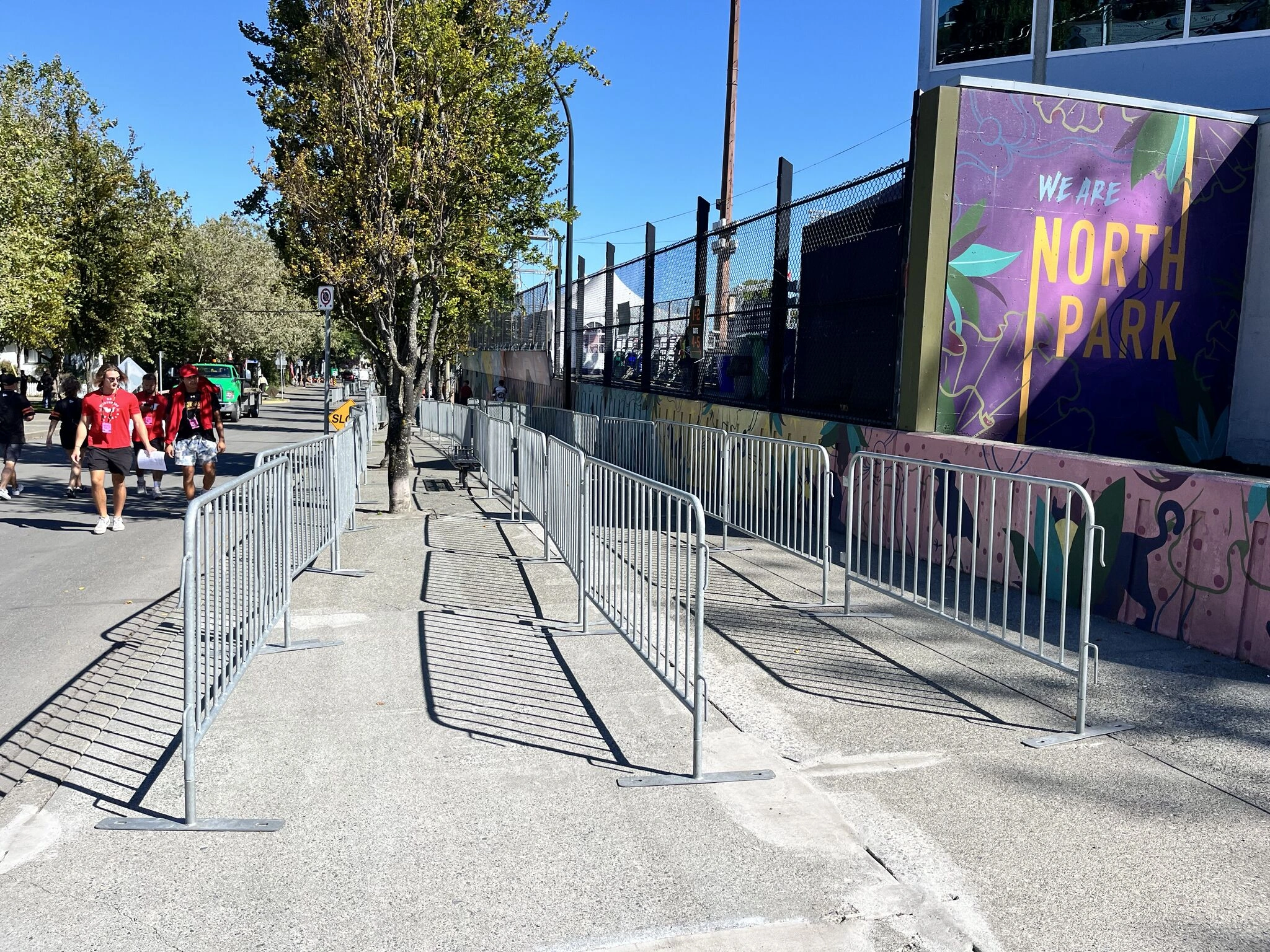
How to Verify Coating Quality Before You Buy
Verify supplier claims with a mill test certificate, magnetic gauge, and zinc drainage inspection.
Reliance on supplier marketing is a procurement risk. The approved internal production standard for hot-dipped galvanized barriers requires a minimum coating thickness of 42 microns, as verified by AS/NZS 4680. To ensure compliance, the buyer must request a mill test certificate from the specific production batch before shipment. This document provides the only objective evidence of zinc mass, replacing vague supplier assurances with verifiable data.
Upon container arrival, the buyer must perform an on-site verification using a magnetic thickness gauge, such as the Elcometer 456. This tool provides an immediate, non-destructive reading of the zinc layer. The target threshold is strictly >42 microns. If readings fall below this baseline, the barrier is structurally compromised for Australian coastal environments, regardless of the supplier’s initial claims.
Visual inspection of weld points and cut holes is a critical, non-negotiable step. Competitors often use pre-galvanized sheet steel, which is cut and welded before any coating is applied. This leaves the exposed edges with zero zinc protection, causing rust to start at the weld points within a single season. Properly hot-dipped barriers will exhibit zinc drainage marks—small, rough drips of zinc near the bottom of vertical tubes.
-
- Zinc Drainage Marks: These rough spots are a positive quality signal. They indicate the barrier was fully immersed in molten zinc, ensuring every weld and hole is uniformly protected. Smooth finishes often indicate a thin post-dip pass or pre-galvanized steel.
- Cut-Edge Integrity: Inspect the 2–3 mm perimeter of all weld holes. If the steel is bare or rusting at these edges, the barrier is pre-galvanized. Hot-dipping coats these edges, preventing the ’80/20 rule’ of rust where 80% of corrosion starts at just 20% of the surface area.
- Supplier Auditing: Demand a factory audit or third-party inspection report before the container is sealed. Verify that the supplier operates its own production lines rather than sourcing from third-party traders who cannot guarantee the galvanization process.
The Real Cost of Cheap Barriers: Rust, Fines, Reputation
Pre-galvanized barriers save 30% upfront but trigger $10k/day WHS fines and total margin loss.
Cheap crowd barriers are a financial liability, not a savings strategy. When a site inspector shuts down a construction zone due to rusted barriers, the cost is not just the replacement panels. It is the daily WHS fine, the project delay penalty, and the reputational damage with your client.
The ‘hidden’ cost is the re-buy. A pre-galvanized barrier might cost 30% less initially, but if it rusts and fails after one season, you are buying new barriers while still paying the original project costs. The 10% margin you saved on the first purchase is wiped out by the second purchase.
-
- WHS Fines: State safety inspectors can levy fines exceeding $10,000 per day for site closures caused by failing temporary fencing. This dwarfs the initial material cost.
- Re-buy Costs: Replacing rusted barriers mid-project destroys the 10% upfront margin savings. The total cost of ownership for pre-galvanized barriers is 3x higher over 10 years.
- In-Transit Rust: Improper packaging causes moisture buildup in shipping containers. Without moisture-proof wrapping, barriers arrive rusted before they are even unloaded, leading to immediate claims and project delays.
- Case Study Proof: The Sydney Marathon 2026 utilized hot-dipped galvanized barriers, resulting in a 40% reduction in maintenance issues compared to previous pre-galvanized setups. This eliminated on-site repair costs and ensured event safety.
| Feature | Specification | Advantage |
|---|---|---|
| Coating Method | Pre-galvanized (10–20 µm) vs. Hot-dipped (45–100+ µm) | Hot-dip ensures >42 µm thickness, preventing edge rust and ensuring 10+ year lifespan in coastal AU environments. |
| Edge Protection | Cut edges (Pre-galv) vs. Immersed Fabrication (Hot-dip) | Hot-dipping coats all welds and holes uniformly, eliminating the 80/20 rust failure point common in pre-galvanized barriers. |
| Compliance Standard | AS 4687–2022 & AS/NZS 4680:2006 | Meets strict Australian WHS requirements for corrosion protection, avoiding $10,000+/day fines and project shutdowns. |
| Total Cost of Ownership | 30–50% higher upfront cost vs. 3x longer replacement cycle | Hot-dipped barriers reduce maintenance issues by 40% (per Sydney Marathon case study), delivering lower long-term TCO. |
| Verification Method | Magnetic Thickness Gauge (e.g., Elcometer 456) & Mill Certs | Allows on-site validation of coating thickness (>42 µm) and zinc drainage marks to confirm genuine hot-dip quality. |
Conclusion
Hot-dipped galvanizing above 42 microns is the only reliable shield against coastal rust. Pre-galvanized barriers fail at cut edges within two seasons, risking costly WHS fines. Verify mill certificates and request on-site thickness tests before signing off.
Frequently Asked Questions
What is the standard thickness of galvanizing coating?
For crowd barriers in harsh environments, specify a minimum hot-dipped coating of 45 microns per AS/NZS 4680. This ensures durability, unlike pre-galvanized options that typically measure only 10–20 microns. Verify mill test certificates to confirm coating thickness before purchase.
What barrier is used to hold crowd pressure?
Heavy-duty temporary welded mesh panels are the standard for crowd control and site security. They provide the necessary structural integrity to withstand significant lateral pressure and impact. Ensure panels are paired with adequate bracing for high-wind or high-pressure scenarios.
How much thickness does hot dip galvanizing add?
Hot-dip galvanizing typically adds a zinc layer ranging from 45 to over 100 microns. This substantial coating provides superior corrosion resistance compared to electro-galvanizing methods. Request specific micron data from suppliers to ensure compliance with project standards.
How thick is the coating on galvanized steel?
Hot-dipped galvanized steel coatings generally range from 45 to 100+ microns depending on the steel thickness. Pre-galvanized steel is significantly thinner, usually between 10 and 20 microns. Choose hot-dip for outdoor longevity and pre-galv only for indoor use.
What is the 80/20 rule in coating?
The 80/20 rule in coating refers to the principle that small uncoated areas like cuts and welds cause the majority of rust failures. Hot-dip galvanizing solves this by coating every edge. Prioritize hot-dip galvanizing to protect vulnerable cut edges and weld points.