Skip to content
Buying crowd control barriers for a festival or public event looks straightforward until you’re the one signing off on the order. For an event logistics director in Australia, the decision carries weight. You’re not just picking a fence — you’re choosing something that has to survive outdoor storage, pass a safety check, and interlock perfectly with whatever your rental fleet already owns. Get the spec wrong, and you’re stuck with barriers that rust after one wet season or, worse, don’t connect with your existing stock.
That’s where the industry’s quality gap shows up. Two barriers can look identical in a product photo but perform completely differently on site. The difference comes down to three things: steel gauge, finish type, and base design. Most supplier listings skip these details. They’ll quote a length and a height, but they won’t tell you the tubing is 18-gauge instead of 16-gauge, or that the paint will flake after two seasons in the sun. That’s the information gap this article closes.

Barrier Types Compared: Steel vs. Plastic
The wrong material choice creates orphan barriers that can’t interlock with your rental pool and rust out after two seasons. Steel handles high crowd pressure; plastic solves rapid deployment. Here is the breakdown by use case.
Interlocking Steel Barricades for High-Security Perimeters
Steel barricades are the standard for any perimeter where crowd pressure is a real risk — main stage barriers at music festivals, fencing around VIP zones, or securing a construction site boundary against public access. The critical spec here is frame gauge. A genuine 16-gauge (1.6mm) steel tube resists bending under lateral crowd loads that would buckle an economy 18-gauge (1.2mm) frame. The difference is invisible from a distance but shows up the first time a crowd surges against the line.
Interlocking hooks with a 30-degree angle and proper tip bend are what keep a continuous line rigid. Suppliers that deviate from this geometry produce barriers that look correct but create gaps under load. For logistics directors managing rental pools, this is the “orphan barrier” trap: a new batch with slightly different hook geometry won’t lock with existing stock, rendering the older units useless for large events. Always request a hook-angle spec and test interlock with a sample before committing to volume.
Finish is the second hidden variable. Painted mild steel starts showing rust within two seasons in coastal Australian conditions. Hot-dip galvanizing per AS/NZS 4680 at 85–100 microns penetrates the steel and eliminates rust for 10+ years of outdoor storage. The upfront cost premium of 20–35% over painted copies is recouped within three years because you are not replacing rusted stock.
Lightweight Plastic Barriers for Portable Crowd Flow
Plastic barriers serve a different job: guiding foot traffic, closing off secondary pathways, or creating temporary queue lanes at events where setup speed matters more than brute-force security. A standard plastic barrier weighs roughly 5–8 kg versus 22 kg for a steel barricade, which means one person can deploy 50 units in the time it takes a team to position 20 steel barriers.
The trade-off is structural rigidity. Plastic barriers rely on water or sand ballast for stability. Without ballast, they tip under moderate wind or a person leaning against them. They are also UV-sensitive — budget-grade polypropylene becomes brittle after 2–3 years of direct sun exposure. For indoor or sheltered use, plastic is a solid choice. For outdoor perimeters where crowd pressure is expected, plastic should not be the primary barrier.
Water-Filled Barriers for Road and Work Zones
Water-filled barriers are purpose-built for traffic management and work-zone separation, not crowd control at events. Their weight comes from filling the hollow body with water on-site — a typical 2-metre barrier holds 60–80 litres, bringing total weight to 70–90 kg. That mass makes them stable against vehicle impact and wind, but it also makes them impractical for event logistics. You need a water source at both deployment and removal points, and draining takes time.
For temporary road closures, lane diversions, or construction site perimeters adjacent to traffic, water-filled barriers are the correct tool. For event perimeter fencing, they are overkill — the weight and water logistics add complexity without benefit over a properly ballasted steel barricade.
Retractable Belt Stanchions for Indoor Queue Management
Retractable belt stanchions are an indoor-only solution for queue management, not perimeter security. They consist of a weighted base (typically 3–5 kg) with a post that houses a retractable belt extending 1–3 metres. These are standard in airports, banks, and event registration areas where you need to guide people through a serpentine line without creating a physical barrier that blocks emergency egress.
Belt stanchions have no place in outdoor event perimeters. The belt provides zero crowd-load resistance, the base is too light to stay upright in wind, and the mechanism jams when exposed to rain or dust. They are a complementary product for indoor queue flow, not a substitute for steel or plastic barriers at outdoor events.
Barrier Type Comparison
Below is a direct comparison of the four barrier types across the specs that matter for procurement decisions: material, weight, interlock mechanism, primary use case, and expected lifespan under regular outdoor event conditions.
- Interlocking Steel: 16-gauge galvanized steel; 22 kg per 2.5m panel; 30-degree hook interlock; high-security perimeters and stage barriers; 10+ years with hot-dip galvanizing.
- Lightweight Plastic: UV-stabilized HDPE or polypropylene; 5–8 kg empty; stacking or pin connection; secondary pathways and queue lanes; 3–5 years before UV degradation.
- Water-Filled: Rotationally moulded polyethylene; 70–90 kg filled; interlocking tabs or pin; road work zones and traffic separation; 5–7 years in traffic use.
- Retractable Belt Stanchion: Steel or plastic post with weighted base; 3–5 kg base; belt hook or magnetic connection; indoor queue management; 5–8 years in indoor use.
For Australian event logistics directors, the decision framework is straightforward: steel for any perimeter where crowd pressure is possible, plastic for rapid indoor or sheltered deployment, water-filled only for traffic zones, and belt stanchions strictly for indoor queue flow. Mixing types within a perimeter line creates compatibility gaps that compromise security and waste budget on barriers that cannot work together.
| Feature | Steel Barricade (Recommended) | Plastic Barricade | Why It Matters for Your Event |
|---|---|---|---|
| Material | 16-gauge (1.6mm) hot-dip galvanized steel tube (1.5in OD) | UV-stabilized polyethylene or HDPE (hollow) | Steel resists bending under crowd pressure; plastic can crack under impact or high heat. |
| Frame Construction | 16-gauge (1.6mm) hot-dip galvanized steel tube (1.5in OD) | UV-stabilized polyethylene or HDPE (hollow) | Steel resists bending under crowd pressure; plastic can crack under impact or high heat. |
| Finish / Corrosion Protection | Hot-dip galvanized per AS/NZS 4680 (85–100 microns) | Color-impregnated plastic (no rust, but UV degrades over time) | Galvanized steel lasts 10+ years outdoors; plastic may become brittle after 3–5 seasons in Australian sun. |
| Standard Dimensions | Height: 1.1m (43in); Lengths: 1m, 2m, 2.5m | Height: ~1.0m; Lengths: 1.8m–2.0m typical | Steel matches global rental pool standards; plastic lengths vary, risking orphan stock. |
| Interlocking System | 30-degree steel hooks with precision tip bend (bolt-on or welded) | Integrated molded tabs or pin-and-loop system | Steel hooks provide true, rigid interlock; plastic tabs can snap or loosen under load. |
| Base Design | Bolt-on flat base (steel or ductile iron); replaceable | Molded hollow base (often water/sand fillable) | Steel bolt-on bases allow single-component repair; plastic bases crack and require full barrier replacement. |
| Base Weight (Empty) | ~22kg per 2.5m panel (steel base) | ~8–12kg per panel (empty) | Steel provides inherent stability; plastic requires filling to achieve comparable weight. |
| Base Weight (Ballasted) | N/A (steel base is permanent weight) | ~18–25kg per panel (water/sand filled) | Plastic barriers are unstable until filled; steel is ready for immediate deployment. |
| Durability / Lifespan | 10+ years with base replacement only | 3–5 years before UV degradation or cracking | Steel offers lower total cost of ownership over 8+ year useful life. |
| Compliance & Certification | AS 4687-2022/2007, ISO9001, SGS certified | Typically no structural certification; may meet basic load standards | Steel is certified for Australian safety checks; plastic may fail compliance audits. |
| Best Use Case | High-security perimeters, crowd control at festivals, construction sites | Light crowd flow guidance, indoor events, temporary lane separation | Steel is the standard for outdoor events requiring safety and durability. |
| Repairability | High: replaceable bases, hooks, and panels | Low: cracked frames or broken tabs require full replacement | Steel barriers reduce long-term replacement costs and waste. |
| Rental Pool Compatibility | Yes: standard dimensions and hook geometry | Often proprietary: may not interlock with existing steel or other plastic brands | Steel prevents orphan stock and ensures 100% compatibility with rental fleets. |
Steel Barricade Dimensions & Frame Specs
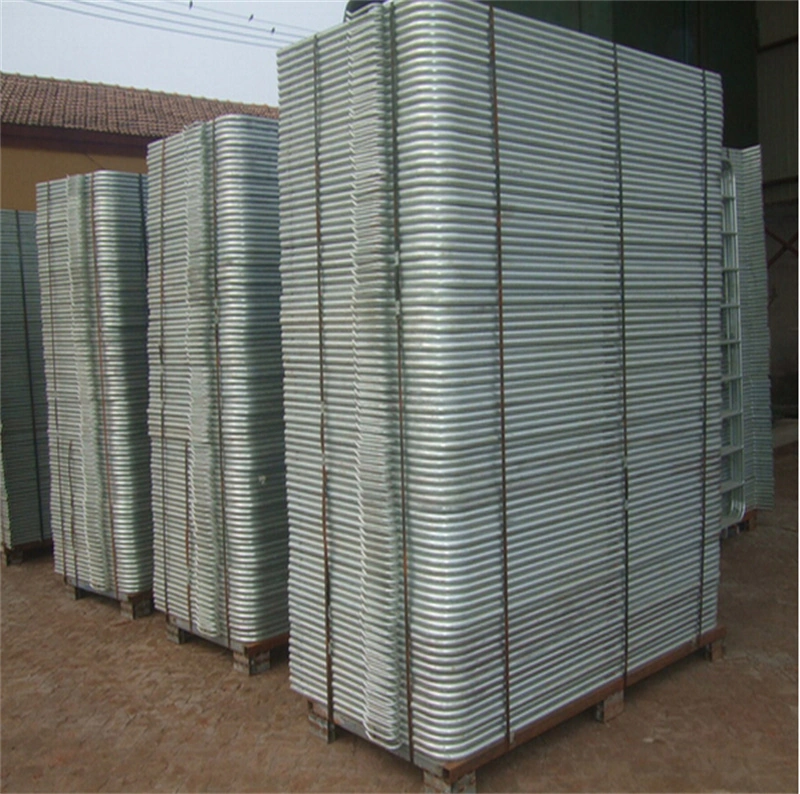
Most economy barriers look identical in a spec sheet but fail within one season. The difference is in three hidden specs: tube gauge, hook geometry, and galvanizing method.
The Industry Standard: 16-Gauge (1.6mm) Steel Tubing
A properly built steel barricade uses 16-gauge (1.6mm) steel tubing with a 1.5-inch (38mm) outside diameter. That tube thickness is the minimum for withstanding crowd pressure at events like music festivals or sporting matches. The standard height across the global rental pool is 43 inches (1.1m), which allows barriers to interlock with existing stock from most major suppliers.
The frame geometry is equally critical. The interlocking hooks must be formed at a 30-degree angle with a sufficient tip bend to create a true mechanical lock between panels. When the hook tip bends back far enough, two barriers cannot be pulled apart laterally without lifting — that is what creates a continuous perimeter. Suppliers who skip the tip bend or reduce the angle produce barriers that separate under light pressure.
The Economy Trap: 18-Gauge (1.2mm) Copies
The most common cost-cutting measure in crowd control barricades is dropping from 16-gauge to 18-gauge (1.2mm) tubing. The barriers look identical in a product photo. The difference shows up under load.
- Frame bending under crowd pressure: An 18-gauge top rail flexes visibly when people lean against it. At a packed event, that flex becomes permanent deformation after a single use.
- Hook failure: Economy hooks are often stamped from thinner material with a shallower bend. They slip apart under lateral force, breaking the perimeter line.
- Rental pool incompatibility: If your existing fleet uses 16-gauge hooks with a 30-degree angle, an 18-gauge barrier with a different hook geometry will not interlock properly. You end up with orphan barriers that cannot be used together.
The price difference between 16-gauge and 18-gauge barriers is typically 15–25% at the factory gate. The cost of replacing bent frames and mismatched inventory after one season far exceeds that saving. For any application involving crowd pressure — concerts, sporting events, street parades — 18-gauge tubing is a safety risk, not a value option.
| Feature | Specification | Advantage |
|---|---|---|
| Frame Tube Gauge | 16-Gauge (1.6mm) Steel | Resists bending under crowd pressure; safer than economy 18-gauge |
| Frame Tube Diameter | 1.5 in (38 mm) OD | Standard global size for rental pool compatibility |
| Barrier Height | 43 in (1.1 m) | Consistent across all major event fleets |
| Standard Lengths | 1 m / 2 m / 2.5 m (8 ft) | Flexible layout for perimeters, queues, and gates |
| Finish & Coating | Hot-Dip Galvanized (85–100 microns per AS/NZS 4680) | No rust for 10+ years; outlasts painted barriers 4x |
| Base Attachment | Bolt-On (M10 or M12 Hardware) | Replaceable base extends lifespan; no welded failure points |
| Interlocking Hook Angle | 30° with Precision Tip Bend | True interlock prevents orphan barriers; fits existing rental stock |
| Base Weight (Steel) | ~22 kg per barrier (flat steel base) | Stable for outdoor events; meets crowd barrier base weight spec |
| Compliance Standard | AS 4687-2022 / ISO 9001 / SGS | Passes Australian safety checks; zero compliance incidents |
| Warranty & Lifespan | 8+ Year Useful Life with Base Replacement | Lower total cost of ownership vs. painted economy copies |
Barrier Bases: The Weakest Link
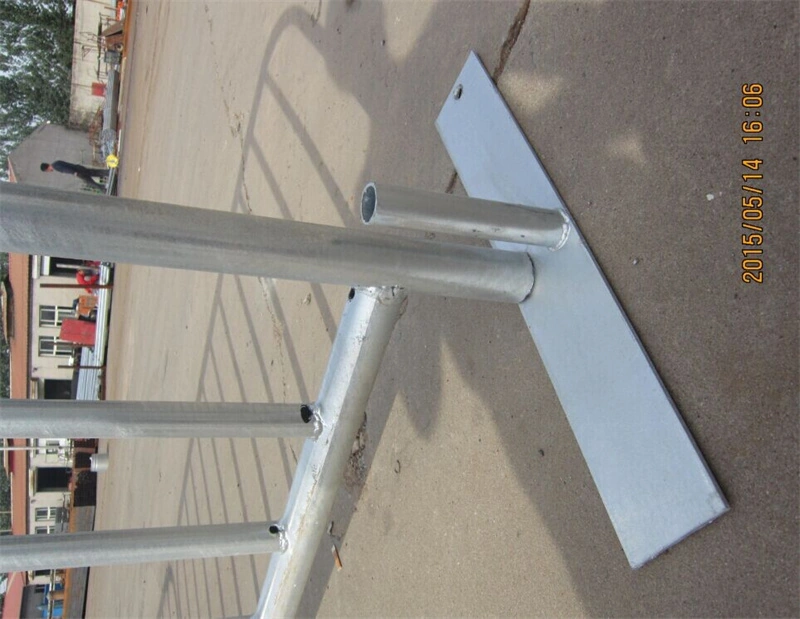
A welded base that rusts out turns a $180 barricade into scrap. A bolt-on base costs $15 to replace. That single detail determines whether your fleet lasts 2 years or 10.
Why Bolt-On Replaceable Bases Save Your Fleet
The base takes the worst abuse — dragged across asphalt, parked in wet grass, hit by vehicle tires. When a base bends on a welded-frame barricade, the entire unit is compromised. You cannot straighten a welded joint without weakening the metal. That barricade becomes scrap or, worse, a safety hazard that fails under crowd load. A bolt-on base uses M10 or M12 hardware to attach the base plate to the frame. Bent base? Four bolts, ten minutes, you are back in service. This is not a premium feature — it is the difference between a capital investment and a consumable expense. Every logistics director managing a rental pool should treat welded bases as a non-starter.
Base Weight: The Minimum for Stability
A steel crowd control barricade that is too light tips under crowd pressure. That is a liability. The standard flat base for a 2.5m steel barricade should weigh between 4.5kg and 6kg per side. Bridge bases (the U-shaped variant used for uneven ground) need additional mass — typically 7kg to 9kg — to compensate for the higher center of gravity. Wheel bases trade weight for mobility; they are acceptable for temporary indoor use but not for outdoor events where wind or crowd surge is a factor. If a supplier cannot provide the crowd barrier base weight specification in kilograms per side, do not buy. You cannot guess stability.
Galvanized vs. Painted: 4x the Service Life
Painted base plates look fine on day one. After one season of outdoor storage and wet ground contact, the paint chips at the edges and moisture creeps under the coating. Rust blooms at the contact points. By season two, the base is structurally compromised. Hot-dip galvanizing per AS/NZS 4680 applies a zinc coating that bonds metallurgically to the steel — not a surface layer that peels. In coastal environments or wet storage yards, a galvanized base plate lasts 4x longer than a painted equivalent. The cost difference at purchase is roughly 15-20%. The cost difference over 8 years of service is negative — you save money by not replacing barricades.
The As-Welded Base Trap
Economy barricades weld the base directly to the frame tube. The weld joint becomes the rust initiation point. Moisture sits in the crevice between the base plate and the tube. Once corrosion starts at that joint, it spreads upward into the frame. There is no repair path — you cannot cut off a welded base and attach a new one without compromising the structural integrity of the tube. The entire barricade goes to scrap. For temporary security barriers outdoor events that cycle through wet conditions, this design flaw guarantees a 3-year maximum lifespan. Bolt-on design eliminates the failure point entirely.

Galvanizing vs. Paint: Longevity Data
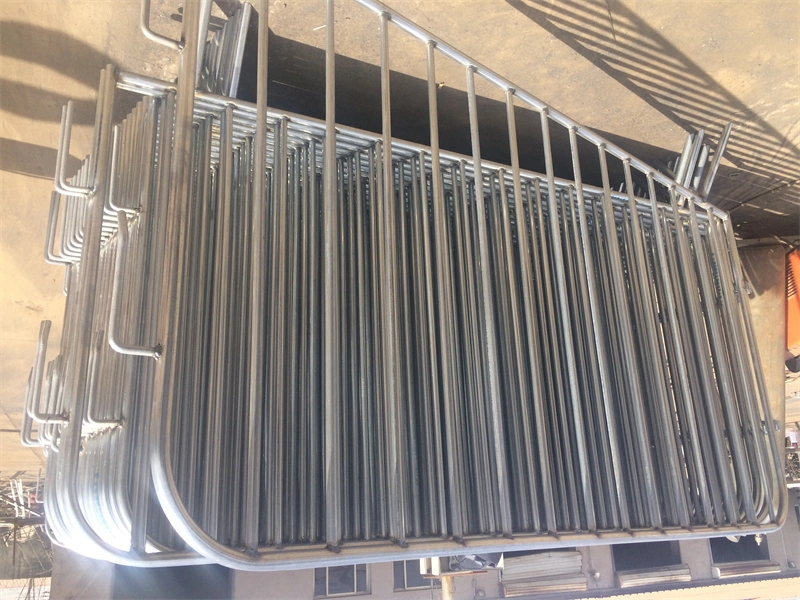
A painted barrier starts flaking within 18 months in Australian sun. A hot-dip galvanized barrier outlasts three replacements of that painted unit. The coating cost difference is recouped before year three.
Why hot-dip galvanizing beats paint on hollow tube sections
The critical difference most buyers miss is cathodic protection. Paint sits on the surface. If a scratch exposes bare steel, rust begins immediately under the paint film and spreads undetected. Hot-dip galvanizing forms a metallurgical bond with the steel. The zinc layer corrodes preferentially — it sacrifices itself to protect the underlying steel at any cut edge or drill hole.
On hollow barrier frames, paint cannot reach the interior of the tube. Moisture enters through open ends or weld pinholes and rusts the tube from the inside out. You see no external sign until the tube wall collapses. Hot-dip galvanizing coats the interior surface completely because the molten zinc flows through the entire tube during immersion. An event barrier with sealed ends and a galvanized interior does not rust from the inside.
The numbers: 3–5x longer service life in Australian conditions
Industry data from the Galvanizers Association of Australia shows hot-dip galvanized steel in mild industrial environments provides a maintenance-free life of 50+ years. In severe coastal environments — which covers most Australian capital city event sites — the figure drops to 15–25 years depending on zinc thickness and distance from surf. Painted mild steel in the same coastal environment requires repainting every 2–3 years and typically needs full replacement after 5–7 years when corrosion penetrates the substrate.
For a logistics director managing a fleet of temporary security barriers for outdoor events, the practical difference is simple: a galvanized barrier bought today will still be in service when your third set of painted replacements has been scrapped.
What happens to painted barriers in the field
Painted barriers fail in a predictable sequence. Within 12 months, UV exposure from Australian sun causes the paint to chalk and lose gloss. By month 18, impact from handling and transport creates chips at corners and weld joints. Moisture wicks under the paint at these damage points, and rust bleeds through the surrounding coating. By month 24, flaking covers 20–30% of the surface area and the barrier looks unprofessional for client-facing events. By month 36, structural rust at base welds compromises the joint integrity.
This matters because certified crowd control barricades AS/NZS require the structure to withstand specific lateral loads. A rust-weakened weld that passes inspection at purchase may fail after two seasons of coastal storage. You cannot visually assess internal tube corrosion on a painted barrier. On a galvanized barrier, the zinc layer provides a measurable thickness that you can verify with a magnetic thickness gauge at any point during the barrier’s life.
Real cost comparison for a 100-barrier fleet
A painted heavy duty crowd control barricade costs roughly AU$90–120 delivered. A hot-dip galvanized equivalent with the same 16-gauge frame and bolt-on base costs AU$130–170. The AU$40–50 premium per barrier is 30–40% more upfront.
Over 10 years, the painted fleet requires full replacement at years 3 and 6, plus partial replacement at year 9. Total capital outlay: AU$27,000–36,000. The galvanized fleet requires one base replacement at year 8 (bases wear from dragging on asphalt) and no panel replacement. Total capital outlay: AU$14,000–18,000. The galvanized option saves 40–50% on total cost of ownership while maintaining a professional appearance for the entire decade.
The zinc thickness threshold that matters
Not all galvanizing is equal. The Australian Standard AS/NZS 4680 specifies a minimum local coating thickness of 85 microns for structural sections. Many economy suppliers apply a thin “flash” galvanizing of 40–50 microns that passes a visual inspection but fails within 5 years in outdoor storage. The DB Fencing specification calls for 85–100 microns per AS/NZS 4680, verified by batch testing. If a supplier cannot provide a coating thickness certificate from an independent lab, assume the zinc layer is undersized.
For steel event barricades with interlocking hooks, the hook itself is the most vulnerable point. The bend radius concentrates stress, and any coating defect at that bend becomes a corrosion initiation site. A galvanized hook maintains full protection at the bend because the zinc coating is ductile and conforms to the radius during forming. A painted hook cracks at the bend during the first cold morning when the barrier is handled, exposing bare steel.
Selection Factors for Events in Australia
The barrier that works for a 2,000-person indoor conference will fail at a 20,000-person outdoor music festival. The difference is not the barrier type—it is the base weight, hook geometry, and finish spec.
Crowd Size and Pressure Load
A standard steel barricade with a flat base weighs roughly 22kg. That is sufficient for queue lines and low-density perimeters where the crowd is static. For high-density standing areas at concerts or sporting events, the lateral force from a crowd surge can exceed 1,500N per linear meter. In those scenarios, you need a barrier with a heavier base—either ductile iron (adding 10–15kg per panel) or a ballasted water-filled base. The frame itself must be 16-gauge (1.6mm) steel tube. Economy barriers using 18-gauge (1.2mm) tubing will bow under sustained pressure, creating gaps that defeat the purpose of the perimeter.
Weather Exposure: Coastal vs. Inland
If your event is within 5km of the coast—Sydney’s Bondi Beach, Melbourne’s St Kilda, or any Gold Coast venue—salt spray will corrode painted mild steel within two seasons. The standard for Australian coastal environments is hot-dip galvanizing per AS/NZS 4680 with a minimum 85-micron coating. Inland events (e.g., regional shows in Wagga Wagga or Toowoomba) can get away with powder-coated barriers, but the cost difference is marginal. A galvanized barrier costs 20–35% more upfront but eliminates the need for full replacement after 2–3 years. The total cost of ownership over 10 years favors galvanized by roughly 40%.
Storage Space: Stackable vs. Non-Stackable
Event logistics directors often underestimate how much warehouse space barriers consume. A standard 2.5m steel barricade with fixed welded bases cannot be stacked. You store them flat, one layer deep. That same barrier with a bolt-on base can be stacked 8–10 panels high by removing the bases during off-season storage. This reduces floor space requirements by 70%. For a fleet of 500 barriers, that is the difference between a single shipping container and a full warehouse bay.
Rental Pool Compatibility with Existing Stock
The most expensive barrier is the one that does not interlock with your existing fleet. This is the “orphan barrier” problem. The interlocking hook geometry—specifically the 30-degree hook angle and the tip bend radius—must match your current inventory exactly. A 2-degree difference in the hook angle means the barriers will not lock flush, creating a 5–10mm gap at every joint. Over a 100m perimeter, that is 40–80 gaps large enough for a person to slip through. Always request a physical sample or a certified CAD drawing of the hook profile before committing to a bulk order. Suppliers who cannot provide this documentation are likely manufacturing to loose tolerances.
Compliance with Local Council Event Licensing
Australian councils require event perimeter barriers to meet Australian Standard AS 4687-2022 for temporary fencing. This standard specifies minimum height (1.1m), maximum gap size between panels, and base stability under load. If your barriers are not certified to this standard, the council will reject your event license application. Most suppliers claim compliance, but the only way to verify is to request the ISO9001 certificate and the SGS test report for the specific model you are buying. A supplier who cannot produce both is selling uncertified product.
Decision Matrix: Event Type to Barrier Specification
- Small indoor event (500–2,000 people): Plastic retainer barriers or lightweight steel. Base weight: 15kg. Finish: powder coat. Stackable: yes. Compliance: low risk.
- Outdoor music festival (5,000–15,000 people): Interlocking steel barricades. Base weight: 22kg steel or 30kg ductile iron. Finish: hot-dip galvanized. Stackable: yes (bolt-on base). Compliance: AS 4687-2022 mandatory.
- High-density concert or sporting final (15,000+ people): Heavy-duty steel with ballasted or ductile iron base. Base weight: 35kg+. Finish: hot-dip galvanized (85+ microns). Stackable: yes. Compliance: AS 4687-2022 + council load test report.
- Street parade or marathon (linear route): Portable steel barriers with quick-deploy interlocking hooks. Base weight: 22kg. Finish: hot-dip galvanized. Stackable: yes. Compliance: AS 4687-2022.
- Regional show or agricultural event: Steel barricades with flat base. Base weight: 22kg. Finish: powder coat (inland) or galvanized (coastal). Stackable: yes. Compliance: AS 4687-2022.
Conclusion
The difference between a barrier that lasts eight seasons and one that fails at the fence line comes down to three things: tube gauge, galvanizing method, and hook geometry. Skip any one of those, and you are buying replacement stock within two years — or worse, dealing with a compliance incident mid-event.
Check your current inventory against these specs. If you are sourcing new barriers, review the certified hot-dip galvanized range with bolt-on bases and standard 30-degree interlocking hooks.
Frequently Asked Questions
What are the five types of barriers?
There are four main types of crowd control barriers for events: interlocking steel barricades, lightweight plastic barriers, water-filled barriers, and retractable belt stanchions. Steel barricades are the standard for high-security perimeters, while plastic and water-filled options are used for lower-impact or road-zone applications. A fifth type, such as a pedestrian gate panel, is often considered an accessory rather than a standalone barrier type. Match the barrier type to your event’s crowd pressure and sightline requirements.
What are crowd control barriers used for?
Crowd control barriers are used to manage pedestrian flow, secure event perimeters, and create safe queuing or exclusion zones at festivals, sporting events, and public gatherings. In Australia, interlocking steel barricades are the preferred choice for high-pressure crowds because they form a continuous, anti-climb line that won’t buckle. They also serve as temporary fencing for construction sites and livestock corrals when not in event use. Specify steel for crowd pressure; plastic for indoor or low-risk flow management.
What size are crowd barriers?
Standard steel crowd barriers are 1.1m (43in) high and come in lengths of 1m, 2m, or 2.5m (8ft). The frame tubing must be 1.5in (38mm) OD with a 16-gauge (1.6mm) wall thickness to handle crowd loads without bending. Economy barriers often use 18-gauge (1.2mm) tubing, which looks identical on paper but bends under pressure. Always confirm tube gauge and OD before ordering to avoid bending failures.
How much does a crowd control barrier cost?
A quality hot-dip galvanized steel barrier with a bolt-on base costs 20–35% more than a painted economy copy, but it lasts 4x longer and can be repaired instead of scrapped. For a 2.5m barrier, expect to pay a premium for 16-gauge tubing and AS/NZS 4680 galvanizing. The real cost saving comes from avoiding full replacement every two seasons. Compare total cost of ownership, not just upfront price per panel.
Are crowd barriers safe for outdoor events?
Yes, but only if they meet three criteria: 16-gauge steel frame, hot-dip galvanized finish (85–100 microns), and bolt-on replaceable bases. Painted barriers rust within two seasons in coastal or outdoor storage, creating weak points that fail under crowd pressure. A properly specified galvanized barrier with standard 30-degree interlocking hooks will pass Australian safety checks and last 10+ years. Demand galvanized finish and bolt-on bases for outdoor event safety.