Skip to content
oem hesco barriers for distributors is the first checkpoint buyers should lock before they approve a supplier, budget, or production slot. You’ve just unloaded a container of 500 Hesco barriers at your distribution yard. The units look right – same dimensions, same wire gauge. But as you peel back the shrink wrap on a pallet, you catch it. The powder coating on the corner posts has a slight orange peel texture you didn’t see in the pre-production sample. Your biggest customer, a civil engineering contractor, will reject these on sight. That’s the reality of sourcing OEM Hesco barriers for distributors: the margin between a profitable resale and a fire-sale clearance is often a 2-micron difference in finish quality.
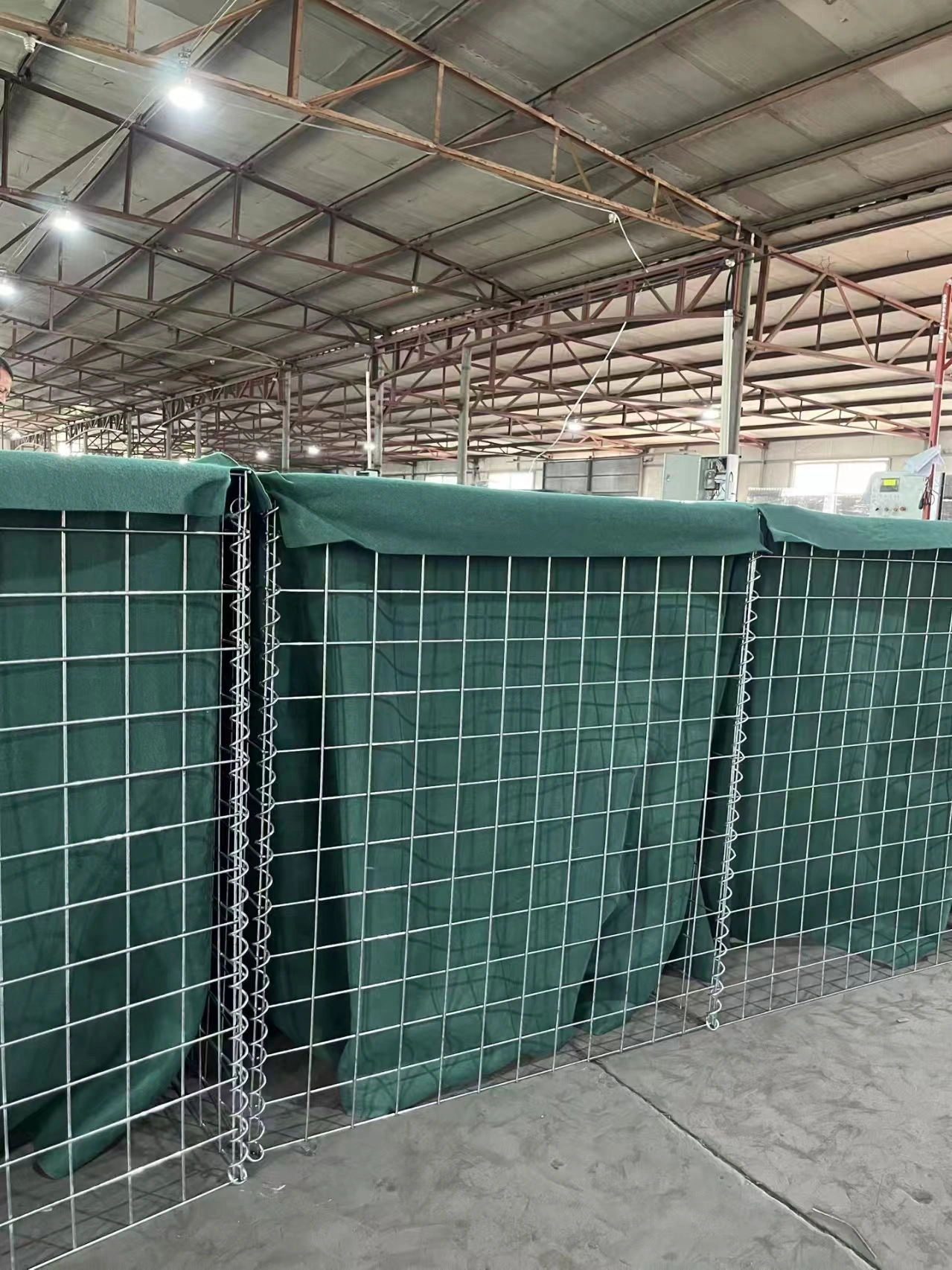
The industry has commoditized the standard galvanized panel. Any mill in Anping can weld a 3.0mm wire into a 2.4m x 1.2m frame. The real leverage for a distributor selling white label Hesco barriers comes from the customization layer – the color profile, the embossed logo on the side rail, the branded geotextile liner that carries your company’s name instead of the factory’s. North American distributors I’ve worked with routinely add 40–60% margin by selling a branded FloodGuard or QuickBerm line, even though the underlying mesh is identical to the unbranded stock. Same tensile strength, same base metal. The differentiator is purely visual and contractual.
The math on that works because the bigger cost adder – powder coating over standard hot-dip galvanized – runs roughly $0.30 to $0.50 per square meter. That’s a 15-20% bump in your landed cost per panel. But on the retail side, it justifies a 20% higher price point easily. The construction project manager who needs color-coded barriers for lane segregation on a 40,000-panel job? They pay the premium without blinking because it saves them two weeks of spray-painting on site. The conversation stops being about FOB pricing per panel and becomes about the value of that finished, ready-to-deploy unit.
The factory capacity to execute this reliably is what separates a one-off experiment from a repeatable product line. DB Fencing runs 10 welding lines with a weekly output of 2,000 sets. But they also operate the only in-house plastic feet machine in Anping – a detail that matters because it means your color-matched base doesn’t come from a third party who treats color tolerance as a suggestion. That vertical control over the injection-molded components is the last 10% most sourcing guides miss. A competitor can match your mesh spec. They can match your galvanizing thickness. But if the feet arrive in a slightly different shade because they’re outsourced to a separate shop floor, your brand’s visual consistency breaks. The professional distributor checks for that before the contract is signed, not after the container arrives.
Why Customization Matters for Distributor Resale Margins
Branded Hesco barriers command 40–60% higher margins than generic commodity units.
When you sell Hesco barriers as a generic product, the buyer compares you to every other supplier on price per panel. The margin shrinks to single digits. But apply your own brand — a logo on the side rail, a custom RAL color, your company name printed on the geotextile liner — and suddenly the conversation shifts. You’re not a middleman moving boxes; you’re the source of a proprietary flood control solution. Distributors in North America have launched lines like ‘FloodGuard’ or ‘QuickBerm’ using the exact same high-strength galvanized mesh they could buy unbranded. The difference? They charge 40 to 60 percent more at retail, and construction managers or event buyers pay it because they trust the brand name and consistency.
-
- Cost adder vs margin gain: Powder coating to a specific RAL color adds $0.30–0.50 per sqm over standard hot-dip galvanized finish. That same color change lets distributors lift retail price by 20% — a net margin swing that more than covers the coating cost. The base mesh is identical to unbranded stock.
- Retail-ready packaging: Unbranded barriers arrive in plain shrink wrap. Add custom pallet labels, barcode stickers, and a printed liner with your warnings and logo, and the product becomes shelf-ready for your dealer network. You skip repackaging labor and control the end-customer experience. A single barcode sticker costs under $0.02 per unit but prevents pricing erosion from online comparison shopping.
OEM Customization Options Available
Powder coating adds $0.30–0.50 per sqm but lifts retail margin by 20%.
Most distributors start with finish selection because it sets the price floor and the brand story. Hot-dip galvanized (>42 microns) is the workhorse – it passes AS 4687 salt spray tests and costs roughly $0.30–0.50 less per square meter than powder coating. But if your target market is municipal flood control or premium construction, RAL powder coating in a custom color turns your white-label Hesco barrier into a branded product that commands a 20% higher shelf price. DB Fencing uses the same high-strength galvanized mesh core regardless of finish – no downgrade on the OEM run.
Logo embossing on the side rail or directly into the mesh panel is the most cost-effective way to claim ownership. Site supervisors spot a stamped logo faster than a printed sticker, and it survives weather and handling. That said, embossing dies add tooling cost and usually require a minimum of 1,000 panels per design. For smaller batch runs, many distributors opt for screen-printed geotextile liners instead – you can put your brand name, safety warnings, or even a QR code to installation videos right on the fabric. The ink must be UV-stable; our standard liner print holds color for 18 months of outdoor exposure without fading.
-
- Custom sizes: Non-standard heights (e.g., 1.2m or 2.4m instead of 1.8m) are common for event barriers or floodwalls. Modifying the panel height shifts the welding jig setup – lead time adds roughly 1 week and cost rises about 5% due to material waste. Always request a sample approval before full production.
- Export packaging: Standard export uses shrink-wrap per pallet. For retail-ready, we add barcode stickers and custom carton labeling. Pallet marking with your SKU numbers is included at no extra cost for orders above 200 panels. If you need fumigation certificates for wood pallets, specify at quote stage – retrofitting adds port delays.
The trap to watch for: Chinese factories sometimes switch to thinner wire (say, 3.0mm instead of 4.0mm) on OEM orders to offset powder coating costs. DB Fencing locks the material spec in the contract – same mesh gauge as our unbranded production. Ask your supplier to include caliper check photos with every container loading.
Minimum Order Quantities and Lead Times
Color MOQ: 500 panels.
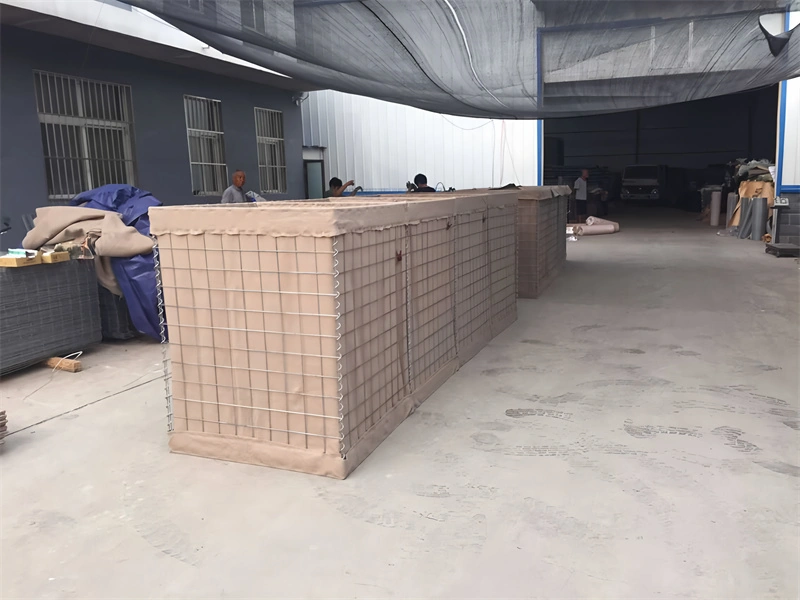
MOQ thresholds exist because custom color means shifting to powder coating line, which requires cleaning and purging between color runs. A batch below 500 panels doesn’t justify the setup cost. For logo embossing on mesh or side rails, the tooling changeover and precision alignment demand longer runs — the 1000-panel minimum covers die setup and quality checks.
-
- Custom RAL color: Minimum order 500 panels. Powder coating adds 2–3 weeks to standard lead time. For 1000+ panels, the per-unit setup fee drops significantly.
- Logo embossing: Minimum order 1000 panels. Requires custom dies and press calibration. Count on 4–6 weeks additional lead time from sample approval.
- Full custom (size + color + logo): Minimum order 1000 panels. Lead time adder: 4–6 weeks. This includes tooling, test runs, and first-article inspection.
If you’re launching a branded line of Hesco barriers for the first time, plan your initial order to hit the 1000-panel mark. Splitting into two smaller runs reduces overall lead time advantage and locks in higher per-unit costs. DB Fencing can produce up to 2,000 sets per week across 10 lines, so once the tooling is set, repeat orders flow faster.
Quality Assurance for Custom Orders
Color mismatch and liner fading are the top reasons distributors reject OEM shipments.
When you reorder your branded Hesco barriers six months later, the first thing your customers will notice is whether the RAL color matches the first batch. Distributors have lost a $200K contract because a second shipment’s powder coat was 2 shades lighter. That’s why batch-to-batch color consistency is locked down at the spectrophotometer level, not visual inspection.
-
- Color consistency: Every powder coating batch is verified against a master RAL card using a spectrophotometer with a Delta E tolerance of ≤1.0. The same pigment supplier and curing profile must be used across reorders – we document this in the batch record under ISO9001. If you switch from hot-dip galvanized to powder coat, expect a different base tone; we always produce a 1-sqm sample panel for your approval before full production.
- UV durability for printed liners: Your logo, hazard warnings, and barcodes on the geotextile liner degrade fast under direct sunlight if the ink isn’t UV-stable. We specify UV-resistant screen-printing ink rated to 500 hours in a QUV weatherometer (ASTM G154 cycle 1). That’s roughly 18 months of outdoor exposure in North America. Without this test, prints can become unreadable within 6 months – making your ‘FloodGuard’ brand look cheap on a construction site.
How DB Fencing Handles OEM Packaging for Export
Packaging that survives ocean freight and doubles as retail display.
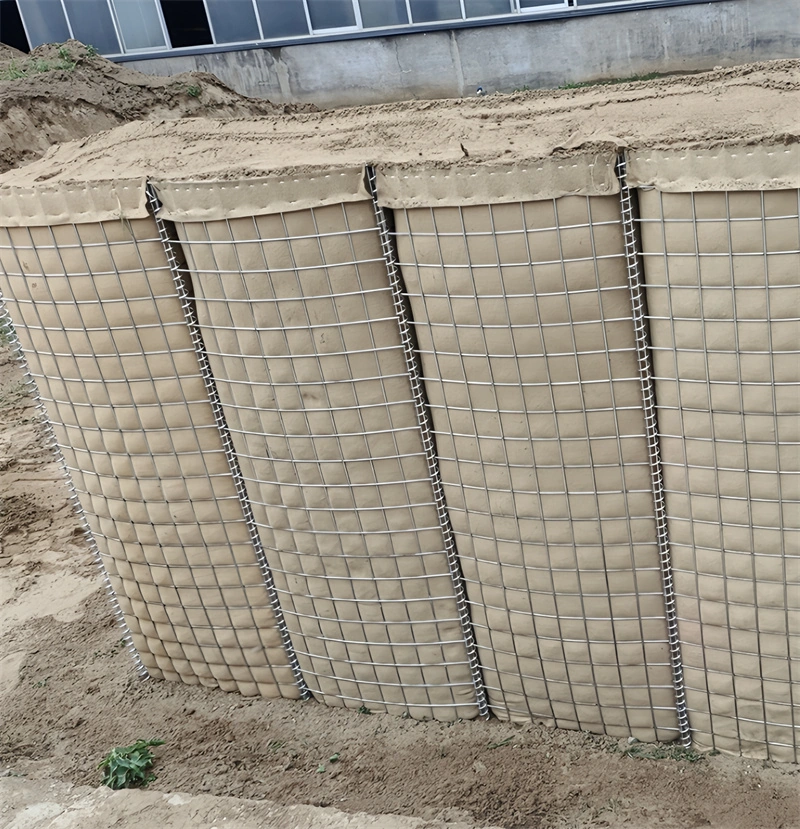
When you’re importing 500 Hesco barriers under your own brand, the packaging is the first physical touchpoint your customer sees. Too many containers open with crushed shrink wrap, faded ink on geotextile liners, and loose pallets that shift during transit. That’s not a margin problem — that’s a reputation problem. DB Fencing treatsOEM packagingas a specification, not an afterthought.
-
- Custom shrink wrap: Each barrier is wrapped in 80-micron UV-stabilized film printed with your brand name, model number, and handling instructions. Standard clear wrap is also available, but printed wrap eliminates the need for extra labels.
- Barcode and pallet labels: We apply durable adhesive labels with scannable barcodes, product codes, and country of origin. Labels are placed on both the shrink wrap and the pallet for redundancy.
- Fumigation-certified pallets: All wood pallets are ISPM-15 certified heat-treated and marked. No risk of your container being held at customs for untreated wood — a $2,000 detention fee we’ve seen distributors hit with when using unbranded suppliers.
- Retail-ready bundles: For smaller barriers sold through retail channels, we offer bundling in branded cartons with built-in carry handles. This reduces your labor for unpacking and repackaging.
- Consistent quality across runs: Our packaging spec sheet is locked at sample approval stage. The same film thickness, label placement, and pallet strapping tension is replicated across every batch — verified by our QC team with photo documentation.
Cost Impact of Customization – Typical Price Markup
Powder coating adds $0.30–$0.50 per sqm, but lets you charge 20% more at retail.
The steel mesh and galvanizing spec stay identical between OEM and unbranded runs. No one downgrades wire gauge or zinc thickness just because you slap a logo on it. That would void AS 4687 compliance and sink repurchase rates. The cost impact comes only from the visible and packaging upgrades—not the core strength.
-
- RAL powder coating vs hot-dip galvanized: Adds $0.30–$0.50/sqm. Justifies a 20% retail markup on branded flood control barriers. Match the color to your line name (e.g., ‘FloodGuard Blue’ or ‘QuickBerm Yellow’). Minimum order for a custom RAL shade is 500 panels; lead time adds 2–3 weeks.
- Logo embossing on mesh or side rails: Tooling stamp cost is ~$200 per die, then $0.10–$0.25 per panel depending on depth. MOQ for embossing is 1,000 panels. The die is reusable for reorders, so per-unit cost drops after the first batch.
- Custom geotextile liner printing: One-time screen setup $150–$300. Per-liner ink cost $0.05–$0.15. Includes brand name, hazard warnings, and your website. UV-durable inks tested for 500+ hours of sunlight exposure without fading.
- Non-standard barrier heights: Engineering and jig modification: flat fee $500–$800 per new height. Per-panel cost increase of 5–8% due to slower production setup. Rework for future orders can share the same jig, reducing the flat fee to zero.
- Retail-ready packaging (shrink wrap, barcode, pallet labels): Shrink wrap adds $0.08–$0.12 per panel; printed barcode stickers $0.02 each; custom pallet tags $0.10. Total packaging upcharge ~$0.25–$0.40 per panel. Your retail customers see ‘ready to sell’ instead of ‘needs repackaging’.
Distributors who move from commodity pricing to branded OEM lines typically see a 40–60% margin lift on the same product. The upfront MOQ of 500–1,000 panels is the biggest hurdle—but once you hit that threshold, the per-unit markup for customization rarely exceeds 12–18% of your landed cost. That spread leaves plenty of room for your reseller markup.
| Customization Option | Price Markup Estimate | Additional Lead Time | MOQ Requirement |
|---|---|---|---|
| Powder Coating (RAL Color, e.g., Green/Blue) | $0.30–$0.50 per sqm vs. hot-dip galvanized | +2–3 weeks | 500 panels |
| Logo Embossing on Mesh or Side Rails | $0.50–$1.00 per panel (die setup one-time extra) | +4–6 weeks (includes die fabrication) | 1,000 panels |
| Custom Geotextile Liner Printing (Brand Name / Warnings) | $0.20–$0.40 per sqm of liner area | +2–4 weeks (printing & curing) | 500 liners (approx. 250-500 panels) |
| Barrier Size Modifications (Non-Standard Height/Width) | 10%–20% surcharge on panel cost | +3–5 weeks (tooling adjustment) | 300 panels (subject to engineering review) |
| Retail Packaging (Shrink Wrap, Pallet Labeling, Barcode) | $1.00–$2.00 per panel | +1–2 weeks (packaging material sourcing) | 100 panels (standard pallet quantity) |
Conclusion
The math is straightforward: a distributor adding 40–60% margin on branded Hesco barriers needs a factory that treats OEM orders as a quality commitment, not a downgrade. DB Fencing uses the same hot-dipped galvanized mesh for both branded and unbranded runs. The real cost adder — powder coating at $0.30–$0.50 per square meter — translates directly into a 20% higher retail price, which most North American distributor lines justify. That ratio is your benchmark when evaluating a quote.
Now match those numbers against your own target margins. Review the product page to see how DB Fencing structures MOQ tiers for custom colors (500 panels), logo embossing (1,000 panels), and full packaging customization — then run the comparison against your current supplier terms.
Frequently Asked Questions
What is the MOQ for custom color Hesco barriers?
500 panels is the minimum for custom powder coating. For logo embossing, the MOQ increases to 1,000 panels. Confirm exact MOQ with your sales rep before ordering.
What are the lead times for custom Hesco barriers?
Custom color adds 2–3 weeks to production. Full custom work with logo and non-standard sizes takes 4–6 weeks. Plan your container booking around these lead time windows.
Can I get my logo embossed on Hesco barriers?
Yes, logo embossing is available on side rails or mesh panels. Minimum order for logo customization is 1,000 panels. Send your logo artwork in vector format for a quote.
What packaging options do you offer for OEM orders?
We offer shrink wrap, pallet labeling, and barcode stickers for export. Packaging can be tailored to your retail or wholesale requirements. Specify your packaging needs at the quotation stage.
Do your Hesco barriers meet Australian standards?
Yes, our barriers comply with Australian Standard AS 4687-2022/2007 and are ISO9001/SGS certified. Hot-dipped galvanized finish exceeds 42 microns for coastal durability. Request a compliance certificate for your project documentation.