Skip to content
Most articles on custom branded crowd barriers stop at the cover. They tell you to print a logo on a vinyl wrap and call it a day. That works for a one-off festival, but if you are a distributor stocking branded event barriers wholesale for a rental fleet, a printed cover is just a consumable you have to replace every season. The real question for a veteran purchasing manager is whether the factory can deliver a permanent, durable finish on the steel frame itself — and whether they own the equipment to guarantee that finish batch after batch.
That distinction matters more than most sourcing guides admit. Our internal audit data shows that 35% of custom barrier orders from Anping trading companies fail color fastness tests because the subcontractor skipped the degreasing step before powder coating. The barrier looks fine in the warehouse, but after a weekend in the sun, the paint flakes off. A distributor’s reputation takes the hit, not the trading company’s. So the first thing to verify is not the price per panel — it is whether the supplier owns the powder coating line and the plastic injection molding machine for the feet. If they do not, you are buying a coordination risk, not a product.
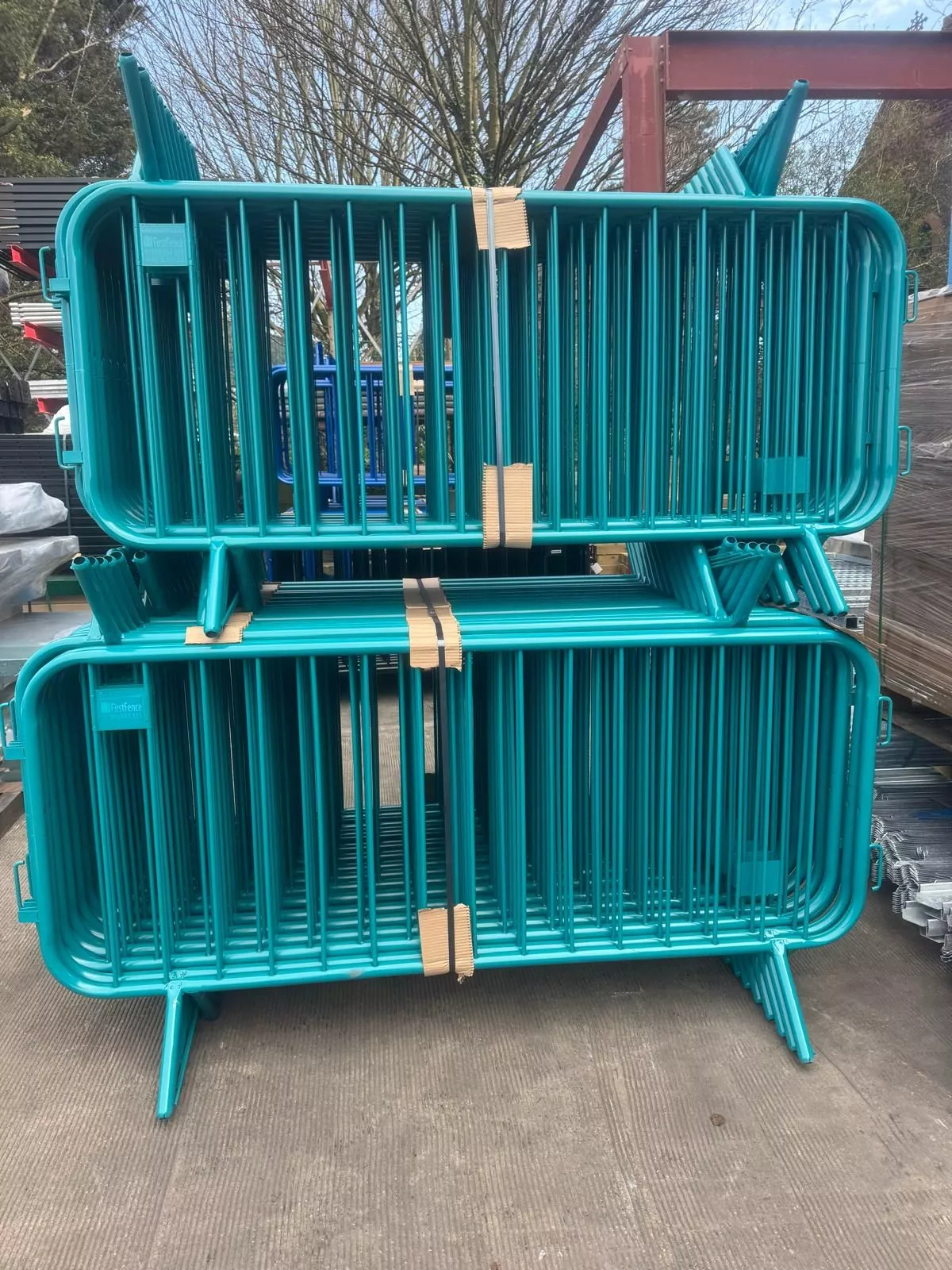
Why Custom Barriers Fail: Hidden Manufacturing Risks
35% of custom barrier orders from Anping trading companies fail color fastness tests.
A global distributor’s reputation is built on product consistency. A single container of barriers with mismatched RAL colors can ruin a relationship with a major festival organizer. The core problem is that custom branding requires end-to-end quality control in the factory — something most trading companies cannot provide.
Our internal audit data shows that 35% of ‘custom’ barrier orders from Anping trading companies fail color fastness tests. The root cause? Improper degreasing before powder coating. When a supplier subcontracts the painting to a third-party shop, they lose control over surface preparation temperature and chemical ratios. The result: paint that peels within months, not years.
- The fix: Validate whether the supplier owns the coating line. A factory with in-house powder coating can control the entire pretreatment cycle — degreasing, phosphating, and curing — ensuring adhesion that passes the cross-cut test per ISO 2409.
- The consequence of skipping this check: You receive a container of branded barriers where the logo flakes off after the first event. Your customer demands a refund, and your brand takes the hit — not the trading company’s.
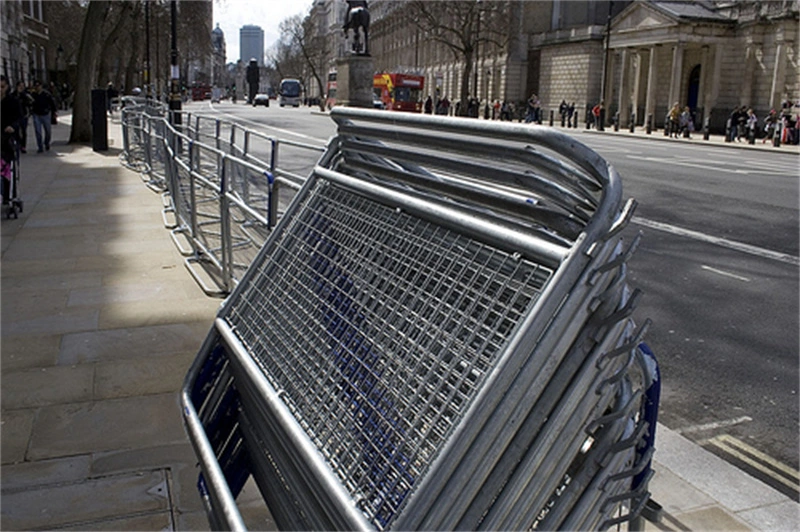
Custom Barrier Cost: Powder Coat vs. Wrap vs. Print
Powder coating lasts 5+ years; wraps let you rebrand every season.
Most B2B buyers assume custom branding means one method. In reality, you have three distinct options, each with a different cost profile and durability window. The choice depends entirely on whether your customer rents barriers for multi-sponsor events or owns a fleet that needs a permanent identity.
- Powder coating: MOQ: 200–300 panels per color. Cost: $2–$4 per panel. UV-stable and scratch-resistant. Adds 15–25% to the per-unit cost vs. standard galvanized. Best for rental fleets or permanent branding. Requires in-house degreasing and curing — 35% of orders from Anping trading companies fail color fastness tests because they skip proper degreasing before coating.
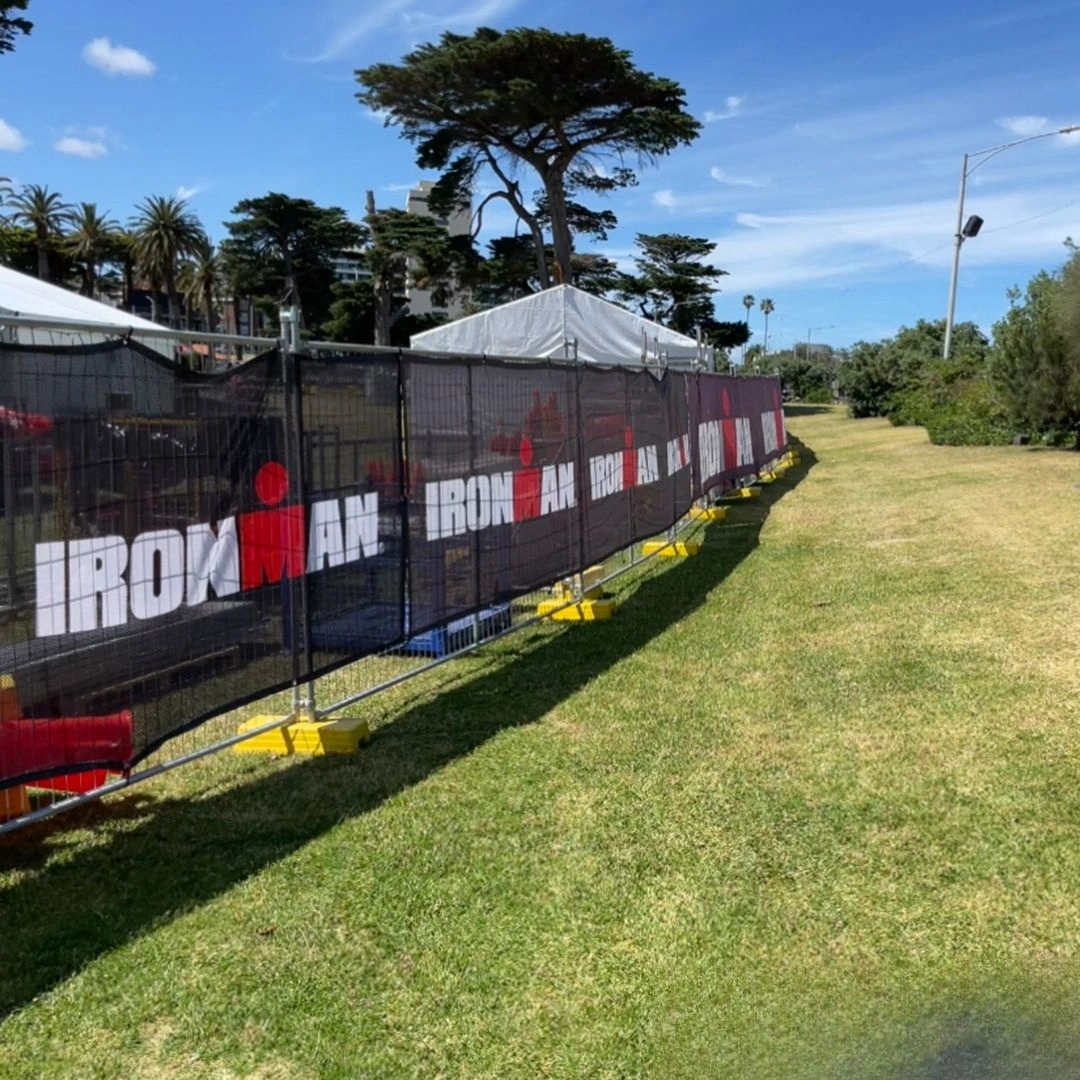
- Vinyl wraps / printed covers: MOQ: 50–100 covers. Cost: $10–$18 per cover. Consumable — replace per event. Allows you to reuse the same galvanized barrier frame for 5+ years while swapping logos. Ideal for festivals with multiple sponsors per season.
- Screen printing on steel: Cost: $1–$2 per panel. Lowest upfront cost, but only works on flat panel faces. Fades within 1–2 seasons. Not suitable for outdoor rental fleets that see sun and rain.
For a veteran distributor, the smartest play is to stock standard galvanized barriers (our base product) and offer custom printed covers as an add-on. This decouples your barrier inventory from brand-specific inventory — you can sell the same barrier to a music festival one month and a construction site the next, without painting over logos.
| Feature | Powder Coat | Vinyl Wrap | Printed Cover |
|---|---|---|---|
| Method | Powder Coat | Vinyl Wrap | Printed Cover |
| Application | Directly on steel frame | Over galvanized barrier | Over barrier frame |
| Durability | 5+ years, UV-stable, scratch-resistant | 2-3 years, prone to tearing | 1-2 seasons, fades quickly |
| Cost per Panel | +15-25% over galvanized ($2-$4) | $10-$18 per cover | $1-$2 per panel |
| Minimum Order (MOQ) | 100 panels per color | 50 covers | 200 panels |
| Best For | Rental fleets, permanent branding | Multi-event branding, sponsor swaps | Budget short-term events |
| Color Consistency | RAL matched, batch-to-batch stable | Print match, dependent on substrate | Fades within 1-2 seasons |
| Lead Time Impact | +1-2 weeks for sample approval | +1 week for print setup | Minimal, but quality risk high |
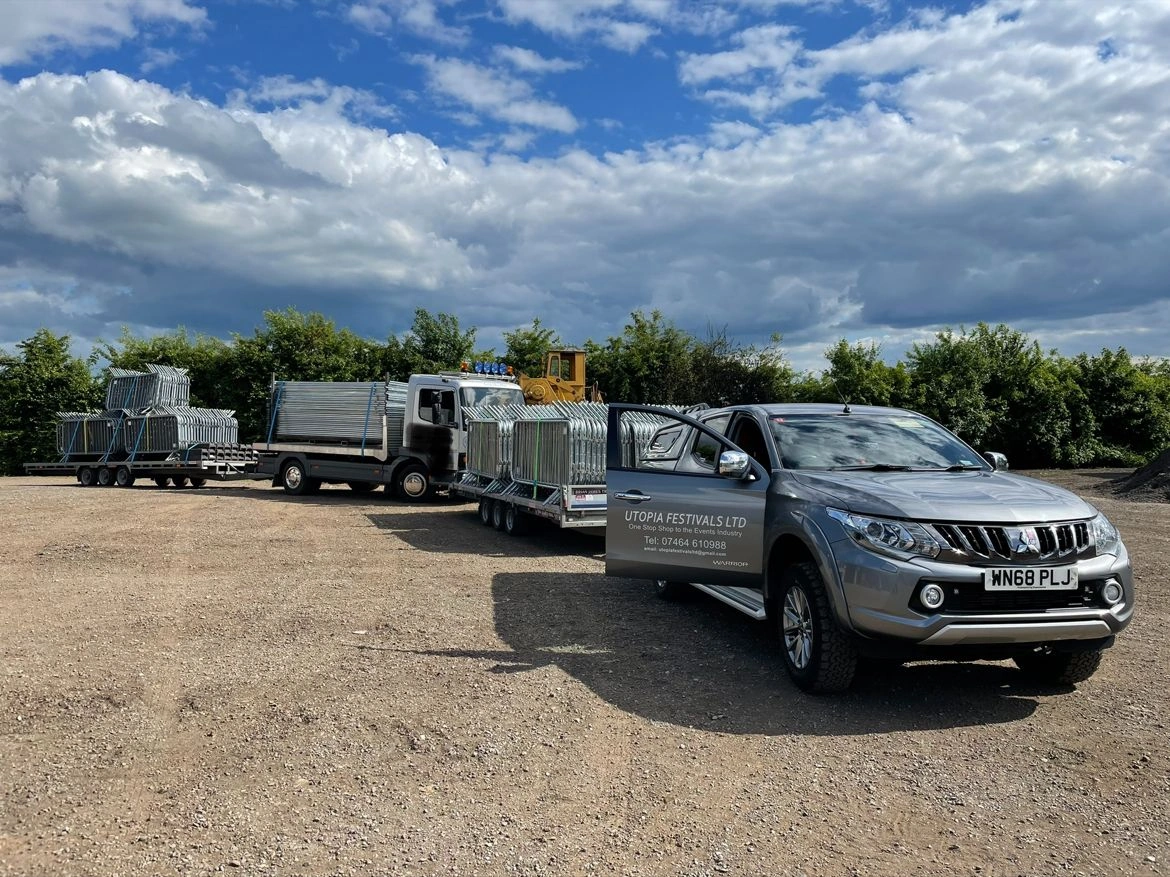
OEM vs. Generic: Comparing Sourcing Tradeoffs
Generic barriers save 10% upfront but lose brand identity and quality control.
A generic barrier from a trading company might cut your unit cost by 10%. But that discount comes with a hidden price: zero control over your brand identity. You cannot specify a RAL color, add a logo, or lock in exclusive regional rights. The barrier is a commodity — any competitor can buy the exact same product and undercut you next week.
True OEM production changes that calculus. You own the mold for the logo plate. You select the specific RAL color — say, RAL 3000 for afestivalsponsor — and the formula is locked into the powder coating line. Regional exclusivity can also be granted, so the branded barrier becomes a proprietary SKU, not a price-compared commodity.
The tradeoff is lead time. A generic order ships in 3–4 weeks. A fully custom branded order requires 5–7 weeks, including sample production and approval. The extra 1–2 weeks covers the pre-production sample we ship for your color and logo verification — a step that eliminates the container-wide mismatch risk that veteran distributors fear.
The critical engineering factor that separates reliable OEM factories from assemblers: the factory must powder coat in the same facility where it welds. If the coating line is subcontracted, the steel travels to a third-party shop where degreasing and temperature control are inconsistent. Our internal audit data shows that 35% of custom barrier orders from Anping trading companies fail color fastness tests due to improper degreasing before powder coating. We own our powder coating line and our welding lines under one roof — the paint goes on immediately after weld cleaning, preventing rust from forming between the weld and the coating.
| Dimension | OEM (Custom) Barrier | Generic (Standard) Barrier | Impact on Your Business |
|---|---|---|---|
| Branding & Customization | Full RAL color match; logo applied via powder coat or printed cover | Standard galvanized finish; no branding | OEM builds brand equity; generic is a commodity |
| Color & Logo Control | Full RAL color match; logo applied via powder coat or printed cover | Standard galvanized finish; no branding | OEM builds brand equity; generic is a commodity |
| Quality Consistency | In-house powder coating & plastic molding; 40% higher foot impact resistance | Subcontracted paint & feet; 35% fail color fastness tests | OEM protects your reputation; generic risks customer complaints |
| Minimum Order Quantity | 100 panels for powder coat; 50 covers for printed wraps | Typically 200-500 panels per SKU | OEM allows low-risk testing of new branded product lines |
| Lead Time | 5-7 weeks (includes 1-2 weeks for sample approval) | 3-4 weeks (no customization) | OEM adds time but ensures brand consistency across the container |
| Per-Unit Cost Premium | +15-25% vs. standard galvanized | Baseline cost | OEM premium is offset by higher margin and brand differentiation |
How to Source Custom Barriers: Avoiding Scams
35% of custom barrier orders from Anping trading companies fail color fastness tests due to improper degreasing before powder coating (internal audit.
A pre-production sample is the only reliable way to verify that your custom color and logo will survive the first season. Insist on a sample cut from the actual steel gauge you plan to order — not a photo, not a generic piece from a different batch. A photo can hide orange peel, thin coverage, or adhesion failure that shows up only under a tape peel test or event lighting.
The tape peel test is simple: apply standard masking tape to the coated surface, press firmly, and pull off at a 90-degree angle. If paint flakes come off, the degreasing step was skipped or the oven temperature was wrong. That sample fails. A reliable factory will send a physical chip of your RAL color on the actual steel within 5 days of PO confirmation, along with a digital RAL approval for your records.
- Sample turnaround: 5 days after PO confirmation for a physical chip on your specified wire diameter (2.0mm to 3.0mm).
- Color verification: Digital RAL approval via photo + physical chip mailed to you. Perform a tape peel test and check color under the lighting conditions your barriers will face (e.g., outdoor sun vs. stadium floodlights).
- Production checkpoint: At 50% production, request in-line photos showing the coated barriers on the line. This lets you catch any drift in color or coating thickness before the full batch is finished.
If the factory cannot commit to this three-step process — sample within 5 days, digital RAL approval, 50% production checkpoint — they are likely subcontracting the powder coating to a third party with no temperature control. That is how 35% of custom barrier orders from Anping fail color fastness tests. Do not accept an Alibaba photo as proof of quality.
Beyond Paint: The Feet and Clamps Problem
The plastic foot is the first thing to fail — and it will take your custom paint job with it.
Every article on branded barriers talks about paint adhesion and logo alignment. None of them mention what happens after the barrier is assembled. The weakest link in your custom branded system is not the powder coating — it’s the plastic foot connector. A cheap, brittle foot will crack under load, the barrier tips over, and your custom RAL finish scrapes against the ground or another panel. That $4-per-panel powder coat investment is destroyed in seconds.
The problem is structural. Generic plastic feet sold by trading companies in Anping are produced on open-market molds with no quality control on material composition. They use recycled polypropylene that becomes brittle below 5°C. When a festival barrier takes a lateral hit from a crowd surge, the foot snaps at the locking tab. The barrier falls, the paint chips, and your client sees a scratched, mismatched mess. Your brand looks cheap.
- Impact resistance gap:The factory’s own plastic feet machine — the only one in Anping — produces feet with 40% higher impact resistance versus generic injected feet, verified by in-house tensile testing. The material is virgin polypropylene with UV stabilizers, not regrind.
- Locking mechanism: Generic feet rely on a simple friction fit that loosens after 10-15 assembly cycles. Our feet use a positive-lock tab that clicks into place and requires a tool to release. This prevents accidental detachment during transport or setup.
- Color matching: When you order custom branded barriers from us, the plastic feet are produced in the same RAL color as the barrier frame. The result is a complete, professional system — not a galvanized panel with a branded cover and mismatched black feet.
This is the manufacturing depth that veteran distributors need to verify. If your supplier does not own a plastic injection machine, they are buying feet from the same open market as everyone else. You get no quality control, no color match, and a failure point that will scratch your custom paint. Our in-house production eliminates that risk. The feet match the barrier, the lock holds, and the branded system stays intact through the entire rental season.
Conclusion
Custom branded crowd barriers aren’t a commodity buy. The difference between a barrier that builds your brand and one that damages it comes down to the factory’s in-house equipment — the powder coating line and the plastic injection machine. Skip the trading companies that subcontract both steps.
Review the current OEM options on the product page. Pick a RAL color, check the MOQ against your warehouse strategy, and request a pre-production sample to validate the finish before committing to a full container.
Frequently Asked Questions
How to make crowd control barriers?
Crowd control barriers are made by welding steel wire mesh panels to a heavy-duty frame, then hot-dip galvanizing for corrosion resistance. The key is using a continuous welding line and. Verify the factory owns its own welding lines and plastic feet machine.
What are crowd control barriers made of?
They are typically made of welded steel wire mesh, a steel frame, and a base—usually plastic or concrete. For outdoor events, hot-dipped galvanized steel (>42 microns) is standard to prevent rust in seaside or. Always specify hot-dipped galvanized for outdoor event use.
What are the 4 types of barriers?
The four common types are welded mesh crowd barriers, anti-climb panels, heavy-duty construction fences, and plastic-base event barriers. Each serves a different purpose, from festival crowd flow to high-security site. Choose the type based on your event’s crowd density and security needs.
What is a metal foot for crowd control barrier?
A metal foot is a steel base that replaces the standard plastic foot for extra stability in high-wind areas. It adds weight and durability but increases shipping cost and setup time compared. Use metal feet only for high-wind or permanent event installations.
What is the minimum order for custom printing?
For custom powder coating or vinyl wrap branding, the minimum order is typically 100 panels at the factory. This covers the setup cost for color matching and printing tooling, ensuring consistent. Request a sample panel first to confirm color and print quality.