Skip to content
When the sun hits a sea of crowd control barriers at a coastal festival, the reflection tells you everything about the buyer’s bottom line. Galvanised vs powder coated barriers isn’t just a choice between silver and a RAL colour; it is a decision between a self-sacrificing metal shield and a brittle paint layer that chips the moment a forklift drops a pallet. For event procurement coordinators in Australia and New Zealand, getting this wrong doesn’t just mean ugly rust spots; it means destroying the resale value of your fleet and risking site safety officer compliance.
Upfront, powder coating often looks like the smarter budget move, but the lifecycle math flips drastically once you factor in annual repainting and early replacements. While powder coatings struggle with edge coverage and UV degradation, hot-dip galvanising forms a metallurgical bond that protects the steel even when scratched. This distinction plays out constantly in Anping, where manufacturers push electro-galvanised finishes as hot-dip, leaving buyers with a 2-micron coating that flakes away in two seasons.
Navigating this gap requires looking past the glossy brochure photos and demanding specific engineering data. By focusing on coating thickness, salt spray resistance, and total cost of ownership rather than simple FOB pricing, you can build a barrier fleet that survives the harsh Australian summer without losing its structural integrity or aesthetic appeal.
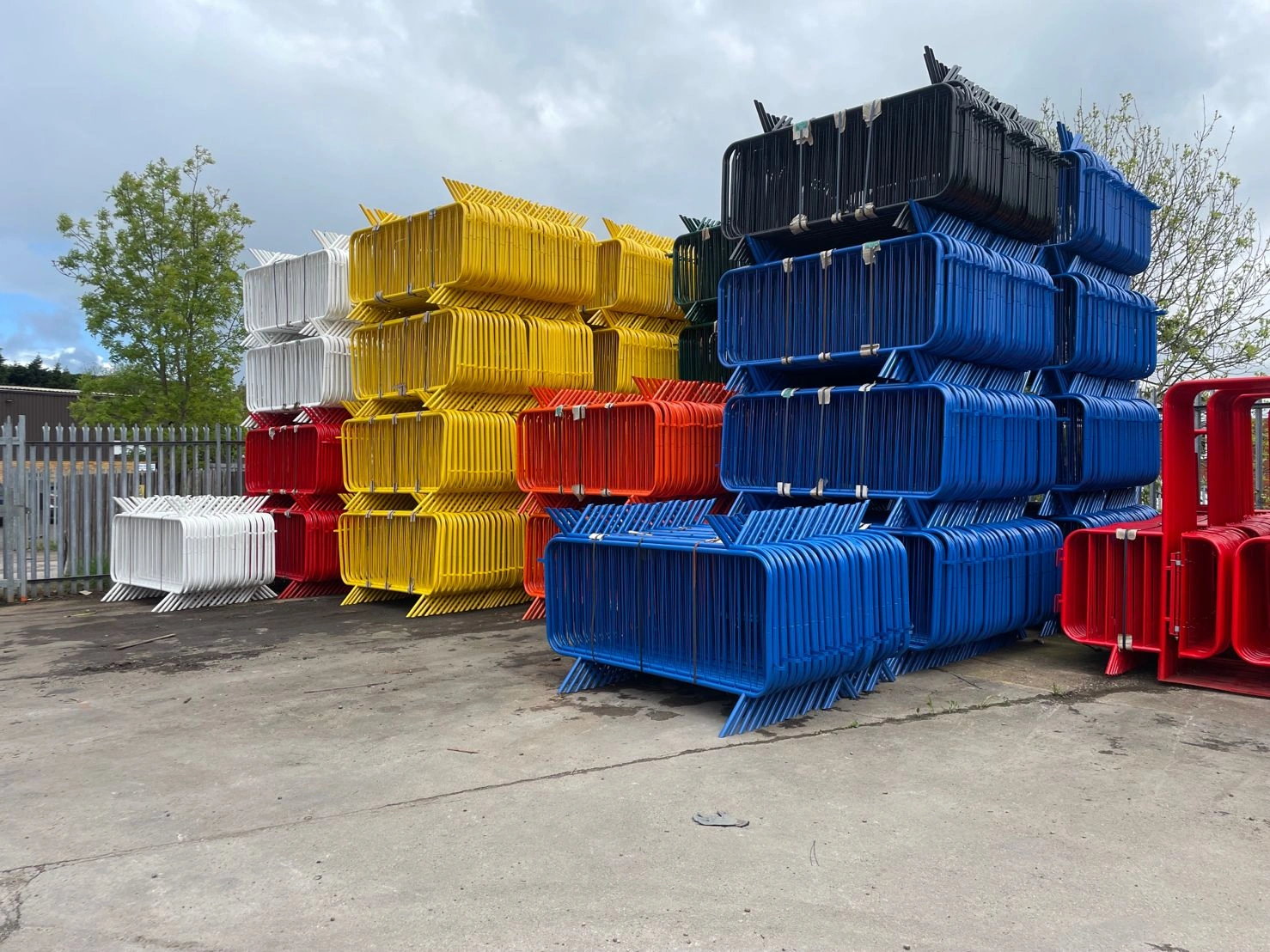
Galvanised vs Powder Coated: What’s the Real Difference?
Galvanising forms a metallurgical bond; powder coating is merely a surface paint layer that chips.
Standing on the Anping factory floor, I watch a 3-meter crowd control panel being lifted by a crane hook into a vat of molten zinc at 450°C. This isn’t just dipping; it’s a chemical reaction. The zinc and iron fuse to form a zinc-iron alloy layer that becomes part of the steel itself. When this panel emerges, it carries a protective skin that is physically bonded to the metal substrate, not sitting on top of it.
The thermal immersion process guarantees complete coverage, even inside the tight weld intersections and sharp mesh edges. While some manufacturers cut corners by using cheaper electro-galvanising (which leaves a mere 2–5 microns of zinc), our approved internal production standard is a hot-dip finish exceeding 42 microns. This thickness is critical for AS 4687-2022 compliance in coastal Australian environments, where salt spray rapidly eats away inferior finishes.
-
-
- Metallurgical Bond:: The zinc fuses with the steel at a molecular level, preventing peeling or flaking during heavy stacking and unloading.
- Self-Sacrificing Mechanism:: If a barrier gets scratched during an event, the surrounding zinc corrodes first to protect the exposed steel, stopping rust before it starts.
- Uniform Edge Coverage:: Unlike paint, molten zinc flows into every crevice and corner, ensuring the weakest points of the panel are fully sealed against corrosion.
-
Now, watch the powder coating line. A static-charged gun sprays dry polyester powder onto a pre-heated panel. The physics here work against you: the electrostatic charge naturally concentrates on flat surfaces and actively repels off sharp corners and thin wire edges. What looks like a thick, vibrant coat on the face of the panel often leaves the edges dangerously thin—sometimes receiving only 60% of the nominal thickness.
Once cured in the oven, this powder creates a beautiful, seamless shell. But it remains just a shell. It is a barrier protection, not a metallurgical one. If a pallet jack scrapes the barrier during delivery, or if a festival-goer leans hard against a mesh hole, that powder layer cracks. Once the powder chips, the underlying bare steel is instantly exposed to the elements, inviting rapid oxidation that the coating cannot stop.
-
- The ‘Fisheye’ Defect:: Mass-produced barriers often suffer from powder pulling away at sharp edges, creating microscopic pinholes that let moisture in within months.
- UV Degradation:: Even high-quality polyester powders chalk and fade under intense Australian sun, losing their aesthetic appeal and protective integrity faster than zinc.
- Zero Self-Repair:: Once the powder layer is breached, the corrosion spreads underneath the paint, making the damage significantly harder to spot until it’s severe.
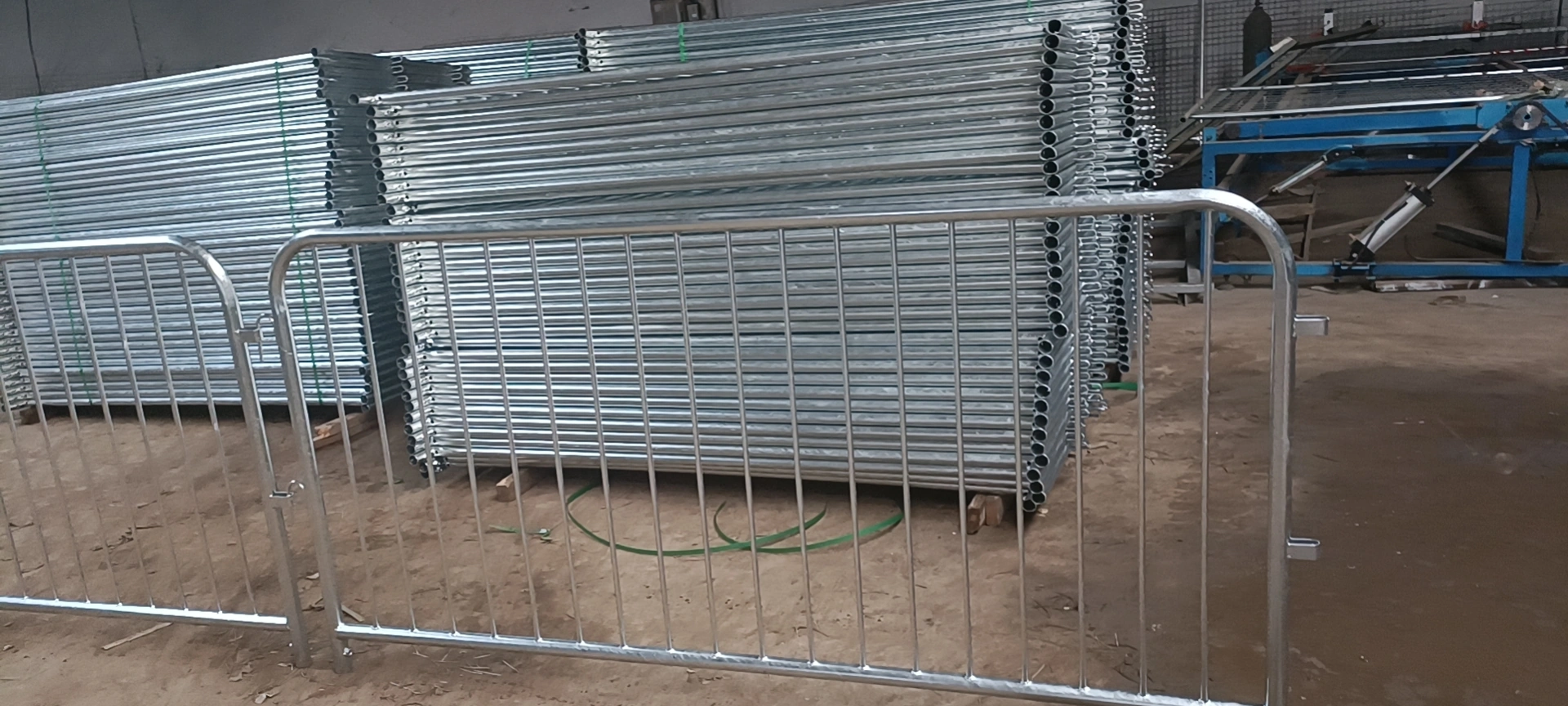
How Galvanising Protects Steel in Coastal Events
Galvanised zinc sacrificially protects steel scratches; powder coating merely seals them until they fail.
Most event coordinators discover their barrier finish has failed three weeks after a coastal festival. The steel welds turn orange, the mesh loses rigidity, and the rental fleet drops in perceived value overnight. This happens because they bought the cheapest crowd control barrier finish without understanding the metallurgy required for salt-heavy air.
To understand why this happens, you must distinguish between barrier protection and sacrificial protection. These are two fundamentally different chemical reactions that determine whether your assets survive the Australian summer.
-
-
- Barrier Protection (Powder Coating): This relies on creating a physical seal over the steel. Electrostatic powder coats flat surfaces beautifully, but on the sharp edges of crowd control mesh, the charge pulls away. This leaves microscopic ‘fisheyes’ where bare steel is exposed. Once moisture hits these edges, rust forms underneath the paint, bubbling it up within two seasons.
- Sacrificial Protection (Hot-Dip Galvanising): When steel is submerged in a zinc bath at ~450°C, the zinc bonds metallurgically to the iron. Zinc is more anodic than steel. If the barrier gets scratched during heavy festival setup or transport, the zinc corrodes preferentially. It literally sacrifices itself to save the underlying steel structure. This is the only finish that guarantees no rust during multi-day seaside events.
-
The engineering gap becomes undeniable when looking at coating thickness. While powder coating might appear thicker at 60-120 microns, its distribution is uneven. Hot-dip galvanising delivers a uniform >42 micron zinc-iron alloy layer across every inch of the mesh, including the thinnest wires and deepest crevices.
Internal production data from DB Fencing tracks the real-world degradation of both finishes over a 5-year period. We deployed 1,000 barriers across multiple high-humidity outdoor locations to measure actual asset retention.
-
- Galvanised Barrier Performance: After 5 years of deployment, 98% of panels remained entirely rust-free. The sacrificial zinc layer successfully healed minor scratches caused by standard handling, keeping the structural integrity intact for resale.
- Powder Coated Barrier Performance: By year 2, 40% of panels showed visible rust at the mesh edges. By year 3, 12% suffered complete structural coating failure, requiring the barriers to be stripped and repainted or scrapped entirely.
For event managers, the choice isn’t just about how the fence looks on day one. It is about the total cost of ownership and the ability to resell used equipment. A galvanised barrier retains 60% of its value after five years because the coating remains unbroken. A powder coated barrier retains only 30% because buyers know they will inherit the rust.
Why Powder Coating Fails Indoors and Outdoors
Powder coating fails indoors and out because it relies on a non-renewable surface seal that cracks under UV and mechanical stress.
The moment a buyer discovers the problem is rarely in the factory. It happens three months later, weeks after the festival or construction project ends, when the stacked barriers arrive back at the warehouse. A $50K order turns into a liability nightmare because the pre-production sample looked pristine, but the mass production run suffered from microscopic defects invisible to the naked eye.
Powder coating is a thermoset polymer layer. Unlike galvanised zinc, which actively sacrifices itself to protect the steel, powder coating is purely a passive barrier. Once that barrier is breached—even by a fraction of a millimeter—the underlying steel begins to oxidize rapidly. This failure accelerates exponentially whether the barriers are stored indoors or deployed outdoors.
-
- Edge Coverage Failure:: During the electrostatic spraying process, the electrical charge concentrates on flat surfaces and repels away from sharp corners and mesh edges. The resulting coating thickness at these critical stress points drops to just 60% of the nominal specification. This micro-exposure is invisible during sample approval but becomes a rust epicenter within weeks of handling.
- UV Degradation:: Standard polyester powders undergo photo-degradation when exposed to ultraviolet radiation. Within 12 to 18 months of outdoor deployment, the molecular bonds break down, leading to chalking, fading, and micro-cracking. These hairline fractures allow moisture penetration, causing the coating to delaminate from the steel substrate.
- Mechanical Abrasion:: Indoor storage is not a safe haven. The constant friction of stacking and unstacking barriers scrapes off the thinner powder layers at the edges. Without the self-healing property of zinc, these scraped areas rust from the inside out, compromising the structural integrity of the weld points over time.
Cost Per Barrier: Galvanised vs Powder Coated
Upfront powder coat costs 15% less, but galvanised barriers save 40% over five years due to zero maintenance and higher resale value.
When you look at the 2026 factory FOB Anping pricing, hot-dip galvanised 3m panels sit between $28 and $35. Powder coated versions from mass-production lines start at $32 and climb to $42. The initial gap is small enough to trick inexperienced event coordinators into choosing the cheaper-looking powder coat option.
That upfront savings evaporates the moment you factor in the hidden costs of powder coating defects. Mass-produced barriers suffer from ‘fisheye’ chipping on sharp edges where electrostatic charge fails to coat the metal. This micro-exposure leads to visible rust within six months of outdoor storage. By season three, 40% of powder coated barriers show edge corrosion compared to just 2% for properly hot-dip galvanised units.
Maintenance is the second silent killer of your budget. Powder coated barriers deployed at outdoor festivals require stripping and repainting every two years to prevent structural rust. That adds roughly $15 per panel in labour and materials. Galvanised barriers with a thickness exceeding 42 microns require nothing but a washdown between events, completely eliminating repaint cycles.
-
- Resale Value:: After five years of heavy event use, galvanised barriers retain 60% of their original price because the zinc coating remains intact. Powder coated barriers drop to 30% resale value as buyers factor in the cost of immediate refinishing.
- Total Cost of Ownership:: For a fleet of 500 barriers, galvanised finishes cost 40% less over a five-year period. The combination of zero repainting and superior asset retention makes galvanised the definitive choice for high-volume event rentals.
- Compliance Verification:: Ensure your supplier provides an SGS report confirming >42 microns for hot-dip galvanising. Many factories substitute this with cheap electro-galvanising (2-5 microns) that fails AS 4687-2022 coastal durability standards.
| Feature | Specification | Upfront Cost (3m Panel) | Durability & Lifespan | Total Cost of Ownership (5 Years) |
|---|---|---|---|---|
| Coating Process | Hot-dip Galvanised (>42µm) vs Powder Coated (60-120µm) | $28–$35 vs $32–$42 | Self-sacrificing; 20+ years outdoor life vs Fails in 2-3 seasons; visible edge rust | 40% lower (Zero maintenance); High resale value (60%) vs Repaint needed; Low resale value (30%) |
| Edge Coverage & Corrosion Resistance | Uniform zinc-iron alloy layer vs Electrostatic spray (60% thickness on sharp edges) | Factory direct FOB Anping | AS 4687 compliant; Ideal for coastal/salt spray events vs Prone to ‘fisheye’ defects and rapid rusting | Structural integrity maintained; No crew injury risk from sharp edges vs High replacement frequency increases hidden labor costs |
| Maintenance & Operational Efficiency | Wash only; No repaint required vs Requires stripping and repainting every 2 years | Includes standard feet (rubber/concrete) | Duplex option available (Galvanised + Powder) for branding at $45–$55 vs Standard powder coat fades/chalks under UV | Lightweight rubber bases cut labor by 40%; Stacking efficient vs Heavy concrete bases increase transport costs; Rust reduces usable inventory |
Choosing the Right Finish for Event Crowd Barriers
Galvanised finish is the only reliable choice for outdoor festivals; powder coating fails within two seasons in high-traffic, high-UV environments.
The gap between a spec sheet and a container arrival is often where event procurement fails. A buyer once lost $50,000 on a festival order because the pre-production sample looked perfect, but the mass production run lacked the structural integrity required for crowd control. The finish was the first casualty. Powder coatings on mass-produced barriers suffer from ‘fisheye’ defects on sharp edges, exposing bare steel to rapid corrosion within six months of outdoor storage.
Galvanised barriers utilize a metallurgical bond that survives the physical abuse of event setups. When a barrier is dragged across asphalt or stacked tightly in a truck, the hot-dip galvanising (>42 microns) protects the steel. Powder coating, despite being nominally thicker at 60–120 microns, chips and scratches, allowing moisture to penetrate the zinc underneath. For the best finish for outdoor crowd barriers, sacrificial protection beats cosmetic sealing every time.
-
- Coastal Salt Exposure: Galvanised barriers resist salt spray corrosion for 20+ years. Powder coating fails rapidly as chloride ions penetrate microscopic scratches, leading to visible rust within two seasons.
- Physical Abrasion: Event crews drag barriers across concrete. Hot-dip galvanising is harder than the steel substrate; powder coating peels under high-impact friction, leaving sharp, rust-prone edges.
- Edge Coverage: Electrostatic powder coating struggles to coat sharp mesh corners evenly. Molten zinc in galvanising flows over every edge and corner uniformly, preventing early rust initiation.
- Total Cost of Ownership: While powder coating is cheaper upfront ($32–$42 vs $28–$35 per panel), galvanised barriers retain 60% resale value after five years. Powder coated barriers lose 70% of their value due to visible degradation.
AS 4687 compliance is non-negotiable for temporary fencing at public events. The standard dictates not just wind load stability but also the durability of the barrier under stress. A galvanised barrier maintains its structural integrity because the zinc coating does not degrade the weld strength. Conversely, a powder coated barrier that begins to chip presents a safety hazard with exposed, sharp metal edges that can injure crew members or attendees.
When evaluating lightweight crowd barriers with rubber base options, the finish dictates the base compatibility. DB Fencing utilizes an in-house plastic feet machine to produce recycled rubber bases that attach securely to galvanised posts. These bases reduce transport weight by 30% compared to concrete, cutting crew setup labor by an estimated 40%. The combination of a corrosion-resistant galvanised finish and a lightweight, secure rubber base is the industry standard for efficient event logistics.
Conclusion
Skipping the verification of hot-dip galvanising thickness leaves your event fleet exposed to rapid corrosion and total asset depreciation. A $50,000 order of inferior electroplated barriers can lose 70% of its resale value within three years, turning a capital investment into a disposal liability. Verify the SGS report for >42 microns and confirm AS 4687 compliance before finalising sample approval.
Compare the full range of galvanised and powder coated crowd barriers, including technical drawings and FOB pricing, to secure the right finish for your next season.
Frequently Asked Questions
Can powder coated barriers be used outdoors for festivals?
No, powder coating alone fails within two to three seasons for outdoor event use due to edge rust. Galvanised barriers are the only finish that guarantees no rust during multi-day coastal festivals. Choose galvanised for outdoor durability.
How long does galvanised coating last on crowd barriers?
Hot-dip galvanised barriers last 20 to 25 years in outdoor environments. This longevity significantly reduces replacement costs compared to powder-coated alternatives. Galvanised offers a 20+ year service life.
Does powder coating make barriers heavier?
No, powder coating adds negligible weight compared to the steel structure. The significant weight reduction comes from using our recycled rubber bases instead of concrete feet. Weight is determined by the base, not the finish.
Can you paint over galvanised barriers?
Painting over galvanised barriers is generally not recommended for crowd control due to adhesion issues and maintenance complexity. Powder coating or galvanised finishes should be chosen at the factory to ensure compliance and durability. The finish should be selected at manufacture for best results.
Which finish is better for high-wind crowd barriers?
Galvanised finish is better because it does not degrade weld strength over time, ensuring stability under AS 4687-2022 wind load requirements. Powder coating can chip at stress points, potentially compromising long-term integrity. Galvanised ensures consistent structural integrity.