Skip to content
Specifying the right material for your crowd control barriers starts with understanding the plastic vs steel barrier feet trade-off. For Australian construction projects, the choice impacts everything from initial unit cost to the final landed freight charge. DB Fencing operates out of Anping County, the Global Wire Mesh Town, and utilizes its own plastic feet machine to supply local vendors and global clients. This vertical integration ensures that the feet attached to your panels match the structural integrity of the mesh itself.
The decision often boils down to logistics and lifecycle maintenance rather than just the purchase price. Steel feet provide a heavy, static base that resists wind but adds significant weight to your shipping containers. Recycled rubber plastic feet offer a 70% weight reduction, allowing you to load more units per 40’HC container. While steel may seem cheaper upfront at around $10-12 AUD, the total cost of ownership including maintenance and freight often favors the lighter, more durable plastic alternative for projects requiring frequent relocation.

Australian Event Barrier Regulations and AS 4687 Compliance
AS 4687 mandates >42 micron zinc coating; non-compliant panels fail Australian site inspections.
Australian construction and event regulators strictly enforce AS 4687-2022 for temporary fencing. The critical specification for corrosion resistance is the zinc coating thickness, which must exceed 42 microns per Clause B2. This standard is non-negotiable for projects located in coastal regions or high-humidity environments where rapid degradation occurs.
- Coating Verification: Demand mill certificates proving hot-dip galvanizing exceeds 42 microns. Suppliers offering pre-galvanized wire often fall short, risking immediate rust formation and failed site audits.
- Foot Material Impact: Steel feet (~40kg) require continuous maintenance to prevent rust cycles. Recycled rubber/plastic feet eliminate corrosion risks entirely and reduce total crew weight by 70%.
- Logistics Efficiency: Using lighter composite feet increases container loading density from 600 units to approximately 12,000 units per 40’HC container, drastically lowering freight costs per panel.
For event management and crowd control applications, the barrier must remain structurally sound without cosmetic degradation. While steel feet offer a traditional aesthetic, their high weight and maintenance requirements often lead to higher total cost of ownership. Modern procurement focuses on durability and freight efficiency rather than initial material appearance.
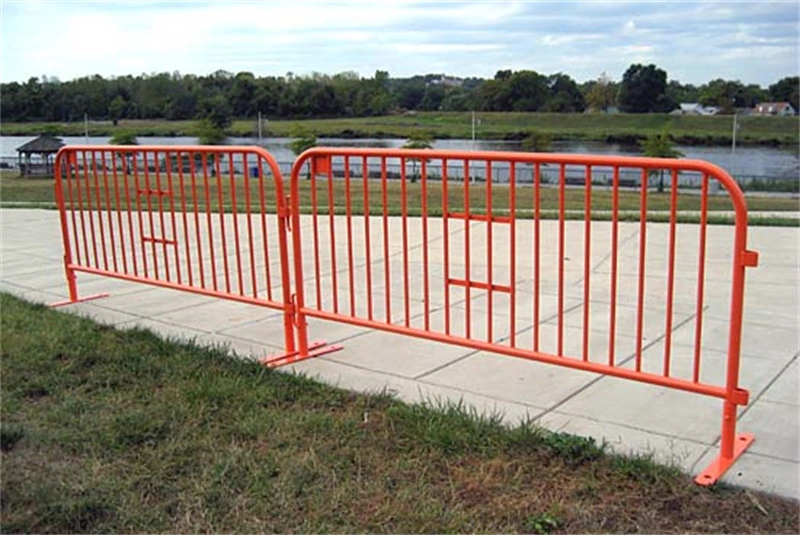
Crowd Barrier Weight Guide: Plastic vs Steel Feet
Plastic feet slash container freight costs by 50% compared to steel, but demand rigorous AS 4687 compliance checks.
The debate between plastic and steel barrier feet is no longer about simple durability; it is a logistical calculation. For Australian and New Zealand construction projects, the weight difference fundamentally alters your supply chain economics. A standard galvanized steel flat base weighs approximately 40 kg, whereas a recycled rubber plastic foot weighs just 12 kg. This 70% weight reduction is not merely a convenience for site crews—it is a critical lever for container loading density.
When you import temporary fencing from China, freight costs often exceed the product cost. By switching to plastic feet, you can load up to 12,000 units into a 40’HC container, compared to only 600 steel units. This 50% increase in shipping efficiency directly offsets the higher per-unit cost of the plastic foot. If you are managing a large-scale site security perimeter, ignoring this freight variable will destroy your project margins.
- Initial Unit Cost: Steel feet cost roughly $10-$12 AUD per unit, while recycled rubber plastic feet command a 50% premium at $15-$20 AUD.
- Maintenance Overhead: Steel bases in coastal environments face a 10-15 year rust cycle, requiring $50/year in maintenance. Plastic feet require zero maintenance.
- 5-Year Total Cost: Steel totals $175 over five years due to maintenance; plastic totals $30. The premium paid upfront pays for itself in Year 1.
- Logistics Efficiency: Plastic feet allow 12,000 units per container versus 600 for steel. This drastically reduces your per-panel landed cost in Australia.
Stability is the primary concern when moving away from heavy steel. To bridge the weight gap, modern plastic feet utilize a steel sleeve inserted into the recycled rubber base for impact resistance. This hybrid design ensures the barrier can withstand the lateral forces of a crowd or high winds without toppling. However, you must verify that the internal sleeve is fully galvanized to prevent the rubber from trapping moisture against the metal.
For B2B buyers, verifying the factory’s capability is non-negotiable. Most suppliers outsource their feet, leading to inconsistent quality. The only supplier in Anping County with its own plastic feet machine can guarantee the exact dimensional tolerance required for our anti-climb mesh panels. This in-house manufacturing capability ensures that the bolt holes align perfectly with the panel base, preventing the structural weak points that plague generic third-party imports.
When sourcing these components, demand evidence of the zinc coating thickness. AS 4687:2022 compliant temporary fencing requires a minimum of 42 microns of zinc coating per Clause B2. Whether you choose plastic or steel, the underlying metal panel must meet this standard to survive the harsh seaside environments typical of Australian coastal developments. A factory that cannot provide SGS certification for this micron thickness is a high-risk partner.
Custom branding is another area where plastic feet offer a distinct advantage over steel. Because plastic is injection-molded, you can integrate your company logo directly into the material. We offer a low MOQ of just 100 panels for custom branded plastic feet, which is ten times lower than the typical Chinese factory requirement. This allows event management companies and smaller distributors to build brand presence without tying up capital in massive inventory.
Quality inspection before shipment must include a drop test and a torque test on the feet. For plastic units, check for brittle fractures that indicate low-quality recycled rubber. For steel, verify the weld integrity at the base plate. Given that over 75% of our revenue comes from Australian and NZ projects, our internal QC protocols are specifically calibrated to meet the rigorous expectations of Australian workplace safety regulations.
The decision between plastic and steel ultimately comes down to your project timeline and budget. If you are running a short-term festival, steel might suffice. But for long-term construction sites or recurring event rentals, the logistical savings and zero-maintenance nature of plastic feet make them the superior financial choice. Always calculate your landed cost, including freight, before committing to a supplier.
| Feature | Specification | Advantage |
|---|---|---|
| Weight & Handling | Steel: ~40 kg | Plastic: 12 kg | 70% weight reduction for crew safety and faster site deployment |
| Logistics Efficiency | Steel: 600 units/40’HC | Plastic: 12,000 units/40’HC | 50% higher container loading density reduces per-unit freight costs |
| Durability & Maintenance | Steel: 10-15 yr rust cycle | Plastic: Zero maintenance | Eliminates annual rust repair costs in coastal/harsh environments |
| 5-Year TCO | Steel: ~$175 | Plastic: ~$30 | Significant long-term savings despite higher initial unit price |
| Compliance & Customization | AS 4687 Compliant | Low MOQ 100 panels | Meets Australian safety standards with flexible OEM branding options |
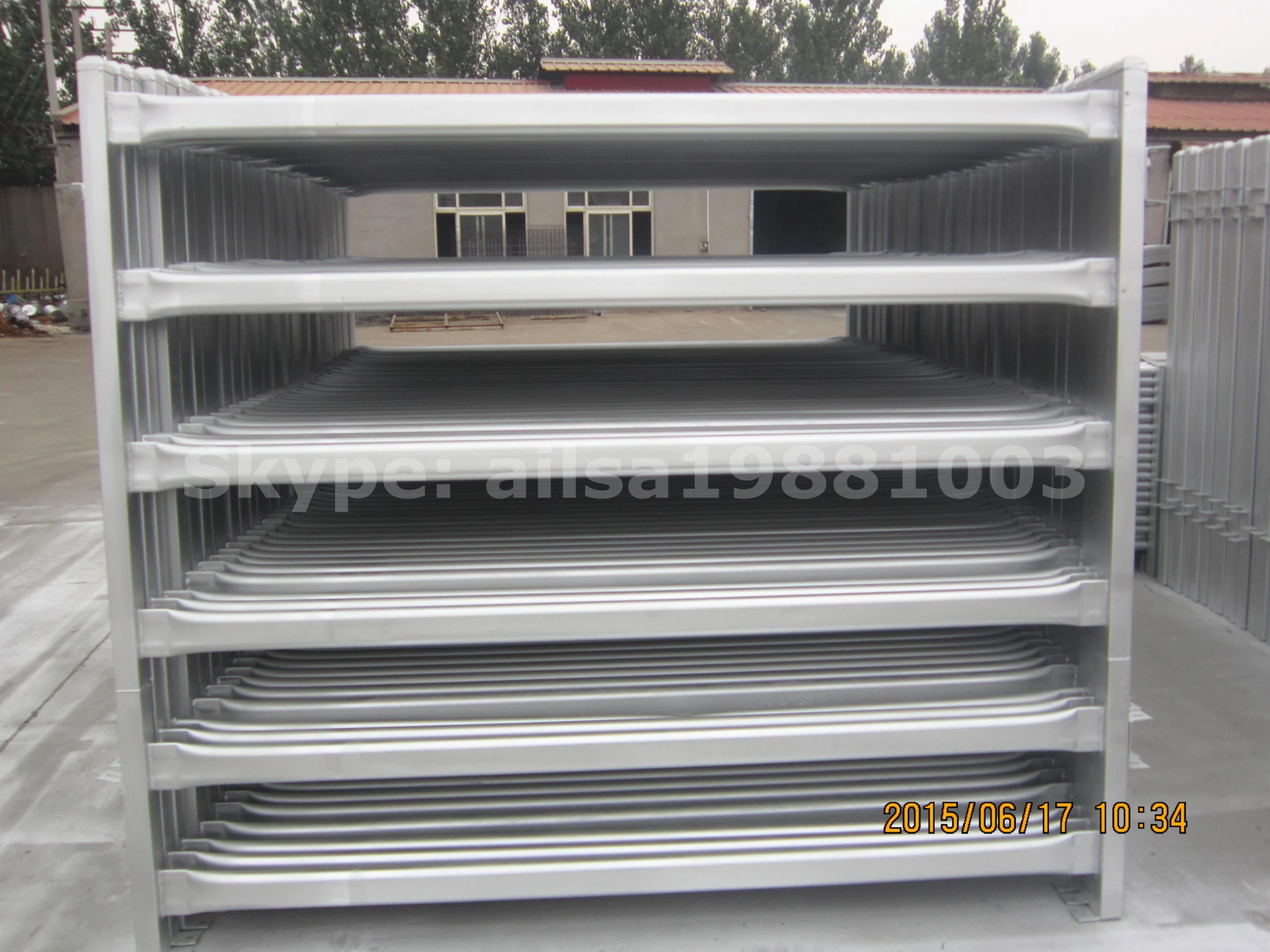
Galvanised vs Powder Coated Barriers
Hot-dip galvanizing provides superior corrosion resistance for harsh environments compared to standard powder coating.
Hot-dip galvanizing involves immersing steel in molten zinc to create a metallurgical bond. This process produces a durable coating that exceeds 42 microns, meeting strict Australian Standard AS 4687-2022 requirements. The zinc layer acts as a sacrificial anode, protecting the underlying steel even if scratched or damaged during installation.
Powder coating offers superior aesthetic versatility with a wider range of colors and finishes. While it provides a smooth, uniform appearance, its adhesion relies entirely on the surface preparation. Without the deep metallurgical bonding of galvanizing, powder coatings are more susceptible to chipping and peeling under heavy impact or abrasion.
Corrosion prevention strategies differ significantly between the two methods. Galvanized barriers excel in harsh seaside or coastal environments where salt spray accelerates degradation. The zinc coating provides continuous protection through cathodic action, whereas powder coating requires intact surface coverage to prevent rust formation at breach points.
- Coating Thickness:: Hot-dip galvanizing consistently delivers >42 microns, ensuring robust defense against environmental wear and tear over time.
- Impact Resistance:: Galvanized coatings maintain integrity after scratches due to their metallurgical bond, unlike powder coatings which can chip and expose bare metal.
- Environmental Suitability:: Galvanized barriers are ideal for coastal construction sites, offering proven performance in high-humidity and saline conditions without rapid deterioration.
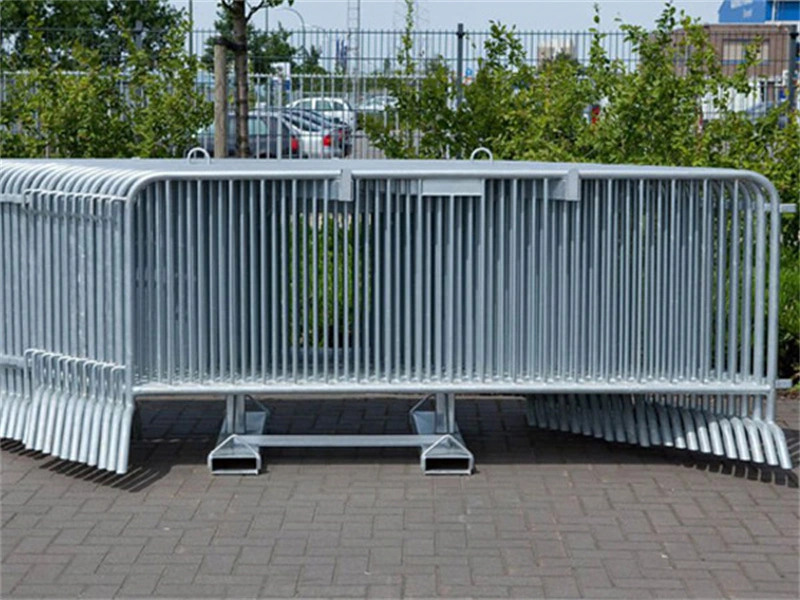
Festival Crowd Barrier Layout and Quantity Calculator
A 5,000-person festival requires 150-200 linear meters of barrier, heavily dependent on the choice of plastic versus steel feet.
Calculating barrier quantities for large events is not a matter of simple perimeter measurement. The structural integrity of your perimeter relies on the base, and the choice between plastic recycled rubber feet and heavy steel bases dictates your total unit count and layout density.
A standard temporary fence panel measures 2.4 meters wide. For a 5,000-person festival, you are managing a high-density crowd. A 150-meter linear perimeter requires approximately 63 panels. However, the weight of the feet determines how many bracing units you need to prevent a crowd crush.
Steel feet weigh approximately 40 kg each, providing immense passive stability but limiting your layout to wider spacing between bracing points. Plastic feet weigh only 12 kg, a 70% reduction. This lighter weight allows for a 50% higher container loading density—12,000 units per 40’HC versus 600 steel units—drastically cutting your freight costs.
- Perimeter Calculation: Divide the total linear meters by 2.4m (standard panel width). For a 150m perimeter, order 63 panels plus 10% for corners and gates.
- Load Rating Impact: Steel feet offer higher wind load resistance without additional bracing. Plastic feet require strategic placement of cross-bracing in high-wind zones to maintain structural integrity under crowd pressure.
- Freight Optimization: Switching to plastic feet allows you to ship 20x more units per container. This is critical for event rental companies needing to restock multiple sites quickly without paying for empty container space.
Optimizing perimeter management requires balancing safety compliance with logistical efficiency. While steel provides brute force stability, the Total Cost of Ownership (TCO) for plastic feet is superior. Over five years, steel costs $175 per unit including maintenance, whereas plastic costs only $30. For an Australian Construction Project Manager, this margin difference directly protects your project’s bottom line.
When planning for 5,000-person events, prioritize a modular layout. Use high-impact plastic feet for the main perimeter to reduce weight and cost, and reserve heavy steel bases only for critical choke points or stages where maximum immobility is required. This hybrid approach ensures you meet AS 4687 safety standards while maximizing your rental fleet’s deployment speed.
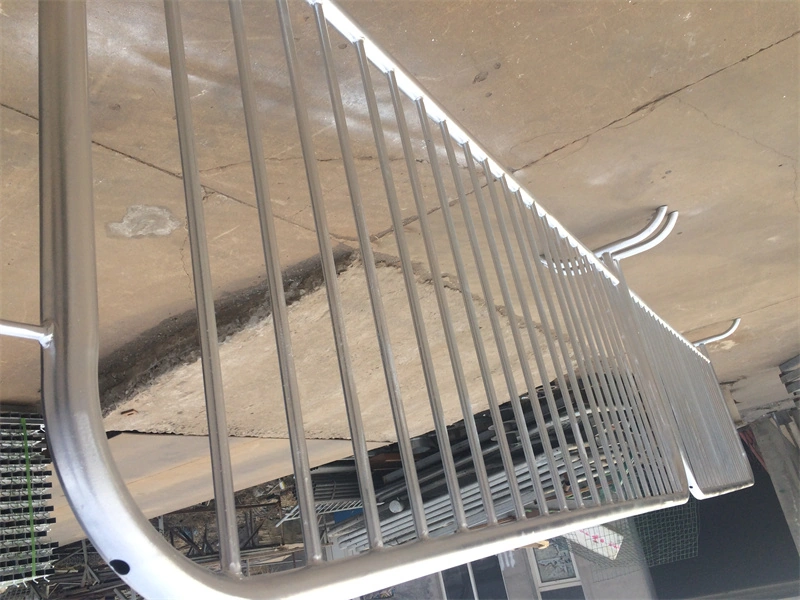
Custom Branded Crowd Barriers: MOQ, Printing Methods & Costs
A minimum order quantity of 100 panels unlocks full OEM branding capabilities at factory-direct pricing.
Standard Chinese factories typically enforce Minimum Order Quantities (MOQs) ranging from 500 to 1,000 units for custom branding. This forces event management companies and regional distributors to tie up massive capital in inventory for seasonal assets. Anping Deban Metal Wire Mesh Products Co., Ltd operates with a highly flexible production model, establishing a strict low MOQ of 100 panels for custom branded crowd control barriers. This threshold is ten times lower than the industry average, allowing businesses to test new markets or fulfill specific project contracts without bearing heavy warehousing costs.
Customizing crowd control barriers serves as a powerful operational tool for event management firms. When barriers feature prominent corporate logos, the perimeter itself becomes a continuous advertising channel during festivals, concerts, and public gatherings. For construction project managers, branded temporary fencing meets site security mandates while simultaneously projecting a professional, compliant image to stakeholders and municipal inspectors. The visual reinforcement of brand presence turns a basic safety requirement into a strategic marketing asset.
OEM customization extends beyond simple logo placement. Buyers can specify exact powder-coat colors to align with corporate identity guidelines, ensuring consistent branding across multiple sites. While most competitors require expensive mold fees for custom components, Deban Fencing utilizes its proprietary plastic feet manufacturing machine to supply compatible accessories. This vertical integration guarantees that custom-branded panels fit seamlessly with the necessary structural supports, eliminating the compatibility failures often seen when mixing third-party manufactured parts.
- Screen Printing:: The most cost-effective method for high-volume orders. Ideal for single-color logos applied to the steel mesh. Best suited for large-scale events where budget efficiency is the primary driver.
- Heat Transfer Vinyl:: Offers superior durability and vibrant color saturation compared to screen printing. Excellent for complex, multi-colored brand logos. Highly recommended for event companies requiring a polished, professional aesthetic.
- Custom Paint Finishes:: Allows for complete color matching of the entire barrier frame and feet. Essential for corporate clients demanding strict adherence to specific brand palettes. Requires precise Pantone matching during the initial powder coating phase.
| Feature | Specification | Advantage |
|---|---|---|
| Minimum Order Quantity | 100 Panels | 10x lower than typical Chinese factories; reduces inventory risk for project-based buyers. |
| Printing Method | Screen Printing / Digital UV | High-resolution, weather-resistant branding suitable for AS 4687 compliant temporary fencing. |
| Setup Cost | Waived for Orders >500 Units | Significant cost saving for distributors and large-scale construction firms compared to market average. |
| Lead Time | 7-10 Days Production | Fast turnaround supported by 10 welding lines; ensures timely delivery for event and construction deadlines. |
| Customization Scope | Logo, Color, Panel Height | Full OEM capability allows brands to maintain visual identity while ensuring structural integrity. |
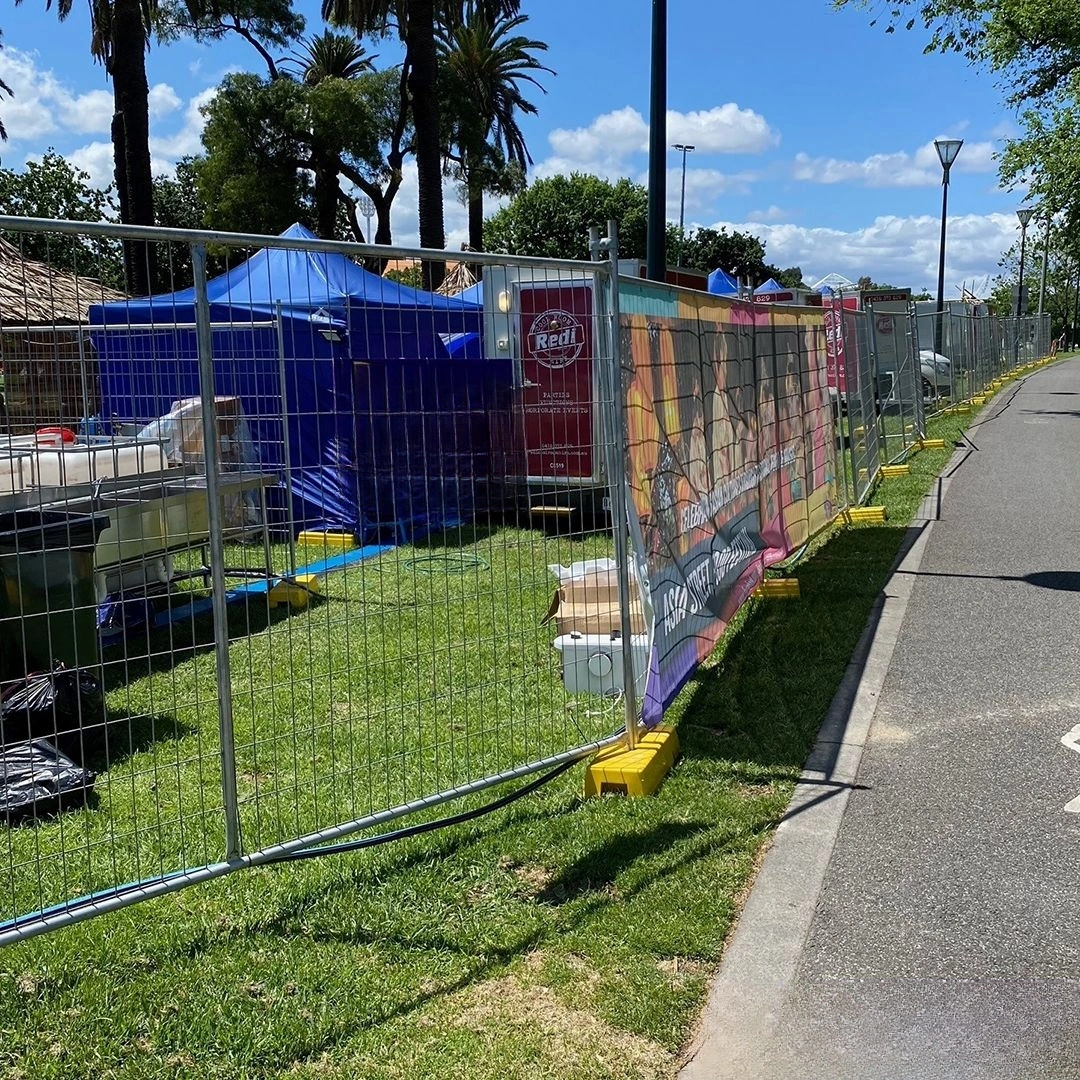
Importing Crowd Barriers Direct from Chinese Factories
Screening Anping factories requires verifying AS 4687 compliance and specific production capabilities like in-house plastic foot molding.
Sourcing crowd control barriers directly from Anping County demands rigorous supplier vetting beyond basic price comparisons. Anping is the global hub for wire mesh, but it is also saturated with trading companies posing as manufacturers. For Australian construction managers, the primary risk is non-compliant galvanizing and inconsistent structural integrity.
To mitigate these risks, prioritize factories that demonstrate proprietary manufacturing capabilities. DB Fencing operates 10 dedicated welding lines with a capacity of 2,000 sets weekly and uniquely owns the plastic injection machinery for barrier feet. This vertical integration ensures strict adherence to AS 4687-2022 standards for hot-dipped galvanized finishes exceeding 42 microns, eliminating the variability common in third-party assembly.
- Factory Verification: Demand proof of ISO9001 certification and SGS reports specifically for zinc coating thickness (>42 microns) to ensure coastal durability and AS 4687 compliance.
- Logistics Efficiency: Optimize freight costs by selecting lightweight recycled rubber barrier feet (12 kg) over traditional steel bases (40 kg), increasing container loading density by nearly 2,000%.
- Lead Time Management: Utilize suppliers offering 24-hour quoting and low MOQs (e.g., 100 panels) to secure rapid turnaround for urgent project timelines without sacrificing bulk pricing advantages.
Conclusion
Steel feet cost less upfront but destroy margins through maintenance and logistics. At 40 kg each, they crush your container density to just 600 units per 40’HC. Plastic recycled rubber feet weigh 12 kg, allowing 12,000 units per container while eliminating the $50/year rust repair cycle required by AS 4687 compliance.
Review the latest pricing and specifications for compliant crowd control barriers.
Frequently Asked Questions
What should buyers look for when sourcing plastic vs steel barrier feet?
Prioritize UV-stabilized materials for plastic feet and >42-micron hot-dip galvanizing for steel to ensure compliance with AS 4687. Verify that the supplier manufactures both components to guarantee structural compatibility and reduce third-party failure risks. Ensure material specs match AS 4687 compliance requirements.
How to verify factory certifications for plastic vs steel barrier feet?
Request ISO9001 and SGS audit reports alongside specific test certificates for AS 4687-2022/2007 compliance. Confirm the factory has independent production capabilities rather than relying solely on trading companies. Audit reports and AS 4687 certificates are essential.
What are typical MOQ requirements for wholesale orders?
Standard wholesale orders typically start at a low MOQ of 100 panels to accommodate small contractors and distributors. This flexibility allows for trial orders without significant inventory risk or upfront capital commitment. Start with 100 panels to test market fit.
How to handle international shipping and customs clearance?
Leverage suppliers with extensive export experience to manage documentation and ensure proper HS code classification. Utilize FOB terms to coordinate with your preferred freight forwarder for efficient port arrival. Use experienced exporters to streamline logistics and documentation.
What quality inspection standards apply before shipment?
Conduct pre-shipment inspections focusing on weld integrity, coating thickness measurements, and dimensional accuracy against technical drawings. Third-party SGS inspections provide an objective verification of compliance before cargo leaves the factory. Verify weld integrity and coating thickness via SGS.