Skip to content
The 2026 update to AS 4687:2022 has fundamentally changed how coastal temporary fencing is procured for Australian construction sites. The days of accepting generic “Region A” wind ratings are over. You now need site-specific calculations based on exact regional wind speeds, terrain categories, and topography to avoid compliance failures that delay project timelines. This shift separates suppliers who understand engineering from those who simply ship metal.
Most suppliers claiming their fencing is “galvanized” for coastal use are selling pre-galvanized (electro) sheet that is welded after coating. The welding heat burns off the zinc at the joints, creating uncoated corrosion hotspots that rust through in 6 to 9 months. Only hot-dip galvanizing after welding seals every cut edge, weld zone, and corner. Paying $2 to $4 more per panel upfront for proper hot-dip galvanization eliminates $15 to $25 in replacement costs per panel within 18 months in salt-spray zones.

Galvanization vs. Corrosion for Coastal Sites
Hot-dip galvanizing after welding is the only method that seals cut edges and weld zones against coastal salt spray.
Most temporary fencing sold for coastal Australia uses pre-galvanized (electro-galvanized) steel sheet welded after coating. This process burns off the zinc at the joints, creating uncoated corrosion hotspots that fail within 6 to 9 months in salt-spray zones. In contrast, hot-dip galvanizing (HDG) after welding seals every cut, weld, and corner, ensuring the fence survives the full project lifecycle.
The difference in coating thickness dictates the lifespan of the fence. Pre-galvanized steel typically has a coating of 18 to 20 microns, which provides less than one year of protection in harsh coastal environments. DB Fencing’s internal production standard uses hot-dip galvanized finishes exceeding 42 microns, meeting the AS/NZS 4680 minimum for coastal applications and providing 8 to 12 years of service life.
- Coating Thickness: HDG provides ≥42 microns per AS/NZS 4680, compared to ≤20 microns for pre-galvanized steel.
- Coastal Lifespan: HDG delivers 8–12 years of resistance to salt air, whereas pre-galvanized steel fails in under 1 year.
- Zinc Oxide Patina: HDG forms a dense zinc oxide patina that blocks oxygen and moisture. Pre-galvanized layers lack this density, leading to rapid red rust formation.
- Cost Efficiency: Paying $2–$4 more per panel upfront for proper galvanization eliminates $15–$25 replacement costs per panel within 18 months.
Importing temporary fencing to Australia requires strict adherence to HS Codes and 2026 duty regulations. Verify that your supplier provides exact regional wind speed data with each shipment, as generic ‘Region A’ ratings are no longer sufficient under AS 4687:2022. Ensure your container arrives with VCI packaging to prevent salt spray corrosion during transit.
Wind Load Engineering Under AS 4687:2022
AS 4687:2022 replaced generic ratings with mandatory site-specific AS/NZS 1170.2 wind load calculations and certified testing.
The transition from AS 4687:2007 to AS 4687:2022 fundamentally altered compliance requirements for coastal temporary fencing. The 2022 standard eliminated generic regional wind ratings, mandating site-specific calculations based on AS/NZS 1170.2 using exact regional wind speed, terrain category, and topography. Importers supplying generic ‘Region A’ data are now non-compliant; exact regional wind speed data must be supplied with each shipment.
Risk-based categorization now strictly defines Coastal A, B, and C zones, dictating the necessary engineering threshold for your fencing. A single unsecured panel in high wind can trigger a cascading collapse of 50+ panels, causing over $50k in damage and lost workdays. To prevent this, AS 4687:2022 requires mandatory stability testing reports, replacing the previous flat-base allowances with weighted or anchored bases.
- Wind Load Calculation: 2007 used generic ratings; 2022 requires site-specific AS/NZS 1170.2 calculations using regional wind speed and terrain.
- Testing Requirement: 2007 had no mandatory testing; 2022 requires a certified wind load test report for every shipment.
- Base Stability: 2007 allowed flat bases; 2022 mandates weighted or anchored bases (minimum 25kg per side for Region A).
- Certification: 2007 relied on self-declaration; 2022 requires auditable stability testing reports to prevent coastal fence collapse.
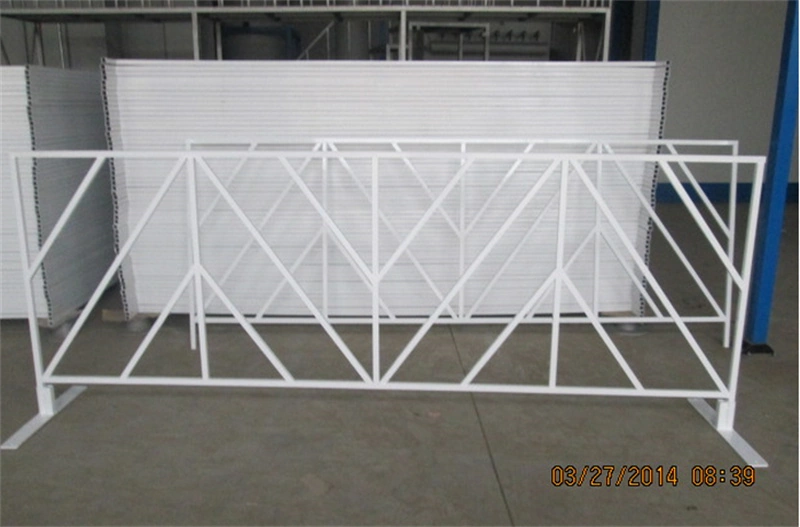
DB Fencing’s hot-dip galvanized panels are engineered to withstand 90 mph (145 km/h) gusts when paired with weighted rubber feet and proper bracing. The 4.0mm wire diameter and 75x75mm anti-climb aperture reduce wind sail effect by 20–30% compared to standard 50x200mm mesh. Adding a solid privacy screen can triple the wind load on a panel, so only wind-permeable screens rated for the specific panel should be used.
A factory audit walkthrough confirms that DB Fencing operates 10 welding lines with a capacity of 2,000 sets per week, ensuring consistent compliance. The facility is the only supplier in Anping with its own plastic feet machine, producing recycled rubber feet that are 30–40% lighter than concrete blocks and eliminate salt corrosion risks. Each container includes the exact regional wind speed data sheet required for 2022 compliance.
Base and Anchoring Systems for Sand and High Wind
Generic Region A ratings are obsolete under AS 4687:2022; you must specify site-specific wind speeds.
The foundation of a coastal temporary fence is not the panel itself, but the anchor system. In high-wind sand zones, a single unsecured panel can trigger a cascading collapse of 50+ panels, causing over $50,000 in damage and lost workdays. Under the updated AS 4687:2022 standard, generic ‘Region A’ ratings are no longer sufficient. You must use weighted bases engineered to resist the exact regional wind speed and terrain category of your specific site.
- Recycled Rubber Feet: The optimal choice for coastal sand. They are 30–40% lighter than concrete, reducing transport carbon emissions by 25%. Crucially, they do not rust or crack from salt corrosion. Certified to withstand 90 mph (145 km/h) gusts when paired with proper bracing.
- Concrete Blocks (ZND Z-Block Alternative): While marketed as superior to sandbags, concrete blocks suffer from two fatal flaws in coastal environments. First, they crack in freeze-thaw cycles. Second, they leave salt residue that actively rusts steel panels. They also add massive, unnecessary weight to your logistics chain.
- Water/Sand-Fillable Bases: A viable alternative for sandy terrain where solid footing is impossible. However, they require manual filling on-site, increasing labor hours, and the plastic housings can degrade under prolonged UV exposure and salt spray.
DB Fencing utilizes an in-house plastic feet molding machine in Anping—the only supplier in the region with this capability—to produce heavy-duty recycled rubber feet. This ensures a perfect fit for our 4.0mm wire diameter frames and eliminates the corrosion points inherent to concrete blocks.
When selecting your base, adhere strictly to the weight requirements. For Region A wind zones under AS 4687:2022, you must use a minimum of 25kg per side. Using undersized bases to save on freight costs is a direct violation of the new stability testing requirements and will result in immediate compliance failure.
Anti-Climb Mesh vs. Wind Permeability
Anti-climb mesh cuts wind load 20–30% vs standard 50x200mm mesh, but solid screens triple it.
The mesh aperture directly dictates the wind sail effect on a 2.4m x 2.1m temporary fence panel. Standard 50x200mm mesh offers minimal resistance to lateral wind forces, creating a high sail effect that requires heavier bracing and increases the risk of panel overturning in gusts exceeding 90 mph (145 km/h). While this aperture is common for basic site security, it is suboptimal for coastal zones where wind load is the primary failure mode.
Anti-climb mesh apertures, specifically 25x50mm or 75x75mm, physically reduce the surface area exposed to the wind. This reduction decreases the total wind load acting on the panel by 20–30% compared to standard mesh. For a project manager procuring temporary fence for high wind areas, this structural advantage means you can maintain robust site security without escalating the base weight requirements or bracing frequency.
However, adding a solid privacy or shade cloth to an anti-climb panel is a critical engineering error. A solid cloth acts as a solid wall, instantly tripling the wind load on the panel structure. This dramatically increases the overturning moment, frequently overwhelming the 25kg base weight per side mandated by AS 4687:2022 for Region A wind zones. If privacy is required, you must use wind-permeable screens rated for the specific panel dimensions to maintain the 20–30% wind load reduction.
- Aperture Geometry: 75x75mm anti-climb mesh (e.g., DB Fencing Commercial 3300mm) balances anti-climb security with 20–30% lower wind load vs 50x200mm standard mesh.
- Screen Impact: Solid shade cloth triples wind load. Only deploy wind-permeable privacy screens on anti-climb frames to prevent cascading collapse.
- Compliance Gap: Many US-based competitors sell wind-permeable screens but lack Australian AS 4687 compliance data. DB Fencing supplies AS 4687-tested anti-climb panels with verified wind resistance for coastal salt air environments.
Coastal Transportation and Storage Best Practices
Salt spray during transit and humid storage are the two primary triggers for flash rust on HDG panels.
Coastal temporary fencing faces a dual corrosion threat before it even reaches the site. During container transit, salt spray penetrates micro-gaps, while high-humidity warehouses accelerate zinc oxidation. Without Vapor Corrosion Inhibitor (VCI) packaging, you risk flash rust on weld zones and cut edges within 48 hours of uncrating.
To prevent this, mandate VCI-encased packaging from your supplier. VCI films release a protective molecular layer that neutralizes moisture and chloride ions, preserving the ≥42-micron hot-dip galvanized (HDG) coating. This is non-negotiable for anti-rust temporary fence coastal Australia projects where supply chain delays are common.
Upon arrival, do not rely on visual inspection alone. Conduct a strict 5-point coastal arrival inspection to verify AS 4687 compliance and prevent costly rejections. Any failure in these areas compromises the structural integrity of the temporary fence bracing high wind systems.
- Weld Zinc Coverage: Inspect every weld joint for complete zinc encapsulation. Exposed steel at welds is the primary failure point for rust in salt air environments.
- Cut Edge Sealing: Verify that all cut edges on the 2.4m x 2.1m panels are fully coated. Unsealed edges allow rapid wicking of saltwater into the steel matrix.
- Clamp Galvanization: Check coupling clamps for ≥42-micron HDG thickness. These high-friction points often suffer from coating thinning during shipping.
- Foot Condition: Inspect recycled rubber feet for cracks or salt corrosion. Damaged feet compromise the 25kg base weight required for Region A wind zones.
- Label Compliance: Ensure each panel is labeled with the specific AS 4687:2022 wind load calculation data. Generic ‘Region A’ labels are non-compliant with 2026 standards.
For project managers evaluating cost versus safety, understanding the application context is critical. While temporary fencing is standard for construction, crowd control barriers serve a different safety and cost profile for events. Refer to our dedicated comparison on Temporary Fencing vs Crowd Control Barriers for Events to align your procurement with the correct safety standard.
Conclusion
Securing a coastal site requires more than just standard fencing; it demands hot-dip galvanized steel with a ≥42 micron coating to resist salt corrosion and panels engineered to AS 4687:2022 wind load specifications. Skipping these specs risks cascading panel collapses and compliance fines that far exceed the initial savings on pre-galvanized alternatives.
Review the full range of AS 4687-compliant temporary fencing options, including heavy-duty welded panels and recycled rubber base systems, to ensure your site remains secure and compliant.
Frequently Asked Questions
What is the best fencing in a coastal environment with a lot of wind to keep dogs in?
Use hot-dip galvanized temporary fencing panels with anti-climb mesh and weighted recycled rubber feet. This combination meets AS 4687:2022 wind load requirements while preventing corrosion. Ensure the mesh height and base weight are sized for your specific wind zone and pet size.
What are the components of temporary fencing?
Standard temporary fencing consists of welded wire mesh panels, steel posts, and interlocking clamps secured by weighted bases like plastic feet or Z-blocks. Additional bracing or anti-climb mesh. Verify that all components are compatible with your chosen base system for stable installation.
What is the best option for temporary fencing?
The best option is hot-dip galvanized steel fencing that complies with AS 4687:2022 and ISO9001 standards. This ensures durability against corrosion and proven structural integrity for construction, events. Select a supplier with verified export experience to guarantee consistent quality and compliance documentation.
How does a frame structure resist wind and heavy loads?
Frame structures resist wind loads through rigid welded joints and strategic bracing that distribute force across the panel. When paired with weighted bases or anchors, the system. Always request certified wind load test reports to validate the structural performance of the frame.
What is the best fence for coastal areas?
The best fence for coastal areas is hot-dip galvanized steel with a coating thickness of at least 42 microns. This finish provides 8–12 years of protection against salt-spray. Confirm the galvanization method and coating thickness with your supplier before placing bulk orders.