Skip to content
inspect crowd control barriers china is the first checkpoint buyers should lock before they approve a supplier, budget, or production slot. You’ve sourced crowd control barriers from China before. Maybe you got lucky with a solid batch. Or maybe you’re staring at photos of rust spots on a container that just landed, wondering how to explain that to your biggest event client. The difference between those two outcomes comes down to one thing: knowing exactly what to inspect before the shipment leaves the factory. Learning how to inspect crowd control barriers from Chinese factories isn’t about distrusting suppliers — it’s about protecting the margin and reputation you’ve spent years building.
Anping County produces a massive volume of these barriers. But not every factory in the “Global Wire Mesh Town” operates the same way. Some run ten welding lines with in-house plastic feet molding. Others are trading desks that subcontract the actual work to whoever has open capacity this week. That difference matters when you’re placing a bulk order for custom-branded barriers. A trading company can’t control weld consistency across three different subcontractors. A real manufacturer can — and they can show you the production line on a video call.
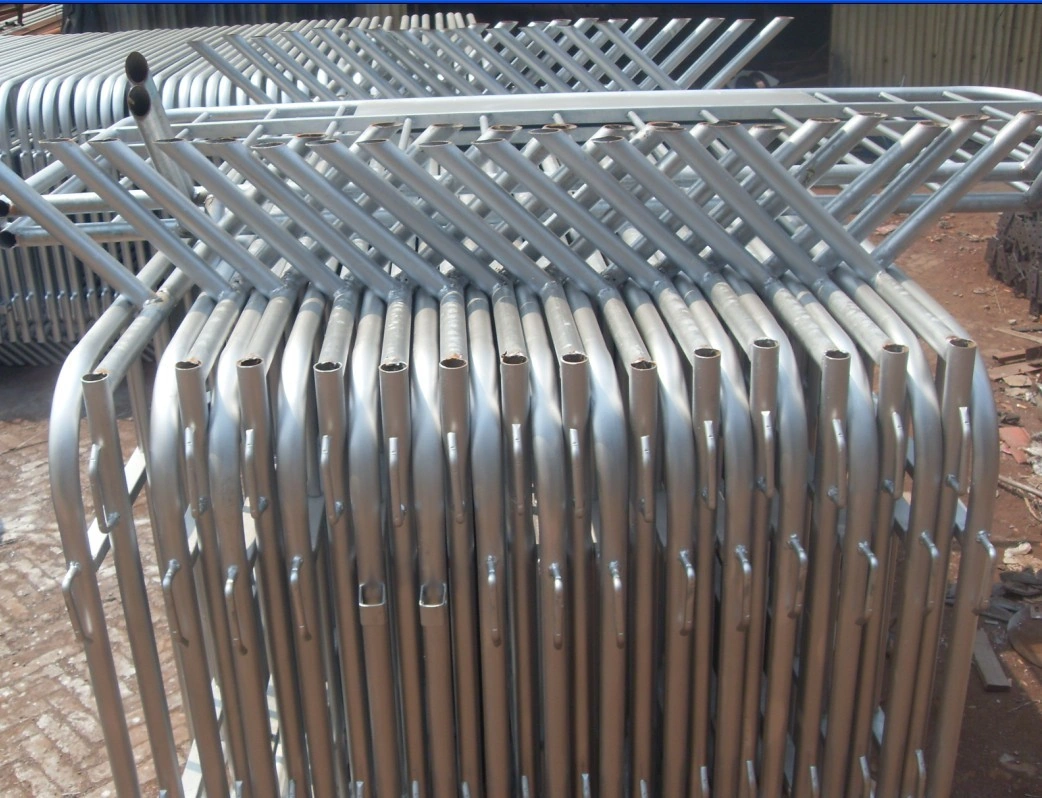
Verify Steel Tube Thickness and Grade
1.0mm is the bare minimum.
Most Chinese crowd control barriers use Q235 steel. The tensile strength range (370–500 MPa) and yield point (235 MPa) are standard across the industry. The real variable that separates a barrier that survives a season from one that buckles under a crowd surge is the tube wall thickness.
- Wall thickness tolerance: A supplier quoting 1.5mm may ship material that measures 1.35mm at the thinnest point. That 10% reduction drops load capacity disproportionately. Always request a caliper measurement at three points along the tube — both ends and the middle.
- 1.0mm floor: This is the absolute minimum for a static barrier used indoors or in low-traffic zones. At this thickness, the frame will deform if leaned on by multiple people. For any outdoor event or construction perimeter, 1.0mm is a warranty risk.
- 1.5mm+ preferred: For distributors supplying construction sites or high-density events, 1.5mm wall thickness is the entry point. It resists bending under crowd pressure and survives repeated forklift handling. The added steel cost is roughly $0.30–$0.50 per panel — negligible compared to a return or reputation hit.
When you verify Q235 steel tube thickness crowd barriers, bring a digital caliper and test random panels from the production batch. If the supplier hesitates or offers excuses, that’s your red flag. Real manufacturers keep a caliper on the shop floor.
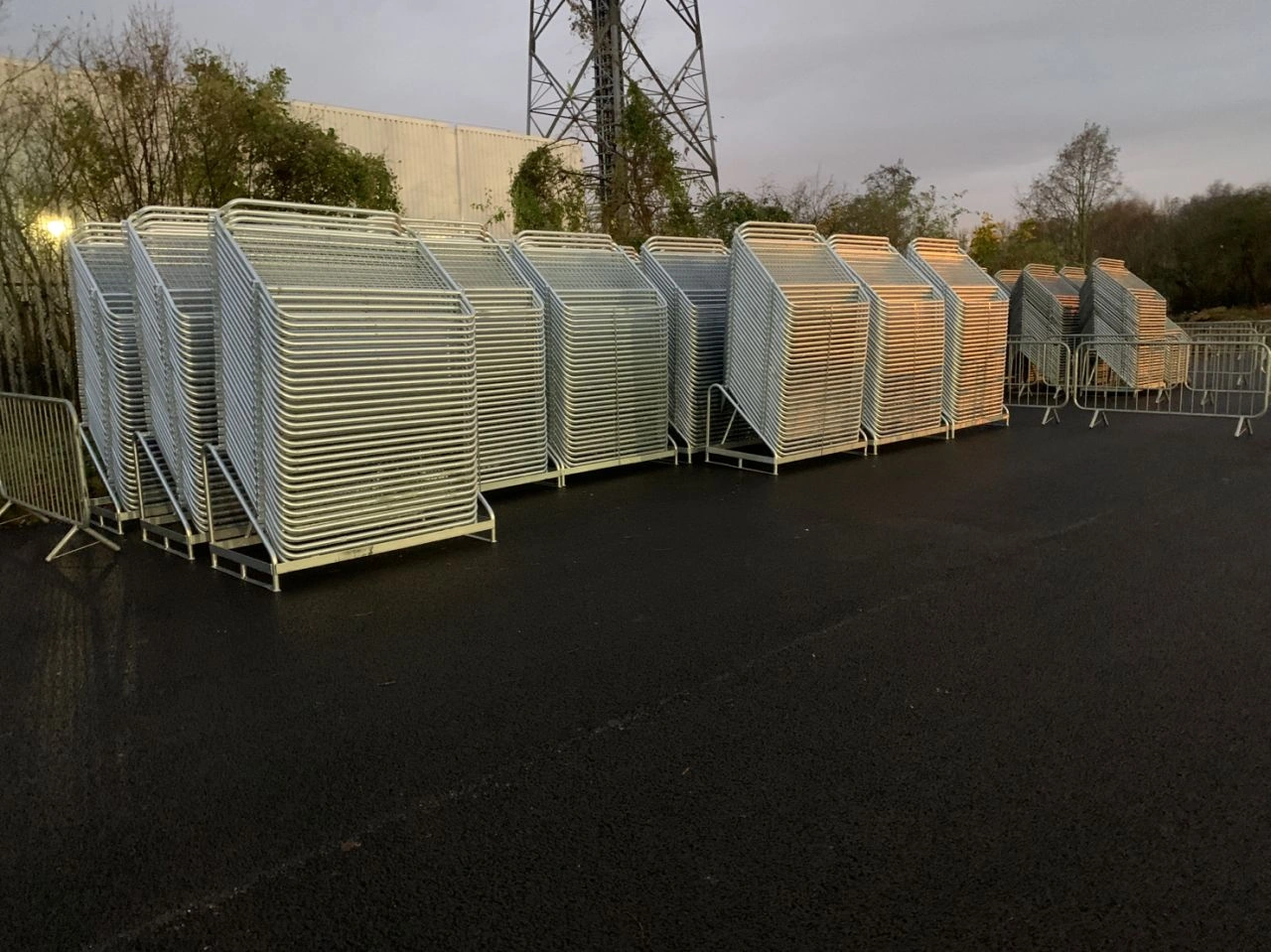
Check Galvanizing Method and Micron Count
Electroplating fails within 12 months in coastal environments.
The term ‘galvanized’ on a spec sheet tells you almost nothing. You need to know which method was used. Hot-dip galvanizing (HDG) immerses the steel in molten zinc at around 450°C, creating a metallurgical bond that provides cathodic protection — the zinc sacrifices itself to protect the steel even if the coating gets scratched. Electroplating (cold galvanizing) deposits a thin zinc layer via an electric current, typically 5-15 microns thick. It costs about 30% less per unit, but it offers no real protection against edge corrosion or scratches.
For distributors supplying coastal regions, high-humidity environments, or Australian construction sites, electroplating is a liability. The Australian Standard AS 4687-2022 requires a minimum hot-dip galvanized coating of >42 microns. Anything below that fails the standard. If your shipment arrives with cold-galvanized barriers, you are importing non-compliant product. Your end customer will see rust within one season, and the warranty claims come back to you.
- Hot-Dip Galvanizing (HDG): Coating thickness: 42-85 microns. Provides cathodic protection. Meets AS 4687 and ASTM B117 salt spray resistance. Adds ~$0.50-$1.00 per unit over electroplating.
- Electroplating (Cold Galvanizing): Coating thickness: 5-15 microns. No cathodic protection. Fails within 12 months in coastal/humid conditions. Not compliant with AS 4687. 30% cheaper upfront, but leads to returns and brand damage.
The financial impact goes beyond the cost of replacement. A single rusted barrier at a high-visibility event or construction site damages your brand reputation with every photo shared online. Distributors who have been burned by cold-galvanized imports typically lose 2-3 customers before they switch suppliers. The math is simple: the extra $0.50-$1.00 per unit for HDG is insurance against losing your entire account.
During a factory audit, ask to see the galvanizing line. If the supplier cannot show you a hot-dip kettle or a third-party coating thickness test report, assume it is electroplated. You can verify with a simple magnetic thickness gauge (e.g., Elcometer) — readings below 40 microns are a red flag. For a third-party inspection, request a hot dipped galvanizing micron test on random samples from the production batch.

Assess Weld Quality and Structural Integrity
Weld failure is the #1 cause of structural collapse in crowd barriers during peak loads.
Visual inspection catches surface defects like burn-through, undercut, or uneven beads. A trained eye can spot porosity or slag inclusion on a clean weld. But visual checks alone miss internal voids or insufficient penetration. That’s where destructive testing comes in. For a bulk order, pull 2–3 random samples from the production run and cut the weld cross-section. Measure the throat thickness and check for complete fusion. A weld that looks smooth on the outside but has a 30% void inside will snap under crowd pressure.
- Consistent weld spacing: Mesh-to-frame welds should be spaced evenly, typically every 100–150 mm. Irregular gaps create weak points where the mesh can buckle or detach. On a 2.0 m panel, count the welds on both sides. They should match within 5 mm tolerance.
- Smooth finishing: Rough weld beads trap moisture and accelerate corrosion, especially on powder-coated barriers where the coating can’t flow into sharp edges. For galvanized barriers, uneven welds create zinc buildup that looks unprofessional and can cause assembly issues. A smooth, consistent weld bead indicates trained operators and proper machine settings.
The post-weld treatment directly affects weld longevity. Hot-dip galvanizing after welding seals the entire joint in zinc, providing cathodic protection even if the weld surface is nicked. Powder coating over raw welds offers no corrosion resistance at the joint — any scratch through the paint exposes the weld to rust. For coastal or high-humidity applications, always specify hot-dip galvanized barriers with a minimum 42-micron coating. Electroplated (cold galvanized) welds fail within 12 months because the thin zinc layer can’t protect the heat-affected zone around the weld.
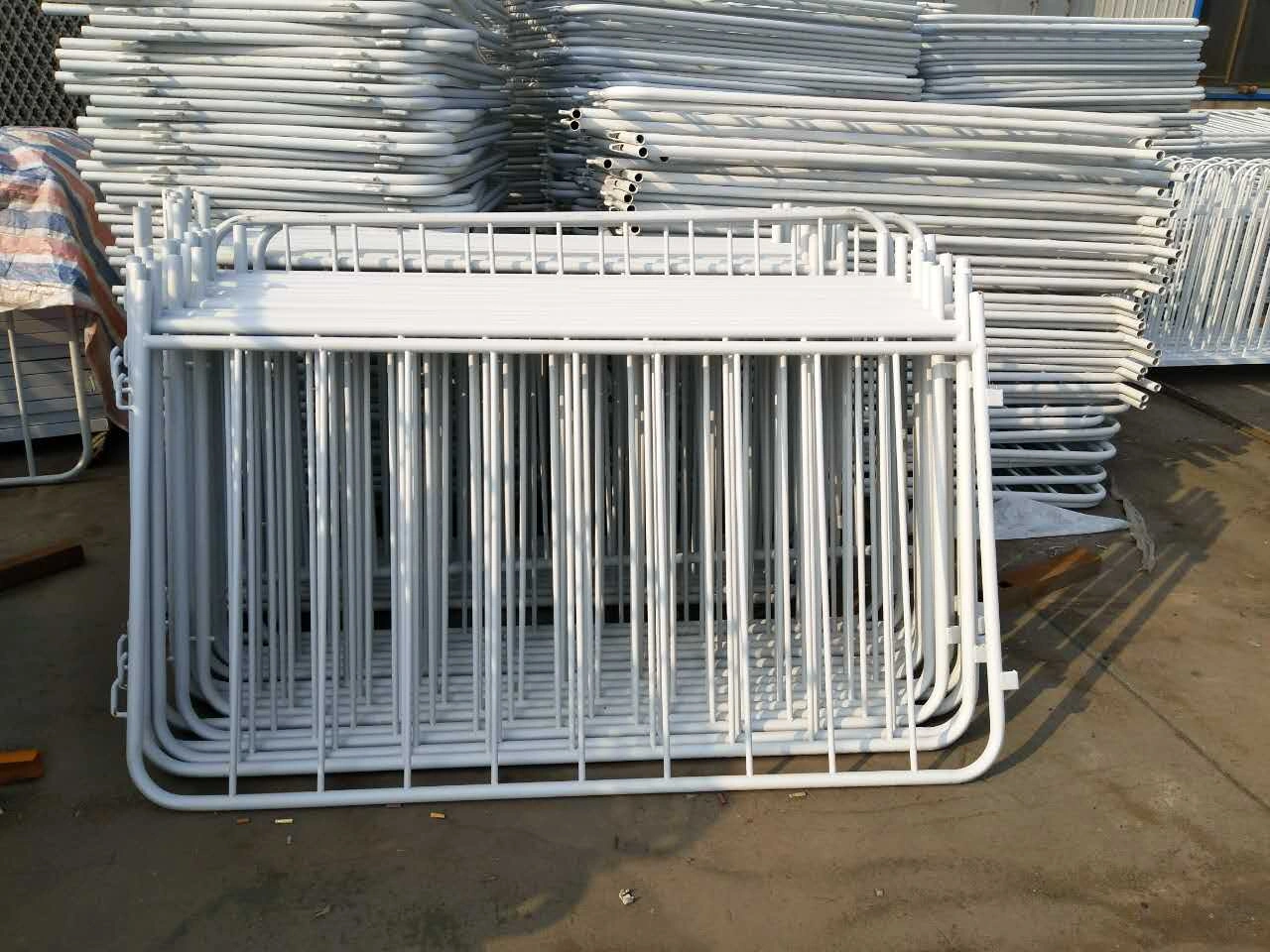
Confirm OEM Customization and Packaging
OEM branding starts at 100 panels — verify before you commit.
For distributors, custom branding is how you protect your margin and build a recognizable product line. But not every factory delivers on their logo and packaging promises. Here is what to check during your inspection.
- Logo application method: Screen printing is the most cost-effective for steel barriers. Powder coating over a stencil creates a durable, long-lasting logo that won’t peel like stickers. Ask to see a sample run before production.
- Color coding consistency: If you order RAL 3020 red for your barriers, request a color card match at the factory. Lighting in the workshop can shift appearance. A spectrophotometer reading (delta E < 1) is the only reliable pass/fail.
- Packaging for sea freight: Barrels and frames should be bundled with steel strapping, not plastic banding. Each barrier must be separated by corrugated cardboard or foam pads to prevent galvanizing scratches. Missing edge protectors are a red flag.
- MOQ for custom branding: Standard industry MOQ for logo printing and custom colors is 100 panels. Some factories require 300+ for full powder coating color change. Confirm this in writing before the order.
- Transit damage prevention: Ask for photos of the container loading plan. Barriers should be stacked vertically, not horizontally, to avoid tube bending. Palletized loads with shrink wrap reduce movement during shipping.
One distributor we worked with received a container where the barriers were packed without cardboard separators. The galvanizing was scratched on 30% of the units, and the powder-coated logos were chipped. That container sat in their warehouse for three weeks while they filed a claim. A simple packaging checklist during inspection would have caught the issue.
Validate Production Capacity and Certifications
In-house plastic feet molding is the single fastest way to spot a real manufacturer vs.
Anping County has over 2,000 registered wire mesh companies, but only a fraction own production lines. A trading company can show you a polished showroom and a stack of certificates, but they cannot show you a welding line running at 2,000 sets per week. The fastest way to separate real capacity from smoke and mirrors is to verify three specific assets: in-house plastic feet injection molding, welding line count, and ISO 9001 certification scope.
- Plastic Feet Machine: Most suppliers outsource the plastic base blocks to a third-party molder. That creates a coordination risk — if the molder misses a delivery, your entire container sits waiting for feet. DB Fencing is the only supplier in Anping with its own plastic feet injection machine, which means they control the fit, color consistency, and lead time of every base that ships with your panels. If a supplier cannot show you their own molding equipment during a video tour, assume the feet are subcontracted.
- Welding Line Count: A genuine manufacturer will have 10 or more dedicated welding lines for mesh panels. DB Fencing operates 10 lines with a weekly output capacity of 2,000 sets. If a supplier claims to be a manufacturer but shows only 2–3 welding stations, they are likely assembling panels from pre-welded mesh sheets bought elsewhere. That introduces tolerance stacking — the frame might not fit the mesh properly, leading to loose panels that fail structural checks.
- ISO 9001 & AS 4687 Certification: ISO 9001 certifies a quality management system, not just product quality. Ask to see the certificate scope — it should list ‘design and manufacture of welded wire mesh fencing.’ If the scope only mentions ‘trading’ or ‘sales,’ the supplier is a trader. For Australian and New Zealand markets, AS 4687-2022/2007 compliance is non-negotiable. DB Fencing holds both ISO 9001 and SGS certification, and their hot-dip galvanizing meets >42 microns per ASTM B117, which is the standard required for coastal environments.
One practical step: ask the supplier to send you a real-time video call showing their welding line running your specific panel size. A trader will stall or offer a pre-recorded video. A manufacturer will walk you to the line within minutes. This single check eliminates 80% of the risk before you even discuss pricing.
Conclusion
A failed shipment of 500 barriers with rust spots or bent tubes doesn’t just cost you the container value. It chips away at the trust your buyers have in your brand. The inspection steps here—checking the steel grade, the galvanizing method, and the weld consistency—are the difference between selling a product that lasts five years and one that fails before the first invoice is paid.
Use this checklist as your baseline when you audit a new supplier. If you want to see how a factory with in-house plastic feet molding and 10 welding lines handles quality control, review the current specs on our aluminum stage barriers page. It gives you a concrete benchmark to compare against any quote you receive.
Frequently Asked Questions
Can I visit your factory in China to inspect the production?
Yes, we welcome factory visits at our facility in Anping County, the Global Wire Mesh Town. You can inspect our 10 welding lines and in-house plastic feet molding, which is unique. Contact us to schedule a tour and verify production capacity firsthand.
What is the best way to inspect crowd control barriers before shipping?
The best way is to request a pre-shipment inspection focusing on steel tube thickness, weld integrity, and galvanizing micron count. For bulk orders, consider a third-party inspection like SGS to verify compliance with. Always confirm inspection criteria and certification requirements before production.
How thick should the steel tubes be for crowd barriers?
Steel tube wall thickness should be at least 1.0mm for standard use, but 1.5mm or higher is recommended for heavy-duty or high-traffic events. Thicker tubes prevent bending under crowd pressure and extend. Specify wall thickness in your contract to avoid cost-cutting substitutions.
What is the difference between galvanized and powder coated barriers?
Hot-dipped galvanized barriers (over 42 microns) offer superior corrosion resistance for coastal or outdoor use, while powder coating provides color options but can chip over time. For long-term durability in harsh. Choose galvanized for longevity; powder coat for aesthetics and indoor events.
How do I verify the quality of welds on crowd barriers?
Inspect welds visually for consistent spacing, smooth finishing, and no cracks or gaps. For critical orders, request destructive testing on sample panels to confirm weld strength under load. Weld failure is the top cause of structural collapse, so prioritize this check.