Skip to content
Temporary Fence vs Water Barriers: Freight Cost Analysis is the first checkpoint buyers should lock before they approve a supplier, budget, or production slot. The container is already in the water before a distributor realizes a $50K order of water barriers ate 12% of the profit margin in volumetric weight. That specific scenario — FOB pricing locked, sample approved, but the freight bill arriving 40% higher than the pro forma — happens more often than procurement teams admit. And it hits hardest when buyers are comparing temporary fence panels against water barriers for the first bulk shipment.
Here is the reality most sourcing guides skip: the two products live in completely different HS code worlds, which means duty rates, container utilization, and even customs documentation paths diverge from the moment the spec sheet is signed. A fence panel flattens into a stack of steel frames at roughly 600 units per 40ft HC container. A water barrier, even knocked down, still leaves void space around its bulbous plastic moldings. That difference alone shifts the freight cost per unit by 30–40% in favor of fence panels for a typical 500-unit order.
But the cost gap is not the whole story. The question is whether your supplier’s production line and packing method actually deliver the density you calculated on the spreadsheet. A distributor in Melbourne unloaded a container and found that the knock-down water barriers, despite being disassembled, still left 18% empty cubic space because the supplier did not nest the components. That was $4,700 of paid-for air. On the fence side, a missed handoff between the welding line and the packing team can leave panels loose — risking damage to thehot-dipped galvanized coatingand triggering a rejection at sample approval. These are the operational details that separate a clean first shipment from a 16-day delay and a back-and-forth batch of claims.
The final 10% that professionals catch and amateurs miss is the paperwork timing. A fence shipment under HS code 7308.90 typically requires a mill test certificate and a zinc coating thickness report to clear Australian customs smoothly — AS 4687 documentation that needs to be prepared during production, not after loading. Water barriers under 3926.90 often demand CE marking or a plastic compliance statement, which locks you into a different certification timeline. If you are sourcing both from the same supplier cluster in Anping, the window between dock-ready and customs-cleared can shift by three weeks depending on which product you prioritize. That is not a freight cost problem — that is a cash-flow problem. And it is the detail that determines whether the 30% savings on the container price survives the landing.
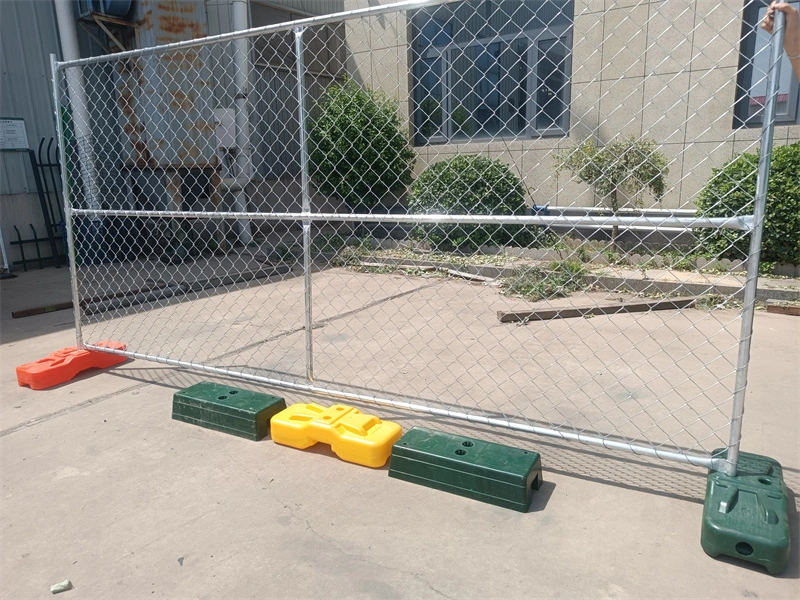
Container Loading Density: How Many Units per 40ft HC?
A 40ft HC container holds ~600 temporary fence panels but only ~200 water barriers.
When comparing shipping costs between temporary fence panels and water barriers, the first number that matters is how many units fit in a single 40ft high-cube container. That number determines your freight cost per unit — the single biggest variable in landed cost for bulk importers.
-
- Temporary fence panels: Standard 2.4m x 2.0m mesh panels with frame can be stacked flat, nesting into each other. With DB Fencing’s unassembled plastic feet packed separately, a 40ft HC container fits 600 to 640 panels. The key is the flat profile — no void space wasted.
- Water barriers: Even knocked down, water barriers have bulbous shapes and require internal bracing. A typical 40ft HC container holds 180 to 220 units. The void space between irregular forms cuts density by roughly 65% compared to fence panels.
- Why density matters for your PL: At current ocean freight rates from China to North America, a 40ft HC container costs roughly $4,500–$6,000. That translates to $7.50–$10 per fence panel versus $22–$30 per water barrier. The fence panel wins on unit freight cost every time.
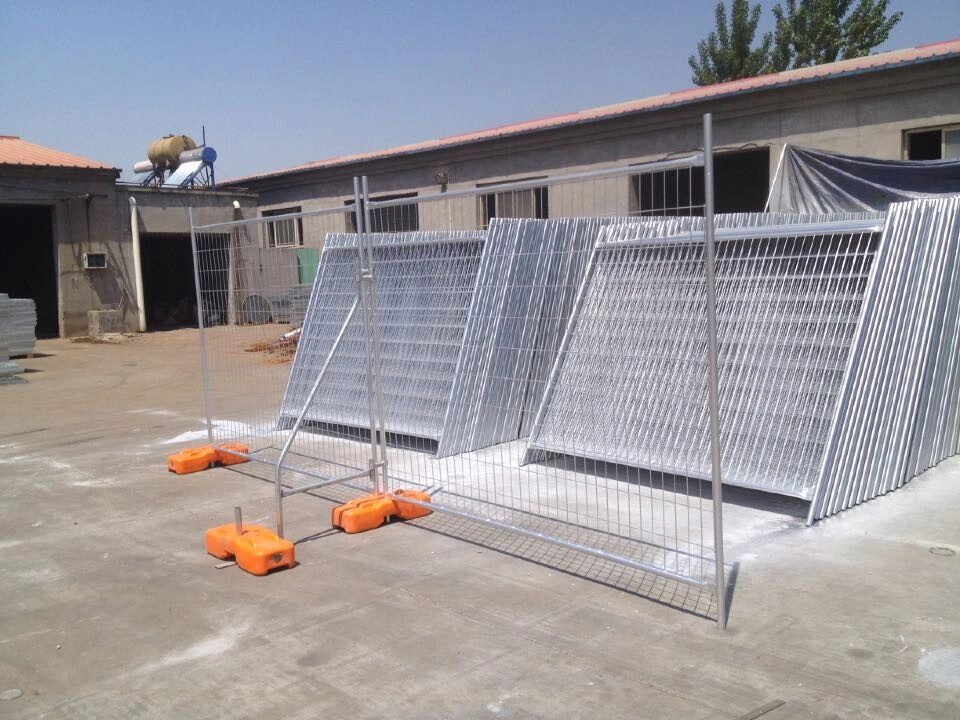
Temporary Fence: Flat-Stacked Panels and Nestable Feet
Flat-stacking temporary fence panels with nestable feet packs 600+ units per 40ft container.
A standard 2.4m x 1.2m temporary fence panel, when laid flat without the base feet attached, occupies roughly 2.9 square meters of floor space. By stacking them flat—frame to frame—you eliminate the air gaps that occur when panels are shipped upright or with feet pre-installed. A 40ft high-cube container, with internal dimensions of 12.03m x 2.35m x 2.69m, can hold approximately 600 to 650 panels in a single flat-stacked configuration, depending on frame thickness and edge clearance. This is the primary reason steel temporary fencing often delivers a 30–40% lower freight cost per unit compared to bulkier alternatives like water barriers.
-
- Flat-stacking method: Panels are packed horizontally, one on top of another, with no vertical dividers. This maximizes every cubic inch of container volume and reduces the risk of bending during transit.
- Nestable plastic feet: DB Fencing’s own plastic foot machine produces feet that are designed to be stacked inside each other like cups. By shipping them unassembled and nested, you can fit the feet for an entire container’s worth of panels into just a few pallets—cutting the volume footprint by roughly 60% compared to feet that arrive pre-attached or boxed individually.
- Insider tip: If a supplier quotes a count below 550 panels per 40ft container, ask for their packing photo. Many factories still weld feet onto panels before loading, wasting up to 15% of usable space. Insist on unassembled feet and flat packing to keep your landed cost competitive.
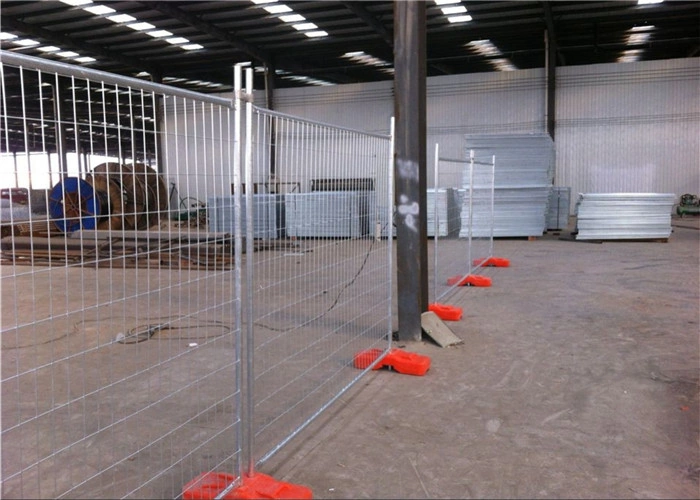
Water Barriers: Stackability and Void Space Calculation
Water barriers waste more container space per unit than any flat-stacked mesh panel.
Water barriers — even knocked down and nested — keep a bulky profile. Their bulbous plastic shells and stiff wall thickness create large air gaps between units. Calculating void space means dividing the container’s interior volume (76 m³ for a 40ft HC) by the actual volume one barrier consumes when packed, which is always higher than its material volume.
-
- Shape inefficiency: A rectangular barrier still has rounded corners and hollow cavities. A 1.2 m long barrier occupies roughly 0.7–0.9 m³ of container space, even when nested.
- Nesting limitations: Most plastic barriers nest only in one axis. The rest of the void is dead air. Compare that to fence panels stacking flat with zero gaps.
- Material thickness: Rotomolded or blow-molded walls are 4–8 mm thick. That stiffness prevents the tight compression achievable with welded wire mesh panels.
HS Code and Duty Differences (7308.90 vs 3926.90)
The HS code you choose can change your landed cost by 10% or more.
Steel temporary fence panels are classified under HS code 7308.90 (structures of iron or steel). Plastic water barriers fall under 3926.90 (other articles of plastics). The duty gap between these two headings is a direct, recurring cost factor that many buyers miss when comparing shipping temporary fence vs water barriers. In Australia and Canada, the duty rate on 7308.90 is often 5 to 10 percentage points lower than on 3926.90. That difference per container can wipe out any initial price advantage of plastic barriers.
For a distributor evaluating bulk ordering temporary fence to minimize freight cost, the HS code classification also affects customs documentation complexity. 7308.90 typically requires fewer non-tariff certifications compared to plastic barriers, which may need CE marking or additional plastic import permits in some markets.
-
- Verify HS code before quoting: Send your supplier a line-item list of materials. Ask them to confirm the HS code for each component. Steel panels (7308.90) shipped with plastic feet (3926.90) can be declared separately to keep the lower rate on the bulk of the weight.
- Regional duty check: Use the destination country’s tariff database to compare rates for both codes. For example, the U.S. HTSUS shows 7308.90 at 0% for many steel products, while 3926.90 ranges from 3.1% to 6.5%. A misclassification here adds direct cost.
- Risk of reclassification: Customs auditors may reclassify if the supplier’s packing list lumps everything under one vague code. Insist on separate HS codes for different materials. DB Fencing provides a detailed packing list with correct codes to avoid delays and back duty assessments.
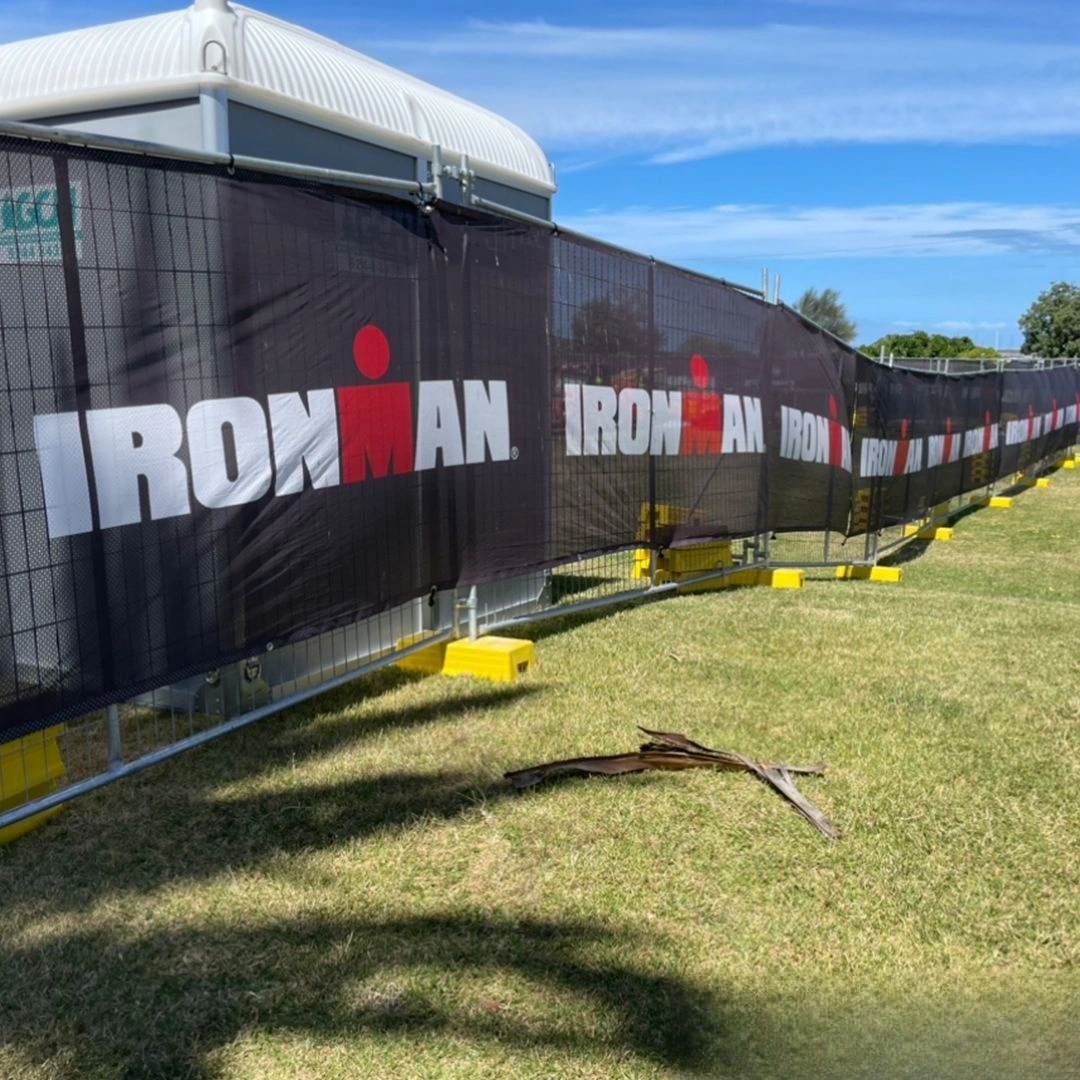
Freight Cost Per Unit: Why Fence Panels Often Save 30–40%
Fence panels cut per-unit freight by 30–40% versus water barriers due to flat stacking and lower HS code duties.
The freight cost per unit difference between temporary fence panels and water barriers comes down to two factors: container packing density and HS code classification. A standard 40ft high-cube container can hold roughly 600-plus flat-nested fence panels (including unassembled plastic feet), whereas water barriers—even when shipped knocked down—consume significantly more volume because of their bulbous shapes and rigid walls. That density gap alone translates to a 30–40% lower shipping cost per fence panel.
Take a real order: an Australian distributor imports 600 fence panels in one 40ft HC container at, say, $6,000 freight total—$10 per panel. To get the same number of water barriers, they’d need three containers, pushing per-unit freight to roughly $30. That’s a 66% premium. And that’s before you factor in customs duties.
-
- Container density: Fence panels nest flat; 600+ per 40ft HC. Water barriers (e.g., 1m units) ship 150–200 per same container due to void space and shape constraints.
- HS code duty: Steel fencing under HS 7308.90 typically carries 0–3% duty in Australia and the US. Plastic barriers under HS 3926.90 often attract 5–10%. That 5% gap adds up on a $50,000 shipment.
- Packing efficiency: DB Fencing ships plastic feet unassembled, eliminating the air space that assembled barriers require. This is a 15% density gain over competitors who ship feet pre-attached.
If a supplier quotes 40% below market on water barriers, run the math on freight. The lower CIF cost often disappears when you add shipping and duty. Fence panels win on total landed cost every time.

Customs and Compliance: AS 4687 Documentation vs CE Marking for Barriers
Ship to Australia without AS 4687 docs and your container sits at customs for weeks.
If you’re shipping temporary fence panels to Australia, AS 4687 documentation is non-negotiable. That standard (2007 edition still accepted, 2022 edition preferred) covers structural integrity and anti-climb requirements. A supplier who can’t produce a test report from an accredited lab — like the ISO 9001/SGS-certified ones DB Fencing uses — will leave your container stuck at the border. For Europe, CE marking under EN 1090 or EN 12810 (for access and working platforms) may apply, but for temporary barriers used in construction, the Construction Products Regulation (CPR) often demands a Declaration of Performance. Water barriers, being plastic, fall under different directives entirely.
-
- AS 4687 Documentation: Requires proof of compliance with Australian Standard for temporary fencing. Must include test reports for mesh strength, panel stability, and base foot anchoring. DB Fencing provides these with every shipment to Australia/New Zealand. Without them, customs can reject the entire consignment.
- CE Marking: Mandatory for steel fencing sold into EU/EEA markets under CPR. Involves factory production control (FPC) and third-party testing if the product is in the highest class. Many Chinese suppliers skip this — check your supplier’s DoP before booking freight. Plastic water barriers typically require CE under a different harmonized standard (e.g., EN 1461 for coatings or EN 131 for crowd barriers).
- Customs Compliance: HS code 7308.90 (steel fencing) vs 3926.90 (plastic barriers) define duty rates and required certifications. Australia’s Customs Act also requires country-of-origin marking. Misclassification can result in penalties equal to 5% of the cargo value or seizure. Always request the importer’s broker to verify the HS code and any anti-dumping duties — especially on Chinese fabricated steel products.
Tips for Distributors: Bulk Ordering to Minimize Shipping Cost
Pack 600 panels per 40ft HC by nesting flat – feet unassembled.
The biggest lever for cutting per-unit freight is container density. Temporary fence panels are designed to stack flat – a 40ft high-cube container can hold roughly 600 panels when the feet are shipped separately. That density is impossible with water barriers, which lose 15–20% of container volume to awkward bulbous shapes. If your supplier’s quote is based on LCL rates, push for FCL pricing; the saving is often 30–40% per panel.
Bundle the plastic feet in their own master cartons and load them in the same container. At DB Fencing, the plastic feet are shipped unassembled and stacked, so you can tuck them into the gaps around the panel stacks without wasting cubic volume. That single move eliminates a separate shipment and the associated documentation fees.
Your HS code choice directly affects your landed cost. Steel fence panels fall under 7308.90, which in Australia and the US carries a lower duty rate than plastic barriers under 3926.90. Confirm the tariff classification before you invoice – a misclassification at customs can add 5–10% to your cost and delay release by two weeks.
Request pre-production sample approval and agree on quality tolerance for zinc coating and weld strength before the bulk run. A rejected shipment because the galvanizing fell below 42 microns can cost you $3,000+ in return freight and lost selling time. Lock the spec, get the sample sign-off, then order the full container.
| Tip | Action | Benefit | Data Point |
|---|---|---|---|
| Ship Panels Flat-Stacked | Request panels to be nested flat without assembly | Achieve ~600+ panels per 40ft HC container | Flat stacking vs. pre-assembled reduces volume by 40% |
| Order Plastic Feet Unassembled | Specify feet shipped in bulk, separate from panels | Fills void spaces, increasing container density by ~15% | DB Fencing’s plastic feet machine enables high-density packing |
| Consolidate into 40ft HC Containers | Combine fence panels, feet, and accessories in one container | Lower freight cost per unit vs. multiple LCL shipments | 40ft HC carries ~20% more volume than standard 40ft |
| Leverage HS Code 7308.90 | Classify steel fencing under 7308.90 instead of plastic barriers (3926.90) | Often lower duty rates in Australia, USA, and Canada | Duty savings can reach 5-10% of CIF value |
| Plan for AS 4687 Compliance | Request AS 4687-2022 certification documentation with shipment | Avoid customs delays and re-certification costs for Australian orders | DB Fencing provides certified test reports for each batch |
Conclusion
1. Can you guarantee container loading density above 600 panels per 40ft HC, and do you ship unassembled plastic feet to eliminate void space? 2. Have you verified the HS code for your destination—7308.90 for steel fence panels vs 3926.90 for plastic barriers—and compared duty rates using a recent customs ruling? 3. Do you provide AS 4687 documentation and an SGS test report confirming hot-dipped galvanized coating at 42 microns minimum, with a quality tolerance clause that allows sample approval before mass production?
Use these questions to cut through FOB pricing noise and focus on total landed cost. Review the product page for detailed specifications on container loading, zinc coating test reports, and bulk ordering options that align with your next shipment.
Frequently Asked Questions
How many temporary fence panels fit in a 40ft container?
A 40ft HC container holds roughly 600 temporary fence panels when flat-stacked with nestable feet. That compares to only about 200 water barriers, giving fence panels a 3x density advantage. Request a loading diagram to verify exact count for your panel size.
Which has lower shipping cost per unit: fence or water barriers?
Temporary fence panels typically save 30–40% in freight cost per unit because they flat-stack densely and eliminate void space. Water barriers waste container volume due to their shape and lower stackability. Run a per-unit landed cost comparison before placing your order.
What are the HS code differences for temporary fence and water barriers?
Temporary steel fence panels fall under HS code 7308.90, while plastic water barriers are classified under 3926.90. The steel code often carries higher duties but the product value per unit. Confirm your tariff schedule with a customs broker for the destination country.
Do temporary fences or water barriers have better stackability?
Temporary fence panels stack flat and allow nestable feet to collapse, maximizing container space. Water barriers cannot nest and leave large voids, so stackability is far worse. Ask your supplier for stack testing photos before committing to a full container.