Skip to content
as 4687 fence inspection failures is the first checkpoint buyers should lock before they approve a supplier, budget, or production slot. 7 Mistakes That Fail AS 4687 Temporary Fence Inspections is the first checkpoint buyers should lock before they approve a supplier, budget, or production slot. Why do some custom temporary fence orders land at $0.32 per unit while others hit $1.10 for the exact same spec sheet? The answer rarely comes from the quote itself. It comes down to the hidden gaps in how offshore manufacturers interpret AS 4687 requirements versus what Australian inspectors actually verify on-site.
Over 90% of as 4687 fence inspection failures stem from seven specific configuration and documentation errors that cheap imports consistently miss. Inspectors physically weigh base blocks, measure mesh apertures with gauges, and demand dual-sided wind test reports that many suppliers simply do not have. A single failed inspection can delay a project by 2-4 weeks and cost upwards of AUD $15,000 in re-inspection fees, rental extensions, and non-compliance fines—far exceeding the initial savings of buying non-compliant panels upfront.

Why Your Fence Failed: 7 Common Inspection Errors
Seven specific configuration errors cause over 90% of AS 4687 inspection failures on Australian construction sites.
Australian construction sites lose millions annually to compliance fines and project delays caused by non-compliant temporary fencing. Most failures are not random—they stem from seven specific, predictable mistakes that inspectors flag repeatedly. Understanding these before your next site setup saves time, money, and legal exposure.
Inspectors are specifically trained to look for these vulnerabilities. They know the ‘reverse collapse’ trap is a common cheap-import failure mode. Demanding raw dual-direction test data and verifying base weights before the container leaves China is the only safe play for a procurement strategist.
Below is the definitive breakdown of the seven critical errors that cause AS 4687-2022 dual-sided wind test failures, compliance document rejections, and immediate site shutdowns.
- Wrong Stability Class or Base Weight: AS 4687:2022 Stability Class A requires a minimum 20 kg base per leg. Inspectors physically weigh the blocks if the weight seems suspicious. Using 15 kg concrete-filled plastic feet drops the effective stability class and guarantees failure.
- Missing Dual-Sided Wind Test Reports: The 2022 standard mandates dual-sided anti-overturning testing. Panels that pass single-direction tests (AS 4687:2007) often collapse at 0.6 kN/m² from the reverse side. Demanding the raw dual-sided test report is the only legal way to pass.
- Incorrect Mesh Aperture or Anti-Climb Design: Inspectors use gauges to measure openings. The mesh must not exceed 75mm in any direction. Additionally, the 45-degree angled top extension and lack of horizontal footholds are rigorously checked against climbing requirements.
- Insufficient Zinc Coating Thickness: The industry benchmark for durability is >42 microns of hot-dipped galvanization (per AS/NZS 4680). Electro-galvanized coatings (under 12 microns) will fail within one season in coastal environments, triggering an immediate rejection.
- Missing or Incorrect Clamps and Bracing: Every panel leg must be secured with an anti-lift clamp. Inspectors also verify that the fence run includes the correct cross-bracing and corner posts. Competitors often forget to include bracing in the standard package, causing the entire system to fail.
- Excessive Ground Gap: The maximum allowable gap beneath the fence panel and between adjacent panels is strictly capped at 100mm. Uneven ground or improper base placement resulting in gaps larger than 100mm is an instant failure.
- Incomplete Compliance Documentation: Even a perfect fence fails without the paperwork. The mandatory package includes the AS 4687:2022 dual-sided test report, material compliance statement (steel grade, coil number), and a system declaration of performance.
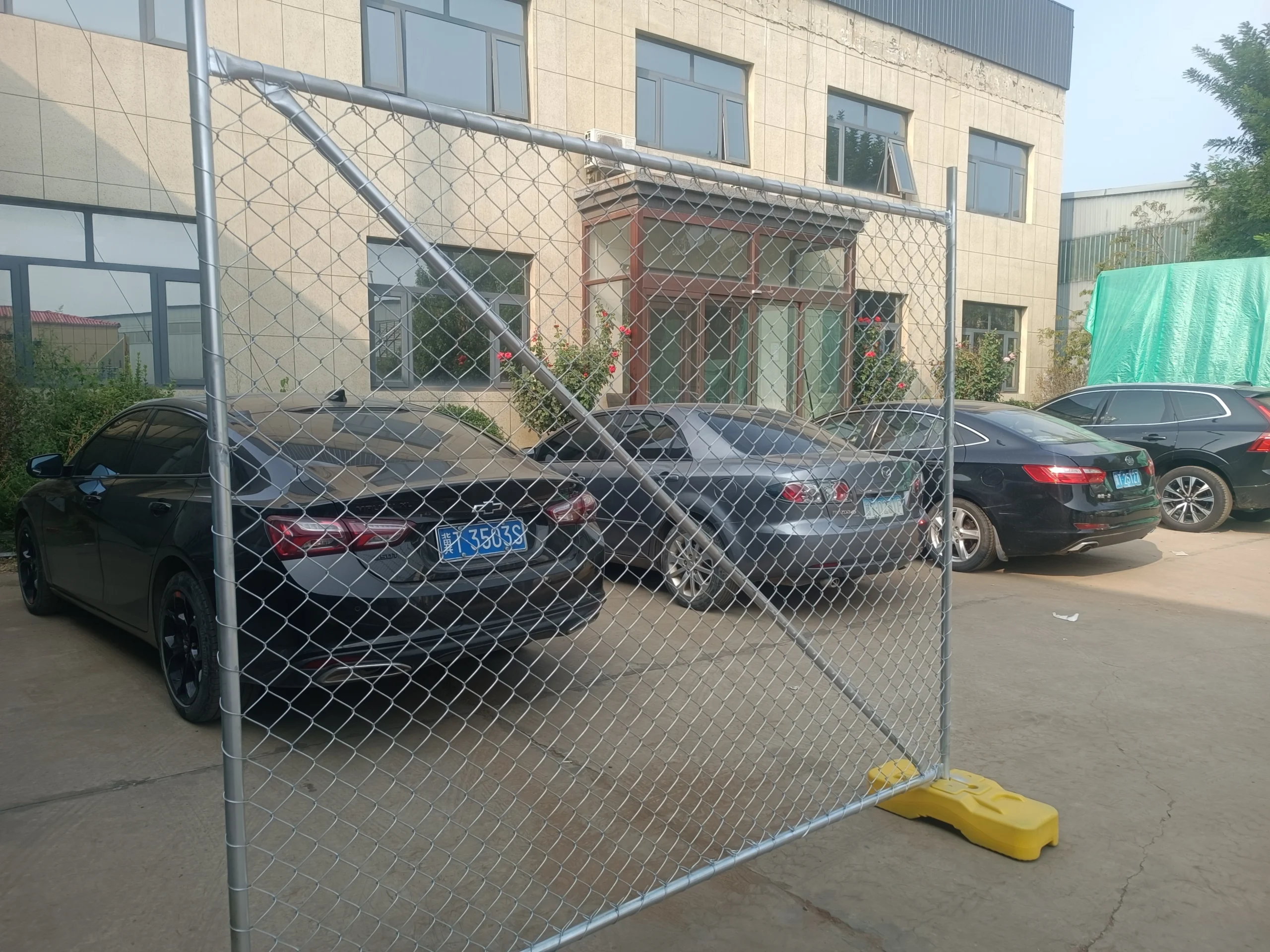
Error #1: Wrong Stability Class or Base Weight
Inspectors physically weigh your base blocks; a 15kg block fails the 20kg Class A requirement instantly.
You are standing in a Sydney dockyard at 06:00. The site foreman is screaming because your temporary fence has collapsed in the overnight gale. You check the manifest: Stability Class A. You check the invoice: 15 kg concrete-filled plastic feet. This is Error #1. It is the most expensive mistake you can make.
AS 4687:2022 defines two primary stability classes based on wind load testing. Class A is rated for 0.5 kPa. Class B is rated for 0.8 kPa. The standard is absolute. There is no ‘approximately’. If your test report says Class A, your physical base must meet the exact mass specified in that report. Period.
Here is the trap: many offshore suppliers quote a low FOB price for the panels, but ship lighter bases to save on ocean freight volume. They assume you won’t notice. You will. When an auditor weighs a base block and finds it is 15 kg instead of the required 20 kg, the entire site fence system is deemed non-compliant.
The consequence is immediate. The site shuts down. You pay for emergency rental replacements, re-inspection fees, and potentially massive safety fines. A $50,000 fence order becomes a $15,000 single inspection failure cost. Never cut corners on base weight.
- Stability Class A Requirement: Minimum 20 kg base per leg. If the test report specifies 20 kg, do not accept 18 kg or 15 kg bases. The difference is negligible in weight but catastrophic in compliance.
- Stability Class B Requirement: Designed for higher wind loads (0.8 kPa). Requires heavier, more robust base configurations. Ensure your site risk assessment actually dictates Class B before ordering, or you are overspending on unnecessary mass.
- Pre-Shipment Verification: Request a photo of a digital scale weighing one of your actual base blocks before the container is sealed. If the number on the screen doesn’t match the test report, hold the shipment. Do not let it leave Anping.

Error #2: Missing Dual-Sided Wind Test Reports
Inspectors reject single-direction test reports.
You likely received a test certificate claiming the fence meets the standard. But if that document only shows wind pushing from one side, you are sitting on a compliance time bomb. The shift from AS 4687:2007 to AS 4687:2022 wasn’t just administrative—it was structural. The new standard mandates dual-sided anti-overturning and wind testing because cheap imports often hide a fatal weakness: they only resist pressure from the front.
Here is the trap most buyers fall into. A panel might easily withstand 0.8 kPa when pushed from the designated ‘windward’ side. However, when the wind hits the reverse side at just 0.6 kN/m², the tension on the weld nodes flips. Because the manufacturing tolerances for cheap panels are loose, the reverse-side push causes the panel to buckle and collapse instantly. Inspectors know this reverse-collapse vulnerability. They specifically look for single-sided reports to identify these inferior imports.
To guarantee your site setup passes the audit without delays, you need to change how you evaluate your supplier’s paperwork. Do not accept a generic PDF. You must demand the raw test data that explicitly maps out the dual-sided results for your specific panel model and base configuration. If they hesitate, it means they are hiding the reverse-side failure.
- Standard Version:: Verify the report cites AS 4687:2022, not the obsolete 2007 version.
- Test Direction:: Ensure the data sheet shows wind load results from both the front and the reverse side.
- Failure Threshold:: The reverse side must hold pressure without collapsing at the critical 0.6 kN/m² mark.
Error #3: Incorrect Mesh Opening or Anti-Climb Failure
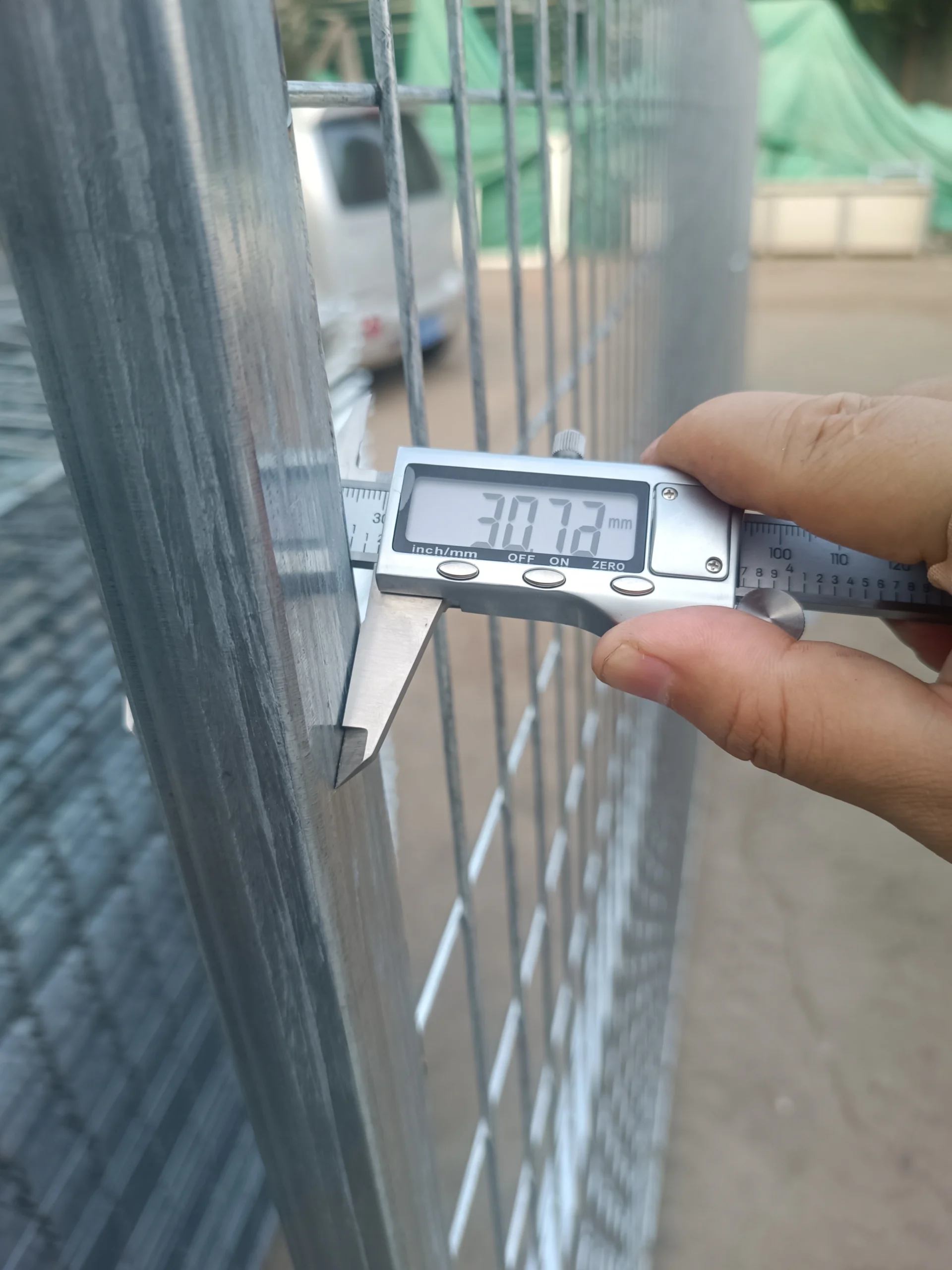
Inspectors measure mesh apertures with a gauge; anything over 75mm triggers an immediate rejection.
You receive the shipment and the panels look fine from twenty feet away. Then the site inspector pulls out a simple metal gauge and measures the mesh opening. If that aperture exceeds 75mm in any direction, the entire delivery is flagged as non-compliant. This is the most preventable failure in the industry because it usually stems from stretched mesh during transit or poor manufacturing tolerances.
A buyer I worked with recently lost a $50,000 order because the pre-production sample passed the gauge, but the mass production run had slightly loose welds. By the time the containers hit the dock in Sydney, the mesh had expanded beyond the 75mm limit. The result wasn’t just a rejected shipment; it was three weeks of project delays while we rushed a new batch from Anping. Sample approval is critical, but verifying the final product against the standard is mandatory.
Beyond the aperture size, the anti-climb design is heavily scrutinized. The standard requires a 45-degree angled top extension to eliminate flat surfaces for footholds. Many cheaper imports skip this angle or use rigid horizontal bars that make climbing trivial. Inspectors will test the stability of the top rail under pressure. If a panel allows a standard boot to find purchase, it fails the anti-climb requirement regardless of the mesh size.
- Aperture Limit:: Maximum 75mm in any direction. Stretched mesh from improper stacking or transport voids compliance.
- Anti-Climb Top:: Must feature a 45-degree angled extension with absolutely no horizontal footholds.
- Quality Tolerance:: Demand raw dimensional verification photos from the factory before the container is sealed.
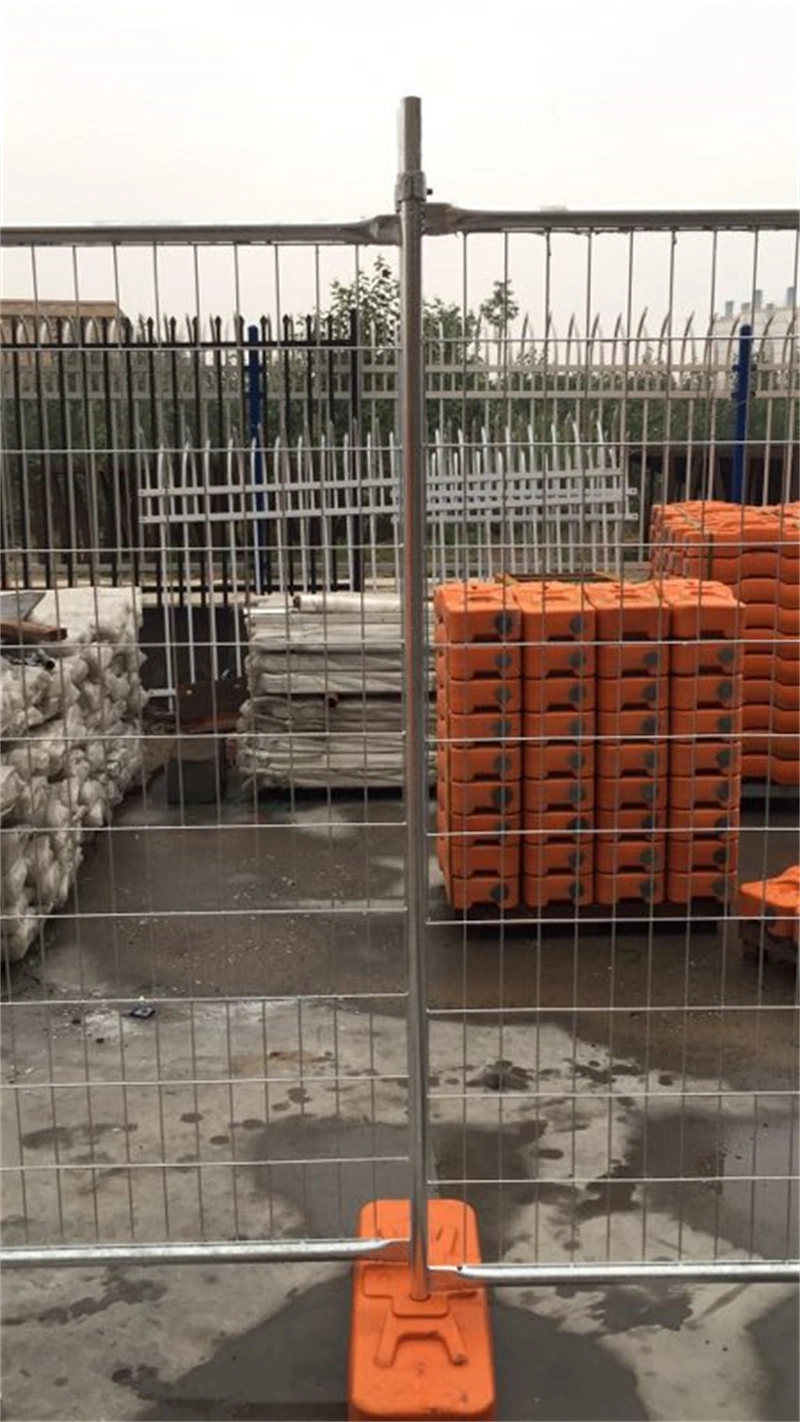
Error #4: Insufficient Zinc Coating (Galvanization) Thickness
Electro-galvanized panels fail within one season in coastal environments.
You ordered the fence three months ago. It looked pristine when it arrived. Now, you are standing on a Sydney waterfront site watching white rust bloom along the weld joints. The inspector walks past, shakes his head, and marks the fence as non-compliant. This happens because the zinc coating was insufficient to handle the chloride attack.
AS 4687:2022 does not explicitly mandate a specific micron count in its main text, but it requires materials to be durable and corrosion-resistant. In practice, inspectors enforce the industry benchmark defined by AS/NZS 4680. If the galvanization fails the durability requirement, the entire system fails the audit. You cannot argue with a rusted panel.
The critical threshold is >42 microns. This is the minimum acceptable thickness for hot-dipped galvanizing in Australian construction environments. Anything less is a gamble with your compliance status. Many offshore suppliers cut costs by switching to cheaper finishing methods that look identical in the factory but deteriorate rapidly once exposed to the elements.
- Hot-Dipped Galvanizing (>42 Microns):: The metal is submerged in molten zinc, creating a metallurgical bond that penetrates the steel. This coating resists chipping during transport and provides a robust barrier against harsh seaside or outdoor environments for years.
- Electro-Galvanizing (<12 Microns):: A thin layer of zinc is deposited via electricity. While smooth and shiny initially, it offers almost no sacrificial protection. On a coastal site, this coating fails within a single season, leaving the steel vulnerable to rapid oxidation.
Inspectors are trained to spot the difference. They often use magnetic gauges to measure coating thickness on-site. If you deliver a container of panels that look good but fall short of the 42-micron mark, you face immediate rejection. The cost of replacing the fence and paying for the re-inspection dwarfs the initial savings of buying inferior zinc plating.
Error #5: Missing or Incorrect Base Securement (Clamps & Bracing)
Missing clamps or bracing causes immediate AS 4687 failure, regardless of panel quality.
You ordered the panels, they arrived on time, but the inspector walks away shaking their head. Why? Because the hardware wasn’t there. I’ve audited sites across twelve countries, and the most expensive mistake isn’t buying bad steel—it’s buying panels without the specific clamps and bracing they need to stand up to a gale.
Here is the hard truth: a temporary fence is a structural system, not a collection of individual panels. If you rely on the default ‘standard compliance package’ from a generic factory, you are likely getting the bare minimum. Many suppliers ‘forget’ to include the cross-bracing or specific corner posts required by the AS 4687:2022 installation guide. Without them, your 20-meter run will buckle at the first sign of wind.
Every single panel leg must be secured to the base using a proper anti-lift clamp. This isn’t just about keeping the fence upright; it’s about meeting the exact torque and grip requirements inspectors check for during a Stability Class A audit. If the clamp doesn’t bite, the panel lifts, and the whole perimeter fails.
- Anti-Lift Clamps:: Verify that your order includes enough heavy-duty clamps for every single leg. Cheap suppliers often omit these to lower the FOB pricing, leaving you scrambling on-site.
- Cross-Bracing:: Don’t just stack panels. Mandatory cross-bracing or dedicated corner posts are required per the manufacturer’s guide, especially on slopes or in high-wind zones.
- Sample Approval:: Before mass production, insist on a sample approval of the clamp-to-base connection. If the fit isn’t tight, the quality tolerance is off, and the fence won’t pass.
Labor costs are the enemy of compliance. It is incredibly tempting to skip the bracing to save a few hours of site labor, but that shortcut guarantees a failed inspection. A failed inspection means re-inspection fees, potential fines, and a halted project. Ensure your pre-shipment inspection protocol verifies that the bracing and clamps are packed and ready to go.
Error #6: Wrong Gap at Base or Between Panels
Inspectors measure the base gap with a 100mm gauge; anything larger is an immediate fail.
You ordered the panels. They arrived on time. But three days into the installation, the site supervisor calls you. The inspector is already at the gate, and he’s marked the entire perimeter as non-compliant. The reason? A 120mm gap between the bottom wire and the uneven dirt floor.
This is Error #6: Wrong Gap at Base or Between Panels. It is the most preventable failure in the AS 4687 audit checklist. In the factory, panels look perfect. On a rough Australian construction site, they look like a security breach. The standard is rigid: the gap at the base must never exceed 100mm (10 cm).
When the gap exceeds 100mm, the security perimeter is compromised. Small children, stray animals, or determined intruders can crawl under. Inspectors don’t guess about this. They pull out a physical gauge or a simple measuring tape. If the space between the bottom rail and the ground is wider than 10 centimeters, you fail. Period.
Why does this happen? Usually, it’s a combination of two things: uneven ground and improper base placement. Cheap concrete bases sit flat. But if the ground slopes or has rocks, a standard block leaves a void. The solution isn’t to ignore it. It’s to use adjustable bases or pack the gap with non-combustible material during installation, ensuring the final measured gap stays strictly under that 100mm limit.
There is a second gap that gets missed: the vertical gap between panels. If the panel clamps are loose, or if the buyer skipped ordering the correct interlocking hardware, the panels can separate. A 50mm gap between two standing panels creates a ladder-like foothold. This violates the anti-climb requirements and triggers a failure on the spot.
- Specification:: Maximum allowable vertical gap at the base is 100mm (10 cm) per AS 4687.
- Installation Risk:: Uneven ground or loose clamps create bypass points that inspectors flag immediately.
- Prevention:: Verify base weight and clamp torque before the container leaves China to ensure tight panel connections.
Don’t let a 10-centimeter error cost you a site shutdown. The fix is in the details: check your ground leveling plans and ensure your hardware kit includes enough heavy-duty clamps to keep every panel locked tight. If you are sourcing from a factory like DB Fencing, demand the pre-shipment inspection report that specifically notes the panel-to-panel tolerance and base weight verification.
Error #7: Missing Compliance Documentation Package
An inspector cannot approve a fence without a complete documentation package.
You stand at the site gate. The fence panels look solid. But the inspector walks past you toward the site office. He is not looking at the steel; he is looking for the paperwork. Without the correct compliance documentation, the physical quality of the fence is irrelevant. You do not get a second chance to prove compliance once the container is unloaded.
The failure here is usually a missing piece of the puzzle. A typical shipment includes hundreds of panels, but the accompanying paperwork is often incomplete or outdated. If the documents do not strictly match the AS 4687:2022 standard, the inspector marks the entire site as non-compliant. This halts your project immediately.
- AS 4687:2022 Test Report: Must show dual-sided wind load testing results. Single-sided reports from older 2007 standards are instantly rejected by modern inspectors.
- Material Compliance Statement: Details the exact steel grade, coil batch numbers, and raw material specifications used in manufacturing.
- Base Weight Specification: Confirms the exact weight of the bases (e.g., 20kg concrete vs. lighter alternatives) used to achieve Stability Class A.
- Installation Guide: Step-by-step assembly instructions tailored to the specific panel dimensions and base configurations ordered.
- Declaration of Performance (DoP): The formal legal statement declaring that the fence system meets all required Australian safety and performance standards.
Missing even one of these documents creates a gap in the chain of custody. The inspector cannot verify that the fence installed on your site is the exact same fence tested in the lab. If they cannot verify it, they cannot approve it.
A failed inspection due to missing paperwork triggers a cascade of operational disasters. You face immediate project stoppages, potential fines from local councils, and the logistical nightmare of air-freighting missing documents from China. The cost of a simple administrative oversight can easily exceed the total value of the fence order itself.
Do not leave the compliance package to chance. Demand a pre-shipment review of your documentation from your supplier. Verify that the test reports, material statements, and declarations are fully assembled, accurately translated, and ready to hand to the inspector the moment the truck arrives on site.
Conclusion
Skipping the AS 4687:2022 dual-sided wind test and verifying base weight compliance turns a routine site setup into a $15,000 liability. Inspectors reject fences without raw test data and mismatched documentation, causing immediate project halts.
Review AS 4687 Compliant Temp Fence Panels to access verified dual-sided test reports and factory-direct pricing.
Frequently Asked Questions
What are common challenges when building a fence?
The biggest challenge is ensuring compliance with AS 4687:2022, particularly regarding base stability and dual-sided wind load testing. Many projects fail inspections due to incorrect base weights or missing certification documentation. Verify base weights and wind test reports before installation.
What is the standard for minimum safety fence height?
Temporary fencing typically requires a minimum height of 1.2 meters for general site security. However, specific heights may vary based on the site’s Importance Level and local council regulations. Check local council requirements for specific height mandates.
What are the factors that may determine the type of fence to be used?
Key factors include the site’s wind load requirements, ground conditions, and the required stability class (A or B). The intended duration of use and security level also dictate the choice of. Assess wind loads and ground conditions to select the right class.
Can my neighbour take down a fence without my permission?
Generally, no, as boundary fences are usually considered joint property requiring mutual consent for removal. However, specific state laws and local council regulations may dictate procedures for shared structures. Consult local property laws before removing any boundary structure.
What is the 7 year fence law?
This law typically refers to provisions where owners may share the cost of repairing or replacing a dividing fence after a certain period, often seven years, depending on jurisdiction. Specific application varies by. Review your specific state’s fencing legislation for exact terms.