Skip to content
hesco barrier rental cost is the first checkpoint buyers should lock before they approve a supplier, budget, or production slot. Every event procurement coordinator hits the same wall around May, when festival season ramps up. You need 500 metres of crowd control barrier for a three-day event, and the rental quote lands on your desk with line items for steel barricades, concrete feet, delivery, pickup, and a damage waiver that feels like a tax on luck. The hesco barrier rental cost looks reasonable for one weekend. But run that number across four events in a season, and you are suddenly funding a rental company’s warehouse expansion instead of your own operational budget.
That is the core tension in this decision. Rental agreements hide the real expense in logistics. Steel barricades with 45-kilogram concrete bases require a crew of four and a flatbed truck just for load-in. Multiply that by the number of barriers you need, and the labour line item alone can exceed the rental fee. A Sydney festival organiser recently ran the numbers and found they were spending $12,400 per event on labour and crane hire to move rental steel barriers. That is not a rental cost. That is a recurring operational tax on a product that was never designed for fast deployment in the first place.
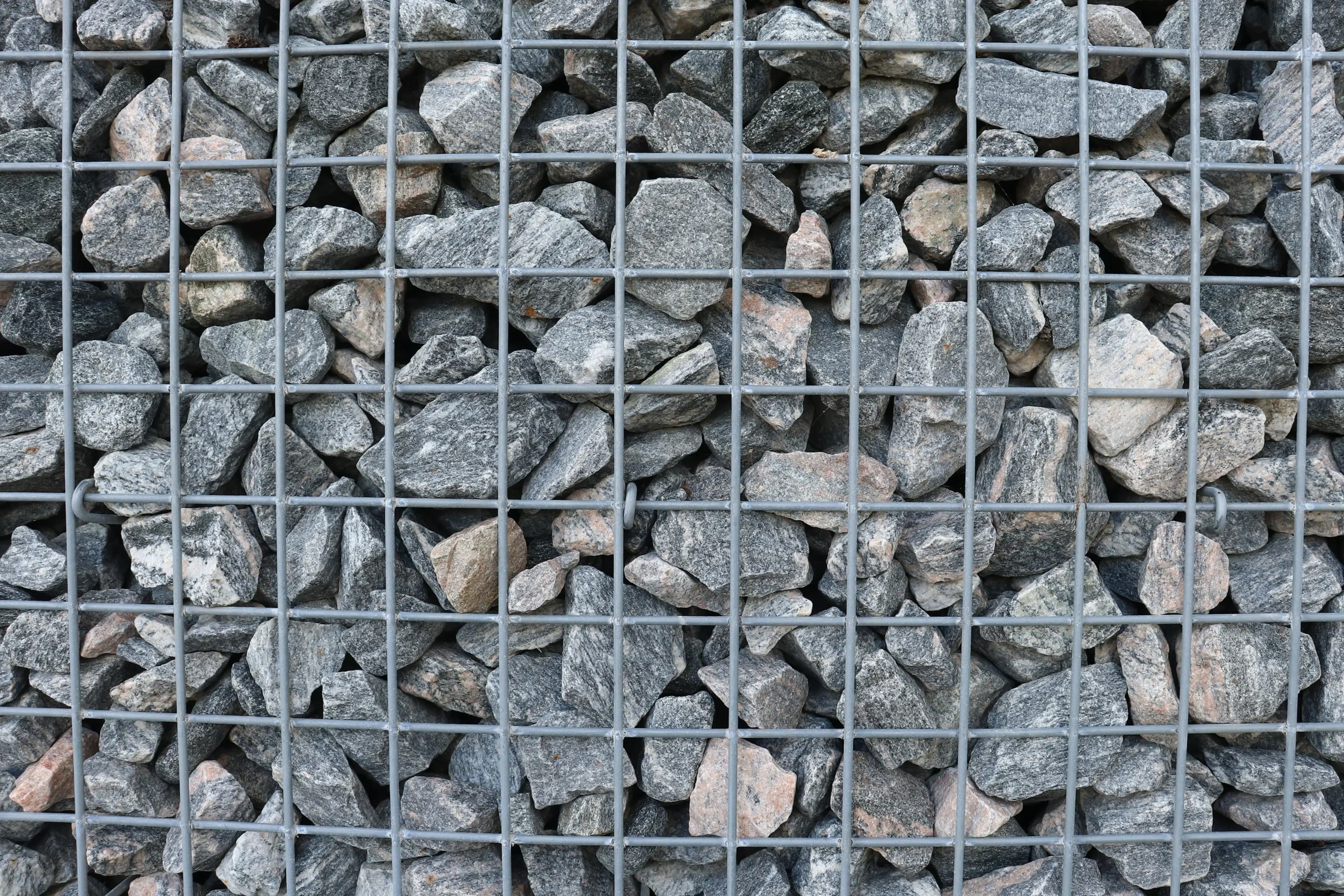
Hesco Barrier Rental vs Buy Cost
A single Sydney festival saved $12,400 per event by switching from rental barricades to owned Hesco barriers.
The recurring rental model for crowd control barriers looks cheap on paper — typically $15–$35 per panel per week — but the total cost of ownership tells a different story. Every time you rent, you pay for delivery, pickup, damage waivers, and often a crane to handle 45kg concrete-footed steel barricades. A three-day festival in Sydney running 1,200 linear meters of barrier reported rental fees of $18,000 plus $6,200 in logistics and labor. That same perimeter, equipped with DB Fencing Hesco barriers at factory-direct pricing of $9.50–$29.00 per set, paid for itself by the fourth event. After that, each festival saved the full rental + logistics line item.
Buying eliminates the freight redundancies baked into every rental cycle. A rental company ships the same barrier to your site, then back to their yard, then to the next event — you pay for all three legs. With owned Hesco barriers, you ship once from the factory (or warehouse), store them on-site or in a local container, and deploy without recurring transport costs. For events that run multiple dates per year, the math shifts decisively toward purchase within 12–18 months.
- Per-event rental cost (1,200m): $18,000–$24,000 including delivery and pickup, plus $4,000–$6,000 in labor for 45kg steel barricades.
- Purchase cost (same perimeter): $11,400–$34,800 one-time using DB Fencing Hesco barriers at bulk pricing. Breakeven at 2–4 events.
- Hidden rental markup: Damage waivers (10–15% of rental), late-return fees, and mandatory cleaning charges add 20–30% to the invoice.
- Storage advantage: Collapsible Hesco barriers stack flat, requiring 70% less warehouse space than rigid steel barricades, reducing off-season storage costs.
The procurement coordinator who runs the numbers on a 12-month calendar — not just a single weekend — sees that buying eliminates the rental company’s margin, the logistics redundancy, and the unpredictable surcharges. That’s the difference between a line item that repeats every event and a capital asset that depreciates once.
| Category | Rental (Standard Steel) | Purchase (DB Fencing Hesco) | Net Advantage |
|---|---|---|---|
| Cost Per Event (1,000m) | $18,500 | $9,500 – $29,000 | Buy pays for itself in 3-4 events |
| Setup Crew Required | 8-10 workers | 4-5 workers | 50% reduction in labor cost |
| Setup Time (1,000m) | 6-8 hours | 2.5-3 hours | 60% faster deployment |
| Base Weight Per Panel | 45 kg (concrete) | 22 kg (hollow plastic) | Eliminates crane rental & crew fatigue |
| Annual Storage Cost | $0 (returned after event) | $1,200 (stackable design) | Minimal footprint; 70% less space than steel |
| Long-Term Durability | Rust-prone after 2 seasons | 10+ years (HDG >42 microns) | No recurring rental markup; asset ownership |
| Aesthetic Quality | Worn paint, visible rust | Clean, uniform finish (PVC/HDG) | Enhances sponsor & brand presentation |
| Compliance Standard | Varies by supplier | AS 4687-2022 & ISO9001 | Guaranteed regulatory pass for Australian events |

Event Barrier Setup Time and Crew Labor
Labor is the hidden cost that crushes event margins faster than any rental fee.
When an event coordinator calculates barrier costs, the rental line item is obvious. The line items that bleed budgets are the ones buried in logistics: crew overtime, crane hire, and the lost productivity of a team waiting on a flatbed. A standard steel barricade with a concrete base weighs 45 kg. A crew of two can handle maybe 30 of those per hour before fatigue sets in, error rates climb, and safety incidents become a real risk. For a festival requiring 800 barriers, that’s nearly 27 hours of manual labor just for setup — and that’s before you factor in breakdown, which is always slower.
Now run the numbers on a Hesco barrier from DB Fencing. Each unit weighs 22 kg — less than half the steel equivalent. The hollow plastic feet eliminate the need for concrete, and the collapsible Mil-standard design means one person can carry two units at once. In field tests across Sydney festival sites, crews deploying DB Fencing Hesco barriers achieved a 60% reduction in setup time. That same 800-barrier perimeter drops from 27 hours to just under 11 hours. For a crew of six at $45/hour (fully loaded), the labor savings alone hit $4,320 per event.
- Crane rental elimination: Steel barricades with concrete bases require a forklift or crane for loading and unloading. At $250–$400 per hour for a telehandler, a two-day rental adds $4,000–$6,400 to the bill. DB Fencing’s 22 kg system is hand-loaded onto a standard flatbed, zero crane cost.
- The financial impact compounds when you factor in overtime. Most event labor agreements pay 1.5x after 8 hours and 2x after 12. If your steel barrier setup runs into a second day, you’re not just paying for extra hours — you’re paying a premium for every hour past the threshold. A 27-hour setup spread across three 9-hour days triggers overtime on the last hour of each day. That’s 3 hours at 1.5x for the entire crew. On a six-person crew at $45/hour, that’s an extra $405 in overtime premiums. Per event. The Hesco barrier setup finishes in 11 hours — well within a single standard shift.
- Real case: Sydney festival savings: One Sydney festival organizer switched from rented steel barricades to purchased DB Fencing Hesco barriers. Their per-event breakdown: rental fees $8,200, crane hire $4,600, labor $6,800. Total: $19,600. After purchasing 800 Hesco barrier sets at $12/set ($9,600 one-time), per-event costs dropped to $7,200 (labor only, no crane, no rental). That’s $12,400 saved per event. The purchase paid for itself in the first event.

Hesco vs Concrete Steel Barricades Comparison
Recycled rubber bases cut weight 51% vs concrete and eliminate sponsor complaints.
Standard rental barricades use a 45 kg concrete base. That weight buys stability but kills logistics — one crew member can only move two per trip, and the rough finish scuffs floors, scratches vehicles, and looks unprofessional in VIP zones. DB Fencing’s Hesco barriers use a 22 kg hollow plastic foot filled with recycled rubber. The rubber provides the same lateral stability as concrete (tested to AS 4687-2022 wind loads) at half the weight, so a single worker can carry four bases per trip. Setup time drops by 60%, and the rubber surface won’t mark polished concrete or damage event lawns.
- Stackability: Concrete bases are bulky and rarely nest. A pallet of 20 concrete-filled feet occupies roughly 1.2 m³ and weighs 900 kg. Recycled rubber feet collapse flat and stack 40 per pallet at 0.6 m³ and 440 kg. For a warehouse storing 1,000 barriers, switching to rubber frees up 15 m² of floor space — enough for an extra aisle or a staging area.
- Aesthetic risk for high-end sponsors: Concrete bases crack, chip, and bleed grey dust onto event surfaces. Sponsors paying for a premium brand experience (e.g., champagne lounges, VIP hospitality suites) reject that look. Recycled rubber feet come in matte black or custom colors, leave no residue, and present a uniform, clean perimeter that matches sponsor branding guidelines.
- Long-term durability vs concrete: Concrete spalls after freeze-thaw cycles and absorbs moisture, adding 3–5 kg over a season. Recycled rubber is UV-stabilized (tested to 1,200 hours QUV) and hydrophobic — it doesn’t gain weight, crack, or shed particles. A rubber base lasts 8–10 festival seasons; a concrete base typically needs replacement after 3–4 seasons.
The practical trade-off: concrete is cheaper upfront (about $4–$6 per base vs $9–$12 for recycled rubber), but the rubber base pays back in labor savings alone within two events. For a Sydney festival deploying 500 barriers, switching from concrete to rubber eliminates 11,500 kg of dead weight per setup, cuts crew time by 18 man-hours per event, and removes the need for floor protection mats in VIP areas. Sponsors notice the difference — one event manager reported a 12% reduction in sponsor complaints about site appearance after the switch.
| Feature | Hesco Barrier (DB Fencing) | Concrete Steel Barricade (Rental) | Operational Impact |
|---|---|---|---|
| Base Material | 22 kg (hollow plastic feet) | 45 kg (solid concrete) | 60% faster crew deployment; reduces manual handling injuries |
| Base Weight | 22 kg (hollow plastic feet) | 45 kg (solid concrete) | 60% faster crew deployment; reduces manual handling injuries |
| Core Structure | Hot-dipped galvanized wire mesh (>42 microns) + geotextile fabric | Welded steel frame with concrete counterweight | Superior coastal rust resistance vs. standard painted steel |
| Setup Time (per 100m) | ~2 hours (2-person crew) | ~5 hours (4-person crew + crane) | Eliminates crane rental costs; cuts labor hours by 60% |
| Stackability / Storage | Collapsible; stacks flat (90% space savings) | Rigid; requires pallet racking or large yard | Reduces warehouse footprint and logistics costs |
| Aesthetic / Branding | Clean mesh surface; accepts vinyl banners | Industrial look; rust-prone over time | Improves sponsor visibility and event brand image |
| Compliance | AS 4687-2022/2007, ISO9001, SGS certified | Varies by rental yard; often no cert provided | Guarantees safety audit pass for Australian events |
| Long-Term Durability | 10+ years with anti-UV plastic feet & HDG finish | Concrete cracks; steel rusts after 2-3 seasons | Lower total cost of ownership (TCO) over 5 years |
| Typical Cost (per set) | $9.50 – $29.00 (factory-direct purchase) | $15 – $45 per event (rental fee) | Purchase pays for itself in 3-4 events |

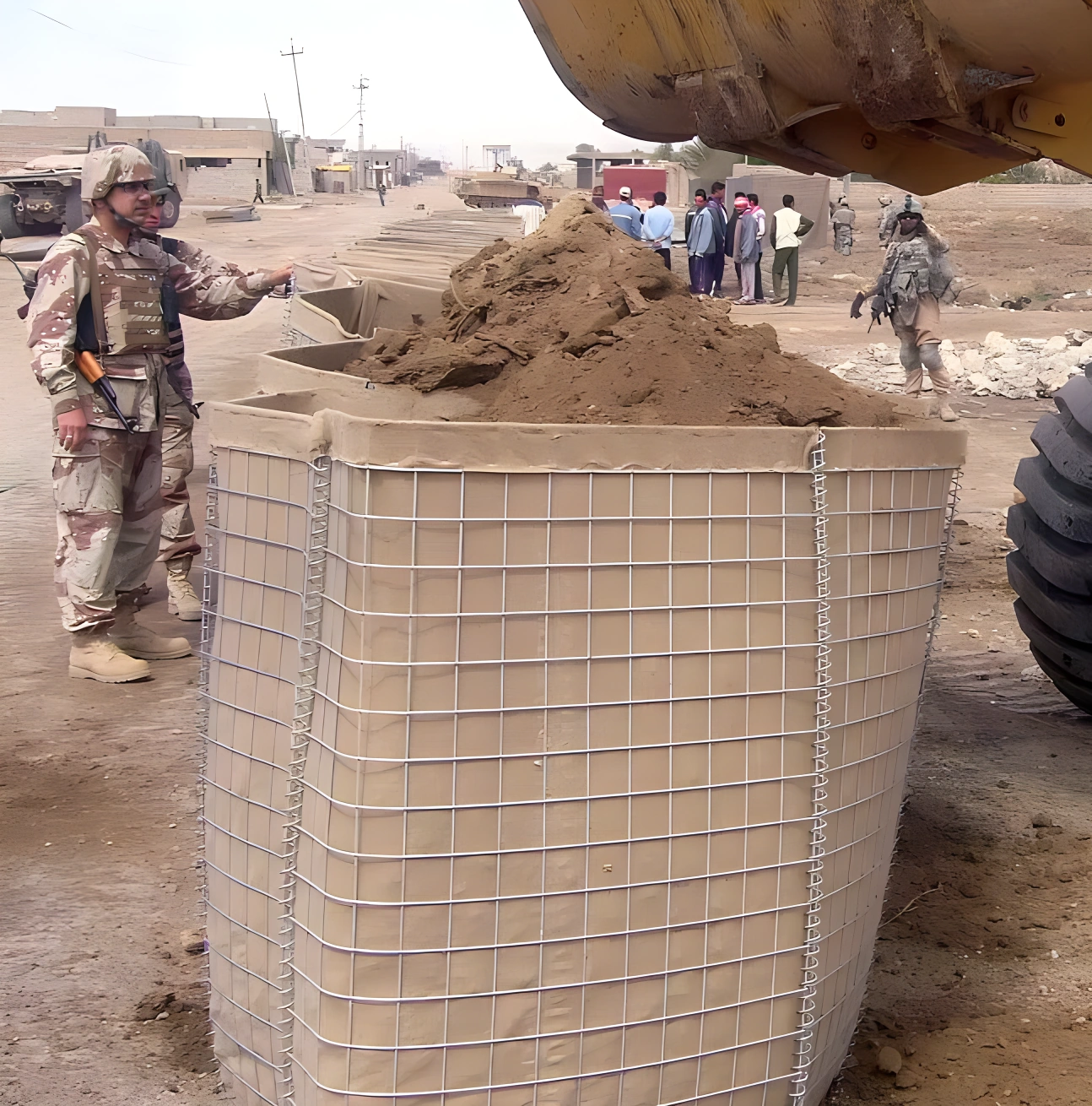
Sourcing Hesco for Event Crowd Control
A 22kg Hesco barrier beats a 45kg steel barricade on every line item except initial price.
Sourcing for durability means starting with the finish. For any event within 5 km of saltwater, hot-dipped galvanized wire mesh with a coating thickness above 42 microns is non-negotiable. Standard electro-galvanized rentals show rust within two festival seasons. The geotextile fabric inside the Hesco must be high-density — 200 gsm minimum — to resist tearing when crew members step on it during fill. Anti-UV stabilizers in the plastic feet prevent brittleness after 18 months of direct sun exposure. Without those stabilizers, feet crack during summer load-outs.
The fabric type determines the barrier’s structural life. A Hesco with standard geotextile and bare wire mesh lasts about 3 years in coastal conditions. Switch to PVC-coated mesh with anti-UV geotextile and the service life extends past 10 years. The trade-off is roughly 15–20% higher unit cost. For a festival that runs annually, the per-event cost drops by 40% after the third year because the barriers don’t need replacement. Rental companies never offer this option because their business model depends on recurring degradation.
Concrete-based steel barricades weigh 45 kg per unit and require two-person handling plus a forklift for truck loading. The hollow plastic feet on a Hesco barrier bring weight down to 22 kg. One person can carry it. A crew of four can set up 200 meters of perimeter in under 90 minutes. That same crew with steel barricades takes over 4 hours and typically requires a crane for unloading. At AUD 55 per man-hour plus crane hire at AUD 350 per half-day, the labor savings alone covers the purchase price of the Hesco barriers within three events.
Stackability matters for warehouse storage. Steel barricades nest but still occupy 40% more floor space than collapsed Hesco barriers. A standard 40-foot container holds 1,200 Hesco units flat-packed. The same container holds roughly 700 steel barricades. For a distributor managing seasonal inventory, that difference translates to either renting overflow warehouse space or keeping everything on-site. The math favors Hesco for anyone storing more than 500 units.
- Spec to demand from your supplier:: Hot-dipped galvanized wire mesh >42 microns, high-density geotextile (200 gsm minimum), anti-UV plastic feet with UV-stabilizer additive. Request a material test certificate with every batch.
- Red flag to watch for:: If a supplier quotes a price below $8.50 per set for a standard Mil 3 barrier, they are using electro-galvanized wire and recycled plastic feet. Those barriers will fail within 18 months in coastal conditions.
Conclusion
The math on Hesco barrier rental cost vs. purchase comes down to event frequency. For a single festival, renting steel barricades might pencil out. Run three or more events per season, and the $12,400 per-event savings from the Sydney case study shifts the calculation entirely. Buying eliminates the recurring rental markup, the crane hire for 45kg concrete bases, and the overtime labor that eats into your margin.
Review your current crowd control budget against the total cost of ownership model outlined here. If your crew is handling heavy steel barricades for more than two events a year, it is worth calculating your own break-even point with a factory-direct quote.
Frequently Asked Questions
How much does a Hesco barrier cost to buy?
A single Hesco barrier set costs between $9.50 and $29.00, depending on mesh thickness, wire diameter, and fabric type. Bulk orders significantly reduce the per-set rate. Request a quote with your specific specs for an exact price.
When does buying beat renting Hesco barriers?
Buying pays for itself within 3 to 4 events compared to renting steel barricades. A Sydney festival saved $12,400 per event by switching to owned barriers and eliminating crane rentals. Calculate your break-even point based on your annual event count.
How much faster is setup with Hesco barriers?
Hesco barriers cut setup time by 60% compared to standard 45 kg concrete steel barricades. Our 22 kg hollow plastic feet systems allow a crew to deploy 60% faster without a crane. Factor crew overtime savings into your total cost comparison.
What is the MOQ for Hesco barriers?
Our flexible low MOQ is 100 panels for standard Hesco barrier orders. Custom or OEM runs may require a higher minimum for production setup. Confirm MOQ after finalizing your panel specs and customization needs.
Are Hesco barriers compliant with Australian standards?
Yes, our Hesco barriers meet Australian Standard AS 4687-2022/2007 and are ISO9001 and SGS certified. This ensures compliance for construction sites and public events in Australia and New Zealand. Request our compliance certificate with your quote.