Skip to content
A global fence distributor looking up the hesco barrier factory price usually finds a wall of opaque quotes. The numbers on the page—$9.50 to $29.00 per unit—look reasonable until you factor in the 30-50% markup that local stockists and import agents tack on before the shipment ever reaches your warehouse. That margin erosion is the silent killer of resale profitability, especially when you’re trying to compete on volume.
The real question isn’t whether you can find a cheaper barrier. It’s whether the supplier you’re talking to actually owns the production line. Most Anping “factories” are trading companies that subcontract the welding and buy plastic feet from third-party molders. That handoff creates quality gaps—inconsistent weld strength, variable zinc coating thickness, and a higher chance of rust claims within the first year. A distributor who absorbs those returns loses more than the initial markup they thought they saved.
Why Hesco Barriers Cost So Much: The Markup Trap
Distributor markups eat 30-50% of your margin.
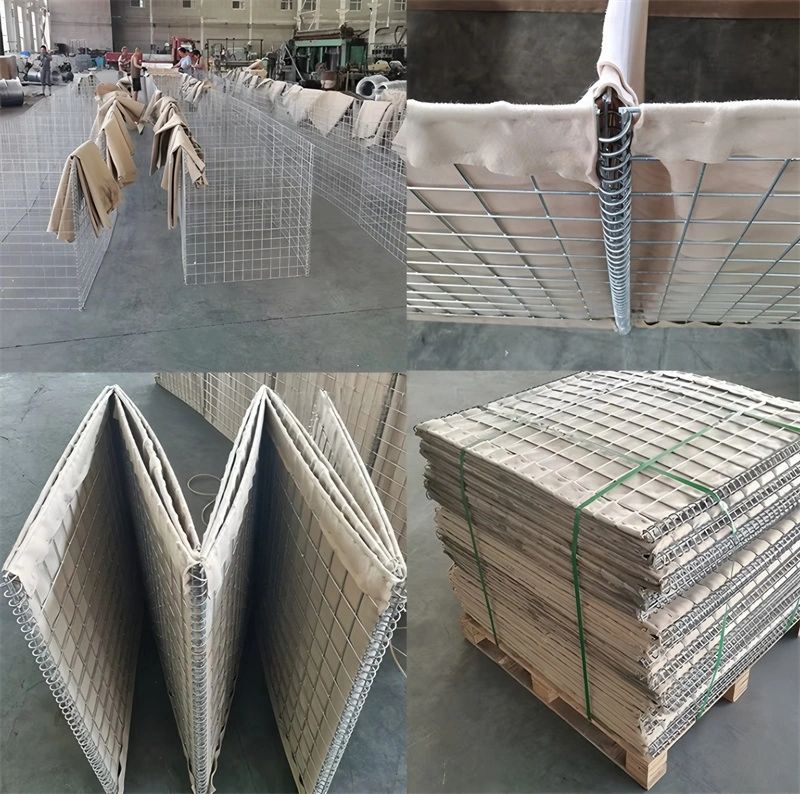
A Hesco barrier is a welded wire mesh cage lined with geotextile fabric. That’s it. No motors, no electronics, no complex assembly. Yet the price you see from a local distributor often lands between $15 and $45 per unit — nearly double what the same barrier costs leaving a factory in Anping. The gap isn’t material cost. It’s layers of middlemen, each taking a cut for warehousing, handling, and inventory risk.
Let’s walk through the real cost structure. A Mil 5 barrier — the most common size for flood control and perimeter security — costs roughly $9.50 per unit when ordered factory-direct at 100 units. At 500 units, that drops to $7.85 per unit because automated welding lines run more efficiently at higher volume, and container loading ratios optimize. The distributor who buys from a trading company (not a real factory) pays $11–$13 per unit, then adds 30–50% markup to cover their own storage, freight consolidation, and profit. Your final landed cost as a wholesaler? $16–$20 per unit. You’ve lost half your potential margin before you even sell one.
- Raw wire mesh: The largest single cost driver. 3mm wire diameter, hot-dipped galvanized to >42 microns. Cheaper electro-galvanized wire costs 20% less but rusts through in 6–12 months in coastal environments — a warranty nightmare for distributors.
- Geotextile lining: Heavy-duty non-woven fabric, typically 200–300 gsm. This is what holds the fill material (sand, gravel, water). Low-grade lining tears during filling, causing job-site failure and liability claims.
- Welding labor: Each intersection must be fusion-welded, not spot-tacked. A 10-line factory like DB Fencing produces 2,000 sets per week with consistent weld penetration. Trading companies outsource to small workshops where weld strength varies batch to batch.
- Galvanization thickness: Hot-dipped galvanization at >42 microns adds 15–18% to raw material cost. Electro-galvanized (5–12 microns) is cheaper but fails salt spray testing within 200 hours. AS 4687-2022 requires minimum 42 microns for outdoor temporary fencing.
The markup trap is especially brutal for distributors testing a new product line. You order 50 units from a local stockist at $18 each, pay $900, and hope to resell at $28. Your margin is 35%. But if you order 100 units factory-direct at $9.50 each, your cost is $950, and you can sell at $22 — still undercutting the local distributor while pocketing 57% margin. The low-MOQ flexibility (100 sets, not 1,000) means you don’t need to bet the warehouse on a new SKU. You test the market with a container’s worth, validate demand, then scale.
One more thing most buyers miss: many Anping ‘factories’ are actually trading companies. They take your order, subcontract to a workshop, add 10–15% for their own margin, and pass the quality risk to you. The only way to guarantee batch consistency — same wire gauge, same weld strength, same galvanization thickness across 500 units — is to work with a manufacturer that owns its welding lines and plastic feet machines. DB Fencing is the only supplier in Anping with its own plastic feet injection line, which means we control the entire production chain. No subcontracting, no quality drift, no hidden fees.
| Factor | Factory Direct (DB Fencing) | Distributor Channel | Impact on Your Margin |
|---|---|---|---|
| Base Price (Mil 5, 100 units) | $9.50/set | $12.35 – $14.25/set (30-50% markup) | Lose $2.85 – $4.75 per set before resale |
| Volume Discount (500 units) | Drops to $7.85/set (non-linear savings) | Fixed % markup, no volume curve | Factory path yields 17% extra margin per unit |
| Minimum Order Quantity (MOQ) | Low MOQ = 100 sets (test new SKUs) | High MOQ = ties up capital in stock | Avoid holding cost of excess inventory |
| Galvanization Quality | Hot-dipped >42 microns (AS/NZS 4680) | Often electro-galvanized (<12 microns) – rust in 6-12 months | Electro = warranty returns eat 100% of savings |
| Supplier Integrity | Owns 10 welding lines + plastic feet machine (batch consistency) | Outsourced production from trading companies (variable quality) | Inconsistent batches lead to customer refunds & lost trust |
Factory Price Breakdown: Hesco vs Distributor Models
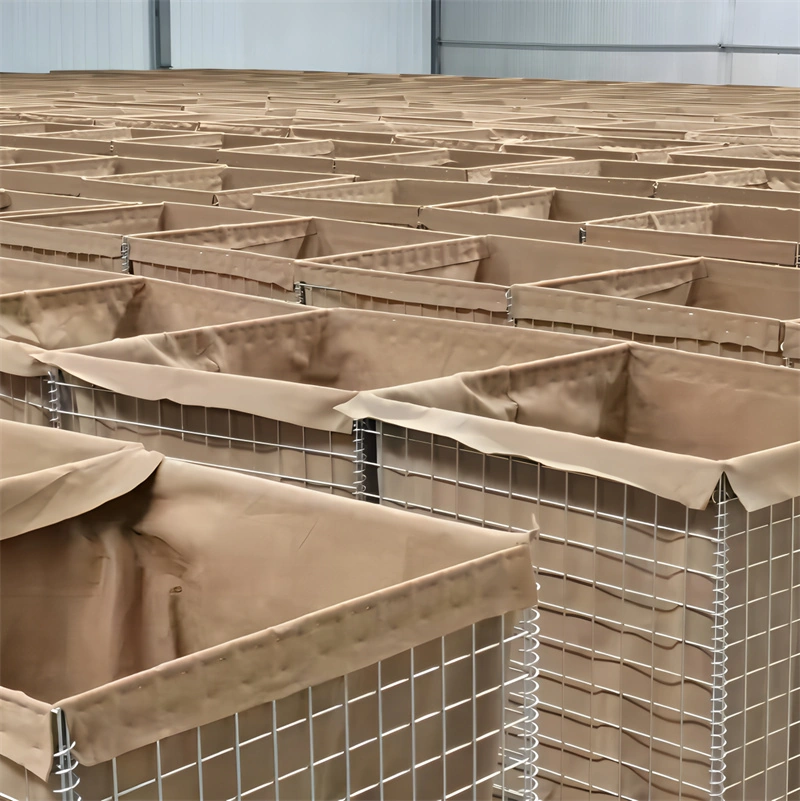
Factory-direct Mil 5 pricing drops from $9.50 at 100 units to $7.85 at 500 units.
Most Hesco barrier buyers assume the price they see from a local stockist is the base cost. It isn’t. Distributors routinely add 30-50% on top of the factory price, bundling shipping, warehousing, and their own margin into a single opaque number. For a veteran wholesaler, that markup directly eats into your resale margin before you even touch the product.
Factory-direct pricing for a standard Mil 5 barrier starts at $9.50 per set at 100 units. Cross the 500-unit threshold and that same unit drops to $7.85. That is not a linear discount — it reflects real production efficiencies: automated welding lines run at full capacity, and container loading ratios hit optimal density. The savings are structural, not negotiated.
- Wire gauge & cell count: A Mil 5 with 3mm wire and 5 internal cells costs less than a Mil 10 with 4mm wire and 10 cells. Every 0.5mm increase in wire diameter adds roughly 12-15% to material cost. Cell count directly affects fabric and welding labor.
- Galvanization method: Hot-dipped galvanization at >42 microns adds about 8-10% to unit cost compared to electro-galvanized. Electro-galvanized barriers fail within 6-12 months in coastal environments, triggering warranty claims that wipe out any upfront savings.
- Local stockist bundling: Stockists rarely separate product cost from logistics. A $15.00 per-unit quote may include $4.50 in freight and storage fees. Factory-direct pricing lets you control shipping independently, often cutting total landed cost by 20-25%.
The real cost trap is not the base price — it is paying for features you do not need or accepting a coating that will rust before your customer’s project ends. Request the zinc coating certificate and caliper verification photos before any PO. If a supplier cannot provide those, you are buying a liability, not a barrier.
| Cost Factor | Factory Direct (DB Fencing) | Distributor Model | Your Margin Impact |
|---|---|---|---|
| Base Unit Price (Mil 5) | $9.50/unit (100 units) | $12.35 – $14.25/unit (30-50% markup) | Lose 30-50% potential profit per unit |
| Volume Discount (500 units) | $7.85/unit | $10.20 – $11.78/unit | Non-linear savings lost; pay inflated per-unit cost |
| Minimum Order Quantity (MOQ) | 100 sets (low risk trial) | Often 500+ sets (high capital tie-up) | Risk of dead stock; less flexibility for new SKUs |
| Galvanization Quality | Hot-dipped >42 microns (AS 4687) | Often electro-galvanized (<20 microns) | Returns & warranty claims from rust within 6-12 months |
| Production Control | Owns 10 welding lines + plastic feet machine | Outsourced to 3rd parties (inconsistent batches) | Defect rates increase; customer trust erodes |
Hesco Barrier Quality Gaps: What Generic Suppliers Hide
Electro-galvanized wire rusts in 6-12 months.
Most generic suppliers in Anping are trading companies, not manufacturers. They subcontract production to the cheapest available shop floor, which means they have zero control over the wire specification. The standard shortcut is to use electro-galvanized wire — a thin zinc coating applied electrically — instead of hot-dipped galvanization. Electro-galvanized wire looks shiny on day one, but in coastal or high-humidity environments, it starts showing rust spots within 6 to 12 months. For a distributor, that translates directly into warranty claims, customer complaints, and a damaged reputation that costs far more than the few dollars saved per unit.
- Electro-galvanized wire: Zinc coating typically under 10 microns. Fails ASTM B117 salt spray test in under 100 hours. Common in unbranded or generic Hesco barriers.
- Hot-dipped galvanized wire: Zinc coating >42 microns per AS 4687-2022. Passes 500+ hours salt spray. Our internal production standard mandates a minimum of 45 microns on all wire mesh used in Hesco barriers.
- Weld joint strength: Trading companies cannot guarantee consistent weld shear strength because they don’t control the welding machines. We operate 10 dedicated welding lines with automated current monitoring, ensuring each cross-wire weld meets a minimum 2.5 kN pull-out force.
- Fabric lining density: The geotextile lining is the second-most common downgrade. Generic suppliers often use 100 gsm non-woven fabric that tears during filling. Our standard lining is 200 gsm needle-punched polypropylene, tested to hold 3 tons of sand without rupture.
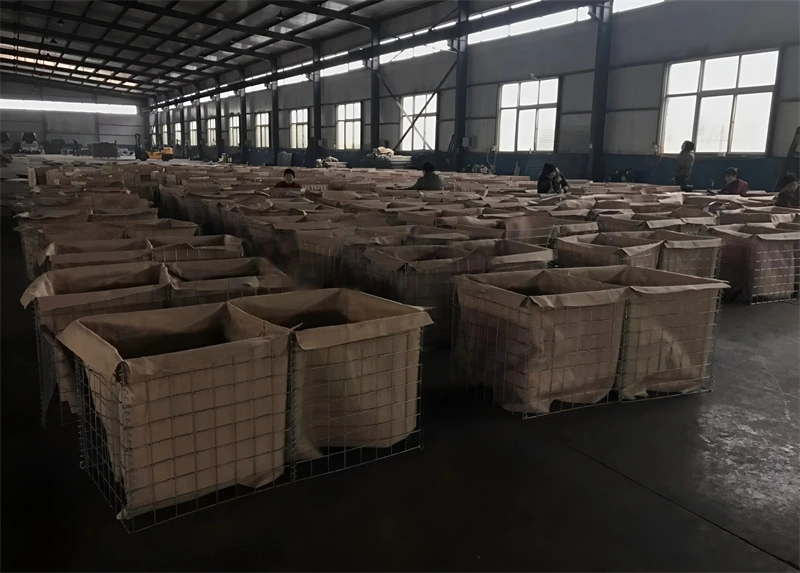
Vertical integration is the only reliable way to lock in these specs. We own the plastic feet molding machines — the only supplier in Anping that does — which means every base, every clip, every foot is made to the same dimensional tolerance. Trading companies buy their feet from three different molders and get three different heights. That inconsistency causes panels to wobble, gaps to appear, and end-users to reject shipments. When you buy from a factory that controls both the wire mesh and the plastic components, you eliminate the single biggest source of batch-to-batch variation.

How to Source Hesco Barriers Without Hidden Fees
Most “factory prices” hide 30-50% distributor markup—here’s how to verify real costs.
The first hidden fee is the zinc coating. If a supplier quotes a low price but uses electro-galvanized wire (typically <20 microns), the barrier will rust within 6–12 months in coastal or humid environments. The standard for outdoor durability is hot-dipped galvanization at >42 microns. Ask for a mill test certificate or a video walkthrough of the galvanizing line. If they can’t produce either, assume the coating is substandard.
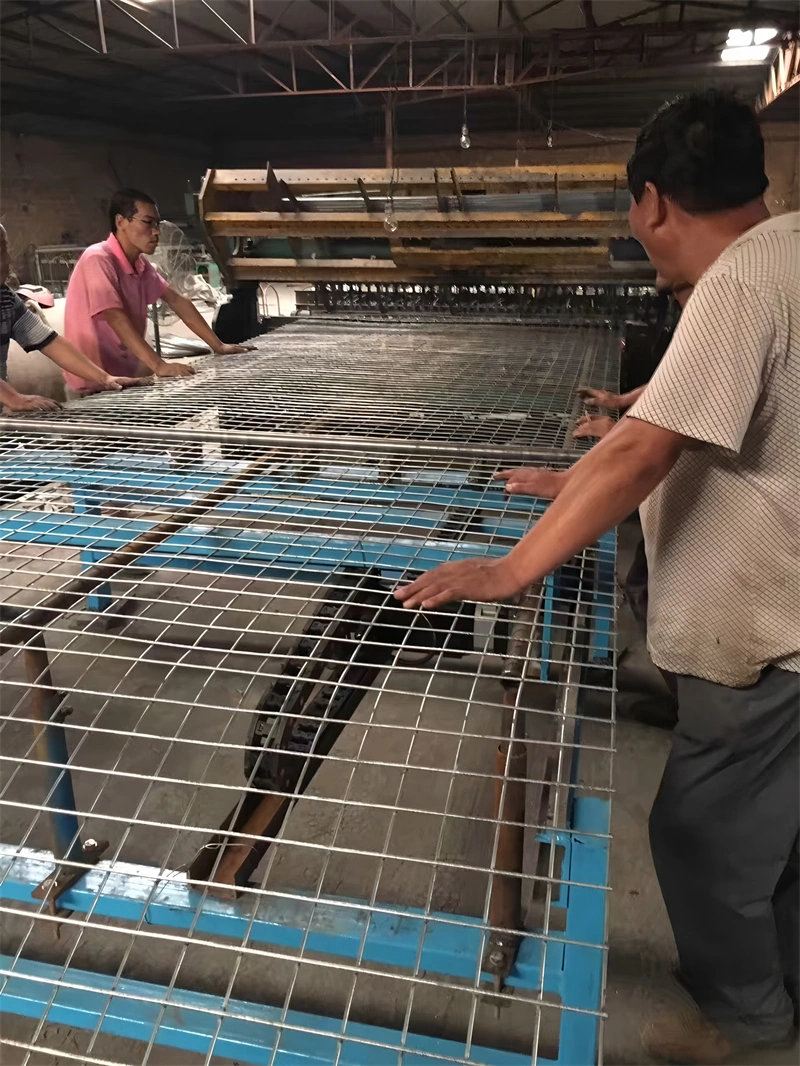
Second, verify the factory owns its production equipment. Many Anping “factories” are trading houses that outsource welding and plastic feet molding to separate workshops. This creates batch inconsistency: one container may have 2.5mm wire, the next 2.0mm. We operate 10 welding lines and the only in-house plastic feet machine in Anping, which means every set—from Mil 1 to Mil 10—uses the same tooling and the same wire diameter. Ask for a live video call to see the welding line running your order.
- Low MOQ (100 sets): Test a new market or replace damaged stock without tying up capital. Most factories demand 500+ units; we start at 100 so you can validate quality before scaling.
- 14 years of export documentation: We handle fumigation certificates, packing lists, and container loading plans. A single missing document can hold your shipment at port for 2–3 weeks—costing you demurrage fees and lost sales.
- Container loading optimization:The exact mix of Mil sizes to fill a 20′ or 40′ container without wasted space is calculated. This drops your per-unit freight cost by 8–12% compared to standard palletized loading.
Third, confirm the supplier’s loading process. A common hidden fee is “container stuffing”—the cost of re-packing poorly loaded containers at destination. We load every container ourselves using pre-planned diagrams, and we photograph each layer for your records. If a supplier can’t show you a loading plan before shipment, you’re paying for their mistakes later.
Finally, ask about the geotextile lining. Cheap liners tear during filling, leading to soil leakage and structural failure. Our lining is a heavy-duty non-woven fabric with a minimum tensile strength of 12 kN/m—enough for flood control and defense applications. Request a sample swatch and test it against a competitor’s. The difference in tear resistance is immediate.
Conclusion
Distributor markups of 30-50% are the single biggest drain on your resale margin. Factory-direct pricing for a Mil 5 barrier drops from $9.50 to $7.85 per unit at 500 sets, a saving that compounds with every container you move. That math is the difference between a competitive quote and a lost bid.
Review the full product specs and bulk pricing on the Heavy-Duty Hesco Barrier page to see how a low MOQ of 100 sets fits your next order cycle.
Frequently Asked Questions
How much do Hesco barriers cost?
Factory-direct Hesco barriers range from $9.50 to $29.00 per set depending on wire thickness, cell configuration, and volume. Distributors typically add a 30-50% markup on top. Request a quote with your exact cell size and quantity to lock in the factory price.
Who is the supplier of Hesco barriers?
Hesco barriers are manufactured by specialized wire mesh producers in Anping, China, the global wire mesh hub. We are a leading manufacturer with 10 welding lines and our own plastic feet machine, supplying. Contact us directly for factory pricing and OEM options.
What are the different types of Hesco barriers?
Standard types include Mil 1, Mil 3, Mil 5, Mil 7, and Mil 10, distinguished by their length, width, and number of cells. The Mil 5 is the most common for construction. Choose your type based on required height and site footprint.
Can civilians buy Hesco barriers?
Yes, Hesco barriers are widely available for civil engineering, flood control, and private site security. We supply directly to construction firms, event companies, and agricultural wholesalers with a low MOQ of 100 panels. Submit your project details for a civilian-use quote.
How much do barriers cost?
General construction barriers range from $5 to $15 per unit, but Hesco barriers are priced higher ($9.50-$29.00) due to their heavy-duty galvanized steel and geotextile lining. The price difference reflects the higher durability and. Compare specs carefully before choosing a barrier type.