Skip to content
If you’re looking at crowd control barrier spec sheets for the 2026 event season, you already know the dimensions. 2300mm long, 1100mm high, somewhere between 8 and 15kg. That part is standard. The real question isn’t the number on the drawing — it’s whether that barrier survives a season of outdoor storage without turning into a rusted liability that your crew refuses to handle.
That 12kg sweet spot is where most procurement conversations stall. Go lighter than 8kg and the barrier wobbles under crowd pressure. Heavier than 15kg and you’re looking at back injuries during load-in, plus higher freight costs per pallet. DB Fencing, a manufacturer based in Anping with its own welding lines and plastic foot production, targets that exact weight. They’re the only supplier in the region producing integrated bases in-house, which cuts warehouse volume by roughly 20% compared to barriers with loose feet. That matters when you’re stacking 500 units for a festival run.
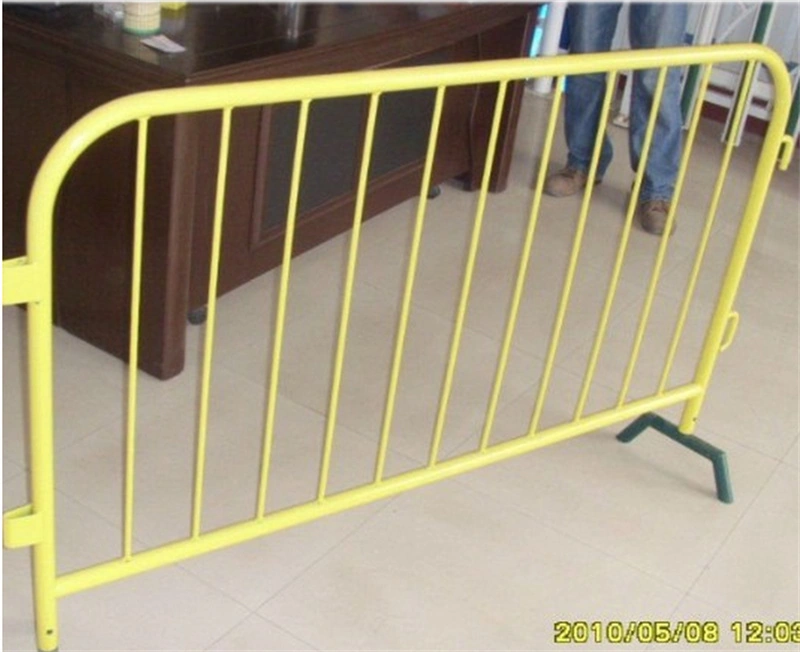
Standard Crowd Barrier Dimensions Explained
The 2.3m x 1.1m ratio is the only dimension that passes both crowd pressure and security sightline tests.
Event planners frequently confuse pedestrian crowd barriers with heavy-duty construction fencing. The difference is not just weight — it is geometry. A standard crowd barrier at 2300mm long and 1100mm high creates a specific ratio that prevents clambering while allowing security staff to maintain sightlines over the top. Construction panels at 2.0m or 2.4m height block vision entirely, creating blind spots that crowd control coordinators cannot accept.
- Self-supporting structure: Unlike temporary fence panels that require separate concrete feet and diagonal bracing, crowd barriers integrate the base into the frame. The 250-300mm base width provides stability without loose components that get lost or broken during storage. DB Fencing manufactures its own plastic feet in-house, which means the base geometry is optimized for stacking — reducing warehouse volume by up to 20% compared to loose-foot barriers from generic suppliers.
- Tight interlocking: The 2300mm length allows barriers to lock together with minimal gap — typically under 5mm between units. In high-density festival zones, gaps over 10mm become pinch points for fingers or allow small objects to pass through. The integrated coupling system on DB Fencing barriers uses a pin-and-loop mechanism that keeps adjacent panels aligned under crowd pressure without requiring separate clamps that get lost on site.
- Quantity calculation: One barrier covers 2.3 linear meters. For a 100-meter event perimeter, you need 44 units (100 ÷ 2.3 = 43.5, round up). Add 10% for gate openings, corners, and staging areas. This calculation is impossible with non-standard lengths. Many generic Alibaba listings advertise ‘custom dimensions’ without disclosing that non-standard barriers require custom couplers and bases — inflating your total cost by 15-25%.
The 12kg weight target is not arbitrary. Barriers under 8kg lift in wind and tip when the crowd leans. Barriers over 15kg cause back injuries during load-in and exceed safe lifting limits for a single crew member. DB Fencing engineers the frame from 1.6mm (16-gauge) steel tube to hit exactly 12kg — heavy enough to stay planted, light enough for one person to carry and stack. Competitors who use thinner tube (1.2mm) to save weight create instability; those who use 2.0mm tube add unnecessary weight that slows setup and increases freight costs.
| Dimension | Specification | Benefit for Event Crews |
|---|---|---|
| Length | 2300mm (approx. 7.5 ft) | Covers standard doorways and stage gaps; reduces number of units needed per linear meter. |
| Height | 1100mm (approx. 43 in.) | Prevents clambering while maintaining sightlines for security; compliant with AS 4687. |
| Base Width | 250–300mm | Integrated base design eliminates loose feet; improves stackability and reduces storage volume by up to 20%. |
| Weight | 12kg (sweet spot: 8–15kg range) | Light enough for one-person handling; heavy enough to resist wind and crowd pressure without concrete feet. |
| Tube Thickness | 1.6mm (16-gauge steel) | Rigid frame withstands multi-person load tests (5–10 people leaning); resists bending during transport. |
| Finish | Hot-dip galvanized (>42 microns) | Seals welds completely; prevents rust streaks on powder-coated surfaces; lasts 5+ years in outdoor storage. |
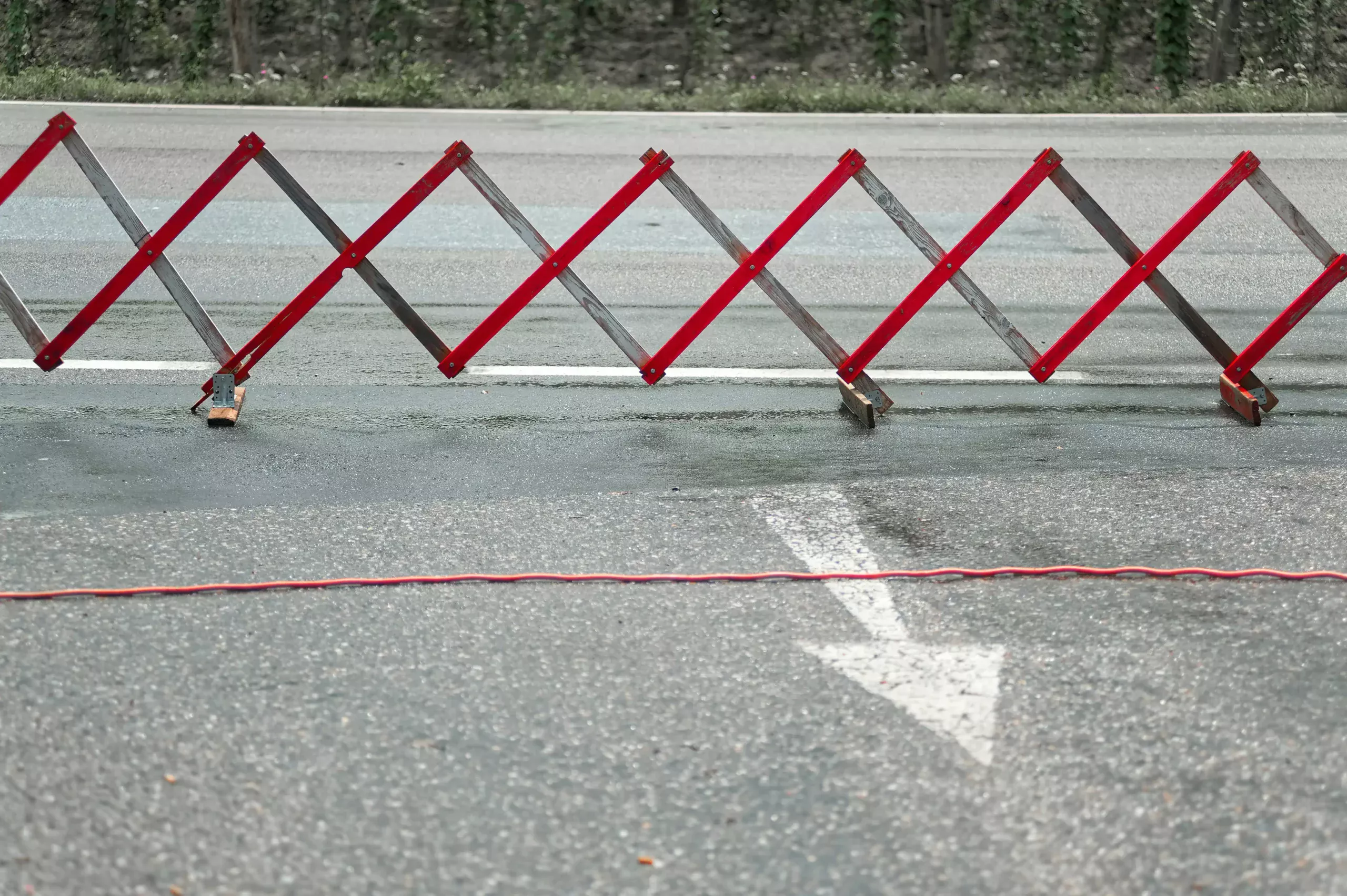
Weight Analysis: Why 12kg is the Sweet Spot
12kg is the ergonomic ceiling for manual handling and the floor for crowd stability.
Every event coordinator knows the math: a barrier that is too light gets knocked over by a crowd surge; one that is too heavy gets dropped on a crew member’s foot. The industry standard of 12kg exists because it sits at the intersection of two hard constraints — OSHA’s manual lifting guidelines and the wind-load requirements for outdoor festival zones. Barriers under 8kg, typically made from thin-wall aluminum or light-gauge steel, fail multi-person lean tests and can slide across asphalt in gust conditions above 30 km/h. On the other end, barriers over 15kg exceed the safe single-person lift threshold for most crews, increasing workers’ compensation claims and slowing load-in times by up to 40%.
The 12kg sweet spot also directly impacts your freight costs. A 40-foot container holds roughly 480 barriers at 12kg each — that’s 5,760 kg of product. Bump the weight to 15kg and the same container hits 7,200 kg, pushing you into a higher shipping bracket or reducing total unit count to stay under weight limits. Over a 10-container peak season order, that 3kg difference adds $18,000–$24,000 in unnecessary logistics spend. For a veteran procurement coordinator, the choice is not about preference — it is about calculating total cost per event.
- Below 8kg: Fails stability tests with 5 people leaning. Requires sandbags or additional anchoring for outdoor events. Not AS 4687 compliant for crowd control applications.
- 12kg standard: Passes multi-person load tests. Can be lifted by one crew member without mechanical aid. Stackable for storage. Meets AS 4687-2022 wind-load requirements.
- Above 15kg: Exceeds NIOSH safe lifting limits for repetitive tasks. Increases injury risk. Slows setup time. Higher per-unit freight cost without proportional stability gain.
Insider warning: Some suppliers market ‘heavy-duty’ barriers at 18-20 kg as superior, but that extra steel adds no crowd-control benefit — it only increases your shipping bill and your crew’s injury risk. The engineering target should always be 12kg ± 1kg, achieved through 1.6mm (16-gauge) steel tube with a hot-dip galvanized finish. Anything heavier means the supplier is using thicker wall tube to compensate for poor base design, not to improve performance. Always request a certified weight spec before placing a bulk order.
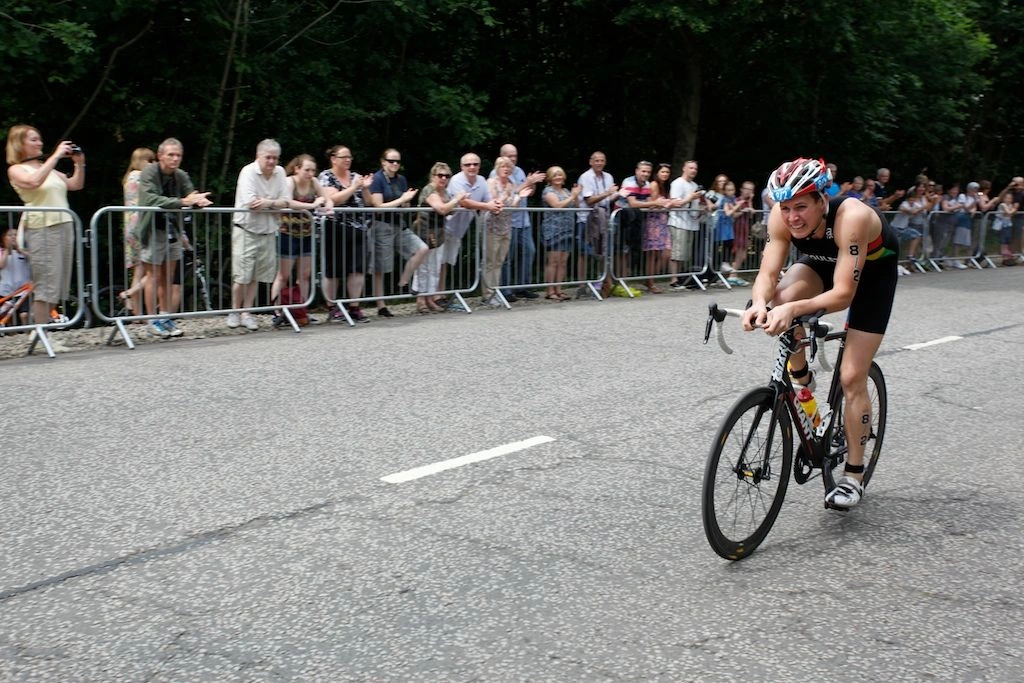
Hot-Dip Galvanized vs. Pre-Galvanized Finishes
Pre-galvanized barriers look fine at delivery.
The difference between a barrier that lasts five years and one that rusts in twelve months comes down to one process: hot-dip galvanization. Most generic crowd control barriers use pre-galvanized steel tube — the sheet metal is zinc-coated before welding. That leaves every weld joint, every cut end, and every drilled hole exposed to the elements. Within one season of outdoor storage, orange rust streaks bleed through white powder coating. For event coordinators managing VIP zones or branded festival perimeters, that rust is a direct hit to professional appearance.
Hot-dip galvanization solves this by submerging the fully assembled barrier — welds, corners, and all — into a bath of molten zinc at approximately 450°C. The zinc bonds metallurgically to the steel, sealing every exposed edge. The result is a uniform coating thickness above 42 microns, measured per ISO 1461. That coating withstands salt spray testing for over 200 hours without red rust. For barriers stored outdoors year-round between events, this is the difference between a reusable asset and a disposable liability.
- Pre-galvanized failure point: Weld joints and cut edges remain uncoated. Zinc paint applied post-weld flakes off under UV and abrasion, exposing bare steel.
- Hot-dip coverage: Entire barrier — tube interior, weld beads, base plate holes — receives full zinc coating. No gaps, no touch-up paint required.
- Aesthetic impact for events: Orange rust streaks on white barriers are visible from 50 meters. Hot-dip barriers maintain uniform color for the life of the powder coat.
- Storage cost math: A pre-galvanized barrier stored outdoors for 18 months typically shows rust on 30-50% of welds. Hot-dip barriers stored identically show zero rust at the same interval.
Sourcing Factory-Direct for OEM Customization
Factory-direct sourcing cuts cost by 40-60% vs.
Local distributors add 40-60% markup to crowd barriers. They also limit your color options to stock black or yellow. Sourcing factory-direct from a manufacturer like DB Fencing eliminates that margin and unlocks full OEM control. But not all factories deliver consistent quality across batches.
DB Fencing operates 10 welding lines and is the only supplier in Anping with its own plastic feet production. That matters because most factories outsource plastic components to third parties, introducing dimensional variation. When feet don’t match frames, barriers wobble on uneven ground — a safety issue at festivals. DB Fencing controls both welding and injection molding in-house, so every barrier interlocks identically.
- OEM customization scope: Custom RAL powder-coating colors to match event branding. Logo placement on frame or base. Integrated base color matching.
- Quality consistency: In-house production means welds are hot-dip galvanized after assembly, not pre-galvanized tubes with zinc paint on joints. This prevents rust streaks on white barriers after one outdoor season.
- MOQ flexibility: 100 panels minimum for OEM orders. Test a new color or logo without committing to a container load. This reduces inventory risk for seasonal event companies.
The hidden risk with low-cost factory-direct suppliers is batch-to-batch variation in tube wall thickness. A supplier quotes 1.6mm but ships 1.2mm after the first order. DB Fencing’s ISO9001/SGS certification includes random thickness checks per production run. Request caliper verification photos on your first order — any reputable factory will provide them.
Conclusion
The 12kg sweet spot, the 1.6mm tube thickness, and the >42 micron hot-dip galvanization are not optional upgrades. They are the difference between a barrier that lasts five seasons and one that rusts at the welds after one. For a procurement coordinator managing 500+ units across multiple festival sites, that math decides the annual budget.
Review the factory-direct specs against your current supplier’s pricing. If they cannot match the zinc coating thickness or the integrated base design, you are paying for a lower standard. Compare the options on the product page and see how the numbers line up for your next peak season order.
Frequently Asked Questions
What spec section is temporary fencing?
Temporary fencing specifications fall under construction site safety or crowd control sections, such as Australian Standard AS 4687-2022. These cover panel dimensions, material, and load ratings for compliance. Always verify local building code requirements.
What is the height of a concert barrier?
The standard concert barrier height is 1.1 meters (1100mm), with a length of 2.3 meters and weight around 12kg. This height prevents climbing while allowing security visibility. Confirm height for your event’s specific crowd density.
What are the OSHA regulations for barricades?
OSHA regulations for barricades are covered under 29 CFR 1926.502 for fall protection and 1926.202 for barricades near excavations. For temporary crowd control, local event safety codes often apply instead of OSHA. Consult your local safety authority for specific requirements.
How far apart should temporary fence posts be?
Temporary fence posts are typically spaced at the panel length, commonly 2.3 meters (7.5 feet) apart for standard crowd control barriers. In high-wind areas, additional bracing or closer spacing may be needed. Always factor in wind load and ground conditions.
What is the 5 4 3 2 1 trench rule?
The 5-4-3-2-1 trench rule is an excavation safety guideline for sloping and shoring depths. It is not directly related to temporary fencing but often referenced in construction site safety. Use this rule for trenching safety, not for fencing layout.