Skip to content
Crowd barrier storage is where most event companies bleed money, quietly turning a ten-year asset into a three-year replacement treadmill. You are likely staring at a non-climate-controlled warehouse, watching crews struggle to move heavy, rusted units, while the finance director questions the capital expenditure for better handling gear. The problem isn’t just poor organization; it is the invisible chemistry happening inside the steel. When a warehouse cools from 25°C to 10°C overnight, it generates roughly 0.05 liters of condensation per square meter of exposed steel. That moisture attacks the weakest point in the barrier: the weld joint.
Most manufacturers use pre-galvanized wire, meaning the welding process burns away the protective zinc layer right at the joint. Without a post-weld hot-dip treatment, those welds become the first place rust appears once the barriers sit dormant. DB Fenching applies a 42 to 50-micron hot-dipped galvanized coating to the finished panel, completely sealing those joints against the humidity that destroys cheaper alternatives. Understanding this distinction is the difference between paying $15 to repair a single panel and keeping your fleet pristine for a decade.
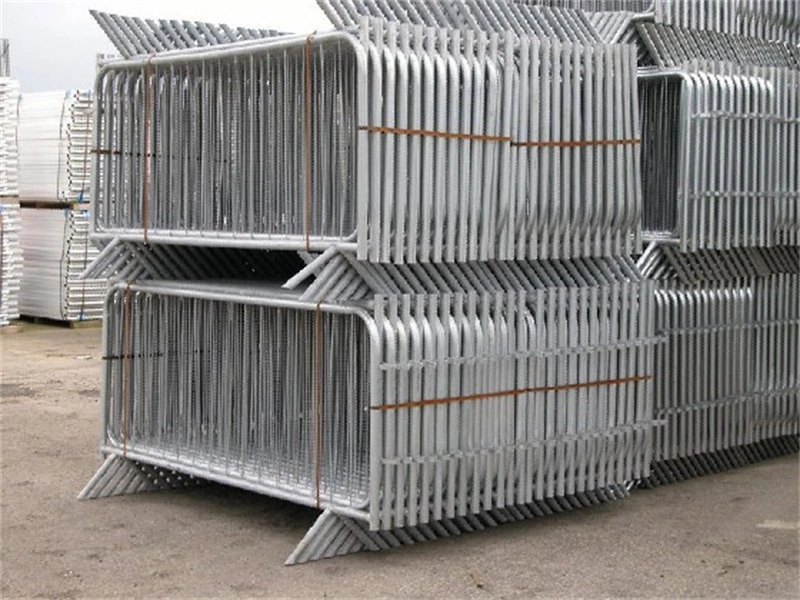
Understanding Crowd Control Barrier Types and Materials
Galvanizing method determines storage lifespan more than the finish type itself.
Procurement coordinators frequently confuse barrier coatings with barrier metallurgy. The visual finish—whether hot-dipped galvanized or PVC powder coated—is secondary to how the zinc is applied during manufacturing. Most Anping factories use pre-galvanized wire that is welded together. The welding arc burns off the protective zinc coating at every joint, leaving the steel vulnerable to immediate corrosion once stored.
True durability requires a hot-dip process applied to the finished welded panel. This submerges the entire barrier, including the weld points, in molten zinc. The resulting 42-micron layer seals the joints completely. Without this step, a barrier that looks pristine on the loading dock will develop white rust stains within months of warehouse storage.
PVC powder coating is a popular aesthetic choice for event companies needing branding. However, PVC alone offers zero rust protection. It acts merely as a physical shield against scratches. If the underlying steel is not hot-dipped galvanized, moisture penetrating even microscopic cracks in the PVC will cause rapid oxidation. The barrier will rot from the inside out.
- Hot-Dipped Galvanized Finish: Provides 42-50 microns of sacrificial protection. Extends barrier lifespan to 8-12 years in humid storage environments. Prevents the #1 failure point: weld joint rust.
- Pre-Galvanized + PVC Coating: Offers excellent visual branding and scratch resistance. Relies entirely on the PVC for moisture sealing. Highly susceptible to rust if the PVC layer is compromised during stacking.
- Electro-Galvanized Finish: Thin, shiny coating typically under 15 microns. Economical for indoor use only. Fails rapidly in unheated warehouses due to condensation, offering a lifespan of just 2-4 years.
| Feature | Specification | Advantage |
|---|---|---|
| Galvanizing Method | Hot-dipped after welding (42-50 microns) | Seals weld points to prevent storage rust; lasts 8-12 years vs. 2-4 for electro-galvanized |
| Storage Stacking | Steel stillage (20 barriers/unit) | Eliminates floor-scratch damage; reduces annual fleet replacement rate from 18% to near zero |
| Humidity Control | Store at <60% Relative Humidity | Prevents zinc corrosion doubling; avoids ‘white rust’ condensation damage in non-climate warehouses |
| Base Foot Type | Recycled Rubber (11 kg) vs. Steel | Lighter weight allows 25% higher stack density; reduces crew labor strain during off-season moves |
| Compliance Standard | AS/NZS 4687-2022 Certified | Mandates minimum 42-micron coating; provides verifiable SGS/ISO9001 documentation for import audits |
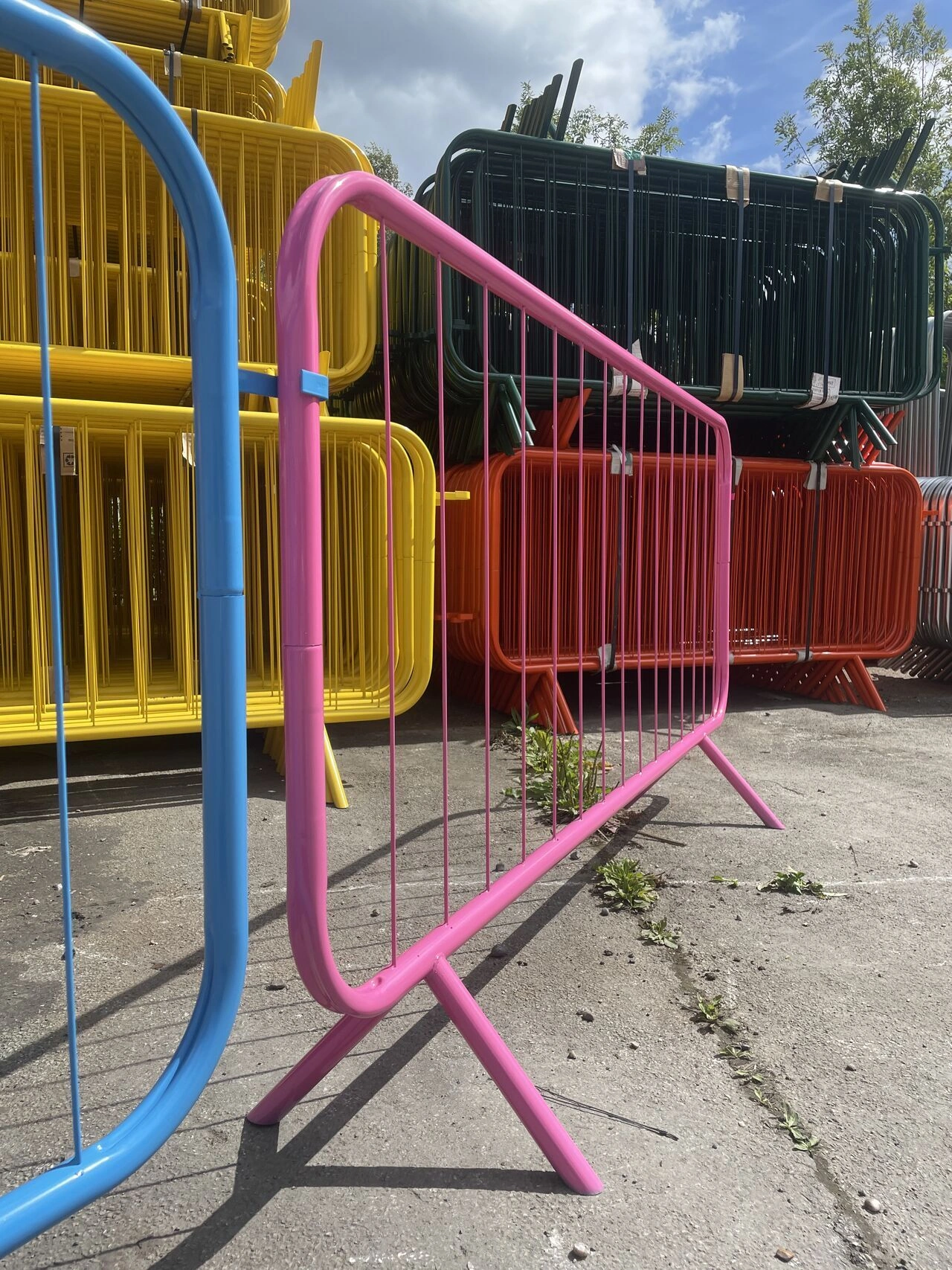
Compliance and Safety Standards for Events
AS 4687-2022 compliance is non-negotiable for Australian event safety; verify the 42-micron zinc coating to ensure structural integrity.
For event management procurement coordinators, compliance is not a bureaucratic checkbox—it is the primary defense against catastrophic liability. In Australia, the Australian Safety Standard for Event Barriers mandates strict adherence to AS 4687-2022. This standard dictates the minimum load ratings and structural robustness required to withstand the intense pressure of crowd control. If your barriers fail these load ratings, you are not just violating regulations; you are exposing your organization to massive civil engineering risks and potential litigation.
The most critical metric within this standard is the hot-dipped galvanized coating thickness. AS/NZS 4687-2022 explicitly requires a minimum of 42 microns for temporary fencing exposed to outdoor weather. Many budget manufacturers utilize electro-galvanizing, which provides a thin, fragile layer that fails rapidly under the stress of stacking and transport. To prevent rust on galvanized barriers during off-season storage, you must demand proof of a true hot-dipped finish. Without this 42-micron baseline, the structural steel is exposed to rapid corrosion, leading to bent frames and compromised load-bearing capacity.
When verifying fence compliance for Australian imports, relying on a supplier’s word is a dangerous gamble. You must request independent SGS or ISO9001 certification documents that specifically reference AS 4687-2022. Furthermore, internal production data shows that reputable manufacturers, such as Anping Deban Metal Wire Mesh Products, apply a coating of 42-50 microns, measured via magnetic thickness gauge onsite before shipment. This level of verification ensures that the crowd control barriers for outdoor events wholesale meet the rigorous safety requirements set by Australian authorities.
- Standard Compliance: Ensure all barriers meet AS 4687-2022 load ratings and structural requirements for Australian events.
- Coating Verification: Demand hot-dipped galvanization of at least 42 microns; electro-galvanized coatings fail prematurely in storage.
- Documentation: Request SGS test reports and ISO9001 certificates directly from the factory to validate compliance claims.
Understanding crowd barrier load ratings is essential for justifying CAPEX spend to finance directors. A barrier that cannot withstand the calculated pressure of a dense crowd is a liability waiting to happen. The cost of rust repair, ranging from $15 to $25 per panel for labor and materials, compounds quickly across a large fleet. By investing in barriers that strictly adhere to these Australian event barrier regulations, you eliminate the 12-18% annual replacement rate seen in companies using substandard, floor-stacked equipment. Prioritize structural integrity and verified compliance over upfront cost savings.
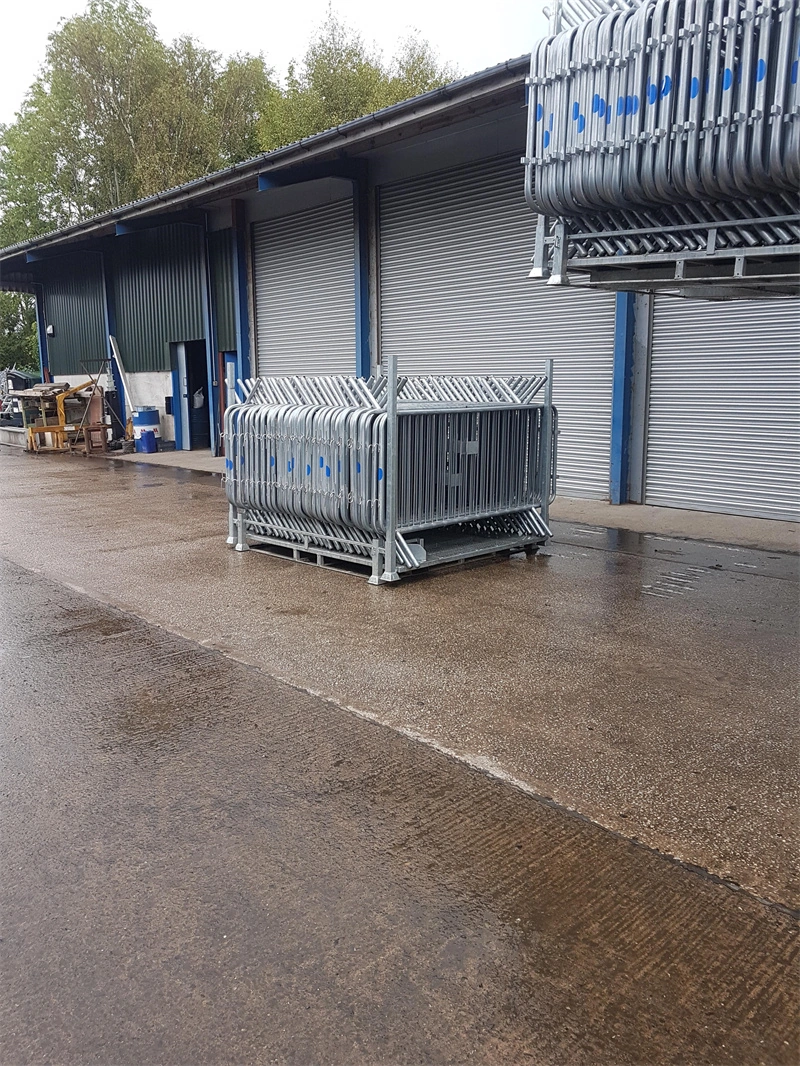
Procurement Strategy and Supplier Selection
Avoid 12-18% annual fleet replacement by storing barriers on stillages at <60% relative humidity.
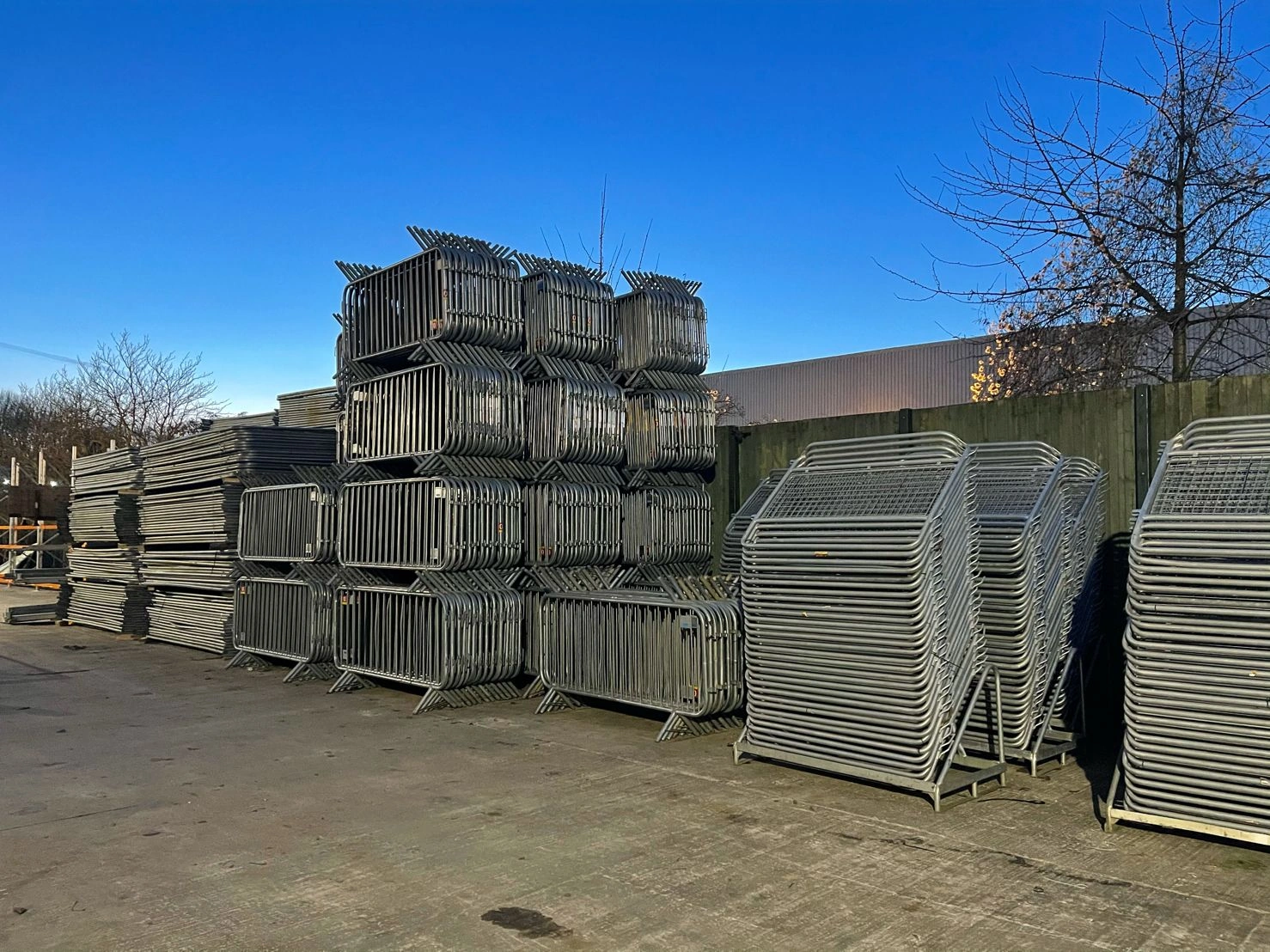
Procurement coordinators lose money when they ignore the physics of off-season storage. A standard 2.0m x 1.0m crowd barrier weighs 16-22 kg. Stacking them directly on a warehouse floor causes 12-18% of your fleet to be replaced annually due to bent frames and rust penetration.
The real cost isn’t the barrier; it’s the $15-25 per panel spent on labor and materials to grind and re-galvanize rusted weld points. To stop this, you must implement industrial barrier storage humidity control and use crowd barrier stillage storage racks.
- Humidity Threshold: Store at <60% Relative Humidity. Above 70% RH, bare zinc corrosion rate doubles, turning ‘white rust’ into permanent ‘red rust’.
- Stacking Protocol: Use a 2.0m x 1.0m steel stillage. It holds 20 barriers, costs ~$150-250, and eliminates the scratch damage that causes early fleet failure.
- Condensation Risk: A 15°C temperature swing generates ~0.05L of condensation per square meter of steel. This moisture is the primary driver of winter storage corrosion.
When inspecting crowd control barriers from Chinese factories, you must verify the galvanizing method. Many Anping factories use pre-galvanized wire. The welding process burns off the zinc at the joints, leaving the most vulnerable points exposed to rust.
Only suppliers that hot-dip the finished welded panel cover these welds completely. For example, Anping Deban Metal Wire Mesh Products applies a 42-50 micron hot-dipped galvanized coating, measured via magnetic thickness gauge onsite before shipment.
Importing crowd barriers direct from a factory requires strict quality control on this coating. If a supplier cannot provide a magnetic gauge reading of at least 42 microns, the barrier will not survive the Australian Standard AS 4687-2022 weather exposure requirements.
For custom branded crowd barriers, the minimum order quantity (MOQ) for OEM customization is typically 100 panels. This low MOQ allows event management companies to justify the CAPEX spend on high-quality, branded barriers without overstocking.
A 10-year investment cycle requires protecting the zinc coating during storage. By using a bulk barrier storage warehouse solution that includes stillages and humidity management, you eliminate the 3-year replacement treadmill and save significant labor costs.
Customization and Branding Options
Custom branding requires a minimum order of 100 panels with screen-printed logos.
Most distributors assume OEM customization demands high volume commitments. DB Fencing challenges this with a low MOQ of 100 panels. This flexibility allows event management companies to test custom branding without tying up excessive warehouse space.
The printing method relies on industrial screen printing. This technique ensures the logo survives the rigors of transport and off-season storage. Unlike simple adhesive stickers, screen-printed ink bonds directly with the galvanized coating.
- Screen Printing Cost:: Ink application is priced per panel. Bulk orders of 100+ units significantly reduce the per-unit expense compared to small batch runs.
- Color Matching:: Clients must provide a Pantone code for accurate color replication. This prevents mismatched branding across large festival setups.
- Logo Placement:: Standard placement is centered on the mid-rail. This maximizes visibility during crowd control while maintaining structural integrity.
- Storage Integration:: Custom logos allow easy sorting in unclimate-controlled warehouses. Identify damaged units instantly without inspecting every panel.
- Asset Tracking:: Branded barriers reduce loss rates. Rental fleets can track inventory more efficiently when every unit carries distinct company markings.
- Durability Check:: Ensure the printing process does not compromise the zinc layer. Screen printing is non-invasive and preserves the corrosion resistance.
A common pitfall is ignoring the galvanized finish during customization. DB Fencing applies hot-dip galvanization after welding. This covers all weld points with a 42-50 micron coating. It prevents the most common failure point: rust starting at the weld joints.
Competitor factories often pre-galvanize the wire before welding. The welding process burns off the zinc at the joints. This leaves the barrier highly vulnerable to rust during storage. Verify the galvanization method before committing to a supplier.
Branded barriers serve a dual purpose. They provide immediate visual identification for your event fleet. They also act as mobile billboards. Professional branding signals reliability to venue managers and local authorities.
For global fence distributors, OEM customization is a margin driver. Private labeling allows you to compete against local retailers. You offer a premium product at factory-direct pricing. This strategy builds long-term loyalty with your end clients.


Logistics, Installation, and Maintenance
Store barriers at <60% RH to prevent zinc corrosion.
Most event companies replace 12-18% of their barrier fleet annually because they stack panels directly on concrete floors. This causes rapid rust penetration at the weld joints, specifically where the zinc coating has burned off during manufacturing. To stop this cycle, you must separate your hardware from moisture.
Standard 2.0m x 1.0m steel stillages hold 20 barriers securely. While a single stillage costs ~$150-250, it eliminates the $15-25 per-panel repair cost and prevents the bent frames that occur during floor stacking. You save on labor and material replacement within the first season.
Prevent rust on galvanized barriers by monitoring your warehouse environment. If the relative humidity exceeds 70%, the corrosion rate for bare zinc doubles. Even in non-climate-controlled spaces, keeping humidity below 60% preserves the protective layer.
- Stacking Method: Always use 2.0m x 1.0m steel stillages. Floor stacking crushes the bottom panels and traps moisture against the weld points.
- Humidity Control: Maintain <60% Relative Humidity. A 15°C temperature swing overnight generates 0.05L of condensation per square meter of exposed steel.
- Inspection Protocol: Look for ‘white rust’ (zinc carbonate) stains immediately. This indicates active condensation damage. If untreated, it turns into ‘red rust’ which destroys the structural integrity.
When performing crowd barrier base rust removal, use a vinegar wash followed by a light oil application. Do not grind the coating down aggressively, as this exposes the raw steel to the elements. For high-quality hot-dip galvanized barriers (42-50 microns), proper storage extends the asset lifespan to 8-12 years, compared to just 2-4 years for thin electro-galvanized alternatives.
Ensure you are storing barriers that were hot-dipped galvanized welding. Many cheaper factories pre-galvanize the wire, meaning the weld joints have zero zinc protection. If you are looking for bulk barrier storage warehouse solutions, start by verifying the galvanizing method of your current fleet.
Conclusion
Proper crowd barrier storage prevents the 12-18% annual fleet loss caused by floor-stacking and condensation. Using a 42+ micron hot-dipped galvanized finish and controlling warehouse humidity below 60% protects your capital investment and keeps crew safety risks low.
Verify the coating thickness and weld coverage on your next order. Review the technical specifications for DB Fenching’s hot-dip galvanized barriers here.
Frequently Asked Questions
What are the three types of barriers that help prevent or reduce the impact of process safety events?
The three primary types are prevention barriers, mitigation barriers, and recovery barriers. Prevention barriers stop incidents from occurring, mitigation barriers limit the spread of harm, and recovery barriers restore operations after an event. Select barriers based on your specific risk assessment.
How to make a crowd control barrier?
Crowd control barriers are manufactured by welding steel wire mesh panels to heavy-duty steel frames and applying a protective finish like hot-dip galvanizing. For operational use, they are assembled by interlocking the panels with connecting pins. Ensure proper interlocking for structural integrity.
What are crowd control barriers called?
They are commonly referred to as temporary fencing panels, steel barricades, or crowd control barricades. In specific industries, they may also be called anti-climb mesh panels or palisade fences depending on the design. Use industry-specific terms for accurate sourcing.
What barrier prevents the crowd from attempting to go on stage?
A steel crowd control barrier with anti-climb mesh or a solid steel panel design prevents unauthorized stage access. These barriers are designed to withstand high lateral pressure and are anchored with weighted feet to deter climbing. Verify load ratings for high-density events.
How do you clean rust off a galvanized crowd barrier?
Remove surface rust using a wire brush or abrasive pad, then apply a zinc-rich touch-up paint to restore the protective layer. Avoid harsh chemicals that could strip the remaining galvanization. Touch up immediately to prevent spread.