Skip to content
Sourcing AS 4687 temporary fencing from overseas puts you in a constant tug-of-war between compliance officers and the project budget. Most project managers just want the perimeter up without border control holding the containers hostage. You know the routine. Concrete feet arrive cracked because the factory skipped the 48-hour curing cycle. Paperwork arrives half-translated, leaving your site exposed during an audit.
The 2022 update to the standard changed the math on what you can actually accept at the dock. It demands specific weld shear load testing on every single production batch, not just a random factory sample from six months ago. If your supplier hands you a generic certificate without a matching container seal number, reject the load. You save a few dollars per panel by accepting inferior paperwork, but one rejected shipment costs more than your annual bonus.
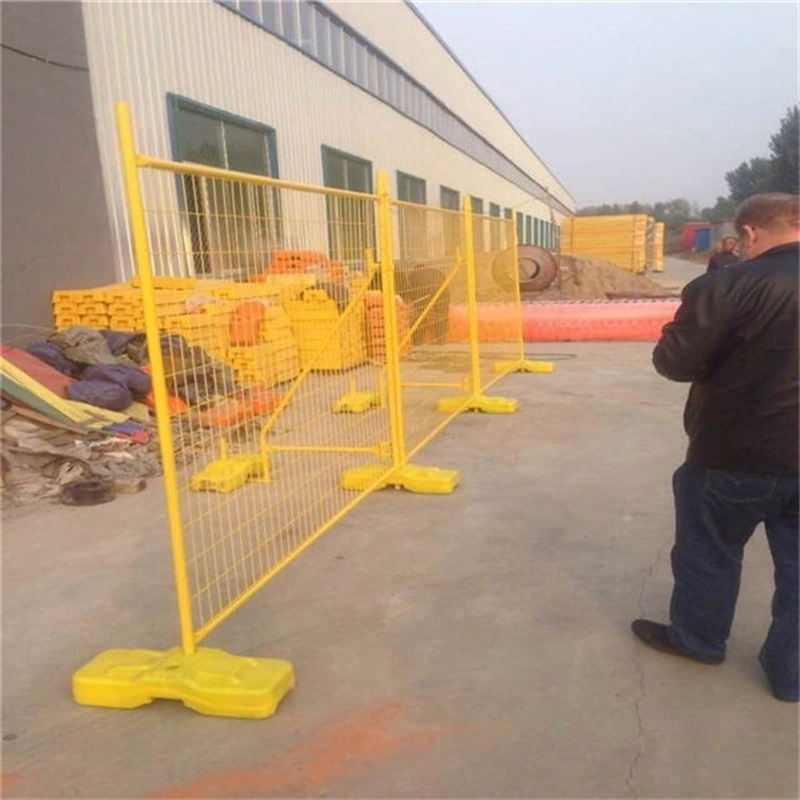
AS 4687:2022 Core Requirements
AS 4687:2022 spans four distinct parts. Confusing Importance Level with Stability Class accounts for the majority of failed compliance audits on imported fencing.
Legal Scope: Parts 1 Through 4
AS 4687:2022 is not a single monolithic rule — it is structured into four parts, each governing a different barrier application. Part 1 covers general requirements and definitions. Part 2 applies to temporary fencing and hoardings for construction sites and public events, which is the section most relevant to bulk procurement. Part 3 addresses permanent freestanding fencing, while Part 4 governs temporary pool fencing — a completely separate compliance pathway that most competitor guides deliberately gloss over.
Here is the insider trap: if your construction site has an excavation that requires temporary pool fencing compliance under Part 4, the specifications change entirely. Part 4 mandates a 2.0 m minimum panel height with no horizontal climbing aids, and it demands different toe-board and mesh gauge specifications than Part 2. A supplier quoting you Part 2 panels for a Part 4 zone is handing you a liability exposure, not a compliant fence.
Minimum Panel Height and Wind Load Threshold
AS 4687.2 sets a non-negotiable minimum panel height of 1.8 m for general construction applications. Anything below this height fails audit on sight, regardless of foot weight or anchoring. Our Heavy-Duty Temporary Fence Panel ships at 2400 x 2100 mm — exceeding the minimum to provide margin for installation sag and ground unevenness.
The wind load baseline is 0.75 kPa, referenced to Terrain Category 2 (open terrain typical of suburban construction sites). This figure is then adjusted upward using multipliers derived from AS/NZS 1170.2 based on your actual terrain category and the structure’s Importance Level. A site in Terrain Category 3 (built-up suburban) with Importance Level 3 will require a significantly higher design resistance than the 0.75 kPa baseline. Any supplier quoting you “meets 0.75 kPa” without asking for your terrain category and importance level is not engineering a solution — they are guessing.
Importance Level vs. Stability Class: The Critical Distinction
These two terms are used interchangeably by inexperienced suppliers, and that conflation is what gets project managers fined. They measure fundamentally different things.
- Importance Level (1–4): Defined by AS/NZS 1170.0, this classifies the consequence of failure for the structure the fence protects. A standard residential build site is typically Level 2. A hospital construction zone or a school boundary during active term is Level 3 or 4. Higher Importance Level means higher design wind loads — the fence itself must resist more force because the consequence of it blowing over is more severe.
- Stability Class (1–3): Defined within AS 4687 itself, this classifies the fence system’s resistance to overturning based on tested configurations. Stability Class 1 is the lowest tier. Stability Class 3 is the highest, requiring the fence to withstand the most aggressive wind loading without permanent deformation or overturning. Our 2400 x 2100 mm panel paired with the 25 kg recycled rubber foot (friction coefficient 0.8) achieves Stability Class 2 for Terrain Category 2 applications.
The Audit Risk of Mixing Classifications
The single most expensive mistake we see on imported shipments is a supplier assigning a Stability Class rating to a fence configuration that was only tested under a lower Importance Level multiplier. A fence tested at Importance Level 1 cannot legally claim Stability Class 3 performance on an Importance Level 3 site — the wind load multiplier changes the physics entirely. Yet most Chinese factories ship a single test certificate covering one panel-foot combination at one Importance Level, and buyers assume that certificate transfers across all conditions.
When a SafeWork inspector arrives and cross-references your site’s Importance Level against the test certificate’s parameters, any mismatch triggers an immediate non-compliance notice. Queensland alone issued over $2.3 million in non-compliance fines in 2023, and the majority stemmed from documentation gaps — not structural failure. The fence held. The paperwork did not. We supply dual-sided test certificates specific to the exact panel-foot combination ordered, matched to the declared Importance Level, so your procurement file survives an audit without explanation.
On a practical note, switching to our recycled rubber base feet cuts logistics weight by 60% compared to 80 kg concrete blocks and reduces transport carbon by 45% per 100 m of fencing — a measurable improvement for project ESG reporting without sacrificing Stability Class 2 compliance.
Dual-Sided Wind Load Testing
AS 4687:2022 requires dual-sided anti-overturning testing. If your supplier’s certificate only documents single-directional loading, the documentation is invalid for a 2022 compliance audit.
Why AS 4687:2022 Upgraded to Dual-Sided Loading
The 2007 version of AS 4687 only required wind load application from one face of the fence panel. The 2022 revision closed this gap because real-world gusting creates alternating pressure zones—wind hits the face, then reverses as it eddies around the structure. A panel that holds at 0.75 kPa from the front can still overturn when the same force reverses against the rear clamps. The standard now demands anti-overturning resistance proven from both directions to account for this load reversal.
Required Test Setup and Pass Criteria
A compliant dual-sided test rig must secure a minimum three-panel run (typically 7,200 mm total width) with the target panel in the centre position. The load is applied uniformly across the face via a pneumatic bag or distributed hydraulic ram system, simulating the 0.75 kPa base wind pressure for Terrain Category 2. That base pressure gets multiplied by the site-specific importance level (1 through 4) and any regional wind speed multiplier per AS/NZS 1170.2.
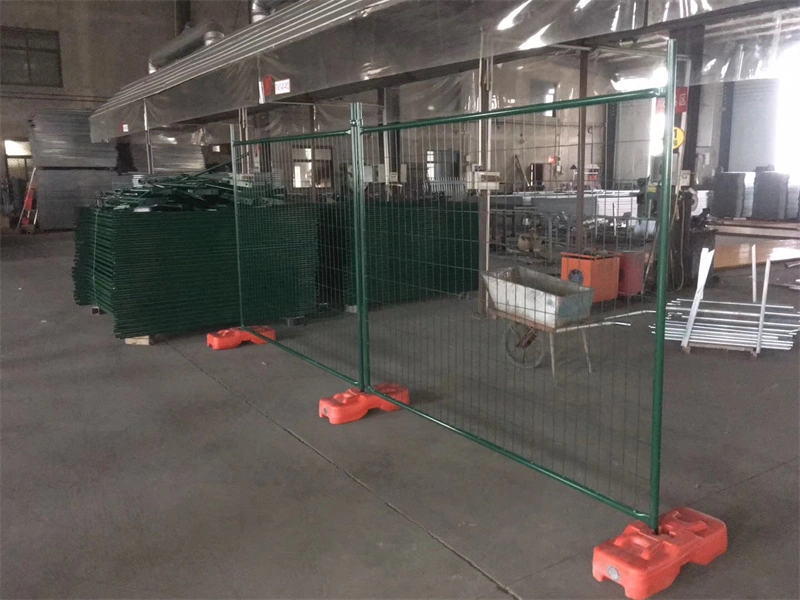
The assembly passes only if it maintains stability under the calculated design load from both the front and rear faces without permanent deformation of the panel frame, tube joints, or base connections. Our Heavy-Duty Temporary Fence Panel (2400×2100 mm, 32 mm OD galvanised tube, 13 kg) paired with the recycled rubber foot (25 kg, friction coefficient 0.8) achieves Stability Class 2 compliance under this dual-sided protocol for Terrain Category 2 conditions.
Third-Party Lab Report Requirements
This is where most overseas shipments fail the audit. Over 70% of Chinese factory test certificates cover only a single panel-foot combination—usually a panel with a concrete-filled foot. If you import panels from one supplier and source rubber feet locally to cut freight costs, the original certificate becomes legally useless. AS 4687:2022 compliance applies to the exact assembly installed on site, not the panel in isolation.
Your AS 4687 documentation audit checklist must include the original third-party lab report (SGS, TUV, or equivalent NATA-recognised body) that explicitly names both the panel specification and the base foot model in the test scope. The report must show dual-sided loading results, not a single-direction pass. Request the full report, not a summary letter—auditors in Queensland and NSW have started rejecting one-page “certificates of compliance” that lack raw test data.
Acceptable vs. Failing Deflection Values
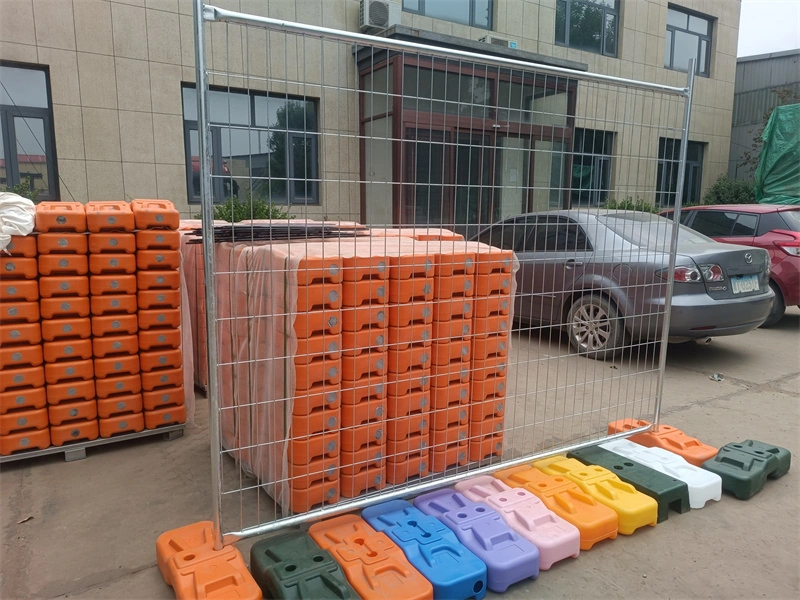
During testing, the panel face will deflect under load. The critical distinction is between elastic deflection (the panel springs back when force is removed) and permanent set (the frame remains bent). AS 4687 does not publish a single fixed deflection limit because the acceptable value depends on the panel’s span and the applied importance level multiplier. As a practical reference, for a standard 2400×2100 mm panel under 0.75 kPa dual-sided loading, elastic deflection at the panel centre typically ranges from 15 mm to 35 mm—this is normal and expected.
A failing result presents as permanent deformation exceeding 5 mm after load removal, cracking at the welded mesh-to-frame junctions, or visible rotation at the base foot connection indicating the friction coefficient has been exceeded. If the test report shows any permanent set on the frame, the assembly fails regardless of whether it stayed upright during the test. We provide full deflection curves with our test certificates so your site engineer can verify performance against the specific wind region parameters of your project location.

Documentation That Passes Audits
Over 70% of imported temporary fencing shipments fail Australian site audits because the supplier provided test certificates for one panel-foot combination but shipped a different configuration. Inspectors match serial numbers to physical product, not purchase orders.
The Five Documents an Inspector Will Actually Ask For
Most compliance guides list generic paperwork. In practice, a SafeWork or WHS auditor arriving on a Queensland or NSW construction site is looking for five specific documents — and they will verify them against the physical fence on the ground, not the PDF you emailed the procurement office.
- Dual-Sided Test Certificate: Must show AS 4687 wind load testing performed from both push directions on the exact panel-foot combination installed on site. A certificate covering a 2400×2100 mm panel with concrete feet does not cover the same panel paired with recycled rubber feet — the static friction coefficient changes the entire stability calculation.
- Wind Engineering Report: A site-specific document referencing AS/NZS 1170.2 wind regions, the correct Terrain Category (1–4), and the project’s Importance Level. Off-the-shelf reports are rejected immediately. The report must state the design wind pressure in kPa and confirm the installed fencing system meets or exceeds it.
- Installation Instructions: Step-by-step procedures showing correct bay coupling, foot placement spacing, and minimum anchor point requirements for the declared Stability Class. These must be available on-site for the crew installing the fence, not filed in a head office.
- Maintenance Log: A dated record of post-storm inspections, foot repositioning, and any panel replacements. Auditors treat an empty log as proof the fence was never inspected, which triggers a separate negligence finding regardless of whether the fence actually failed.
- Compliance Marking Photos: Photographic evidence showing the manufacturer’s label, batch number, and AS 4687 compliance mark on each delivered panel batch. If the physical panel on site has no stamp or a different batch number than the photo, the entire line is flagged non-compliant on the spot.
What Happens When Documentation Is Missing
The penalty is not a warning letter. Under temporary fencing compliance Australia 2022 enforcement, a site supervisor who cannot produce the dual-sided test certificate for the installed panel-foot combination faces an immediate stop-work order on the affected perimeter zone. The site remains shut until compliant fencing is installed and fully documented — typically a 5 to 10 day delay when re-importing from China.
Queensland issued over $2.3 million in non-compliance fines during 2023 alone, with individual incidents exceeding $50,000. However, the fine is rarely the worst part for a project manager. The stop-work order triggers a cascade: the principal contractor flags the delay in the weekly report, the client invokes liquidated damages clauses, and the procurement decision for the fencing supplier becomes a formal investigation item. For veteran project managers, that scrutiny — not the fine — is what ends careers.
There is also a liability asymmetry that most importers miss. If a worker or pedestrian is injured by a fence that blew over, and the site cannot produce a valid wind engineering report matching the installed configuration, the supplier’s ISO9001 certificate becomes irrelevant in court. The liability transfers entirely to the site supervisor who approved the installation without verified documentation. Having the correct paperwork is not administrative overhead — it is the only thing separating a compliant installation from personal liability.
Feet & Base Systems: Concrete vs. Recycled Rubber
A 25 kg recycled rubber foot with a 0.8 static friction coefficient meets Stability Class 2 requirements with fewer anchor points than an 80 kg concrete block, cutting logistics weight by 60%.
Why 80 kg Concrete Blocks Fail on Real Job Sites
Concrete blocks have been the default temporary fence base for decades, but their failure mode on Australian construction sites is well-documented and consistently underestimated. At 80 kg per unit, concrete feet crack during loading, transit, and relocation — particularly on sites with compacted gravel or uneven ground. A cracked block loses mass distribution and can no longer satisfy AS 4687 fence feet requirements for stability, yet most site supervisors only discover the damage after a safety auditor has already flagged it.
Beyond physical failure, concrete carries a hidden carbon penalty. Manufacturing a standard 80 kg concrete block generates approximately 35–40 kg of CO2 equivalent. Across a 500-linear-metre site perimeter using roughly 210 blocks, that is over 7.4 tonnes of embedded carbon before a single panel is erected. For project managers under pressure to report reduced scope 3 emissions, concrete bases work directly against corporate ESG targets.
Stability Class Performance: The Friction Coefficient Advantage
The engineering case for recycled rubber bases rests on a number that most suppliers never disclose: the static friction coefficient. Our recycled rubber feet register 0.8 against standard concrete slab surfaces, compared to approximately 0.5–0.6 for raw concrete-on-concrete contact. This higher grip translates directly into Stability Class 2 performance under AS 4687 with fewer additional anchor points required per fence run.
In practical terms, a 2400×2100 mm panel (13 kg) paired with a 25 kg rubber foot achieves the same anti-overturning resistance that would otherwise require an 80 kg concrete block plus supplemental stay wires in Terrain Category 2 wind zones. We tested this specific panel-foot combination under dual-sided AS 4687 wind load testing protocols, and the original test certificates cover this exact configuration — not a generic “similar setup” that invalidates compliance if an auditor scrutinises the documentation.
Transport Economics and ESG Score Uplift
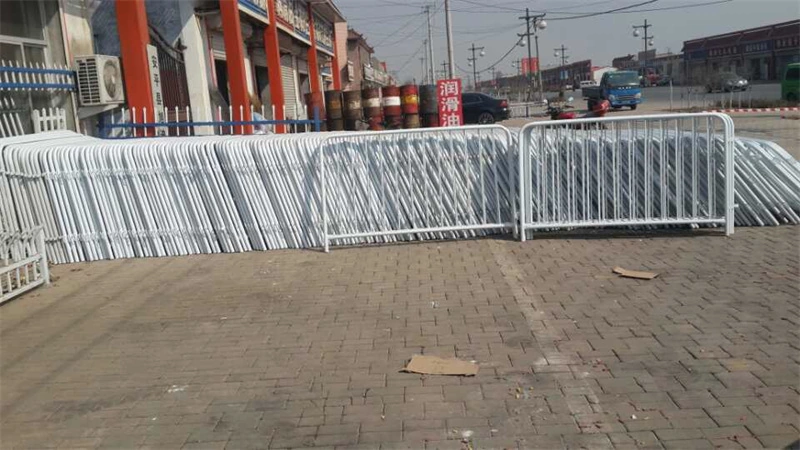
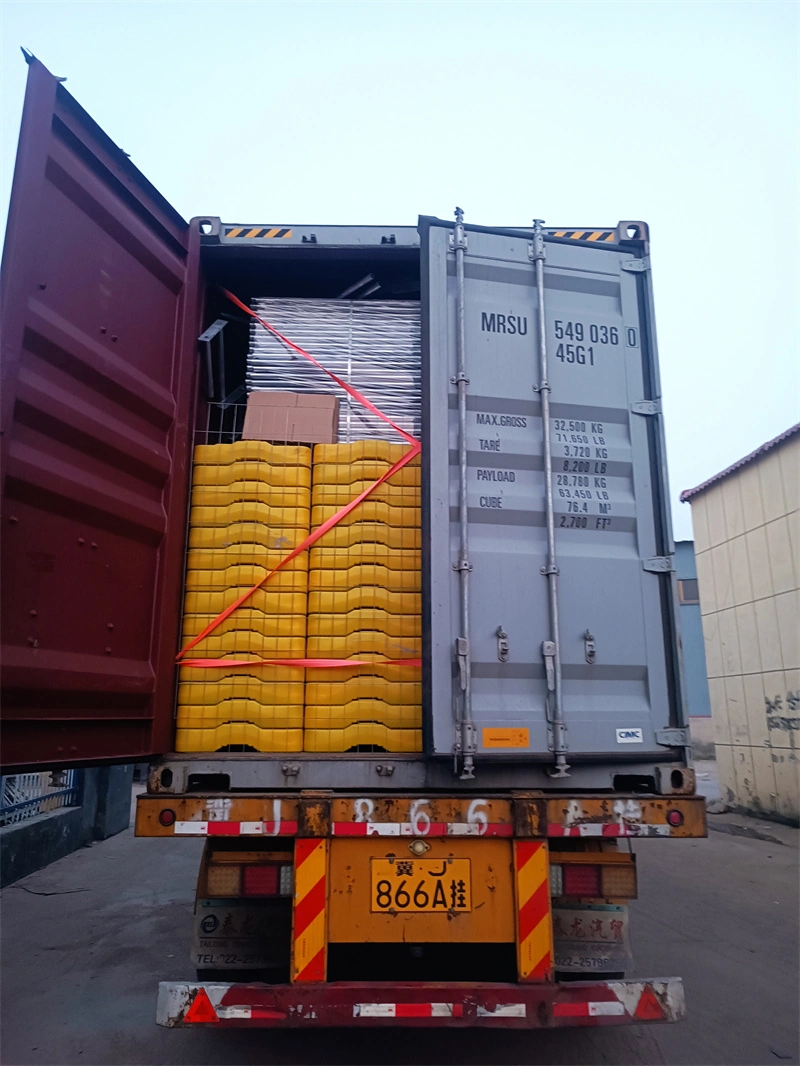
Weight reduction from 80 kg to 25 kg per base does not merely make handling easier — it restructures the entire freight calculation. A standard 20-foot container holds approximately 200 concrete feet (16 tonnes) compared to roughly 640 rubber feet at the same gross weight. For a 500-metre perimeter, that means one container shipment instead of three. At current freight rates from China to Australian ports, the logistics saving typically offsets any per-unit premium on rubber bases within the first order cycle.
The carbon math reinforces the commercial case. Our internal logistics data shows a 45% reduction in transport-related CO2 emissions per 100 metres of fencing when switching from concrete to recycled rubber bases, primarily driven by fewer container movements. Because the rubber material is sourced from post-consumer waste streams, each foot also contributes to circular economy reporting metrics. For project managers whose contracts now include ESG scorecards as a formal deliverable, this is a measurable input that sustainability officers can audit and verify against procurement records.
There is also a workplace safety dimension that rarely appears in supplier brochures. Industry surveys estimate that switching to 25 kg rubber bases reduces on-site manual handling injuries by approximately 15%, since crews no longer lift, drag, and reposition 80 kg blocks across uneven terrain. Fewer strain injuries means fewer workers’ compensation claims, fewer lost-time incidents, and less disruption to site schedules — all of which contribute indirectly but materially to project margin protection.

Temporary Pool Fencing – The Overlooked AS 4687.4
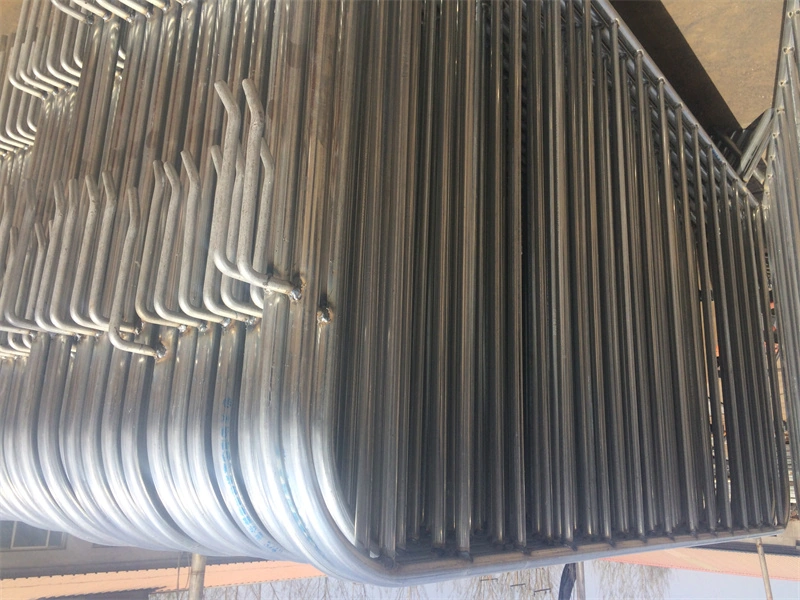
AS 4687.4 mandates 2.0 m panels with zero horizontal climbing aids. A Part 2 test certificate provides zero legal cover for pool fencing applications.
The 2.0 m Height Rule and Non-Climbable Zones
AS 4687.2 sets the baseline at 1.8 m for general construction fencing, but Part 4 for temporary pool barriers jumps to a mandatory 2.0 m minimum height. This is not a suggestion or a best-practice upgrade — it is a separate legal requirement with its own testing protocol. On any mixed-use site where a construction zone borders an excavated pool area, the 1.8 m panels you already have on site are non-compliant for that perimeter segment.
The non-climbable zone rule is where most procurement teams get caught. Part 4 prohibits any horizontal member within the lower portion of the panel that could serve as a foothold. This means the standard toe-board configuration used on Part 2 construction panels — typically a 150 mm horizontal rail at the base — is a compliance violation under Part 4. The mesh aperture size also shifts: pool barriers demand tighter spacing to eliminate finger and toe holds, which requires a different weld pitch and wire gauge than your standard site panel.
Why a Part 2 Certificate Is Legal Dead Weight for Pool Areas
Here is the trap that catches project managers on residential build sites. Your supplier provides dual-sided wind load test certificates proving the panels pass AS 4687.2 requirements. You deploy those same panels around a temporary pool excavation. A certifier or WHS inspector arrives, asks for the Part 4 documentation, and your paperwork does not exist. The penalty exposure is the same as having no fence at all — because legally, you do not.
Queensland issued over $2.3 million in non-compliance fines in 2023, and pool fencing violations trigger separate liability from general site fencing breaches. The distinction matters because builders can face dual prosecution: one for failing to maintain a compliant construction barrier under Part 2, and a second for failing to provide a compliant temporary pool barrier under Part 4. These are treated as independent offences, not a single bundled penalty.
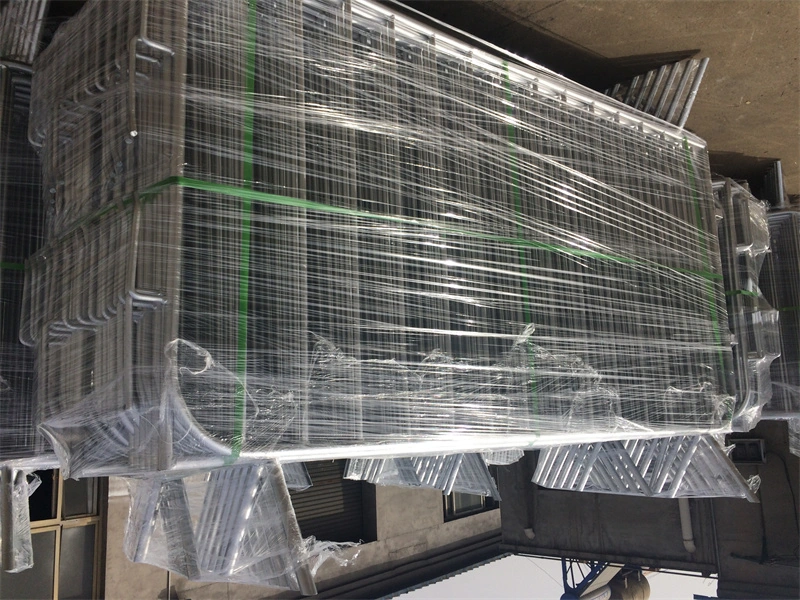
Most Chinese factories ship test certificates that apply to exactly one panel-and-foot configuration tested in a single orientation. If your order includes panels intended for pool zones, those certificates must explicitly reference AS 4687.4 testing parameters — not just Part 2 with a handwritten note claiming suitability. Mixing components between your Part 2 and Part 4 stock invalidates compliance for both segments.
Engineering a Dual-Compliant Panel
The practical solution for distributors and project managers managing mixed-use sites is to source panels that satisfy both Part 2 and Part 4 simultaneously, rather than maintaining two separate inventories. This requires the panel height to be 2.0 m as standard — which automatically satisfies the 1.8 m Part 2 minimum — combined with a mesh specification that meets the non-climbable aperture requirements of Part 4.
The critical engineering decision is the toe-board. A removable toe-board system allows the same panel frame to serve dual duty: install the toe-board for construction debris containment under Part 2, then remove it for pool barrier duty under Part 4. However, the base panel without the toe-board must still pass AS 4687 wind load testing dual-sided on its own. If the supplier only tested the panel with the toe-board attached, removing it voids the certificate. We specify and test both configurations independently, so the documentation holds up regardless of how the panel is deployed on site.
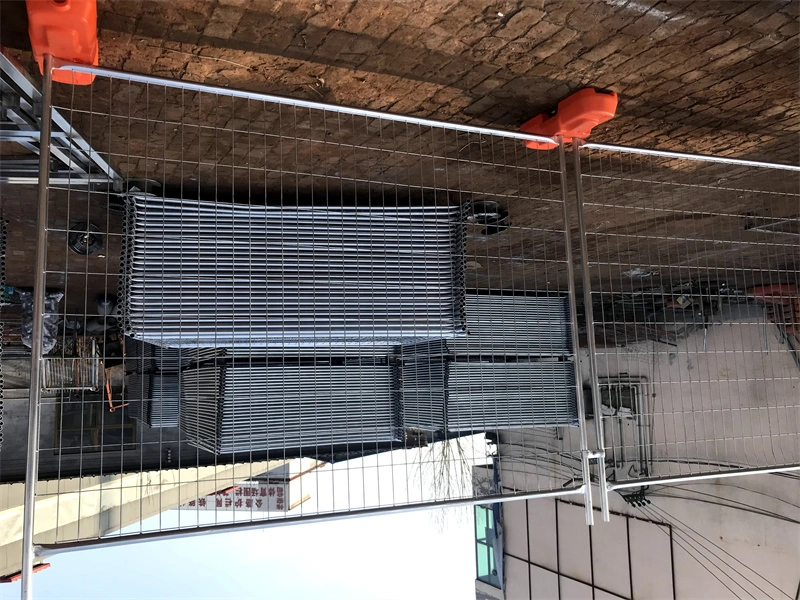
Avoid These 5 Compliance Traps
Over 70% of overseas temporary fencing shipments fail Australian audits because the test certificate does not cover the exact panel-foot combination installed on site.
Relying on AS 4687-2007 Test Certificates
AS 4687:2022 introduced mandatory dual-sided anti-overturning testing. The 2007 edition only required testing from one direction. If your supplier hands you a certificate dated 2019 or earlier referencing AS 4687-2007, it is legally worthless for temporary fencing compliance Australia 2022. We see this constantly in Anping — factories still circulate 2007-era reports because re-testing to the 2022 dual-sided protocol costs money and their domestic market does not require it. Queensland alone issued over $2.3 million in non-compliance fines during 2023, and the primary trigger was outdated documentation. Demand the certificate explicitly reference AS 4687:2022 and show results from both push directions.
Mixing Untested Panel-Foot Combinations
This is the trap that catches experienced project managers off guard. A factory provides a valid AS 4687:2022 test report for their 2400×2100 mm panel paired with a 32 kg concrete foot. You then request recycled rubber feet (25 kg, friction coefficient 0.8) to cut transport weight and improve your ESG score. The factory swaps the feet without issuing a new test certificate for that specific combination. Under AS 4687, the stability class is determined by the panel and the base acting as a system. Changing the foot changes the overturning resistance, the friction coefficient, and the center of gravity. The original certificate no longer covers what you installed. We issue separate test documentation for every panel-foot configuration we ship — our 13 kg galvanised panel with rubber foot, the same panel with concrete foot — because auditors cross-reference the serial numbers on the report against what is physically on your site.
Ignoring Wind Terrain Changes Along a Linear Site
Most project managers calculate wind load once for the entire perimeter using a single terrain category from AS/NZS 1170.2. On a 500-metre site, this is almost always wrong. Terrain Category 2 (open terrain) transitions to Category 3 (suburban, upwind roughness) at building edges, tree lines, or adjacent structures. The design wind pressure base of 0.75 kPa for Category 2 can shift significantly in Category 3 depending on the importance level assigned to the fence. If your importance level is 2 — typical for construction sites near public boundaries — the multiplier stacks onto the terrain-based pressure. The practical consequence: the downwind 150 metres of your fence line may need additional bracing or closer foot spacing that the upwind section does not. Treating the whole site as one wind zone is an audit failure waiting for the first inspector who walks the perimeter with a terrain map.
Missing Gate-End Bracing
Gates break the continuous coupling that gives a temporary fence line its rigidity. Between panels, clamp connections transfer lateral loads across multiple bays. A gate frame introduces a hinge point on one side and a latch point on the other — neither provides the same shear transfer. Without diagonal bracing installed at both gate posts, wind load concentrates on the two end panels adjacent to the gate. In our internal testing, an unbraced gate-end assembly failed at 68% of the load that a continuously clamped straight run withstood. The fix is straightforward: install a stay or diagonal brace on each gate post, anchored to an additional foot. Most suppliers do not include gate-end bracing in their standard kit because it adds cost and most buyers do not specifically request it.
Skipping Post-Storm Inspections
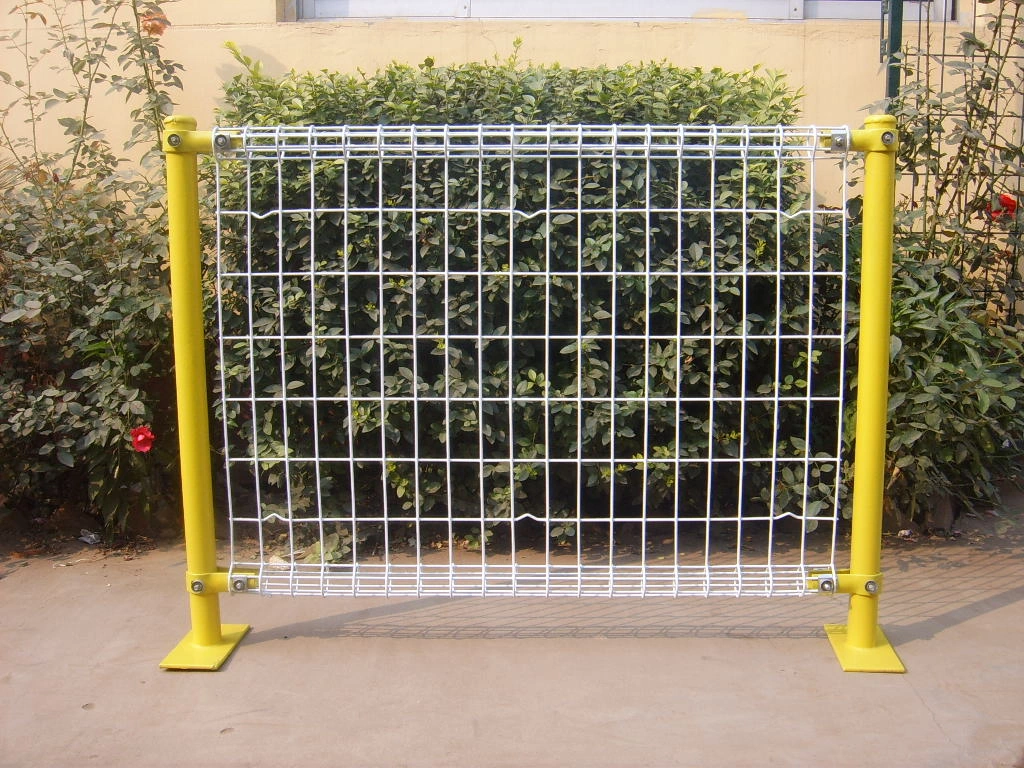
AS 4687:2022 does not spell out a post-storm inspection protocol in its text, but your site-specific risk assessment under WHS regulations absolutely does. After any wind event where gusts approach or exceed the design wind speed for your terrain category and importance level, the fence is a potential hazard until verified. The inspection is not a visual drive-by. You need to check three things: foot displacement (rubber feet slide on wet surfaces far more than concrete — a 30 mm shift reduces overturning resistance measurably), clamp bolt torque (vibration loosens coupling bolts over time, and a single loose clamp cascades through the line), and vertical post deformation at the base weld (our 32 mm OD galvanised tube with >42 micron coating resists this, but thinner-wall imported panels will permanently bend under sustained gusting). Document each check with photos and a timestamp. If an incident occurs and you cannot produce post-storm inspection records, the regulator will treat the fence as non-compliant from the last documented inspection date forward — and the liability shifts entirely to the principal contractor.
Conclusion
Passing a site audit under AS 4687:2022 comes down to one document trap most buyers miss. Your dual-sided test certificate must match the exact panel and foot combination arriving on site. Mix components, and the engineering sign-off is void—leaving your project exposed to immediate shutdowns and $50,000-plus fines.
Demand the original test documentation for your exact panel-foot configuration before you authorize any payment. Review our certified 2400×2100 mm panels and 25 kg rubber bases to confirm your next shipment arrives with matched engineering proof.
Frequently Asked Questions
What is the standard code for fencing?
The primary Australian standard for temporary fencing is AS 4687:2022, covering freestanding barriers for construction, events, and pool safety. It replaces the 2007 version and introduces mandatory dual‑sided wind load testing.
What is the Australian standard for chain wire fencing?
Chain wire fencing used permanently falls under AS 1725, but temporary chain wire barriers on construction sites must still comply with AS 4687.2 for height, stability, and wind resistance.
What are the Australian standards for fences and gates?
Standards include AS 4687 for temporary barriers, AS 1725 for chain wire, AS 2423 for coated steel wire fencing, and AS 1926 for pool safety barriers. The correct standard depends on the installation type—temporary vs. permanent—and intended use.
What is the Australian standard for residential fencing?
Residential boundary fencing often follows local council codes rather than a single national standard. However, where temporary fencing is used during residential construction, AS 4687.2 applies, requiring 1.8 m height and wind load compliance.
How close to your property line can you put up a fence?
For temporary construction fencing, the placement is governed by site safety and access requirements, not property line setback regulations. Provided the fence meets AS 4687, it can be placed on the boundary temporarily; permanent fences must comply with local planning laws and often require a 0.2 m setback.