Skip to content
Crowd barrier weight is the first number most procurement coordinators look for when ordering for festivals or public events. It’s also the most misleading one when taken out of context. A 2.5m steel barricade can land anywhere from 18kg to 25kg depending on the steel gauge, the coating, and especially the feet. Plastic barriers come in at 5-8kg. That spread alone should tell you weight alone tells you very little about whether a barrier will hold up under a packed crowd or if your crew can set it up before load-in begins.
Most suppliers quote a single number and call it a day. What they don’t mention is the steel gauge — 16-gauge (1.6mm) versus 18-gauge (1.2mm) makes a real difference in how the panel bends under lateral load. An 18-gauge barrier at 18kg won’t perform the same as a 16-gauge one at 20kg. The same logic applies to foot design. Heavy concrete feet add 15% to freight and crack after repeated use. Plastic feet cut that weight by up to 40% and let you ship more units per pallet. But not all plastic feet are equal — the lock-in geometry and interlock consistency matter just as much as the material. That’s where the ability to custom-balance weight and fit becomes the real differentiator for 2026 event planning.
Why Most Barrier Weights Mislead Buyers
Weight alone won’t save your event from a barrier failure.
Most procurement coordinators assume a heavier barrier means a stronger barrier. That assumption is exactly why suppliers love quoting total weight while hiding the steel gauge. A 2.5m steel barricade weighing 20kg could be built from 18-gauge (1.2mm) wire that buckles under lateral crowd pressure, or from 16-gauge (1.6mm) wire that holds firm. The scale doesn’t tell you which one you’re buying.
- 18-gauge steel (1.2mm): Weighs roughly 18–20kg per panel. Bends permanently under a 300N lateral load. Frequently found in cheap imports sold by weight alone. Fails AS 4687 dynamic load tests for crowd control applications.
- 16-gauge steel (1.6mm): Weighs 22–25kg per panel. Withstands repeated crowd surges without deformation. Required for compliance with Australian Standard AS 4687-2022. The extra 3–5kg in steel comes from thicker wire, not from heavier feet.
- Concrete feet: Add 10–15kg per barrier. Increase shipping costs by ~15%. Risk cracking during transit or on uneven ground. Common in low-bid stock, but hard to justify when recycled rubber bases offer equal stability at 40% less weight — no cracking, lower freight, faster deployment.
- Plastic feet (in-house controlled): Allow custom weight balancing so every panel in your order mates perfectly. No orphan barriers. DB Fencing’s own plastic feet machines produce consistent geometry and weight tolerances within ±0.5kg, eliminating interlock failures.
The danger is not just structural. An 18-gauge barrier from one supplier will not interlock properly with a 16-gauge barrier from another. The difference in wire diameter and frame rigidity creates mismatched coupling points, leaving gaps that create ‘orphan barriers’ — panels that cannot connect to the rest of your line. That gap becomes a crowd bypass route, a safety violation, and a logistical nightmare during setup.
When evaluating quotes, demand the steel gauge and the foot material, not just the total weight. A 22kg barrier with recycled rubber feet and 16-gauge wire will outperform a 25kg barrier with concrete feet and 18-gauge wire on every KPI that matters: labor time, safety margin, shipping cost, and long-term intercompatibility. For a full breakdown of the five critical specs beyond weight, see the companion guide ‘5 Factors When Buying Crowd Control Barriers’.

Real Cost Breakdown of Barrier Weight in 2026
The real cost of barrier weight isn’t on the price tag — it’s in shipping and labor.
The weight of a crowd barrier is not just a specification — it is a direct driver of logistics and manpower expenses. A standard 2.5m steel barricade (18–25kg) with steel feet costs roughly 15% more to ship per container than the same panel fitted with plastic feet (5–8kg). Over a full container of 400 units, that translates to an extra $2,000–$3,000 in freight alone.
- Shipping cost impact: At current 2026 ocean freight rates, every extra 10kg per panel across a 40′ container adds about $500–$700 to total shipping. Plastic feet cut panel weight by up to 40% vs. concrete bases, directly reducing freight cost.
- On-site labor inefficiency: A crew of two can handle 20 plastic-foot barriers per hour; the same crew manages only 10–12 steel-foot barriers in the same time due to heavier lifting. For a 3-day festival using 800 barriers, that doubles your labor budget.
- Hidden compliance risk: Steel gauge is the real safety factor — 16-gauge (1.6mm) is required for crowd loads under AS 4687. Some suppliers ship 18-gauge (1.2mm) barriers that weigh the same as 16-gauge but flex under crowd pressure. Weight alone does not guarantee safety.
- In-house plastic feet advantage: DB Fencing’s in-house plastic feet production ensures consistent weight across batches, eliminating the ‘orphan barrier’ mismatch that occurs when mixing different suppliers’ feet types — a common cause of stacking failures during events.
| Barrier Type | Weight per Panel | Freight Cost Impact | Labor Time Impact | Compliance Note |
|---|---|---|---|---|
| Steel 16-Gauge (1.6mm) + Concrete Feet | 22–25 kg | ~15% higher per container | 2x setup time vs plastic | Meets AS 4687-2022 load ratings |
| Steel 18-Gauge (1.2mm) + Concrete Feet | 18–20 kg | ~10% higher vs plastic | 1.8x setup time | Bends under crowd pressure; not AS 4687 compliant |
| Plastic Barrier + Concrete Feet | 5–8 kg (panel only; feet add 12–15 kg) | Moderate – feet weight drives cost | 1x setup time (easier panels) | Risk of cracking feet; inconsistent geometry |
| Plastic Barrier + DB In-House Plastic Feet | 5–8 kg (panel) + 3–5 kg (feet) | ~40% lower vs concrete feet | 0.5x setup time (quick interlock) | Custom weight balancing; AS 4687 compliant |
| Plastic Barrier + Recycled Rubber Base | 5–8 kg (panel) + 6–8 kg (base) | ~30% lower vs concrete | 0.6x setup time | Equal stability; UV resistant; eco-friendly |
Barrier Weight vs Load Ratings: Which Matters?
Weight helps portability; load rating ensures safety — don’t confuse the two.
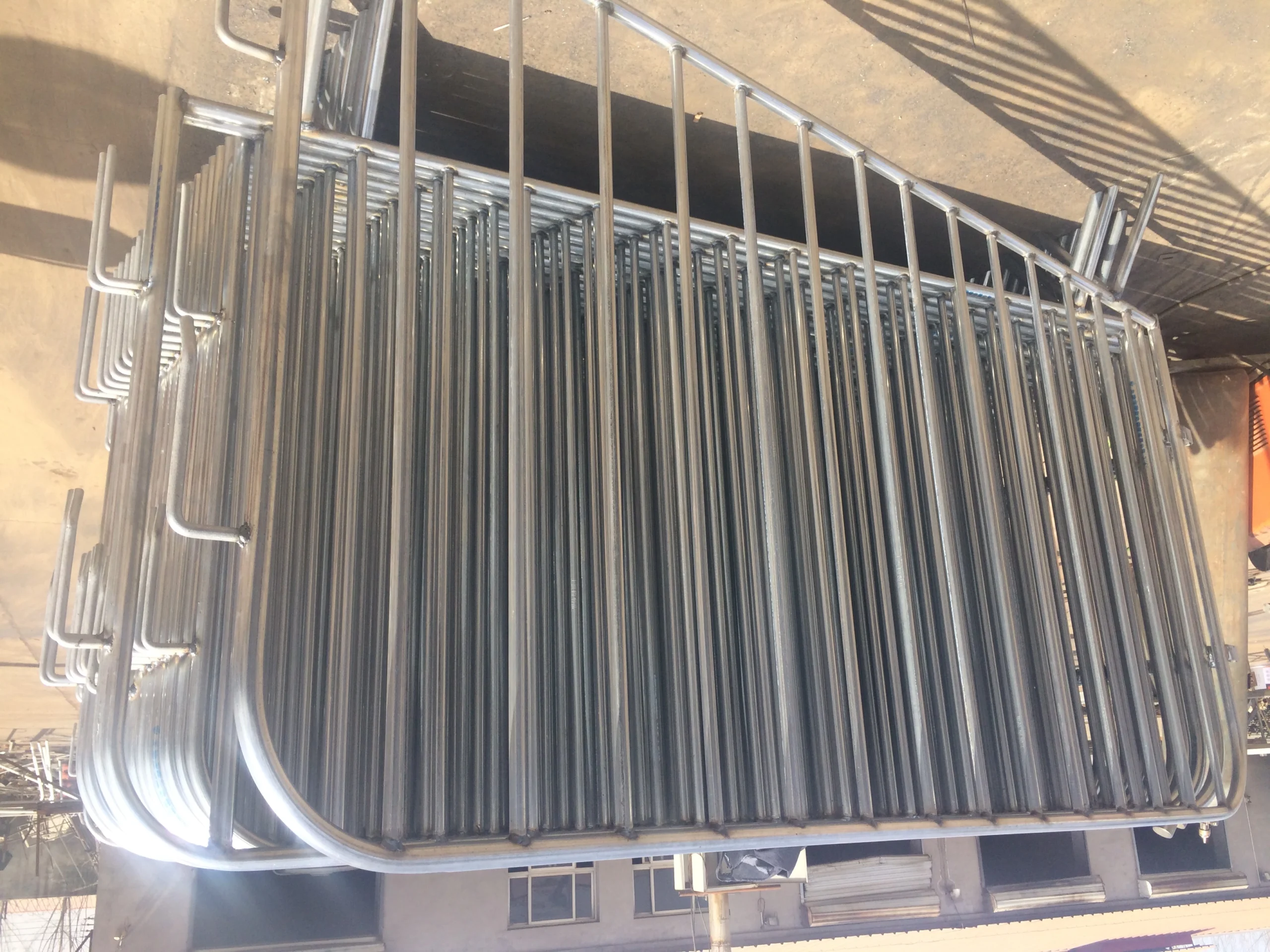
Buyers often equate a heavier barrier with higher safety. That assumption is dangerous. A steel panel weighing 22kg made from 18-gauge (1.2mm) wire will flex or buckle under lateral crowd pressure, while a 16-gauge (1.6mm) panel at the same weight holds firm. The real differentiator is the load rating — the barrier’s ability to resist horizontal force without tipping or deforming — which is governed by steel gauge, base design, and interlock strength, not total mass.
Australian standard AS 4687-2022 sets specific lateral force resistance requirements for temporary fencing and crowd barriers. A compliant unit must withstand a minimum horizontal load applied at the top rail without collapse. Our internal production testing uses 16-gauge mesh panels paired with either concrete or recycled‑rubber feet. The recycled‑rubber base reduces overall weight by up to 40% compared to concrete while maintaining the same tip‑over threshold — because stability comes from base footprint and geometry, not raw weight.
- Weight vs Load Tradeoff: Standard steel barrier (2.5m): 18–25kg. Plastic barrier: 5–8kg. For low‑pressure crowd channels, plastic saves labor and freight costs. For high‑risk perimeters or events with crowd surges, only a 16‑gauge steel barrier with a proper base load rating complies with AS 4687.
- The Gauge Trap: Many suppliers quote weight but omit steel gauge. A 1.2mm panel is ~15% lighter than a 1.6mm panel, but it yields under far less lateral force. Always request gauge thickness in writing — caliper‑verified photos are standard practice for any reputable factory.
- Base Material Impact: Concrete feet (common in budget imports) add 15% to shipping weight and crack after repeated handling. Recycled rubber or our in‑house plastic feet cut weight by 40% and eliminate cracking, while still passing AS 4687 lateral force tests. DB Fencing’s plastic feet are the only locally‑molded option in Anping, giving consistent interlock tolerance batch to batch.
When comparing barriers, ignore total weight first. Instead, ask: What is the steel gauge? What lateral load rating is documented? Does the foot design prevent tipping at a 30‑degree lean? A detailed breakdown of load ratings and test methods is available in our article on Crowd Barrier Load Ratings Explained, which covers AS 4687 pass/fail criteria and how to verify compliance before placing a bulk order.
How to Source Lightweight Barriers Without Sacrificing Safety
Only source where plastic feet are made in-house – weight variance drops to near zero.
You want lighter barriers to cut shipping and labor costs. But weight alone tells you nothing about safety. Most suppliers quote total weight without mentioning steel gauge. A 2.5m barrier in 18-gauge (1.2mm) steel is 2–3 kg lighter than one in 16-gauge (1.6mm), but it bends under crowd pressure. That’s a failure waiting to happen. The only way to get lightweight without losing strength is to control the entire assembly — including the feet.
- Steel gauge deception: 18-gauge (1.2mm) panels save weight but fail AS 4687 lateral load tests. Always specify 16-gauge (1.6mm) minimum. Request caliper verification from the factory before shipping.
- Plastic feet advantage: Concrete feet add 15% to freight costs and crack under repeated handling. Recycled rubber or engineered plastic feet cut weight by 40% with equal stability. DB Fencing is the only Anping vendor that manufactures its own plastic feet, enabling custom weight balancing and eliminating the ‘orphan barrier’ interlock problem.
Importing directly from a factory in Anping cuts your cost per panel by 30–50% compared to local distributors. But you need a supplier that understands export compliance: AS 4687-2022 certification, hot-dip galvanizing above 85 microns (AS/NZS 4680), and a low MOQ to test the market. DB Fencing offers MOQ of 100 panels, 24-hour quoting, and 14 years of export experience to Australia and New Zealand. For a complete walkthrough of the import process — from sampling to container loading — read our guide ‘Import Crowd Barriers Direct From Factory’.
Conclusion
A 2.5m steel barricade at 18–25kg doesn’t guarantee safety if the supplier uses 18-gauge steel. The real metric is load rating, not just mass. Plastic barriers at 5–8kg save on freight and setup time — but only if the feet design and interlock geometry match your event layout. Choose based on crowd pressure, not a number on a spec sheet.
Review your current barrier stock against AS 4687 requirements. If you need lightweight plastic feet that still pass load tests, explore models with recycled rubber bases and in-house weight balancing. Compare panel gauge and coating thickness side by side before placing your next bulk order.
Frequently Asked Questions
How much does a metal crowd barrier weight?
A standard 2.5m steel crowd barrier typically weighs 18–25 kg, depending on gauge and galvanizing thickness. Plastic feet versions can reduce total weight to 5–8 kg, but that changes load capacity. Always verify gauge (16-gauge minimum) before ordering.
What are the different types of crowd control barriers?
Common types include steel crowd barriers (A-frame, interlocking), plastic barriers (footed or water-filled), and modular event barriers. Each varies by weight, stability, and compliance for construction or festival use. Match type to your event’s AS 4687 load requirements.
How much does a 30 foot long barrier wall weight?
A 30-foot barrier wall is not a standard single panel; it is typically assembled from multiple 2.5m (8ft) panels. Steel panels for that length would total roughly 66–92 kg before bases. Request a custom assembly quote from the factory for exact weight.
What are type 3 barricades?
Type 3 barricades are heavy-duty, generally continuous footed or water-ballasted barriers used for high-security perimeters. They are not covered in the provided research; the article focuses on steel and plastic feet. Check with your supplier for a definition specific to your region.
What’s the difference between a type 1 and type 2 barricade?
The difference is not detailed in the provided research. Usually Type 1 is a lightweight A-frame barrier, and Type 2 is a heavier duty version with reflective sheeting, but these classifications vary. Confirm type definitions with your local building code or supplier.