Skip to content
importing corral panels canada is the first checkpoint buyers should lock before they approve a supplier, budget, or production slot. You’ve signed a $50,000 PO forcorral panelsdestined for Canadian farms, you’ve approved the pre-production sample, and then the container shows up with tube walls that are 1.5 inches instead of the 1.9 you specified. What happened? The standard line from most Chinese factories is that the sample approval covers the design, not the production run — a gap that costs Canadian wholesalers real money in reorders, refunds, and lost distributor trust. If you are importing corral panels from China for the Canadian market, thatsample-to-production mismatchis the single most common failure point observed across the industry.
The fix isn’t complicated, but it requires a different conversation upfront. Instead of just asking for a sample, you need to lock the tube diameter (1.9″ OD, 14-gauge wall), the galvanization thickness (>50 microns for wet climates), and the panel hinge design into the production contract — not just the sample spec. A factory that routinely ships 1.5″ tube to other markets will default to that unless you make it a line item in the PO. The rest of this guide walks through exactly which specs matter for Canadian farms, how to load a container efficiently, and what CFIA guidelines actually apply to livestock fencing so you don’t get burned on your first container.
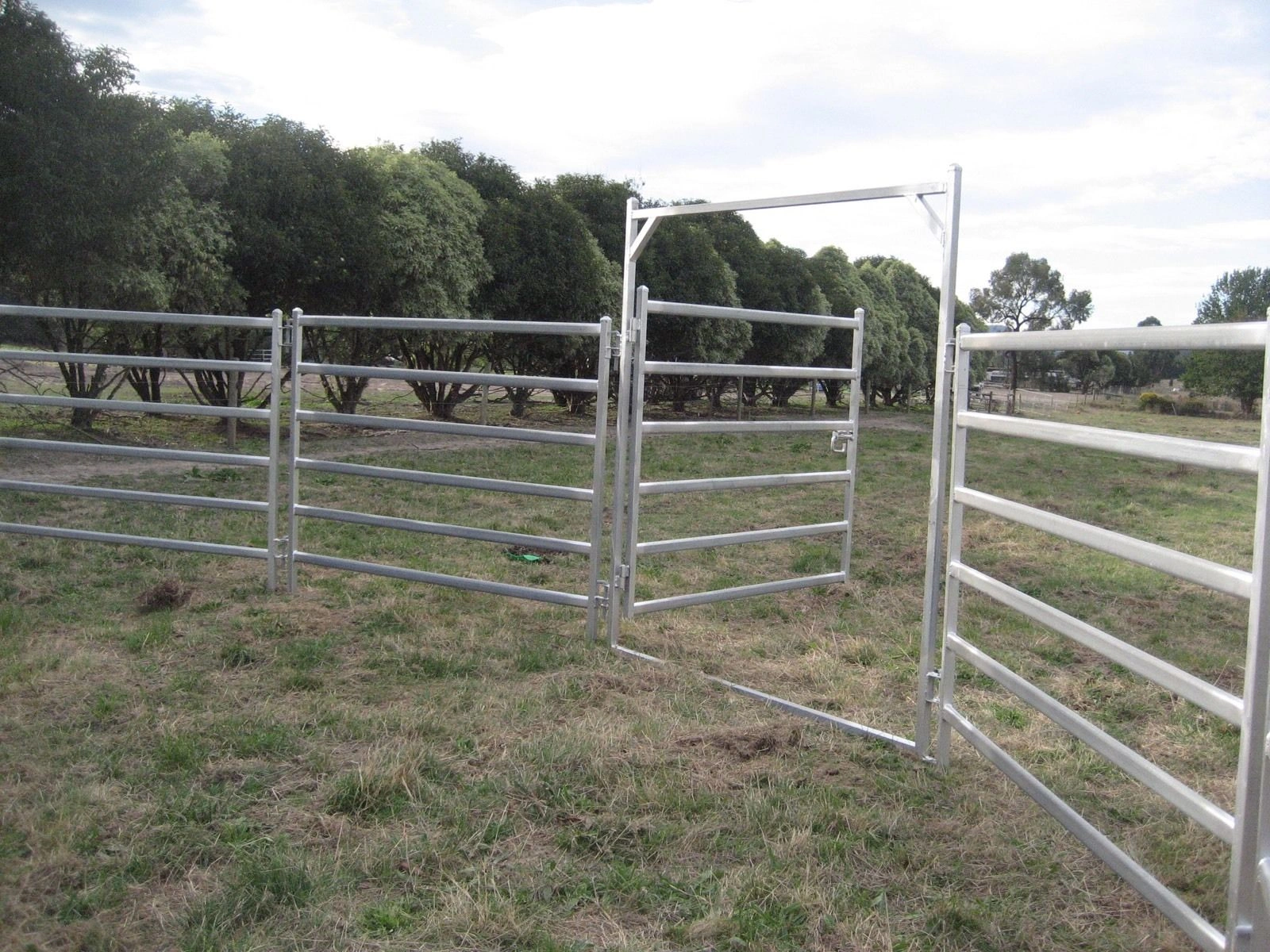
Why Source Corral Panels from China?
China-built corral panels can save Canadian wholesalers 40–50% versus domestic production — but only if you demand 1.9″ tube and 50+ micron.
On a per-panel basis, a domestic Canadian manufacturer typically quotes $55–$70 for a standard 16′ x 6′ corral panel with 1.9″ OD 14-gauge tube and hot-dip galvanized finish. A Chinese supplier quoting FOB will land that same spec at $28–$35 per panel. After adding ocean freight ($4–$6 per panel inside a 40-ft container holding 250–350 panels), port handling, and customs brokerage, your all-in cost lands at $34–$43 per panel delivered to a Canadian distribution hub. That’s a 30–40% margin cushion before you even touch retail markup. The catch: many Chinese factories default to a 1.5″ OD tube because it’s cheaper to weld and uses less steel. If you don’t specify 1.9″ x 14-gauge in writing, that’s what you’ll get — and Canadian cattle farmers will reject panels that flex under a 1,200‑lb animal leaning into them.
Quality from Chinese wire mesh factories has shifted noticeably since 2020. The trigger was export pressure from Australian and New Zealand buyers with their AS 4687 standard, which forced suppliers to invest in continuous hot-dip galvanizing lines with real-time coating thickness meters. Today, the better agricultural fencing producers maintain zinc coating at 50–60 microns (not the 42‑micron minimum acceptable for temporary construction fencing) and routinely batch-test weld shear strength to 1,500 N. A few, like the Anping factories that run dedicated agricultural lines, also offer sample panels for winter testing: you can request three panels, ship them at your cost (roughly $250 via DHL), and test for ice adhesion and coating wear under your heaviest freeze-thaw cycle. That single step separates factories that understand Canadian conditions from those that don’t.
Key Specs for Canadian Livestock Corral Panels
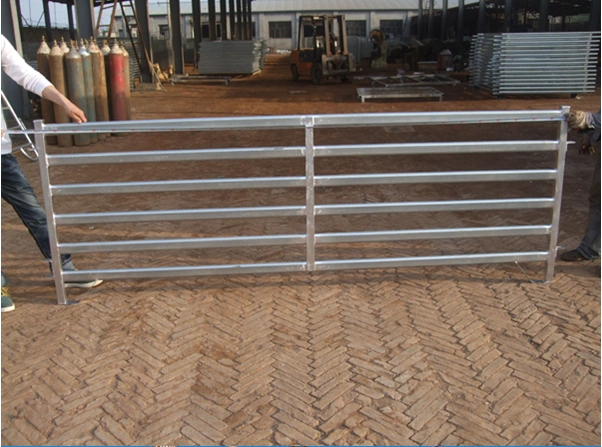
Most factories ship 1.5″ tube — Canadian cattle farmers need 1.9″ OD with 14-gauge wall.
The single biggest spec mismatch observed when Canadian wholesalers import corral panels is tube diameter. A 2.0″ OD tube feels robust but adds unnecessary weight and cost. The sweet spot for cattle and bison corrals in Canada is 1.9″ OD with a 14-gauge (2.0 mm) wall. This combination handles the impact of 1,800 lb animals leaning against panels without bending, yet keeps the panel light enough for one-person repositioning. Many Chinese factories default to 1.5″ OD or thinner 16-gauge walls because those specs are common in temporary fencing. If you don’t specify the exact tube size on your PO, you’ll receive panels that will buckle within two Alberta winters.
-
-
- Recommended spec for Canadian cattle corrals: 1.9″ OD tube, 14-gauge (2.0 mm) wall thickness. This matches what experienced farmers in the Prairies demand. It’s heavy enough to withstand a full herd push but still shippable.
- What happens if you accept the factory default: Incoming container contains 1.5″ OD / 16-gauge panels. Within one freeze-thaw cycle, welds at the hinge points crack and tubes dent when cattle lean. You’ll spend more on warranty replacements than you saved on the per-unit price.
-
On galvanization: don’t accept the same zinc coating used for temporary construction fencing. Those panels work with 42 microns because they get stored after 6–12 months. Your customers’ corral panels sit in snow, mud, and road salt for 15+ years. Hot-dip galvanization must exceed 50 microns — preferably 60–70 microns — for agricultural use in wet Canadian climates. Anything less and you’ll see red rust on the bottom rails by the second spring. Powder coating, even epoxy-based, chips off quickly when panels are dragged across frozen ground or rubbed by cattle. HDG is the only finish that survives that environment.
-
-
- Hot-dip galvanized (>50 microns): Outlasts 15 Canadian winters with zero maintenance. The zinc layer self-heals small scratches. Initial cost is higher, but total cost of ownership over 10 years is 40% lower than powder coat when you factor in replacements.
- Powder coated (any thickness): Looks good day one. After one season in a Manitoba feedlot, the coating peels at contact points with snow and manure. You’ll get complaints. Not recommended for permanent agricultural installations — only for show pens or indoor use.
-
Panel height depends entirely on what the farmer pens. For standard cattle (Angus, Hereford, Holstein), 6′ panels are adequate. For bison or large-breed beef cattle (Charolais, Chianina), you need 8′ panels — they can easily clear a 6′ rail if spooked. Many Canadian auction yards and processing facilities now specify 7′ or 8′ for mixed-use pens. Custom heights are straightforward when you’re ordering a container load; just confirm the tooling exists at the factory before signing the contract. And if you’re dealing with dairy bulls, do not go below 7′ — a bull has been observed clearing a 6′4″ gate.
-
- 6′ panels: Suitable for standard beef cattle, sheep, and most dairy operations. Most economical to ship — fits tight in a 40ft container. Common for feedlot sorting pens.
- 8′ (or custom 7′) panels: Required for bison, large bulls, and high-security holding pens. Adds about 12% to the per-panel cost. Reduces container count by roughly 18% compared to 6′ panels — but the market demand is strong, especially for export to US-based bison ranches.
Mesh Spacing and Safety Considerations
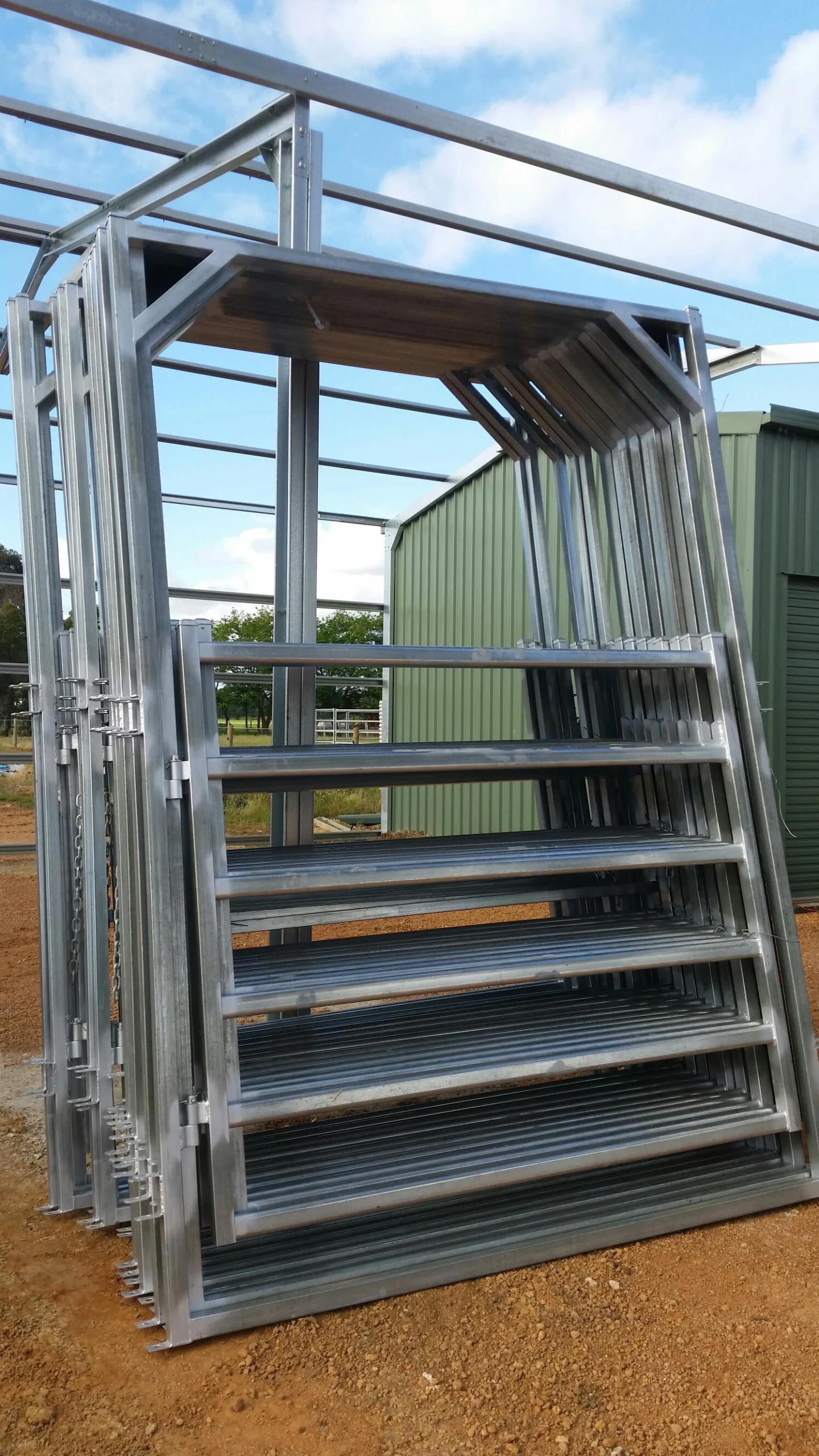
Most hoof injuries come from mesh spacing over 6 inches.
The number one safety issue with corral panels is hoof entrapment. When a cow or sheep gets a hoof stuck between the rails, the result is often a broken leg, torn ligaments, or a cull animal. The Canadian winters make this worse – frozen mud and ice can prevent the hoof from pulling back out. The industry rule of thumb for cattle is a maximum vertical spacing of 6 inches (152 mm). For sheep and calves, that drops to 4 inches (100 mm) to prevent smaller hooves from slipping through. Many Chinese factories default to 6-inch spacing because it uses less metal, but if your customer runs mixed herds, you need panels with adjustable spacing or at least two SKUs.
The second hazard is sharp edges on hinges and welds. Panels have been observed arriving from Chinese suppliers with bare metal burrs where the hinge pin was punched through – those edges slice through leather gloves and skin in seconds. Any reputable factory should tumble or grind the hinge areas after welding. The minimum standard: run a cotton glove over every hinge and weld point. If it snags, the panel fails. Some factories will skip this step to save 30 seconds per panel, and that 30 seconds can cost your customer a vet bill. Request a hinge-edge close-up photo in natural light before you approve the sample. If the supplier can’t produce a clean image, assume the worst.
-
- Spacing Check: Measure the vertical opening between horizontal rails. For cattle: 6″ max. For sheep/calves: 4″ max. Always confirm the factory’s default panel drawing before production.
- Hinge Edge Finish: Ask for a macro photo of the hinge hole and surrounding weld. The hole should be punched cleanly, not torch-cut. Any visible burr or sharp edge is a reject.
- Sample Testing: Order 2–3 sample panels and physically drag a denim cloth across all hinge and weld edges. If the cloth snags, the panel needs rework. Do not accept a certificate – test the actual metal.
Container Loading Efficiency for Agricultural Panels
Folding corner panels cut volume 25% at a $2-3/panel cost premium.

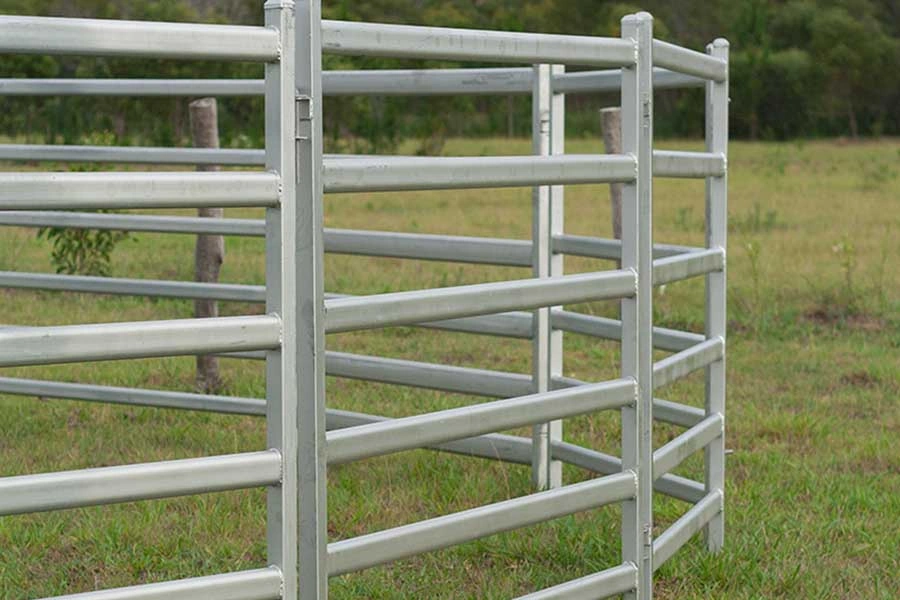
The row vs. flat panel choice directly determines your container yield and final landed cost. Standard 8′ corral panels with attached hinged feet (feet folded flat against the tube) stack to roughly 250–350 units per 40ft container. Flat panels without feet — or with removable feet packed separately — can push that number closer to 400–450 units because you can nest the frames more tightly.
-
- Flat panels (no feet): Yield ~400–450 per 40ft container. Lowest per‑unit freight cost. Customer must attach feet, order loose feet separately, and manage missing parts risk.
- Panels with hinged feet: Yield ~250–350 per 40ft container. Higher freight cost per panel but zero field assembly. Plastic feet stay captive on the tube, reducing warranty claims on lost parts.
- Folding panel option: If the panel frame itself uses hinge joints at the corners, shipping volume drops ~25% vs. a rigid frame. The $2–3/panel premium is often justified for remote Canadian farms where freight is the dominant cost component.
When evaluating bulk corral panel shipping for Canada container load orders, run the total cost comparison: freight + duty + drayage + field labor for foot installation. A 300‑panel container with hinged feet can actually beat a 400‑panel flat pack if your customer’s crew charges by the hour.
Import Compliance for Agricultural Use
CFIA doesn’t mandate corral panel design, but lacks of documentation can freeze your container.
The CFIA (Canadian Food Inspection Agency) does not impose a compulsory standard for livestock fencing like AS 4687 does in Australia. However, their guidelines under the Health of Animals Act require that any structure in contact with livestock is free of sharp edges, burrs, or materials that could cause injury. For a corral panel, that means every hinge pin, clip, and weld bead must be ground smooth. A Canadian wholesaler lost two weeks at port because a batch of hinges had 0.5mm burrs flagged by a CFIA inspector on a random hold — the cleanup cost them CAD 1,200.
The real compliance trap isn’t the product itself — it’s the paperwork. CFIA technically requires proof that the steel is free of any animal-derived contaminants, which is where the BSE-Free Steel Declaration comes in. Despite steel having a zero risk of BSE transmission, Canadian importers routinely ask for it because one missing document can trigger a full detention inspection.
-
- Mill Certificate (MTR): Must originate from the steel mill, not the fence factory. It confirms the chemical composition (e.g., carbon content 0.12-0.20% for Q235B) and mechanical properties. Many Chinese factories do not hold mill certs for each shipment; you must contractually require them 14 days before loading. Expect a fee of roughly $50-80 per consignment.
- BSE-Free Steel Declaration: A signed statement on factory letterhead confirming that no animal by-products (tallow, grease, bone char) were used in the rolling or galvanizing process. This is a customs broker’s requirement derived from CFIA’s general import conditions, not an explicit legal mandate. But without it, your broker will refuse to file a release. Make sure the factory stamps and signs the declaration — many Anping vendors have never filled one out for a Canadian buyer.
- Galvanization Compliance Record:While not a strict standard, CFIA may request batch-specific zinc coating thickness records if the panels show visible rust upon arrival. It is recommended to specify a minimum average of 50 microns per the purchase order and to attach a third-party thickness test report to the packing list. This can cut weeks off any post-arrival dispute.
Finding the Right Manufacturer in China
A factory that builds lightweight temp fencing will fail on 14-gauge ag panels — the two production lines are not interchangeable.
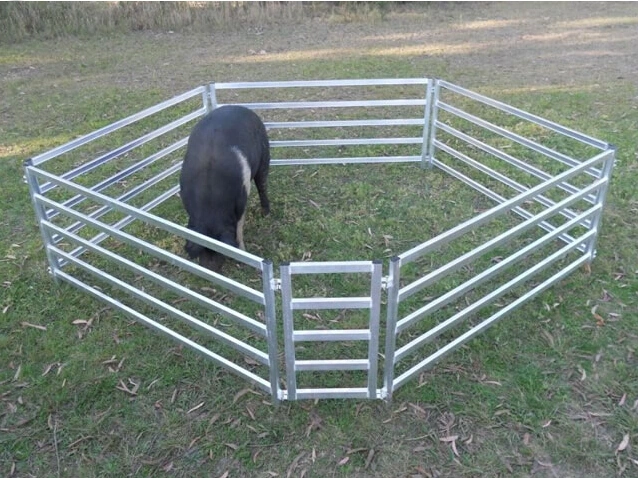
Most Chinese fencing factories in Anping fall into two camps: temporary fencing shops and agricultural fencing shops. The distinction matters because the welding equipment, tube rollers, and galvanizing lines are tuned differently. A factory that cranks out 1.5mm-thick temporary panels for construction sites cannot simply switch to 1.9″ OD x 14-gauge (2.0mm wall) corral panels without retooling — and most won’t. If you’re a Canadian wholesaler sourcing for cattle or bison, you need a factory that runs agricultural-grade tube stock year-round, not one that pivots between crowd barriers and sheep panels based on seasonal demand.
Ask direct questions before sending an RFQ: What wall thickness does your default welder run? Do you hold inventory of 14-gauge tube (1.9″ OD) or do you order it per container? A factory that stocks that tube size has committed to the ag market. One that asks ‘what thickness is 14-gauge?’ is still in the temporary fencing mindset. Also verify whether the galvanizing bath delivers a minimum 50-micron coating — not the 42 microns that passes for temporary fencing. The difference is 6–8 years of rust-free service in Alberta’s snow-mud cycle.
-
-
- Tube size confirmation: Insist on 1.9″ OD x 14-gauge (2.0mm wall) for Canadian corral panels. Many Chinese factories default to 1.5″ or 1.7″ tube — specify this in writing and request a photo of the caliper reading on the raw tube before production starts.
- Galvanizing thickness: Require a mill certificate showing >50 microns per ASTM A123 (or equivalent). Do not accept a general ‘hot-dip galvanized‘ claim without a certified test report. 42 microns will fail in Canadian coastal or high-moisture regions within 3-4 seasons.
- Factory specialization: Ask for photos of their welding line with 1.9″ tube being fed. If the line is set up for flat 1.5mm sheet, they cannot run 2.0mm wall without changing rollers — and the weld quality suffers. A true agricultural fencing factory will have a dedicated heavy-tube line.
-
Now, on sample panels for winter testing. A standard pre-production sample shipped in July tells you nothing about how the panel behaves at -30°C when the galvanized coating embrittles and welds crack under livestock impact. You need a winter-simulated sample — or actual winter shipping — to catch failures. Here’s the protocol that works for Canadian buyers: request two sample panels produced with your exact tube spec and sent via ocean freight in November. Have the factory air-dry them (no artificial heating) then load into a container. When the container lands in Vancouver or Montreal in January, inspect the panels within 48 hours of opening — look for stress cracks at weld joints and coating flaking on edges. A panel that survives that journey without defects will handle a Saskatchewan feedlot.
-
- Winter test timeline: Order samples by early October for November ocean departure. Receive in Canada by January. Inspect immediately. This window gives you 60 days to reject or approve before the factory’s Chinese New Year shutdown (late January).
- What to inspect: Check weld integrity on every corner joint. Use a hammer test: strike the weld area with a 2-lb hammer from 18 inches — if the weld cracks, that batch fails. Also inspect the galvanized surface under bright light for ‘grey spots’ that indicate bare steel — those spots will rust in one Canadian winter.
- Hinged vs. flat samples: If you’re evaluating folding panels, test the hinge mechanism at -20°C (place sample in a freezer for 4 hours then cycle the hinge 10 times). Many hinge pins seize or break when cold. Folding panels save 25% container space but add $2-3/panel — worth it only if the hinge survives freeze-thaw cycles.
One more insider note: a factory that passes your winter sample test but fails to document the tube gauge on the production run will ship panels that bow under a 1,200-lb bull. Always request a ‘first-article inspection’ report from an independent third-party inspector (SGS or Intertek) at the factory before container loading. The cost is about $500-$800 and saves you a $25,000 claim later.
Shipping and Duty Rates
Get the HS code wrong and you could overpay 8% duty – or worse, get your container held.
For corral panels entering Canada, the correct HS code is almost always 7326.90.90.99 – other articles of iron or steel. This classification carries a Most-Favored-Nation (MFN) duty rate of 0% for shipments from China. Some suppliers or customs brokers mistakenly use 7308.90.90.90 (structures and parts of structures), which triggers a different rate and can require additional engineering drawings or mill certificates. That mistake adds cost and delays.
-
- HS 7326.90.90.99: 0% MFN duty for China; covers welded panels, gates, and livestock fencing components. No preferential rates under USMCA/CUSMA because China is not a party.
- HS 7308.90.90.90: MFN duty rate for China is 8%, and customs often demands structural load certifications. Avoid this code for standard agricultural corral panels unless you’re importing load-bearing frames.
Because China is outside the USMCA zone, there is no duty preference to file. Your landed cost calculation should include the 0% duty plus GST/HST, and any applicable anti-dumping or safeguard surtax. As of 2026, no anti-dumping duties are in place specifically for corral panels from China, but steel product tariffs can change quarterly. Always request a binding tariff classification from CBSA before your first container.
Case Study: Ontario Wholesaler Saves 40% vs. Domestic Supplier
An Ontario wholesaler cut corral panel costs by 40% by switching to a Chinese factory that met Canadian specs on tube size.
The buyer had been sourcing from a domestic manufacturer in Quebec. Panels were 1.9″ OD with 14-gauge wall, but the domestic price per panel was $62 CAD FOB warehouse. After auditing three Chinese factories specializing in agricultural fencing, one factory in Anping matched the spec sheet exactly — including the critical hot-dip galvanization thickness above 50 microns required for Ontario’s freeze-thaw cycles and wet springs.
Logistics were the make-or-break variable. The wholesaler’s previous domestic supplier used LTL trucking direct to farm stores, which added $8–$12 per panel in freight. With the Chinese supply, the cost per panel landed at Toronto was $37 CAD — a 40% reduction — but only if container utilization hit 90% or better.
-
- Container choice:: Used 40ft HQ containers. Standard flat corral panels (without folding hinges) load at 250 panels per container. The wholesaler opted for folding corral panels with heavy-duty hinges at the corners, which increased per-panel cost by $2.50 but allowed 330 panels per container — a 32% volume gain that cut per-panel ocean freight from $11 to $8.30.
- Galvanization verification:: Before shipping, the factory sent sample corral panels for winter testing. The wholesaler placed one panel outdoors in a barnyard for 60 days of snow, mud, and livestock contact. No rust appeared. The mill certificate confirmed average zinc thickness of 54 microns across three test points.
- Distributor network:: Instead of direct farm deliveries, the wholesaler used cross-dock freight from Toronto to three regional distribution hubs: London (ON), Edmonton (AB), and Moncton (NB). Each hub served 30–40 farm supply dealers. The savings in intra-provincial LTL was $1.20 per panel.
- HS code and duty:: Classified under HS code 7326.90.90.99 (other articles of iron or steel). Duty to Canada is 0% under MFN tariff for this code as of 2026. No NAFTA/USMCA complications since the goods originate in China. Customs clearance took 4 days on the first shipment.
The final landed cost — including folding panel premium, ocean freight, customs brokerage, and inland distribution — was $37.20 per panel. Compared to the domestic $62, the wholesaler saved $24.80 per panel. On a first order of 1,000 panels, that’s $24,800 in savings — enough to fund a factory audit trip to Anping for the next year’s planning.
Conclusion
Skipping the tube gauge spec or accepting the standard 42-micron galvanization might save a few cents per panel, but the failure surfaces 18 months later—rust spots in weld joints, hoof entrapment from loose mesh, and a $15,000 replacement order your customer never budgeted for. A single rejected container due to dimensional non-conformance can erase any FOB price advantage you negotiated. The difference between a bulk shipment that sells out and one that sits in inventory often comes down to how tightly you controlled the sample approval process and whether you enforced a realistic quality tolerance for weld strength and coating thickness.
Before committing to a container load, request sample panels built to your exact Canadian farm spec—1.9″ OD, 14-gauge wall, 50+ micron hot-dip. Run them through a freeze-thaw cycle in a snowbank. Compare the weld integrity against CFIA guidelines for livestock handling. Then check the product catalog to see how factory-direct pricing and folding-panel options can cut your landed cost while still meeting those standards.
Frequently Asked Questions
What tube diameter is best for Canadian cattle panels?
1.9-inch outer diameter with 14-gauge wall is the recommended spec for Canadian cattle corral panels. Most budget factories ship 1.5-inch tubes which are too weak for livestock applications. Specify 1.9″ OD 14ga in your PO.
How many corral panels fit in a 40ft container?
A 40ft container typically holds 250 to 350 corral panels with hinged feet. Flat panels without feet can load more, but hinged feet are standard for farm use. Confirm exact count with your supplier based on panel design.
Is hot-dip galvanized or powder coated better for snow and mud?
Hot-dip galvanized (HDG) lasts significantly longer than powder coating in snow and mud. Powder coating chips easily in freezing conditions, while HDG maintains corrosion protection even when scratched. Request HDG finish with a minimum of 42 microns for Canadian winters.
Do I need special certifications to import corral panels into Canada?
No mandatory standards exist, but CFIA guidelines recommend safe mesh spacing and smooth edges. Request mill certificates and a BSE-free steel declaration from your Chinese supplier to ease customs. Always ask for the BSE-free steel letter before shipping.
How can I test a sample panel before bulk order?
Request full-size sample panels and test them in your local winter conditions for snow load and corrosion. Check weld quality, galvanization thickness, and hinge smoothness before approving production. Run a 30-day field test before committing to a container load.