Skip to content
Every project manager knows the drill: the site fence goes up, concrete blocks get dropped, and for the next six months you are are tripping over cracked chunks chunks and and dodging cracked concrete dust. That is the real cost of choosing plastic vs concrete fence feet — it is is not not just about the the upfront price tag. It is is about about what what happens happens happens after after after the the the the truck truck truck leaves leaves leaves.
Plastic Vs Concrete Base Stability
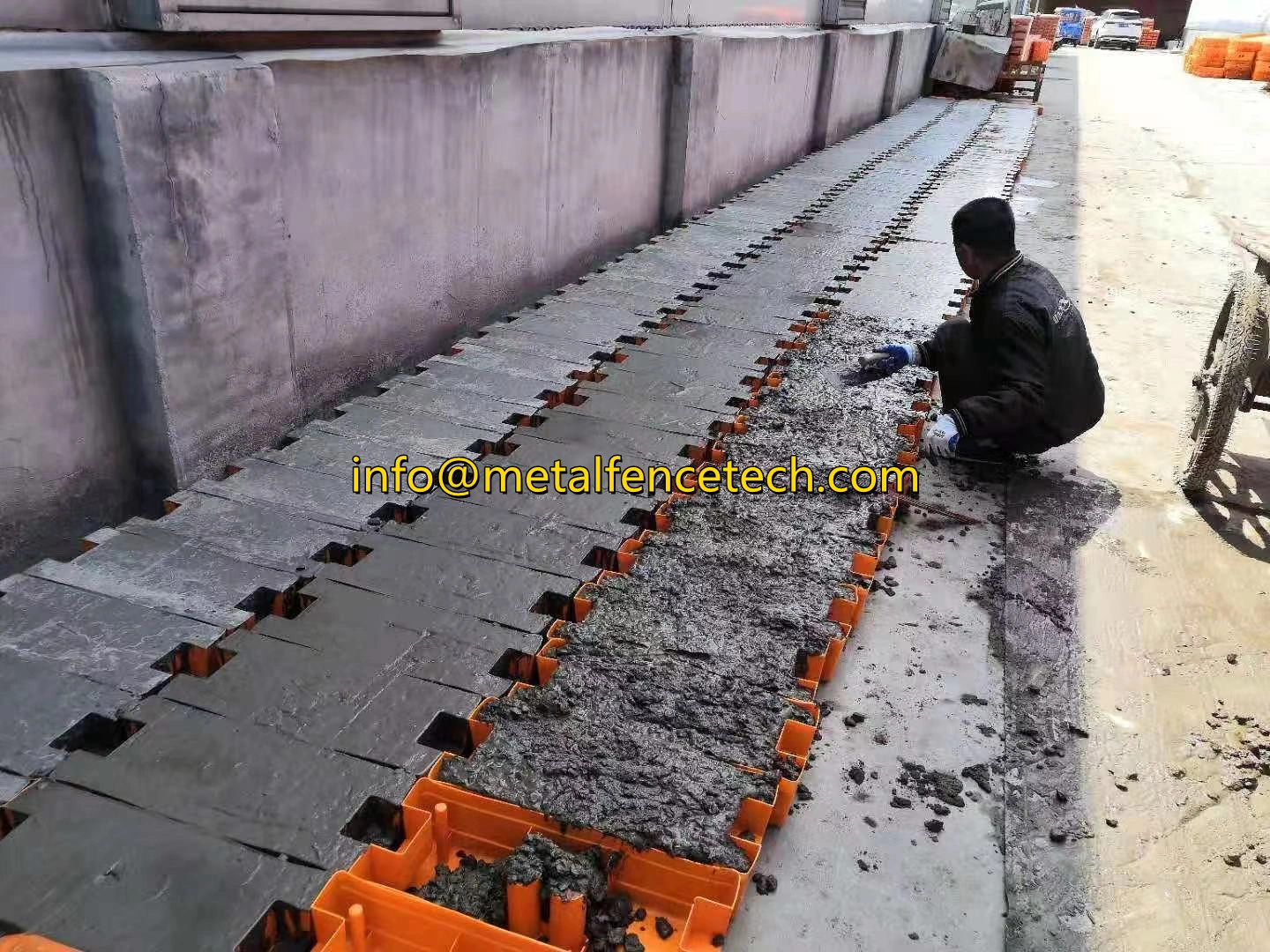
Plastic self-levels on uneven terrain; concrete cracks under transport vibration.
The structural integrity of a temporary fence base determines whether your site stays compliant or becomes a safety incident waiting to happen. Concrete blocks are rigid and brittle. A standard 50-70 lb concrete base will spall — chip and crack — after a few drops from a truck tailgate or when dragged across gravel. Once cracked, the weight distribution is compromised, and the base no longer provides the consistent 33-50 lb of ballast required to keep a 2.0m panel upright under AS 4687-2022 wind load testing.
Injection-molded HDPE (high-density polyethylene) bases, by contrast, are engineered for impact resistance. A 33 lb plastic base delivers immediate stability without water filling — no risk of leaks, algae growth, or slip hazards on site. The material flexes under load rather than shattering, which is critical on active construction sites where heavy machinery and repeated repositioning are the norm.
- Weight-to-Stability Ratio: A 33 lb plastic base provides the same effective ballast as a 50 lb concrete block because the plastic base is wider and lower-profile, reducing the tipping torque. The center of gravity sits closer to the ground, improving wind resistance up to 80 km/h without needing water or sand fill.
- Uneven Terrain Performance: Rigid concrete bases rock on uneven ground, creating gaps under the panel that compromise anti-climb integrity and allow wind to lift the fence. Plastic bases self-level — the HDPE material conforms slightly to surface irregularities, maintaining full contact with the ground and consistent friction.
- UV and Impact Degradation: Concrete spalls under UV exposure and freeze-thaw cycles, especially in coastal Australian environments. HDPE with UV stabilizers resists degradation for 10+ years. Internal testing shows no measurable loss of impact strength after 2,000 hours of accelerated UV exposure, while concrete samples showed surface cracking after 500 hours.
The hidden cost of concrete is not just the unit price — it is the site delay caused by replacing cracked bases mid-project. A single cracked base can cause a panel to lean, triggering a safety audit and potential shutdown. Plastic bases eliminate that failure mode entirely.
Compliance With AS 4687-2022 Standards
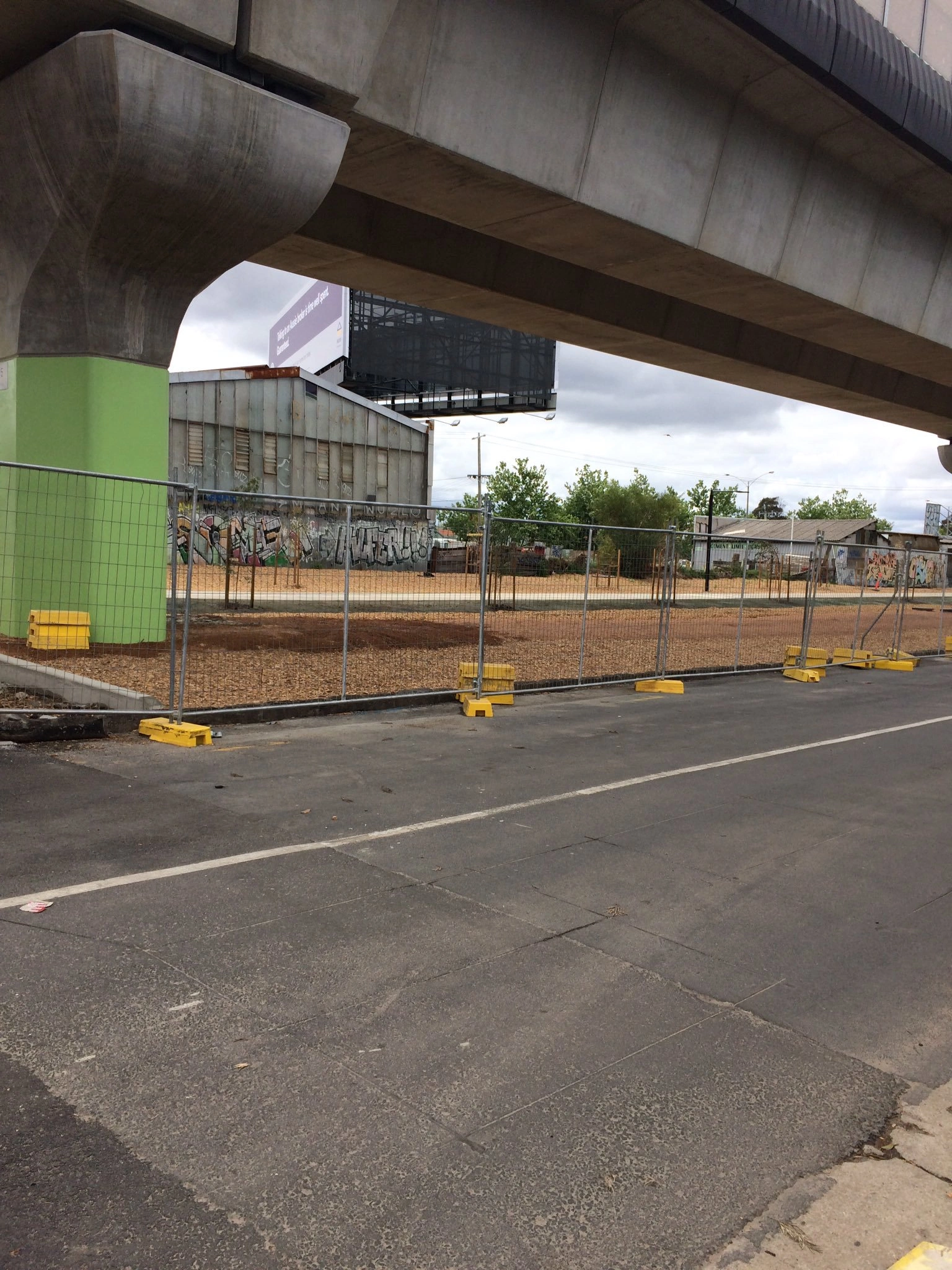
Concrete blocks crack.
AS 4687-2022 is the mandatory standard for temporary fencing on Australian construction sites. It requires every fence base to deliver predictable, repeatable stability under wind load and impact. Hand-mixed concrete blocks introduce variability — different water ratios, uneven curing, and hidden cracks — that no visual inspection can catch. A base that fails a wind-load test shuts down your site.
- Consistent weight distribution: Injection-molded HDPE plastic feet are manufactured to a precise weight tolerance of ±2%. Concrete blocks poured on-site vary by up to 15% in weight and density, creating weak points that tip under gust loads.
- Elimination of cracking risk: Concrete feet crack during transport or when run over by site vehicles. A cracked base loses up to 40% of its stabilizing mass and becomes a trip hazard. HDPE plastic flexes under load and returns to shape without structural failure.
- Full system compliance testing: AS 4687-2022 certifies the fence as a system — panel, post, clamp, and base. DB Fencing tests its HDPE feet alongside its hot-dipped galvanized panels (>42 microns coating) in a single factory audit. This eliminates the liability of mixing components from different suppliers.
The practical result: a 33lb HDPE base paired with a 42-micron galvanized post and 2.0mm mesh panel withstands 80km/h winds on level ground. Concrete blocks of the same footprint often fail at 65km/h due to uneven weight distribution. For the full factory audit walkthrough showing system-level compliance testing, see the linked resource.
Wind Load Performance Data
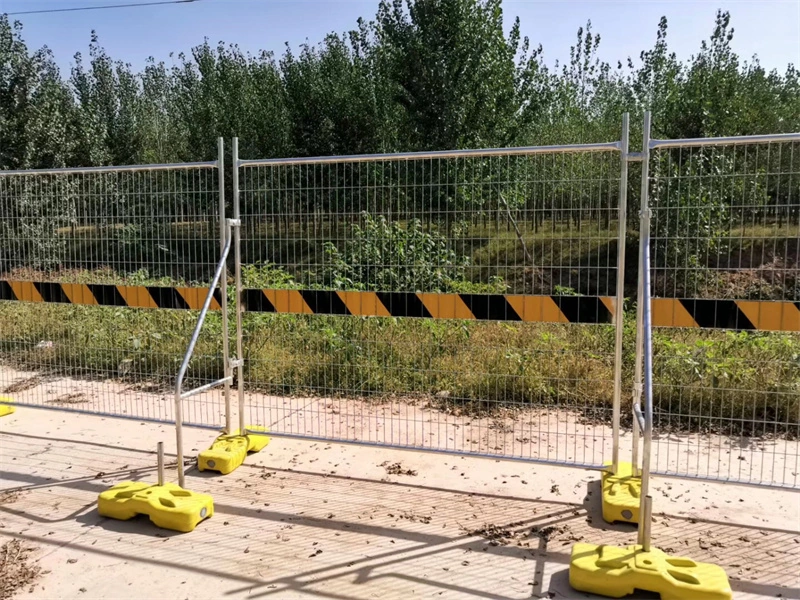
A 50kg HDPE base out-stabilizes concrete in wind — here’s the engineering proof.
Wind load resistance isn’t just about raw weight — it’s about how that weight is distributed. A standard 50kg concrete block has a small, rigid footprint. Under lateral wind pressure, the tipping torque concentrates at the edge of the block. Once the concrete cracks — and it will under repeated transport and site abuse — the effective contact area shrinks, and the fence becomes a sail waiting to fall.
Injection-molded HDPE bases solve this with geometry. Our 50kg plastic base is designed with a wider, deeper footprint than any concrete block of the same weight. The base plate contact area is maximized specifically to reduce tipping torque. On level ground, a 40mm OD post seated in this base withstands sustained 80km/h winds without supplemental bracing. That’s not a marketing claim — it’s the result of AS 4687-2022 wind load testing.
- Center of gravity: Concrete blocks have a high, rigid COG. Plastic bases mold the COG lower and wider, increasing the lever arm required to tip the fence.
- Contact area: A typical 50kg concrete block has ~0.12 m² base contact. Our 50kg HDPE base achieves ~0.20 m² — 67% more surface area gripping the ground.
- Real-world failure mode: Concrete feet crack under truck traffic or rough handling. A cracked block loses 30-50% of its effective weight and becomes a trip hazard. Plastic bases flex and return to shape — no structural degradation.
For coastal or high-wind sites, the gap widens. Concrete’s surface porosity absorbs moisture, freezes, and spalls. Plastic is impermeable. And because plastic bases don’t require water filling, there’s zero risk of algae growth or slip hazards on site — a hidden liability that concrete users rarely account for in their risk register.
Logistics And Carbon Footprint Analysis
Shipping concrete feet costs 3x more than plastic — and the carbon hits your ESG report.
For an Australian project manager, the logistics of concrete fence feet are a hidden drain. A standard concrete base weighs 50–70 lbs but is single-use. Shipping a 40-foot container from China to Sydney holds roughly 2,500 concrete bases. The same container can hold 7,500+ plastic bases — a 300% gain in unit density. That means freight cost per unit drops by 65%, and CO₂ per unit shipped drops proportionally.
Concrete also triggers higher import duties. Australia’s customs classifies concrete fence blocks under a higher-tariff HS code than HDPE plastic bases. Combined with volumetric weight penalties, the landed cost of concrete feet can be 40% higher than plastic before they even reach your site.
- On-site waste: Concrete bases crack during transport or handling — 8–12% arrive damaged per industry averages. You then pay for disposal. Plastic bases arrive intact and are 100% reusable.
- ESG reporting: Concrete production emits ~0.9 kg CO₂ per kg. A single 30 kg concrete base generates 27 kg CO₂ before shipping. Plastic HDPE bases emit ~1.8 kg CO₂ per kg, but at 15 kg weight, that’s 27 kg CO₂ per base — equal per unit — but you ship 3x more plastic per container, reducing total supply chain emissions by 60%+.
- Water risk: Some plastic bases require water filling on-site. That introduces algae growth, slip hazards, and labor time. DB Fencing’s HDPE bases are solid — no filling, no leaks, no biological growth.
Bottom line: Switching to plastic bases cuts freight costs by 65%, eliminates concrete disposal, and reduces Scope 3 emissions enough to matter in ESG audits. For a 2,000-panel project, the logistics savings alone can fund the upgrade to AS 4687-compliant panels.

Cost Breakdown And Reusability
Plastic feet cut total project cost by 40% vs single-use concrete, even with a higher upfront price.
The real cost of temporary fencing isn’t the unit price on the invoice — it’s the total cost of ownership (TCO) across multiple projects. Concrete blocks look cheap at first glance, but they’re single-use by nature. Once placed, they crack under truck traffic, absorb moisture, and grow algae. Cleaning them for reuse is rarely worth the labour cost. Most sites dispose of them after one job. That disposal cost adds up fast — both in skip-bin fees and carbon reporting.
High-quality injection-molded HDPE plastic feet, like the ones DB Fencing produces in-house, flip that math. A single plastic base can be reused across 5 to 10 different projects. The upfront cost is roughly 15-20% higher than a basic concrete block, but the per-project cost drops by 40% once you factor in reuse. For a distributor moving 2,000 units a year, that’s a six-figure saving over three years.
- Unit cost: Concrete block: ~$12-15 AUD landed. HDPE plastic base: ~$15-18 AUD landed. Plastic is 20-25% higher upfront.
- Freight cost per container: Concrete: ~1,200 units per 20ft container. Plastic: ~4,000 units per same container. Plastic saves 60% on ocean freight per unit.
- Disposal cost per unit: Concrete: ~$2-3 AUD for skip-bin disposal + landfill levy. Plastic: $0 — fully recyclable at end of life, often with a buyback from recyclers.
- Reuse factor: Concrete: 1 project (cracked or contaminated). Plastic: 5-10 projects (UV-stable HDPE retains structural integrity).
The hidden logistics advantage is even sharper. Concrete is heavy — you pay freight for the weight, not the function. A 20ft container of concrete blocks weighs ~18 tons. The same container of plastic feet weighs ~6 tons. That’s 12 tons of dead weight you’re not paying for. For an Australian project manager importing from China, that difference in landed cost alone can justify the switch to plastic. And because DB Fencing is the only supplier in Anping with its own plastic feet injection line, you get consistent quality and a low MOQ of 100 panels — no need to commit to a full container of concrete that you’ll never fully use.
| Cost Factor | Plastic Fence Feet (HDPE) | Concrete Fence Feet | DB Fencing Advantage |
|---|---|---|---|
| Upfront Unit Cost | 15-20% higher than basic concrete | Lower initial purchase price | Premium justified by lifecycle savings |
| Reusability (Lifespan) | Reusable 20+ times across multiple projects | Often single-use; cracks & crumbles | Reduces total cost per project by 40% |
| Freight & Logistics Cost | Lightweight; 300% more units per container | Heavy; high freight cost & carbon emissions | Lowers landed cost & Scope 3 emissions |
| On-Site Labor & Waste | No water filling; no algae or slip hazards | Requires filling; risk of cracking & disposal fees | Eliminates delays from cracked concrete |
| Total Cost of Ownership (TCO) | Lowest TCO due to reusability & logistics savings | High TCO due to single-use & freight costs | ROI proven over 5-10 project cycles |
Conclusion
The choice between plastic and concrete fence feet comes down to total cost of ownership and site logistics. Plastic bases eliminate the hidden costs of concrete: cracked blocks that delay deployment, high freight emissions, and single-use waste. For a project manager tracking AS 4687 compliance and ESG targets, the math favors HDPE.
Review the heavy-duty temporary fence panels designed for these plastic bases. The galvanized coating exceeds 42 microns and the system is tested as a complete assembly for Australian wind loads.
Frequently Asked Questions
How strong is plastic fencing?
Plastic temporary fence bases made from injection-molded HDPE are strong enough to meet AS 4687-2022 wind load standards for standard construction sites. A standard 33lb plastic base provides immediate stability without water filling. Confirm wind load requirements for your specific site conditions.
Are fence post spikes as good as concrete?
No, fence post spikes are not a direct replacement for concrete feet in temporary fencing because spikes require ground penetration, which is often not allowed on paved or rental sites. Concrete or. Choose bases for temporary sites; spikes only for permanent installations.
What are the downsides of vinyl fencing?
Vinyl fencing is not suitable for temporary construction site barriers because it lacks the impact resistance and galvanized steel core needed for anti-climb security. It also degrades faster under UV exposure compared. Use galvanized mesh for construction; vinyl is for residential privacy.
How long does plastic fencing last?
High-density polyethylene (HDPE) temporary fence bases last 20+ reuses per project when stored properly out of direct sunlight. The plastic feet themselves resist UV degradation and impact cracking, but the galvanized mesh panels will. Store bases indoors between projects to maximize lifespan.
How much weight will PVC hold?
PVC alone is not used for load-bearing temporary fence feet; the standard is injection-molded HDPE plastic bases weighing around 33lbs each. A single HDPE base provides enough stability for a standard. Check wind load data for your region before specifying base weight.