Skip to content
cattle panel sizes compared is the first checkpoint buyers should lock before they approve a supplier, budget, or production slot. If you’re comparing cattle panel sizes to figure out which one saves you more, you’ve probably already noticed the industry default is 16 feet. That’s what every rancher asks for, and it’s what fills most wholesale inventory. But here’s the thing no one talks about: the 16ft panel is also the one most likely to bow in the middle after two seasons, and it eats up a disproportionate share of your freight budget. For a veteran wholesaler, that’s not a minor annoyance — it’s a margin killer.
The real question isn’t just which size is popular. It’s which size moves off your lot fastest, generates the fewest returns, and lands at a cost that lets you compete. That’s where the math gets interesting. A 40ft HC container packs 1,050 units of 8ft panels stacked two-high versus only 525 units of 16ft panels laid flat. That’s effectively half the per-unit freight cost for the shorter panel. And because 8ft panels weigh 21–23 lbs instead of 41–45 lbs, your end-users can toss them in a pickup truck without a flatbed trailer. That eliminates a whole category of complaints before they start.
None of this means you should drop the 16ft SKU. It’s still the right call for long cattle runs and temporary corrals where fewer posts matter. But the veteran buyer’s pain point isn’t about dimensions — it’s about inventory that sits because the end-user found rust spots or a sagging middle bar. That’s a quality problem, not a size problem. And it’s one you solve by demanding hot-dip galvanization above 42 microns (300 g/m²) and 4-gauge wire with continuous seam welds. If a supplier can’t quote coating weight in grams per square meter, they’re selling electro-galvanized wire that barely hits 20 microns. Walk away.

16ft Cattle Panels: Industry Standard, Hidden Risk
8ft panels eliminate mid-span bowing and cut freight cost per unit by 50% vs 16ft.
The 16ft x 50in cattle panel is the default for cattle yards and temp corrals. It uses 4-gauge (5.19mm) wire with 8 vertical stays to resist sagging. But after two years in the field, mid-span bowing is common even with hot-dip galvanization. For wholesalers, this is your highest-volume SKU but carries the most freight cost and complaint risk.
- Bowing risk: Mid-span bowing happens because the 16ft span has no mid support. End-users blame the panel quality, not the design. Returns hurt your margin.
- Galvanization trap: Many competitors use electro-galvanized wire that barely meets 20 microns. Ask for coating weight in g/m² (300 g/m² minimum). If your supplier hesitates, walk away.
- Container math: A 40ft HC container holds only 525 units of 16ft panels flat-stacked. 8ft panels stack 2-high and hold 1,050 units — cutting per-unit freight by 50%.
If you stock 16ft panels, demand hot-dip galvanization >42 microns (300 g/m²) and 4-gauge wire. Anything less and you are buying returns. DB Fencing supplies 16ft x 50in panels with 4-gauge wire, hot-dipped galvanized after welding, and 8 vertical stays. That is the spec that keeps end-users happy and your inventory moving.
8ft Utility Panels: Freight Saver & Bowing Eliminator
8ft panels cut freight cost per unit by ~50% vs 16ft and eliminate mid-span bowing.
- Weight per panel: 8ft: 21–23 lbs vs 16ft: 41–45 lbs. Same wire gauge, same mesh opening.
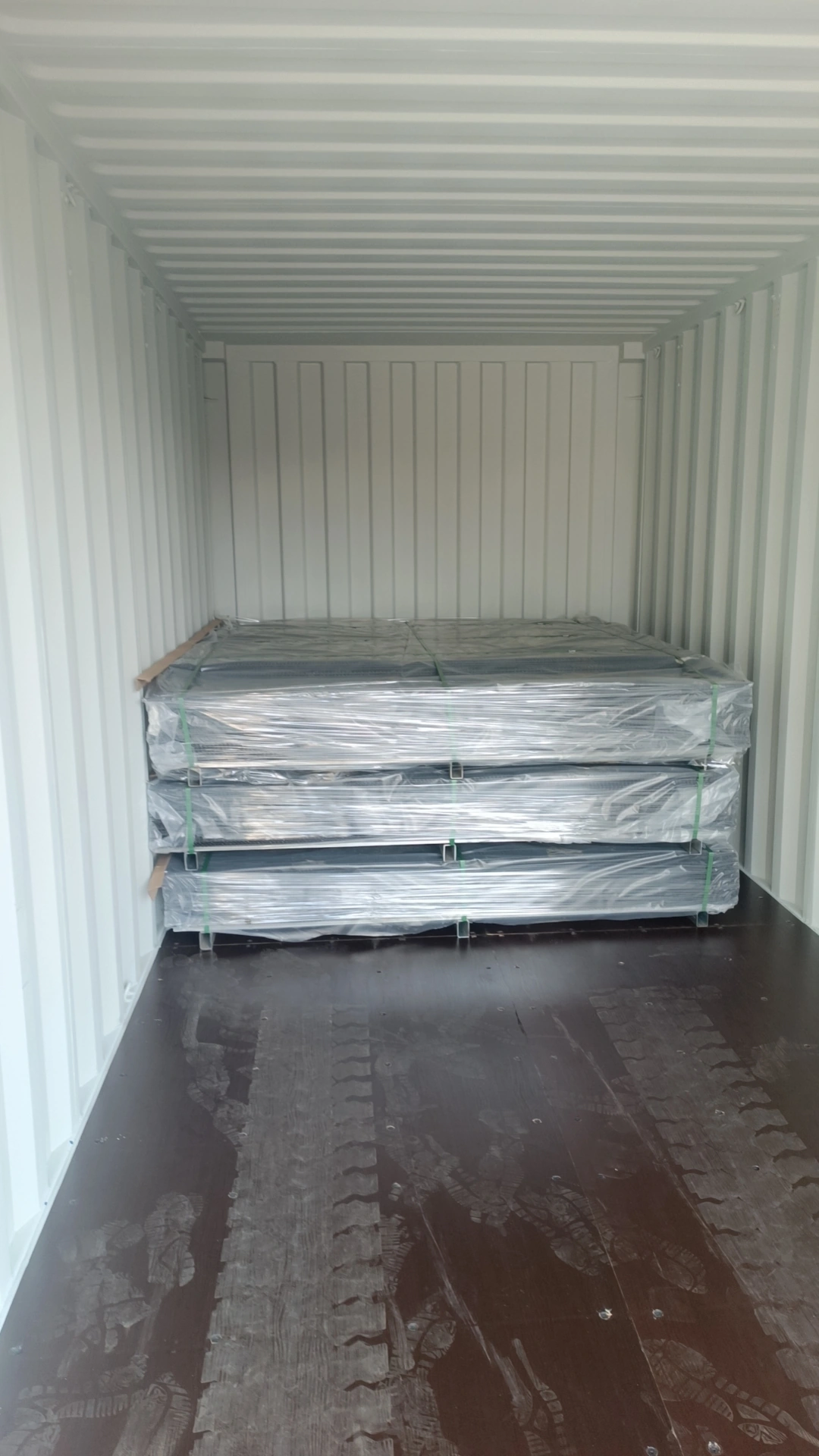
- Container capacity (40ft HC): 8ft: 1,050 units (stacked 2-high) vs 16ft: 525 units (flat-stacked).
- Bowing risk: 8ft panels have no unsupported mid-span. 16ft panels with 8 vertical stays still sag over time in humid climates.
- Transport to end-user: 8ft fits in a standard pickup truck bed (6.5–8 ft). 16ft requires a flatbed trailer or cutting.
The trade-off is post density. An 8ft panel covers half the linear feet of a 16ft panel, so you need roughly twice as many posts per 100 ft of fence line. For permanent cattle runs where labor is the bigger cost, 16ft panels still make sense. But for portable corrals, seasonal grazing rotations, or any application where the fence moves, the 8ft panel’s logistics advantage outweighs the extra post cost. Your end-users who own pickup trucks will thank you.
There is a hidden quality trap here. Many competitors selling 8ft panels use electro-galvanized wire with coating thicknesses barely hitting 20 microns. That coating fails in humid environments within 18 months. Ask your supplier for the coating weight in g/m² — if they cannot give you a number above 300 g/m² (equivalent to >42 microns), you are buying rust. DB Fencing’s hot-dipped galvanized panels meet that threshold because the 8ft panel’s lightness does not excuse cheap metallurgy.
12ft Panels: Niche Sweet Spot for Portable Yards
12ft panels: 840 units per 40ft HC — a middle path that cuts freight per panel by 20% vs 16ft.
If you’re a wholesaler who’s been defaulting to 16ft panels for every order, you’re leaving margin on the table — especially for portable yard systems where weight and setup speed matter. 12ft panels sit in a niche that most sourcing guides ignore: they require fewer posts than 8ft panels (reducing labor and hardware costs), yet they take up less container volume than 16ft panels. For portable yards that get moved every few weeks, that weight difference is a real operational advantage.
- Container math: A 40ft HC container holds 840 units of 12ft panels stacked flat, compared to 1,050 units of 8ft panels and only 525 units of 16ft panels. That’s a per-unit freight cost roughly 20% lower than 16ft, though still 25% higher than 8ft. If your customer doesn’t need the full 16ft span, 12ft is the freight-efficient compromise.
- Weight per panel: A 12ft x 50in panel using 4-gauge (5.19mm) wire weighs approximately 31–34 lbs — noticeably lighter than the 41–45 lbs of a 16ft panel. For portable yard systems, that means one person can handle setup without a loader, and the panels are less likely to sag during relocation.
- Price positioning: Wholesale pricing for 12ft panels typically lands between 8ft and 16ft — expect roughly $22–$28 per panel FOB China for hot-dipped galvanized (>42 microns). That’s about 15% less than 16ft panels, making it an easier upsell for end-users who are price-sensitive but need more coverage than 8ft provides.
The real question isn’t whether 12ft panels work — they do. The question is whether your inventory mix reflects the actual demand. Most North American agricultural wholesalers carry 16ft as the default and 8ft as a specialty item. Adding 12ft as a middle SKU lets you capture the portable-yard buyer who would otherwise buy 16ft and complain about the weight, or buy 8ft and complain about too many posts. That’s not a niche — that’s a gap in your lineup.
Container Packing Math: 16ft vs 8ft vs 12ft
8ft panels cut landed freight per unit by 50% vs 16ft — that’s real margin.
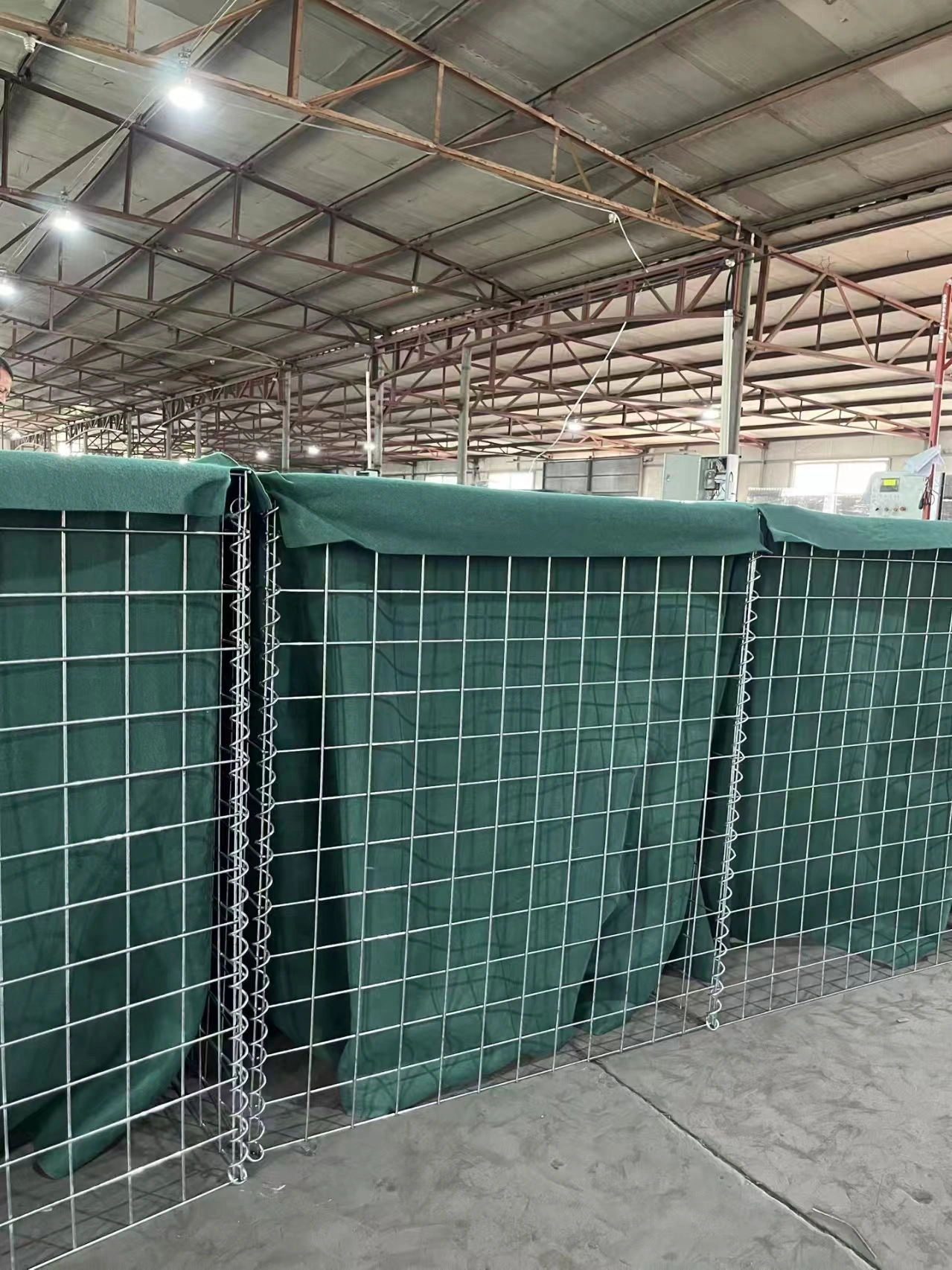
- 8ft panels (2.44m x 1.27m, 21-23 lbs each): Stacked 2-high in 3 rows = ~1,050 units. Each row uses the full container length, and the 2-high stack fits within the 2.70m height. Per-unit freight drops by nearly half compared to 16ft.
- 12ft panels (3.66m x 1.27m): Stacked 2-high in 2 rows = ~840 units. You lose one row because 3 rows of 12ft would exceed container length. Still better than 16ft, but 20% less efficient than 8ft.
- 16ft panels (4.88m x 1.27m, 41-45 lbs each): Flat stacked only = ~525 units. You cannot stack 2-high because two panels (2.54m) barely clear the door height, and any dunnage or pallet adds height. This is the worst packing density of the three.
The takeaway: 8ft panels give you double the units per container vs 16ft, and each panel weighs half as much. That means your landed cost per panel — including freight, insurance, and port fees — drops roughly 50%. For a wholesaler moving 5 containers a year, that’s $15,000-$25,000 in freight savings alone. The 16ft panel bowing problem is well documented; the 8ft panel eliminates it entirely because the span is short enough that 4-gauge wire (5.19mm) with 4 vertical stays resists sagging even in wet corrals. End-users also prefer 8ft for pickup truck transport (fits in an 8ft bed) and for tight paddock corners where a 16ft panel is overkill. The only downside: more posts per linear foot. But your customers already buy posts, so that’s incremental revenue, not a problem.
Conclusion
The decision between 16ft, 12ft, and 8ft panels comes down to freight math and end-user handling. 8ft panels cut your per-unit shipping cost by nearly half and eliminate bowing complaints entirely. 16ft panels remain necessary for large cattle runs, but only if the galvanization holds up — and most suppliers’ electro-galvanized wire won’t.
Review the hot-dipped galvanized cattle panel specs and container packing tables on the product page. Compare the 16ft and 8ft options side-by-side, then request a quote for the mix that fits your inventory strategy.
Frequently Asked Questions
How tall is a 16 ft cattle panel?
A standard 16 ft cattle panel is typically 50 inches (about 4.2 ft) tall. This height is the industry norm for containing cattle and is consistent across most wholesale suppliers. Always confirm exact height with your supplier before ordering.
How much does a 16 ft cattle panel cost?
Wholesale pricing for a 16 ft cattle panel varies by gauge, coating, and order volume, but factory-direct quotes from Anping typically range from $25 to $45 per panel. Request a quote with your spec and volume to get the real landed cost.
How many T-posts for a 16 ft cattle panel?
You typically need three T-posts per 16 ft panel: one at each end and one in the middle to prevent sagging. For high-traffic areas or softer ground, adding a fourth. Use one post per 5–6 ft of panel as a general rule.
Can I fit a 16ft cattle panel in my truck bed?
No, a 16 ft panel will not fit fully inside a standard 6.5 or 8 ft truck bed. You must transport it with the tailgate down and the. For easier transport, consider 8 ft panels which fit flat in most truck beds.
How many cows can fit in a 16ft trailer?
A 16 ft trailer typically holds 4 to 6 adult cows, depending on their size and the trailer width. For calves or smaller breeds, you can load up to 8 head. Always follow local livestock transport regulations for spacing and weight limits.