 Skip to content
I watched a Queensland distributor lose a six-figure livestock account last year over rusted panels. They shipped standard galvanised cattle panels to a station three kilometers from the ocean, and the weld joints corroded in under 14 months. The farmer didn’t care about supply chain excuses. He just switched to a competitor. That distributor’s mistake was ignoring the zinc coating thickness. Salt air eats cheap galvanizing for breakfast. You need a minimum of 42 microns of hot-dipped zinc to survive that environment. Anything less is just a delayed warranty claim.
We cut apart panels from six different manufacturers last quarter and measured the actual zinc weight per square meter. Most suppliers advertise a standard coating, but the lab results showed a 40% variance between the spec sheet and what actually shipped. This guide breaks down exactly what happens to steel wire mesh in a high-salinity coastal environment, the minimum micron thresholds you should demand from your suppliers, and the specific welding techniques that prevent early failure at the joints. You will walk away knowing exactly what to write on your next purchase order to stop eating replacement costs.
Conclusion
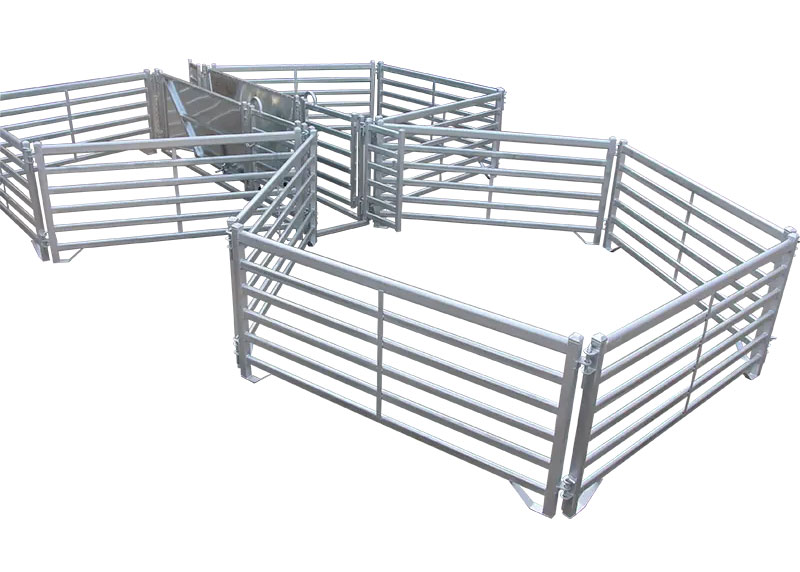
Electro-galvanized panels rust out in under two years near saltwater. You need hot-dipped galvanised cattle panels with a zinc coating over 42 microns. That specific thickness handles coastal salt spray for a decade without rusting through the weld joints.
Ask your supplier for a salt spray test report before you sign the order. Don’t accept a generic certificate—demand the actual lab results showing the exact micron thickness. If they hesitate to send it, find another factory.
Frequently Asked Questions
What is the MOQ?
Our minimum order quantity is just 100 panels. This low threshold allows agricultural wholesalers and regional distributors to test the market without tying up significant capital. We maintain flexible production scheduling to accommodate these smaller batches alongside bulk shipments. This approach has made us a preferred supplier for growing operations across Australia and New Zealand.
Will it rust on the coast?
Our cattle panels feature a heavy-duty hot-dipped galvanized finish exceeding 42 microns in zinc coating. This specific thickness is critical for withstanding the high salinity and moisture levels typical of coastal agricultural environments. Unlike basic electro-galvanized alternatives, our process ensures long-term structural integrity and significantly delays the onset of rust. You can expect years of reliable livestock containment even in severe seaside conditions.
Do they meet Australian standards?
Yes, our manufacturing processes strictly comply with Australian Standard AS 4687-2022/2007. Since Australia and New Zealand represent 75% of our export business, we have optimized our welding lines specifically for these rigorous specifications. Furthermore, our facility holds ISO9001 and SGS certifications to guarantee consistent quality control. This compliance ensures your imported fencing passes local inspections without costly delays.
How fast can you produce?
We operate 10 dedicated welding production lines capable of outputting up to 2,000 sets per week. Being located in Anping County, the Global Wire Mesh Town, gives us unparalleled access to raw materials and specialized labor. We also provide 24-hour quoting to keep your procurement timeline on track. This massive capacity allows us to fulfill large-scale farm deployments and emergency restocks with equal efficiency.
Can I get custom branding?
We offer comprehensive OEM customization for global fence distributors and retailers. This includes custom packaging, logo printing, and specific panel dimension adjustments to match your local market requirements. We are the only supplier in Anping equipped with our own plastic feet machine, allowing for unique component customization that competitors cannot provide. Our 14 years of export experience ensure your branded products arrive ready for retail shelves.


