Skip to content
Anping is the global wire mesh hub, but it is also a minefield of middlemen. When you want to verify chinese fence factory, you have to look past the glossy website photos. Most traders in the town rent warehouse space and outsource production. They sell you a product they cannot control. You need to see the actual welding lines and the galvanizing tanks. That is the only way to protect your margins.
Real manufacturers give you access to their operations. They show you the live video of the galvanizing bath. They prove their capacity with 10 welding lines producing 2,000 sets per week. They own the machines that make the PVC feet. You get transparent pricing on raw steel and processing fees. Traders hide these details because they do not control the supply chain. Ask for the live video. If they hesitate, walk away.
Verify Manufacturer Identity and License
Cross-reference the business license (营业执照) with the legal entity to expose hidden trading markups.
In the Anping supply chain, the first step to verify a Chinese fence factory is forensic document analysis. Many suppliers present themselves as direct manufacturers to secure higher margins, but their corporate registration tells a different story. You must cross-reference the company’s official Business License (营业执照) with the actual legal entity operating the facility.
To identify a trading company versus a genuine manufacturer, scrutinize the ‘Business Scope’ section of the license. Look for specific Chinese keywords indicating production capability. The presence of ‘production’ (生产) or ‘manufacturing’ (制造) confirms the entity owns the physical machinery. If the license only lists ‘sales’ (销售), ‘trade’ (贸易), or ‘export’ (进出口), the company is an intermediary.
The financial impact of buying from a trader is immediate and severe. Trading companies typically inject a 15% to 25% markup on top of factory-direct pricing. This erodes your wholesale margin and removes your ability to negotiate raw steel costs. Furthermore, traders often outsource critical steps like galvanizing, meaning you lose control over coating thickness and compliance verification.
- Production Capability: Verify the license contains ‘production’ (生产). This indicates the entity owns assets like welding lines and galvanizing baths, unlike traders who only handle paperwork.
- Sales-Only Entity: If the scope is limited to ‘sales’ (销售), you are dealing with a middleman. This guarantees a 15-25% price premium and introduces communication delays that risk project deadlines.
- Legal Entity Match: Ensure the name on the Business License matches the company issuing the Proforma Invoice. Mismatches are a primary red flag for shell companies or unauthorized subcontracting.
Demand Proof of Galvanizing and Coating Thickness
Demand live video of the galvanizing bath; if they refuse, they are a trader or using inferior electro-galvanizing.
Galvanizing is the single most critical failure point for temporary fences in coastal markets. Many suppliers claim ‘hot-dip’ but deliver electro-galvanized panels that rust within months. To verify authentic hot-dip galvanizing, you must request a real-time video of the galvanizing bath process. Traders cannot provide this because they do not control the production line. Authentic hot-dip coating must exceed 42 microns to withstand harsh seaside environments and meet Australian Standard AS 4687-2022.
- Live Video Verification: Insist on a live video call showing the panels entering the molten zinc bath. This proves the factory owns the galvanizing line and is not outsourcing to a third-party coating shop.
- Coating Thickness (>42 Microns): Hot-dip galvanizing provides a metallurgical bond that electro-galvanizing cannot match. For coastal projects, the coating must be thicker than 42 microns to prevent rapid corrosion.
- Electro-Galvanizing Risk: Electro-galvanized panels have a smooth, shiny finish but lack the zinc thickness for durability. They are often passed off as ‘premium’ but fail in salt-spray testing within weeks.
- Tier 1 Factory Indicator: A genuine manufacturer like DB Fencing owns its own PVC feet machines. This ensures the feet fit the panels perfectly and are made from recycled rubber, avoiding the fitment issues common with trader-sourced components.
Assess Production Capacity and Lead Times
Verify factory output against project timelines to avoid costly port demurrage fees.
When auditing a wire mesh fence manufacturer in Anping, production capacity is the primary indicator of supply chain reliability. A genuine Tier 1 factory, such as Anping Deban Metal Wire Mesh Products Co., Ltd, operates 10 dedicated welding production lines with a verified output of up to 2,000 sets per week. This scale ensures that even large-scale construction projects or rapid event setups can be fulfilled without outsourcing to smaller, unreliable workshops.
To calculate a realistic lead time, you must look beyond the factory floor. A standard order requires 7-10 days for rigorous quality control and assembly, followed by 30-40 days for ocean freight to major markets like Australia or North America. Distributors must account for this entire window when planning inventory to prevent stockouts during peak construction seasons.
Logistical efficiency is often the hidden differentiator between a factory and a trader. A robust manufacturer like DB Fencing owns proprietary plastic feet machines and specializes in optimizing container loading. This in-house control allows for precise space utilization, ensuring you maximize the number of panels per 20-foot container while protecting the heavy-duty temporary fencing from transit damage.
- Capacity Benchmark: 10 welding lines producing 2,000 sets per week.
- QC Timeline: 7-10 days for internal quality assurance and assembly.
- Freight Window: 30-40 days for standard ocean shipping to global hubs.
- Logistical Edge: In-house PVC feet production ensures perfect component fitment and optimized container density.
Check Compliance Certifications and Standards
AS 4687 compliance requires rigorous structural testing beyond standard ISO 9001 certification.
To conduct a true AS 4687 compliant temporary fence factory audit, you must look past the standard ISO 9001 certificate. While ISO 9001 confirms basic quality management processes, it does not guarantee that your temporary fencing meets specific structural load requirements in harsh Australian environments. Many Anping temporary fence manufacturers vs traders only claim compliance on paper, leaving distributors exposed to site safety failures.
The critical differentiator in a factory direct temporary fencing pricing structure is the willingness to provide third-party SGS or Intertek test reports. You need concrete data on material tensile strength and precise panel dimensions. Without these independent verification documents, you are buying based on a supplier’s word rather than engineered reality.
- AS 4687-2022/2007 Adherence: Ensure the factory explicitly references the latest Australian Standard. Verify that their internal production logs match these specific structural load requirements for temporary security fencing.
- Third-Party SGS / Intertek Reports: Demand current, batch-specific test reports for tensile strength and exact panel dimensions. These independent audits are the only objective proof of compliance that protects your brand reputation.
- Hot Dipped Galvanized Coating Thickness: Verification of hot dipped galvanized fence coating thickness is non-negotiable. Reputable factories provide >42 microns for coastal durability, whereas traders often cannot verify this critical metallurgical process.

Conduct Video Audits and Sample Testing
Demand unedited live video of the galvanizing bath; never accept pre-recorded clips.
A genuine Anping temporary fence manufacturer vs trader distinction becomes obvious during a remote factory audit. Trading companies cannot replicate live, unedited video calls of their production floor because they do not own the machinery. When you ask how to audit wire mesh fence manufacturer China, the first test is to request a live walkthrough of the welding and galvanizing lines. If a supplier hesitates, offers only pre-recorded footage, or claims ‘live video is too busy,’ they are likely a middleman.
During a live AS 4687 compliant temporary fence factory audit, you must verify the physical presence of production assets. Look specifically for proprietary equipment that most traders outsource. For instance, the most advanced facilities operate their own plastic feet machines. This ensures the recycled rubber bases fit the steel panels perfectly, a critical durability factor that outsourcing often compromises. Seeing 10 active welding lines running simultaneously confirms a capacity of up to 2,000 sets per week, proving they can handle your bulk volume.
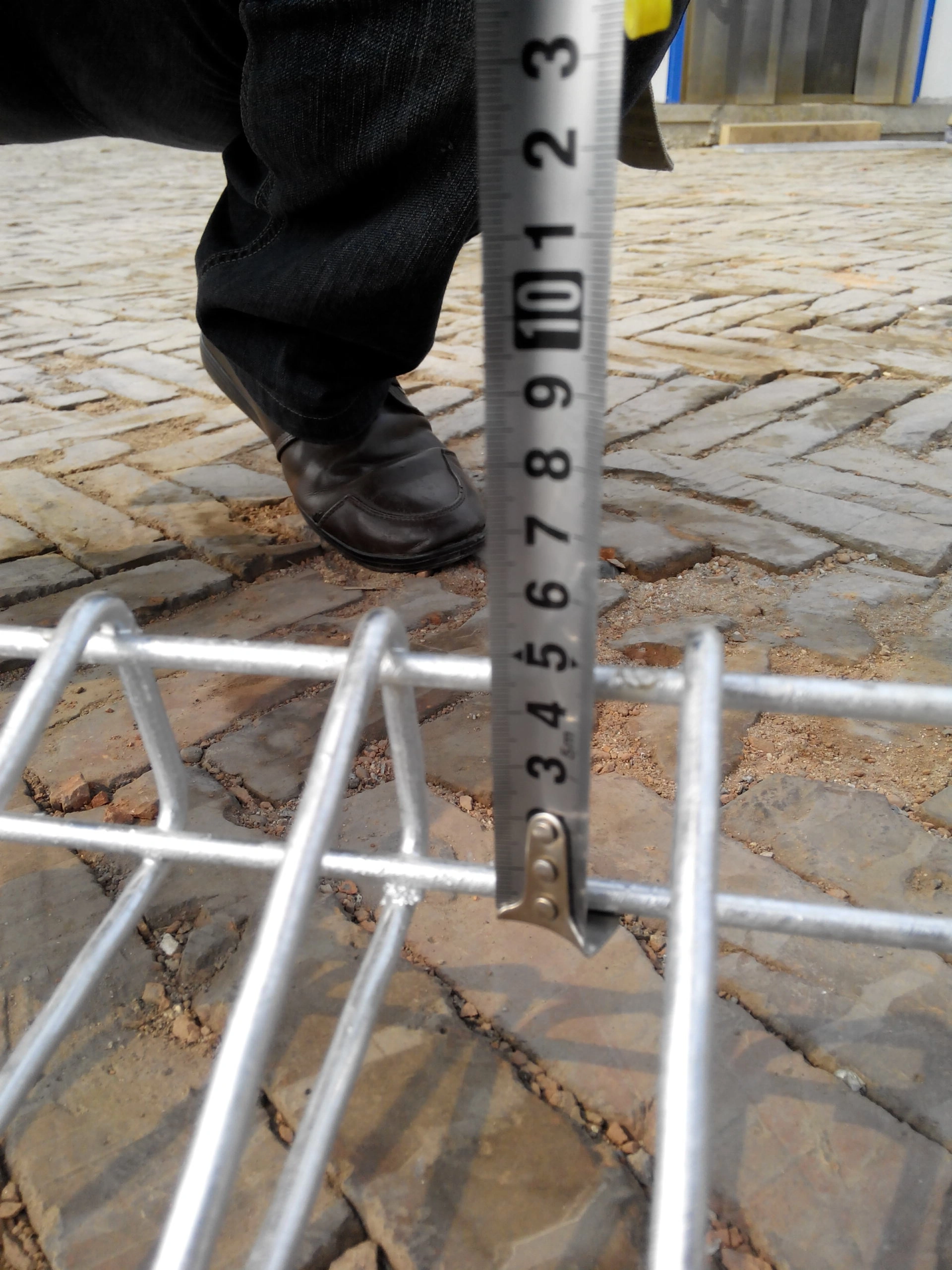
Video calls are insufficient for verifying material integrity. You must order a physical sample kit to conduct hands-on weld quality and coating adhesion tests. This step is the only way to perform accurate hot dipped galvanized fence coating thickness verification. Once the sample arrives, use a magnetic pull-test or a specialized coating thickness gauge. If the zinc coating is below 42 microns, the fence will fail in harsh coastal environments within a single season.
- Live Video Protocol: Request a real-time walk-through of the galvanizing bath and welding stations. Reject pre-recorded files, as they hide production bottlenecks and outsourced processes.
- Galvanizing Verification: Measure the zinc coating on the sample kit. It must exceed 42 microns. Anything less indicates electro-galvanizing, which lacks the corrosion resistance required for long-term site security.
- Finish Durability (Galvanised vs Powder Coated): Hot-dip galvanizing provides a metallurgical bond that powder coating cannot match. Powder coatings on temporary fencing often chip during transport and assembly, exposing the steel to rapid rust.
- Weld Integrity Test: Attempt to separate a welded joint on the sample kit. A proper resistance weld should not snap under manual pressure. Loose or cold welds indicate poor quality control.
By combining live video verification with physical sample testing, you eliminate the risk of buying subpar goods from unverified sources. This rigorous approach protects your margin and ensures your brand reputation remains intact, regardless of whether you are sourcing for Australian construction sites or North American agricultural projects.
Conclusion
Verifying a Chinese fence factory requires moving beyond static photos to demand live video of the galvanizing line and welding floor. Insisting on specific metrics like >42 microns coating thickness and AS 4687-2022 test reports separates genuine manufacturers from traders adding 15-25% markup.
Frequently Asked Questions
How to verify suppliers in China?
Cross-reference the business license (营业执照) to confirm ‘production’ scope rather than just ‘sales’. Demand live video of the galvanizing line and welding machines to prove they are a factory, not a trader. Verify license scope and request live production video.
How can I check if the products from China are real?
Request real-time video of the galvanizing bath to confirm hot-dip application exceeding 42 microns. In-house PVC feet production indicates a Tier 1 factory capable of full assembly control. Confirm coating thickness and in-house component production.
How to check legit companies in China?
Match the legal entity on the business license with the actual operating address and production capacity. Look for specific output benchmarks, such as 10 welding lines and 2,000 sets weekly, to ensure robust manufacturing. Match legal entity with verified production capacity.
What is the 4 2 1 rule in China?
I am not certain about the specific definition of the 4 2 1 rule in this context. Please clarify if you refer to a specific regulatory standard or internal company metric. Clarify the specific context for the 4 2 1 rule.
How do you verify a Chinese supplier?
Audit their compliance with Australian Standard AS 4687-2022 and ISO9001 certifications. Verify they offer factory-direct pricing by checking for transparent raw steel costs rather than hidden trading markups. Audit certifications and verify factory-direct pricing structure.