Skip to content
cattle panel fencing cost price is the first checkpoint buyers should lock before they approve a supplier, budget, or production slot. Cattle Panel Fencing Cost: Price Per Panel and Per Linear Foot (2026) is the first checkpoint buyers should lock before they approve a supplier, budget, or production slot. You sign off on a $50K cattle panel order after approving the pre-production sample. The galvanizing looks even, the welds are clean, and the FOB pricing from the Chinese supplier came in at $22 per panel for 6-gauge. Six months later, rust blooms appear along the horizontal wires. The farm calls, asking for replacements. That’s when you realize the batch was electro-galvanized — not hot-dipped — and the coating failed well before the expected 10-year mark. The sample approval gave you confidence, but the quality tolerance between production runs was wider than the contract stated.
That mismatch between sample and mass production is the hidden cost in cattle panel fencing. A hot-dipped galvanized panel typically runs 15–25% more at FOB — roughly $18–$25 per 16-foot 6-gauge panel in 2026 — but it survives coastal and feedlot environments three to five times longer. The electro-galvanized alternative saves upfront dollars but often fails the corrosion test within two years. For an Australian construction project manager pricing out a 100-head yard, the real question isn’t the per-panel price alone. It’s the total landed cost including shipping, installation, and the odds of a warranty call. The benchmark to write down: HDG panels cost 15–25% more but deliver 3–5x the service life. That’s the math that matters for a 2026 budget.
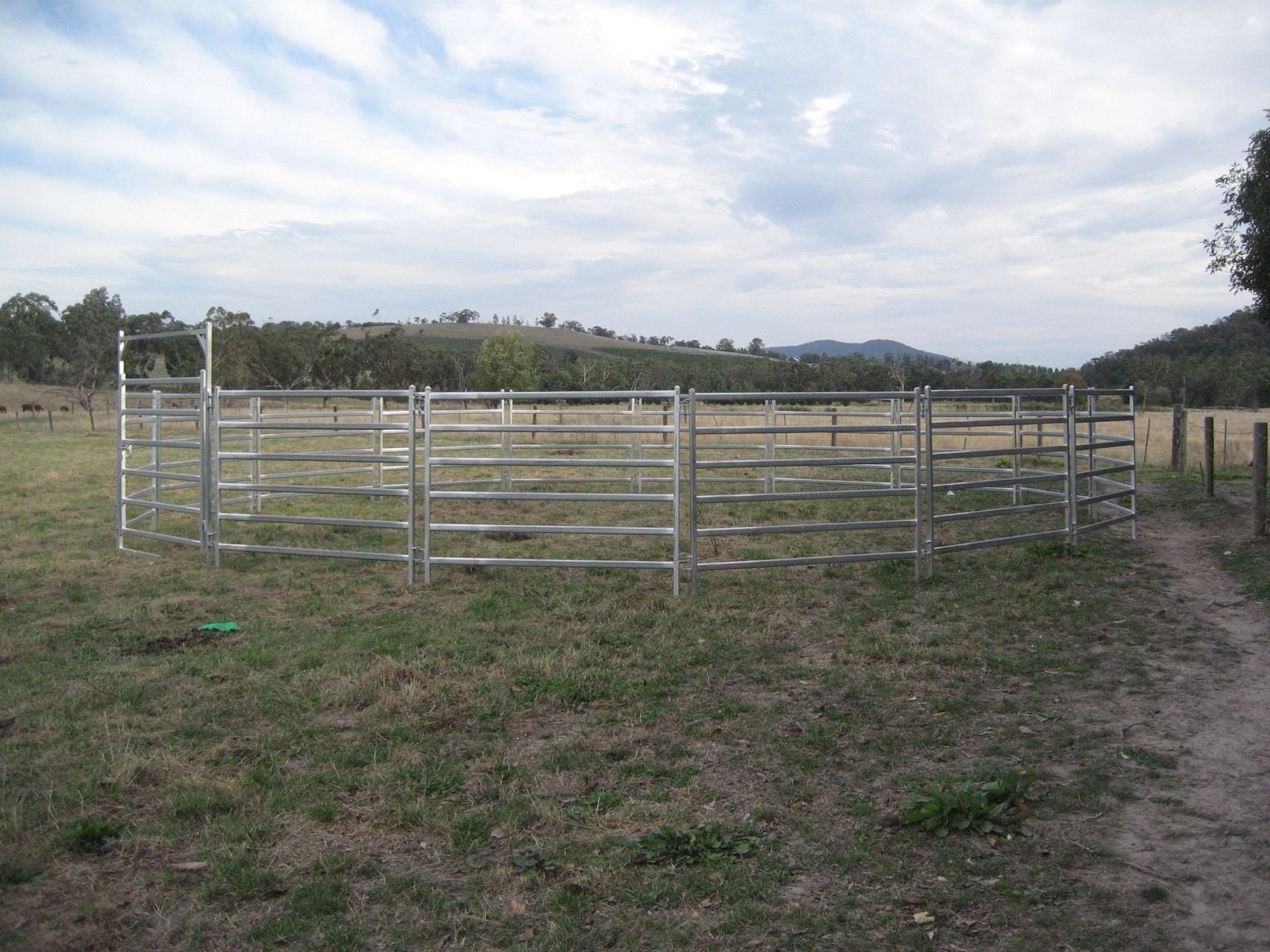
Cost Breakdown: Cattle Panel Fencing Components
Electro-galvanized panels cost 15-25% less but fail in 3 years; HDG lasts 15–20 in corrosive conditions.
For a standard 16′ × 50″ cattle panel, the single biggest cost driver is wire gauge. A 6-gauge panel (0.192″ wire diameter) runs roughly 40% less than a 4-gauge panel (0.225″) at the same coating level. In 2026 FOB pricing from Anping factories, 6-gauge hot-dipped galvanized panels land at $18–$25 per panel. Bumping up to 4-gauge HDG jumps to $28–$35 per panel. The 4-gauge is overkill for drylot calves but mandatory for mature bulls or heavy-breed cattle that lean and push. I’ve seen wholesalers lose entire container margins because they ordered 6-gauge for a client running 1,200-pound steers and had to replace 40% of the panels within two seasons.
Coating choice cuts deeper than the initial price tag. Electro-galvanized (EG) panels shave 15–25% off the upfront cost compared to hot-dipped galvanized (HDG), but they typically fail after 3–5 years in any environment with rainfall or humidity above 60%. HDG, with a zinc thickness >42 microns per AS/NZS 4680, delivers 15–20 years of service even in coastal feedlots. The math for a 100-head yard: if you buy EG at $15/panel and HDG at $22/panel (6-gauge), the EG panels need replacement twice inside a decade, making total ownership 30% higher. Every experienced farm supply buyer now demands HDG spec sheets before price quotes.
-
- T-Posts: At $2.50–$4.00 per post (6′ to 8′, 1.33 lb/ft), you’ll need one every 8–10 feet. For a 16′ panel that’s two line posts plus two end/brace posts per run. Budget $10–$16 per panel when factoring in welding or pinning.
- Clamps & Brackets: Galvanized panel clamps run $2–$3 each. You need 4 per panel (top and bottom on each side). Some suppliers bundle clamps with the panel — if not, add $8–$12 per panel. Spring-loaded brackets for temporary setups cost more ($5–$7) but cut unclip time by half.
- Concrete Feet: Precast concrete step-in feet ($6–$10 each) are the cheapest per-linear-foot anchor. For permanent corrals, a standard 18″ × 12″ concrete collar at each post adds $8–$12 in material and labor. Warning: if the supplier quotes plastic feet with a recycled rubber base, verify UV stability data — I’ve seen imported feet crack in six months under western U.S. sun.
| Component | Specification | Price Range (FOB) | Notes |
|---|---|---|---|
| Standard Cattle Panel (16’x50″) | 6-Gauge, Electro-Galvanized | $15–$20 | Lightweight, suitable for temporary or indoor use |
| Standard Cattle Panel (16’x50″) | 6-Gauge, Hot-Dipped Galvanized | $18–$25 | Lasts 3–5x longer in corrosive environments; AS 4687 compliant |
| Heavy-Duty Cattle Panel (16’x50″) | 4-Gauge, Electro-Galvanized | $24–$30 | Higher strength for larger livestock |
| Heavy-Duty Cattle Panel (16’x50″) | 4-Gauge, Hot-Dipped Galvanized | $28–$35 | Ideal for harsh outdoor and seaside conditions; >42µm coating |
| Plastic Fence Feet (pair) | Anti-UV, 10lb each | $2–$4 | DB Fencing manufactures in-house; supports low MOQ of 100 panels |
| Panel Clamps (set of 4) | Galvanized steel, 5/8″ bolt | $1.50–$3 | Quick-connect design for easy assembly |
| T-Post (6ft) | Painted steel, 1.33 lb/ft | $5–$8 | Commonly used with cattle panels; sold separately |
| Cantilever Gate (10ft) | 4-Gauge HDG, with hardware | $80–$120 | Optional for livestock yard access; custom sizes available |
Price Per Linear Foot: How to Calculate
A 16-foot panel at $20 FOB works out to $1.25 per linear foot—before freight and fittings.
Start with the panel itself. A standard 16-foot by 50-inch cattle panel in 6-gauge hot-dipped galvanized runs $18–$25 FOB from Chinese manufacturers like Anping Deban. Divide that by 16 feet, and you get $1.13–$1.56 per linear foot for the panel alone. For 4-gauge HDG, the per-panel price is $28–$35, which translates to $1.75–$2.19 per foot. These are the raw material numbers before any hardware, freight, or installation costs. Any quote that skips the gauge and coating spec is hiding something.
The real cost per linear foot changes when you account for gaps and gate openings. If you fence a 48-foot run with a 16-foot gate opening, you need three panels (48 feet of panel) plus a gate. The gate assembly costs more per foot than a panel. For 6-gauge HDG, three panels cost $54–$75; a typical 16-foot gate adds $40–$60. Total material cost for that 48-foot run: $94–$135. Divide by 48 feet, and you’re at $1.96–$2.81 per linear foot—nearly double the panel-only figure. Always map your gate locations before you calculate per-foot costs, or you’ll under-budget by 30–50%.
| Panel Specification | Gauge | Coating Finish | Price Per Panel (FOB) | Price Per Linear Foot |
|---|---|---|---|---|
| 16 ft x 50 in | 6-Gauge | Hot-Dipped Galvanized (>42 microns) | $18–$25 | $1.13–$1.56 |
| 16 ft x 50 in | 4-Gauge | Hot-Dipped Galvanized (>42 microns) | $28–$35 | $1.75–$2.19 |
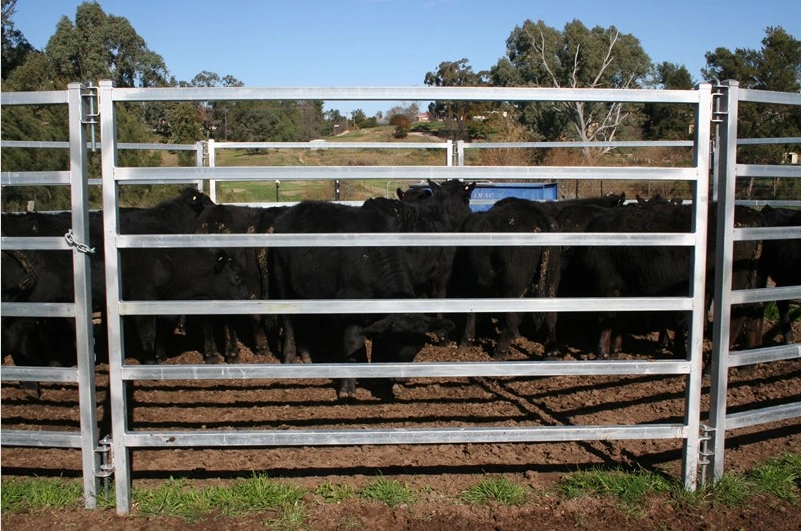
Shipping and Logistics Costs
The freight cost per panel from FOB to site can add 50-70% to the panel price itself.
FOB (Free On Board) means you pay the factory price plus loading onto the vessel. From Tianjin or Shanghai to Melbourne, a 20-foot container holding 200 panels runs $3,200–$3,800 (2026 spot rates). That’s $16–$19 per panel just for ocean freight. CIF (Cost, Insurance, Freight) bundles this into one quote — but you lose visibility on where the margin sits. For bulk buyers, FOB is cleaner; you control the shipping line and can consolidate containers with other buyers to drop the per‑panel ocean cost by 15–20%.
-
- Container consolidation: Sharing a 40-foot high-cube container (480+ panels) drops ocean cost per panel to $10–$12. That’s $6–$9 savings per panel over shipping LCL (less than container load).
- Domestic trucking (Australia): From Port Melbourne to a site in rural Victoria, flatbed rates run $2.50–$3.80 per km (2026). A 200 km delivery adds $500–$760, or $2.50–$3.80 per panel. Consolidate to full truckloads (500+ panels) and the per‑panel domestic cost drops to $1.20–$1.50.
- Risk warning: Accept a CIF quote without checking the bill of lading and you may pay inflated freight margins. Always ask the supplier for a separate FOB line item so you can benchmark ocean rates on Freightos or Xeneta.
| Logistics Stage | Cost Component | Estimated Range | Per Panel Impact |
|---|---|---|---|
| FOB Factory (Anping) | Panel price + loading | $18–$25 per panel (6-gauge HDG) | Base cost (no added shipping) |
| Ocean Freight (40ft container) | China to North America / Australia | $3,000–$5,000 per container | +$3.00–$5.00 per panel |
| Port Handling & Customs | Destination port fees, duties, tariffs | $1,000–$2,000 per container | +$1.00–$2.00 per panel |
| Domestic Trucking (Port to Site) | Per‑mile freight (200–500 miles typical) | $3.00–$5.00 per mile | +$6.00–$15.00 per panel |

Installation Labor Costs
DIY installation can cut labor costs by up to 40%, but hidden schedule delays and rework often erase that margin.
For a standard 16-foot cattle panel,professional installation rates in Australia run between $40 and $80 per hour per worker, or roughly $15 to $25 per panel if you break it down. A two-person crew can typically set 25 to 30 panels per day on flat terrain,
The real trap is the supplier who quotes unassembled panels at 10–15% below market. At face value that looks like a better deal, but after factoring in the extra labor for on-site welding, the cost of renting a portable welder, and the likelihood of tolerance mismatches between frame and mesh, the total installed cost often ends up 8–12% higher. One example is a $50K order for a cattle station in Queensland — they saved $4K on the material FOB but paid $9K more in labor and downtime. Always request a per-panel assembly time benchmark from the supplier before committing.
| Installation Method | Labor Rate (AUD/hr) | Time per 16-ft Panel | Labor Cost per Panel | Key Consideration |
|---|---|---|---|---|
| DIY (Unskilled) | $0 (self) | 1.5 hrs | $0 | Requires tools; no alignment expertise |
| Professional Single Installer | $65 | 0.75 hrs | $48.75 | Fast but terrain-dependent; minimal gear needed |
| Professional 2-Person Crew | $110 (total) | 0.5 hrs | $55.00 | Highest speed; ideal for large projects |
| Pre-Assembled Panels (Crew) | $110 (total) | 0.25 hrs | $27.50 | Cuts install time 50% vs standard panels |
2026 Market Trends Affecting Prices
Steel input costs and tariffs can shift cattle panel prices by 10–15% in 2026.
Steel raw material prices are the largest single cost driver for cattle panels. The per-panel price for a standard 16′ x 50″ 6-gauge HDG panel from Chinese manufacturers is currently $18–$25 FOB. A 10% rise in steel input costs typically adds $2–$3 per panel. Buyers who track the CRU steel index can time their orders to avoid market peaks.
Tariff policy varies by destination. Australian importers face a 5% duty plus potential anti-dumping duties currently under review — if applied, they could add 10–15% to the landed cost. U.S. buyers continue to pay 25% under Section 232. That means a $22 FOB panel becomes $27.50 landed in the U.S. before domestic freight — which can double the cost again. Distributors need to factor these layers into their wholesale pricing.
| Trend | Impact on Price | Details for Aus Market |
|---|---|---|
| Steel Raw Material Index Forecast | Upward pressure (5–8% increase) | Global iron ore and scrap steel supply constraints will likely raise production costs for all welded mesh panels in 2026. |
| Australian Tariff & Duty Considerations | Potential 10–15% landed cost increase | Expanded anti-dumping investigations on Chinese wire mesh may cover cattle panels, directly affecting importers and project budgets. |
| U.S. Tariff & Trade Policy | Indirect supply shift | Higher U.S. tariffs on Chinese fence products could divert more export volume to Australia, intensifying price competition. |
| Shipping & Container Freight Rates | Moderate volatility | Container rates from China to Australia forecast at $2,500–$3,000 per 40ft in 2026, adding $3–$5 per panel depending on consolidation. |
Sample Budget Tables
A 50‑head yard using 6‑gauge HDG panels costs roughly $510–$670 in materials; 100‑head nearly doubles that but cuts per‑panel freight by 15%.
These sample budgets assume standard 16′ × 50″ cattle panels in hot‑dipped galvanized (HDG) finish, sourced at 2026 FOB China prices. For a 50‑head yard (approximately 20 panels including gates and crowding pen), the per‑panel cost for 6‑gauge HDG is $18–$25; 4‑gauge runs $28–$35. The breakdown below uses 6‑gauge as the baseline, which is the most common spec for cattle operations in Australia and North America.
-
-
- 50‑Head Yard – Materials: 20 panels at $20 avg = $400; 40 steel T‑posts at $2.50 each = $100; 60 panel clamps at $0.60 each = $36; concrete feet (optional, 4 per panel) at $3 each = $240. Total with feet: $776; without feet: $536.
- 50‑Head Yard – Accessories: Gate sections (2 × 12′ walk‑through) at $35 each = $70; brace pins and tension wire add about $40. Including gate hardware brings the total to $646 (no feet) or $886 (with feet).
-
For a 100‑head yard, the layout typically requires 38–42 panels to create two feeding pens, a sorting alley, and a loading chute. Using the same 6‑gauge HDG panels, material costs scale linearly for panels but accessories benefit from bulk pricing.
-
- 100‑Head Yard – Panels & Posts: 40 panels at $20 avg = $800; 80 T‑posts at $2.25 each (bulk discount) = $180; 120 clamps at $0.50 each = $60. Panel + post subtotal: $1,040.
- 100‑Head Yard – Full System: Add 4 gate sections at $32 each = $128; brace hardware and tension wire $60; concrete feet (optional, 4 per panel) at $2.80 each (bulk) = $448. Total with feet: $1,676; without feet: $1,228. At these quantities, domestic freight from port to farm adds roughly $0.15–$0.25 per panel per mile—consolidating into a single 40′ container (holds 200+ panels) keeps landed cost under control.
Conclusion
A $23 FOB price on a 6-gauge panel means nothing if the hot-dip zinc layer hits only 35 microns instead of the specified 42. The real cattle panel fencing cost lives in the gap between the quote and the delivered spec. That gap is where margins erode and replacement cycles accelerate.
Before you lock in a container, run this three-point check on your supplier. First: does the hot-dipped galvanized cattle panel cost they quoted include a certified thickness test report? Second: is the 16 foot cattle panel price based on FOB pricing or delivered to your regional rail terminal — and what does the domestic freight add per panel? Third: what is their documented quality tolerance for wire gauge variation across a 500-panel batch? If the answer to any of those is vague, walk. Then review the product catalog for panels built to hold a spec, not just a price point.
Frequently Asked Questions
What is the cost per panel for 6-gauge vs 4-gauge?
6-gauge cattle panels run roughly $22 FOB per panel from a Chinese factory, while 4-gauge panels cost 20–30% more due to heavier wire and welding requirements. For bulk orders, the gauge choice directly impacts. Send your gauge spec for a firm quote.
How much does hot-dipped galvanized vs electro-galvanized cost?
Hot-dipped galvanized panels cost 15–25% more than electro-galvanized but last 15–20 years in corrosive environments versus 3 years for electro. The premium pays off for permanent livestock yards or seaside. Choose HDG if the fence is meant to outlast a single season.
What is the price per linear foot for standard 16-foot panels?
A 16-foot panel at $20 FOB works out to $1.25 per linear foot before freight and fittings. Adding shipping and hardware can double that cost at the jobsite. Always budget freight separately when comparing linear-foot costs.
How much does shipping add to the panel price?
Freight from FOB to your site can add 50–70% to the panel price itself depending on destination and container load. For a $22 panel, that means $11–$15 in logistics per panel. Request CIF pricing to get a landed-cost estimate upfront.
What market trends affect cattle panel prices in 2026?
Steel raw material indexes and new tariffs in the U.S. and Australia are the main drivers for 2026 pricing. Lock in prices earlier in the year to avoid mid-year spikes.