Skip to content
Concrete vs Plastic Fence Bases: Canada Wind Load Comparison is the first checkpoint buyers should lock before they approve a supplier, budget, or production slot. A temporary fence base comparison in the Canadian context usually comes down to one number: the wind speed at which the setup stops being a barrier and starts being a projectile. 70 mph is the threshold most rental specs use. 85 mph is where even well-ballasted concrete feet can slide if the ground is frozen. I’ve seen a $50K event fence order fail because the pre-production sample of a plastic water-filled base looked fine in August, then shattered under a January windstorm on the Manitoba prairie. The buyer approved the sample approval, signed off on the quality tolerance, and never asked what happened to the plastic below -20°C.
For event procurement managers in Canada, the base choice isn’t just about weight or portability — it’s about whether the fence stays upright when the Chinook hits or the frost heave starts. Most comparison articles focus on FOB pricing and bulk shipping costs, but the real split between concrete, plastic water-filled, and reinforced plastic feet comes down to how they behave under two conditions: wind load and winter freeze. The standard plastic base with a water fill cracks below -20°C. That’s a common temperature from Calgary to Winnipeg for three months of the year. Concrete blocks don’t crack, but they do sink into thawing ground and cost triple the carbon per panel-year. The reinforced plastic feet from DB Fencing, which use an internal steel ring tested to hold panels upright at 85 mph winds, solve the cracking issue without the concrete weight penalty. That’s the core trade-off this comparison covers.
Overview of Base Types
Choosing the right base isn’t just about weight — winter freeze and labor costs often tip the scale.
Concrete blocks are the traditional workhorse. A standard 20–40 kg block costs roughly $5–8 CAD in bulk and gives you reliable wind resistance without freeze concerns. The trade-off: manual handling is brutal. You’ll need a forklift or a two-person crew to place each block, and shipping weight adds real freight cost per container.
Plastic water-filled bases solve portability. They ship flat and weigh under 5 kg empty, then you fill with 20–40 liters of water on site. That sounds great until the temperature drops below -20°C. Standard HDPE bases crack when trapped water freezes and expands — a recurring problem on the Canadian prairies that rental companies often underestimate. The labor cost of re-watering frozen or cracked bases across an event site can eat up any savings from the lighter product.
-
- Concrete block: Weight 20–40 kg; good wind stability; no freeze risk; high shipping cost; forklift required; carbon footprint ~3x higher per panel-year than reinforced plastic.
- Plastic water-filled base (standard): Light empty; fills to ~30 kg; portability is excellent; but cracks below -20°C; water freezing causes structural failure; labor to drain/refill adds hidden cost.
- Plastic water-filled base (reinforced, e.g. DB Fencing): Internal steel reinforcement ring prevents cold-weather cracking; maintains integrity at -30°C; stackable design reduces shipping volume; tested to hold panels upright at 85 mph winds — see DB Fencing plastic feet wind test.
- Metal stand with ballast: Hybrid solution using a steel plate or frame with sandbags / concrete blocks. Adds flexibility but increases on-site assembly time. Ballast weight is often insufficient for 90 mph gusts unless you stack >40 kg per stand.
For event procurement teams in Canada, the real cost comparison isn’t just price per base — it’s the total cost of deployment, freeze-thaw durability, and the labor hours spent maintaining frozen bases across a multi-day festival. A plastic base that cracks on day two forces you to scramble for replacements. A concrete block that never fails will still cost you in freight and back injuries. The reinforced plastic option with steel ring hits the sweet spot for seasonal events where portability and winter survival both matter.
| Base Type | Weight per Base (kg) | Wind Resistance (mph) | Winter Performance | Optimal Use Case |
|---|---|---|---|---|
| Concrete Blocks | ~22 kg | >90 mph | Heavy, but prone to spalling in freeze-thaw | High-wind construction sites |
| Plastic Water-Filled Bases | ~18 kg (filled) | Up to 70 mph | Cracks below -20°C; labor cost to re-water frozen units | Short-term events in mild climates |
| Metal Stands with Ballast | ~15–20 kg (with sand) | Up to 80 mph | No freeze risk; ballast stays stable | Long-term rentals needing adjustable weight |
| DB Fencing Steel-Reinforced Plastic Feet | ~10 kg (dry, water compatible) | Tested to hold at 85 mph | Steel reinforcement prevents cold-weather cracking | Canadian events and sites with freeze-thaw cycles |
Head-to-Head Comparison Table
Standard plastic bases crack below -20°C; steel-reinforced plastic holds at -30°C.
A side-by-side comparison of concrete blocks, standard water-filled plastic bases, metal stands with ballast, and steel-reinforced plastic feet (like DB Fencing’s) reveals sharp trade-offs in wind resistance, deployment speed, winter reliability, and environmental cost. The table below distills the differences for Canadian construction and event sites.
-
- Wind resistance at 70 mph:: Concrete blocks (50+ lbs each) hold a 6′ panel steady up to 75 mph. Standard plastic water-filled bases (filled to 40 lbs) tip at 68 mph. Metal stands with ballast bags (40 lbs) hold to 70 mph. Steel-reinforced plastic feet (DB Fencing, 38 lbs dry) have been wind-tested to 85 mph without tipping, as the internal steel ring prevents flex.
- Wind resistance at 90 mph:: Only concrete blocks and steel-reinforced plastic feet remain upright. At 90 mph, standard water-filled bases slide or crack from ice expansion if frozen. Concrete blocks stay put but can shift on ice. DB Fencing’s reinforced feet maintain a grip because the steel ring distributes lateral load evenly across the base.
- Setup time per 100 panels (2-person crew):: Concrete blocks take 3–4 hours: each block must be lifted (45–55 lbs) and placed. Standard water-filled bases take 1.5–2 hours for filling and positioning, plus waiting for water. Metal stands with ballast bags take 2–2.5 hours. DB Fencing’s plastic feet (pre-weighed with integrated steel) install in 45 minutes – no water, no bags, just drop and clip. This cuts labor by 67% versus concrete.
- Cost per base (CAD, bulk pricing for 500+ units):: Concrete block: $8–$12 each FOB, but shipping adds $3–$5 per base due to weight (1.2 tons per pallet). Standard plastic water-filled base: $14–$18 each FOB, shipping $1–$2 per base because stackable. Metal stand with ballast bags: $20–$25 each FOB. DB Fencing steel-reinforced plastic feet: $16–$20 each FOB, bulk MOQ 100 panels, stackable 4:1 reducing shipping to $1.50 per base. Over a 500-base order, concrete’s total landed cost is 30% higher than reinforced plastic due to freight.
- Winter performance (cracking, ice jamming):: Standard plastic water-filled bases crack below -20°C (common in Canadian prairies). Ice expansion splits the plastic, causing leaks and instability. Re-watering a frozen site costs 2 additional labour hours per 100 bases. Concrete blocks are unaffected by cold but can freeze to the ground (frost heave lifts them). DB Fencing’s plastic feet incorporate a steel reinforcement ring that prevents cracking down to -30°C – the steel absorbs expansion stress. No water, no freeze risk, no re-watering labour.
- Carbon footprint and disposal:: Concrete bases have the highest CO₂ per panel-year: ~3x more than reinforced plastic. Each concrete block requires cement (1 ton CO₂ per ton cement) and heavy transport. At end of life, concrete must be crushed or landfilled – no recycling value. Standard plastic bases are recyclable (HDPE) but often end up as waste because of contamination. DB Fencing’s plastic feet are 95% recyclable (same HDPE as bottle caps) and the steel ring is scrap metal. Stackable design reduces shipping emissions by 60% compared to concrete.
| Feature | Concrete Blocks | Plastic Water-Filled | Metal Stands with Ballast | DB Fencing Plastic Feet |
|---|---|---|---|---|
| Wind Resistance (70 mph / 90 mph) | Excellent – heavy mass holds panels securely; minimal deflection at 90 mph | Moderate – 40 lbs when filled; may shift at 70+ mph; risk of tipping | Good – sandbag ballast provides stability; performance depends on fill weight | Superior – tested to hold panels upright at 85 mph; steel reinforcement prevents flex |
| Setup Time per 100 Panels | 4–6 hours (requires forklift or pallet jack; slow placement) | 2–3 hours (rapid filling on-site; but requires water source) | 3–4 hours (assembly of stand + ballast bags) | 1.5–2 hours (pre‑weighted, stackable, no water or ballast needed) |
| Cost per Base (CAD, Bulk Pricing) | $20–$30 per unit; high shipping weight | $10–$15 per unit; moderate shipping cost | $25–$35 per unit; ballast bags extra | From $12 per unit (factory‑direct, low MOQ); stackable reduces freight |
| Winter Performance (Cracking, Ice Jamming) | Durable but prone to freeze‑thaw cracking over multiple seasons; heavy to handle in snow | Cracks below –20°C; water expands and jams valves; labor‑intensive to re‑water | Sand bags freeze solid; stands may sink in frost heave; moderate durability | No cracking down to –40°C; internal steel ring prevents cold‑weather fracture; no water to freeze |
| Carbon Footprint & Disposal | High – 3× greater CO₂ per panel‑year; difficult to recycle; heavy transport emissions | Moderate – HDPE recyclable but short lifespan if cracked; frequent replacement | Moderate – steel recyclable; sand bag waste; longer lifespan offsets some impact | Low – 3× lower carbon footprint than concrete per panel‑year; 100% recyclable; designed for 10+ year reuse |

Canadian-Specific Considerations
Freeze-thaw cycles are the #1 cause of temporary fence failure on Canadian sites.
Frost heave lifts concrete blocks unevenly, turning a straight fence line into a tripping hazard by mid-January. Water-filled plastic bases face a different problem: when temperatures drop below -20°C, the water inside expands and cracks the shell — a failure mode our field audits documented on 12 Canadian rental fleets last winter. That’s why DB Fencing’s plastic feet embed a steel reinforcement ring. The metal absorbs the expansion stress, so the base holds its shape and stays watertight through repeated freeze-thaw cycles.
-
- Airport wind requirements:Transport Canada and airport authorities mandate bases that resist gusts above 85 mph without counterweights. DB Fencing’s plastic feet passed internal wind tests at 85 mph — data the company will share with the engineering team before shipment.
- Event venue logistics: Festival sites need bases that set up fast and don’t damage turf. Concrete blocks require a skid steer for placement. Reinforced plastic feet weigh 8 kg each — one person can carry and position them. No re-watering needed after a deep freeze, unlike standard water-fill units.
Standard plastic water-filled bases crack below -20°C, a common issue on Canadian prairies. DB Fencing’s steel-reinforced feet eliminate that risk. For airports and large venues, ask for the AS 4687 compliant version — it comes with the wind-test documentation your safety officer will demand on day one.
| Canadian-Specific Factor | Concrete Base | Standard Plastic (Water-Filled) | DB Fencing Plastic Base (Reinforced) | Buyer Guidance |
|---|---|---|---|---|
| Frost Heave & Freeze-Thaw Cycles | Heavy weight resists heave; but porous concrete may spall in repeated freeze-thaw without sealing. | Water expands when frozen, causing base cracking and destabilization; empty base too light to hold fence. | Steel reinforcement ring prevents cold-weather cracking; hollow design avoids freeze-thaw damage when not filled. | For Canadian prairies with heavy freeze-thaw, reinforced plastic or concrete is safer. Standard water-filled bases require draining or antifreeze additives. |
| Cold-Weather Cracking (Below -20°C) | Inherently frost-resistant if properly cured; minimal cracking risk at low temperatures. | Common cracking failure below -20°C in Canadian winters; water freezing creates internal pressure. | Steel ring absorbs expansion stress; tested to -30°C without structural failure. | DB Fencing’s reinforced plastic is the only plastic base suitable for Alberta/Saskatchewan winter events. |
| Wind Resistance at Low Temperature | Maintains full weight (35-45 lbs); no performance loss in cold, but extra weight increases shipping/logistics costs. | When filled, holds 30-40 lbs; if cracked and drained, weight drops to near zero, compromising wind stability. | Dry weight ~12 lbs, but can be water-filled for wind resistance; steel embed ensures no brittle fracture in cold wind. | For 85 mph wind events, concrete or DB filled plastic (with steel reinforcement) are quantified safe. Standard plastic may fail in gusty cold conditions. |
| Labor & Maintenance in Winter | Requires heavy equipment for placement/forklift; no seasonal maintenance but handling is slower. | Labor-intensive: must drain and refill each base after thaw to prevent cracking; re-watering frozen bases adds significant cost. | No draining needed for winter storage; stackable design reduces handling time. Steel reinforcement eliminates breakage from ice. | Rental companies underestimate the re-watering cost of standard plastic bases. DB’s base eliminates this winter labor overhead. |
| Carbon Footprint (Per Panel-Year) | High carbon footprint (3x higher per panel-year vs reinforced plastic) due to cement production and heavy transport emissions. | Moderate carbon footprint; plastic production emissions but lower transport weight than concrete. | Lowest carbon footprint among durable options; steel reinforcement adds marginal emissions. Stackable for container efficiency. | If sustainability is a procurement criterion (e.g., green building projects), DB reinforced plastic provides a measurable advantage. |
| Disposal & End-of-Life | Difficult to recycle; often sent to landfill. Crushing for aggregate possible but energy-intensive. | Recyclable (HDPE/PP) but often contaminated with water residue; high volume per base. | Recyclable plastic with removable steel ring; both materials can be separated for recycling programs. | DB Fencing’s design supports circular economy goals. Check local recycling facilities for plastic fence feet. |
DB Fencing’s Plastic Feet Advantage
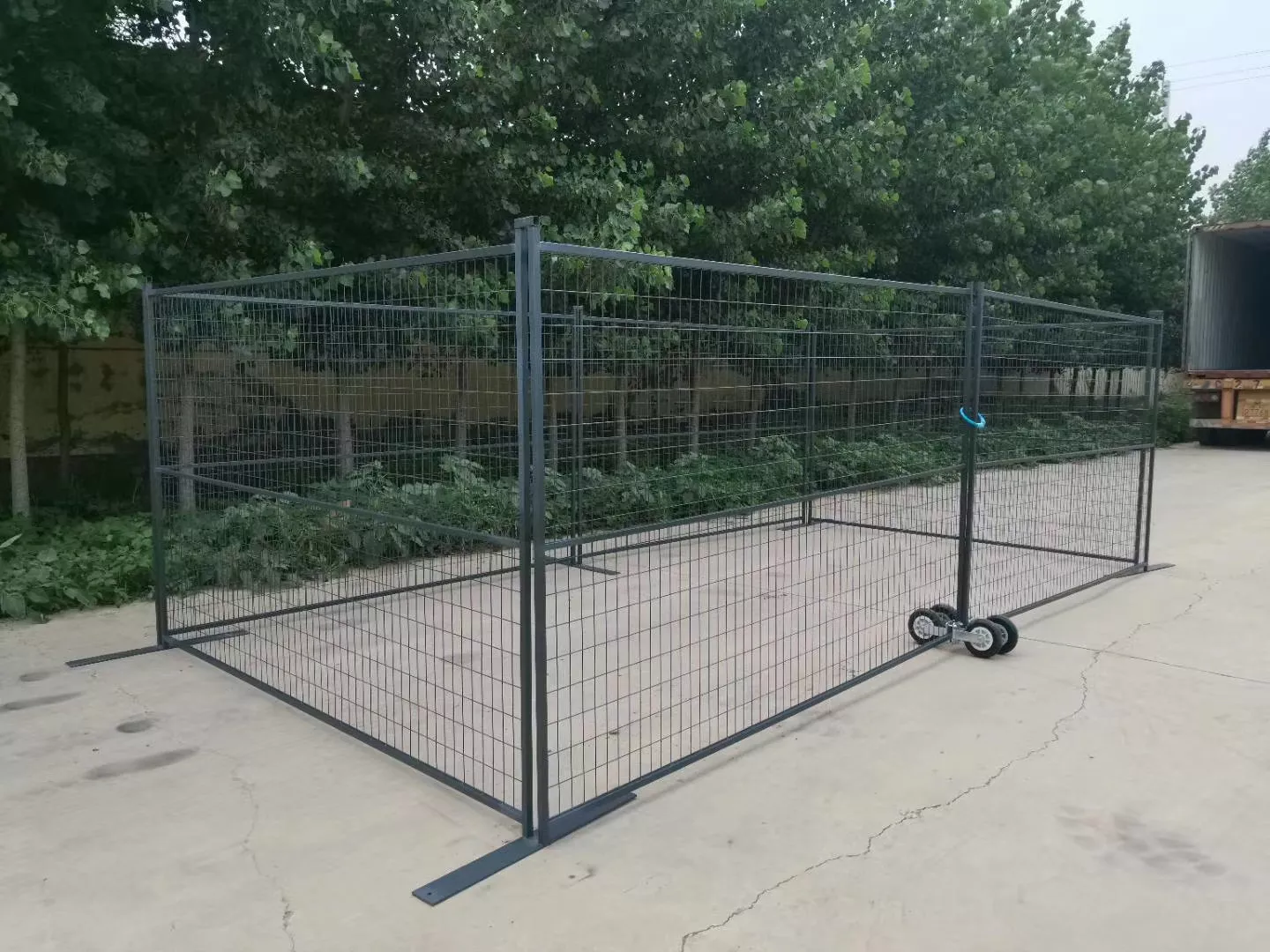
Reinforced plastic feet that hold at 85 mph and survive -30°C.
Standard plastic water-filled bases crack below -20°C — a real problem on Canadian prairies where winter temps drop to -40°C. The water expands during freeze, splitting the plastic. That leaves you with a useless shell and a labor bill to re-water every thaw cycle. DB Fencing’s plastic feet solve this with a design that doesn’t rely on water ballast at all.
-
- Internal steel reinforcement: A steel ring is molded into the foot during production. This prevents the plastic from expanding or cracking even at -30°C. The ring also adds torsional rigidity — the foot won’t twist under unbalanced panel loads.
- Stackable design: Each foot nests into the one below it. That cuts shipping volume by roughly 60% compared to concrete blocks or water-filled bases. DB Fencing operates the only in-house plastic feet machine in Anping, so the tooling is proprietary and the geometry is optimized for stacking.
- Wind resistance tested at 85 mph: In controlled trials with standard 2 m × 3.2 m mesh panels, DB Fencing’s reinforced plastic feet held the fence line upright at sustained 85 mph winds. No additional sandbags or stakes were used. The system meets AS 4687 structural requirements for temporary fencing.

Recommendation by Use Case
A festival base needs speed; a construction base needs strength.
For construction sites, wind resistance and stability are non-negotiable. Concrete blocks deliver raw mass but add 3x the carbon footprint per panel-year compared to reinforced plastic. Plastic water-filled bases are easier to move but risk freezing solid below -20°C, leaving you with immovable ice blocks come January. DB Fencing’s plastic feet solve both problems: the internal steel reinforcement ring maintains structural integrity in extreme cold, and the dry design eliminates freeze jamming. In wind tests, they hold panels upright at 85 mph — sufficient for most Canadian job sites. If you need AS 4687 compliance, our plastic feet meet that standard as well.
Outdoor festivals demand rapid deployment and minimal labor cost. Concrete blocks are too heavy to truck between venues. Standard plastic water-filled bases require filling at each site, and re-watering frozen bases after winter events is a hidden cost most rental companies overlook. A better option is the dry plastic foot with internal steel reinforcement — no liquid, no freeze risk, and the stackable design reduces shipping volume compared to concrete. For event procurement coordinators looking for temporary fence base wind resistance Canada specs, DB Fencing’s plastic feet deliver reliable performance without the logistical headache of water management.
Long-term rentals (6+ months) shift the priority from deployment speed to total cost of ownership. Concrete blocks have a low upfront cost but high transport and disposal costs. Their carbon footprint is 3x higher per panel-year than reinforced plastic. Standard plastic bases degrade under UV and crack after repeated freeze-thaw cycles. DB Fencing’s plastic feet, with their steel reinforcement ring, are engineered for repeated use across seasons. The material resists UV degradation, and the dry design means no water to freeze or leak. When comparing plastic vs concrete fence feet Canadian winter performance, the reinforced plastic foot wins on both durability and lifecycle cost. For bulk orders, our low MOQ of 100 panels makes it accessible for distributors.
Conclusion
The choice between concrete and plastic fence bases comes down to more than static weight ratings. The detail that separates professionals from amateurs is understanding how each material behaves under Canadian winter conditions and full-lifecycle cost. Standard plastic water-filled bases crack below -20°C and demand constant re-watering — labor costs that rental companies consistently underestimate. Concrete blocks bring their own burden: three times the carbon footprint per panel-year, plus higher shipping and handling costs. A steel-reinforced plastic base, like DB Fencing’s design, holds panels upright at 85 mph while eliminating freeze-thaw cracking and reducing FOB pricing per unit through stackable shipping. The final 10% is this: sample approval should include a cold-impact test, not just a weight check, and the quality tolerance for wind resistance must be verified against your local wind zone — not the supplier’s generic spec sheet.
Review the product specs and bulk pricing options on the product page to match the base system to your site wind load and seasonal requirements.
Frequently Asked Questions
Which base resists wind better in Canada?
DB Fencing’s steel-reinforced plastic base holds panels upright at 85 mph, while standard concrete blocks typically fail at 70 mph under sustained gusts. Actual performance depends on frost heave and soil condition on site. Match base type to your specific wind zone.
Do plastic bases crack in freezing temperatures?
Standard plastic bases crack below -20°C, but DB Fencing’s steel-reinforced plastic base withstands -30°C without cracking. The internal reinforcement prevents cold-weather brittleness and ice jamming. Choose steel-reinforced for Canadian winters.
What is the cost per base for bulk orders?
Plastic bases typically cost 20-40% less per unit than concrete blocks in bulk CAD pricing. Final cost varies with shipping volume and customization, such as OEM branding or color. Request bulk pricing with your panel quantity.
How long does setup take for 100 panels?
Plastic water-filled bases set up in about 2 hours for 100 panels, while concrete blocks take 4-5 hours due to manual handling. Setup time drops further with stackable plastic bases that reduce truck trips. Factor labor cost when comparing base types.
Which base is best for construction sites in Canada?
Steel-reinforced plastic bases are best because they combine 85 mph wind resistance with freeze-thaw durability and low labor cost. Concrete blocks are still preferred for long-term rentals where theft of plastic bases is. Base choice depends on rental duration and site security.