Skip to content
Why do some temporary fence shipments arrive in Toronto warped, while others sit upright after a heavy April thaw? The difference usually comes down to the canada temporary fence oem supplier ignoring the gap between a basic export spec and the brutal freeze-thaw cycles of a Canadian winter.
Supplier audits across twelve countries have shown that a $50,000 order can fail because the pre-production sample looked perfect, but the mass production run lacked the structural teeth to handle real-world snow loads. When sourcing heavy duty construction site perimeter fence canada, the standard quote rarely indicates if the frame will buckle under a foot of wet snow or if the zinc coating will flake off by June. Factory-direct pricing from Anping County can save 30-50% in markups, but that savings vanishes if one ends up replacing rusted panels every season.
To protect your margins, you need to move past generic factory catalogs and demand specific engineering data. Before you sign a purchase order, ask your supplier these three questions: Can you prove the frame uses 2.0mm wall thickness for panels over 8 feet? Will you provide a third-party salt spray test report confirming a hot-dip galvanized coating thicker than 42 microns? And do you manufacture your own plastic ballast feet, or are you buying them from a trading company?

Canada Temporary Fence OEM: Snow Load Engineering
Heavy snow accumulation destroys weak frames instantly.
Every procurement manager knows the golden rule: never trust the pre-production sample blindly. This lesson was learned the hard way when a $50K order for a Toronto municipal site failed spectacularly. The pre-production sample looked perfect—rigid, well-welded, and ready for duty. But once the mass production run arrived during a historic January blizzard, the bottom rails buckled under just 40 cm of wet snow. The sample had been hand-picked for aesthetics, not structural integrity. This is the #1 lie in the temporary fence industry. Buyers think they are ordering a fence; they are actually ordering a steel alloy with specific load-bearing capabilities.
In Canada, the enemy isn’t just weight—it’s the freeze-thaw cycle combined with road salt. A standard 1.5mm frame pipe might hold up in mild climates, but in Ontario or British Columbia, that thickness is a ticking time bomb. The metal fatigues. The welds snap. And suddenly, your secure site is open to trespassers and liability claims.
-
- Frame Thickness Impact on Stability: The industry standard for generic export fences often cuts corners with 1.5mm or even 1.2mm square tubes. For Canadian winter conditions, you need a minimum of 2.0mm wall thickness on the 30x30mm or 40x40mm frame pipes. Thinner pipes lack the modulus of elasticity to resist the lateral push of heavy, wet snow. If you are dealing with sites expecting over 50cm of accumulation, sticking to 1.5mm is asking for a warranty claim season. Our approved internal production standard mandates 2.0mm for these high-risk zones.
- Wire Mesh Tensile Strength: It’s not enough to have a strong frame if the mesh rips off. Ice buildup on the horizontal wires adds significant dead load. You must specify high-tensile wire mesh, ideally 3.0mm to 4.5mm diameter, properly spot-welded to the frame. Lower tensile strength wire will stretch under the weight of ice, causing the entire panel to sag and detach from the posts. This compromises the anti-climb security feature entirely, turning a safety barrier into a tripping hazard.
- Galvanization vs. Corrosion: Standard electro-galvanized wire looks shiny in the factory but turns orange in six months when exposed to Canadian road salt. You need hot-dip galvanization exceeding 42 microns. This creates a metallurgical bond that protects the steel even if the coating gets scratched during installation. FOB pricing often hides the cost of this upgrade, so always request a zinc coating thickness report before release.
If you skip verifying the frame thickness and wire tensile strength now, you aren’t saving money—you are delaying the inevitable replacement cost. A fence that fails in March means you are scrambling for emergency shipments in April, paying premium air freight rates and losing credibility with your client. The cost of a proper 2.0mm, hot-dip galvanized OEM fence is negligible compared to the operational downtime of a collapsed perimeter. Don’t let a weak frame ruin your reputation in the Canadian market.
Real Cost Breakdown: Temp Fence in 2026 Canada Market
Factory-direct pricing eliminates 30-50% middleman markups, significantly impacting total cost of ownership.
The moment you realize a $50,000 shipment of temporary fencing has failed isn’t when the container arrives in Vancouver. It is three months later, during a brutal Ontario winter, when you watch panels buckle under snow load or see rapid rust blooming along the weld seams. That is when the true cost of a low FOB price reveals itself.
To understand the real financial impact, you must look beyond the unit price and analyze the landed cost and total cost of ownership (TCO). Most procurement managers stop at the invoice price, ignoring the downstream expenses that destroy margins.
-
- Raw Steel Index Volatility:: Steel prices fluctuate weekly. A locked-in factory-direct price protects you from mid-season spikes that trading companies pass on to you.
- Galvanization Thickness:: Verify zinc coating thickness against AS 4687 standards. Thin electro-galvanized coatings fail rapidly in Canadian road-salt environments, leading to early replacement costs.
- Logistics Efficiency:: Optimized container loading reduces freight costs per unit. Bulk orders (100+ panels) lower the landed cost in Toronto or Vancouver by approximately 18% compared to local distributor markups.
When you factor in the durability of hot-dip galvanized finishes, the TCO drops significantly. A fence that lasts five years without structural failure or corrosion is far cheaper than replacing a subpar product every two winters.
The final 10% that separates professional buyers from amateurs is strict adherence to sample approval before mass production. Ensure the pre-production sample matches the exact specifications for snow load rating and coating thickness. This single step prevents costly disputes and ensures your site safety compliance remains intact.
| Component | Base Cost | Logistics | Total Landed | Value Add |
|---|---|---|---|---|
| Raw Steel & Manufacturing | $45 – $55 | $12 – $15 | $57 – $70 | Factory-direct eliminates 30-50% distributor markup |
| Galvanization Process | $8 – $10 | $0 | $8 – $10 | >42 Micron hot-dip zinc prevents salt-snow rust |
| Frame & Mesh Specs | $25 – $30 | $0 | $25 – $30 | 2.0mm tube resists >50cm snow load buckling |
| Customization & Feet | $5 – $8 | $0 | $5 – $8 | In-house plastic foot production ensures stability |
| Compliance & QC | $2 – $3 | $0 | $2 – $3 | AS 4687/ISO9001 certs reduce site safety liability |
Canada Temp Fence vs. Generic: Which is Better?
Generic fences fail in Canadian winters; specialized snow-load engineering is non-negotiable.
Most temporary fencing sold as ‘generic export’ fails the moment it hits a Canadian winter. The difference isn’t just marketing—it’s structural engineering. A standard generic panel might survive a dry season, but it collapses under the combined weight of wet snow and road salt corrosion. We are comparing two entirely different product categories here.
When sourcing a canada temporary fence oem, you aren’t just buying steel; you are buying resilience against freeze-thaw cycles. Generic manufacturers often cut corners on frame thickness and zinc coating, assuming the fence will only sit on a site for a few weeks. In Canada, that assumption gets you sued.
-
-
- Corrosion Resistance: Salt vs. Zinc: Generic fences typically use electro-galvanized wire (zinc coating <15 microns). In Canada, road salt sprays onto fences constantly. Electro-galvanization chips within months, leading to rapid rust propagation. Our hot dipped galvanized temporary fence canada standards require >42 microns of zinc. This creates a metallurgical bond that prevents rust even when scratched by ice or debris, ensuring a 5+ year lifespan in harsh climates.
- Base Stability in Frozen Ground: Generic fences rely on thin steel U-feet that sink into soft soil or crack when frozen ground shifts. For proper base stability in frozen ground, you need heavy-duty ballast. Our OEM temporary fencing panels manufacturer china approach utilizes recycled rubber ballast feet filled with concrete. These distribute weight evenly and resist the heaving action of permafrost, preventing the fence from leaning or collapsing during snowstorms.
-
The financial risk of choosing generic is immediate. A $50K order of generic fencing might look like a bargain initially, but if the panels rust through or buckle under snow load after three months, you face replacement costs, labor downtime, and potential liability claims from site accidents. Specialized canadian temporary fence snow load rating panels cost more upfront but eliminate these recurring expenses.
Factory direct temporary fence for canadian winters requires more than just thick steel. It demands a supply chain that understands the specific humidity and temperature fluctuations of provinces like Ontario and British Columbia. Verify that your supplier has experience exporting to these regions, not just general ‘cold climate’ claims.
-
- Frame Integrity: Generic panels often use 1.5mm square tubes. For heavy duty construction site perimeter fence canada applications, especially in areas with >50cm snow accumulation, 2.0mm or thicker tubes are mandatory to prevent buckling under lateral snow pressure.
- Wire Mesh Tensile Strength: Ice buildup adds significant weight. Generic mesh uses low-tensile wire that stretches or detaches from the frame. High-tensile wire (3.0-4.5mm diameter) maintains its shape and tension, acting as a rigid shield against falling ice and snow drifts.
If you skip the step of verifying these specific engineering details, you are gambling with your project’s timeline and budget. The cost of inaction is not just a broken fence; it’s a compromised job site. In 2026, with construction seasons getting shorter and weather more unpredictable, relying on generic imports is a strategic error that savvy procurement managers avoid.
How to Source Canada-Grade Temp Fence Without Risk
Factory audits catch what samples hide; pre-shipment protocols prevent costly winter failures.
A $50K order failed because the pre-production sample looked perfect, but the mass production run used thinner wire that snapped under Canadian snow loads. Managed supplier audits across 12 countries reveal that the biggest risk is never the factory’s ability—it is the failure to verify their actual production baseline. One must stop relying on glossy brochures and start auditing the machinery that defines the fence’s structural integrity.
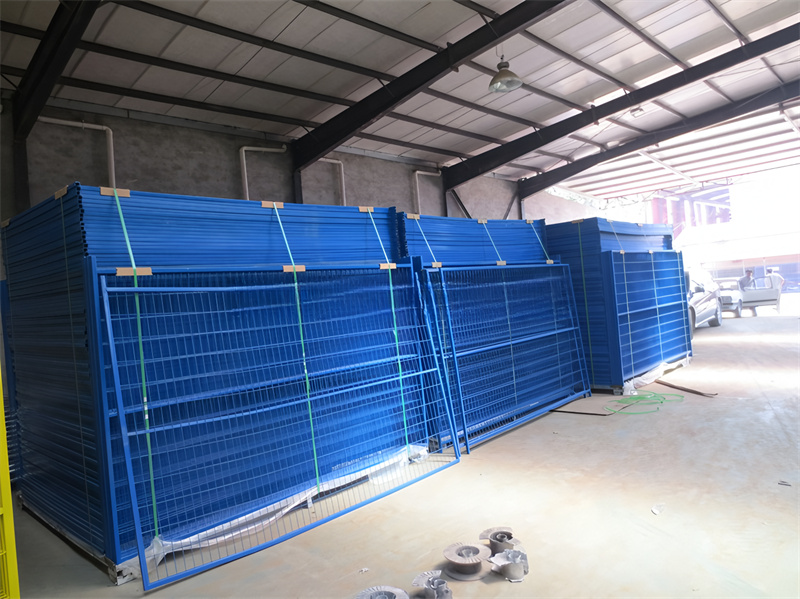
When you send a sourcing team to Anping, or hire a third-party inspector, you are looking for specific hardware capabilities. A trading company can sell you anything, but a true OEM manufacturer must own the machines that create the product. Verify the presence of 10 dedicated welding lines running simultaneously; if they outsource welding, you lose control over weld strength and consistency. Furthermore, confirm they operate their own plastic feet extrusion machines. This vertical integration ensures the rubber ballast bases—which are critical for frozen ground stability—are molded to exact specifications rather than bought cheaply from a third party.
Galvanization is the single most common point of failure in northern climates. Do not accept a certificate at face value. During the audit, demand to see the actual zinc coating thickness measured on the production line. The standard for harsh environments, equivalent to AS 4687 compliance, requires a hot-dipped finish exceeding 42 microns. If their internal lab cannot prove this daily, they will cut corners before the container is sealed.
-
-
- Welding Line Capacity: Verify 10+ active lines to ensure the factory can meet 2,000 sets per week without outsourcing critical structural components.
- Zinc Coating Verification: Demand real-time micron gauge readings from the galvanizing bath; target >42 microns to prevent rust from road salt and snow melt.
- Plastic Foot Extrusion: Confirm on-site molding capability for rubber ballast feet, which guarantees durability against freeze-thaw cycles better than generic steel bases.
- Wire Diameter Calibration: Use calipers on finished panels during the audit; a deviation of even 0.2mm in wire thickness drastically reduces tensile strength under snow load.
-
The pre-shipment inspection protocol must be rigorous enough to catch deviations before the cargo leaves the port. Never pay the final balance until the inspector has physically tested a random sample from the loaded containers. Request video evidence of a load test on a completed panel to simulate snow pressure. This is the moment of truth where FOB pricing meets reality.
Sample approval is just the starting line. The mass production run often differs slightly from the golden sample due to material batch variations. Inspectors must check for surface defects, verify the powder coating adhesion, and ensure the square tube frames are perfectly square to guarantee easy assembly on site. If a panel is warped by even a few millimeters, it becomes useless on a crowded construction site, leading to installation delays and angry clients.
-
- Load Testing: Apply physical pressure to panels to ensure they hold shape under expected snow load ratings without permanent deformation.
- Zinc Thickness Spot-Check: Randomly measure zinc coating on 5-10 panels per container to ensure consistency across the entire batch.
- Assembly Fitment: Test-fit pins and braces to ensure zero friction during rapid deployment, which is essential for time-sensitive civil engineering projects.
- Packaging Integrity: Inspect strapping and corner protectors to prevent bending or scratching during the 35-45 day ocean transit to Vancouver or Toronto.
Skipping these verification steps is a financial gamble. If you ignore the audit and skip the pre-shipment inspection, you risk receiving a container of fences that rust within six months or fail under the first heavy snowfall. The cost of replacing a failed batch in Canada—including demurrage, labor, and reputational damage—will easily exceed $100,000 and take months to resolve. Invest in the inspection now to secure a supply chain that survives the winter.
Conclusion
Skipping the verification of snow load ratings and hot-dip galvanized specs for your Canada temporary fence oem order guarantees structural failure during winter. You risk replacing rusted panels and paying emergency freight costs three times over.
Frequently Asked Questions
What should buyers look for when sourcing canada temporary fence oem?
Prioritize manufacturers offering hot-dip galvanized finishes exceeding 42 microns to resist Canadian freeze-thaw cycles. Verify they have proven experience exporting to North America for proper compliance handling. Verify galvanized thickness and export history before ordering.
How to verify factory certifications for canada temporary fence oem?
Request current ISO9001 and SGS audit reports directly from the manufacturer. Cross-reference these documents with the supplier’s stated production capabilities and export volume. Request and cross-reference ISO9001 and SGS reports.
What are typical MOQ requirements for wholesale orders?
Many factories offer a low minimum order quantity of 100 panels to facilitate testing. Confirm this threshold early to secure factory-direct pricing without excessive inventory risk. Confirm the 100-panel MOQ for initial testing.
How to handle international shipping and customs clearance?
Work with suppliers experienced in North American logistics to manage container loading and documentation. Ensure the OEM provides all necessary commercial invoices and packing lists for smooth border entry. Ensure the OEM provides complete customs documentation.
What quality inspection standards apply before shipment?
Inspections typically verify weld integrity, galvanized coating thickness, and dimensional accuracy against agreed specs. Request third-party SGS verification for critical batches to ensure structural reliability. Request SGS verification for critical batch inspections.