Skip to content
A Chinese temporary fencing factory audit stops being a theoretical exercise the moment you discover the container doesn’t match the pre-production sample. That’s usually six weeks after the sample approval, when the panels are sitting in a Toronto warehouse and the coating thickness reads 30 microns instead of the promised 42. A buyer I know lost a $50,000 order exactly that way — the sample looked perfect, but the mass production run had a different supplier’s raw material mixed in. The quality tolerance between that sample and the bulk shipment was wider than anyone expected, and the FOB pricing they negotiated didn’t account for a reorder.
For Canadian importers, the math gets worse. The 25% steel surtax on Chinese temporary fencing means every panel has to land right the first time. You can’t return a container and hope for a credit — the customs paperwork alone kills the margin. That’s why a proper factory audit isn’t about walking a production floor and shaking hands. It’s about verifying the things that actually break an order: the galvanized coating thickness test report, the welding line capacity, and whether the factory owns its own plastic feet machine or just buys them from the same vendor as everyone else.
The suppliers that hesitate to share an SGS report or a recent batch test are the ones you need to walk away from. The real manufacturers in Anping can show you a production line, a third-party certificate, and a container loading inspection checklist without blinking. The difference between a $50K win and a $50K loss often comes down to one question: did you audit the factory before you placed the order, or after the problem showed up?
Why Auditing Matters for Canadian Importers
A factory audit is the only way to verify claims before you wire the deposit.
Canadian importers face a 25% steel surtax on top of freight costs. If your container arrives with non-compliant panels — say, wire gauge below spec or galvanized coating at 30 microns instead of the required 42 — you’re not just stuck with rusted inventory. You’re looking at customs rejection, demurrage fees, and a client who won’t pay for fencing that doesn’t meet AS 4687. I’ve seen distributors lose $50K in a single shipment because the pre-production sample matched, but the mass production run used thinner wire and skipped the hot-dip bath.
- Coating Thickness: Always request a recent galvanized coating thickness test report. Many suppliers claim HDG but only achieve 30 microns; the approved internal standard is >42 microns. A 30-micron coating will fail in Canadian winters within two seasons.
- Production Capacity: A factory with 10 welding lines can output 2,000 sets per week. Ask for a live video walkthrough. If they dodge, they’re likely a trading desk, not the actual producer. Anping-based manufacturers often supply other local vendors, so a direct audit ensures you’re buying from the source, not a middleman.
- Vertical Integration: Only a few factories have their own plastic feet machine. That means consistent quality, faster lead times, and one less handoff. If your supplier doesn’t own one, ask how they control that critical component.
A structured factory audit protects your ROI by exposing three things before you commit: the real thickness of the galvanizing, the actual welding line output, and the authenticity of certifications like ISO 9001 and SGS. Without it, you’re gambling on a supplier’s PDF. With it, you have leverage to negotiate FOB pricing, enforce quality tolerances, and schedule pre-shipment inspections that flag problems before the container leaves the yard.

Key Certifications to Verify
A certificate without a test report is just paper.
ISO 9001:2015 certifies that a factory has a quality management system in place, but it does not guarantee that any specific product meets your required standard. A genuine supplier will pair that certificate with a recent SGS inspection report — a third-party verification of actual product dimensions, coating thickness, and weld strength. If the supplier offers only the ISO certificate and hesitates to share the SGS report, treat that as a red flag. Many factories in Anping can produce a certificate; the report separates the real producers from the traders.
For Canadian importers, the Australian Standard AS 4687-2022/2007 is the most commonly referenced temporary fence standard in the Pacific region, and it is frequently accepted by Canadian project managers as a de facto benchmark. However, you must verify that the test report covers the specific items under AS 4687: panel dimensions, base stability, and weld breaking load. There is no direct Canadian equivalent for temporary fencing, so most Canadian distributors rely on either AS 4687 or a custom specification. The key is to request a galvanized coating thickness test report — many suppliers claim hot-dip galvanized (>42 microns) but actually deliver only 30 microns of electro-galvanizing, which will rust within a year in Canadian salt or freeze-thaw conditions.
- What to verify in the report: Check that the SGS or third-party report is dated within the last 12 months, includes the exact model number you are ordering, and specifies the test methods (e.g., ISO 1461 for galvanizing). If the report only lists a generic product name, it is not proof of compliance for your specific order.
- Canadian equivalents and gaps: No single Canadian standard covers temporary fencing. Some provinces reference CSA G164 for hot-dip galvanizing, but panel geometry and stability are left to the buyer’s specification. The safest approach is to accept AS 4687 compliance and supplement it with a signed supplier declaration that the coating meets CSA G164 or ASTM A123.
One hard truth from the field: about 30% of suppliers who claim AS 4687 compliance cannot produce a test report that actually matches their current production. When you visit the factory, ask to see the batch test report for the wire coil used in your order. If the supplier cannot trace the coating thickness back to the incoming material, you are looking at a future claim. This is where a direct factory audit pays for itself — on site, you can take a handheld coating gauge to any panel and get instant readings.

Factory Capability Checklist
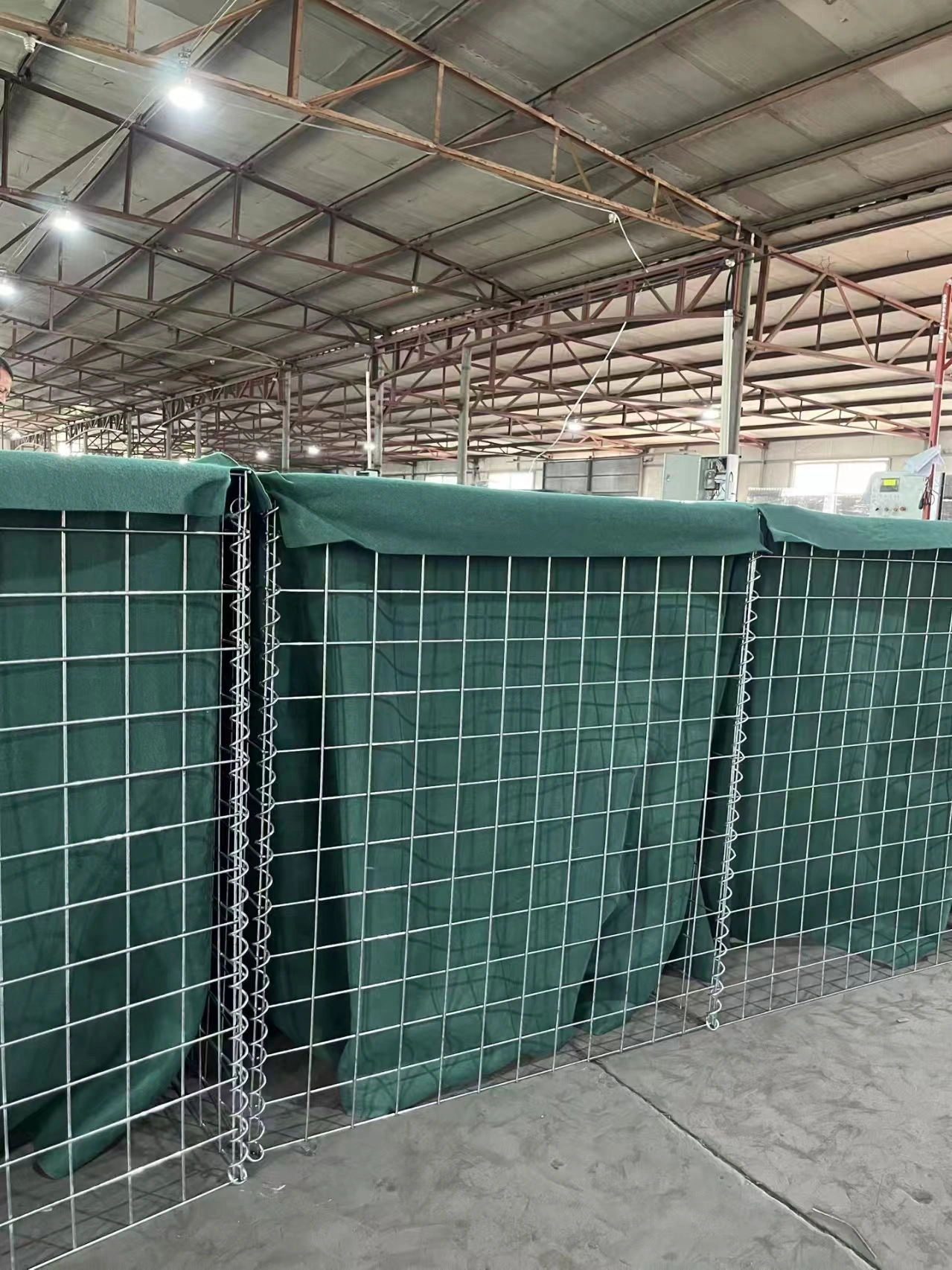
Only factory in Anping with its own plastic feet machine — a clear sign of vertical integration.
A factory with 10 automated welding lines and a weekly capacity of 2,000 sets is equipped to handle large Canadian orders without stretching lead times. Automated production ensures consistent weld quality across every panel — something manual lines cannot guarantee. When you audit, walk the floor and count the lines. If a supplier claims high capacity but runs only 3 lines, the math doesn’t add up.
- Vertical Integration: Only a handful of factories in Anping own their plastic feet injection molding machine. This one does. It means faster turnaround on orders and direct control over fit and finish, instead of waiting on a third-party supplier.
- Supply Chain Transparency: Because this machine also supplies plastic feet to other local vendors, a direct audit confirms you are buying from the actual producer, not a trading company that assembles from multiple sources.
Hot-dip galvanized coating thickness is where many suppliers cut corners. The Australian Standard AS 4687 requires >42 microns, and Canadian equivalents are similar. Yet many factories claiming HDG deliver only 30 microns. Before you commit, request a recent galvanized coating thickness test report from a third-party lab. If the supplier hesitates, that’s a red flag. The cost of premature rust on a 1,000-panel order can wipe out your margin in two winters.

Red Flags in Supplier Communication
In 12 years of factory audits, these three red flags have been observed to cost buyers tens of thousands of dollars.
When a supplier tells you they have ‘large production capacity’ but can’t name a number, that’s a warning. A real factory knows exactly how many welding lines they run and what their weekly output is. For reference, a manufacturer with 10 automated welding lines and two shifts can produce around 2,000 sets per week — that’s a concrete number you can verify during a site visit.
- Ask for line count: How many welding lines? Are they automated or manual? Factory should provide exact count and shift schedule.
- Confirm weekly output: What is the guaranteed minimum weekly output for standard temporary fence panels? If the answer is ‘it depends’, push for a range based on historical shipping data.
- Request coating thickness certificate: Ask for a third-party report showing actual micron readings for HDG. If they push back or offer ‘self-declared’ data, treat it as a red flag.
- Verify test standard: Make sure the report references the correct standard (e.g., AS/NZS 4687 for Australian/New Zealand markets or equivalent Canadian standard).
- Define MOQ policy: What is the absolute minimum per order for standard panels? Can you mix sizes within one container? A transparent supplier puts this in writing.
- Lock in lead time: Ask for lead time per container size and what happens if they miss it. Reliable exporters have standard terms — 20 days for a 20GP, 25 days for a 40HQ — and stick to them.
Suppliers who refuse to share recent third-party test reports are hiding something. The most common deception involves hot-dip galvanized coating thickness. Many suppliers claim HDG but actually deliver only 30 microns — well below the 42-micron minimum required for Australian Standard AS 4687 compliance. Always request an SGS or equivalent report dated within the last 6 months.
Vague MOQ and lead times often indicate a trading company rather than a genuine OEM manufacturer. A factory that controls its own production can offer a low MOQ — for example, 100 panels — and a consistent lead time of 15–20 days per 20-foot container. Any supplier that says ‘MOQ depends on design’ or ‘lead time varies widely’ is either a trader or stretched too thin.

Sample Request and Pre-Shipment Inspection
A sample that matches production is the only guarantee you have.
Every distribution agreement I’ve seen fall apart started with a sample that looked right but a production run that didn’t. The gap between sample approval and mass production is where most quality failures happen. For a Canadian importer, a $50K order sitting on a non-compliant shipment is not a risk — it’s a certainty if you skip this step.
- Coating Thickness: Use a digital gauge to measure the hot-dip galvanized coating on the sample. Minimum acceptable is 42 microns. Many suppliers claim HDG but only hit 30 microns. Always request the galvanized coating thickness test report from the same batch as your sample.
- Welding Consistency: Inspect each weld joint for uniform penetration. Weak welds cause panel separation under load. The quality tolerance standard is no more than 2mm gap at any weld. If you see inconsistent beads, expect failures in the field.
- Plastic Feet Fit: If the supplier has an in-house plastic feet machine (only a few factories in Anping do), the feet should snap on securely without play. Loose feet indicate poor mold tolerance or a subcontracted source. That adds lead time and variability.
- Dimensional Accuracy: Measure panel height, width, and mesh opening with a caliper. Deviations beyond 3mm on a 2m panel cause alignment issues during installation. A tape measure won’t catch it — use a caliper.
- Pre-Shipment Inspection (PSI): Verify quantity, visual defects, dimensions, and coating thickness. Use AQL 2.5 normal level. Random sample from 20% of cartons. This catches defects before they leave the factory.
- Container Loading Inspection (CLI): Confirm that the correct number of panels, feet, and accessories are loaded. Check for damaged packaging, moisture, and correct fumigation stamp. This avoids port delays and demurrage charges that can run $200–$500 per day.
Relying on the supplier’s own QC is not enough. For Canadian importers, third-party inspection is standard. Options include SGS, Bureau Veritas, and Intertek. They can perform pre-shipment inspection (random sampling per AQL 2.5) and container loading inspection. Cost typically runs $300–$500 per inspection — negligible compared to a $15,000 container. For AS 4687 compliance, request an inspection that includes coating thickness testing and weld strength tests.
If a supplier balks at a third-party inspection, that’s a hard stop. They either have something to hide or they’re not used to export standards. Move on. The cost of skipping this step is a container of non-compliant fencing that sits in Canadian customs for weeks — and that’s not a hypothetical.
Conclusion
Skipping a full factory audit can cost you 25% in steel surtax penalties and three months of lost time if a container gets rejected at the port. A shipment where the hot-dip galvanized coating tests at 30 microns instead of the required 42 will start rusting within a year—and your customer will hold you responsible. The difference between a compliant supplier and one that fudges test reports is precisely the margin you planned to keep.
Before you wire a deposit for a full container, compare the sample approval process and the quality tolerance clauses in your contract. Start with a review of the factory’s current SGS reports and the FOB pricing breakdown. Then browse the product page to see what a properly audited supply chain looks like—one that delivers AS 4687 compliance, verified coating thickness, and a production line that actually owns its plastic feet tooling.
Frequently Asked Questions
Why audit a Chinese temporary fencing factory?
A factory audit verifies that the production line, coating thickness, and certifications match what the supplier promised before you pay a deposit. Without it, you risk a 25% steel surtax or non‑compliant panels that fail Canadian standards. Audit first, wire funds after.
What certifications must a Chinese fence factory have?
At minimum, verify ISO 9001:2015 and a third‑party SGS test report for hot‑dip galvanized coating thickness. A certificate without a test report is just paper, so ask for the actual micron measurement. Always request the raw test report, not just the certificate.
How do I check hot-dip galvanized coating thickness?
Ask the factory for a certified SGS or equivalent third‑party report showing a minimum of 42 microns on the wire and frame. During the audit, use a handheld magnetic thickness gauge. Test at least three panels from different parts of the batch.
What red flags should I look for in supplier communication?
Vague capacity numbers, reluctance to share third‑party test reports, or unclear MOQ and lead times are immediate red flags. A reliable supplier will give you a specific weekly output (like 2,000 sets), a clear MOQ. If they hesitate on numbers, walk away.