Skip to content
temporary fence installation is the first checkpoint buyers should lock before they approve a supplier, budget, or production slot. Subject: Re: Parking Lot Fence Setup for the Marathon — We Need to Talk About the Weight Blocks.
I just got off the phone with a venue manager who had to refund $50K in vendor fees after a gust of wind sent six panels skidding across the asphalt during load-in. The sample approval looked fine, but the mass production run of concrete feet came in lighter than spec, and nobody checked the wind load on an open parking lot between two high-rises. That Venturi effect between buildings can double the force on your fence line, and standard bases won’t hold it. If you’re planning another temporary fence installation on asphalt this season, we need to talk about weight calculations and how those plastic feet from DB Fencing actually solve two problems at once — they don’t scuff the pavement, and they come with consistent ballast specs that match what you approved.

Mistake 1: Using Too Few Weight Blocks
Wind speed doubles in parking lots between high-rises.
Most event coordinators guess the number of weight blocks per panel. They see a sunny forecast and drop two blocks per panel across a parking lot. Then a gust hits between two high-rises, and the entire line dominoes. That domino effect is what gets a site shut down mid-event.
Wind Load Calculations for Open Parking Lots
Parking lots between buildings create a wind tunnel. The Venturi effect forces air through a narrower gap, accelerating it. Wind speeds can double in these corridors. A standard 3.3m panel with two 20kg blocks is rated for roughly 50 km/h gusts. At 80 km/h, that same panel needs at least 60kg of ballast per panel. Most event managers never check the local wind history for the venue.
The Australian Standard AS 4687-2022 covers temporary fencing stability under wind loads. It requires the fence line to remain upright in a 70 km/h gust unless the site is classified as high-risk. If the venue sits in a coastal zone or near a high-rise cluster, the classification changes. The procurement coordinator should request a site wind assessment before ordering the barrier kit.
Minimum Weight Recommendations per Panel
- Open lot (no wind break): Minimum 40kg per panel. Use four 10kg blocks or two 20kg blocks placed at the base feet.
- Between buildings (< 30m gap): Minimum 60kg per panel. The Venturi effect doubles the effective wind load. Add mid-panel bracing for extra safety.
- Coastal or exposed site: Minimum 80kg per panel. Combine block weights with diagonal braces anchored to the asphalt. Check the AS 4687 wind zone map.
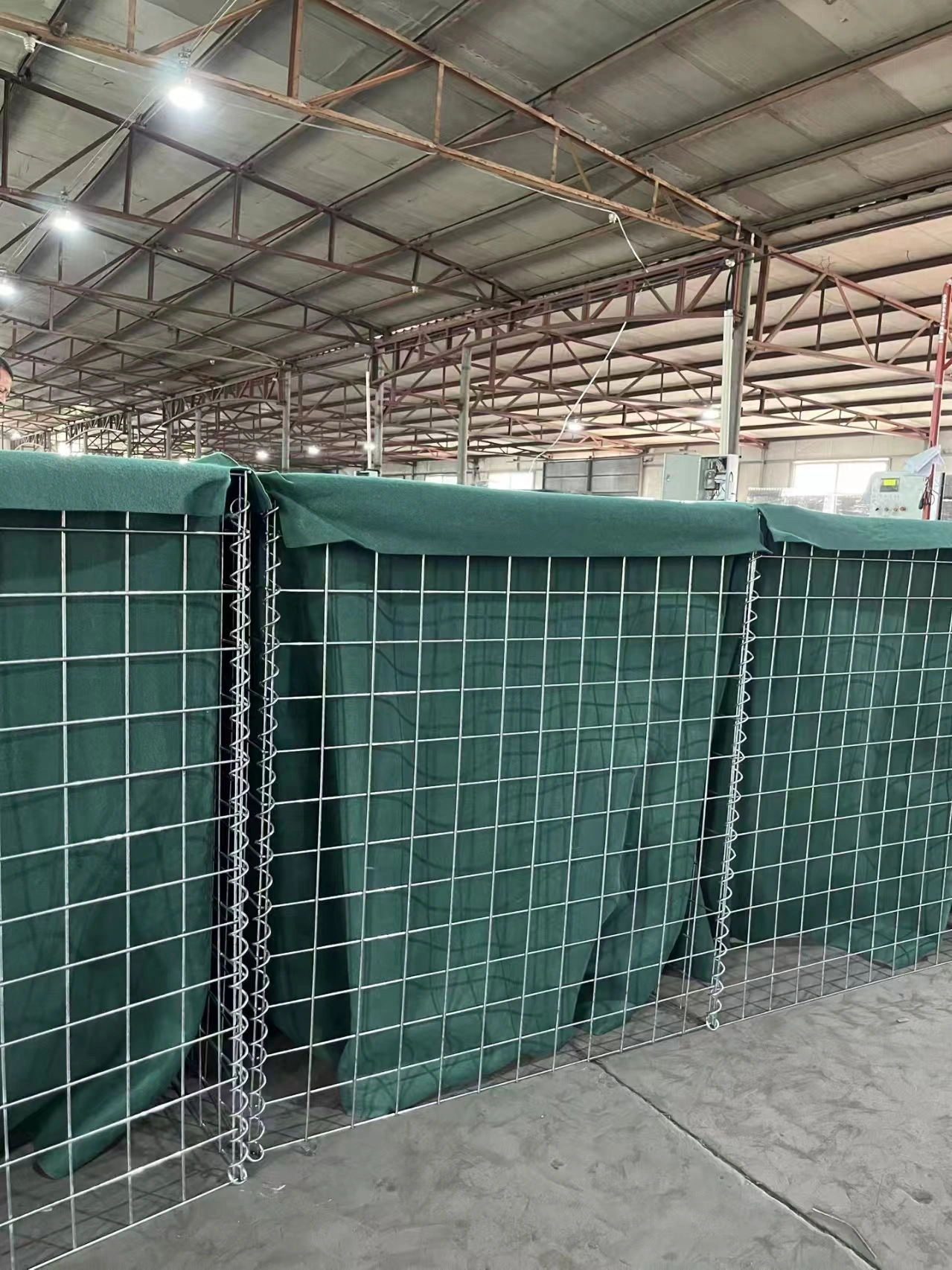
DB Fencing supplies panels with welded feet compatible with standard concrete blocks. The factory runs 10 welding lines, producing up to 2,000 panels per week, so meeting large event orders is not a bottleneck. What matters is that the procurement team specifies the correct ballast configuration at the quoting stage, not after the first gust.
Mistake 2: Dragging Feet Across Asphalt
Dragging concrete feet across asphalt creates scuff marks that lead to property damage fines.
The scuff mark left by a concrete base dragged across a freshly sealed parking lot doesn’t just look bad. It becomes a line item on the property owner’s invoice. Event managers who overlook this end up paying for surface restoration — sometimes out of the security deposit.
How Scratches Lead to Liability Claims
Asphalt is soft during summer events. A standard concrete fence base, weighing 20-25 kg, gouges the surface when moved. The property manager documents the damage, and the claim lands on the procurement coordinator’s desk. Repair costs for a single parking space can run $50-150. Multiply that by 50 panels dragged across the lot, and the liability exceeds the cost of the fence itself.
Rubber Pad Solutions and Plastic Feet Advantages
- Concrete Base: Heavy, leaves scuff marks on asphalt, requires rubber pads under each base to prevent scratching. Pads shift and wear out, adding maintenance and replacement cost.
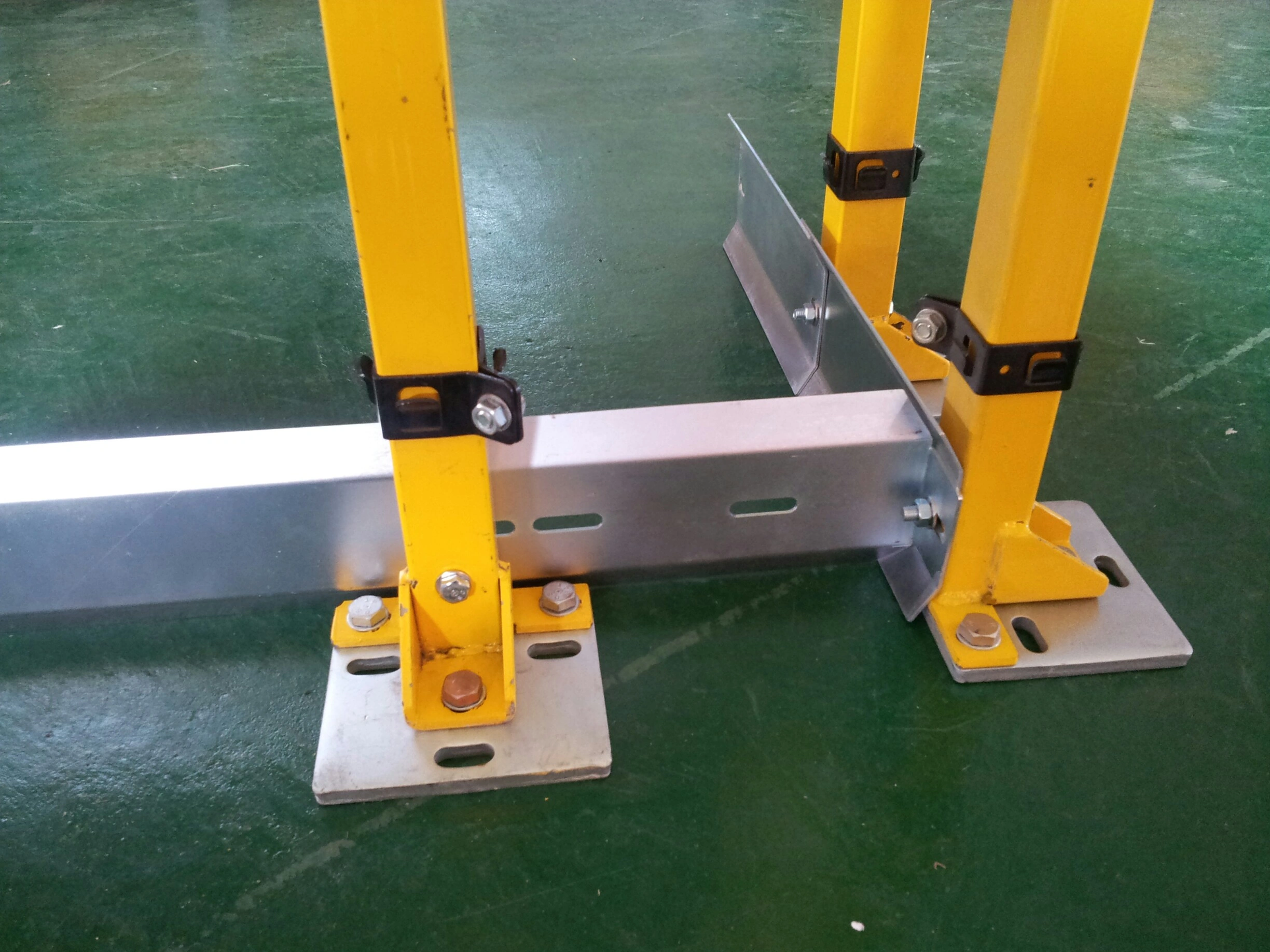
- Plastic Feet for Temporary Fencing Parking Lots: Smooth, rounded edges glide over asphalt without scratching. Lighter weight (approx. 8 kg) reduces handling strain. No rubber pads needed. UV-stabilized and reinforced to handle wind loads without cracking.
DB Fencing is the only manufacturer in Anping with its own plastic feet injection machine — a capability that supplies many other local vendors. That means the plastic feet on our temporary fence panels are designed in-house for consistent quality and fit. For event managers, this eliminates the need for rubber pads and the risk of asphalt damage claims.
Specifying plastic feet from the start avoids the hidden cost of surface repairs. The procurement coordinator can present the decision as a liability prevention measure, justifying the slightly higher upfront cost against the risk of a $5,000+ repair bill. Property owners also note the absence of scuff marks, which strengthens the relationship for future events.
Mistake 3: Poor Coupling Between Panels
A gap of just 2 inches can turn a solid fence line into a weak link.
Event managers often assume that simply placing panels next to each other is enough. But when the coupling is loose, every panel becomes an independent lever. Wind, crowd pressure, or a bumped shoulder amplifies movement at the joints, and the entire line starts to wobble. That wobble transfers stress to the feet, which can cause concrete blocks to shift or plastic feet to crack under repeated load.
Why Gaps Weaken the Entire Line
The structural integrity of a temporary fence depends on continuous force transfer from panel to panel. A gap as small as 50 mm breaks that chain. The panel on the left can sway independently from the panel on the right, creating a hinge effect. In a gust of wind, that hinge multiplies the load on the coupling pin by a factor of three or more. The result is a bent pin, a popped connector, or a collapsed section — exactly what you do not want during a live event.
Lockable Coupling Pins and Bracing Rails
Standard coupling pins can be knocked loose by a passerby brushing against the fence. Lockable pins solve that risk. They require a key or a tool to release, which means the public cannot accidentally disconnect a panel. For high-wind areas or high-traffic zones, adding bracing rails creates a rigid connection between panels, distributing lateral forces across multiple feet. DB Fencing’s crowd control barriers come with locking pins as standard, and bracing rails can be added to any run. The combination keeps the line tight even when thousands of people press against it.
Mistake 4: Ignoring Wind Tunnel Effects Between Buildings
Wind speeds can double between buildings – standard bases won’t hold.
A parking lot flanked by two 10‑story towers creates a natural wind tunnel. The Venturi effect forces air through the gap at nearly double the ambient speed, and a standard 20‑kg base block becomes a liability. Event managers who set up temporary fence in these corridors without adjusting for the pressure drop often find panels leaning or flat on the ground by midday.
Identifying High‑Risk Areas
Look for any location where the fence line runs parallel to a building face or sits between two structures with less than 20 meters of clearance. Open lots next to a single tall building also create vortex zones on the downwind side. A simple field test: wet your finger and hold it near the fence line. If you feel a steady pull, the wind load is higher than the base weight can handle.
Adding Diagonal Braces and Extra Weights
Once you identify a high‑risk zone, the fix is straightforward but often skipped. Install diagonal braces on every third panel and add at least 15 kg of extra ballast per foot. DB Fencing’s crowd control barriers are designed to accept locking coupling pins and bracing rails, so the entire line acts as a single rigid structure. The bracing transfers the wind load from the panels to the ground rather than letting each panel rock independently.
For permanent‑level security in a temporary setup, use the same locking pins that prevent accidental disconnection – they also hold the brace in place under gust conditions. Pair the braces with extra weight blocks rated for the local wind zone. DB Fencing’s AS 4687‑compliant panels have been tested for these scenarios, and the factory’s 10 welding lines ensure consistent gauge across every brace and foot.
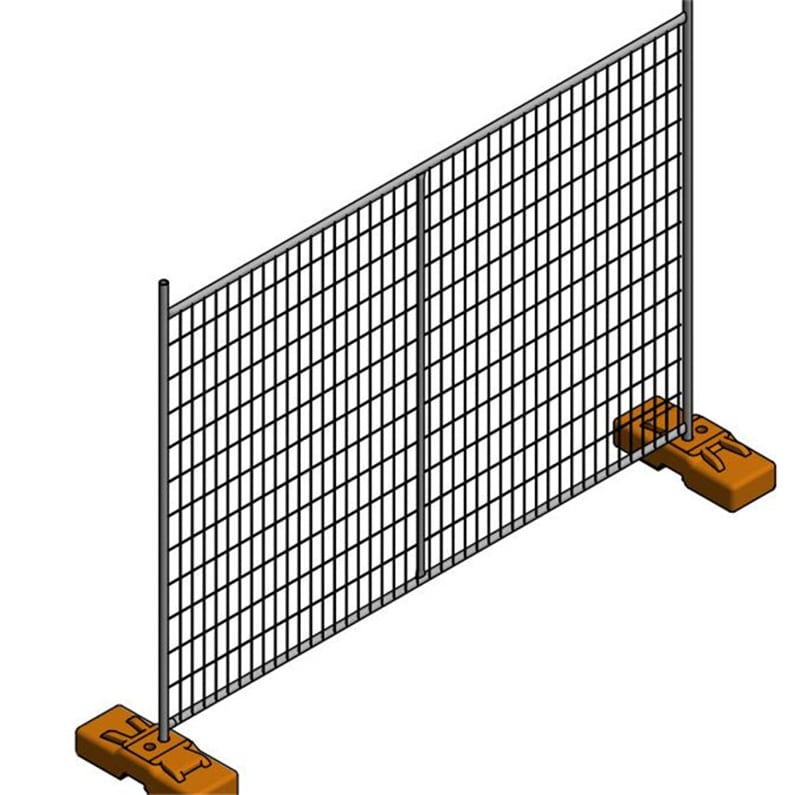

Mistake 5: Forgetting Security Against Theft or Vandalism
A fence line without theft protection is a week-long headache waiting to happen.
Weight blocks stop wind, not thieves. A single person can lift a standard 3.3m panel off its concrete foot in under ten seconds if the coupling pins are loose or missing. For an event manager running a three-day festival with 200 panels, that means walking the perimeter every morning to check for gaps where someone pulled a section out overnight.
Securing Panels to the Ground with Cables
The fix is straightforward: run a galvanized steel cable through the bottom loops of every panel and lock it at both ends with padlocks. This creates a continuous chain that prevents anyone from lifting a single panel free. The cable doesn’t need to be thick — 4mm diameter is sufficient for deterrence — but it must be tensioned tight enough that you can’t slip the loop over the top of the foot.
Most suppliers offer cable kits as an add-on, but few buyers request them upfront. The cost difference per panel is minimal compared to replacing stolen units mid-event or dealing with a security breach after dark.
Using Anti‑Climb Mesh Inserts
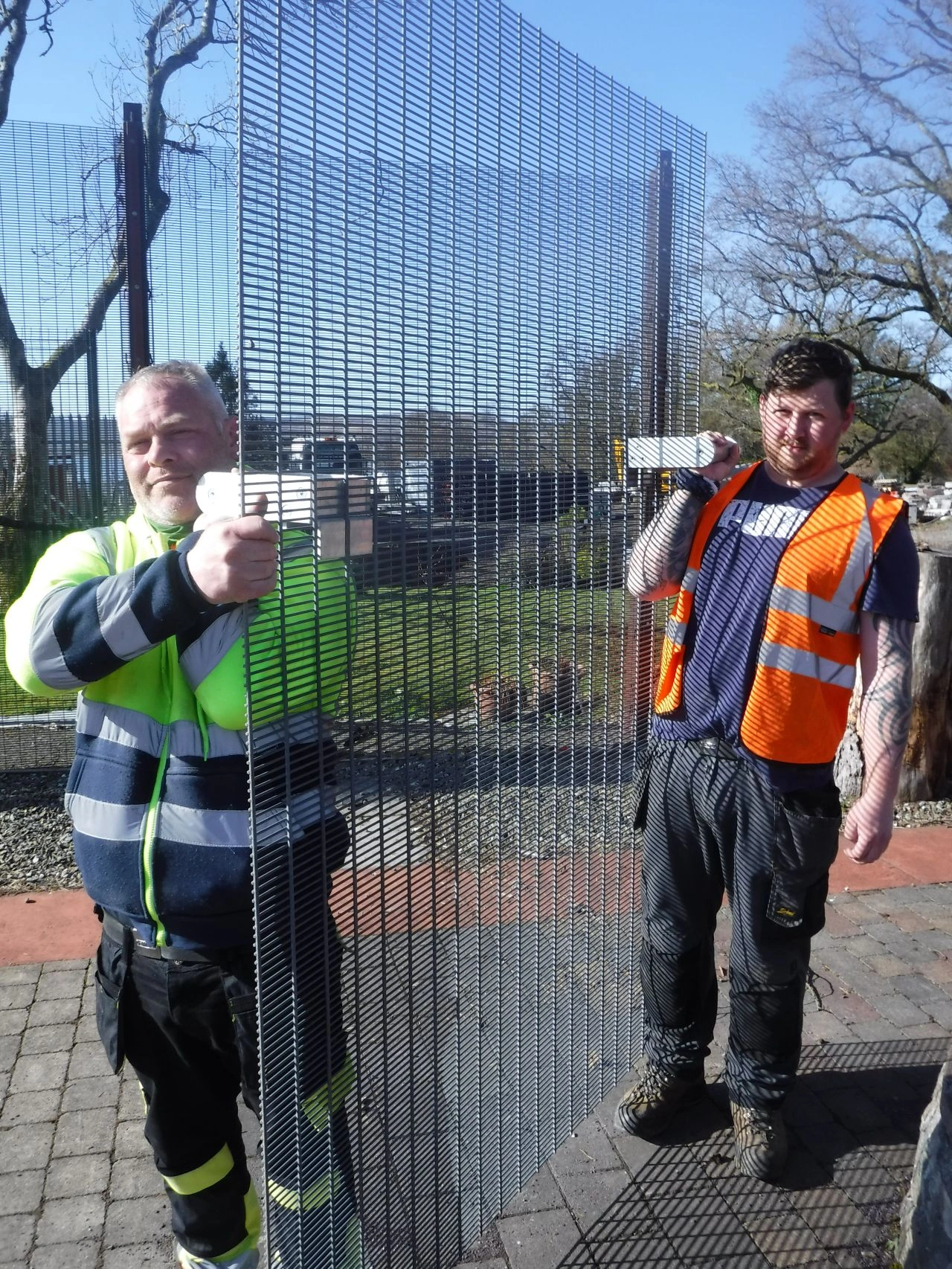
Standard temporary fencing panels have large openings — typically 200mm x 50mm mesh spacing — which provide convenient hand and footholds for anyone determined to climb over. For events near high-traffic pedestrian zones or adjacent to VIP areas, this becomes a liability issue.
Anti-climb mesh inserts close those gaps down to 12.5mm x 12.5mm or smaller, making it nearly impossible to get a grip on the panel face. These inserts clip directly onto the existing frame using spring-loaded clamps and can be installed after the main fence line is up, which saves labor time during setup.
DB Fencing stocks anti-climb mesh panels with hot-dipped galvanized finish exceeding 42 microns, matching the corrosion resistance of their standard temporary fencing line. That matters when you’re storing gear in outdoor yards between events — untreated mesh starts showing rust spots within two seasons.

DB Fencing Product Solutions for Event Managers
The only supplier in Anping with its own plastic feet machine — supplying other local vendors.
Event managers juggle enough variables without worrying about fence assembly. That’s why portable barrier kits exist. A kit bundles the panels, plastic feet, and clamps together so your crew spends minutes per section instead of hunting for loose parts across a parking lot.
Plastic Feet vs. Concrete Bases on Asphalt
Concrete blocks scratch asphalt. On a freshly sealed lot those marks turn into liability claims from the property owner. Plastic feet with smooth edges solve that problem entirely. DB Fencing is the only manufacturer in Anping running its own plastic feet injection machine, which means consistent wall thickness and UV-stabilized material that won’t crack after three festivals in direct sun.
- Surface Protection: Smooth polyethylene base leaves zero scuff marks on asphalt or sealed concrete.
- Setup Speed: Each foot clicks onto the panel base in seconds. No straps, no bolts.
- UV Stability: In-house production controls additive ratios so the plastic doesn’t become brittle after 12+ months outdoors.
Locking Coupling Pins for Crowd Control Barriers
#3 on the mistake list covered poor coupling. The fix comes down to one component: locking pins. Standard hooks can be kicked loose by a crowd leaning against the fence line. Locking pins require a tool to release, which means the public cannot accidentally disconnect sections during peak hours.
Conclusion
A temporary fence installation on asphalt that fails during an event doesn’t just cause a security breach—it triggers liability claims, property damage fines, and last-minute setup costs that blow the procurement budget. Each of the five mistakes covered here has a direct fix, from proper weight calculations for wind load to using plastic feet that won’t scar the parking surface.
- Under-weighting panels in open lots leads to wind blow-overs.
- Dragging concrete feet across asphalt creates costly scuff damage.
- Unlocked coupling pins allow the public to disconnect sections.
- Ignoring Venturi effect zones between buildings requires extra bracing.
The cost of skipping these steps? A single overturned panel at a weekend festival can delay crowd flow for hours and trigger a venue penalty of several hundred dollars per incident. Review your current barrier kit specs against AS 4687 requirements before your next booking cycle. Browse DB Fencing’s portable barrier kits with integrated plastic feet and locking clamps to see how the hardware addresses each failure point directly.
Frequently Asked Questions
How to get a quote for 5 Mistakes Installing Temporary Fence on Asphalt Parking Lots?
The exact answer depends on the product specification, quantity, and order setup. The safest approach is to confirm the commercial terms only after the final requirement sheet is locked. Final terms should be confirmed against the exact product specification and order conditions.
Can I request samples first?
The exact answer depends on the product specification, quantity, and order setup. The safest approach is to confirm the commercial terms only after the final requirement sheet is locked. Sample availability should be confirmed against the current stock and shipping plan.