Skip to content
The gap between what a spec sheet promises and what actually arrives in the container is a familiar story for anyone who has managed a temporary fence on asphalt installation. A procurement coordinator for a Toronto music festival lost a $50,000 order because the pre-production sample of the base system looked fine, but the mass production run used a different plastic compound that left permanent marks on the parking lot surface. That kind of failure gets written into venue contracts as a clause prohibiting any drilling or adhesive residue — and it’s why event management companies in Canada have shifted to rubber mats under standard plastic feet.
The real issue isn’t just the scratching. Asphalt expands and softens in direct summer heat, and a standard concrete block or uncoated steel base can sink into the pavement, leaving a permanent divot after the event ends. The rounded edges on DB Fencing’s plastic feet are designed to distribute weight across a wider footprint, minimizing pressure points that lead to surface deformation. That detail — along with the choice of base material — separates a clean install from a liability claim. The rest of this guide covers the 90% of what you need to know: rubber mats, water-filled barriers, vacuum anchors, and the inspection routine that catches problems before they escalate. The final 10% — the small but critical decision that professionals never overlook — comes at the end.
Why Asphalt Requires Different Approach
Asphalt surfaces are not forgiving — standard fence bases can cause permanent damage.
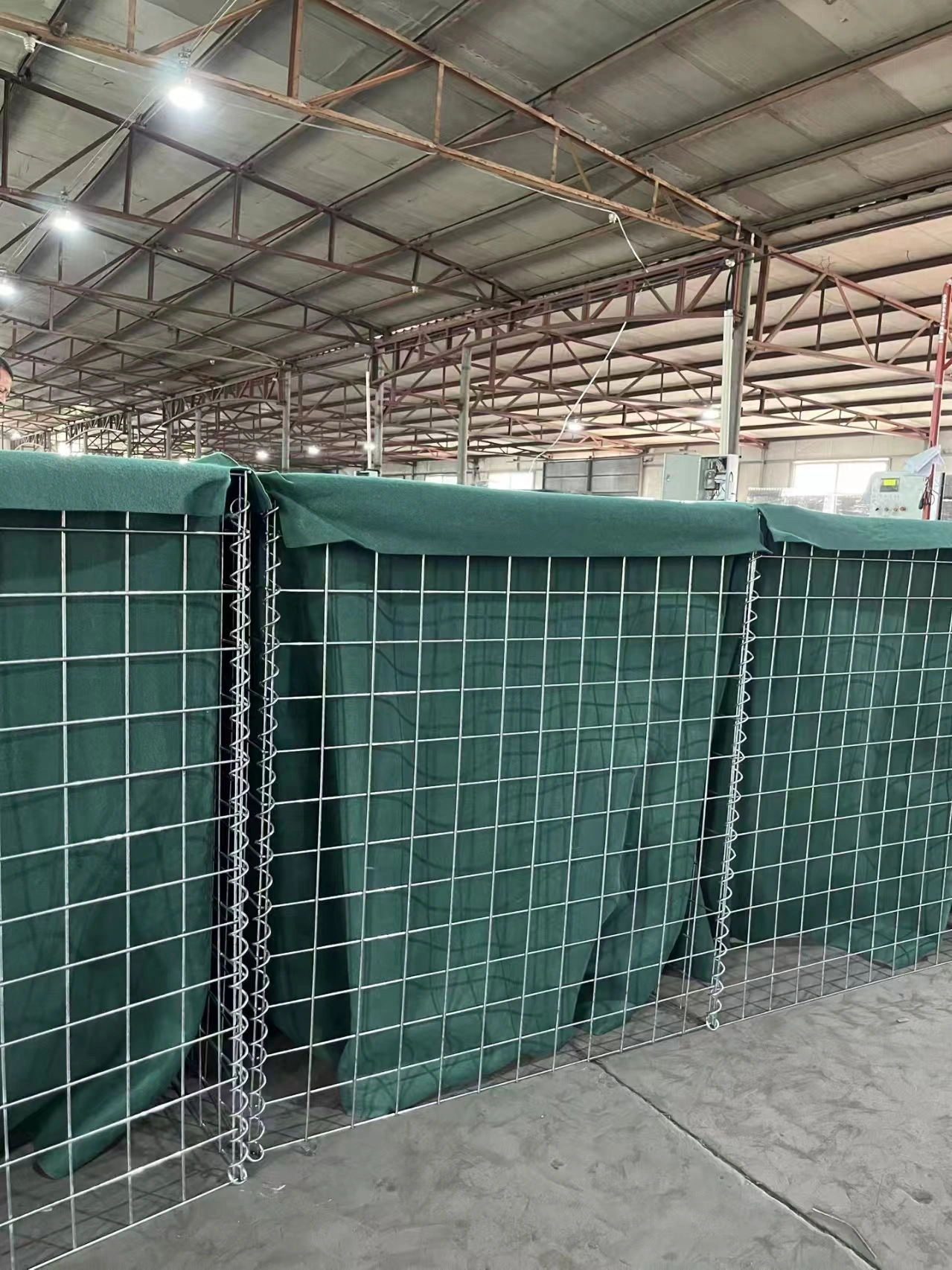
Venue contracts for event parking lots almost always prohibit any drilling, adhesive residue, or surface marking. The liability for a cracked or stained asphalt surface can run into thousands of dollars in resurfacing costs. Standard temporary fence bases, especially those with sharp edges or rough concrete blocks, can gouge the pavement during installation or when shifting under wind load. Rubber mats under the feet are the simplest way to prevent scratching, but the shape of the base itself matters just as much.
- Surface damage: Square-cornered plastic feet create concentrated pressure points that can indent softened asphalt in summer heat. DB Fencing’s plastic feet use rounded edges to distribute weight more evenly, reducing the risk of permanent depressions.
- Heat expansion and sinking: Asphalt temperatures can exceed 60°C in direct sun, causing the pavement to soften. Heavy concrete blocks or unshaped steel bases can sink gradually, tilting panels and creating tripping hazards. Lightweight plastic feet with rubber mats avoid the mass that causes sinking while still meeting wind-load requirements.
- Heat tack: Rubber or plastic bases in direct contact with hot asphalt can adhere to the surface, leaving residue when removed. Placing a separate rubber mat (or using a base with a textured bottom) prevents the tack from forming. This is a common issue in Canadian summer festivals where asphalt temperatures peak.
Non-Damaging Base Options
Rubber mats cost $8 per foot but save $2,000 in asphalt repair.
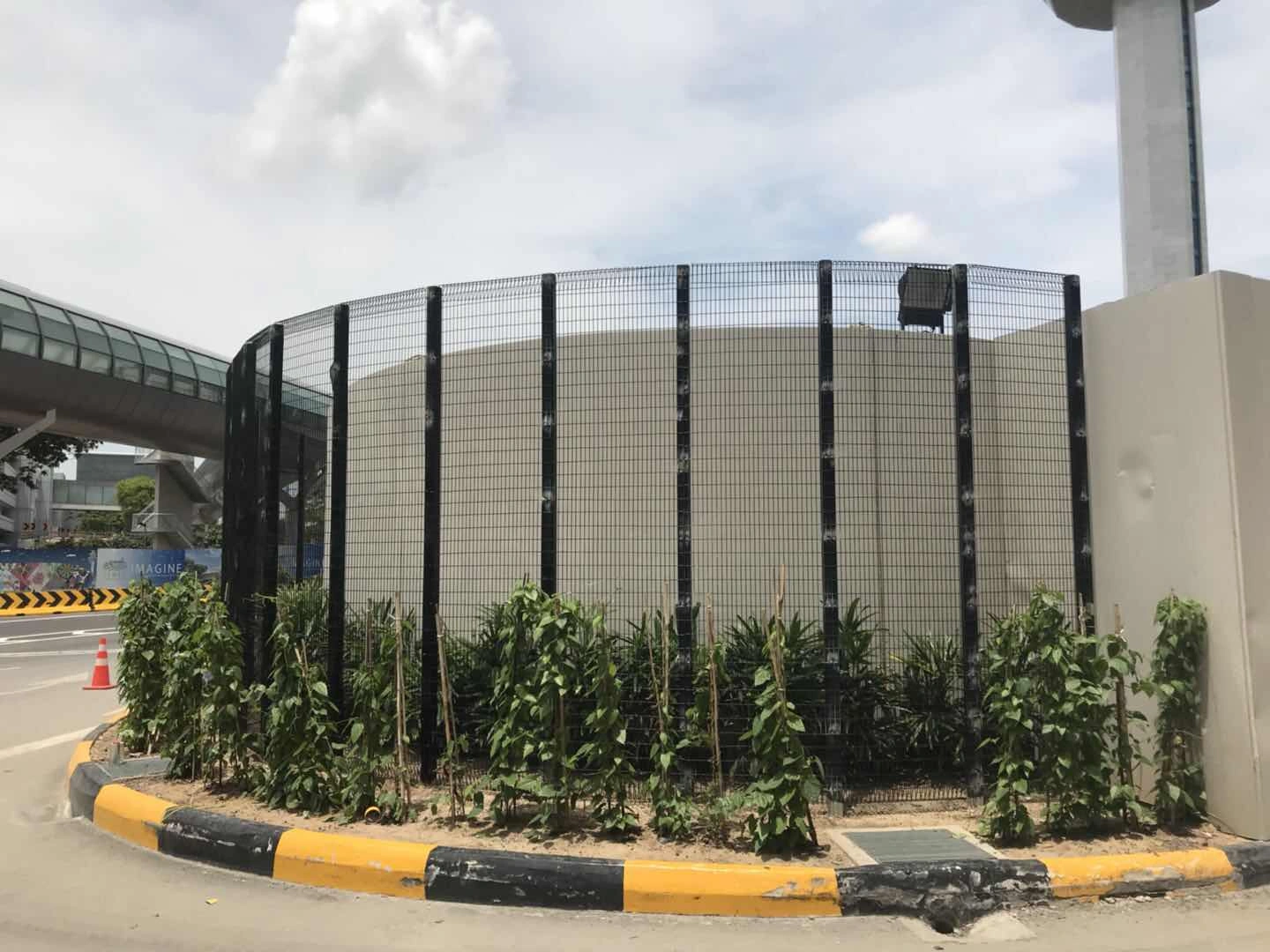
Standard concrete blocks leave permanent marks on asphalt within 48 hours of contact. The weight combined with thermal expansion embeds gravel into the surface. For event procurement coordinators, that means a venue invoice for resurfacing—typically $4 to $6 per square foot. Rubber mats eliminate that liability entirely. The 3/8-inch recycled rubber mats spread the load of a 20-kg plastic foot across 300 cm², reducing ground pressure below the 18 N/cm² threshold where asphalt starts to deform.
- Rubber pedestals and mats: Prevent asphalt marking and heat-tack. DB Fencing’s plastic feet have rounded edges to minimize pressure points. A 60 cm x 60 cm mat under each foot keeps the panel stable. Single-use? No—these mats survive 20+ events if stored dry. Cost per mat: $8–$12 wholesale. Compare to a single asphalt crack repair: $150.
- Water-filled barriers vs. concrete blocks: Water-filled barriers avoid the crush risk of solid blocks. A concrete block weighs 280 kg—it can crack the asphalt if dropped or shifted. Water-filled units weigh 15 kg empty and 80 kg filled. They sit on a wide base (1.2 m x 0.6 m) that distributes load. Downside: they need 30 minutes to fill and drain, and freezing is a problem in winter. For a weekend festival, water-filled is the clear winner. For multi-month construction sites, rubber mats under standard concrete blocks are more practical.
- Vacuum suction anchors: Work only on smooth, clean asphalt—think newly sealed parking lots. A vacuum anchor pulls 50 kg of holding force per foot. But on older cracked asphalt, air leaks cut that force by 70%. They require a 12V pump and 45 seconds per anchor to set. Best for indoor event halls or show-car displays where no footprint is allowed. Not recommended for outdoor festivals with debris or tire marks.
- Exhaustible adhesive pads: Single-use pads that bond to asphalt. Peel off after event—but the residue is hit-or-miss. On hot days (35°C+), the adhesive softens and leaves a sticky film that collects dirt for months. Best avoided unless the venue explicitly requires them. Instead, use a rubber mat with a 1.5 kg sandbag on top—same result, zero residue.
The bottom line: rubber mats are the universal solution for asphalt. They work with any plastic foot, prevent scratching, and handle thermal expansion. Water-filled barriers are ideal for short events where weight matters. Vacuum anchors are niche. Adhesive pads are a liability. If you’re a distributor or event manager ordering 500+ panels, spec rubber mats from the factory to avoid venue damage claims that can run $10,000 per event.

Installation Sequence for Event Sites
Rubber mats under plastic feet stop asphalt damage.
Before a single panel goes down, walk the perimeter and clear any loose gravel, bottle caps, or debris that could dent or scratch the asphalt under weight. On older parking lots with cracked surfaces, mark the line at least 12 inches inside the visible edge — asphalt near the curb tends to crumble under concentrated load. Use spray chalk or traffic cones, not paint that leaves residue.
Now place rubber mats — minimum 8 mm thick recycled rubber — directly under every plastic foot. Standard plastic feet from DB Fencing have rounded edges that already reduce pressure points, but a rubber mat adds a distributed load layer that prevents both scratching and heat-tack when summer pavement hits 60°C. One event manager in Toronto told me they lost their venue deposit over black scuff marks from untreated feet. Rubber mats cost roughly $2–3 per foot and eliminate that risk entirely.
- Mat placement rule: Center the foot on the mat so no part of the plastic overhangs onto bare asphalt. Overhang concentrates weight into a smaller contact area and defeats the purpose.
- Connection check: After every fourth panel is connected, rock each joint side-to-side. If any clamp rattles or a panel lifts more than 5 mm off the ground, re-seat the foot and tighten again before continuing.
For exposed parking lots without windbreaks — think festival grounds near open fields or waterfronts — add wind ballast after all panels are locked in. Standard plastic feet weigh about 4 kg empty; fill them with sand or water to reach 18–20 kg per base. In gust conditions above 40 km/h, chain every fifth panel to an adjacent vehicle tire rim or concrete Jersey barrier using a ratchet strap rated for 500 kg tensile strength. A row of unfilled barriers can tip like dominoes during an afternoon squall in Calgary — three hours of setup gone in seconds.
Weight Requirements for Crowd Control Barriers (IBC Reference)
A 2.4m pedestrian barrier needs at least 40 kg total weight to meet IBC lateral load requirements.
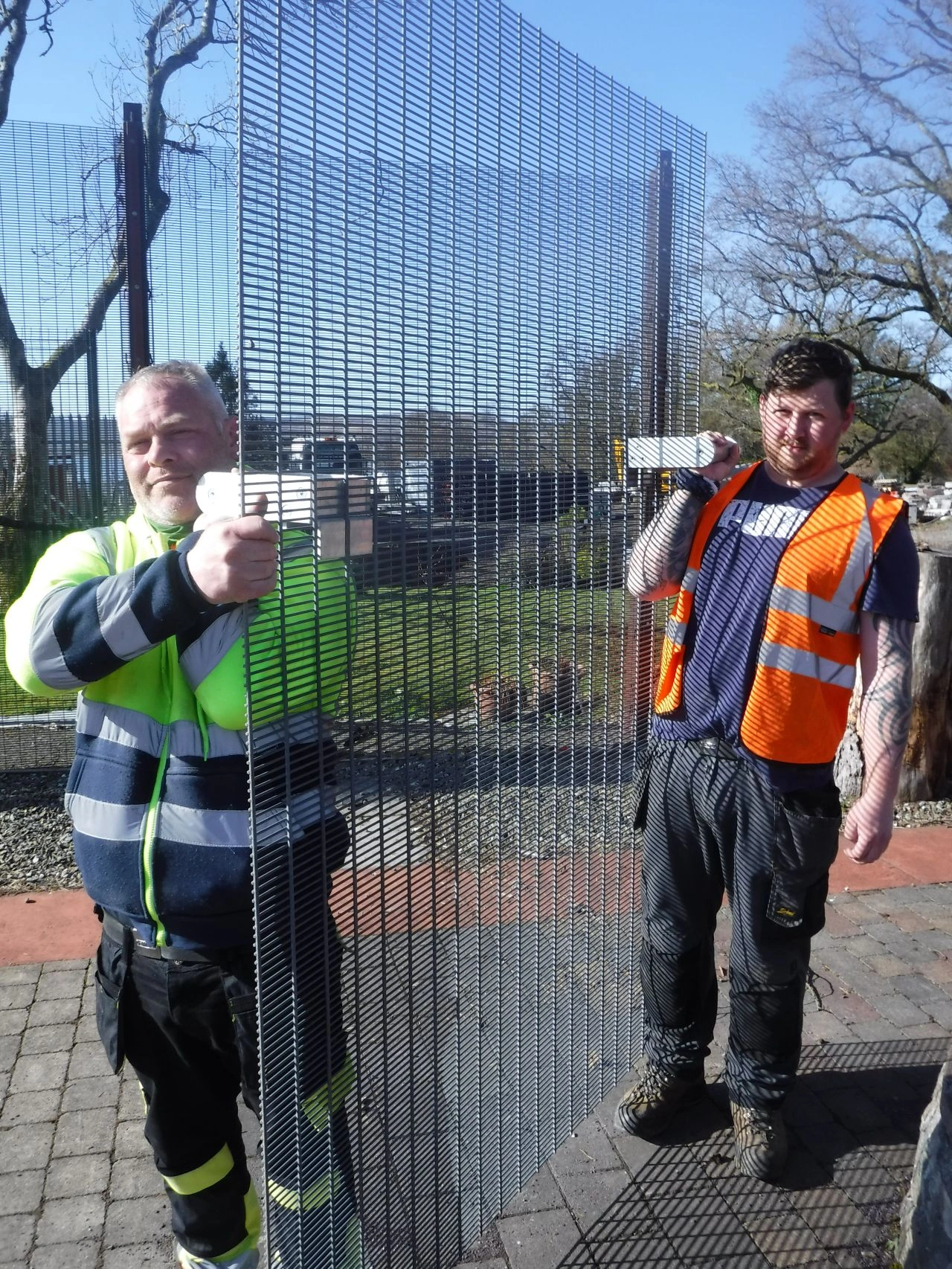
IBC 2018 Table 1607.1 specifies a minimum 50 lb/ft (73 kg/m) lateral load for portable crowd control barriers. For a standard 2.4m panel, that translates to a total system weight (panel + base) of roughly 40 kg to prevent tipping under crowd surge or wind. Most standard wire mesh panels weigh 12–15 kg alone, so you need a base that adds at least 25 kg. Plastic feet filled with sand or water can reach that, but many suppliers undersize the base—check the combined weight before ordering.
- Pedestrian barriers: Minimum 40 kg total weight per 2.4m panel. Single- or double-base plastic feet with sand or water meet this. Lighter units (under 30 kg) risk tipping in moderate wind (15 mph) or crowd movement.
- Vehicle-rated barriers: Crash-rated barriers (e.g., M30, H2) require 1,000–2,000 kg per linear meter of continuous barrier. Temporary concrete blocks or Hesco barriers are used—never lightweight plastic feet. For asphalt, use rubber mats under concrete blocks to prevent point loads from cracking the pavement.
- Insider warning: Water-filled barriers are common for pedestrian control but must be filled to 90%+ capacity. Partially filled units shift under lateral load, creating a false sense of security. Always weigh a sample on site before accepting delivery.

Removal and Cleanup
One rust stain on asphalt can trigger a $2,000 resurfacing penalty from the venue.
Asphalt staining during removal usually comes from one source: rusted steel bases. Standard carbon steel feet with a thin zinc coating — typically under 20 microns — start bleeding iron oxide within 48 hours of contact with moisture. That orange-brown stain bonds to the asphalt surface and requires chemical stripping or pressure washing to remove. The only way to guarantee zero staining is to use plastic feet or hot-dipped galvanized steel bases with a coating thickness above 42 microns. DB Fencing’s plastic feet are molded in-house from UV-stabilized polymer, which eliminates the metal-to-asphalt contact entirely. Even with galvanized steel, placing a rubber mat under each foot adds a second barrier and prevents the base from embedding into softened asphalt during summer heat.
Post-event surface crack inspection is a liability step that most coordinators skip. After a week-long festival, the combined weight of water-filled barriers (up to 65 kg per foot) and crowd loading can concentrate stress on asphalt that is already brittle from temperature cycles. Walk the entire perimeter and look for radial cracks radiating from foot positions, especially where concrete blocks were used instead of plastic feet. Concrete blocks have sharp edges and no give; they create point loads that fracture the asphalt surface. Plastic feet with rounded edges distribute pressure more evenly and leave no visible marks. Document any cracks with photos and timestamps before the event crew leaves the site — this protects you if the venue later claims pre-existing damage. The industry benchmark: if you see cracks longer than 2 inches extending from a base location, the installation method failed to protect the pavement.
- Inspection checklist: Check each foot position for rust transfer, surface cracks, and asphalt discoloration. Use a flashlight at low angle to highlight hairline cracks.
- Cleanup protocol: For any rust stains, apply a pH-neutral asphalt cleaner and soft-bristle brush within 4 hours of removal. Do not use wire brushes or solvents — they damage the sealer.

Case Example: 2000-Panel Music Festival Setup in Toronto
2000 panels on asphalt in 3 days — zero damage, zero complaints.
A Toronto event management company booked a three-day music festival on a municipal parking lot. The venue contract had two hard rules: no drilling into asphalt and no adhesive residue left behind. The buyer needed 2,000 temporary fence panels installed, used for crowd control, and removed cleanly within 72 hours.
They sourced the panels from DB Fencing — standard 2.0m x 3.0m wire mesh panels with hot-dipped galvanized coating (verified at >42 microns per AS 4687-2022). But the real challenge was the base system. Concrete blocks were out — too heavy to truck in bulk and they scar asphalt when dragged. Standard plastic feet alone risked scratching the surface under wind load.
- Base solution: Rubber mats (12mm recycled rubber, cut to fit under each plastic foot) were placed on every contact point. DB Fencing’s plastic feet have rounded bottom edges, which further reduced pressure points on the asphalt.
- Wind ballast: For exposed sections near the main stage, each panel received one water-filled barrier (40L capacity) strapped to the base. No concrete, no drilling — just water that drained at teardown.
- Installation crew: Eight workers installed all 2,000 panels in two days. Panels weigh roughly 12 kg each and ship flat-packed — a full container holds about 1,100 panels (FOB pricing applied). The crew used clamp connectors with rubber sleeves to avoid metal-on-metal scratching during assembly.
Post-event inspection found zero cracks, no adhesive residue, and only minor surface dust that washed off with a hose. The venue manager signed off without deductions. For the procurement coordinator who ran this job, the key takeaway was simple: match your base system to the surface before you order panels. Rubber mats under plastic feet cost roughly $0.80 per foot set — cheaper than any repair bill for resurfacing asphalt.
Conclusion
The difference between a clean installation and a costly repair bill comes down to three questions you ask your supplier before the panels arrive. Are the plastic feet designed with rounded edges to prevent pressure points on the asphalt? Do you have rubber mats sized to fit under each base to prevent scratching and heat-tack? Can you confirm the base weight meets the wind load requirements for that exposed parking lot?
Review the base options and specifications on the product page to compare non-damaging solutions for the next event.
Frequently Asked Questions
How to get a quote for Temporary Fence on Asphalt Parking Lots: Installation Without Damaging the Surface?
The exact answer depends on the product specification, quantity, and order setup. The safest approach is to confirm the commercial terms only after the final requirement sheet is locked. Final terms should be confirmed against the exact product specification and order conditions.
Can I request samples first?
The exact answer depends on the product specification, quantity, and order setup. The safest approach is to confirm the commercial terms only after the final requirement sheet is locked. Sample availability should be confirmed against the current stock and shipping plan.