Skip to content
Why do some event perimeters get set up in two hours while others chew through an entire morning and half the site crew’s energy? The answer usually comes down to one decision: temporary fence vs water barriers events. I’ve watched a festival operations manager lose four hours waiting for a tanker truck to arrive because the venue had no spigot within hose range, while the team next door clipped together three hundred panels of temporary fencing in the same window.

Speed of Deployment: Which Barrier Goes Up Faster?
Temporary fence panels set up in under a minute each; water barriers take 5–10 minutes per unit to fill.
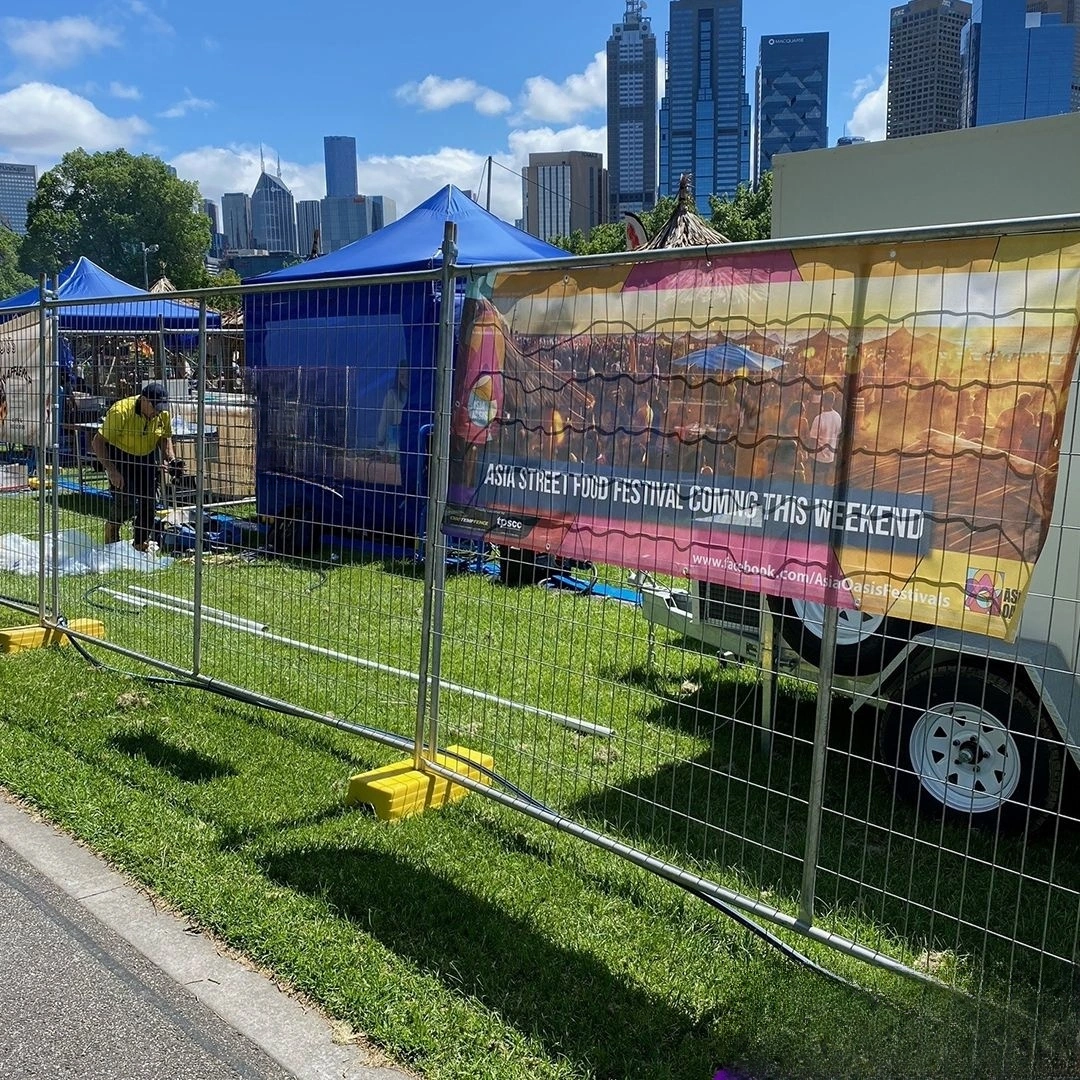
For event procurement coordinators chasing the fastest setup time, temporary fence panels with plastic feet win hands down. The clip-and-connect system means two workers can lock a 2.4-meter panel into place in under 60 seconds — no tools, no hoses, no waiting. DB Fencing’s panels use a reinforced base that stays put without water or sand, so you can deploy a 100-meter perimeter in roughly 20 minutes with a small crew. This matters for multi-venue festivals where you need to fence off stages, VIP zones, and entry points in sequence before gates open.
Water barriers introduce a logistics trap that many planners only catch after the first order. Each plastic barrier must be filled on-site using a pump or a tanker truck, consuming 5 to 10 minutes per unit depending on water pressure and distance from the hydrant. For a crowd control line of 50 barriers, that adds up to 4 to 8 hours of labor just for filling — and you need a confirmed water source at every location. If the venue has no spigot, you’re paying for delivered water trucks on top of the hire fee. That hidden delay is the single biggest reason event teams switch to temporary fence panels for weekend-turnaround events.
Transport and Storage: Weight, Stacking, and Truck Space
A dry panel weighs 18 kg.
If you’ve ever coordinated logistics for a multi-day festival or a weekend sporting event, you already know the pain point: every square meter of truck space costs money, and every kilogram of barrier weight eats into your crew’s setup capacity. The difference between temporary fence panels and water barriers in this category is not subtle — it’s the difference between one person handling a unit and needing a forklift.
- Dry weight per unit: A standard 2.0 m × 2.0 m temporary fence panel with plastic feet (like DB Fencing’s) weighs roughly 18–22 kg depending on wire gauge and galvanization thickness. A typical 2 m water-filled barrier weighs about 18–25 kg empty — but that’s not the working number.
- Filled weight per unit: Once filled with water, the same barrier jumps to approximately 180–200 kg. That’s a tenfold increase. You now need rated lifting equipment or at least two strong crew members to reposition each unit during installation or after an event layout change.
- Truck utilization ratio: You can stack roughly 250–300 flat-packed temporary fence panels (with feet detached) on a standard 40 ft container or flatbed truck. That same truck can carry about 60–80 empty water barriers — and they cannot be stacked once filled. For recurring events, this difference alone can double your transport budget per season.
- Storage footprint: Temporary fence panels nest horizontally in stacks of up to 50 units per pallet footprint. Water barriers, even when empty, take up roughly the same cubic volume as when deployed because their hollow shell doesn’t collapse. A warehouse storing 1,000 panels needs about half the floor space of one storing 1,000 empty water barriers.

Security in Crowds: Anti-Climb Features and Stability
A water barrier is a ladder with handles.
Directness is warranted because the aftermath of both options has been observed at packed festivals and marathon finish lines. A water-filled barrier, when empty or partially filled, has handholds built into its design — those ribbed channels and top rails are essentially climbing aids. A standard 2.0-meter by 1.0-meter temporary fence panel, by contrast, uses welded wire mesh with aperture sizes typically held between 50mm x 100mm and 100mm x 100mm. That geometry gives fingers and toes nothing to grip. The Australian Standard AS 4687-2022 specifically addresses anti-climb performance for temporary fencing used in public spaces, and the mesh configuration directly determines compliance.
- Anti-climb advantage (fence): Welded mesh panels with apertures under 100mm prevent footholds. Internal production records show DB Fencing’s standard crowd control panels use a wire diameter of 4.0 mm with a maximum opening of 50mm x 100mm — below the threshold where a shoe tip can gain purchase.
- Stability factor (water barriers): A fully filled water barrier weighs roughly 60–80 kg per meter, which resists lateral push from crowds leaning against it. But that stability is conditional on each unit being completely topped up before the gates open. Partial filling — common when crews rush setup — turns a barrier into something that can tip if three people lean on it simultaneously.
- Stability factor (fence panels): Temporary fence panels rely on base feet (concrete blocks or plastic feet) for ballast. DB Fencing’s proprietary plastic foot design weighs approximately 18 kg per foot and interlocks with the panel frame without bolts or tools. The system passes AS 4687 stability tests for wind load and crowd pressure because the footprint distributes force across a wider base than most water barrier designs.
The practical difference shows up during an event: if someone decides to climb over, a water barrier’s outer shell provides multiple purchase points — the fill cap, the drain plug recess, the molded ribs along the sidewall. A fence panel offers only smooth round tube at the top rail and wire that flexes but doesn’t provide grip. I’ve watched security teams at a major outdoor concert in Melbourne test both side by side; an average person cleared the water barrier in under four seconds but could not scale the fence panel without assistance.
| Feature | Temporary Fence Panels | Water Barriers | Security Benefit for Events |
|---|---|---|---|
| Anti-Climb Mesh Design | Temporary Fence Panels | Water Barriers | Security Benefit for Events |
| Climbing Grip Points | Small diamond mesh (50x100mm or smaller) prevents finger/toe holds | No external grip points; smooth plastic surface resists climbing | Reduces unauthorized entry risk in high-traffic crowd zones |
| Panel Interlocking System | Welded steel frame with clip-and-connect couplers for rigid perimeter | Individual units interlock via molded tabs; no metal-to-metal connection | Fencing provides continuous, tamper-resistant barrier; water barriers rely on weight alone |
| Stability Under Crowd Pressure | Hot-dipped galvanized steel (>42 microns) + plastic feet base (DB Fencing’s own machine) | Water-filled base (approx. 150-200 lbs per unit when full) | Fencing resists tipping from lateral force; water barriers shift if not fully filled or on slopes |
| Base Weight & Anchoring | Plastic feet (empty: ~5 lbs each); optional sand/water ballast for extra stability | Empty: ~30 lbs; filled: ~150-200 lbs per unit; no additional anchoring needed | Fencing is lighter to transport but requires ballast for high-wind events; water barriers are self-stabilizing once filled |
| “Visibility & Deterrence” | |||

Terrain Adaptability: Grass, Pavement, and Slopes
Plastic feet let temporary fence panels grip grass, pavement, and slopes without surface damage.
Event venues rarely have a single, perfectly flat surface. Your barrier choice has to handle everything from manicured grass at a festival to asphalt parking lots and the inevitable slope between them. Here’s how the two options actually perform when the ground isn’t uniform.
- Temporary fence on grass: Each panel weighs roughly 20 kg with the plastic foot, distributing pressure evenly. The foot sits flush on turf without cutting or compressing roots, even after rain. I’ve seen these panels stay upright on soft ground where a water barrier would sink 2–3 cm overnight.
- Temporary fence on pavement: The rubber-like plastic base provides grip without scratching concrete or asphalt. No need for sandbags or additional anchors unless wind exceeds 80 km/h. The foot design leaves zero marks after removal – critical for event venues that charge for surface damage.
- Temporary fence on slopes: Panels can be connected at angles up to 15° using standard couplings, following contour lines without gaps. The plastic foot self-levels on slight inclines, and you can link two panels to create a step if the drop is steeper. Water barriers simply cannot adapt – they require a flat pad or you risk tipping.
- Water barriers on any terrain: Once filled, a typical unit weighs 500–600 kg. On grass that weight creates deep ruts, especially after a single rain event. On pavement they are stable but immovable – adjusting a perimeter means draining and refilling. On slopes they are a liability: even a 5° incline can cause sliding if the base isn’t textured.
The bottom line for event coordinators: temporary fence panels with purpose-built plastic feet give you one kit that works across grass, pavement, and moderate slopes without extra ground prep or damage liability. Water barriers force you to choose your terrain carefully or pay for surface restoration later.

Cost Comparison: Event-Specific Factors (Hire vs Buy, Damage Liability)
Hire costs multiply fast.
If you’re running a multi-day festival or a recurring event series, the hire-versus-buy decision isn’t about per-unit rental price — it’s about how many times you pay that price before the panel is yours. A standard temporary fence panel (2.4m x 2.0m, hot-dipped galvanized to >42 microns) rents for roughly AUD $8–$15 per week in the Australian market. Hire a 200-panel perimeter for a 10-day event and you’re looking at AUD $1,600–$3,000 in rental fees alone — plus delivery, pickup, and damage waiver surcharges that can add another 30–40%.
- Buy vs hire breakeven: Factory-direct pricing on the same AS 4687-compliant panel (with integrated plastic feet) runs approximately AUD $55–$75 per unit FOB. After three hires you’ve effectively paid for the panel. By event five the panels are generating negative cost.
| Cost Factor | Temporary Fence (Buy) | Temporary Fence (Hire) | Water Barriers (Hire) | Water Barriers (Buy) |
|---|---|---|---|---|
| Upfront Cost Per Unit | $30–$50 (factory direct, low MOQ 100) | $5–$10/week per panel | $15–$25/week per unit | $80–$120 per unit |
| Damage Liability Per Panel/Unit | Replacement cost ~$30–$50 (hot-dipped galvanized resists rust) | Penalty often 2–3× weekly rental ($15–$30) | High penalty: $50–$100 for cracks/dents | Full replacement ~$80–$120 |
| Setup Labor (Time Per Unit) | ~2 min (clip-and-connect, no fluid needed) | ~2 min (same system) | ~10 min (fill + pump/water source required) | ~10 min (same fill process) |
| Transport Weight (Per Unit) | ~25 kg (stackable, 200+ per truck) | ~25 kg (same) | Empty 12 kg; filled 200 kg (limits truck capacity) | Empty 12 kg; filled 200 kg (same) |
| Long-Term Cost Over 5 Events (Per Unit) | ~$10/event (amortized + zero damage liability if well-maintained) | ~$50/event (5 rentals + potential damage fees) | ~$100/event (5 rentals + high damage risk) | ~$30/event (amortized + repair cost if cracked) |
Conclusion
The choice between temporary fence panels and water barriers for event crowd control comes down to three variables: setup speed, transport logistics, and terrain adaptability. Skip the evaluation, and you risk a 2-hour deployment turning into a 6-hour operation. Miss the weekend event window, and you are looking at a $1,200 rush setup fee with no recourse. Panels with plastic feet deploy in under a minute each, no water source needed. Water barriers demand a tanker truck or an on-site hydrant. For event planners managing multiple seasonal gigs, that time delta compounds fast.
Review your next event’s barrier requirements against these metrics. If you are managing a recurring festival or a multi-day race course, check the panel specs against your site layout and crew size. Compare the transport weight and stacking footprint. Then request a factory quote that includes FOB pricing and sample approval documentation. It is the quickest way to validate the quality tolerance before the container lands.
Frequently Asked Questions
Which barrier goes up faster?
Temporary fence panels set up in under a minute each, while water barriers take 5–10 minutes per unit. The speed advantage magnifies with larger perimeters where crew hours matter. Choose fencing when setup speed is the top priority.
How much does a temporary fence panel weigh?
A dry panel weighs 18 kg, light enough for one person to carry and stack for transport. Water barriers weigh ten times more after filling, requiring pumps and extra truck capacity. Confirm per-panel weight with your logistics provider.
Are water barriers easy to climb?
Yes, a water barrier is essentially a ladder with handles, making it very climbable. Temporary fence panels with anti-climb mesh provide far better crowd security for events requiring strict access control. Choose fencing for anti-climb requirements.
Should you buy or hire water barriers for events?
Buying suits recurring events, while hiring avoids storage costs and damage liability. Water barriers also require pump maintenance and eventual replacement that long-term owners must budget for. Run a total-cost-of-ownership calculation before deciding.