Skip to content
If you are sourcing barriers for a major event and the supplier’s cut sheet only lists dimensions, you are missing the data that actually matters. That is the problem with most military hesco barrier specifications you will find online — they tell you the height and width but skip the wire gauge, the coating weight, and the liner stabilizer that determine whether your perimeter wall lasts one season or five. As a procurement coordinator, your real question is not whether a barrier looks like a Hesco; it is whether the steel and fabric underneath match the MIL-DTL-32488 baseline that gives you confidence under load and inspection.
Here is the specific insight you need: HESCO’s own spec sheets omit wire diameter and zinc coating thickness entirely. That is not an oversight — it is a deliberate omission that forces you to request those numbers directly from any supplier claiming equivalence. The military standard calls for 4mm wire (12 American SWG) with a zinc-aluminium coating, and a UV-stabilized geotextile liner at a minimum of 250g/m². Without those three data points, you are buying on faith, not engineering. And when your barrier needs to hold back a crowd or a flood, faith is not a spec.
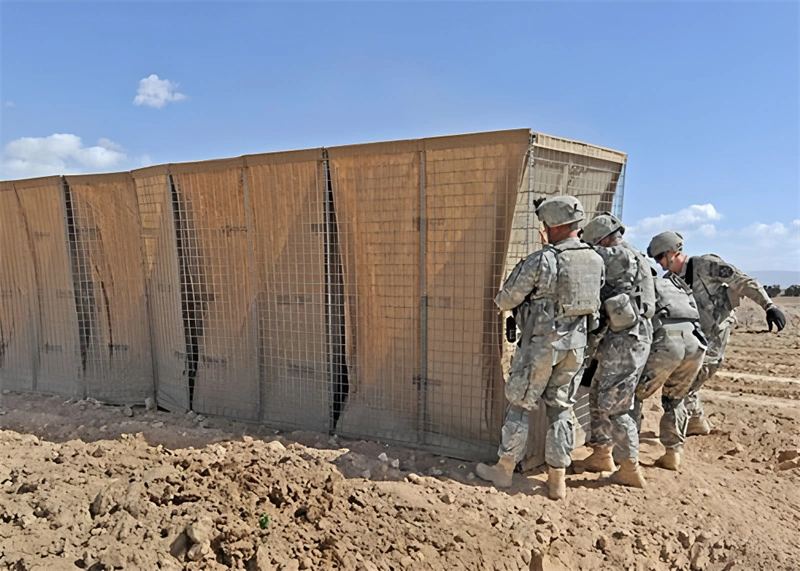
Hesco Barrier Size Guide: 13 Standard Options
The MIL-DTL-32488 spec mandates 4mm wire. If a supplier can’t show you a gauge report, walk. That’s your baseline.
You’re here because you need to benchmark a “real” military Hesco barrier before you commit to a supplier. The core spec is defined by MIL-DTL-32488, but the procurement reality is that most cut sheets only show dimensions. You need to know what to demand in writing.
Start with the wire. The military standard requires 12 American SWG, which is exactly 4mm in diameter, with a mesh spacing of 3 inches by 3 inches. Any deviation from this—thinner wire or wider spacing—means the unit will not meet the structural load requirements for blast or crowd containment. You need to explicitly request the wire diameter and zinc coating weight (g/m²) to avoid thin-wire imports that fail in 2 years.
The coating is where most budget copies cut corners. MIL-DTL-32488 specifies a zinc-aluminium coating, not plain galvanized. For civilian equivalents, you want hot-dip galvanized (HDG) with a coating thickness greater than 42 microns per ASTM A653. If a supplier quotes a “military-like” barrier without this coating spec, the steel will corrode in coastal or wet environments within 24 months.
The geotextile liner is another hidden risk. Military MIL units use UV-stabilized, non-woven polypropylene fabric, typically at 250g/m². Many budget civilian units skip the UV stabilizer to save roughly $0.50 per unit, which causes liner embrittlement within 18 months of sun exposure. Always request the liner weight spec and ask if it includes UV stabilization. For event perimeters exposed to direct sunlight, a 350g/m² liner is the safer choice.
-
- Wire gauge: 12 American SWG / 4mm per MIL-DTL-32488 test specification.
- Coating: Zinc-aluminium per MIL-DTL-32488; civilian equivalent HDG >42 microns per ASTM A653.
- Geotextile: Non-woven polypropylene, UV-stabilized, typical weight 250g/m².
- Fill material: Sand/gravel mix recommended; no pure clay or organic soil.
- Connections: Zinc-aluminium coated steel spirals connecting adjacent units.
The height-to-width ratio is a hard structural limit: wall height must never exceed 2 times the base width. Even a single-tier barrier built to this 2:1 ratio can tip if fill material is too loose. A competitor test unit using a 3.5ft base with 7ft height required a nominal unfilled height of 6 inches to maintain stability—a detail no supplier mentions. You need to factor this into your deployment plan for high-traffic event zones.
| Feature | Specification | Notes |
|---|---|---|
| Standard Sizes (MIL) | 13 options: 24″ to 108″ height (MIL1 to MIL19) | Height-to-width ratio ≤ 2:1 |
| Wire Gauge & Mesh | 4mm (12 SWG) per MIL-DTL-32488 | Mesh spacing 3″ x 3″, zinc-aluminium coated |
| Coating (Military vs Civilian) | Zinc-aluminium per MIL-DTL-32488; civilian HDG >42 µm per ASTM A653 | Request coating weight (g/m²) from suppliers |
| Geotextile Liner | Non-woven polypropylene, UV-stabilized | Weight options: 200, 250, 300, 350 g/m² |
| Fill Material | Sand/gravel mix recommended | Avoid pure clay/organic soil to prevent settling |
| Price (Civilian Equivalent) | $9.50 to $29 per unit (MOQ 100 panels) | Factory-direct from DB Fencing (Anping, China) |
| Certifications & Compliance | ISO 9001, SGS, AS 4687-2022 | Request wire diameter, coating, and liner test reports |
| Available Sizes (DB Fencing) | 1m cube, MIL1 equiv. (1.37m×1.06m×10m), MIL7 equiv. (2.21m×2.13m×27.74m) | Foldable flat-pack, zinc-plated spring connectors |
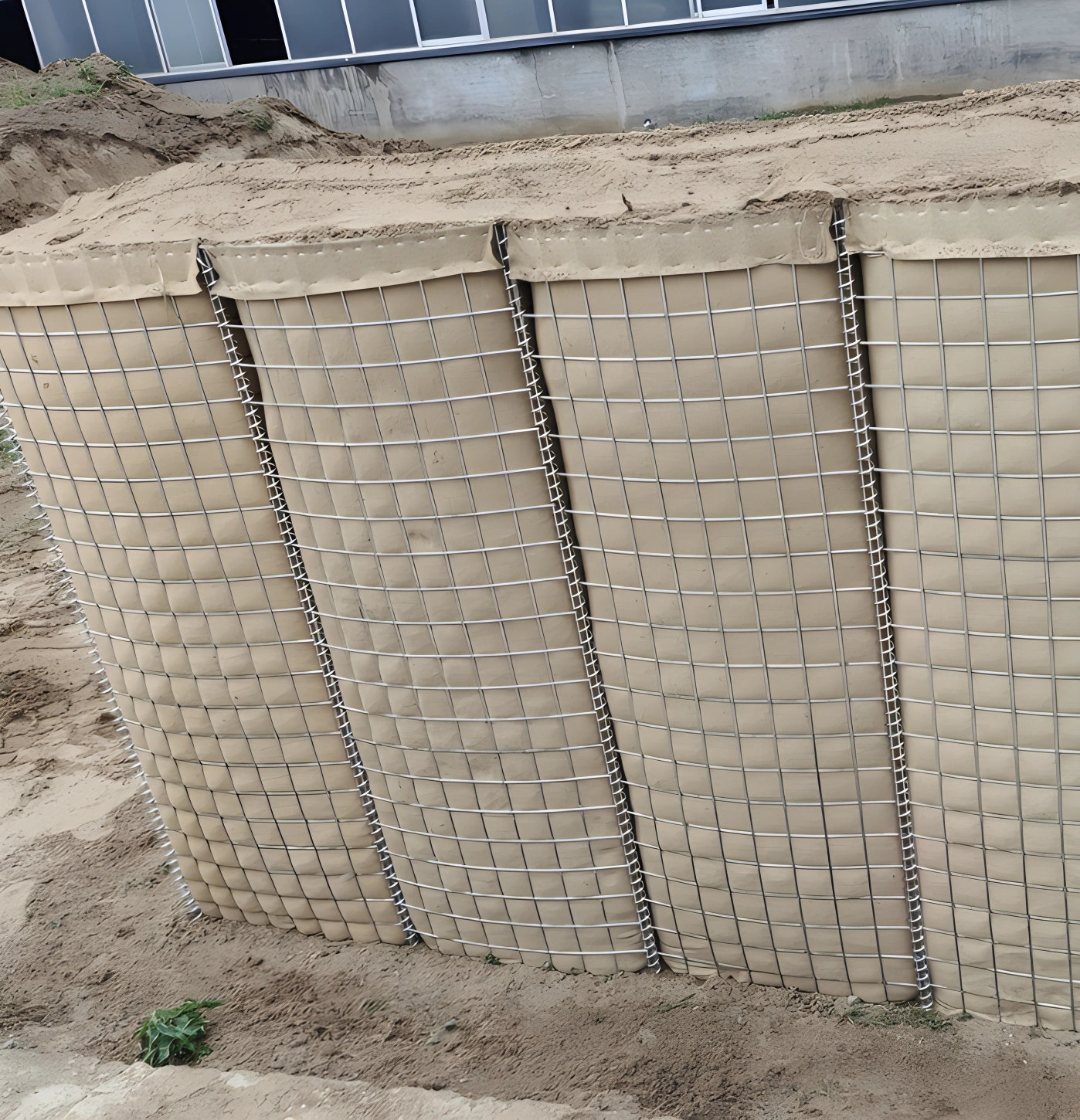
Military vs. Civilian Hesco Barriers: Material & Coating Differences
The military spec requires a zinc-aluminium coating per MIL-DTL-32488. Most civilian “equivalents” use standard hot-dip galvanizing. If you don’t ask for the coating weight in g/m², you’re buying blind.
The gap between a genuine MIL-spec barrier and a civilian copy isn’t the ballistic fabric — it’s the metallurgy and the liner chemistry. HESCO’s own spec sheet for the MIL line omits wire gauge and coating thickness entirely. You need to demand those numbers.
Here is what the MIL-DTL-32488 standard actually requires for the wire mesh:
-
- Wire diameter: 4mm (12 American SWG). No thinner.
- Mesh spacing: 3″ x 3″.
- Coating: Zinc-aluminium alloy per MIL-DTL-32488. Not plain zinc.
For civilian use, the acceptable equivalent is hot-dip galvanized steel with a coating thickness greater than 42 microns, verified per ASTM A653. A supplier who cannot provide a coating weight test report (g/m²) is a red flag. Thin-wire imports using 3.2mm or 3.5mm wire will corrode through in coastal environments within two years.
The second hidden risk is the geotextile liner. Military MIL units use UV-stabilized non-woven polypropylene, typically 250g/m². Many budget civilian suppliers skip the UV stabilizer to save roughly $0.50 per unit. That liner will become brittle and tear within 18 months of direct sun exposure. You need to request the hesco barrier geotextile liner weight and confirm UV stabilization in writing.
ITAR restrictions only apply to armor-coated liners with ballistic fabric. Standard geotextile liners are export-free. If a supplier tells you their “military-grade” barrier is ITAR-restricted, ask them to specify exactly which component triggers that restriction — nine times out of ten, they are using the term incorrectly to justify a higher price.
| Feature | Specification | Standard | Weight Options | MOQ | Civilian Equivalent |
|---|---|---|---|---|---|
| Wire Diameter | 4mm (12 SWG) | MIL-DTL-32488 | |||
| Mesh Opening | 3″ x 3″ (76mm x 76mm) | MIL-DTL-32488 | |||
| Coating Type | Zinc-Aluminium (MIL) / HDG >42µm (Civilian) | MIL-DTL-32488 / ASTM A653 | |||
| Geotextile Liner | Non-woven Polypropylene, UV-stabilized | 200g/m², 250g/m², 300g/m², 350g/m² | |||
| Height-to-Width Ratio | Wall Height ≤ 2x Base Width | Structural Stability | |||
| Fill Material | Sand/Gravel Mix (No pure clay/organic soil) | MIL-DTL-32488 | |||
| Connectors | Zinc-Aluminium Coated Steel Spirals | MIL-DTL-32488 | |||
| Price Range (Civilian) | $9.50 – $29 per unit | 100 panels | |||
| Certifications | ISO 9001, SGS, AS 4687-2022 | Quality Management | |||
| Standard Sizes | 13 MIL sizes (24″ to 108″ height) | 1m x 1m x 1m cube, MIL1, MIL7 |

Height-to-Width Ratio: Why 2:1 is the Hard Limit
Hesco MIL barriers are zinc-aluminium coated welded wire mesh containers with a non-woven polypropylene liner, available in 13 standard sizes from 24″ to 108″ in height. The height-to-width ratio never exceeds 2:1. Civilian equivalents cost $9.50–$29 per unit.
You’re responsible for barrier procurement at large public events. You need to know exactly what a military-spec Hesco barrier is, how it differs from civilian versions, and what to demand from suppliers. This guide gives you the spec sheet behind the spec sheet — the data points most cut sheets omit.
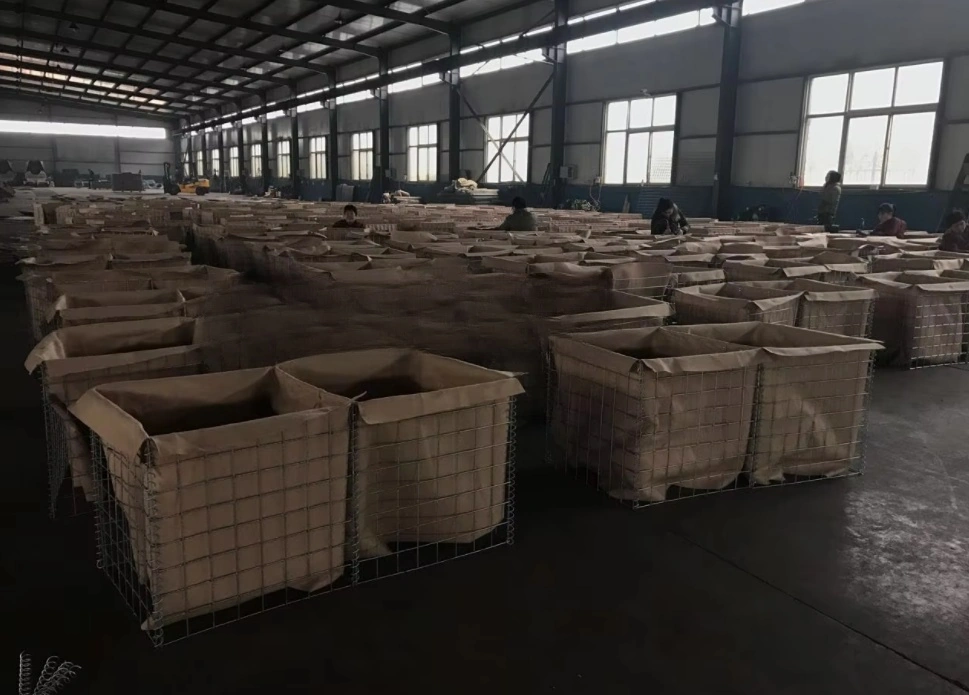
Hesco Barrier Size Guide: 13 Standard Options
The military MIL series includes 13 standard sizes (MIL1 through MIL19, with some gaps). Each has a fixed height, width, and length. The critical rule: wall height must never exceed 2 times base width. Here are the key dimensions in inches and meters:
-
-
- MIL1: 54″ high x 42″ wide x 10.5′ long (1.37m x 1.06m x 3.2m) — ratio 1.29
- MIL2: 24″ x 24″ x 4′ (0.61m x 0.61m x 1.22m) — ratio 1.0
- MIL7: 87″ x 84″ x 27.74′ (2.21m x 2.13m x 8.45m) — ratio 1.04
- MIL19: 108″ x 42″ x 10.42′ (2.74m x 1.07m x 3.18m) — ratio 2.57
-
Event procurement needs to match barrier size to crowd density and available fill material. A 7‑ft tall barrier for a music festival is overkill and a logistics nightmare. For most civilian perimeters, a 1m x 1m x 1m cube (similar to MIL2) is sufficient. Refer to the Hesco Barrier Installation Guide for Flood Control for stacking rules.
Military vs. Civilian Hesco Barriers: Material & Coating Differences
The military spec (MIL‑DTL‑32488) requires zinc‑aluminium coating, 4mm wire (12 SWG), and 3″ x 3″ mesh spacing. Civilian equivalents typically use hot‑dip galvanized steel with HDG >42 microns per ASTM A653. The geotextile liner is UV‑stabilized in MIL units; many budget civilian liners omit UV stabilizers to save $0.50/unit, causing embrittlement within 18 months of sun exposure.
You must explicitly request the wire diameter (minimum 4mm) and zinc coating weight (g/m²) from any supplier. HESCO’s own spec sheet omits these numbers. Thin‑wire imports (3.5mm or less) corrode in 2 years in coastal environments. ITAR restrictions apply only to armor‑coated liners — standard geotextile is export‑free, so civilian buyers can legally procure certified equivalents.
Height‑to‑Width Ratio: Why 2:1 is the Hard Limit
Structural physics: a 1m wide base supports a maximum 2m wall. Ratios below 1.5 are safer for blast or water pressure. For example, MIL1 (54″H × 42″W) gives a ratio of 1.29; MIL7 (87″H × 84″W) gives 1.04. Even a single‑tier barrier built to 2:1 can tip if fill material is too loose — pure sand without gravel will settle and create voids. A competitor test showed a 3.5ft x 3.5ft base with 7ft height (ratio 2.0) required a nominal unfilled height of 6 inches to maintain stability. Always demand the unfilled height spec from your supplier.
Fill Material & Geotextile Liner Specs
Fill must be a sand/gravel mix — never pure clay or organic soil. Clay settles unevenly; organic matter rots and compacts. The liner weight must match use: 200g/m² for light flood control, 350g/m² for permanent blast barriers. Typical military grade uses 250g/m² non‑woven polypropylene. ASTM D4533 measures tear resistance — request this test report. Pin connections are zinc‑aluminium coated steel spirals connecting adjacent units.
Compliance, Certification & Import Rules
Civilian buyers should check ISO 9001 certification. Avoid sellers promising “ITAR‑free military lines” — that’s a red flag. Require a checklist:
-
- Wire diameter gauge report (min 4mm / 12 SWG)
- Geotextile weight spec (200‑350g/m², UV‑stabilized)
- Zinc coating thickness test per ASTM A653 (>42 microns)
- 2‑year corrosion/tear warranty
Link to our Bulk Hesco Barrier Supplier Checklist for detailed vetting.
FAQ: Military Hesco Barrier Specifications
Can civilians buy HESCO barriers?
Yes. Civilians can legally purchase civilian‑grade Hesco barriers (often called JOESCO barriers) without government contracts. Military MIL units with ballistic fabric may require DOD authorization. Always verify the seller does not use ITAR‑restricted components.
What are the different types of HESCO barriers?
Main types: MIL (original earth‑filled), MIL Recoverable, MIL Flex (arc shape), RAID (roof‑mounted), SANGARS (helo‑transportable), HAB (horizontal airbag blast barrier), Floodline, Guard Post, TerrabLock, and Armor. Civilian equivalents often skip ballistic fabric.
How much do HESCO barriers cost?
A single civilian Hesco barrier set ranges from $9.50 to $29 per unit, depending on size, coating, and liner quality. Military MIL units through government contracts can cost 3‑5x more due to MIL‑DTL‑32488 certification.
What are the dimensions of a Hesco barrier?
Standard MIL sizes range from 24″ H x 24″ W x 4′ L (MIL2) to 108″ H x 42″ W x 10’5″ L (MIL19). Civilian variants also offer 1m cubes and 1.5m x 1m x 3m units. Full size chart available in the size guide section above.
How long do Hesco barriers last?
With proper installation and maintenance (replacing torn liners, refilling settled fill), a hot‑dip galvanized civilian barrier can last 5–10 years outdoors. Zinc‑aluminium coated military versions may last 12–15 years. UV‑degradation of the liner is the primary failure mode — always request UV‑stabilized fabric.
Military Hesco Barrier Specs & Civilian Use Cases
Browse our product page to explore civilian Hesco-equivalent barriers with verified specs — factory-direct pricing, ISO 9001 certified.
Learn More ->Fill Material & Geotextile Liner Specs
Fill must be a sand/gravel mix (65/35 nominal) – never pure clay or organic soil. Clay settles unevenly, creating voids that compromise wall integrity. Gravel provides drainage and locks the mass.
-
- Geotextile weight options: 200 g/m² (light flood control), 250 g/m² (standard event), 300–350 g/m² (permanent blast barriers)
- Liner tear resistance: Measured per ASTM D4533 – request this test report before purchase
- UV stabilizer: Mandatory for any outdoor use lasting >6 months – confirm with supplier
- Test data point: A 3.5 ft × 3.5 ft × 7 ft competitor unit used 12‑gauge wire, 3″ mesh, and 250 g/m² liner – required a 6‑inch unfilled height at the top to maintain stability. No supplier mentions that margin.
Without UV stabilizer, the liner becomes brittle in 18 months. For event barriers that are deployed, stored, and redeployed, specify UV‑stabilized fabric or plan to replace liners every 2 years.
| Feature | Specification | Benefit |
|---|---|---|
| Standard | MIL-DTL-32488 | Ensures military-grade quality and performance |
| Wire Gauge | 4mm (12 SWG) | Provides structural integrity and load-bearing capacity |
| Mesh Spacing | 3″ x 3″ | Prevents fill material leakage and maintains shape |
| Coating | Zinc-Aluminium (MIL) / HDG >42µm (Civilian) | Corrosion resistance for 5-15 year lifespan |
| Geotextile Liner | Non-woven PP, UV-stabilized, 200-350g/m² | Prevents UV degradation and liner tear failure |
| Height-to-Width Ratio | ≤ 2:1 | Prevents tipping under load or water pressure |
| Standard Sizes | 13 MIL sizes (24″ to 108″ height) | Flexible deployment for various perimeter heights |
| Fill Material | Sand/gravel mix (no pure clay or organic soil) | Prevents settling and maintains barrier stability |
| Connectors | Zinc-aluminium coated steel spirals | Secure unit-to-unit connection for continuous walls |
| Civilian Price | $9.50 – $29 per unit (MOQ 100 panels) | Cost-effective alternative to government-contract barriers |
Compliance, Certification & Import Rules
You’re here because you need to benchmark a real Hesco barrier before evaluating suppliers. Below is the exact spec data, dimensional logic, and material standards that separate a MIL‑spec unit from a civilian copy. No fluff.
Direct Answer: Hesco MIL barriers are zinc‑aluminium coated welded wire mesh containers with a non‑woven polypropylene liner. They come in 13 standard sizes from 24″ to 108″ height, with a height‑to‑width ratio never exceeding 2:1.
Cost Insight: Civilian equivalents using hot‑dip galvanized steel and UV‑stabilized liners start at $9.50 per unit (MOQ 100). That makes them viable for events, flood control, and security perimeters without a government contract.
Engineering Gap: Military spec demands 4 mm wire, 3″ × 3″ mesh, and a zinc‑aluminium coating. Many budget copies use thinner wire or skip UV stabilizer — causing liner embrittlement within 18 months. You need to ask for the wire diameter and coating weight.
Hesco barriers are classified by MIL numbers (MIL1 through MIL19). The height ranges from 24 inches (0.6 m) to 108 inches (2.74 m). Every MIL unit follows the critical rule: wall height ≤ 2 × base width. For example, MIL1 is 54″ high and 42″ wide (ratio 1.29); MIL7 is 87″ high and 84″ wide (ratio 1.04).
If you’re procuring for a civilian application, you don’t need all 13 MIL sizes. Standard civilian Hesco‑equivalent barriers come in:
-
-
- 1 m × 1 m × 1 m cube — ideal for crowd control at festivals (can be stacked to 2 m height with two tiers).
- 1.37 m × 1.06 m × 10 m unit — civilian equivalent of MIL1, suited for linear security perimeters.
- 2.21 m × 2.13 m × 27.74 m unit — equivalent to MIL7, used for large‑scale flood protection or blast walls.
-
This size guide matters because event procurement must match barrier dimensions to crowd density and available fill material. A 7‑ft‑tall barrier for a music festival is overkill and a logistics nightmare. Stick to 1 m‑high cubes for temporary perimeters unless you face vehicle‑borne threats.
The military specification (MIL‑DTL‑32488) requires a zinc‑aluminium coating — not plain galvanized — and a minimum wire diameter of 4 mm (12 American SWG). The mesh spacing is always 3″ × 3″. The geotextile liner must be UV‑stabilized, non‑woven polypropylene, typically 250 g/m².
Civilian equivalents often use hot‑dip galvanized steel with coating thickness >42 microns per ASTM A653. That’s acceptable for most outdoor uses (5‑10 year lifespan) but inferior to the zinc‑aluminium blend used in MIL units (12‑15 year lifespan). The hidden risk: many budget suppliers skip UV stabilizer in the liner to save ~$0.50 per unit. After 18 months of sun exposure, that liner becomes brittle and tears under load. Always request a UV‑stabilized geotextile specification, not just “non‑woven polypropylene.”
ITAR restrictions only apply to ballistic‑fabric liners used in military armor variants. Standard geotextile liners are export‑free. So civilians can legally buy 99% of what’s offered as “military‑style” Hesco barriers, as long as the seller doesn’t claim ITAR‑controlled components.
The 2:1 ratio isn’t a suggestion — it’s a structural limit. A 1‑meter‑wide base supports a maximum 2‑meter wall height. Exceed that and the barrier can tip under wind, water pressure, or crowd impact. For example, MIL1 (54″H × 42″W) works at 1.29 ratio; MIL7 (87″H × 84″W) is 1.04. Even a single‑tier barrier built at exactly 2:1 can tip if fill material is too loose — pure sand without gravel creates voids that shift weight.
For step‑by‑step stacking and pinning instructions, refer to the Hesco Barrier Installation Guide for Flood Control.
Fill material must be a sand/gravel mix — never pure clay or organic soil, which settles and creates voids. The geotextile liner weight should match the application: 200 g/m² for light flood control, 350 g/m² for permanent blast barriers. A competitor’s test unit used 3.5 ft × 3.5 ft base with 7 ft height, 12‑gauge wire, 3″ mesh, and 250 g/m² liner. That unit also required a nominal unfilled height of 6 inches to prevent tipping — a detail most suppliers omit.
Liner tear resistance should be verified via ASTM D4533. If your supplier can’t provide that test report, consider it a red flag. The industry standard for civilian grade is 250 g/m² UV‑stabilized polypropylene, double‑coated for extra puncture resistance.
Civilian buyers should always verify ISO 9001 certification. Avoid any seller claiming “ITAR‑free military lines” — that phrase is a contradiction and a marketing trap. Instead, request these four documents before placing an order:
-
- Wire diameter gauge report (minimum 4 mm / 12 SWG).
- Geotextile weight and UV‑stabilization certificate.
- Zinc coating thickness test (≥42 microns per ASTM A653).
- A 2‑year corrosion/tear warranty on both wire and liner.
For a deeper dive into supplier red flags, see the Bulk Hesco Barrier Supplier Checklist: 10 Red Flags.
Q: Can civilians buy HESCO barriers?
A: Yes. Civilian‑grade Hesco barriers (often called JOESCO barriers) are legally available without government contracts. Military‑grade MIL units with ballistic fabric may require DOD authorization. Always verify the seller does not use ITAR‑restricted components.
Q: What are the different types of HESCO barriers?
A: Main types include MIL (original earth‑filled), MIL Recoverable, MIL Flex (arc shape), RAID (roof‑mounted), SANGARS (helo‑transportable), HAB (horizontal airbag blast barrier), Floodline, Guard Post, TerrabLock, and Armor. Civilian equivalents typically skip the ballistic fabric but retain the structural mesh and liner.
Q: How much do HESCO barriers cost?
A: A single civilian Hesco barrier set ranges from $9.50 to $29 per unit, depending on size, coating, and liner quality. Military MIL units through government contracts can cost 3–5× more due to MIL‑DTL‑32488 certification.
Q: What are the dimensions of a Hesco barrier?
A: Standard MIL sizes range from 24″H × 24″W × 4′L (MIL2) to 108″H × 42″W × 10′5″L (MIL19). Civilian variants also offer 1 m cubes and 1.5 m × 1 m × 3 m units. The full size chart is available in the size guide section above.
Q: How long do Hesco barriers last?
A: With proper installation and regular maintenance (replacing torn liners, refilling settled fill), a hot‑dip galvanized civilian barrier can last 5–10 years in outdoor use. Zinc‑aluminium coated military versions may last 12–15 years. UV‑degradation of the liner is the primary failure mode — always request UV‑stabilized fabric.
Military Hesco Barrier Specs & Civilian Use Cases
Browse this product, solution, or service page to explore relevant offerings.
Conclusion
Military Hesco barrier specifications are defined by a strict set of engineering standards—4mm wire gauge, a 2:1 height-to-width ratio, and UV-stabilized geotextile liners—that ensure structural integrity and compliance. For event procurement coordinators, the critical distinction is not between military and civilian labels, but between suppliers who can document these specs and those who cannot. A barrier that fails a load test or a municipal inspection is not a cost-saving measure; it is a liability.
Now that you have the definitive spec benchmarks, compare your current supplier quotes against the data points in this guide. If a vendor cannot provide a wire diameter report or a geotextile weight certificate, you have your shortlist answer. Review our civilian Hesco-equivalent barriers with verified MIL-compliant specs and factory-direct pricing to see how certified materials fit your budget and deployment timeline.
Frequently Asked Questions
Can civilians buy HESCO barriers?
Yes, civilians can buy barriers similar to HESCO MIL-spec units, but not the exact ITAR-restricted military grade. Civilian equivalents use hot-dip galvanized steel and UV-stabilized liners, making them suitable for events, flood. Always confirm the supplier’s coating and liner specs before ordering.
What are the different types of HESCO barriers?
The primary types are MIL-spec barriers (zinc-aluminium coated, 4mm wire, 13 standard sizes) and civilian equivalents (hot-dip galvanized, 3.5-4mm wire, UV-stabilized liner). Military units follow MIL-DTL-32488, while civilian versions prioritize cost and. Match the type to your fill material and deployment timeline.
How much do HESCO barriers cost?
Civilian-grade equivalents range from $9.50 to $29 per unit, depending on size and coating thickness. Military MIL-spec barriers are typically government-contract-only and not openly priced for commercial buyers. Request a quote with your required dimensions and quantity for accurate pricing.
What are the dimensions of a Hesco barrier?
MIL-spec barriers come in 13 standard sizes from 24″ to 108″ in height, with a strict 2:1 height-to-width ratio. Civilian equivalents often use 1m x 1m x 1m cubes. Confirm the exact height, width, and length against your fill material before ordering.
How long do Hesco barriers last?
Military MIL-spec barriers with zinc-aluminium coating and UV-stabilized liners can last 5-10 years in outdoor conditions. Civilian hot-dip galvanized versions (>42 microns) typically last 3-5 years, depending on exposure to UV. Inspect the liner and coating thickness to estimate actual service life.