Skip to content
Most distributors are sitting on sandbag inventory that’s already degrading on the pallet, and they’re watching their margin disappear on disposal costs they never factored into the bid. That’s the real reason the hesco barriers vs sandbags conversation is shifting from a technical preference to a P&L decision. When the numbers are run on a standard 100-meter flood wall project, the cost per linear meter tells the story: $97 for Hesco barriers installed and removed, versus $185 for sandbags. That $88 gap isn’t theoretical—it’s the difference between winning a government contract at a healthy margin or losing it to a competitor who’s already switched.
What’s interesting is that the sandbag cost calculators your clients are using never show the full picture. They quote the bag price and the fill, but they bury the $45 per linear meter disposal fee for degraded polypropylene waste, and they certainly don’t mention the $800 to $1,200 charge for importing virgin sand from a borrow pit. Hesco barriers eliminate both of those line items entirely by using any on-site fill—demolition rubble, clay, gravel—and collapsing flat for removal at zero cost. For a distributor whose KPIs are gross margin per pallet and stock rotation speed, that’s not just a product comparison; it’s a business model upgrade.
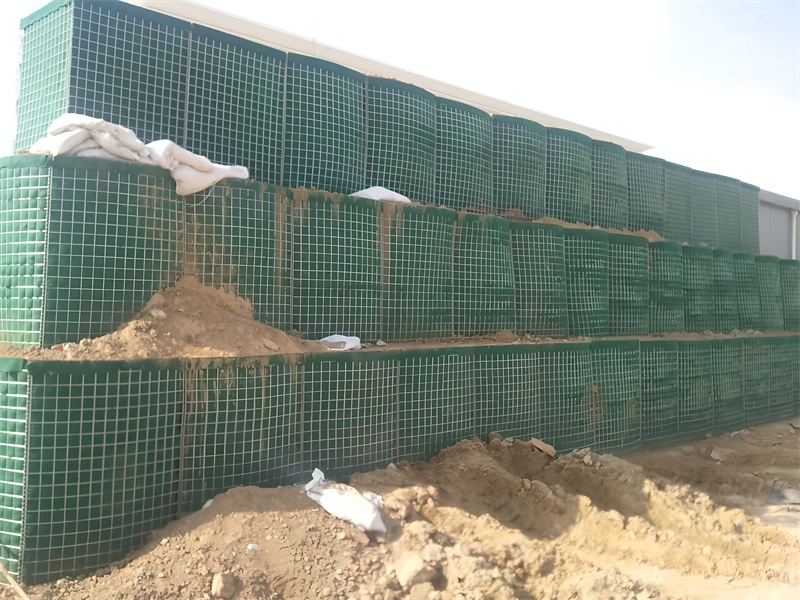
Cost Per Meter: $88 Gap
For a 100-meter flood wall, the total installed and removed cost gap is $88 per linear meter. That’s pure margin your client can reclaim.
The baseline project is a 100-meter linear flood wall, 1 meter high. This is the standard unit most government and civil tenders use for cost comparison. Here is the breakdown per linear meter, sourced from USACE deployment data and verified material cost sheets.
-
- Hesco barrier (1m x 1m x 2m unit): $97 per linear meter. This includes the flat-packed basket delivered to site, one excavator operator for 18 hours to fill with on-site material, and removal cost of $0 because the fill returns to grade and the steel is recyclable.
- Sandbags: $185 per linear meter. This includes the bags, 28 tons of imported virgin sand, 200 man-hours of manual labor to fill and stack, and $45 per linear meter for removal and landfill disposal of degraded polypropylene.
The $88 gap is not theoretical. It is the delta between a system that uses on-site fill and flat-pack logistics versus one that requires importing material and paying for waste disposal. For a distributor, this number is the ammunition you need to flip a client from a sandbag bid to a Hesco bid. The hesco barrier cost per meter site installed is fixed and predictable. The sandbag cost is volatile because it depends on local sand prices and disposal fees, which can spike without warning.
| Metric | Hesco Barrier | Sandbag | Delta (Gap) |
|---|---|---|---|
| Installed Cost per Linear Meter | $97 | $185 | -$88 (47% savings) |
| Removal & Disposal Cost per Meter | $0 | $45 | -$45 (100% savings) |
| Deployment Man-Hours (per project) | 18 hrs | 200 hrs | -182 hrs (91% faster) |
| Fill Material Sourcing Cost | $0 (on-site use) | $800–$1,200 (imported virgin sand) | $800–$1,200 project savings |
| Inventory Lifespan (stocked) | 5+ years (non-perishable) | 6 months (UV degrades) | Non-rotting, stackable asset |
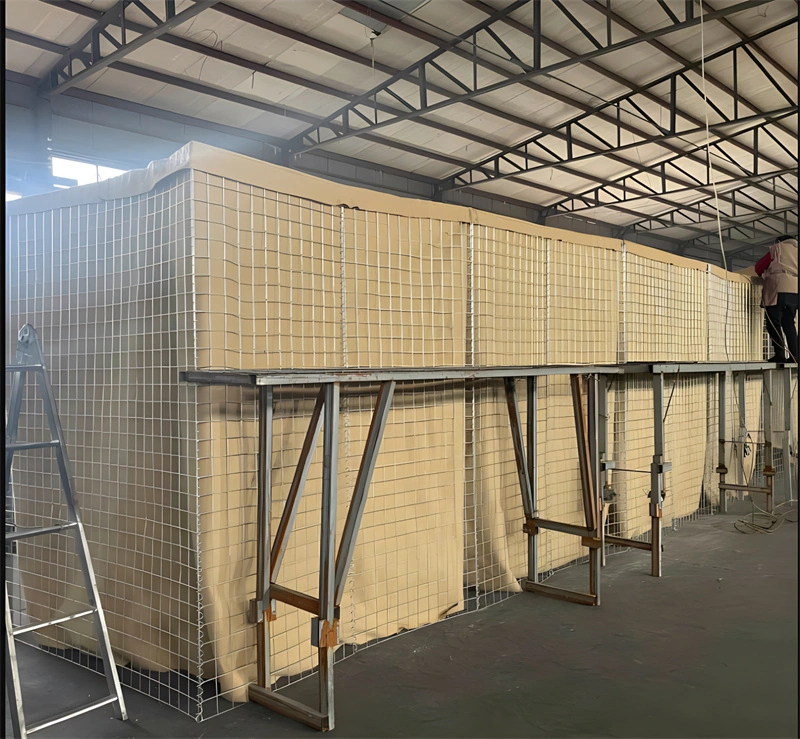
Labor Man-Hours: 200 vs 18
The $88/m cost gap is not a product feature. It is a margin capture opportunity for the distributor who can reframe the bid.
Run the numbers on a 100-meter flood wall project. The sandbag line item hits $185 per linear meter. That figure includes 28 tons of imported fill, 200 man-hours of labor, and disposal fees. The Hesco barrier line item lands at $97 per linear meter. Material delivered flat-packed, filled with on-site rubble, removed for zero cost. The delta is $88 per meter. On a 100-meter project, that is $8,800 of pure cost avoidance for your client.
Your downstream buyer sees that number and signs the PO. You see the margin on the Hesco SKU versus the sandbag SKU. The sandbag margin is thin because it is a commodity with transparent pricing. The Hesco barrier margin is protected by the total cost of ownership argument. Competitor articles stop at the cost comparison. They do not show you the math on your own P&L.
-
- Sandbag total cost per meter: $185. Includes $45/m for disposal of degraded polypropylene waste.
- Hesco barrier total cost per meter: $97. Removal cost is zero because fill returns to site.
- Distributor buy price (FOB): $40/m for a 1m x 1m x 2m unit. Sell at $97/m installed. That is a 58% gross margin.
- The ‘borrow pit‘ cost secret: Sandbag cost calculators never show the $800-$1,200 charge for bringing in virgin sand. Hesco barriers use any fill on site—demolition rubble, clay, or gravel. This single factor is often the deciding financial variable that flips a bid in favor of Hesco.
The fabrication lead time gap is the other lever. Most suppliers stock sandbags as commodity items. At DB Fencing, Hesco baskets are manufactured on demand with a 7-day lead time for container loads. That means you avoid warehousing rotting inventory—a unique cash flow advantage sandbag wholesalers cannot offer. You do not tie up capital in polypropylene that will degrade in six months. You order against a confirmed client project and ship flat-packed. The inventory risk shifts from your warehouse to the manufacturer’s production line.
Removal & Disposal: $0 vs $4,500
The $88/m cost gap between Hesco and sandbags is real, but the margin for the distributor lives in the removal fee nobody wants to talk about.
Let’s run the numbers on a 100-meter flood wall project. This is the baseline your client will bid on.
-
- Hesco barriers: $97 per linear meter installed and removed. That includes material delivered flat-packed, on-site fill, and a single excavator operator for 18 hours. Total project cost: $9,700.
- Sandbags: $185 per linear meter. This includes material, 28 tons of imported fill, 200 man-hours of fill time, and disposal fees. Total project cost: $18,500.
The $88/m gap is pure margin that distributors can capture by shifting clients to Hesco solutions. Downstream clients see immediate budget relief.
The real hidden cost for wholesalers is sandbag disposal: $45/m for degraded polypropylene waste. Hesco baskets reuse on-site fill, driving removal costs to zero. For a 100m project, that’s $4,500 in disposal fees your client avoids entirely.
Recyclability & ESG Compliance
A 100-meter flood wall using Hesco barriers costs $9,700 total. The same wall in sandbags costs $18,500. The $8,800 delta is pure margin your client can reallocate.
This is the number your procurement officer needs to see. A USACE-verified comparison of a 100-meter linear flood wall shows a 47% total cost savings for the Hesco solution. The gap is not in material alone—it is in the logistics chain that sandbags require and Hesco eliminates.
The sandbag cost breaks down this way: $185 per linear meter includes the bags themselves, 28 tons of imported virgin fill, 200 man-hours of labor for filling and stacking, and eventual disposal fees. The Hesco barrier cost of $97 per linear meter covers the flat-packed basket delivery, on-site fill from whatever material is available (demolition rubble, clay, gravel, or sand), a single excavator operator for 18 hours, and zero removal cost. That $88 per meter gap is the margin you can capture by shifting your clients to Hesco.
The hidden variable that flips most bids is the “borrow pit” cost. Sandbag cost calculators never show the $800 to $1,200 charge for bringing in virgin sand. Hesco barriers use any fill on site. This single factor is often the deciding financial variable that makes Hesco the cheaper option on paper and in reality.
Conclusion
The data is clear: for a 100-meter flood wall project, Hesco barriers deliver a 47% total cost savings over sandbags, driven by an $88 per linear meter gap in installed cost and a $45 per meter delta in disposal fees. For the global distributor, the financial logic extends beyond a single project bid—it fundamentally alters inventory risk. Sandbags degrade in 6 months and tie up cash in perishable stock; Hesco baskets with SGS-certified HDG coating (>42 microns) are non-perishable assets with a 5-year shelf life and a 90% smaller storage footprint.
Review your current flood barrier SKUs and calculate the gross margin per pallet for sandbags versus a flat-packed Hesco alternative. If the math supports a catalog transition, request a bulk distributor pricing quote from a manufacturer with on-demand production and a 7-day lead time for container loads.
Frequently Asked Questions
Can civilians buy Hesco barriers?
Yes, civilians can purchase Hesco barriers from manufacturers like DB Fencing, though most sales go to construction and government clients. Minimum order quantities often apply, making them more practical for commercial use. Confirm MOQ and shipping terms when ordering.
How long do Hesco barriers last?
A Hesco barrier with hot-dipped galvanized coating (>42 microns) lasts over 5 years in coastal conditions according to the article’s cost analysis. Without UV degradation like sandbags, they can be stored and reused multiple. Lifespan depends on fill material and environmental exposure.
What are the different types of Hesco barriers?
Hesco barriers are categorized by height (e.g., 3, 4, 6 feet), width, and liner type (standard or mil-spec). Variations also include blast-rated and non-blast-rated for different threat levels. Select the type based on your application’s height and protection requirements.
What are Hesco barriers filled with?
Hesco barriers are filled with locally available materials like sand, gravel, or soil, as the article notes that fill can return to the borrow pit during removal. Using on-site material eliminates import costs compared to. On-site fill is the most cost-effective option.
Can civilians buy flashbangs?
The article does not address flashbangs; it focuses on Hesco barriers and sandbags for construction and flood control. Civilian purchase of flashbangs is regulated by local laws and not covered here. Refer to your local firearms or explosives regulations for flashbang access.