Skip to content
A 0.4mm drop in wire diameter sounds small until your 2000-panel import temporary fencing china australia shipment fails the site inspector’s caliper check. That gap between the pre-production sample and the mass production run is exactly where a $50,000 order gets stuck—and it happens more often than most buyers expect.
The real issue isn’t the sample approval process; it’s what changes after you sign off. A supplier might switch from hot-dipped galvanized (>42 microns) to electro-galvanized without telling you. Your packing list won’t show the difference unless you specifically ask for micron thickness and wire diameter by line item. Australian customs and construction site inspectors look for exactly those details under AS 4687-2022. Miss them, and you’re looking at a re-export or a full batch re-coating that eats your margin.
That’s why the smartest approach to buying temporary fencing from China starts with compliance documentation, not price negotiation. Suppliers in Anping who ship 75% of their output to Australia—like DB Fencing—already have the paperwork dialed in. They understand that the HS code classification (7308.90) must match the duty rate calculation, and that the container loading plan for a 40ft container (approx. 140–150 panels) needs to balance weight limits with freight costs. The rest is about choosing between FOB and CIF, and knowing which port (Sydney, Melbourne, Brisbane) minimizes inland logistics. Below is a grounded framework to get that math right before you commit to a PO.
Why Import Temporary Fencing from China?
The real savings come from bypassing local distributors, but only if your supplier understands Australian compliance.
Every Australian construction PM I’ve talked to knows the local markup on temporary fencing — it’s anywhere from 40% to 70% above factory gate. The math is simple: a direct import from Anping, the global wire mesh hub, can cut your landed cost by 30–50%. But the savings evaporate if the supplier can’t meet AS 4687-2022 or ships without a proper packing list. That’s where most importers get burned.
-
- Production capacity: DB Fencing runs 10 welding lines and ships up to 2,000 sets per week. That means consistent lead times even during peak construction season — no 12-week waits that kill project schedules.
- Compliance built in: Every panel is hot-dipped galvanized to >42 microns — the standard required by Australian site inspectors. If a supplier can’t certify micron thickness on the packing list, your container risks being held at Sydney or Melbourne ports until third-party testing is done. That’s a delay you can’t afford.
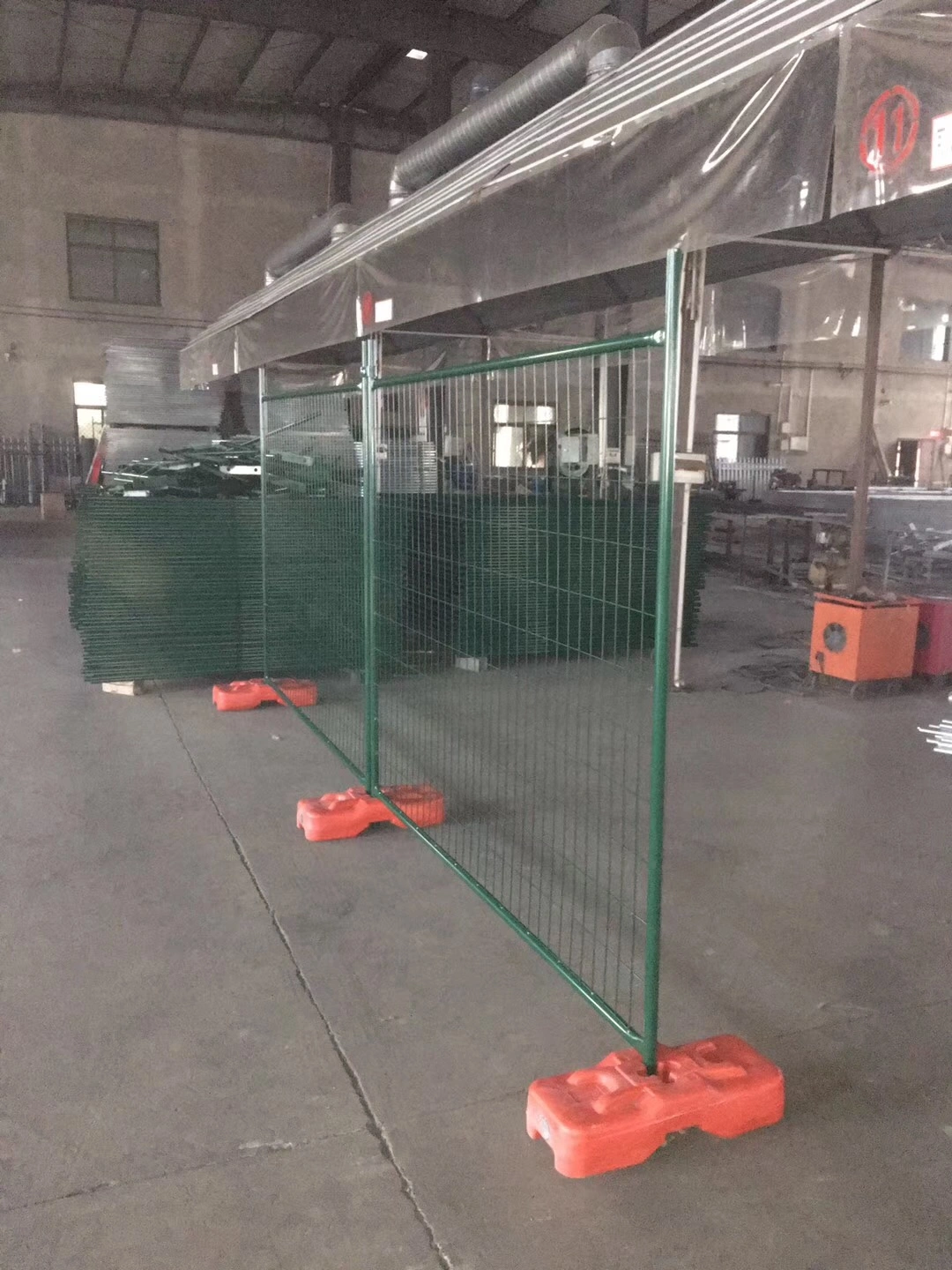
- Low MOQ, high flexibility: 100 panels minimum — not the 500 or 1,000 that many factories demand. That lets you test the product on a real project before committing to container loads. And because DB Fencing supplies its own plastic feet (they’re the only factory in Anping with its own injection line), you get consistent base quality without sourcing from separate vendors.
- Shipping terms matter: Most Chinese factories quote FOB. But Australian buyers consistently prefer CIF — it gives you control over freight rates and avoids hidden port charges. DB Fencing has 14 years of export to AU/NZ and can provide correct HS code (7308.90) classification upfront to prevent customs holds. Many importers overlook that a simple misclassification adds 2–3 weeks and extra inspection fees.

HS Code and Duty Rates for Temporary Fence Panels
Misclassify HS 7308.90 and your container sits at customs for weeks.
Temporary fence panels fall under HS code 7308.90 – ‘structures and parts of structures, of iron or steel’. This is the catch-all for fabricated metal frameworks. Most Australian importers assume it’s under 7326 (other articles of iron/steel) which attracts higher duties, or they lump it with fencing wire under 7313. Wrong classification triggers overpayment or, worse, a customs hold requiring reclassification before release.
-
- Duty rate: For panels manufactured in China, the general Most-Favoured-Nation rate is 5% of the FOB value. This is confirmed in Schedule 3 of the Australian Customs Tariff. No special preference applies unless you have a valid Free Trade Agreement certificate – which China-Australia ChAFTA does cover, but only if the supplier provides a genuine FTA certificate of origin. Many small Chinese factories cannot issue one. Without it, expect 5%.
- GST calculation: Goods and Services Tax (GST) is 10% applied to the sum of: customs value (FOB price + insurance + freight), duty, and any other charges like import processing fees. On a $50,000 FOB shipment with $3,000 freight and $500 insurance, duty is $2,500 (5% of $50k), and GST is 10% of ($50k+$3k+$500+$2,500) = $5,600. That’s $8,100 in taxes on top of your initial cost – a line item most first-time importers forget until the invoice lands.
- Packing list trap: Customs and site inspectors require documentation showing wire diameter and micron thickness of the hot-dipped galvanized coating (e.g., >42 microns). DB Fencing includes this on every packing list. A generic ‘steel fence panels’ description will raise red flags. Your clearance broker will ask for it, and if the supplier can’t provide per-panel measurements, the consignment gets flagged for random inspection – add 7–10 days to your lead time.

Shipping Methods: FOB vs CIF vs DDP
Most Australian buyers prefer CIF – they want control over shipping, not just a factory gate price.
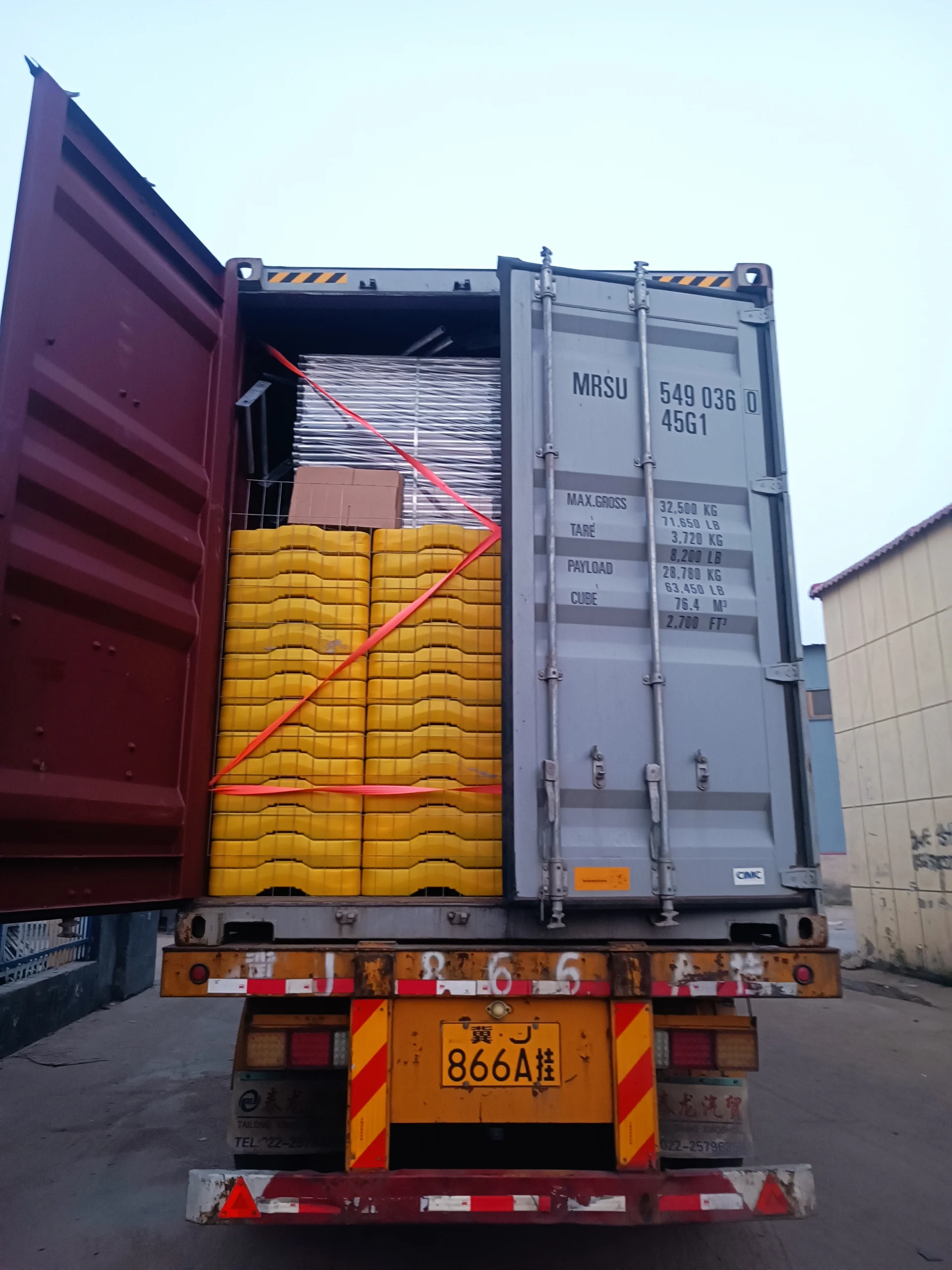
Container loading is not one-size-fits-all. A standard temporary fence panel (2.4m x 1.8m) with recycled rubber feet will load differently than a flat-stacked panel set. In a 20ft container, you typically fit around 400–500 panels depending on the base type and whether bracing is included. A 40ft container doubles that range to 800–1,000 panels. Always request a loading plan from the supplier – DB Fencing provides detailed packing lists that also include micron thickness and wire diameter, which Australian customs require for inspection.
-
- FOB (Free on Board): Supplier delivers to port of departure. You arrange shipping, insurance, and inland freight in China. Cheaper upfront but requires you to manage freight from origin. Most Chinese suppliers default to FOB Qingdao or Tianjin.
- CIF (Cost, Insurance, Freight): Supplier covers cost, insurance, and freight to the destination port. Australian buyers controlling the shipping often prefer CIF because it locks in a single landed cost and eliminates the risk of port congestion surcharges mid-transit.
- DDP (Delivered Duty Paid): Supplier handles everything including customs clearance, duties, and final delivery. Rare for fencing imports due to GST and deferred duty schemes, but useful if you lack an import broker.
Port selection matters. Sydney (Port Botany) is the busiest, with frequent sailings from China – 18–22 days transit. Melbourne and Brisbane add 2–4 days. Fremantle has longer lead times (25–30 days) but lower congestion. DB Fencing’s 14 years exporting to Australia means they know which shipping lines give reliable schedules and how to correctly classify under HS code 7308.90 to avoid customs holds.
Compliance Documentation: Certificate to AS 4687-2022
A valid AS 4687-2022 certificate isn’t optional — it’s the price of entry to Australian worksites.
Customs and site inspectors both demand proof that your temporary fencing meets Australian Standard AS 4687-2022. For customs, the key document is a Certificate of Conformity from the manufacturer, backed by a packing list that explicitly states the wire diameter and galvanized coating thickness (minimum 42 microns). Without these details, your container risks getting flagged for inspection at the bond store, adding days and demurrage costs.
-
- Certificate of Conformity: Issued by the factory confirming the panels are tested and compliant with AS 4687-2022. Must reference the standard number and batch.
- Packing list with specs: Must show wire diameter (e.g., 4.0 mm) and galvanized coating thickness (>42 microns) per panel. Many importers skip this — site inspectors will reject without it.
- Third-party test report: SGS or ISO 9001 certification adds weight. Australian site inspectors often ask for a test report from an accredited lab, not just a factory declaration.
- Pre-shipment inspection records: Photos or a signed checklist from a third-party inspector showing panel dimensions, weld quality, and coating uniformity can fast-track clearance.
Here’s the hard truth: if your supplier can’t provide a packing list with micron thickness and wire diameter, your consignment will likely sit at the port or get rejected on site. DB Fencing includes these details automatically on every shipment, backed by its own plastic feet machine and 14 years of Australian export experience.
Browse the Product Range →
Tips for Avoiding Delays
The packing list detail that most importers miss — and why it costs weeks.
-
-
- Specification: Each packing list must include the exact galvanized coating thickness (>42 microns) and wire diameter (typically 4.0–5.0 mm for standard panels). DB Fencing’s export documentation always lists these values per the mill certificate, so customs can verify compliance without delays.
- Failure Mode: Suppliers who treat the packing list as a simple weight or quantity sheet risk misclassification under HS 7308.90. The Australian Border Force has tightened scanning for structural steel imports — any ambiguity triggers a hold.
-
Beyond paperwork, logistics planning is the second most common delay driver. Most buyers assume a 40ft container holds around 480 panels, but the actual count depends on panel height and foot design. DB Fencing uses standardized stacking configurations that maximize container space without exceeding weight limits — verified through 14 years of export records. If you request a loading plan before production starts, you lock in the shipping cost and eliminate last-minute repacking.
-
- Pre-Shipment Inspection (PSI): Schedule a PSI through an independent agency (e.g., SGS) while the goods are still at the factory. The inspector checks panel dimensions, weld spacing, and coating thickness against the approved sample. DB Fencing provides ISO9001 production records and invites inspectors on-site — no surprise rejections at discharge.
- FOB vs CIF Timing: With FOB quotes, the buyer controls freight but must coordinate carrier acceptance dates with the factory production finish. One misalignment between your freight forwarder’s vessel cut-off and the supplier’s production completion adds weeks. CIF shifts that coordination risk to the supplier — DB Fencing’s team manages the booking against a confirmed production schedule.
Partnering with DB Fencing for Seamless Import
14 years of Australian-destined exports means DB Fencing knows exactly what customs and site inspectors check.
The first time you import temporary fencing, you learn the hard way that a missing packing list—or a misclassified HS code—can leave a container sitting at the Port of Melbourne for a week while you scramble for a broker. DB Fencing has shipped into Australian ports since 2009. That experience means every invoice, packing list, and certificate is prepped for Australian Border Force review. They classify panels under HS code 7308.90 automatically, and the packing list explicitly shows wire diameter and galvanized micron thickness—two details that often trigger holds when left off.
-
- Compliance documentation: Every order ships with a Certificate of Conformity to AS 4687-2022, plus ISO9001:2015 and SGS third-party inspection reports. Site inspectors in Sydney and Brisbane accept these without additional testing.
- Galvanized finish proof: Hot-dipped galvanized coating exceeds 42 microns per AS/NZS 4680. The packing lists the actual micron reading from the production batch—no guesswork, no customs queries.
- Plastic feet manufacturing: DB Fencing runs the only in-house plastic feet machine in Anping. This avoids the common problem of mismatched foot dimensions or brittle recycled rubber that cracks under Australian UV.
With 10 welding lines producing up to 2,000 panel sets per week, DB Fencing can consolidate a full 40ft container for you within 10–15 working days after sample approval. They quote FOB Tianjin or CIF to Sydney, Melbourne, Brisbane, or Fremantle—most Australian buyers choose CIF to lock in shipping costs and avoid spot-rate surprises. The low MOQ of 100 panels means you can start with a trial container before committing to volume, and 24-hour quoting removes the typical back-and-forth delay.
Conclusion
Getting the HS code right, the AS 4687 certificate in hand, and the CIF quote locked in is the difference between a smooth landing and a costly customs hold. The cost savings from direct import only materialize when you control every variable — from micron thickness on the packing list to the port of entry. That due diligence turns a FOB quote into a reliable landed cost.
Review your project’s temporary fencing specs against a factory-direct price list. DB Fencing’s 14-year export record and AS 4687-2022 compliance cover the compliance angle before you even ship.
Frequently Asked Questions
What Australian standard must temporary fencing comply with?
Temporary fencing imported to Australia must comply with AS 4687-2022 or AS 4687-2007. DB Fencing products meet these standards and are ISO9001 and SGS certified, which is required by site inspectors. Request the certificate before production to avoid customs delays.
What is the MOQ for importing temporary fencing from China?
DB Fencing offers a flexible Low MOQ of 100 panels for stock or semi-custom orders. Custom runs or special coatings may require a higher minimum to justify material setup. Confirm MOQ after finalizing your spec and customization level.
Which shipping method do Australian buyers prefer?
Most Australian buyers prefer CIF (Cost, Insurance, Freight) to maintain control over shipping and local customs clearance. FOB works if you have your own freight forwarder, while DDP simplifies the process but. Choose CIF if you want balance between cost and control.
How do DB Fencing panels handle high-wind conditions?
DB Fencing offers heavy-duty panels with hot-dipped galvanized finishes over 42 microns, plus optional bracing and Hesco barriers for high-wind sites. Their plastic feet are anti-UV and designed for stability in outdoor events and construction. Specify wind-load requirements when requesting a quote.