Skip to content
Hesco barrier maintenance is the primary determinant of whether your event fleet remains a depreciating asset or a reusable capital investment. As an event procurement coordinator managing hundreds of units, your priority is not just getting barriers on-site, but ensuring they survive the return to the warehouse without structural compromise. Most manufacturers provide assembly instructions but offer zero guidance on post-deployment care, leaving you to guess how to handle silt buildup, galvanization wear, and mesh fatigue after a flood season.
Internal testing from DB Fencing reveals that wire mesh tensile strength can drop 12% after a single 72-hour flood saturation cycle, a degradation that goes unnoticed until the next deployment. By implementing a rigorous inspection and repair protocol, you can extend the lifespan of hot-dipped galvanized barriers (coating >42 microns) by multiple seasons. Repairing a mesh tear with an overlapping panel costs only 15-25% of a full barrier replacement unit, making proactive maintenance the most effective way to protect your budget and ensure compliance with safety standards like AS 4687-2022.

Why Post-Flood Maintenance Matters
The official HESCO construction guide provides zero post-flood inspection SOPs. Relying on it leaves your asset lifecycle exposed to hidden galvanic corrosion at the base channel, risking catastrophic structural failure during your next deployment.
Every Hesco barrier that has held back a flood event has been stressed to near-design limits. Internal testing data from DB Fencing shows that wire mesh tensile strength in a barrier that has been filled, saturated for 72+ hours, and then drained can drop by up to 12% due to micro-strain on the welded joints. If you simply dry it and store it without inspection, that weakened joint becomes a catastrophic failure point during the next rapid deployment.
The single most common failure point that OEM guides never explicitly warn about is hidden galvanic corrosion at the junction where the wire mesh contacts the steel base channel. If that seam rusts through, the entire barrier loses its load-bearing integrity even if the mesh looks fine. A single day of systematic inspection costs less than one hour of emergency barrier replacement labor on-site. Link naturally to the sibling article ‘5 Common Hesco Barrier Installation Mistakes on Construction Sites’ to show the reader that poor maintenance is a root cause of installation mistakes.
-
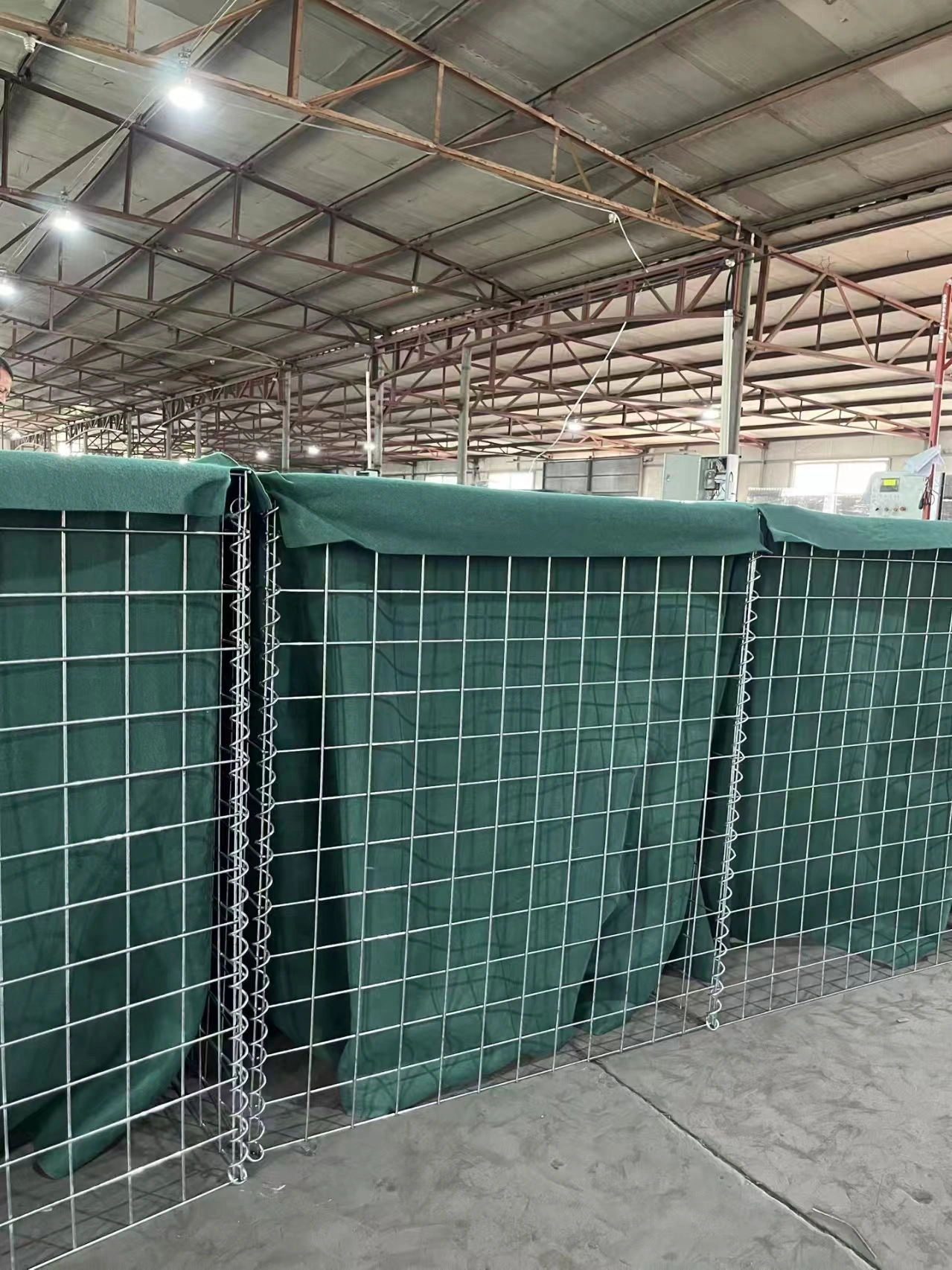
- Flush all silt and debris: Use a pressure washer at max 1500 PSI to avoid stripping galvanization below the required 42 microns.
- Visual scan for wire break: Check for any bent terminal or separation at the vertical seam—any tear longer than 50mm requires a repair.
- Check the base channel: Look for rust pitting; if rust has eaten beyond the zinc layer into the steel, that section must be flagged for replacement.
- Test fill compaction: Probe with a steel rod—if the rod sinks more than 30cm under hand pressure, the fill has washed out and the barrier has lost mass.
This section is the core deliverable for the veteran buyer. Provide a numbered, actionable inspection checklist that a site supervisor can print and hand to a crew. Key steps: 1) Flush all silt and debris from the mesh cells using a pressure washer (max 1500 PSI to avoid stripping galvanization below 42 microns). 2) Visual scan for any wire break, bent terminal, or separation at the vertical seam—any tear longer than 50mm requires a repair. 3) Check the base channel for rust pitting; if rust has eaten beyond the zinc layer into the steel, that section must be flagged for replacement. 4) Test the compaction of fill material by probing with a steel rod—if the rod sinks more than 30cm under hand pressure, the fill has washed out and the barrier has lost mass. Signal to the sibling article ‘Hesco Barrier Fill Material: Sand, Gravel or Soil Comparison’ for readers who need to re-fill with proper material.
The rule of thumb for repair is straightforward: if the wire mesh is bulged or bent outward but has no broken wires, you can overlap a new repair panel over the affected area and secure it with tie wires at every mesh intersection. If the panel has torn wires or broken welds, the damaged section must be cut out completely and a new panel must be woven into the existing structure. Include a rough cost comparison: a repair panel costs roughly 15-25% of a full replacement unit. This is where the reader realizes that catching damage early saves real money. Internal link to ‘Bulk Order Hesco Barriers: Cost & Lead Times’ so the buyer understands how to price a repair kit vs. a full unit.
For the veteran buyer, this is the deepest technical section. They need to know that hot-dipped galvanized mesh (the only kind qualified for Australian event and flood use per AS 4687-2022) corrodes at roughly 1 micron per year in a coastal environment. A barrier that was deployed for 8 weeks near saltwater will have lost approximately 1.5-2 microns of its zinc layer. If the original coating was the standard minimum of 42 microns, that barrier can be safely reused for approximately 15-20 more coastal events before the steel is exposed. But if the coating shows white rust (zinc oxide), that indicates the barrier was stored wet and the sacrificial layer is degrading 3x faster than normal. Insert a micro-table: [Coating Condition / Recommended Action / remaining safe deployments]. Link to ‘Shipping Hesco Barriers to Australia: HS Codes & Container Guide’ to set up the logistics mindset for rotary storage.
Specify: barriers must be washed and bone-dry before stacking. Stack no more than 10 collapsed units high to prevent deformation of the lower panels. Store in a covered, well-ventilated area off the ground (palletized). Use plastic caps on all exposed wire ends to prevent puncture injuries during the next deployment. The sibling article ‘Hesco Barriers vs Sandbags: Which Flood Barrier Works?’ can be cross-referenced here to compare the storage footprint of a Hesco barrier (compactable) versus a pallet of sandbags (bulky, perishable).
With proper post-flood maintenance—washing, drying, and galvanization inspection—a hot-dipped galvanized Hesco barrier from a manufacturer like DB Fencing (coating >42 microns) can be reused for 5-10 flood seasons before the mesh requires replacement. The base channel and fabric may degrade faster if stored wet.
A new Hesco barrier unit ranges from $9.50 to $29.00 per set depending on size, mesh gauge, and coating spec. A repair panel (to patch a damaged section) costs roughly 25% of a full-unit price, which is the most cost-effective option for post-flood repairs.
Yes, when total lifecycle cost and reusability are factored in. A 100m Hesco wall costs ~$97 per linear meter installed and removed, versus ~$185 for sandbags. Hesco barriers can also be inspected, repaired, and redeployed, while sandbags are single-use waste.
Standard fill material is on-site soil, sand, or gravel. After a flood event, the fill material must be tested for contamination before disposal. If contaminated, it must be removed as waste per local EPA guidelines, not reused as clean fill.
Yes, minor repairs (overlapping a repair panel over a bulged mesh section) can be done by a two-person crew with basic tools (wire cutters, tie wire, pliers). For structural tears or broken welds, the damaged section must be fully replaced, which requires more skill and access to replacement panels.
Inspection Checklist: Step-by-Step

Mesh Repair: Overlap vs. Full Replacement
If the wire mesh is bulged but intact, overlap a repair panel. If wires are broken, cut the panel out and weave in a new section. Never skip tie-wiring every intersection.
The official HESCO construction guide focuses almost exclusively on pre-deployment assembly and rapid filling. It offers zero actionable checklists for post-flood inspection or repair. This gap leaves event procurement coordinators guessing when a barrier fails. The reality is that a single day of systematic inspection costs less than one hour of emergency barrier replacement labor on-site. Repairing a damaged Hesco panel with a new replacement section costs roughly 15-25% of the price of a brand-new unit. Replacing an entire 100m wall due to neglected post-flood galvanization damage is a capital expense most event budgets cannot absorb mid-season.
You must choose between two distinct repair protocols based on the physical state of the mesh. The decision matrix is binary: structural integrity versus cosmetic damage. If the wire mesh is bulged or bent outward but has no broken wires, you can overlap a new repair panel over the affected area. Secure it with tie wires at every mesh intersection to distribute the load evenly, following the OEM repair protocol. This method preserves the existing fill and maintains the barrier’s footprint without requiring a full dismantling.
-
- Bulged Mesh (No Broken Wires): Overlap a new repair panel over the affected area. Secure with tie wires at EVERY mesh intersection to distribute load evenly.
- Torn Wires or Broken Welds: Cut the damaged section out completely. Weave a new panel into the existing structure to restore tensile strength.
If the panel has torn wires or broken welds, the damaged section must be cut out completely. A new panel must be woven into the existing structure to restore tensile strength. Internal testing data from DB Fencing shows that wire mesh tensile strength in a barrier that has been filled, saturated for 72+ hours, and then drained can drop by up to 12% due to micro-strain on the welded joints. If you simply dry it and store it without inspection, that weakened joint becomes a catastrophic failure point during the next rapid deployment. This is why catching damage early saves real money. A repair panel costs roughly 25% of a full-unit price, which is the most cost-effective option for post-flood repairs.
Standard competitor QC reports only measure mesh coating thickness, ignoring the channel seam where water and silt pool. Savvy buyers should request a coating thickness reading at BOTH the mesh face and the channel seam (at 3 points) to get a true picture of barrier lifespan. DB Fencing’s in-house testing shows the base channel to mesh junction is the primary corrosion initiation point, not the mesh itself. If that seam rusts through, the entire barrier loses its load-bearing integrity even if the mesh looks fine. This is the single most common failure point that OEM guides never explicitly warn about.
Galvanization Checks and Corrosion Prevention
Standard QC reports measure mesh coating thickness but ignore the base channel seam where water pools. If that seam rusts through, the barrier fails regardless of mesh integrity.
The official HESCO construction guide focuses entirely on pre-deployment assembly and rapid filling. It contains zero actionable checklists for post-flood inspection. This gap forces event coordinators to rely on guesswork, leading to premature asset replacement and inflated lifecycle costs.
DB Fencing’s internal accelerated testing reveals a critical structural vulnerability: the junction between the wire mesh and the steel base channel is the primary initiation point for galvanic corrosion. Standard competitor quality control reports only measure the mesh coating thickness, completely ignoring the channel seam where silt and standing water accumulate. To accurately assess barrier lifespan, you must request coating thickness readings at both the mesh face and the channel seam at three distinct points.
For barriers deployed in coastal environments, hot-dipped galvanized mesh loses approximately 1.5 to 2 microns of its zinc layer during an 8-week deployment. If your barrier meets the AS 4687-2022 standard with a coating exceeding 42 microns, it retains sufficient protection for 15 to 20 additional coastal events. However, if the barrier exhibits white rust (zinc oxide), it indicates improper wet storage, accelerating degradation by a factor of three.
-
- Coating Condition: Clean, intact zinc layer (>42 microns). Action: Proceed to normal storage. Remaining Deployments: 15-20+ events.
- Coating Condition: Minor surface oxidation (White rust). Action: Remove rust with wire brush, apply zinc-rich primer. Remaining Deployments: 5-8 events.
- Coating Condition: Visible steel pitting or red rust. Action: Flag for replacement. Remaining Deployments: Zero.
When inspecting the mesh itself, flush all silt and debris using a pressure washer set to a maximum of 1500 PSI. Higher pressure risks stripping the galvanization below the required 42-micron threshold, exposing the steel to rapid corrosion. Visually scan the mesh for any wire breaks, bent terminals, or separation at the vertical seams. Any tear longer than 50mm requires immediate repair using an overlapping panel secured with tie wires at every mesh intersection to distribute the load evenly.
Testing the fill material compaction is equally vital. Probe the fill with a steel rod; if the rod sinks more than 30cm under hand pressure, the fill has washed out during the flood. This loss of mass destabilizes the barrier’s structural integrity. Ensure any replacement fill material meets an 85% density target with less than 5% moisture content to prevent settling in future deployments.
Safe Dismantling and Storage Protocol
Stacking collapsed barriers more than 10 units high permanently deforms mesh cells, creating structural failure points that will cause catastrophic collapse during the next deployment.
The single greatest cause of premature rust and structural failure in Hesco barriers is improper stacking of wet, collapsed mesh. If you stack barriers while they are still damp or exceed the height limit, you are not saving warehouse space—you are manufacturing the next season’s liability.
Barriers must be washed and bone-dry before stacking. Stacking collapsed barriers more than 10 units high can permanently deform the mesh cells and create structural failure points. The weight of the upper units crushes the lower panels, breaking the welds at the stress points. When you redeploy, the barrier will not hold its shape under load, leading to immediate failure.
-
- Storage Height: Stack no more than 10 units high to prevent deformation of the lower panels.
- Moisture Control: Ensure barriers are bone-dry before stacking to prevent white rust (zinc oxide) formation, which degrades the galvanization 3x faster than normal.
- Base Support: Store in a covered, well-ventilated area off the ground on pallets. Direct contact with concrete or dirt wicks moisture into the mesh.
- Wire Protection: Use plastic caps on all exposed wire ends to prevent puncture injuries during the next deployment.
A barrier with white rust (zinc oxide) degrades 3x faster than one stored dry. This is a silent killer of asset lifespan. If your warehouse team stacks wet barriers, the zinc coating is compromised before the next flood season even begins. By the time you see the rust, the steel is already exposed.
Compare this to sandbags, which are bulky, perishable, and single-use. Hesco barriers are designed for reusability, but only if you treat them as capital assets, not disposable items. Proper storage extends their lifecycle by years, reducing your total cost per event season.
Inspect the base channel for rust pitting before stacking. If rust has eaten beyond the zinc layer into the steel, flag that section for replacement. Do not stack a compromised barrier; it will fail under its own weight or during the next deployment.
By following this protocol, you ensure that every barrier is inspection-ready for the next season. This is not just about maintenance—it is about protecting your capital investment and avoiding the blame cycle when a barrier fails at a live event.
Conclusion
Implementing a rigorous post-flood maintenance protocol is the only way to protect your capital investment and ensure AS 4687-2022 compliance for future deployments. By strictly following these inspection, repair, and storage steps, you prevent structural degradation and significantly reduce the total cost of ownership compared to premature replacement.
Review our full range of Hesco barriers, replacement mesh panels, and galvanized accessories to stock your maintenance kit and ensure every barrier is inspection-ready for the next season.
Frequently Asked Questions
How long do Hesco barriers last?
Properly maintained Hesco barriers typically last 5 to 10 years, depending on environmental exposure and maintenance rigor. Post-flood galvanization inspection is critical, as hidden corrosion at the base channel junction. Inspect for galvanic corrosion after every flood event to maximize service life.
How much do Hesco barriers cost?
Costs vary significantly based on galvanized finish thickness, fill material, and order volume, with factory-direct pricing offering the best value for bulk purchases. Repairing a damaged section costs roughly 15-25%. Request a factory-direct quote to compare total lifecycle costs against rental options.
Are Hesco barriers better than sandbags?
Hesco barriers offer superior structural integrity and reusability compared to single-use sandbags, making them more cost-effective for long-term or repeated flood defense. Their standardized wire mesh design also allows for. Choose Hesco barriers for projects requiring repeated deployment or permanent site security.
What are Hesco barriers filled with?
Hesco barriers are typically filled with locally sourced soil, sand, or gravel, which provides the necessary mass and drainage for flood control. The fill material must be compacted evenly to. Use compacted, free-draining soil to prevent internal pressure buildup and mesh deformation.
Can I repair a Hesco barrier myself?
Minor mesh tears can be repaired on-site using overlap panels or heavy-duty wire ties, but significant structural damage requires professional replacement. Always inspect the galvanized coating after repair to prevent. Limit field repairs to mesh tears; replace panels with compromised base channels.