Skip to content
hesco barrier galvanization quality check is the first checkpoint buyers should lock before they approve a supplier, budget, or production slot. Picture this. A construction buyer finalizes a $50K order for Hesco barriers after a flawless sample approval. The FOB pricing is competitive, the timeline works, and the quality tolerance seems tight. Then the mass production run lands at the site. The wire joints show uneven silver patches. Within three months, orange dust wipes off on a white glove. The supplier’s response: “It’s just surface oil.” It’s not. It’s thin galvanization—5 to 12 microns of electro-galvanizing masquerading as hot-dip.
That scenario repeats more often than buyers admit. The real cost isn’t just the $50K—it’s the reorder, the site delay, and the reputation hit when a barrier meant for flood mitigation or crowd control starts corroding. Australian Standard AS 4687 mandates a minimum 42 microns of hot-dipped galvanization for temporary fencing in coastal or outdoor environments. Anything below that, and the barrier’s lifespan drops from five years to eighteen months. A proper Hesco barrier galvanization quality check catches these gaps early, before your purchase order becomes your problem. Here are five signs your supplier is cutting corners—and how to verify each one before you commit.
Why Galvanization Thickness Is Critical for Hesco Barriers
A Hesco barrier with sub-42 micron galvanization will rust through within 6 months in coastal conditions.
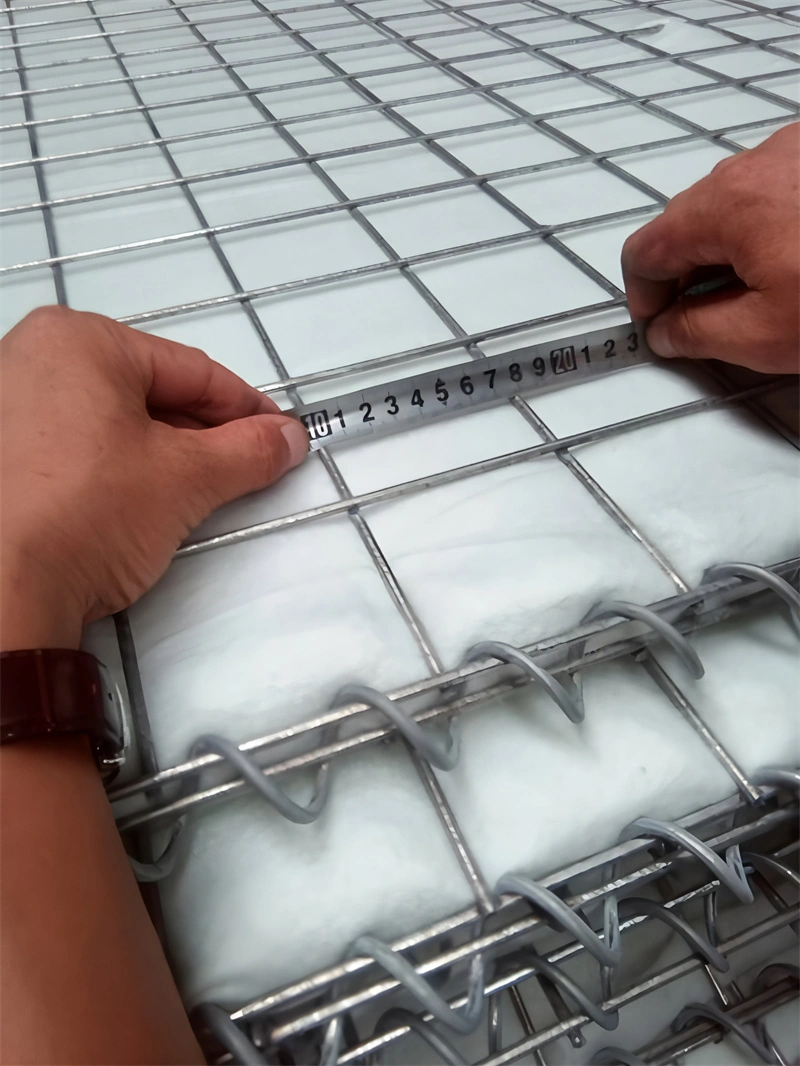
Hesco barriers deployed along coastlines or in flood-prone areas face constant moisture and salt. The Australian Standard AS 4687-2022 explicitly requires a minimum hot-dipped galvanized coating thickness of 42 microns to withstand these conditions. Yet many suppliers from Asia substitute electro-galvanizing—a process that deposits only 5–12 microns—because it’s cheaper and looks similar to the untrained eye. Within six months of outdoor exposure, that thin coating breaks down and red rust appears. This is why verifying galvanization thickness is critical before purchase.
-
- Electro-galvanized coating: Typical thickness 5–12 microns. Fails neutral salt spray test (ASTM B117) within 24 hours. Does not meet AS 4687 requirements.
- Hot-dipped galvanized coating (AS 4687 compliant): Minimum 42 microns. Passes 72-hour salt spray test without red rust. Provides 5+ years of service life in coastal environments.
Sign #1: Uneven or Patchy Coating on Wire Joints
Orange rust dust on a white cloth means zinc coating is under 20 microns – expect failure within 6 months.
Take a clean white cloth and wipe the wire joints of your Hesco barrier sample. If you see orange rust dust, that’s oxidized iron from steel exposed through thin or missing zinc. Genuine hot-dipped galvanizing at 42+ microns (AS 4687 minimum) won’t leave dust. Electro-galvanized coatings (5–12 microns) will produce dust immediately.
-
- What orange dust indicates: Coating thickness below 20 microns – fails salt spray within 24 hours. Claimed ‘hot-dipped’ but actually electro-galvanized.
- What a clean cloth indicates: Coating likely meets AS 4687 requirement. Still verify with magnetic gauge and salt spray report.
Sign #2: No Galvanization Certification from the Mill
A mill cert without an actual thickness check is just paper.
-
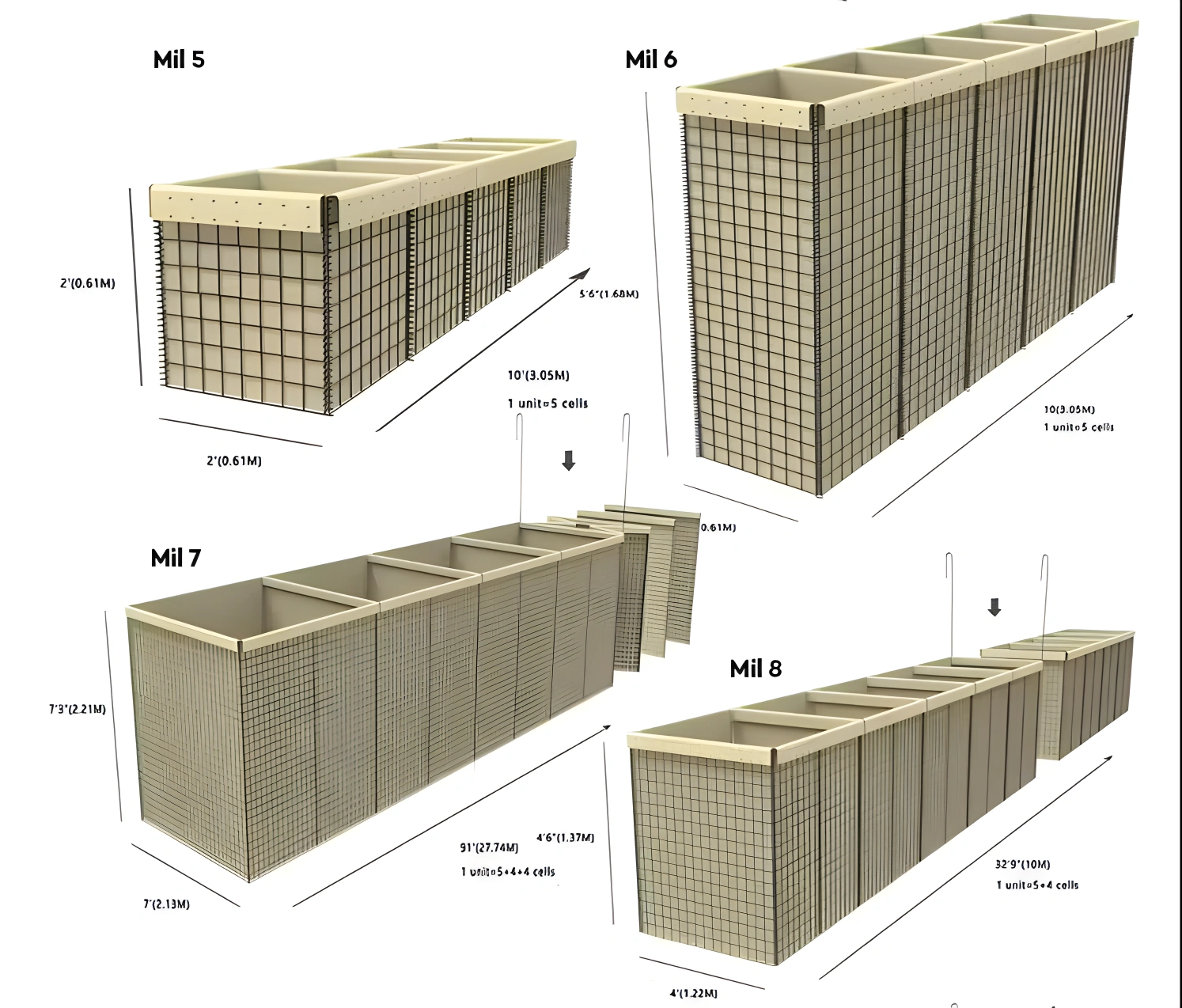
- What to request: Demand a mill certificate that specifies the zinc coating weight in grams per square metre (g/m²) — not just a generic ‘hot-dipped’ claim. Then take an Elcometer 456 magnetic gauge to your actual sample. AS 4687 requires a minimum of 42 microns, which corresponds to roughly 300 g/m². If the number on the cert doesn’t match your reading within ±10%, the batch is inconsistent.
- Red flag: If the supplier cannot produce a certificate that is traceable to the specific production lot number on your order, assume the coating is below spec. Many Hesco barrier manufacturers in China buy steel from multiple local mills and mix inventory. The cert they show you may belong to an entirely different shipment. This is one of the most common Chinese Hesco barrier supplier quality red flags.
Electro-galvanizing (5–12 microns) will never show up on a meaningful mill cert because the coating is applied via a cold electrochemical bath after the wire is drawn. Genuine hot-dip galvanizing at 42+ microns leaves a measurable, consistent layer that matches the mill cert. If you can’t verify that match, you are buying paper, not protection.

Sign #3: Wire Edges Show Sharp, Uncoated Steel
Sharp wire edges mean the galvanization missed those spots entirely.
When a Hesco barrier is hot-dip galvanized properly, the entire wire surface — including cut edges — gets a uniform zinc coating. But many low-cost manufacturers use a dip angle that’s too shallow or pull the basket out too fast. Gravity pulls the molten zinc downward, leaving the sharp wire edges on the upper side with zero coverage. Under AS 4687, every exposed steel surface must meet the minimum 42-micron thickness. Uncoated edges violate that standard and guarantee premature rust.
-
- Visual check: Run a white cloth along a cut wire edge. If you see orange dust or shiny bare steel, the galvanization failed at that point.
- Magnetic gauge test: Place an Elcometer 456 directly on the edge. Readings below 20 microns confirm poor dip coverage — a clear red flag for electro-galvanizing (5–12 micron range).
- Failure timeline: Uncoated edges exposed to coastal or flood conditions develop red rust within 8–12 weeks. That rust creeps under the adjacent coating, delaminating it and voiding any warranty.
Sign #4: The Supplier Can’t Provide a Salt Spray Test Report
A 72-hour salt spray test reveals what visual inspection hides—and what some suppliers don’t want you to see.
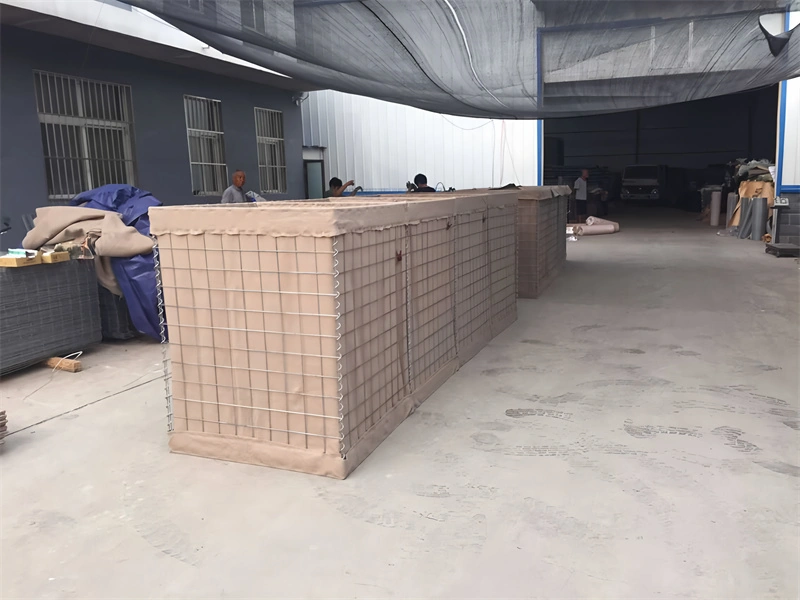
A neutral salt spray test per ASTM B117 is the quickest way to sort genuine hot-dipped galvanizing from cheap electro-galvanizing. The industry benchmark for Hesco barriers used in coastal Australian environments is 72 hours with zero red rust formation. Electro-galvanized coatings — typically 5–12 microns — fail within 24 hours under the same conditions. If a supplier cannot produce a lab report for a 72-hour pass on their production wire, assume the coating is substandard.
-
- How the test works: A sample of welded wire mesh (cut from a finished barrier or the same production lot) is placed in a sealed chamber with a 5% sodium chloride solution at 35°C for 72 hours. After exposure, the sample is inspected for red rust on the wire surface and welded joints. ASTM B117 defines the pass/fail criteria: no red rust on coated surfaces, though white corrosion (zinc oxide) is acceptable.
- Why 72 hours is the cutoff: Hot-dipped galvanized wire with a coating thickness of 42+ microns (as required by AS 4687) consistently passes 72-hour exposure. Coatings below 30 microns — common in electro-galvanized or poorly executed hot-dip processes — show red rust well before the 72-hour mark. Many suppliers skip this test because their coating thickness averages 15–25 microns, which would fail and lose orders.
- Where to test:Third-party labs in China (e.g., SGS, Bureau Veritas) offer ASTM B117 testing for roughly $150–$300 per sample. Some factories like DB Fencing maintain an in-house salt spray chamber, allowing batch-level testing without waiting for external labs. If a supplier claims that they can arrange testing but cannot show a past report from their own production, request a pre-shipment sample test and pay for the report yourself — it is cheaper than replacing a container of rusted barriers.
- What to demand in your purchase order: Specify: ‘Supplier shall provide an ASTM B117 neutral salt spray test report for the actual production wire mesh used in this order. The test sample must show no red rust after 72 hours of exposure. Report must include starting coating thickness measurement and post-test photos of the sample.’ Add this clause to your bulk Hesco barrier quality assurance checklist.
Sign #5: Price Is 15%+ Below Market Average
15% below market price means galvanization is almost certainly compromised.
Hot-dip galvanization adds a predictable cost: roughly $0.05 to $0.08 per micron per square meter. For a Hesco barrier requiring 42 microns (per AS 4687), that’s $2.10 to $3.36 per square meter just for the coating. A supplier quoting 15% below market isn’t absorbing that cost — they’re skipping microns. I’ve seen barriers where the supplier claimed 42 microns but the actual coating measured 12. That’s electro-galvanizing, not hot-dip. It looks fine for the first three months, then red rust appears by month six.
-
- Genuine hot-dip galvanization (42+ microns): Passes 72-hour neutral salt spray test per ASTM B117 with no red rust. Coating is uniform, matte gray, and durable in coastal or floodwater conditions.
- Cheap electro-galvanizing (5–12 microns): Fails within 24 hours in the same salt spray test. The coating looks shiny initially but flakes off at weld joints and wire edges. A magnetic thickness gauge catches it instantly.
The fix is straightforward: before you issue the PO, request a mill test certificate for the zinc batch and a salt spray report from an independent lab. Better yet, ask your supplier to run a batch test in their own salt spray chamber. DB Fencing operates its own lab — that’s the level of transparency you need. If the supplier can’t produce either, the 15% discount will cost you an early replacement.
| Aspect | Proper Spec (Hot-Dip Galvanized) | Cheap Alternative (Electro-Galvanized) | Consequence |
|---|---|---|---|
| Coating Thickness (Microns) | ≥42 microns (AS 4687 compliant) | 5–12 microns | 6-month outdoor rust failure; non-compliance fines |
| Cost per Micron per m² | $0.05 – $0.08 USD | $0.01 – $0.02 USD | 15%+ price undercut = 80% thinner coating |
| Salt Spray Test (ASTM B117) | Passes ≥72 hours without red rust | Fails within 24 hours | Coastal/outdoor use: delamination by month 6 |
| Certification & Traceability | Mill test certificate + ISO9001 | No documentation or fake certs | Unable to prove compliance; rejected on site |
| Edge Coverage | Fully coated edges (dipping angle optimized) | Sharp uncoated steel visible | Rust initiation at edges; structural weakness |
How to Verify Galvanization at Your Facility
A $300 gauge reveals whether a supplier’s ‘hot-dipped’ claim is real.
A visual check alone won’t catch a thin coating. A magnetic thickness gauge — like an Elcometer 456 or a cheaper PosiTector 6000 — measures the zinc layer in microns. If a supplier claims hot-dipped galvanizing but the gauge reads under 12 microns, they actually used electro-galvanizing, which rusts within six months on a construction site.
-
- Step 1: Calibrate: Zero the gauge on an uncoated steel sample (request a bare wire offcut from the supplier). Then set to ferrous mode.
- Step 2: Measure multiple points: Take readings on the main wire body, at welded joints, and on edges. Hesco barriers have varying geometry — thin spots often appear at clip connections and bends.
- Step 3: Interpret results: AS 4687-2022 mandates a minimum local thickness of 42 microns. Readings below 30 microns on any point fail compliance. If the average is under 12 microns, the coating is electro-galvanized — reject the batch.
Run this check on three random panels from any shipment. For bulk Hesco barrier quality assurance, a 5-gauging-point-per-panel protocol catches inconsistent dip angles. DB Fencing’s own production logs show average readings of 55–65 microns on wire and 48–55 microns at joints — well above the standard.
DB Fencing’s Galvanization Quality Assurance Process
DB Fencing runs its own salt spray lab — we test every batch before it ships.
Our galvanization process starts with hot-dipped zinc coating applied at a minimum thickness of 42 microns, verified per AS 4687. We do not use electro-galvanizing (5–12 microns), which corrodes within six months in outdoor conditions. Each production batch is logged, and we conduct three layers of quality control before shipment.
-
- Salt spray test:Every batch is tested in the in-house chamber per ASTM B117 for 72 hours. Pass means zero red rust. Electro-galvanized panels fail in under 24 hours. Test videos are available on request.
- Magnetic gauge inspection: We use an Elcometer 456 to check coating thickness on wire, weld points, and edges. All readings must exceed 42 microns. Non-compliant panels are rejected.
- Mill certificate traceability: Each wire coil has a mill certificate showing zinc coating weight. We match it to the batch number. You receive a copy with your shipment.
Conclusion
The five signs above form a practical checklist for procurement managers who need to ensure their temporary fencing investments hold up through the project lifecycle. For Australian sites exposed to coastal salt or seasonal flooding, the 42-micron AS 4687 requirement isn’t a paperwork hurdle—it’s the line between a barrier that performs for years and one that requires replacement within months.
Use this checklist when vetting supplier quotes and inspecting first articles. If the galvanization data—mill certificates, salt spray reports, or magnetic gauge readings—doesn’t back the claim, the risk lands squarely on your project timeline and maintenance budget.
Frequently Asked Questions
How do I check galvanization thickness on a Hesco barrier?
Use a magnetic thickness gauge like the Elcometer 456 to measure the zinc coating directly. AS 4687 requires a minimum of 42 microns, and any reading below that signals a substandard supplier. Test multiple spots—especially wire joints—for an accurate average.
What is the minimum galvanization thickness for AS 4687?
AS 4687 requires a minimum of 42 microns for hot-dipped galvanized temporary fencing and Hesco barriers. Anything less will likely fail salt spray testing and rust within months in coastal environments. Insist on a mill test certificate confirming 42+ microns before ordering.
How do I verify a supplier’s galvanization certification?
Request the mill test certificate from the steel supplier and cross-check the thickness values against an actual sample using a gauge. A cert without a physical check is just paper—ask. Only accept certification that matches the delivered product and third-party test results.
What does patchy coating on wire joints mean?
It means the zinc coating is under 20 microns at those spots, which drastically reduces corrosion protection. Wipe the joints with a white cloth—orange rust dust confirms thin coating and a supplier cutting corners. Reject any batch showing orange dust before shipment.