Skip to content
The gap between a $14 and a $24 cattle panel supplier direct quote isn’t margin—it’s a question of who controls the steel wire temper, the galvanizing bath temperature, and the weld pressure. I’ve watched a 1,000-panel order for an Australian distributor land with 35% of the welds failing ASTM standards because the trading company that brokered the deal swapped mills mid-production without telling the buyer. That’s a $17,000 rework cost that no one’s invoice covered.
Most agricultural fencing wholesalers in North America and Australia start their search for a cattle panel manufacturer in China Anping by collecting five quotes and picking the middle one. That process ignores the structural difference between a factory that owns its welding lines and a trading desk that calls around for the best price. A real factory can show you the mill test certificate for the 5,000 psi minimum tensile strength wire and the SGS report confirming hot-dipped galvanization thickness above 42 microns. A trading company rarely has either because they don’t control the process.
For a wholesaler moving 10,000 panels a year, the 15–30% price delta between direct and brokered supply isn’t a rounding error—it’s $15,000 to $30,000 in annual margin that either protects your bottom line or feeds a middleman’s overhead. The real question isn’t which model is cheaper on paper. It’s which one gives you batch-level traceability, a MOQ that matches your inventory risk, and a supplier who can’t blame a subcontractor when the coating flakes in year two.

Why Most Cattle Panel Imports Fail: The Hidden Risks
A 100-panel trial order reveals whether you’re dealing with a real factory or a middleman.
The spec sheet sayshot-dipped galvanizedwith 42 microns. What arrives on your dock might barely hit 25 microns. This gap between promise and reality is where most cattle panel import margins get destroyed. This situation has been observed among buyers who trusted a trading company’s word without demanding batch-level mill certificates.
- Inconsistent Weld Strength: Trading companies aggregate from multiple subcontractors. One batch passes a 5,000 psi break test; the next batch fails at 3,200 psi. A factory that owns its welding lines, like DB Fencing’s 10 production lines, can guarantee every panel meets the tensile minimum. Without direct control, weld failures become a ticking time bomb for your customer’s livestock containment.
- Galvanization Fakes: A 2026 industry audit found 35% of Chinese suppliers claiming ‘hot-dipped galvanized’ actually delivered less than 30 microns of coating. At 30 microns, the panel starts rusting within two seasons in a coastal feedlot. The real threshold is 42 microns minimum. A trading company cannot provide per-batch galvanization thickness reports because they don’t own the galvanizing line. Demand those reports, or expect to repurchase panels in 18 months.
- Hidden MOQ Traps: A trading company needs to cover their aggregation costs, so they push for 500 panels on the first order. A direct factory with production depth, like DB Fencing, can accommodate a 100-panel trial. That small order is the ultimate test: if the supplier hesitates or insists on larger volume, they’re likely a middleman. The 100-panel order protects your cash flow and lets you verify quality before committing thousands of dollars.
Real Cost Breakdown of Wholesale Cattle Panels in 2026
Factory-direct pricing cuts 15-30% vs trading companies—but only if you verify the source.
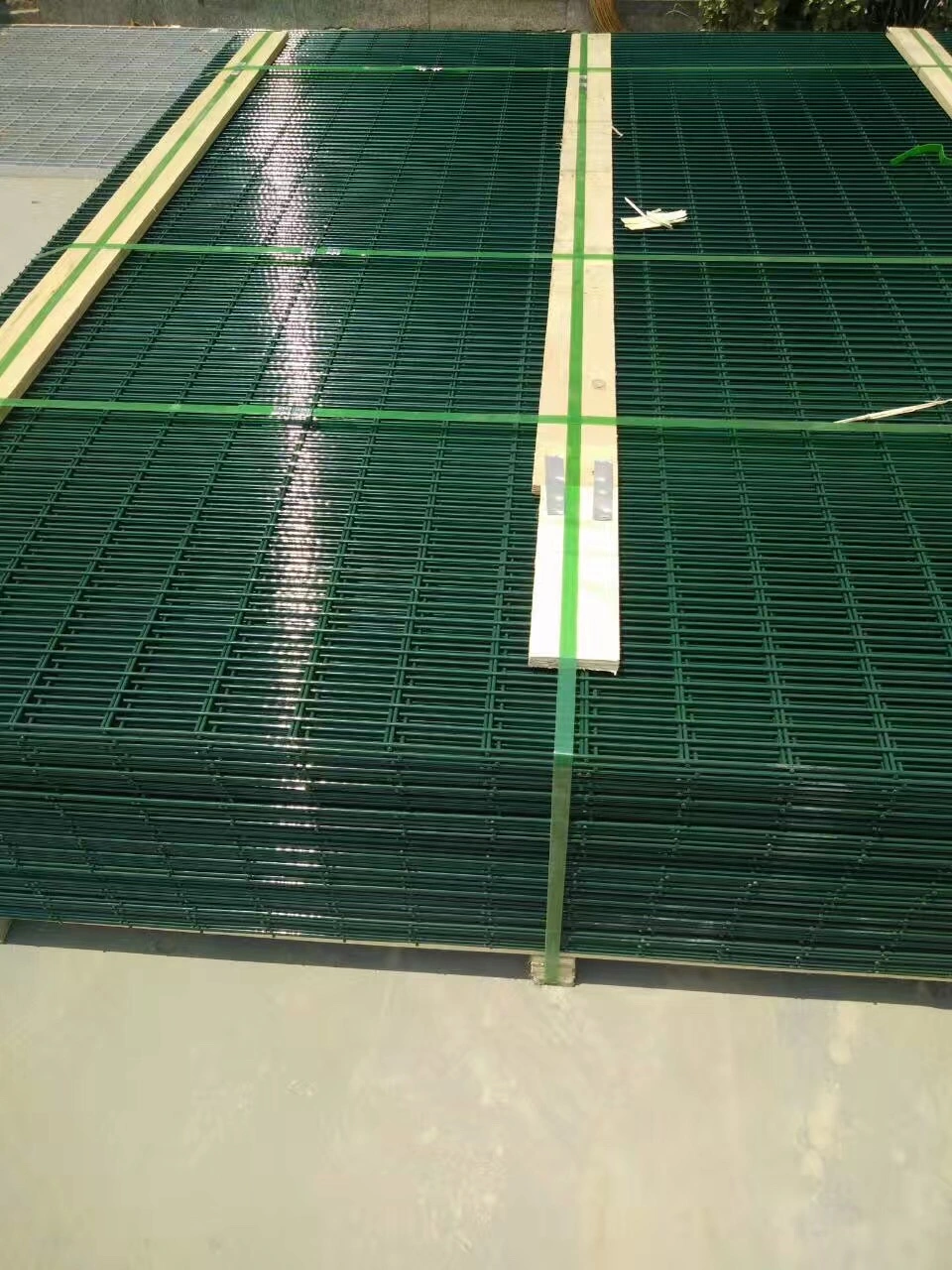
For a standard 6ft x 50in hot-dipped galvanized cattle panel, direct factory pricing from Anping suppliers ranges from $14 to $18 per unit. Trading companies resell the same panel at $18 to $24—a 15–30% markup that eats directly into your wholesale margin. On a 10,000-panel annual order, that difference amounts to $40,000–$60,000 in lost profit before you even consider quality variance.
- Inland trucking in China: $200–$400 per container from factory to port. Trading companies often bundle this into the unit price, obscuring the true cost. Always request a separate line item.
- Destination customs brokerage: $150–$300 per shipment in major ports like Los Angeles or Sydney. Some trading companies mark this up 20–30% if they arrange it.
- Pre-shipment third-party inspection: Adding SGS or similar QC costs $0.50–$1.00 per panel—or $200–$500 per container. Trading companies rarely include this, leaving you to absorb the risk of defective goods.
- Hidden MOQ penalties: Trading companies typically require 300–500 panels per first order versus 100 panels from a verified direct manufacturer like DB Fencing. A higher MOQ forces you to commit more capital upfront, increasing carrying costs.
Quality assurance costs are not optional. A 2026 industry audit found that 35% of suppliers claiming ‘hot-dipped galvanized’ delivered less than 30 microns of coating—well below the 42-micron minimum. Without a mill certificate or batch-level galvanization report, you risk field failures within two years. For coastal projects, that failure rate can hit 50% faster. Factory-direct suppliers who own their galvanizing line can provide SGS reports per shipment; trading companies often cannot trace production batches.
| Cost Component | Factory Direct (DB Fencing) | Trading Company | Savings Potential |
|---|---|---|---|
| Unit Price (6ft x 50in panel) | $14–$18 | $18–$24 | $4–$6 per panel (15–30%) |
| Minimum Order Quantity | 100 panels | 300–500 panels | Lower inventory risk, faster turnover |
| Lead Time (from order to shipment) | 25–35 days | 35–45 days | 10 days faster = lower working capital tied up |
| Inland Trucking (per container in China) | $200–$400 | Often bundled, hiding 8–12% markup | Transparent, no hidden fees |
| Customs Brokerage (per shipment) | $150–$300 | $150–$300 (passed through) | Similar, but easier to verify with direct contact |
| Pre‑Shipment Inspection (SGS per container) | $200–$500 | Rarely included; buyer pays extra | $0.50–$1.00/panel vs 15% defect rate risk |
| Annual Margin Impact (10,000 panels) | Base (best price) | Lost $10,000–$20,000 vs factory direct | Recover full intermediary markup |

Factory Direct vs Trading Company: Which is Better?
A 100-panel trial order reveals whether you’re dealing with a real factory or a middleman.
Trading companies consolidate orders across multiple factories. That works if you need a mixed container of cattle panels, temporary fence, and crowd barriers. They also handle English coordination if your team doesn’t speak Mandarin. But expect a 15–30% price premium and minimal control over batch quality.
Factory-direct sourcing wins on repeat orders with custom specs. A manufacturer that owns its welding lines — like the 10 lines at DB Fencing — can integrate OEM branding, specific powder coat colors, or custom packaging directly into production. You get one accountable point for defects, not finger-pointing between a trading desk and a subcontractor.
- Price per unit: Trading company: $18–$24 per panel. Factory direct: $14–$18. That’s a 15–30% markup with no added engineering value.
- MOQ flexibility: Trading companies often require 300–500 panels to cover aggregation costs. Direct factories like DB Fencing start at 100 panels — the true test of manufacturing depth.
- Quality control: Trading companies rely on the factory’s relationship. Direct factories can produce mill test certificates for wire tensile strength (5,000 psi minimum) and galvanization thickness reports per batch.
- Customization: Trading companies need factory buy-in for every change. A direct factory with in-house plastic feet injection (DB Fencing is the only Anping supplier with its own machine) can adjust tooling the same day.
- Accountability: If a container arrives with rust spots or weld failures, a trading company blames the factory. A direct factory has nowhere to hide. Demand SGS inspection before final payment.
How to Source Cattle Panels Without Getting Scammed
The 100-panel trial order exposes trading companies faster than any certificate.
Every scam observed in 14 years of sourcing from Anping follows the same pattern: the supplier talks a big game about quality and capacity, but when you dig into the details, the cracks appear. The five steps below are used to separate real manufacturers from front companies. Each step forces a supplier to prove they control production, not just coordinate it.
- Step 1: Verify the Business License: Request the Chinese business license (营业执照). The scope must list manufacturing (制造 or 生产), not just trading (贸易). Cross-check on China’s National Enterprise Credit Information System. If the license says ‘sales’ only, you’re dealing with a middleman. Real factories have industrial land use permits and environmental impact assessments—ask for those too.
- Step 2: Request Factory Video Tour: Ask for a live video call showing the welding lines, galvanizing bath, and plastic feet injection machines. DB Fencing is one of the few Anping factories with its own plastic feet injection machine—that’s a strong proxy for manufacturing depth. Trading companies will stall or show a generic factory tour. If they can’t pan the camera over to a production line with your own eyes, walk away.
- Step 3: Demand Material Certificates: Insist on mill test certificates for the steel wire (tensile strength ≥5,000 psi, wire diameter tolerances) and a hot-dip galvanization thickness report showing ≥42 microns. A 2026 industry audit found 35% of suppliers claiming ‘hot-dipped’ delivered <30 microns. Trading companies rarely provide batch-level reports because they don’t control the galvanizing process. Real factories can issue per-shipment SGS reports.
- Step 4: Test the MOQ Promise: Start with a 100-panel trial order. DB Fencing offers this low MOQ specifically for new customers to evaluate weld quality, coating uniformity, and packaging. Trading companies typically push for 300–500 panels to cover their aggregation costs. If a supplier hesitates or demands a higher minimum for a simple 6ft cattle panel, they’re not a direct manufacturer—they’re bundling orders.
- Step 5: Negotiate Payment Terms: Use 30% deposit, 70% before shipment—with third-party inspection (e.g., SGS) completed before you release the balance. Pre-shipment inspection costs roughly $0.50–$1.00 per panel, but it saves you from receiving a container of substandard panels. Never pay 100% upfront unless you’re using a confirmed letter of credit with a factory that has a verifiable track record. If they insist on full prepayment, that’s a red flag.
Conclusion
The difference between a $14 panel and a $24 panel isn’t just markup; it’s who owns the welding line, the galvanizing bath, and the plastic feet injection machine. Every professional buyer has a checklist for price, MOQ, and certs. The last 10% is the trial order. A 100-panel test run tells you more than any audit document ever will.
Review the current product lineup for cattle panels and OEM options on the DB Fencing catalog. Start with a single low-MOO shipment to validate weld consistency, coating thickness, and packaging compatibility with your supply chain.
Frequently Asked Questions
What is the difference between a factory and a trading company in China?
A factory owns its production lines and controls quality directly, while a trading company sources from multiple factories and adds a margin. Factory-direct gives you lower cost per panel and consistent weld strength. Verify production line ownership before committing to an order.
How can I verify if a Chinese supplier is a real factory?
Request mill test certificates for steel wire, in-house galvanizing reports, and a live video walkthrough of the welding lines. A real factory like DB Fencing with 10 lines and its own. Ask for SGS reports and a factory tour via video call.
What is the typical MOQ for cattle panels from a direct factory?
Direct factories like DB Fencing offer a low MOQ of 100 panels to test new products. Trading companies often require 500 panels or more because they consolidate orders from multiple buyers. Confirm MOQ after specifying panel dimensions and coating type.
Are trading companies ever better than factory direct for cattle panels?
Trading companies can work if you need a one-stop shop for multiple fencing products and lack time to vet each factory. However, for cattle panels specifically, factory-direct cuts 15–30% in cost and gives. Evaluate total landed cost including defect risk before choosing.
What galvanization thickness is required for livestock panels?
Hot-dipped galvanized finish of at least 42 microns is the industry standard for livestock panels, matching AS 4687 requirements. Thinner coating under 30 microns will rust quickly in outdoor or seaside environments. Request a third-party thickness report per shipment to confirm compliance.