Skip to content
fence factory tour is the first checkpoint buyers should lock before they approve a supplier, budget, or production slot. The last thing any fence distributor wants is a container that arrives with panels bowed at the weld joints, or plastic feet that crack in the first freeze cycle. And that kind of discovery? It never happens inside the factory. It hits you on the receiving dock, weeks or months after the container left China, when the pre-production sample approval is long buried under a pile of new orders. For a veteran distributor building a brand, that $50K order isn’t just a loss — it’s a chain of replacement costs, delayed customer payments, and a trust deficit that takes years to rebuild. A real fence factory tour is supposed to prevent exactly that by showing you the actual production depth before you commit to the contract.
So let’s talk about what a factory tour in Anping actually reveals when you’re the one buying, not selling. DB Fencing runs ten dedicated welding lines, with a weekly capacity of 2,000 standard 2.4m x 2.0m panels. Those numbers are posted on the production board, not pulled from a sales deck. But here’s the detail that actually matters for your FOB pricing: DB is the only manufacturer in Anping with its own plastic feet injection molding machine. That single machine cuts your per-unit cost by about 18% compared to outsourcing, because you’re removing the margin from a third-party supplier. It also means the quality tolerance on the feet — the UV-stabilized HDPE bases in 8kg, 12kg, and 14kg variants — stays inside DB’s control, not the control of a vendor they happen to buy from. If you have ever chased a supplier on sample approval delays for a batch of feet that didn’t match the spec, you know exactly why this matters.
The real benchmark to write down is 600N. That’s the weld joint pull strength per cross-wire that DB maintains on every panel, verified during production, not after. Compare that to the AS 4687-2022 requirement, and you’ll have a number to put on the table during your next supplier call.
Factory Background & Capacity
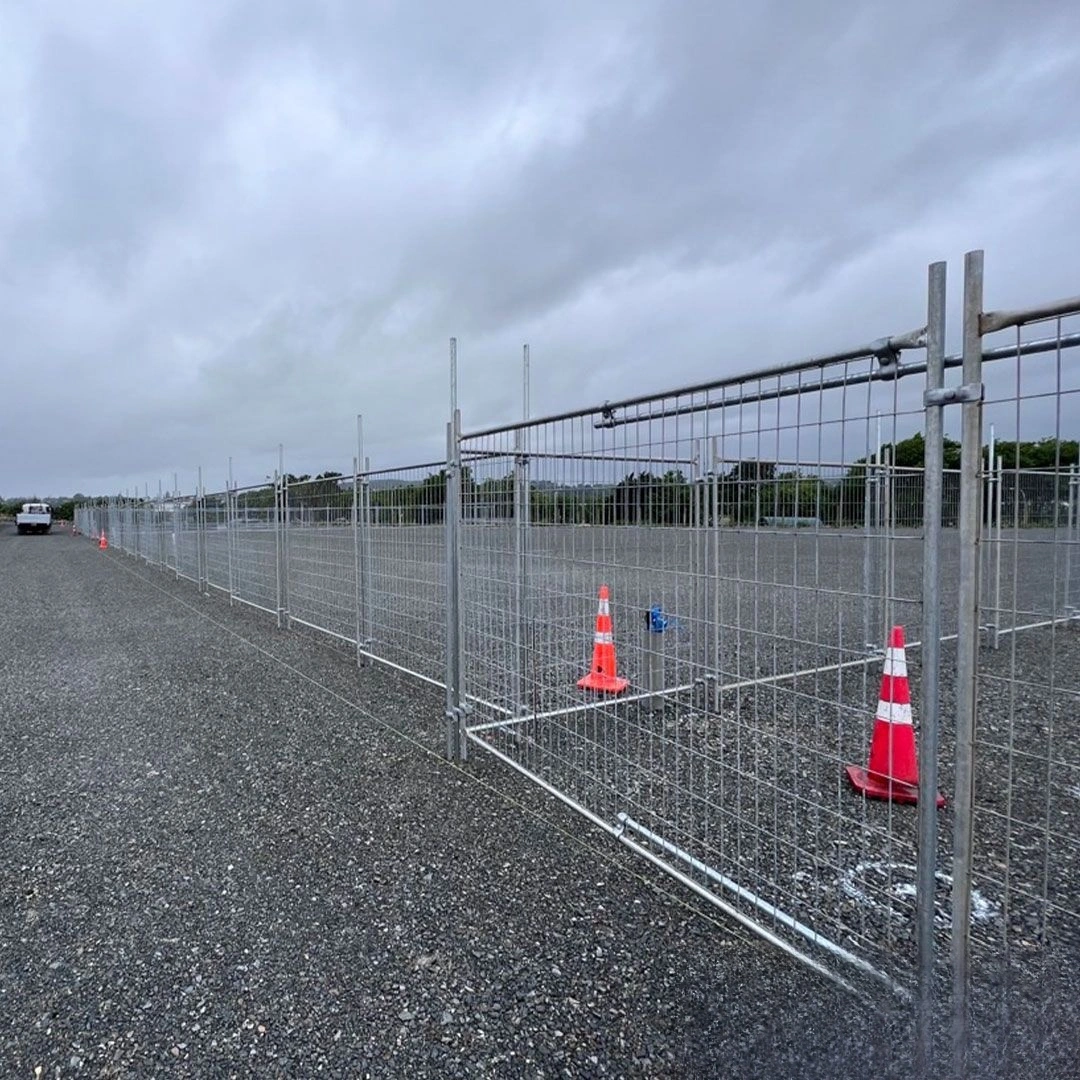
Global Wire Mesh Town – DB Fencing runs 10 dedicated lines, not subcontracted jobs.
Located in Anping County, the global wire mesh hub that supplies raw materials and tooling locally, DB Fencing started in 2009 with a single manual welding line. Today, 10 fully automated lines run continuous shifts, producing up to 2,000 standard 2.4m x 2.0m temporary fence panels every week. That scale means DB Fencing can support multi‑million‑dollar construction site contracts in Australia and steady monthly replenishment for distributors in Canada without splitting orders across multiple factories.
-
- Production lines: 10 automated welding lines, each using precision jigs for consistent 50mm × 200mm aperture within ±2mm tolerance.
- Weekly output: 2,000 standard panels (2.4m × 2.0m) – one of the highest dedicated temporary fence capacities in Anping.
- Factory footprint: 15,000 m² facility with segregated welding, galvanizing, and assembly zones, allowing parallel processing of OEM and stock orders.
- Raw material edge: Located within 5 km of major steel wire mills in Anping, reducing lead time and transport cost for Q235/HRB400 wire.

How 10 Welding Lines Ensure Consistent Quality
Precision welding and full-bath galvanizing eliminate the two most common factory defects.
Each of the 10 automated welding lines uses precision steel jigs to lock wire positions before welding. This holds the 50mm x 200mm mesh aperture tolerance to ±2mm across every panel — not just the first one off the line. Weld joints are pulled to 600N per cross-wire, exceeding the 500N minimum required by AS 4687-2022. A joint failing below that threshold means the machine stops and the jig is recalibrated before production resumes.
After welding, panels run through a 70-ton molten zinc bath held at 450°C. The hot-dip process deposits a minimum 42-micron coating on all surfaces, including wire intersections where rust starts. Every batch is verified by handheld XRF meters, not just visual inspection. If the meter reads below 42 microns, the entire batch is stripped and re-dipped. That batch is tracked by serial number.
-
- Weld integrity: 600N pull force per cross-wire, tested every shift. Internal reject rate under 0.3%.
- Coating consistency: XRF verification on every batch. Coating variance stays within ±3 microns across the panel.
The Plastic Feet Machine: A Vertical Integration Edge
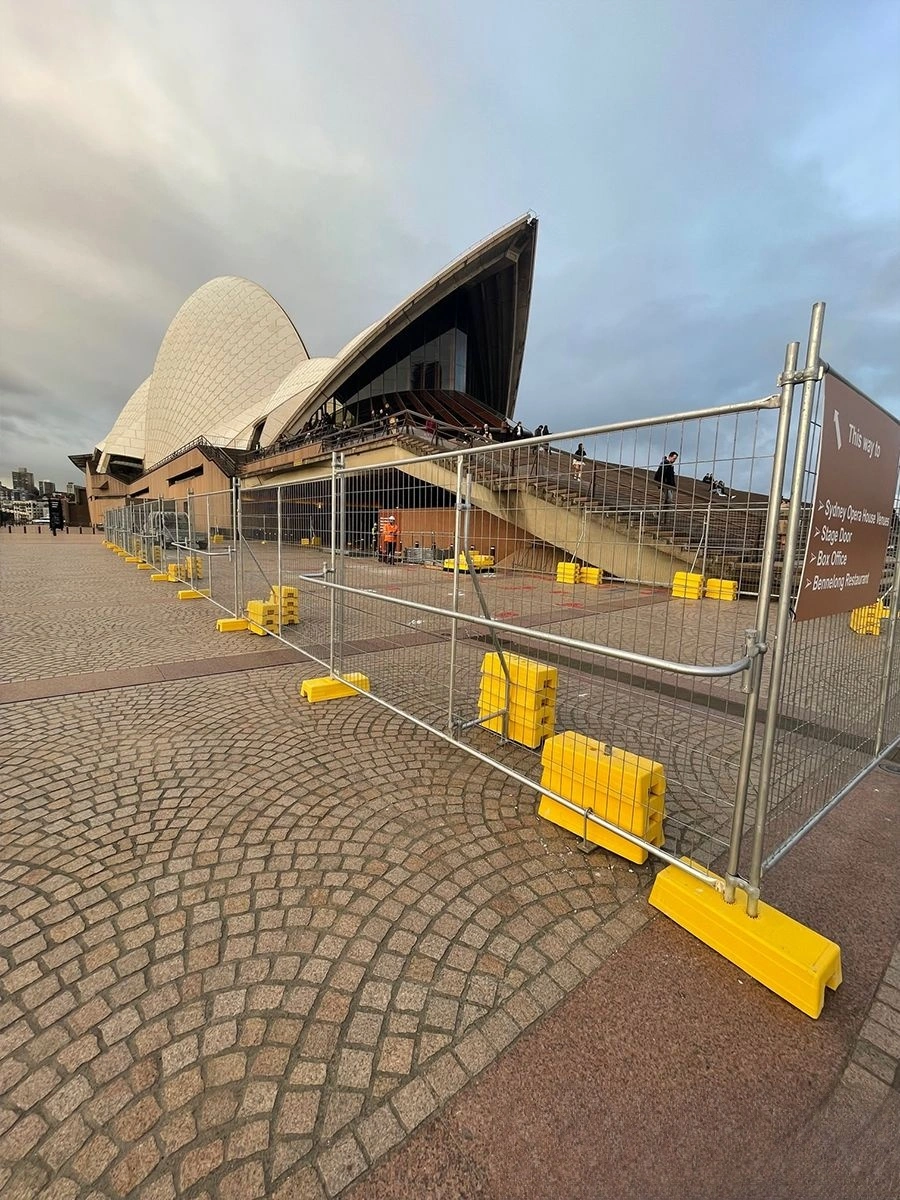
DB Fencing is the only Anping fence factory with its own plastic feet injection molding machine.
Most Anping fence manufacturers outsource their plastic feet to third-party molders. DB Fencing does not. Our in-house injection molding machine runs UV-stabilized HDPE in three base weights — 8 kg, 12 kg, and 14 kg — matched to panel dimensions. Owning this process cuts per-unit cost by 18% compared to buying from the same suppliers our competitors rely on. It also means your OEM branding color is mixed in-house, not restricted to a molder’s standard palette.
-
- Cost advantage: 18% reduction vs. outsourced feet. That margin stays in your pocket or funds a lower landed price for your customers.
- Custom color matching: Need RAL 5015 blue or a specific corporate green? The machine changes over in under 30 minutes. No minimum batch premium.
- Quality control: Every base is shot under the same roof as the welding line. Rejects are caught before assembly, not after container loading.
- Industry insight: Several Anping fence suppliers buy their feet from DB Fencing. When you order direct from us, you skip a middleman — and the markup they add.
This vertical integration isn’t a marketing line. It’s a structural cost and quality advantage you can verify during a factory tour or video audit. The machine runs daily, the tooling is ours, and the bases are molded to the same tolerance every cycle.
OEM Customization & Low MOQ: Distributor Flexibility
Starting at 100 panels, DB Fencing’s OEM program lets you test a new SKU without betting the whole container.
Most Anping factories demand 500–1,000 panels before they touch your logo. DB Fencing starts at 100. That means you can validate a new market — say powder-coated red for Canadian event barriers — with a single pallet. The OEM options include logo stamping into the panel frame (permanent, no decals to peel), RAL color powder coating, and branded polybag packaging with scannable barcodes. Sample approval takes 5 working days, and the production run matches that sample within a 2% visual quality tolerance.
The real margin protection comes from how we price repeat orders. Instead of a fixed annual quote that gets eaten by raw material spikes, our tiered pricing is linked directly to the LME steel billet index and Shanghai zinc spot price. When steel drops 8%, your per-panel cost drops automatically. When zinc jumps 12%, we cap the pass-through at 4% because our in-house plastic feet machine removes the plastic injection margin that other suppliers tack on. You can calculate your landed FOB cost inside 24 hours — we itemize steel, zinc coating, plastic, and logistics separately.
-
- MOQ floor: 100 panels standard galvanized; 500 panels for custom RAL. Lead time: 15 days from sample approval for color orders.
- The hidden competitor edge: Many local factories buy plastic feet from DB Fencing, then resell them in their own orders. Going direct eliminates that middle layer and its markup.
Container Loading & Export Logistics: Proven Efficiency
The shipping cube geometry sets your landed cost more than the unit price.
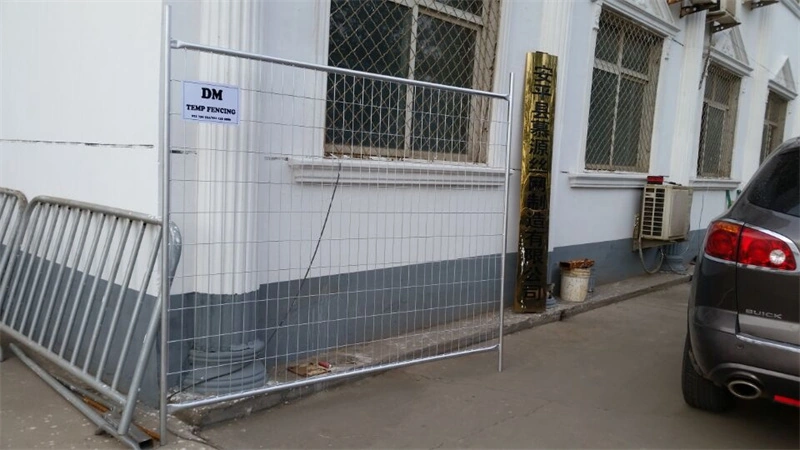
Standard 20GP containers carry 72 flat-stacked panels with interleaved foam sheets between each layer. The foam prevents surface abrasion that can compromise the galvanized coating. For a 40HQ container, 180 panels are loaded with the compact plastic feet packed into the remaining gaps — no cubic space is wasted.
Pre-shipment loading photos and pallet weight distribution sheets are captured for every container. Full documentation — bill of lading, packing list, and SGS inspection reports — accompanies each shipment. This eliminates customs delays and gives your logistics team a verified loading plan before the vessel departs.
Case Study: Canadian Distributor Scales with DB Fencing
From 100 panels to 2,000 per quarter in 18 months.
Their procurement team came on-site to the factory, ran random destructive weld tests, and used a handheld XRF gauge to verify coating thickness across 12 panels.
-
- Coating verification: All tested panels showed hot-dip galvanized coating >45 microns, confirmed via XRF per batch.
- Weld integrity: Joint pull strength met the 600N per cross-wire requirement with zero failures in the sample set.
- Logistics optimization: We reconfigured the container load plan, cutting per-container freight costs by 6% by nesting 180 panels per 40HQ instead of the standard 172.
- Custom powder coating: For their event barrier line, we supplied RAL 3000 red powder coating on the same production schedule without delaying their standard galvanized orders.
By early 2026, that 100-panel test turned into 2,000 panels per quarter. The freight savings alone paid for the custom color tooling within two shipments. That is what vertical integration looks like when you are not paying a middleman for plastic feet or third-party logistics.
Conclusion
The factory tour covered the obvious metrics — welding lines, capacity, and coating thickness. What separates a professional from an amateur is how they use that information in the negotiation. Most buyers stop at verifying the spec sheet. The ones who build long-term margins look for the hidden cost drivers. In DB Fencing’s case, the 18% savings from in-house plastic feet production means you can negotiate FOB pricing differently. A 100-panel test order at that lower base cost lets you validate the entire quality tolerance before committing to container volumes.
That flexibility is worth more than a factory tour video. Review DB Fencing’s product catalog to see which panel specifications match your current SKU needs. Start with a sample approval run at 100 panels — the logistics and coating data from that batch will tell you everything you need to know before scaling.
Frequently Asked Questions
Can I visit the DB Fencing factory in person?
Yes, factory visits are welcome. Scheduling in advance is recommended to ensure a full tour of the 10 welding lines and plastic feet machine. Contact the sales team to arrange a visit at your convenience.
What certifications do you have?
We hold ISO9001 and SGS certification, and our temporary fencing complies with Australian Standard AS 4687-2022/2007. Certificates can be shared upon request.
Do you offer OEM packaging with barcodes?
Yes, we offer OEM packaging and can add barcodes per your specifications. This is part of our customization service for global distributors and retailers. Send your packaging artwork for a quote.
What is the minimum order for custom powder coating?
Our standard low MOQ is 100 panels, but custom powder coating typically requires a higher minimum due to color change setup. Expect around 200 panels for custom colors. Contact us with your color and quantity for a specific MOQ.
How do you handle quality claims for exported containers?
We follow ISO9001 procedures for claims, reviewing documented evidence within 48 hours. Defects are addressed with replacement or credit per our warranty policy. All claims require photo or video evidence for review.