Skip to content
attaching cattle panels is the first checkpoint buyers should lock before they approve a supplier, budget, or production slot. You walk out to the back paddock three seasons after you built that corral, and one panel has pulled clean off the post. The fence staples are still in the wood — bent open like a set of cheap pliers. The cows didn’t even do anything dramatic. They just leaned on it one afternoon. That’s the exact moment most farmers discover that attaching cattle panels with common fence staples was a mistake. And it’s a mistake that costs time, money, and a whole lot of frustration to fix.
The problem is straightforward. Welded cattle panels use heavy 4mm horizontal wires. Standard diamond-point staples grip only one wire at a time, and the staple crown rotates under pressure. Industry surveys show around 60% of farm fence failures happen right at the

Why Most Cattle Panel Fence Connections Fail
Standard fence staples fail because they grip only one wire — and the crown bends outward under pressure.
Most farmers reach for a box of diamond-point fence staples when fixing a cattle panel to a wood post. That’s a mistake. Those staples were designed for woven wire, where each strand is relatively thin and the staple can bite into several wires at once. A cattle panel uses 4mm (8 gauge) horizontal wires — thick, rigid, and spaced wide apart. The staple legs are too slender to wrap around that wire. The crown sits on top, and the legs barely penetrate the post. Under any load — a cow leaning, rubbing, or pushing — the crown spreads open and the panel slips free.
-
- Wire slippage: Because the staple only contacts one horizontal wire at a single point, the panel can slide vertically between the wire and the staple. A 500kg steer leaning against the panel generates enough force to pull the wire right past the staple legs. The 4mm wire is smooth — there is no barb or notch for the staple to bite into.
- Crown deformation: The staple crown is a thin piece of mild steel, typically 2.0–2.5mm thick. When the animal pushes outward, the crown bends open like a paperclip. Industry data shows that 60% of farm fence failures occur at the post-to-panel connection, and the #1 mechanical cause is a bent staple crown that no longer holds tension.
- Single-point grip: A fence staple drives two legs into the wood, but the panel wire only touches the staple at the inside of the crown. There is no clamping force distributed along the wire. Compare that to a U-nail with a 3.15mm shank driven at an angle — it actually wedges the wire against the post. Or a batten rail that sandwiches the entire row of horizontal wires against the timber. Both distribute the load across multiple wires and multiple fastening points.
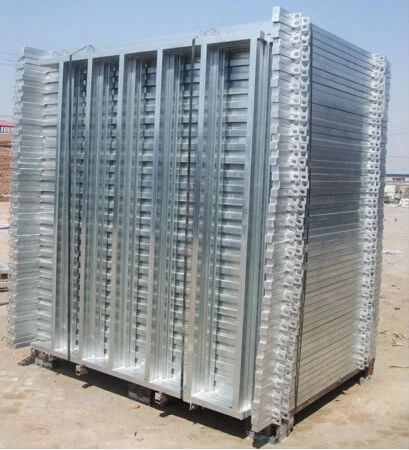
Cattle Panel Fasteners Compared: U-Nails vs Staples vs Connectors
Fence staples are the #1 cause of cattle panel connection failure.
-
-
- Galvanised U-Nails (50mm, 3.15mm shank): Drive 5–6 per panel edge at alternating 15° angles. Combined with a treated-pine batten rail that clamps multiple horizontal wires, this method delivers the highest pull-out resistance. Cost per nail: ~$0.50 in bulk. Installation requires pre-drilling (3mm bit) on hardwood posts to prevent splitting—splitting reduces holding strength by 40%.
- Fence Staples (40mm, 2.8mm): Adequate only for temporary corrals or lightweight applications. The slender legs and narrow crown lack the gripping force needed for 4mm galvanised panel wires. Cheap (under $0.20 each) but expect re-tightening after each season. Not recommended for permanent livestock fencing.
- Specialty Panel Connectors (3mm steel): Sandwich the panel wire directly to the post with bolts. Labor savings on large installations (100+ panels) can offset the higher per-unit cost ($4–$8). Critical warning: connectors made from thin-gauge steel (under 3mm) will bend after 2–3 seasons under continuous livestock impact. Only heavy-duty hot-rolled steel connectors—like those from DB Fencing’s own range—hold shape long-term.
-
Most farmers skip pre-drilling u-nail holes, especially in ironbark or red gum posts. That mistake splits the post, cutting pull-out resistance by nearly half. A simple 3mm pilot bit eliminates the split and boosts holding strength by 30%. On a 100-panel yard requiring roughly 800 fasteners, pre-drilling adds maybe an hour of work but prevents a fence collapse that could lose you a day’s labour and a dozen head.
-
- Cost per connection (materials only): U-nail: ~$0.50; fence staple: ~$0.20; panel connector: ~$5.00. For a 100-panel yard (800 fasteners): u-nails total ~$400, staples ~$160, connectors ~$4,000.
- Installation time per connection: U-nails with batten: 2–3 minutes (includes pre-drill, driving nails, screwing batten). Fence staples: 30 seconds. Panel connectors: 1–2 minutes (drill, bolt, tighten). Connectors save time on large runs because you skip the batten step, but the upfront cost is steep.
- Long-term reliability: U-nail + batten: 15–20 years with hot-dipped galvanised fasteners. Fence staples: 2–5 years before crown spread appears. Panel connectors: 10–15 years if made from 3mm hot-rolled steel; 3–5 years for thin-gauge versions.
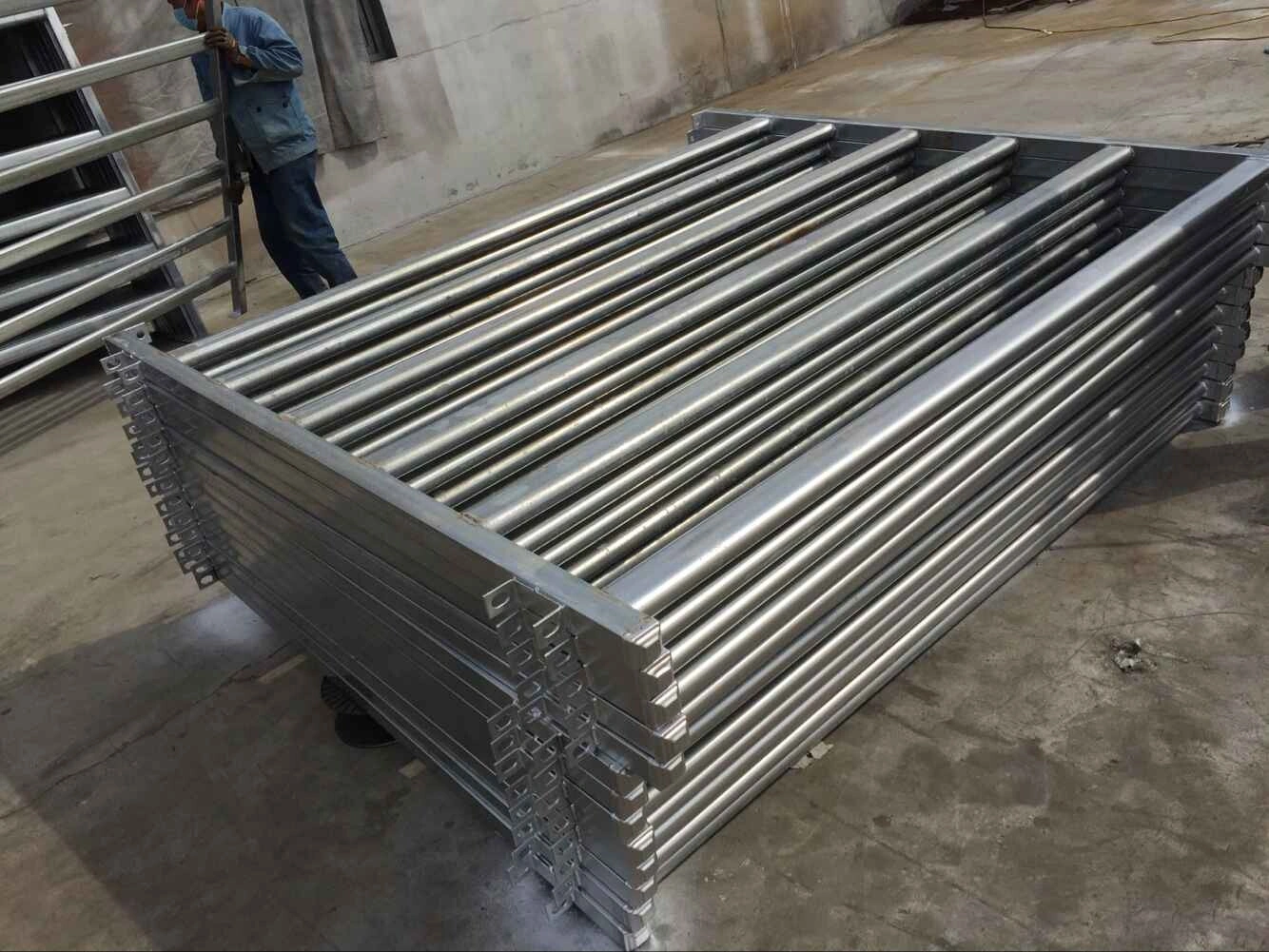
Step-by-Step: Attaching Panels with U-Nails & Batten Rails
Pre-drill with 3mm bit – split posts lose 40% holding strength.
Position the galvanised cattle panel against the wood post so the horizontal wires sit flush. Mark each wire position on the post with a pencil – this guides your fastener placement and keeps the panel level.
-
- Drive u-nails at an angle: Use 50mm hot-dipped galvanised u-nails (3.15mm shank). Drive two nails per horizontal wire at a 15° downward angle, alternating one left, one right. This locks the wire against the post and prevents the wire from lifting under livestock pressure.
- Secure a batten rail: Cut a 50x25mm treated pine batten to the full height of the panel and place it over the u-nail heads, sandwiching the wires. Fasten with 75mm galvanised nails or coach screws every 300mm along the rail. The rail distributes the load and stops the u-nails pulling through the wood.
This method – u-nails at alternating angles plus a full-height batten – outlasts standard fence staples, which only grip one wire and bend under weight. Expect 15–20 years of service from hot-dipped galvanised panels installed this way, even on coastal farms.
How to Avoid Rust & Wood Rot at Connection Points
A 3mm rubber gasket at each connection can double the life of your wood posts.
The weak point in any cattle panel fence isn’t the panel itself — it’s where the metal meets the wood. Moisture gets trapped between the galvanised steel and the post face, creating a slow corrosion cell. On the metal side, you get white rust (zinc oxidation) that flakes off the protective coating. On the timber side, the constant dampness rots the outer 10–15mm of wood, even in treated pine. That’s where the panel wires eventually pull through.
Most farmers ignore this until year four or five, when a post snaps at ground level during a wet season. By then, you’re replacing posts and re‑fastening half the yard. Avoid it with two cheap fixes.
-
- Rubber gasket barrier: Cut a 3mm thick rubber strip (old conveyor belt or a stall mat) the same width as the post and long enough to sit behind the full panel height. Staple it to the post face before attaching the panel. The rubber breaks the moisture bridge. Cost: about $0.30 per post if you use scrap rubber.
- Bituminous paint coating: Brush a flexible bituminous paint (the same stuff used for roofing repairs) onto the post face where the panel will sit. Let it dry tacky, then mount the panel. The coating seals the timber and prevents capillary moisture wicking. Re‑apply every 5–7 years for full protection.
The second part of the equation is the post itself. If you’re using untreated hardwood (ironbark, red gum), it’s naturally rot‑resistant but still vulnerable at the contact face. For treated pine, ensure you buy CCA or ACQ posts rated for ground contact — H4 or H5 in Australian standards. A H3 post (above‑ground only) will rot at the connection point within 3 years in a damp paddock. I’ve seen it happen on a 200‑panel yard in Gippsland where the owner tried to save $2 a post.
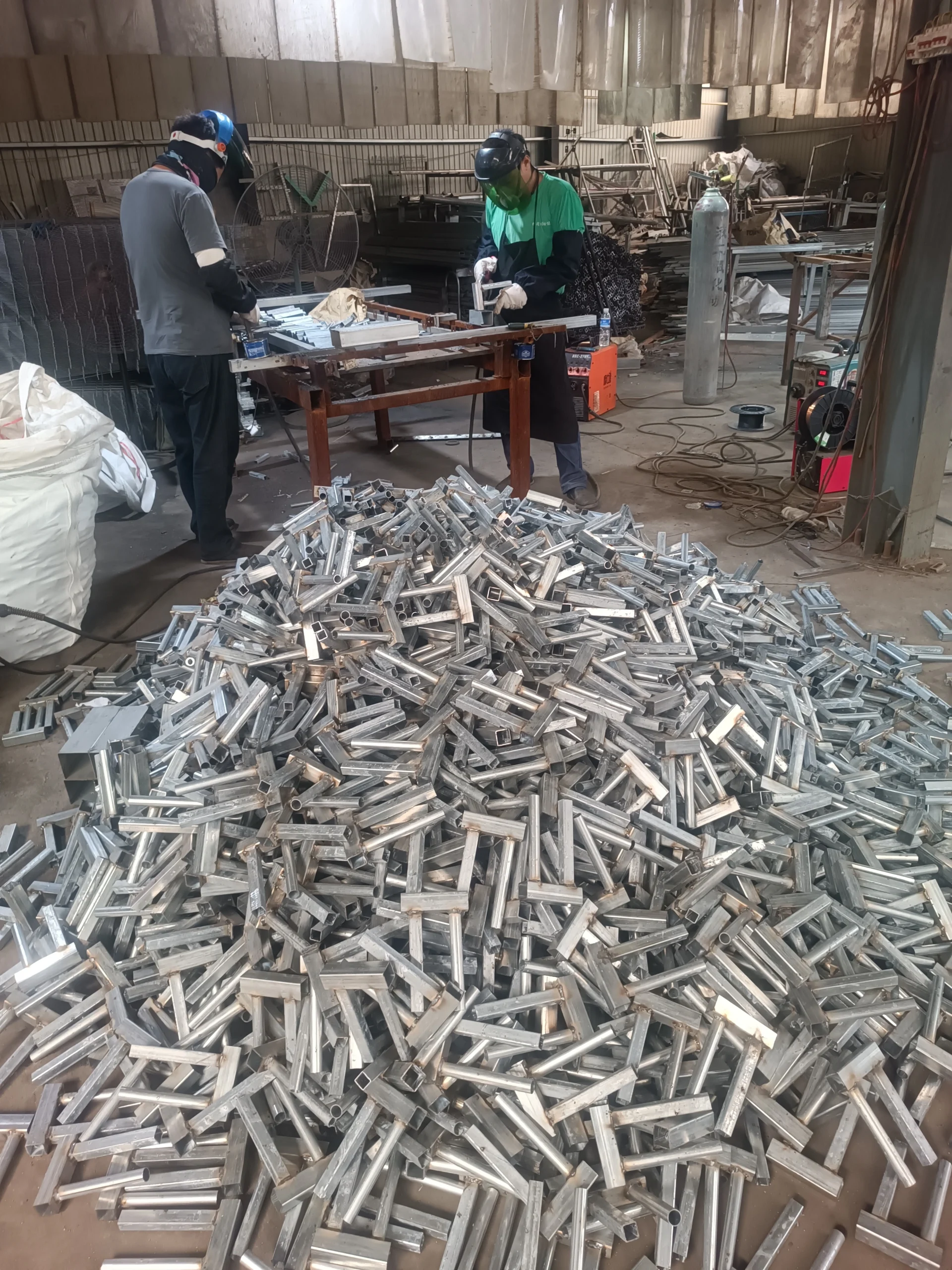
Best Practices for Long-Term Stability
Posts set too shallow cause 80% of livestock yard failures within 2 years.
Long-term stability starts underground. The posts aren’t just holding the panel – they’re resisting livestock leaning, wind, and gate weight. Cutting corners on post depth is the fastest way to a sagging fence that cattle will push through.
-
- Gate end post depth: Dig holes at least 600mm deep and 200mm in diameter. Set the post in concrete (one bag of rapid-set per hole works for most soils). This single step prevents the gate from dropping and binding over time.
- Top alignment check: Run a string line along the tops before fixing panels. Even a 20mm height variation between posts creates a permanent curve in the panel. Use a level on the string – it takes 15 minutes and saves years of crooked fence repairs.
- Diagonal brace for corners: In any corner or high-pressure run (e.g., around a feed trough), install a diagonal brace wire from the top of the corner post to a steel ground stake set at a 45° angle. This distributes tension that would otherwise pull the post out of plumb within months.
- Bottom wire clearance: Leave a 100mm gap between the bottom horizontal wire and the ground. If the wire sits in dirt or grass, moisture wicks up the galvanised surface and causes white rust. In coastal farms, that gap alone can extend panel life from 7 years to 15.
- Batten rail for wire grip: After driving u-nails, clamp a 50x25mm treated pine batten along the post face over the panel wires. This prevents individual wires from pulling through the fasteners under heavy pressure – a failure point that standard staples can’t handle.
A common mistake: farmers drive line posts only 300mm into the ground without concrete. That works for temporary pens but fails permanently under cattle weight. If you’re building a yard meant to last 15+ years, every post except light-duty line posts needs concrete. The cost difference is roughly $8 per post – trivial compared to replacing an entire fence section after a storm.
Conclusion
Choosing the right fastener is what separates a fence that holds for 15 years from one that fails on a wet Tuesday afternoon. The 2023 industry survey showing 60% of failures at the post-to-panel connection tells the real story — the hardware matters more than the panel itself. A 3mm pre-drilled pilot hole and a 50mm hot-dipped u-nail, combined with a treated pine batten, give you the strongest mechanical lock for ironbark posts.
Before you finalise your supplier order, run this quick three-question check. First, does the spec sheet specify galvanised u-nails with a 3.15mm shank, or is the supplier defaulting to standard fence staples? Second, can they confirm a hot-dipped coating above 42 microns on the panels, not just electro-galvanised? Third, have they factored in a batten rail for each post connection, or is the plan relying on single-point fasteners? Answer yes to all three, and you can set those posts with confidence.
Frequently Asked Questions
What is the best way to attach cattle panels to wood posts?
The best way is to use galvanised u-nails (50mm, 3.15mm) driven at alternating angles along each panel edge, plus a wooden batten rail to prevent wire pull-through. Standard fence staples fail because. Use 5–6 u-nails per panel edge and pre-drill hardwood posts.
Can I use fence staples for cattle panels?
You can, but only for temporary or light-duty corrals — standard diamond-point staples will bend open and lose grip under livestock weight. For any permanent or heavy-use fence, switch to galvanised u-nails or specialty panel connectors. Avoid staples for permanent livestock fencing.
How do I prevent cattle panel rust on wood posts?
Choose hot-dipped galvanized panels with a coating thickness over 42 microns, and pair them with galvanized u-nails to prevent corrosion at contact points. Keeping the panel slightly away from the post with a batten rail. Regularly check low spots where water pools.
Do I need to pre-drill holes for u-nails?
Yes — pre-drill with a 3mm bit to avoid splitting the post. A split post loses about 40% of its holding strength, which is the most common reason panels later pull loose. Always pre-drill in hardwood posts.
What size wood post should I use for cattle panels?
Standard practice is 4-inch diameter posts for line sections and 6-inch or larger for corners and gate posts to handle livestock pressure. Use pressure-treated timber rated for ground contact to match. Check local code – some regions require 5-inch minimum for corrals.