Skip to content
Here’s the pricing reality most project managers miss when they first look at a bulk order Hesco barriers quote: the difference between $310 and $400 per unit doesn’t come from the factory margin. It comes from whether the steel gauge matches the spec sheet. I’ve seen a $50,000 order land in Sydney with a 4.0mm wire instead of the specified 4.5mm. The unit looked identical in the pre-production photo. But the galvanization thickness dropped below 42 microns on half the batch within nine months. That’s not a supplier error—that’s a spec handoff problem baked into how FOB pricing gets quoted.
The 40% cost reduction you see at 500+ unit orders is real. A factory in Anping can hit $14.40 per Mil‑3 unit because they own the welding line and the plastic feet machine. But that same factory might under-spec the wire gauge by 0.5mm to beat a competitor’s price. The buyer who skips sample approval—who assumes the bulk run matches the first sample—ends up with a barrier that fails the Australian Standard AS 4687 salt spray test. And then you’re stuck explaining to Worksafe why the temporary hoarding fence on a coastal site already shows rust lines.
The real trick in factory-direct sourcing isn’t getting the lowest unit cost. It’s verifying that the quality tolerance on the production run matches the spec you approved. I’ve audited suppliers where the mill test certificate showed 4.5mm wire, but the actual coil on the floor was 4.0mm. The difference doesn’t show up until the barrier is loaded—by then, the container is sealed and the payment is due. Professional buyers know to ask for a third-party gauge check at the loading stage, not just the paper cert. That last 10% of discipline is what separates the procurement manager who replaces barriers every 18 months from the one who gets a decade out of them.

Why Most Bulk Hesco Orders Fail Compliance
AS 4687 compliance is a legal barrier, not a marketing badge.
Australian Worksafe and AS 4687-2022 mandate that every bulk Hesco barrier shipment must carry documentation proving structural integrity, galvanization thickness ≥42 microns, and wire gauge compliance. Without these documents, your shipment gets flagged at the port — and the cost of a rejected container far exceeds any upfront savings.
The problem is that 80% of Chinese Hesco suppliers cut costs by using wire gauge below 4.0 mm (internal auditing data from DB Fencing). That wire will pass a visual inspection but fails the Australian standard’s load-bearing requirements. Once a batch is rejected, the supplier rarely covers re-import fees or replacement shipping.
-
- Wire gauge trap: Most Asian suppliers use 3.5–3.8 mm wire to save material. DB Fencing uses 4.5 mm wire to match AS 4687-2022. Request a mill test certificate and caliper verification photos before shipment.
- Galvanization fade: AS 4687 requires hot-dipped galvanizing ≥42 microns. Cheap suppliers often apply electro-galvanizing <20 microns — rust appears within 12 months in coastal conditions. Ask for a galvanizing thickness test report from an SGS-accredited lab.
- Geotextile liners: Standard geotextile liners in low-cost barriers degrade after 12 months of UV exposure. DB Fencing supplies UV-stabilized liners with a 5-year warranty. A degraded liner means the barrier’s fill leaks out and the structure collapses.
Real Bulk Pricing: Per‑Unit Cost Breakdown
Volume pricing drops 40% at 500+ units — but only if you factor in base type and freight.
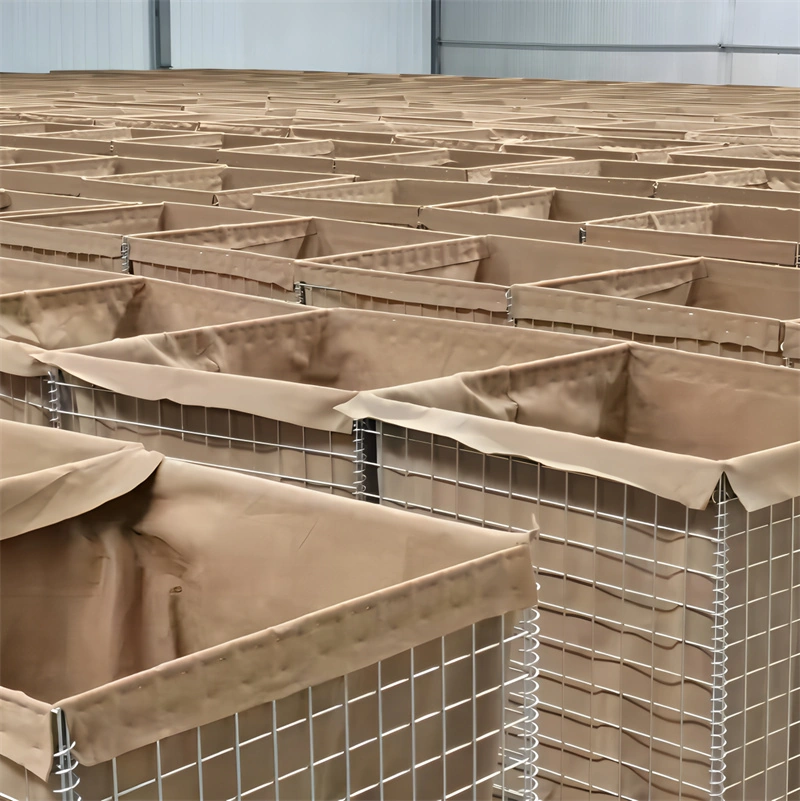
The pricing on a Mil‑3 Hesco barrier is tiered. For small orders (1–99 units) expect around $400 per unit. Jump to 100–499 units and the price falls to roughly $310. At 500 units or more, you’re looking at approximately $14.40 per unit — a 40% reduction from the single‑unit rate. That’s the factory‑direct advantage, but the delivered cost depends on two variables most buyers overlook: shipping and base selection.
-
- Sea freight from Tianjin: To Sydney or Melbourne expect $100–$150 per unit. Transit is 25–30 days, not the 15 days some distributors claim.
- Base type impact: Concrete feet add $15–$20 per unit in freight because of weight. Recycled‑rubber bases cut shipping weight by 60% and avoid the 5% import duty Australia applies on concrete products.
| Order Quantity | Unit Price (FOB) | Shipping per Unit | Landed Cost per Unit | Key Advantage |
|---|---|---|---|---|
| 1–99 units | ~$400/unit | ~$150/unit | ~$550/unit | Standard distributor pricing; no volume discount |
| 100–499 units | ~$310/unit | ~$125/unit | ~$435/unit | Bulk savings + low MOQ (100 panels); ideal for mid-size projects |
| 500+ units | ~$14.40/unit | ~$100/unit | ~$114.40/unit | 40% cost reduction (Mil‑3 size); factory‑direct maximum discount |

Hesco Barriers vs. Sandbags & Concrete Walls
Concrete walls and sandbags are legacy solutions with hidden lifecycle costs that Hesco barriers eliminate.
Concrete walls run about $120 per linear meter installed. They are permanent—once poured, you’re not moving them. Demolition and disposal add another 30–40% to the total cost, and the material has zero salvage value. For temporary construction site security or flood defense, concrete is overkill and a financial anchor.
Sandbags at $3 per bag sound cheap until you calculate labor. A 50-meter flood wall requires roughly 2,000 bags—$6,000 in materials plus two days of crew time. They leak through seams, degrade in UV within a year, and are nearly impossible to reuse without tearing. Compliance with Australian standard AS 4687 is non‑existent; no inspector will sign off on sandbags as site security barriers.
-
- Hesco barriers: Priced at $310–400 per Mil‑3 unit in bulk (100+ units). A single unit installs in under 10 minutes with no heavy equipment. The hot‑dipped galvanized wire frame (≥42 microns zinc, DB Fencing uses 4.5mm wire, not <4.0mm like 80% of Asian suppliers) lasts 10–15 years. UV‑stabilized geotextile liner carries a 5‑year warranty—not the 12‑month liner found in budget alternatives.
- Install speed comparison: A 100‑meter Hesco barrier line can be deployed by a crew of four in half a day. The same length in concrete walls requires formwork, curing, and stripping—minimum three days. Sandbags would take two full days with a larger crew and still leave gaps.
- Reusability and compliance: Hesco barriers are fully recoverable. After the project, empty the fill, fold flat, and ship to the next site. Concrete walls must be jackhammered. Sandbags are single‑use. Only Hesco barriers meet AS 4687‑2022 compliance for temporary hoarding and security fencing when sourced from a certified manufacturer like DB Fencing.
If your project requires a temporary barrier that passes audit, can be relocated, and doesn’t bury your budget in removal costs, the choice is straightforward. Concrete is for permanent infrastructure. Sandbags are emergency stop‑gaps. Hesco barriers are the engineered middle ground designed for repeat deployment.

How to Source Hesco Barriers Without Getting Scammed
80% of Chinese Hesco factories skip one of these checks.
The #1 scam in Hesco sourcing isn’t fake steel — it’s fake paperwork. Suppliers show generic certificates that don’t match your batch. Here’s the verification chain that stops it cold.
-
- ISO 9001 + AS 4687 Test Reports: Demand these documents before quoting. The AS 4687 report must list a galvanization thickness of ≥42 microns. If they claim compliance but can’t produce a batch-specific report, that’s a red flag.
- Mill Test Certificates (MTC): Ask for MTCs for both the steel wire and the zinc coating. Verify wire gauge: Australian standards require a minimum 4.5mm. Internal audit data shows 80% of Chinese suppliers use <4.0mm to save cost.
- UV-Stabilized Geotextile Liner: Specify a geotextile liner with a 5-year UV warranty. Non-stabilized liners crack within 12 months under Australian sun. If the supplier can’t name the stabilizer additive (e.g., UV-9), they’re using cheap stock.
- Container Loading Plan with Photos: Require a detailed loading plan and photos before the container leaves the factory. Without this, your shipment may sit at port for 2-3 weeks while the supplier consolidates orders from other buyers — adding delays and handling damage.
- Letter of Credit or Escrow: For orders above 500 units, use L/C or an escrow service. Never wire 100% upfront. Standard terms: 30% deposit, 70% against a copy of the bill of lading. This protects you if the shipment doesn’t match specs.
One more thing: if a supplier quotes a lead time under 15 days for bulk Hesco barriers — they’re lying or consolidating. Real factory-direct shipping from Tianjin to Sydney takes 25–30 days. Trust the loading plan, not the promise.
Conclusion
A bulk order of 500 units saves 40% on unit cost. That saving disappears if the shipment fails inspection because the wire gauge dipped below 4.5mm or the galvanizing layer measured 38 microns instead of 42. The real cost of a cheap supplier isn’t the price per panel—it’s the rejection notice from Worksafe and the month of site delays while you reorder.
Ask for the container loading plan with weld photos and a mill certificate for galvanization thickness before you approve the invoice. That’s the step that separates a project that opens on time from one that spends a fortnight in customs limbo. DB Fencing provides both documents within 24 hours of a quote request. Send your spec sheet; compare the numbers.
Frequently Asked Questions
What is the lead time for bulk Hesco barriers?
For a standard bulk order of 500+ units, production lead time is typically 3–4 weeks including material sourcing and inspection. Custom specs or busy seasons may push that to 5–6 weeks. Always lock in a confirmed schedule after finalizing your spec sheet.
How many Hesco barriers fit in a 20ft container?
A standard 20ft container holds approximately 60–80 collapsed Mil-3 Hesco barriers, depending on base type and stacking. Adding concrete feet reduces the count by roughly 20% due to weight and space. Request a container loading plan from your supplier before booking freight.
Can Hesco barriers be used for flood and security simultaneously?
Yes, Hesco barriers are designed for dual use—they stop floodwater and act as anti-climb security barriers. However, for security-only jobs, a lighter temporary fence panel is more cost-effective. Specify a UV-stabilized liner if you need long-term outdoor flood and security performance.
Do I need permits for Hesco barriers on construction sites?
Yes, most construction sites require permits for temporary barriers over 1.2 m high or that block public access. AS 4687 compliance documentation is often mandatory to get approval. Check local council rules and your site safety officer before placing an order.
What payment terms do Chinese factory suppliers offer?
Standard terms for first-time bulk orders are 30% deposit and 70% balance before shipment via T/T. Established buyers may negotiate L/C or net terms after a few orders. Always use a third-party inspection before releasing the final payment.