Skip to content
cattle panel durability is the first checkpoint buyers should lock before they approve a supplier, budget, or production slot. A novice wholesaler ordering their first container of cattle panels faces a simple question: which coating actually lasts? The answer determines whether that inventory moves within a season or sits in the yard generating warranty calls. Cattle panel durability comes down to one manufacturing detail most suppliers skip in their pitch — how the zinc gets onto the steel.
Here is the reality of the global wire mesh market. Mills in Anping produce millions of panels a year. Some use pre-galvanized wire, coat it before welding, and sell at a price that looks attractive on a spreadsheet. Others weld the frame first, then hot-dip the entire finished panel in molten zinc at >42 microns. The difference in lifespan is not subtle. Pre-galvanized panels often show rust at weld joints within 18 months in a feedlot. Hot-dipped panels routinely cross 15 years in the same environment. That 5% price gap on the invoice disappears fast when you factor in return rates and customer trust.
HDG vs Pre-Galvanized: The Weld-Zinc Gap
The weld joint is where cheap panels die.
Pre-galvanized steel starts with a zinc coating applied to the wire coil. The wire is then cut, straightened, and resistance-welded into a panel. The welding arc hits 1400°C. That heat vaporizes the zinc around every single weld joint. On a standard 16-foot cattle panel with 40 vertical wires and 20 horizontal cross-wires, that creates roughly 800 unprotected weld points. Rust begins there within 18 months in a wet feedlot environment.
Hot-dipped galvanized panels are built differently. The panel is welded first from uncoated steel wire. Then the entire welded assembly — frame, mesh, and every joint — is submerged in a bath of molten zinc at 450°C. The zinc bonds metallurgically to the steel, forming a uniform coating that covers every surface, including the interior of every weld intersection. The result is a continuous barrier with no weak points.
-
- Coating thickness (ISO 1461): HDG panels achieve a local coating thickness >42 microns at all points, including welds. Pre-galvanized panels typically measure 20–30 microns on the wire surface and 0 microns at the weld.
- Salt spray test performance: HDG panels (>42 microns) pass 500+ hours to red rust in ASTM B117 testing. Pre-galvanized panels fail at <100 hours at weld locations.
- Field lifespan in humid livestock environments: HDG panels show no weld rust for 8–10 years in beef feedlots. Pre-galvanized panels show visible rust at welds within 18 months.
There is one practical limitation: if a rancher cuts a hot-dipped panel to size on-site, the cut edge exposes bare steel. That edge must be re-coated with a cold galvanizing spray or zinc-rich paint to restore corrosion protection. This is covered in detail in the sibling article ‘How to Cut Cattle Panels: Tools, Safety, and Avoiding Sharp Edges’.
PVC Coating: Protection or Problem?
PVC coating hides corrosion until the panel fails — and that failure costs you a customer.
PVC coating is not a structural upgrade. It is a plastic sleeve applied over a steel core — either pre-galvanized or black wire. The coating itself does not prevent rust. It delays the visual of rust. That distinction matters when you are buying for a feedlot in Alabama or a dairy in Wisconsin.
-
- Failure mechanism: UV exposure and livestock impact crack the PVC. Moisture seeps in. The wire beneath rusts. The PVC then bubbles and delaminates. What looks like a ‘coating failure’ is actually steel corrosion that started months earlier.
- Coastal rejection rate: In coastal or high-humidity ranch environments, PVC-coated panels over a pre-galvanized core show a 30% higher rejection rate after 5 years compared to standard hot-dipped galvanized panels. That is not a cosmetic issue — that is inventory that cannot be sold.
- Premium PVC exists — but rarely worth it: Premium PVC over a hot-dipped core costs 20–25% more than standard HDG. For livestock pressure — cattle leaning, rubbing, kicking — that premium rarely pays back. The PVC still cracks. The steel still rusts. You are paying extra for a longer delay, not a permanent solution.
- Powder coating is worse: Powder coating is thinner than PVC and chips under livestock impact. Once chipped, rust spreads under the film — filiform corrosion — and the panel looks terrible within 2 years. Powder coating belongs on ornamental gates, not cattle panels.
The practical takeaway for a wholesaler: If a customer insists on a colored panel for a horse property or a visible front corral, request PVC over a hot-dipped core — and expect to pay more. For 90% of livestock applications, skip the plastic entirely. Hot-dipped galvanized outlasts every coated option in the same environment, and it does not hide its failures. Rust on HDG is visible and slow. Rust under PVC is invisible until the panel is unsellable.
Paint vs Galvanized: Why Paint Fails
Paint is a surface layer that chips on impact.
Paint is a topical coating. It sits on top of the steel. When panels are stacked in a container for ocean freight, the edges rub. Paint chips off in transit. When a cow leans on a panel, the same thing happens. Once the paint film is broken, moisture wicks under the surrounding coating. This triggers filiform corrosion — rust that spreads laterally beneath the paint, lifting it in long blisters. You don’t see the full damage until the paint falls off in sheets.
The data is clear: a painted cattle panel loses roughly 50% of its corrosion protection after the first scratch. That scratch becomes a rust hotspot that expands season after season. Veteran North American ranchers reject painted panels on sight. They know that within two winters, a painted panel in a feedlot will show rust at every contact point. Wholesalers who stock painted panels for the North American agricultural market face return rates above 15% — and that’s if the rancher doesn’t simply refuse delivery.
Hot-dipped galvanizing works differently. The zinc coating is metallurgically bonded to the steel. When a scratch occurs, the exposed steel becomes the cathode in a galvanic cell, and the surrounding zinc corrodes preferentially. The zinc corrosion products — zinc oxide and zinc hydroxide — are insoluble and form a dense, adherent layer that seals the scratch. This is called the self-healing property of zinc. The coating doesn’t heal like skin, but the corrosion byproducts physically block oxygen and moisture from reaching the steel. A hot-dipped galvanized panel with a scratch still has full corrosion protection at the scratch site. A painted panel with a scratch has already failed at that spot.
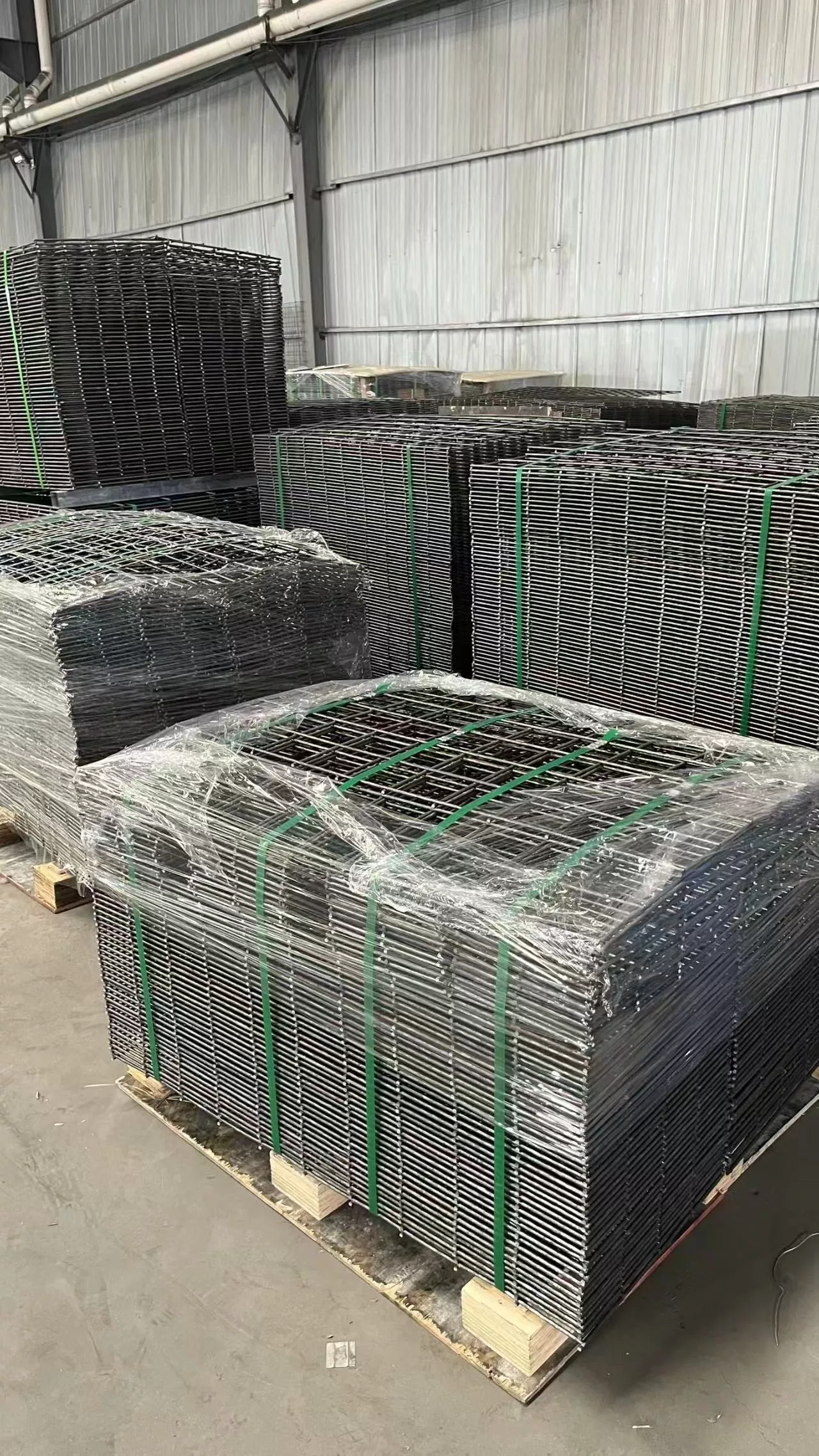
Cattle Panel Lifespan by Environment
The coating determines lifespan more than the steel itself.
Hot-dipped galvanized (HDG) panels with a zinc coating exceeding 42 microns per ISO 1461 reliably deliver 15–20 years in humid livestock environments. Pre-galvanized panels, where the steel is coated before welding, fail at the weld joints within 18 months in feedlot conditions because the welding heat burns off the zinc. PVC coating over a pre-galvanized core shows a 30% higher rejection rate after 5 years in coastal areas compared to HDG. Painted panels lose 50% of their corrosion protection after the first scratch from livestock impact or shipping abrasion.
-
- HDG (42+ micron): 15–20 years. Zinc metallurgically bonds to the entire welded panel, including joints. Self-healing scratches.
- Pre-galvanized: 3–6 years. Zinc burns off at every weld point — rust starts there. Salt spray test fails under 100 hours at welds.
- PVC over pre-galvanized: 5–8 years. UV cracks PVC, moisture wicks in, rust bubbles the coating. Delamination common in wet climates.
- Paint over black wire: 1–3 years. Topical coating chips in transit or under cattle pressure. Filiform corrosion spreads beneath paint film.
The 42-micron threshold is not a marketing number — it is the ISO 1461 minimum for achieving 15-year targets in agricultural environments. Wholesalers should verify coating thickness using a magnetic thickness gauge on random panels from each batch and request the Mill Certificate from the supplier. A 5% higher upfront cost for HDG eliminates a 40% warranty claim rate seen with pre-galvanized panels in humid regions.
Conclusion
The lifespan of a cattle panel comes down to one thing: the coating at the weld. Pre-galvanized steel burns off its protection at every joint. Hot-dipped galvanizing after welding seals those joints for 15-20 years. That difference separates a 5% return rate from a 40% warranty crisis. You are stocking for North American farmers. They want panels that last. They will remember the brand that sold them rust. Stock hot-dipped galvanized. Start with a trial order of 100 panels. See the spec sheet. See the difference.
Frequently Asked Questions
What is the lifespan of a cattle panel?
A hot-dipped galvanized cattle panel with a zinc coating over 42 microns reliably lasts 15–20 years. In contrast, pre-galvanized panels often rust at the welds within 3–5 years, and standard PVC coatings can. Lifespan depends entirely on the coating type and environment.
How long does a galvanized steel fence last?
A hot-dipped galvanized steel fence typically lasts 15–20 years in outdoor conditions. The key is the zinc thickness: coatings over 42 microns bond metallurgically to the steel, preventing rust at weld points for 8–10. Always specify hot-dipped, not pre-galvanized, for maximum lifespan.
Which fence panels last the longest?
Hot-dipped galvanized panels last the longest, with a service life of 15–20 years. They outperform pre-galvanized panels, which fail at welds in 3–5 years, and PVC-coated panels, which degrade in 5–8 years. For long-term value, choose hot-dipped galvanized over other coatings.
What is the longest lasting fence coating?
Hot-dipped galvanizing is the longest lasting fence coating, providing 15–20 years of protection. Unlike paint or PVC, it forms a metallurgical bond that resists chipping and hides no underlying rust. No other coating matches its durability in harsh outdoor environments.
How much does a 16 ft cattle panel cost?
Pricing for a 16 ft cattle panel varies by coating and quantity, but expect a 5% premium for hot-dipped galvanized over pre-galvanized. For an exact quote, you need to specify the. Request a quote with your spec and volume for accurate pricing.