Skip to content
We see this naming confusion on 30% of incoming RFQs. A distributor in Texas ordered 500 “hog panels” last spring and received 34-inch panels with uniform spacing — because their retail customers call 50-inch cattle panels “hog panels” when they use them for pig enclosures. That mismatched shipment sat in the warehouse for six weeks. The customer rejected it. The distributor ate $4,200 in restocking fees and freight. The problem isn’t that you don’t know the difference between a cattle panel vs hog panel — it’s that your retail customers use the terms interchangeably, and if your PO doesn’t specify exact dimensions, you’ll get whatever the supplier decides to ship.
We pulled three years of production data and mapped exactly where distributors get caught out. Height is the obvious one: 34 inches versus 50-52 inches. Mesh spacing trips people up too — graduated versus uniform requires different welding machine programming, and low-cost suppliers will sometimes skip that step and ship uniform mesh labeled as “hog panel.” The galvanisation gap is the real margin killer. Electro-galvanised coating at 8-12 microns rusts through in one to three seasons. Hot-dipped at 42+ microns lasts 15-20 years. The comparison table below gives you the exact specs to put on your next purchase order so the supplier ships what you actually ordered — not what they think you meant.
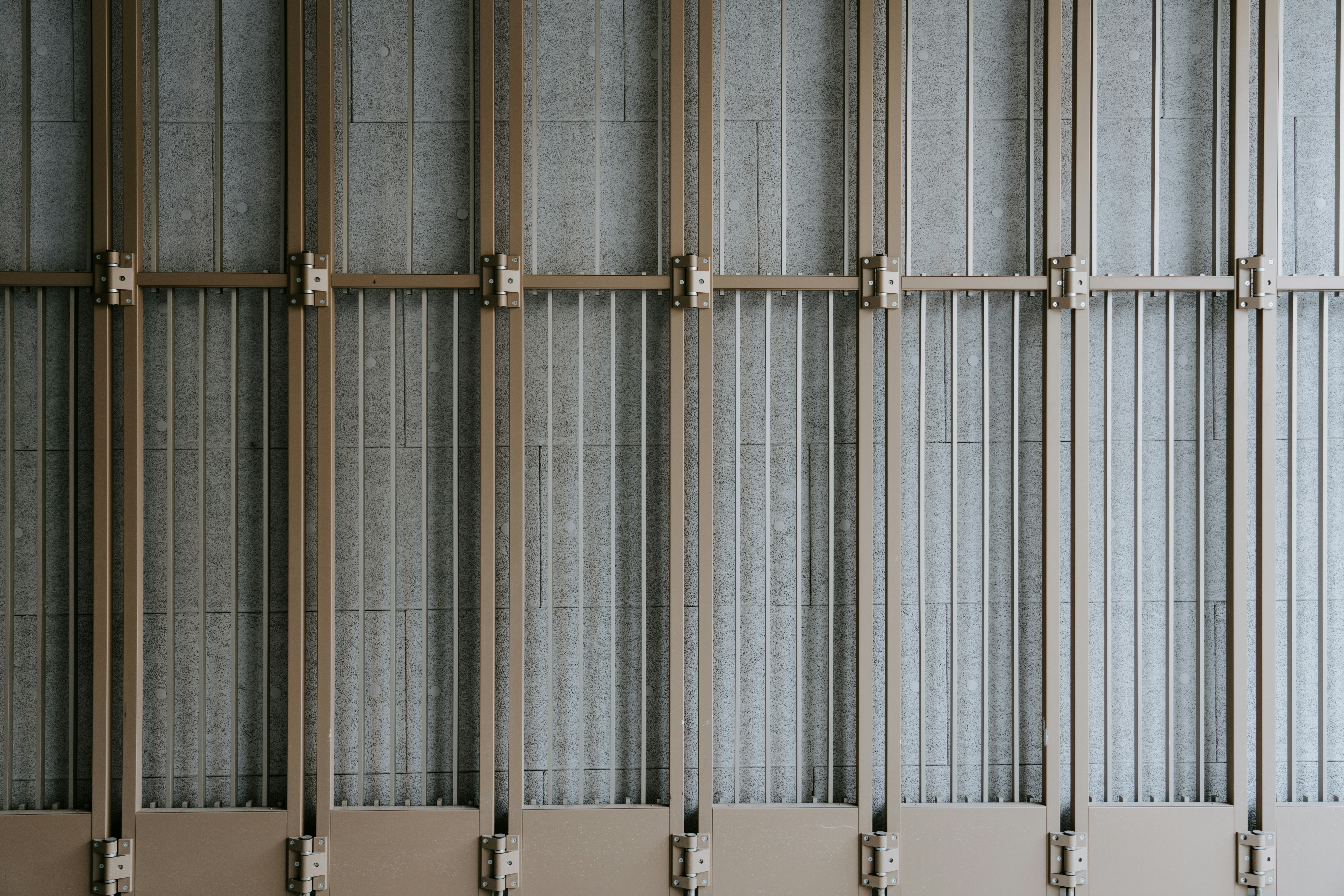
Hog Panel vs Cattle Panel: Spec Comparison
Hog panels and cattle panels are distinct SKUs with different height, mesh patterns, and weight — but US retail naming overlap causes 30% of distributor RFQs to specify the wrong product.
Length & Height
Both panel types share a standard 16 ft (4.88 m) length, which is the universal rack dimension for flatbed shipping and retail floor display. The critical differentiator is height. Hog panels measure 34 in (0.86 m) tall — designed to contain hogs, which are low-center-of-gravity animals that test fences by rooting and pushing from the bottom. Cattle panels stand 50–52 in (1.27–1.32 m) tall to account for the reach and leaning force of cattle. We see distributors get burned when they order “livestock panels” without specifying height and receive 34-inch stock their cattle-farming clients cannot use.
Wire Gauge
Both panel types use the same raw material: 4–5 gauge wire (approximately 5.4–4.4 mm diameter). Remember that gauge is an inverted scale, so 4-gauge is the heavier wire. At DB Fencing, our standard for both hog and cattle panels is 4-gauge vertical stays and 5-gauge horizontal wires. This combination balances structural rigidity with manageable panel weight for two-person handling. Any factory quoting 6-gauge wire on a cattle panel is cutting cost at the expense of load-bearing strength.
Mesh Spacing Pattern
This is where the two products diverge technically, and where sourcing mistakes are most expensive.
- Hog panel: Graduated spacing — tight 2 in × 4 in openings at the bottom, widening to 6 in × 6 in at the top. This prevents piglets from squeezing through the base while allowing airflow at the top.
- Cattle panel: Uniform 6 in × 8 in spacing throughout the entire panel. Cattle do not require graduated openings, so the simpler grid reduces welding complexity and cost.
Graduated mesh adds 8–12% to manufacturing cost because our welding machines must be reprogrammed per run. Many low-cost Anping factories skip this step, ship uniform-spacing panels, and label them as “hog panels.” If your quality inspection does not measure the bottom mesh openings, you will stock the wrong SKU.
Weight Per Panel
Hog panels weigh approximately 23–27 lb (10.4–12.2 kg) per panel, reflecting the shorter height and tighter mesh. Cattle panels weigh 32–36 lb (14.5–16.3 kg) due to the taller frame and additional weld points. Weight is your fastest field verification tool — if a supposedly 50-inch cattle panel arrives under 30 lb, the wire gauge or spacing spec has been altered.
Primary Livestock Use
Hog panels are engineered for swine containment and are also widely repurposed in the US retail market for garden trellising and small-animal pens. Cattle panels are built for cattle, bison, and large livestock corrals. The interchangeability problem is strictly a retail naming issue — your factory RFQ must never use these names alone. Always specify exact height, mesh pattern, and wire gauge to eliminate ambiguity.
| Specification Point | Hog Panel Specs | Cattle Panel Specs | Distributor Sourcing Note |
|---|---|---|---|
| Standard Dimensions | 16 ft L × 34 in H (4.88 m × 0.86 m) | 16 ft L × 50–52 in H (4.88 m × 1.30 m) | Cattle panel vs hog wire panel confusion stems from US retail using names interchangeably; specify exact height in RFQs to prevent wrong SKU inventory. |
| Panel Weight | ~23–27 lb per panel | ~32–36 lb per panel | Weight discrepancy confirms distinct factory classifications; do not rely on retail naming alone when calculating freight margins. |
| Mesh Spacing Pattern | Graduated (2″×4″ bottom to 6″×6″ top) | Uniform (6″×8″ throughout) | Hog panel graduated mesh spacing wholesale cost adds 8–12% due to variable weld programming; low-cost factories often substitute uniform spacing. |
| Wire Diameter | 4–5 gauge (approx. 5.4–4.4 mm) | 4–5 gauge (approx. 5.4–4.4 mm) | Gauge is an inverted scale (4-gauge is thicker). Require exact mm measurements in PO contracts to avoid thin-wire substitution. |
| Galvanization Standard | Hot-dipped >42 microns (ASTM A123) | Hot-dipped >42 microns (ASTM A123) | Electro-galvanised (8–12 microns) rusts in 1–3 seasons. Enforce >42 microns on wholesale cattle panels vs hog panels specs to keep return rates below 3%. |
| Expected Lifespan | 15–20 years (with >42 micron coating) | 15–20 years (with >42 micron coating) | Lifespan relies on zinc coating thickness, not wire gauge alone. Demand mill test reports per shipment to ensure zero complaints on rust. |
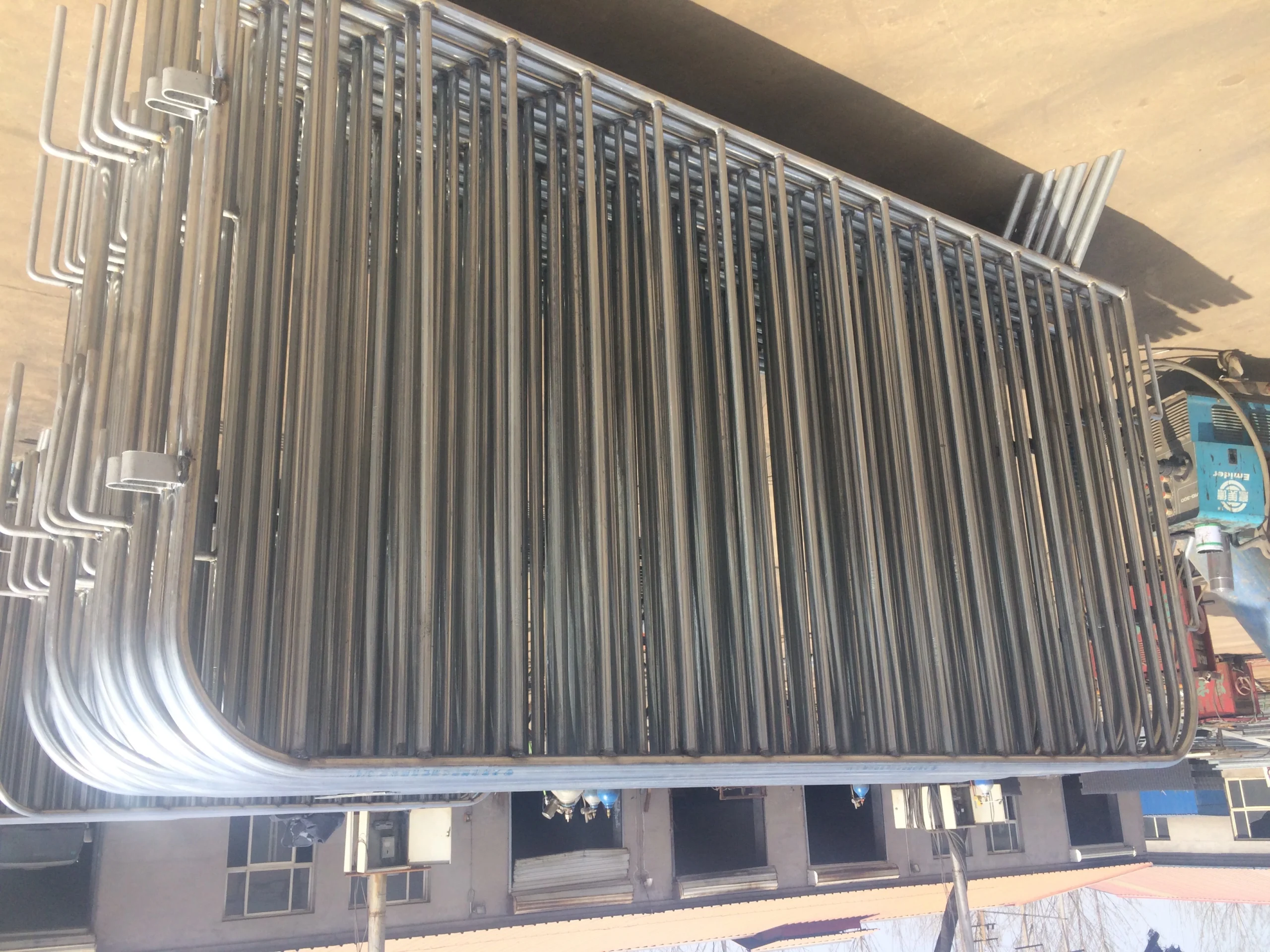
Mesh Spacing: Graduated vs Uniform
Graduated spacing on hog panels is a manufacturing differentiator, not a cosmetic feature. It adds 8-12% to factory cost and is the primary spec low-cost Anping suppliers quietly substitute.
Hog Panel Graduated Spacing: 2″×4″ to 6″×6″
A standard 16 ft × 34 in hog panel uses graduated mesh spacing: tighter 2″×4″ openings at the bottom, transitioning to wider 6″×6″ openings toward the top. The logic is containment-specific—smaller hogs and piglets cannot push through the lower section, while the wider upper mesh reduces steel weight and per-panel freight cost.
We see approximately 30% of incoming RFQs from North American distributors requesting “hog panels” without specifying graduated spacing. When those orders land at factories running uniform mesh welding programs, the result is a 6″×6″ panel throughout—functionally a different product that your retail customers will reject on sight.
Cattle Panel Uniform Spacing: 6″×8″ Openings
Cattle panels at 16 ft × 50-52 in use a consistent 6″×8″ mesh across the entire panel face. Cattle containment does not require tight bottom spacing the way hog fencing does, so uniform openings simplify production without compromising function.
The 6″×8″ pattern also means fewer total weld points per panel compared to a hog panel’s graduated pattern. Fewer welds translate directly to faster line speed and lower per-unit cost—this is why a galvanised cattle panel at 16 ft carries a lower factory price than a hog panel of the same 4-5 gauge wire.
Manufacturing Cost Differences: Variable Weld Points
Graduated spacing is not a simple jig adjustment. Each hog panel run requires reprogramming the welding machine to change intersection density partway through the panel. On our 10 production lines in Anping, a graduated panel run is measurably slower than a uniform cattle panel run.
- Weld point density: A hog panel packs more intersection welds into the same 16 ft length than a 6″×8″ cattle panel, increasing electrode wear and electricity consumption per unit.
- Programming changeover: Switching from uniform to graduated spacing requires machine reconfiguration, adding setup time that uniform cattle panel runs skip entirely.
- Quality inspection overhead: Graduated panels require verification at the transition zone where spacing changes—uniform panels need only a single dimensional check.
This 8-12% cost premium is the reason many low-cost Anping suppliers quietly ship uniform-spacing panels labeled as “hog panels.” For a distributor ordering a container, that substitution destroys SKU consistency and triggers returns when your agricultural buyers measure the bottom mesh. When you write your next RFQ, state the exact spacing progression—for example, “graduated 2×4 bottom transitioning to 6×6 top”—to lock in the correct product from the factory floor.
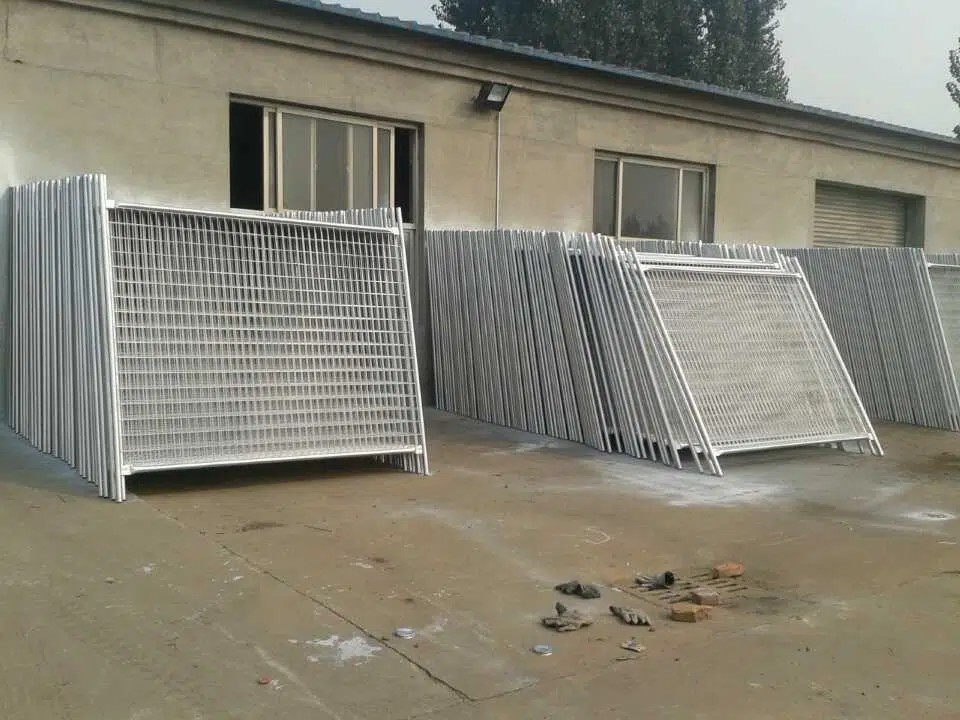
Height and Containment Strength
Height is the single fastest way to distinguish a cattle panel from a hog panel on a factory spec sheet — 50–52 in versus 34 in. Stock the wrong one and your customer’s containment fails.
Cattle Panel Height: 50–52 Inches (1.27–1.32 m)
A standard cattle panel from our production lines runs 16 ft × 50–52 in, weighing approximately 32–36 lb per panel depending on wire gauge selection. The uniform 6″×8″ mesh opening is sized specifically for cattle behavior: these animals lean their full body weight against fencing and push forward when pressured by herd movement or during loading. The 50+ inch height prevents cattle from stepping over the panel, and the structural rigidity of the welded 4–5 gauge wire absorbs repeated lateral force without panel deformation.
We see distributors run into trouble when a retail customer requests a “cattle panel” but actually needs a shorter panel for a smaller enclosure — and vice versa, when a customer asks for a “hog panel” expecting full cattle height because their local farm store uses the terms interchangeably. On our end, these are separate SKUs with separate production runs. Your RFQ must specify the exact height, or you will receive mismatched inventory.
Hog Panel Height: 34–36 Inches (0.86–0.91 m)
Hog panels ship at 16 ft × 34 in, weighing roughly 23–27 lb per panel. The critical spec here is not just the reduced height but the graduated mesh spacing — typically 2″×4″ openings at the bottom transitioning to 6″×6″ toward the top. This graduated pattern is a containment requirement, not a design preference. Hogs do not challenge fencing by leaning like cattle. They root with their snouts along the ground line and attempt to squeeze through gaps. The tight 2″×4″ lower mesh prevents snout entry and escape through the base of the panel.
Many low-cost Anping factories cut costs by running uniform spacing across the entire panel and still labeling it as a “hog panel.” This is the specific quality check your warehouse team needs to perform on arrival. If the bottom mesh matches the top mesh, it is not a functional hog panel regardless of what the packing list says.
Behavior Drives the Spec, Not the Animal Name
The engineering logic behind these two panel types is straightforward. Cattle containment demands height and rigidity to resist pushing force. Hog containment demands ground-level gap exclusion and graduated spacing to prevent rooting and squeezing. These are structurally different products serving different physical challenges, which is precisely why factories categorize them separately — even when US retail shelf labeling does not.
When writing your factory RFQ, list the height, mesh pattern, and wire gauge explicitly. Do not rely on the product name alone. We categorize by physical specification, not regional retail terminology, and every quote we issue includes the full dimensional breakdown to protect your order accuracy.
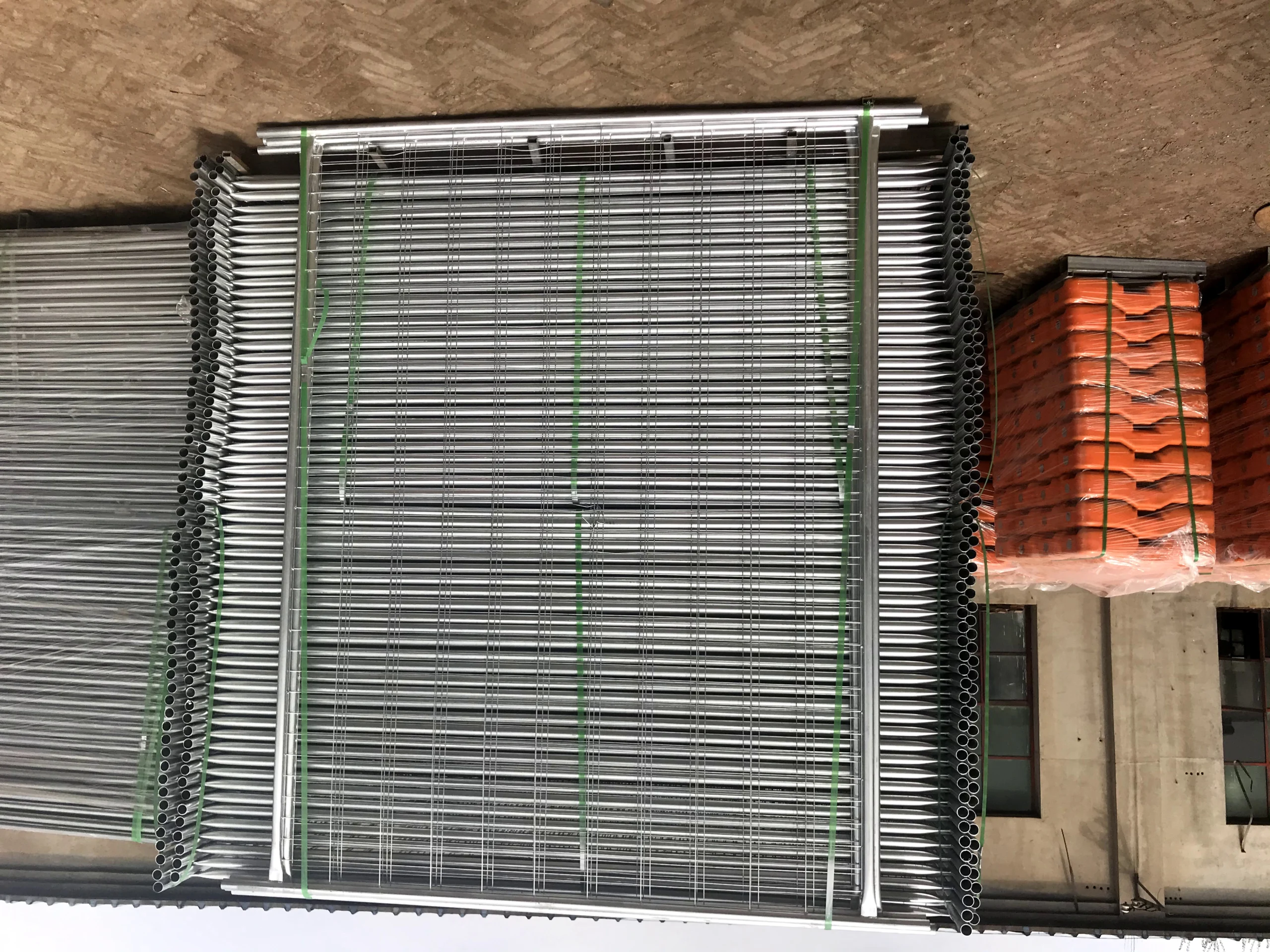
Wire Gauge Explained for Wholesale Buyers
Wire gauge and galvanisation specification are the two variables that separate a 15-year panel from a one-season return. Most factory spec sheets obscure both.
The Inverted Gauge Scale
Wire gauge operates on an inverted scale: a lower gauge number indicates a thicker wire. A 4-gauge wire measures approximately 5.4 mm in diameter, while a 5-gauge wire measures approximately 4.4 mm. We see this confusion on roughly 30% of incoming RFQs from first-time importers who assume a higher number means heavier material. If a distributor’s retail customer requests “5-gauge” assuming it is the heavier option, the resulting shipment will be under-spec for cattle containment and the distributor eats the return.
Typical Gauge Range for Livestock Panels
Both cattle panels and hog panels in the wholesale trade standard fall within the 4-gauge to 5-gauge range. Cattle panels, which need to withstand direct impact from livestock weighing 400 kg plus, typically use 4-gauge wire at roughly 32-36 lb per 16 ft panel. Hog panels at 34 inches tall use 4-gauge or 5-gauge depending on the supplier, weighing roughly 23-27 lb per panel. When writing a factory RFQ, specify the exact millimeter diameter (5.4 mm or 4.4 mm) alongside the gauge number. Gauge alone is an ambiguous specification when dealing with factories across different measurement standards.
Galvanisation: The Real Margin Killer
This is where most competitors’ spec sheets fail wholesale buyers. Stating “4-5 gauge galvanized steel” without specifying the galvanisation method and coating thickness is a meaningless claim. The zinc coating is the sole barrier between the steel core and corrosion, and the gap between the two available methods is severe.
- Hot-dipped galvanised (>42 microns): Wire is fully submerged in molten zinc per ASTM A123. Coating thickness exceeds 42 microns. Expected field lifespan in outdoor and seaside environments is 15-20 years. This is the standard we apply at DB Fencing across all livestock panel lines.
- Electro-galvanised (8-12 microns): Zinc is applied via an electrical current, producing a thin surface layer of 8-12 microns. Field lifespan in farm environments is typically 1-3 years before red rust appears.
The commercial implication is direct. A distributor who sources electro-galvanised panels because the factory quote was 8-12% cheaper per container will face product returns within a single season. For a wholesale buyer targeting a return rate below 3% and container margins above 25%, electro-galvanised stock destroys both metrics simultaneously. Always demand a micron thickness declaration and ASTM A123 compliance confirmation on your purchase order. If the supplier cannot provide it, the price advantage is false economy.
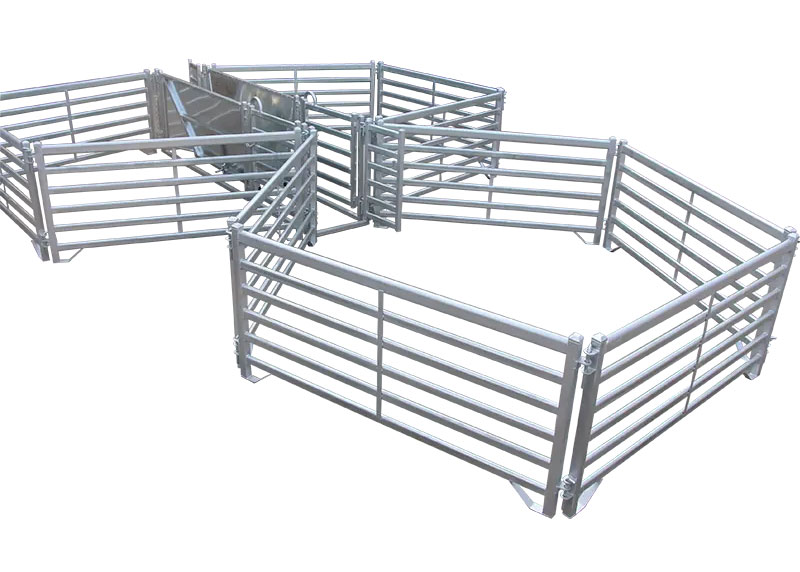

Galvanisation: The Real Durability Factor
The galvanisation specification gap is the single largest hidden profit-killer for livestock fence distributors. Coating thickness, not wire gauge, determines whether your panels survive 15 years or rust through in one season.
Hot-Dipped vs Electro-Galvanised: The Specification Breakdown
We see this confusion on roughly 30% of incoming RFQs. A distributor requests “galvanised cattle panels” without specifying the coating method, and the factory ships electro-galvanised stock because it is cheaper and faster to produce. The two processes yield fundamentally different products.
- Hot-dipped galvanised: >42 micron zinc coating per ASTM A123. Full immersion process creates a metallurgical bond between zinc and steel.
- Electro-galvanised: 8-12 micron coating. Surface-only electrolytic deposition with no metallurgical bond, prone to flaking under impact or stress.
Lifespan Difference and the Returns Trap
For a wholesaler targeting a sub-3% return rate, coating thickness is non-negotiable. Hot-dipped galvanisation at >42 microns delivers a 15-20 year outdoor lifespan, even in harsh seaside or agricultural environments where livestock urine and fertiliser accelerate corrosion. Electro-galvanised panels at 8-12 microns typically show visible rust within 6-12 months and fail structurally within 1-2 seasons.
Premature rust is the number one cause of customer returns for livestock fence wholesalers. A farmer or contractor who paid $40-60 per panel expects multi-year service. When that panel rusts through in a single winter, the distributor absorbs the return shipping, the replacement cost, and the damaged customer relationship. On a container of 500 panels, even a 5% return rate triggered by coating failure wipes out the entire container margin and makes that 25% margin target mathematically impossible.
At DB Fencing, we default to hot-dipped galvanised finishes exceeding 42 microns across our entire livestock panel range, including both cattle panels (16 ft × 50-52 in) and hog panels (16 ft × 34 in). This is not a premium upsell — it is the base specification. We do not offer electro-galvanised panels because the return liability it creates for our wholesale partners is unacceptable.
Naming Confusion: Same Product or Different?
Hog panels and cattle panels are distinct products with different dimensions and mesh configurations, despite US retail using the names interchangeably. RFQs must specify exact specs to avoid receiving mismatched inventory.
US Retail Terminology Overlap
We see this naming confusion on roughly 30% of incoming RFQs from North American distributors. At the US retail level — confirmed by Tractor Supply customer complaints and Facebook gardening groups — “hog panel” and “cattle panel” are used as interchangeable shelf labels. A buyer walks into a farm supply store asking for a “cattle panel” and gets handed a 34-inch tall panel because the clerk treats them as the same product family. This retail-level sloppiness does not translate to the factory floor in Anping. Chinese manufacturers categorize these as separate SKUs with distinct spec sheets, production line settings, and pricing structures.
The physical differences are not subtle. A cattle panel stands 50–52 inches (1.27–1.32 m) tall, weighs 32–36 lb per panel, and uses a uniform 6″×8″ mesh throughout. A hog panel stands 34–36 inches (0.86–0.91 m), weighs 23–27 lb, and features graduated mesh spacing — typically 2″×4″ at the bottom transitioning to 6″×6″ at the top. These are not the same product cut to different lengths. The welding programs, wire feed rates, and jig configurations are different on the production line.
Import SKU Mismatch Risks
Where this becomes a distributor’s problem is at the container loading stage. If your RFQ to a Chinese factory says “cattle panels, 16ft” without specifying height and mesh pattern, a low-cost supplier will interpret that loosely. We have seen wholesalers receive containers where half the stock was hog panels labeled as cattle panels because the factory defaulted to their most common 34-inch production run. For a distributor servicing both farm and rural residential customers, that mismatch means stocking the wrong SKU entirely.
The graduated mesh on hog panels is the specific point where factories cut corners. True graduated spacing requires reprogrammed welding machines per production run, adding 8–12% to manufacturing cost. Many Anping factories skip this step, weld uniform spacing, and still label the panel as a “hog panel.” Your customer — the farmer who bought it specifically to prevent piglets from squeezing through the bottom — will notice immediately. That is a return, not a negotiation.
Terminology Guidelines for RFQs
Eliminate product names entirely from your RFQ and lead with dimensional specifications. Factory sales engineers do not need to know what your retail customers call the panel. They need the numbers that determine which welding program to load.
- Panel dimensions: State length × height in inches (e.g., 16 ft × 52 in for cattle, 16 ft × 34 in for hog).
- Mesh pattern: Specify “uniform 6×8 in” or “graduated 2×4 in to 6×6 in” — do not write “standard mesh.”
- Wire diameter: Use gauge or millimeters (4-gauge = 5.4 mm, 5-gauge = 4.4 mm). Gauge is an inverted scale — 4-gauge is thicker.
- Galvanisation method: Write “hot-dipped galvanised, minimum 42 microns per ASTM A123.” If you do not specify this, factories default to electro-galvanised at 8–12 microns, which rusts within one season in outdoor farm conditions.
At DB Fencing, every RFQ receives a spec confirmation sheet before production begins. This sheet lists exact dimensions, mesh pattern, wire gauge, and coating thickness with tolerance ranges. If the numbers on that sheet do not match what your market requires, that is the moment to correct it — not after a container arrives at your warehouse.
Wholesale Ordering Considerations
MOQ Flexibility and Mixed-Container Loading
DB Fencing sets a low MOQ of 100 panels across all livestock panel SKUs. For a distributor testing a new market or validating customer demand for a specific panel height, this threshold keeps upfront capital exposure manageable. Our 24-hour quoting turnaround means you can price out multiple SKU combinations before committing order volume.
Mixed-container loading is standard practice here. You can combine cattle panels (16 ft × 50–52 in, uniform 6″×8″ mesh) and hog panels (16 ft × 34 in, graduated spacing) in a single 20ft or 40ft container. This eliminates the need to fill an entire container with one product type, which is where most distributors get burned on inventory rotation.
A 100-panel MOQ with mixed-container loading lets distributors test SKUs without committing to a single slow-moving product line.
OEM Branding Options
We apply custom branding at the factory level — printed PVC tags affixed to each panel bundle, or custom-stamped plastic feet if your order includes temporary fence bases. DB Fencing operates its own plastic feet injection machine, the only one in Anping County. This means branding on feet is not outsourced to a third party, giving you control over lead time and batch consistency. For livestock panels specifically, branding appears on bundling straps and packaging labels rather than the panel itself, since hot-dipped galvanised surfaces do not retain printed ink.
Avoiding Overstock of Slow-Moving SKUs
The single largest inventory mistake livestock fence distributors make is ordering based on retail naming conventions instead of factory spec sheets. We see this cattle panel vs hog wire panel confusion on roughly 30% of incoming RFQs. A distributor’s customer asks for “hog panels,” the distributor relays that term to the factory, and receives 34-inch graduated mesh panels when their market actually expects 50-inch uniform mesh — because US retail uses both terms interchangeably at shelf level.
To prevent dead stock, structure your RFQ around three verifiable data points rather than product names:
- Exact dimensions: State panel length, height, and wire diameter in inches or millimeters — never rely on the product name alone.
- Mesh pattern: Specify uniform spacing (e.g., 6″×8″) or graduated spacing (e.g., 2″×4″ transitioning to 6″×6″) — this determines whether the welding line requires reprogramming and affects unit cost by 8–12%.
- Coating specification: Request hot-dipped galvanisation exceeding 42 microns per ASTM A123 and reject any factory quoting electro-galvanised (8–12 microns) as “farm-grade” — the latter will generate returns within one season in coastal or high-humidity regions.
Locking these three parameters into your purchase order creates an unambiguous spec document. If a specific SKU underperforms, the root cause is traceable to market fit rather than a sourcing error — and that distinction is what keeps your return rate below the 3% threshold.
Conclusion
Stock both SKUs, but isolate them strictly by height and mesh spacing in your warehouse. A 34-inch panel with graduated spacing costs 8-12% more to manufacture because we reprogram the welding machines, so a flat-rate quote means someone is skipping that step. Demand hot-dipped galvanizing exceeding 42 microns on every order, because electro-galvanized panels will rust out in one season and destroy your return rate.
Send me the spec sheet your current supplier uses, and I will point out exactly where the substitutions are happening. Ask us for a 16-foot physical sample, then test the zinc layer yourself with a coating thickness gauge before you load a container.
Frequently Asked Questions
Are hog panels stronger than cattle panels?
No. Cattle panels are taller (50–52 in vs 34–36 in) and heavier (32–36 lb vs 23–27 lb), built to withstand pushing force from large livestock. Hog panels suit smaller animals but are not rated for cattle-pressure loads.
What is another name for a cattle panel?
In US retail, ‘cattle panel’ is frequently labelled ‘hog wire,’ ‘hog panel,’ or ‘utility panel.’ This overlap causes SKU mismatch when ordering from Chinese factories that use separate product codes for each type.
Is hog panel the same as cattle panel?
No. Same 16 ft welded wire construction, but different height (34 in vs 50 in), mesh pattern (graduated vs uniform), and livestock application. Substituting one for the other causes containment failures.
What is a hog panel?
A 16 ft × 34 in welded wire panel in 4–5 gauge galvanised steel with graduated mesh — 2″×4″ at the bottom to block small animals, widening toward the top.
How long do hog panels typically last?
Hot-dipped galvanised panels (>42 microns) last 15–20 years in farm conditions. Electro-galvanised panels (8–12 microns) rust within 1–3 years when exposed to animal waste and soil moisture.