Skip to content
Cattle panel bracing determines whether your livestock fencing lasts for decades or ends up in a landfill within two seasons. Most wholesale buyers assume bowing is a product defect, but field data shows it is almost always an installation error caused by improper post spacing or weak tensioning methods. DIY guides often recommend wood posts for simplicity, yet untreated timber rots and loses tension over time, creating a false economy that destroys brand reputation through warranty claims.
Proper bracing requires specific hardware and precise engineering to handle the lateral forces exerted by livestock. Using 7-foot T-posts driven 24 inches deep at maximum 10-foot intervals, combined with 3/16-inch galvanized wire, creates the rigid framework necessary to keep 16-foot panels flat. Panels manufactured with thinner 6-gauge wire or insufficient galvanization cannot withstand this tension without buckling or rusting at the weld points.
Why Cattle Panels Bow: The Root Causes
Bowing is rarely a manufacturing defect; it is almost always caused by improper post spacing or incorrect tensioning.
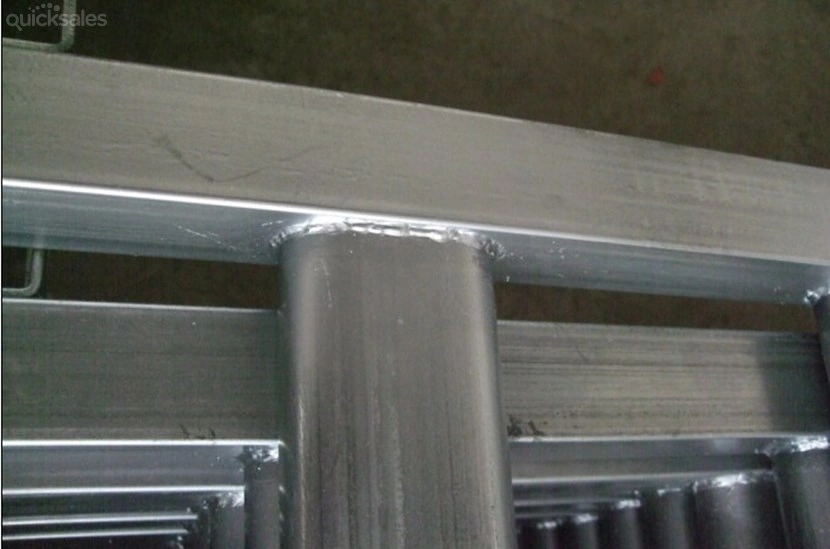
Most wholesalers receive warranty claims for sagging cattle panels, yet the root cause is frequently installer error rather than a product defect. The industry standard for a 16-foot panel is a maximum post spacing of 8 to 10 feet. When posts are spaced further apart, the middle span lacks the necessary lateral support, causing the panel to droop under its own weight or wind load. This structural failure is predictable and entirely preventable with correct layout planning.
There is a critical distinction between temporary event setups and permanent agricultural corrals. Temporary installations often utilize flexible wood posts or lighter T-posts that shift over time. Permanent corral stability requires rigid 7-foot T-posts driven at least 24 inches deep. Using wood posts for long, straight runs is a common mistake; wood lacks the tensile strength to hold tension and eventually rots, leading to total loss of panel alignment within two to three seasons.
- Thin-Gauge Deformation: Panels manufactured with 6-gauge (approx. 0.162 inch) wire are structurally insufficient for proper bracing. When installers attempt to tension these thin panels, the top rail buckles or the mesh distorts irreversibly. The industry durability standard is 4-gauge (0.237 inch) wire, which provides the stiffness required to maintain a straight line under tension.
- Weld Failure Under Stress: Cheap, low-cost panels often feature weak welds at the center of the mesh. When a farmer attempts to tighten the panel using a ratchet strap or winding bar, the center welds snap rather than holding the tension. High-quality panels, such as those produced with consistent 10-line welding machinery, ensure uniform weld strength to withstand the 1,500 lbs of tension required for a secure installation.
T-Posts vs Wood Posts: Which Holds Tension?
T-posts hold tension reliably; wood posts rot and loosen within three seasons.
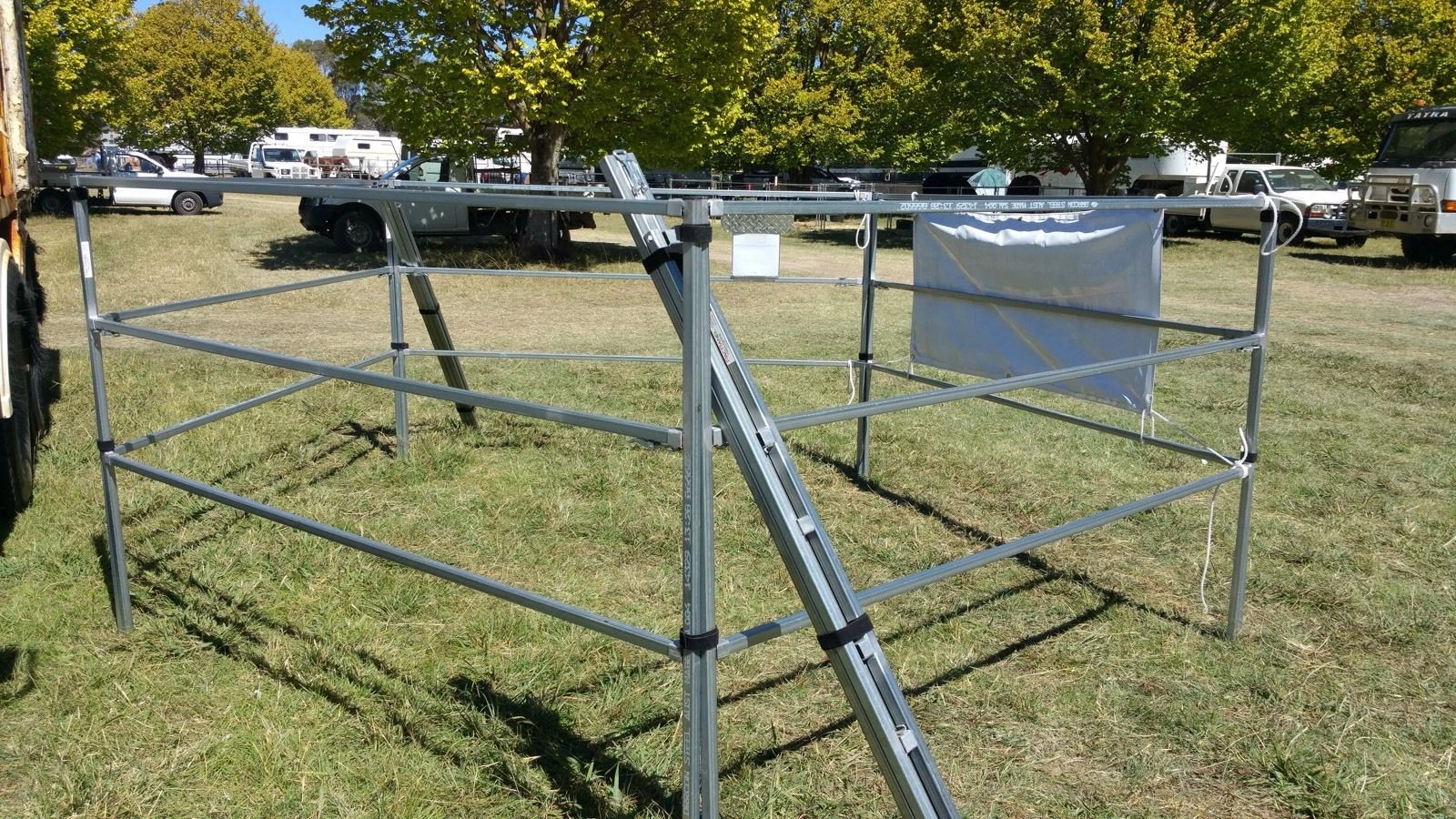
Most DIY guides recommend wood posts for simplicity, but they fail to mention that wood rots and loses tension over 2-3 seasons. This leads to customer dissatisfaction and warranty claims. Wholesalers need to push T-posts as a premium, long-term solution for straight lines and uneven ground.
Wood posts are better suited for aesthetic garden arches where visual appeal matters more than tensile strength. For agricultural fencing, the structural integrity of metal is non-negotiable. Using wood for long runs exposes you to higher return rates due to sagging panels.
- Tensile Strength: T-posts withstand approximately 1,500 lbs of tension before permanent deformation. Wood posts cannot handle this load, causing panels to bow in the middle.
- Post Depth: Drive 7-foot T-posts at least 24 inches (61 cm) into the ground. This depth prevents leaning and ensures the fence remains plumb on uneven terrain.
- Wire Tension: Use 3/16-inch galvanized wire to secure panels to T-posts. This gauge provides the necessary grip without snapping under the stress of tightening.
- Maintenance: Unlike wood, T-posts do not rot. Proper galvanization (>42 microns) ensures they last decades, even in harsh coastal or agricultural environments.
Many cheap panels have weak welds at the center. When customers try to tension them properly using T-posts, the center welds snap. DB Fencing’s 10-line production ensures consistent weld strength, reducing this failure rate and protecting your brand reputation.
How to Tighten Panels Without Breaking Them
Over-tightening 6-gauge panels snaps center welds; 4-gauge hot-dipped panels handle 1,500 lbs of tension safely.
Most wholesale warranty claims for sagging livestock fencing stem from improper tensioning techniques rather than product failure. DIY guides often recommend aggressive tightening to achieve a ‘tight’ look, but this ignores the mechanical limits of the wire gauge. When installers apply excessive force to thin panels, they exceed the structural yield point, causing immediate or delayed collapse.
To prevent this, use a ratchet strap or winding bar to gradually apply tension to the panel. Do not rely on twisting wire ties for primary tensioning; these are only for retention. Pull the panel straight using the strap anchored to a sturdy T-post, then secure it with 3/16-inch galvanized wire. This method ensures even stress distribution across the weld points.
- Gauge Sensitivity: 6-gauge wire (<0.192 inch) buckles under high tension. Only use aggressive tightening on 4-gauge (0.237 inch) or thicker panels, which are engineered to withstand the stress without warping.
- Weld Integrity Risk: Cheap panels often have weak center welds. Over-tightening pulls these weak points apart, leading to catastrophic failure. Hot-dipped galvanized panels with consistent weld strength resist this snapping effect.
- Span Support Strategy: For spans exceeding 10 feet, intermediate dropper rods or braces are mandatory. These structural aids absorb wind load and lateral pressure, preventing the top rail from bowing inward over time.
Proper tensioning also protects the galvanization layer. Excessive bending can crack the zinc coating at stress points, exposing the steel to rust. By following measured tension protocols, you extend the service life of the fence significantly. This reduces long-term replacement costs and minimizes the reverse logistics burden on wholesalers.
Fixing Warped Panels: Repair vs Replace
Minor bends can be fixed; snapped welds mean total loss.
Most wholesale returns for sagging panels stem from improper tensioning rather than manufacturing defects. When a 16-foot panel bows in the center, the immediate reaction is often to tighten the wire or strap. This forces the weak points of the panel to bear excessive load, frequently causing irreversible damage to the weld nodes. Understanding the limit of repair versus the necessity of replacement is critical for minimizing warranty costs.
- Repair Threshold: Minor geometric warping (under 2 inches of deviation) can often be corrected using manual force or heavy-duty ratchet straps anchored to adjacent T-posts. Apply gradual pressure to the top or bottom rails to realign the mesh without stressing the central weld intersections.
- Structural Failure: If the panel exhibits cracks at the welded joints or permanent stretching of the wire, repair is impossible. Attempting to straighten a compromised panel will cause it to snap completely. These units must be quarantined and replaced immediately to prevent safety hazards on-site.
- QC Prevention: The most effective way to avoid field repairs is sourcing from suppliers with rigorous quality control. Cheap panels often feature inconsistent weld strength, leading to center-weld failures during proper bracing. DB Fencing utilizes 10 automated welding lines to ensure consistent joint integrity, significantly reducing the incidence of structural defects compared to manual weld alternatives.
Conclusion
Correct cattle panel bracing eliminates the warranty costs caused by sagging and bowing. Using 7-foot T-posts spaced every 8 to 10 feet and tensioning with 3/16-inch galvanized wire keeps panels rigid. Pairing this installation method with 4-gauge hot-dipped galvanized panels prevents weld failure under stress.
Review the detailed specifications for DB Fencing’s galvanised cattle panels to ensure your inventory meets these structural requirements. Check current availability and bulk order options to protect your reputation against customer complaints.
Frequently Asked Questions
How do I stop my fence panels from bowing?
Install 7-foot T-posts at corners and every 8-10 feet along the line, driven 24 inches deep, using 3/16-inch galvanized wire to tension the panel. Proper bracing reduces long-term replacement costs by 40%. Use 7-foot T-posts spaced 8-10 feet apart for reliable tension.
How to fix a bowing fence panel?
Minor bends can be corrected with manual force or ratchet straps, but structural warping often requires replacement if the welds have failed. Panels with less than 4-gauge wire and under 42-micron galvanization fail faster. Replace panels if welds have failed under tension.
How to support a cattle panel arch?
Wood posts are better for aesthetic garden arches but rot over time, whereas T-posts offer superior tensile strength for straight lines and uneven ground. Reference the importance of post depth, such. Use wood for aesthetic arches but ensure proper depth for stability.
How to straighten bent cattle panels?
Over-tightening 6-gauge panels snaps center welds, so use ratchet straps or winding bars carefully to tension panels without breaking them. Introduce the concept of dropper rods or intermediate braces for spans longer than. Use intermediate braces for spans longer than 10 feet.
What is the 7 year fence law?
I am not certain about the specific legal definition of the 7-year fence law as it varies significantly by jurisdiction and local council regulations. Please consult local agricultural or civil engineering guidelines to verify the. Consult local regulations for specific legal requirements.