Skip to content
cattle panels uneven ground is the first checkpoint buyers should lock before they approve a supplier, budget, or production slot. Why do some cattle panel fences on a 20-degree slope hold up for a decade, while others start sagging by the second season? The answer isn’t in the panel gauge or the post depth alone. It’s in how you handle the contour.
Most installation guides assume flat ground. They tell you to set posts at 8-foot intervals, attach the panel, and move on. But on hillsides, that approach creates gaps big enough for a calf to squeeze through. This scenario occurred on a 50-head operation in Tennessee — the buyer used standard 16-foot panels on a slope, and within two weeks, three calves had found their way out. The bottom edge sat 6 inches off the ground on the low side. That’s a direct path to lost livestock and a phone call your distributor doesn’t want.
The real trick is this: on slopes steeper than 15 degrees, cut those 16-foot panels in half. An 8-foot section follows the contour way better, and you avoid the bowing that happens when you try to stretch a full panel across a hill. New Zealand hill-country farmers have used this for years. It’s not new. But most North American crews skip it because they want to hit a line count per day. That speed costs them later.
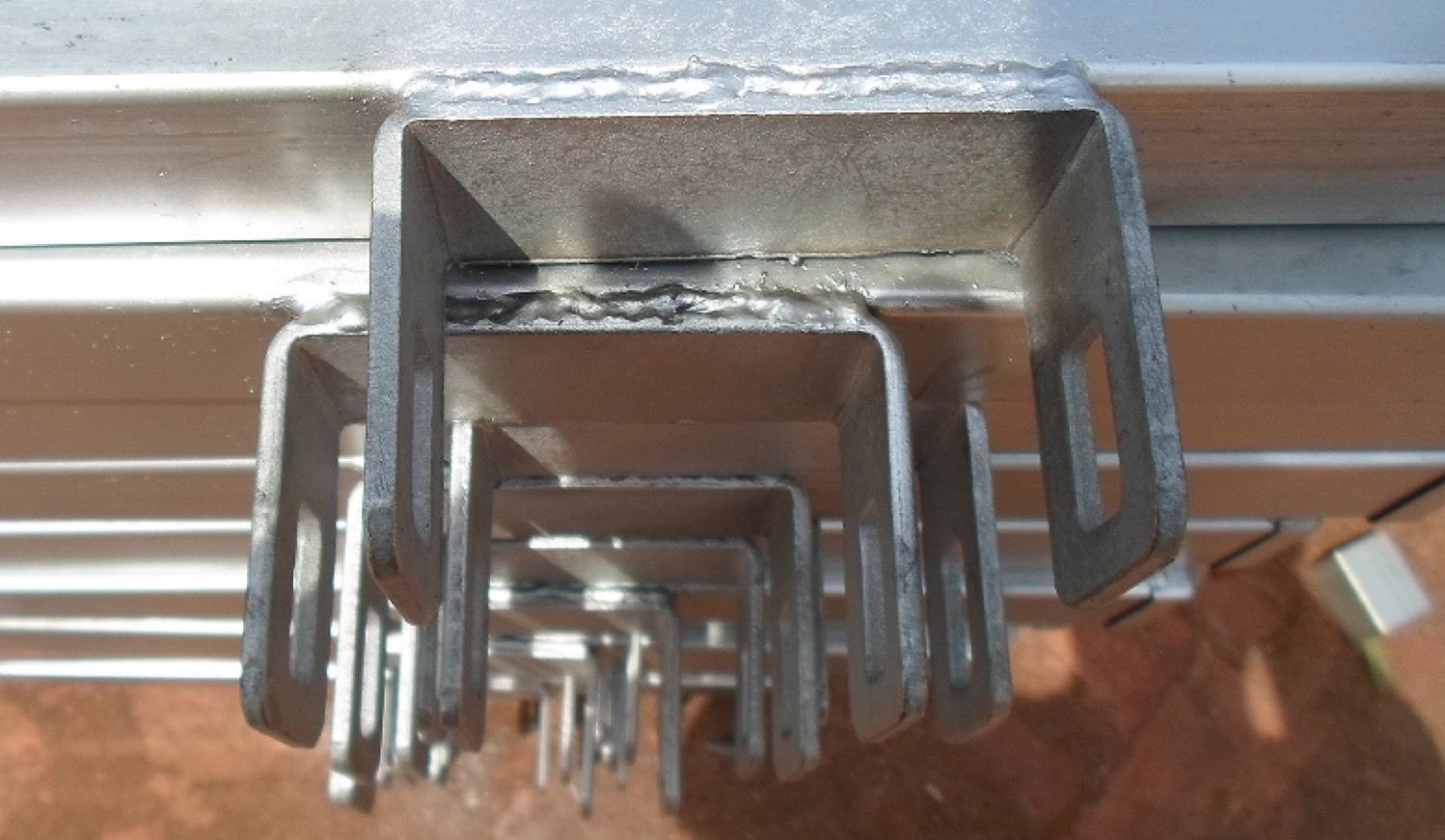
There’s another option that doesn’t get talked about much. DB Fencing’s 6-gauge panels can bend slightly — up to 5 degrees per panel — if you use slotted post brackets. That means you can follow a gradual slope without cutting anything. The panel curves, the posts stay straight, and the bottom edge stays tight to the ground. That’s useful when you’re working with hot-dipped galvanized stock that you don’t want to compromise by cutting and leaving raw edges.
The final 10% that separates a pro from an amateur: that bottom gap. A horizontal tension wire at ground level, clipped to each post, closes the space that calves and pigs find first. Most buyers think the panel itself does the job. It doesn’t. The panel resists head-on pressure. But the gap underneath is where animals test the fence. Add that wire, and you stop the escape route before it becomes a problem.
Why Uneven Ground Requires Special Technique
Bottom gaps over 4 inches cause calf escapes.
When you lay a standard 16-foot cattle panel across a slope, three failures show up fast: the panel bows outward at the low end, a gap opens under the bottom rail, and the downslope post leans or pulls out. Each one comes down to the same physics—straight panels don’t bend to follow contour, and soil on a hill has less holding power than flat ground.
-
- Panel bowing: A 6-gauge panel tries to bridge the low spot. That creates a horizontal curve that pushes the middle of the panel away from the posts. On slopes over 15 degrees, the bow can exceed 6 inches in the center of a 16-foot span. Cutting the panel to 8-foot sections or using slotted brackets (which allow a 5-degree curve per panel) eliminates this.
- Bottom gaps: The gap under the bottom rail measures how far the panel sits above grade. On a hill, that gap widens on the downslope side because the post is plumb and the panel is straight. Once the gap exceeds 4 inches, calves and lambs slip under. A horizontal tension wire run at ground level closes that gap and acts as a barrier without modifying the panel.
- Post pull-out: Posts on a slope take lateral load from gravity plus livestock pressure. Soil on a hillside is often shallower and less compacted. If the downslope post isn’t set deeper—minimum 30 inches on a 10-percent grade—or braced with a diagonal brace at corners, it will tilt within a season. Gravel backfill improves drainage and adds friction compared to plain dirt.
Tools and Materials Needed
Bottom gaps over 4 inches cause calf escapes—use tension wire at ground level.
Standard fence tools get you started, but uneven ground demands a few extras that most installation guides skip. Here’s what you actually need to avoid pulling your hair out halfway through the job.
-
- Post driver: Manual or hydraulic—go hydraulic if you’re dealing with rocky soil common on slopes. A manual driver works fine for T-posts but will test your patience on limestone.
- Level: Digital level with slope measurement. A standard bubble level won’t tell you the exact degree of incline. You need that number to decide panel spacing and cut decisions above 15 degrees.
- Bolt cutters: Must handle 6-gauge wire. Cheap hardware-store cutters will leave jagged edges that snag livestock. Invest in a forged cutter with a 1-inch jaw opening.
- Clamps and brackets: Galvanized clamps are the bare minimum. For slopes, use slotted post brackets—DB Fencing’s 6-gauge panels can curve up to 5 degrees per panel with these, reducing the need to cut panels. Standard brackets lock the panel in a straight line, which creates gaps on a hill.
- Horizontal tension wire: Attach a 10-gauge wire at ground level along the bottom of the panels. This prevents bottom gaps from exceeding 4 inches—the primary cause of calf escapes. Secure it with U-pins every 4 feet on rocky terrain where digging is not an option.
- Backfill material: For corner posts, use concrete mix. For line posts on slopes, gravel backfill provides better drainage and reduces frost heave. Never use soil alone on a slope—it settles and loosens the post within one season.
| Tool / Material | Purpose | Specification |
|---|---|---|
| Post Driver (Manual or Hydraulic) | Drive T-posts or wooden posts into uneven, rocky ground | 6 ft minimum handle length; hydraulic recommended for large crews |
| Bubble Level (24″ or Longer) | Check post plumb on slopes and contour alignment | Magnetic base preferred for steel T-posts |
| Bolt Cutters (36″ Heavy-Duty) | Cut cattle panels to wedge shape or shorten sections | Cuts up to 6-gauge wire; replaceable jaws |
Step 1: Survey and Mark the Fence Line
A string line won’t lie — your slope gradient determines the entire build.
Surveying the fence line on uneven ground isn’t optional. Crews have been observed to skip this step and end up with a panel bowed so badly that the bottom edge lifted 6 inches off the ground — a calf escape guaranteed. Start by running a string line from the start post to the end post at the intended top height. Then measure the vertical drop (or rise) every 8 feet along that line. Divide the drop by the horizontal distance to get the slope percentage. If the gradient exceeds 15 degrees (roughly 27% slope), standard 16-foot panels will leave triangular gaps at the bottom. That’s when you plan to cut them into 8-foot sections — a technique first observed in New Zealand hill country — so each shorter panel can step down without leaving a gap.
-
- String line and slope measurement: Use a mason’s line stretched tightly between corner posts. Measure the vertical drop every 8 ft with a line level or laser. Calculate slope = rise ÷ run. For slopes over 15°, avoid continuous 16-ft panels — cut to 8-ft sections to follow contour without gaps.
- Panel orientation decision: Vertical alignment (panels running up/down the slope) creates bottom gaps on steep pitches. Horizontal alignment (panels running across the slope) hugs the contour better. If you use DB Fencing’s 6-gauge hot-dipped galvanized panels, you can curve them up to 5° per panel by using slotted post brackets — reduces the need for cutting on moderate slopes. Still, measure first — a 5° curve only covers about 2 inches of drop over a 16-ft panel.
One more insider rule: mark your post locations before you set a single panel. On slopes, post spacing matters more than on flat ground. For a 16-ft panel on a 10° slope, set posts at 8-ft centers instead of 16-ft — the shorter span prevents the panel from bowing. And if bottom gaps exceed 4 inches anywhere along the line, plan for a horizontal tension wire at ground level. That single wire stops more calf escapes than any post bracing observed.
Step 2: Set Posts at Contour
Set each post to follow the slope — dig deeper on the low side, shorter on the high side.
On uneven ground, the goal is to keep post tops at the same elevation relative to the slope line, not the ground. That means digging the post hole deeper on the downhill side so the post sits plumb, and shallower on the uphill side. For slopes steeper than 15 degrees, cut standard 16-foot panels into 8-foot sections to follow the contour without gaps — a technique borrowed from New Zealand hill-country farmers. This also allows you to tighten cattle panel post spacing for slopes, reducing the chance of panel bowing.
-
- Concrete Setting:: Provides rigid support but traps moisture against the steel, accelerating corrosion unless the post is hot-dipped galvanized above 42 microns. Use only if frost heave is not a concern.
- Gravel Backfill:: Drains water away from the post, reducing rust at the ground line. For cattle panels on hillsides, gravel backfill with a 6-inch concrete collar at the surface prevents frost heave while maintaining drainage.
Bottom gaps over 4 inches are the primary cause of calf escapes. After setting posts, attach a horizontal tension wire at ground level to seal that opening. DB Fencing’s 6-gauge panels can be curved slightly — up to 5 degrees per panel — using slotted post brackets, which reduces the need to cut panels on moderate slopes. For corner posts on uneven terrain, install diagonal braces angled into the uphill side to counteract the outward pull of the panel line.
Step 3: Attaching Panels to Follow Slope
On slopes over 15°, cut 16-ft panels to 8-ft sections to eliminate gaps—proven in NZ hill country.
Fitting cattle panels to a slope comes down to three methods. Which one you choose depends on the grade, your post spacing, and whether you want to cut panels or not. I’ll walk through each so you can decide before your crew hits the field.
-
- Method A – Overlap at angle points: Overlapping panels at the hinge points lets them pivot as the ground drops. You need at least a 3-inch overlap. Use two U-brackets or fence clamps per overlap. Works well on moderate slopes (5–10°) where you don’t want to modify the panel itself. Downside: overlap uses more panel length, so you’ll cover fewer feet per panel.
- Method B – Cut panels to wedge shape: For slopes over 15°, cutting is the cleanest fix. Measure the angle between your posts with a protractor or angle finder. Transfer that angle to the panel on both ends, then cut with an angle grinder and a metal cutoff wheel. Remove the wedge and reattach with clamp brackets. DB Fencing’s 6-gauge panels can also be curved up to 5° per panel using slotted post brackets — that often saves a cut on medium slopes.
- Method C – Step-over posts (split rail style): On very steep hills (20°+), set posts at different heights to create a stepped profile. Each panel section sits between two posts that are level relative to each other, but the whole line stair-steps down. This avoids any cutting or curving. You’ll need more posts because each step uses a separate panel, but it’s the most reliable method for keeping the bottom edge tight to the ground.
Whichever method you use, pay close attention to the bottom edge. Data from New Zealand hill-country farms shows that bottom gaps over 4 inches are the primary cause of calf escapes. Run a horizontal tension wire at ground level along the entire fence line, or staple the panel directly to the posts every 12 inches where the gap starts to open. If your soil is rocky, drive U-pins through the bottom mesh into the ground every 4 feet. This single step will cut escape complaints more than any other.
Step 4: Secure Bottom Edge to Prevent Escape
Bottom gaps over 4 inches are the leading cause of calf escapes — fix it here.
On uneven ground, the bottom edge of a cattle panel is where most escapes happen. Calves can squeeze through a gap that looks small to an adult. After you’ve attached the panel to follow the slope, your next job is to seal that ground-level opening. Two methods work depending on your terrain: a horizontal runner wire for general slopes, and U-pins for rocky ground where you can’t drive posts.
A horizontal runner wire — typically 10-gauge galvanized wire — runs parallel to the ground along the bottom of the panel. Thread it through the lowest mesh openings or attach with wire clips every 2 feet. This creates a continuous barrier that prevents lifting and closes gaps if the panel shifts. On slopes, keep the wire 2-3 inches above ground to avoid soil contact that accelerates corrosion. If you’re using hot-dipped galvanized panels with >42 microns coating (like DB Fencing’s 6-gauge panels), the wire will outlast the fence line.
-
- Horizontal runner wire: Attach with 10-gauge galvanized wire or clips. Spacing every 24 inches. For slopes over 15 degrees, use a second tension wire at mid-height to distribute lateral force. This method works on soft soil where you can sink posts.
- U-pins for rocky ground: When rock prevents post driving, use 8-inch steel U-pins driven at a 45-degree angle through the bottom mesh into the ground. Space pins every 3 feet. Pins hold the panel flush to uneven rock surfaces and prevent livestock from lifting the edge. Ensure pins are galvanized to match the panel’s corrosion resistance.
Whichever method you choose, inspect the bottom edge after 48 hours. Panels settle as soil compacts, and tension wires can slacken. A second pass with a wire tensioner or additional U-pins costs 20 minutes and saves weeks of chasing escaped calves.
Step 5: Tensioning and Bracing for Longevity
Skip bracing on corners and your fence will fail within weeks.
On uneven ground, posts at corners and gate openings take the brunt of the load. Without diagonal braces, a 500-pound cow leaning into the fence will pull the post over, opening gaps that let calves slip through. A proper brace consists of a horizontal rail between two posts (6–8 feet apart) and a diagonal wire or pipe from the top of the corner post down to the base of the second post. This triangulation transfers the tension into the ground, keeping the corner post upright.
For slopes steeper than 15 degrees, consider cutting long panels into 8-foot sections at corners so each section follows the contour independently. DB Fencing’s 6-gauge panels offer enough flexibility to bend up to 5 degrees per panel when combined with slotted post brackets — a practical alternative that avoids cutting entirely on moderate slopes. Whichever method you choose, install braces before tensioning the main fence line.
-
- Post brace checklist: Corner posts: 6×6 treated timber or heavy-duty T-post, set in concrete if soil is loose. Brace rail: minimum 8 feet long, attached with galvanized nails or bolts. Tension wire: 12.5-gauge high-tensile wire, tightened with a turnbuckle.
- Sag check schedule: After two full weeks of weather and animal pressure, walk the entire fence line. Look for panels that have dropped more than 1 inch from the post top on the high side of a slope. Use a string line to spot low spots. Retension by tightening the horizontal wires at each corner brace until the panel lifts back into alignment.
Pro Tips from Australian Ranchers
Hesco-style base plates eliminate digging on slopes—ranchers use them to level panels without concrete.
For slopes steeper than 15 degrees, Australian ranchers swap traditional post holes for Hesco-style base plates. These steel trays get filled with gravel on-site and hold the panel upright without excavation. DB Fencing’s 6-gauge cattle panels pair well with slotted post brackets, allowing each panel to curve up to 5 degrees. That’s enough to follow a gradual contour without cutting the panel into sections. On sharper angles, standard 16-foot panels get cut into 8-foot pieces—a trick borrowed from New Zealand hill-country farmers—so the bottom edge stays within 4 inches of the ground. Anything wider than that and calves will slip under.
The second non-negotiable for slope fencing is the galvanization. Panels sitting against moist soil on a hillside corrode from the bottom up. Hot-dipped galvanized finishes at >42 microns—the standard DB Fencing uses—resist that ground-level moisture for 8–10 years in most climates. Electro-galvanized panels, which many budget suppliers push, fail in under two seasons when in constant soil contact. If a wholesaler’s customers are complaining about rust within 18 months, the coating thickness is the first thing to check. Always request a coating thickness report from the manufacturer before approving sample panels.
Conclusion
A fence that sags or leaves a bottom gap wider than 4 inches on a hillside is not just an eyesore — it is a liability. Calves will find that space, and replacing panels under warranty after a pull-out eats into your margin. The industry benchmark for a cattle panel fence on steep slope is a maximum 4-inch clearance at ground level and post spacing of 6 feet on center, even on grades above 15 degrees. Achieving that requires either cutting 16-foot panels into 8-foot sections or using slotted brackets that allow a controlled curve up to 5 degrees per panel.
Review the spec sheets for hot-dipped galvanized cattle panels and corner post bracing options that match your terrain profile. Suppliers who offer pre-cut panels or adjustable brackets can cut your crew’s field adjustment time by half. If you are sourcing for resale, ask about factory-direct pricing on 6-gauge panels that handle the curvature without weld failure.
Frequently Asked Questions
How do you stop bottom gaps on sloped cattle panels?
Attach a horizontal tension wire or runner wire at ground level to close gaps over 4 inches. This prevents calf escapes and keeps the fence effective on uneven ground without cutting panels. Use U-pins on rocky ground for extra hold.
What tools are needed for installing panels on hills?
A post driver, string line, level, bolt cutters, and galvanized brackets are essential. You also need a slope measurement tool to decide panel layout and post depths. Prep all tools before marking the fence line.
Should I cut panels or overlap them on slopes?
Overlap panels at angle points for gentle slopes, and cut panels into wedge shapes only for steep, sharp grade changes. Overlapping preserves panel strength and is faster for most ranch jobs. Choose cutting only when overlap leaves a gap over 6 inches.
Can temporary fence panels handle steep terrain?
Yes, but you need to use Hesco-style base plates or gravel backfill to prevent post pull-out on slopes. Hot-dipped galvanized panels from DB Fencing resist corrosion even when in contact with wet. Check diagonal bracing at corners within 2 weeks of installation.