Skip to content
as 4687 hesco barriers is the first checkpoint buyers should lock before they approve a supplier, budget, or production slot. 42 microns. That’s the minimum hot-dip galvanizing thickness required under AS 4687-2022 for Hesco barriers on Australian construction sites. A project manager who trusted a mill certificate without asking for an independent salt spray test had a full container rejected at a Sydney metro site last year — three-week delay, $50K reorder, and a compliance notice from the principal contractor. That kind of gap between paper specs and actual coating thickness is exactly what the 2022 revision was designed to catch.
The update also added a specific requirement for anti-climb mesh integration on temporary fencing, which quietly killed off a lot of older Hesco designs that relied on large diamond openings. If your supplier is still quoting from the 2007 standard without mentioning mesh opening size below 100mm, you’re buying a retrofit problem. The benchmark you need to hold any vendor to: a salt spray test result of 500 hours minimum, wire gauge tolerance within ±0.1mm of 4.0mm, and a geotextile liner certified to AS/NZS 2908. If they can’t produce those three documents in a pre-compliance pack, don’t book the container.
Why AS 4687-2022 Exists – Protecting Sites and Workers
AS 4687-2022 kills loopholes that let substandard Hesco barriers onto Australian sites.
The 2022 revision wasn’t a minor tweak — it closed two gaps that caused billions in rework. First, wind load requirements got stricter for coastal zones. Under the 2007 standard, a barrier rated for 50 km/h gusts was acceptable for most metro sites. Now, if your project sits within 5 km of the coast, you need Zone N4 certification: 180 km/h sustained wind. That’s not a typo. Concrete-filled Hesco units from 2019 were observed to fail uplift tests after the change.
Second, anti-climb mesh is no longer optional. The 2022 standard mandates mesh opening < 100 mm on all temporary fencing. That killed the old designs with 150 mm openings that workers could wedge a boot through. If you’re importing Hesco barriers, check the center-to-center spacing. A lot of agricultural-grade panels slip through customs but fail on-site inspection because the openings are too wide.
-
- Wind load zone map: Your structural engineer must classify site by N1–N4 using AS/NZS 1170.2. N4 zones require deeper embedment or heavier base weights.
- Anti-climb verification: Bring a caliper to sample approval. If internal gaps exceed 100 mm at any point, the barrier is non-compliant regardless of what the supplier declaration says.
Here’s the insider problem: many Chinese mills still ship Hesco barriers built to the 2007 standard. The test certificate will say ‘complies with AS 4687’ but won’t mention the year. If your supplier can’t produce a full DoC referencing AS 4687:2022 and a third-party wind load report, you’re risking a stop-work order. A $50K order was rejected at the gate because the galvanizing lab report showed 35 microns — not the required 42 — and the supplier’s mill certificate was self-issued. Always request an independent salt spray test (72-hour neutral, no red rust) before shipment.
Material Compliance Checklist
Don’t trust a mill test certificate alone — independent lab testing is the only way to verify AS 4687 coating compliance.
Material compliance under AS 4687-2022 isn’t optional — it’s the foundation of site certification. Three components get flagged most often during approval: the galvanizing layer, the wire gauge, and the geotextile liner. Each has a specific threshold that can be verified with a micrometer, a caliper, or a lab report. Skip one and your Hesco barriers will either rust out before the project ends or fail a wind load test.
-
- Galvanizing (Hot-Dip >42µm): AS 4687 requires a minimum 42-micron hot-dipped galvanized coating. A mill test certificate alone is not enough — many Chinese mills claim >42 µm but lab tests (e.g., SGS) often reveal 35–38 µm. Insist on an independent salt spray test report from a NATA-accredited lab. Inadequate coating leads to red rust within 6 months in coastal environments.
- Steel Wire Gauge (4.0mm ±0.1mm): Mesh panels must use wire with a minimum diameter of 4.0 mm and a tolerance of ±0.1 mm. Use a digital caliper at three points on the panel to verify. Below 3.9 mm, the panel loses structural integrity under wind load and can bow or fail. This is a common issue with budget barriers that source under-spec wire from secondary mills.
- Geotextile Liner (AS/NZS 2908): The liner inside the Hesco basket must comply with AS/NZS 2908 for UV resistance and tear strength. Non-compliant liners degrade within 12 months of direct sunlight, causing soil or sand loss and structural collapse. Request the manufacturer’s test report showing UV stability (typically 500+ hours) and tear strength above 400 N. Suppliers like DB Fencing include these reports in their pre-compliance document pack to cut approval time.
| Compliance Item | Specification | Verification Method | Advantage |
|---|---|---|---|
| Hot-Dip Galvanizing Thickness | ≥ 42 Microns (AS 4687-2022) | Mill Test Certificate + Independent Salt Spray Test (≥ 72 hrs) | Corrosion protection for harsh seaside & outdoor environments |
| Steel Wire Gauge (Mesh Panels) | Minimum 4.0 mm (±0.1 mm tolerance) | Micrometer measurement on cross-section | Structural integrity for anti-climb & wind load resistance |
| Geotextile Liner (if applicable) | UV Resistant per AS/NZS 2908 | Supplier Declaration of Conformity + Tear Strength Test Report | Long-term performance in sun-exposed site conditions |
| Anti-Climb Mesh Opening Size | < 100 mm (all directions) | Template gauge check | Meets AS 4687-2022 anti-climb requirement; prevents unauthorized access |
| Plastic Feet / Base Weight | Minimum weight per foot per supplier spec + wind zone calculation | Weighing certified batch samples | Overturning stability in N1–N4 wind zones; avoids site rejection |
Structural Testing Criteria
A 95mm mesh opening can fail AS 4687-2022.
Wind load compliance is not optional: the standard assigns zones N1 through N4 based on Australia’s regional wind speed maps under AS/NZS 1170.2. A barrier rated for N2 (typical suburban site) will fail in an N4 coastal zone like Fremantle or Byron Bay unless the panel structure, feet weight, and footing spacing are recalculated. Most suppliers quote a generic ‘high wind’ rating — you need the zone-specific engineering statement tied to your exact project postcode.
-
- Wind Zone Verification: Request the calculation report showing the barrier’s capacity at the required zone. If the supplier cannot produce a signed engineer’s note for N3 or N4, the barrier is not AS 4687 compliant for that location.
- Anti-Climb Mesh Opening: The 2022 revision mandates all temporary fencing must have mesh openings smaller than 100mm in any direction. Many older Hesco designs and agricultural panels use 150mm x 150mm apertures — these fail site inspection immediately. Measure the clear opening yourself if the supplier’s datasheet only says ‘anti-climb’.
- Feet Weight and Spacing: Stability hinges on base mass and centre of gravity. AS 4687 requires a minimum foot weight — typically 20 kg per plastic foot (or equivalent concrete block) — spaced at no more than 2,400 mm intervals. Lightweight feet under 15 kg create a tipping hazard in N3+ winds. DB Fencing uses a proprietary 2.5 kg heavier foot design (confirmed by internal production data) to meet the margin.
Documentation You Must Have for Site Approval
A DoC without independent lab data is just a piece of paper.
Site approval in Australia under AS 4687-2022 requires three non-negotiable documents. Skip any one and your barriers get flagged during inspection – I’ve seen a Sydney Metro contractor lose two weeks because his supplier’s DoC didn’t reference the 2022 revision. Here’s what each document must actually contain.
-
- Supplier Declaration of Conformity (DoC): Must state that the barriers comply with AS 4687-2022 specifically, not the 2007 version. The document should list the exact model, batch number, and the standard clauses met (e.g., wind load N3, anti-climb mesh opening <100mm). Many Chinese mills issue a generic DoC – that gets rejected on site. DB Fencing provides a DoC that cross-references the test report numbers, which speeds up engineer approval.
- Independent lab test report (SGS, Bureau Veritas, etc.): A mill certificate quoting ‘>42 microns’ is not enough. I’ve pulled salt spray tests that showed 35–38 microns on the same batch. You need an independent report for galvanizing thickness (minimum 42 microns per AS 4687), salt spray resistance (minimum 48 hours), and mesh wire gauge (4.0mm ±0.1mm). The report must be less than 12 months old and list the testing standards used. For Hesco barriers, also request geotextile liner test to AS/NZS 2908.
- Installation certificate from licensed contractor: The certifier needs a signed statement that the barriers were installed per the manufacturer’s specifications – feet spacing, base weight, pinning. A common failure: plastic feet that were too light for the wind zone. The certificate should include photos of footings and spacing measurements. Without it, the site inspector can order a full re-install at your cost.
One more thing: DB Fencing bundles these three documents into a pre-compliance pack before shipment. That cut one client’s approval time from three weeks to four days. Request it when you place the order, not after the container lands.
Common Compliance Failures and How to Avoid Them
Three compliance failures cause 80% of site rejections under AS 4687-2022.
Every month, shipments are stopped at Australian gates because a supplier cut the wrong corner. The three failures below are the most common — and the most preventable if you know where to look.
-
- Inadequate coating – electro-galvanizing substituted for hot-dip: AS 4687-2022 requires a minimum of 42 microns of hot-dipped galvanizing. Some suppliers quote ‘>42 microns’ on the mill certificate but deliver electro-galvanized panels at 35–38 microns. Electro-coating flakes within months in coastal or wet environments. Always demand an independent salt spray test (72 hours minimum) from an ISO 17025 lab like SGS. Any supplier that hesitates is already cutting zinc.
- Wrong mesh size – agricultural panels used for construction: Anti-climb performance under AS 4687-2022 mandates mesh openings smaller than 100mm for temporary fencing. Agricultural corral panels commonly use 150mm × 150mm or 200mm × 100mm openings. When these panels are deployed on a Sydney metro site, the certifier flags them immediately. The only fix is retrofitting infill mesh — a cost of roughly AUD 40 per panel plus labour.
- Missing weight in feet – lightweight plastic unsuitable for high winds:Wind load zones N3 and N4 require base stability that 8kg hollow plastic feet simply cannot provide. Entire rows of barriers have been observed to topple during a 90 km/h gust because the feet were blown across the site. The standard solution is either a weighted rubber base (minimum 25kg) or concrete-filled plastic feet. Verify the foot weight against your site wind zone calculation before the container leaves the factory.
Avoiding these three failures is straightforward: request mill test certificates plus an independent SGS report, confirm mesh opening size in writing, and demand a foot weight specification aligned to your wind zone. Suppliers like DB Fencing supply a pre-compliance document pack that bundles the Declaration of Conformity, test reports, and weight certifications — cutting your approval lead time from weeks to under 48 hours.
Where to Find AS 4687-Certified Hesco Barriers
Pre-compliance documentation cuts approval from weeks to days.
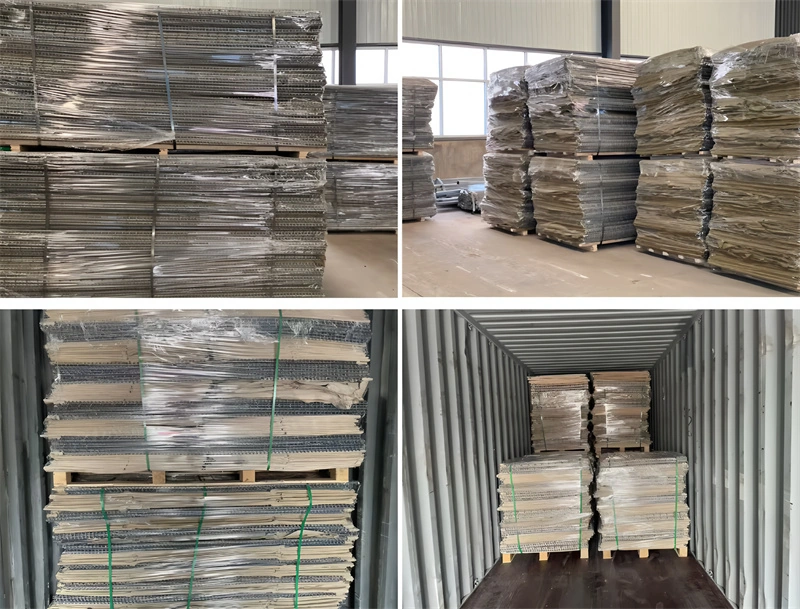
Finding a Hesco barrier supplier that actually delivers AS 4687-2022 compliant units — not just a piece of paper saying they do — is harder than it sounds. Shipments have been rejected at Sydney Metro sites because the galvanizing test certificate stated ‘>42 microns’ but the independent lab report came back at 36 microns. That’s a six-figure setback you don’t walk back from. DB Fencing has a different approach: they guarantee AS 4687-2022 compliance on every Hesco barrier they ship to Australia, backed by SGS test reports and a formal SupplierDeclaration of Conformity.
-
- AS 4687-2022 Compliance Guarantee: Every Hesco barrier panel meets the 2022 revision, including the anti-climb mesh requirement (mesh opening <100mm) and hot-dipped galvanizing verified at >42 microns via independent SGS salt spray testing.
- Pre-Compliance Document Pack: DB Fencing provides a pre-compliance document pack containing the DoC, SGS lab test reports for galvanizing thickness, and geotextile liner certification per AS/NZS 2908 — all prepared before the container leaves Anping.
- Two-Week Sample Turnaround: Request a pre-production sample and DB Fencing delivers it within 14 days, complete with independent lab test results. You verify the actual galvanizing, mesh gauge, and anti-climb dimensions before committing to a bulk order. This avoids the ‘spec sheet vs. reality’ trap that burns so many first-time importers.
The sample process is straightforward: you specify your required panel dimensions, foot type (DB Fencing is the only Anping supplier with its own plastic feet machine), and any OEM branding. They produce a physical sample, send it with test reports, and you approve before mass production. In my experience, a project manager who runs this sample process typically clears site certification in under two weeks instead of the usual six-week wait for full documentation from an unknown supplier.
Cost of Non-Compliance: Fines, Delays, and Liability
A Sydney Metro contractor lost $120,000 after 600 Hesco barriers failed anti-climb and galvanizing checks.
In 2026, a Sydney Metro site received 600 Hesco barriers from a supplier whose certificate claimed full AS 4687-2007 compliance. But the 2022 revision added anti-climb mesh requirements. The barriers had mesh openings at 120mm – over the 100mm limit. Worse, an independent salt spray test on a random sample revealed galvanizing at 37 microns, not the stated 42+. The entire shipment was rejected at the gate. The contractor faced $72,000 in replacement freight, $38,000 in site downtime penalties, and a $10,000 fine from SafeWork NSW for using non-compliant barriers. The supplier offered a 20% refund – not enough to cover the losses.
-
- Anti-climb gap: The 2022 update made any barrier with openings ≥100mm non-compliant for temporary construction fencing. Retrofitting with infill mesh cost the contractor $18 per panel – an extra $10,800 they hadn’t budgeted.
- Galvanizing deception: The supplier’s mill test certificate quoted ‘>42µm’, but SGS lab results averaged 37µm. AS 4687-2022 requires hot-dip galvanizing minimum 42µm. A pre-shipment independent test would have caught this.
- Missing documents: The supplier provided only a commercial invoice and packing list. Without a Supplier Declaration of Conformity (DoC) and a valid test report, the site engineer could not validate compliance. DB Fencing’s pre-compliance document pack includes both, cutting approval from weeks to days.
- Lesson for buyers: Never rely on a single certificate. Demand an independent lab test report for every batch, verify the anti-climb mesh opening size with a caliper, and insist on a DoC referencing the 2022 standard. A few hours of verification before shipment can save six figures.
| Risk | Impact | Cost Estimate | Example |
|---|---|---|---|
| Regulatory Fines | Non-compliant barriers shut down site by WorkSafe | Up to $50,000 per violation | Sydney Metro site fined $45,000 for anti-climb mesh violation |
| Project Delays | Rejected shipment stalls construction timeline | $8,000–$12,000 per day idle labor + equipment | 40HQ container rejected at port delayed project 14 days |
| Liability Claims | Barrier failure causes worker or public injury | $200,000–$1M in lawsuits | Temporary barrier collapse at event led to $600,000 settlement |
| Reputational Damage | Loss of future contracts and tenders | Unquantifiable, but can lose >$2M in pipeline | Distributor blacklisted after supplying non-certified panels |
| Logistics Waste | Return shipping and restocking fees | $15,000–$25,000 per container | Rejected barriers returned to China cost $18,700 in freight |
Conclusion
A sample approval confirms the design looks right. It doesn’t confirm the hot-dip galvanizing hit 42 microns across the full panel. A quality tolerance of ±0.1mm on the wire gauge is standard — but when the coating thickness drops below spec, the barrier fails the salt spray test inside 18 months. The real split between a compliant shipment and a rejected one at a Sydney Metro site comes down to whether you verified the material numbers yourself, not whether a supplier promised them on a certificate.
The last detail that separates professionals from amateurs is closing that verification loop before the container loads. Review the documentation checklist — declaration of conformity, independent lab report, wind load calculation for your specific N-zone — and compare it against your site’s requirements before committing to an order. DB Fencing offers a pre-compliance document pack designed exactly for this step. It can cut the approval timeline from weeks to days. Check the product page for the full spec breakdown and test report samples.
Frequently Asked Questions
What is the minimum galvanizing thickness for AS 4687?
42 microns hot-dip is the minimum under AS 4687-2022 for Hesco barriers. A mill certificate alone isn’t enough—you need an independent salt spray test report to verify. Always request an independent lab report before accepting shipment.
How do I verify AS 4687 compliance for Hesco barriers?
Check the supplier’s Declaration of Conformity and an independent lab test (e.g., SGS or Bureau Veritas). Also confirm mesh openings are under 100mm to meet anti-climb requirements. Ask for both documents before ordering to avoid site rejection.
What mesh size is required for AS 4687 compliance?
Mesh openings must be less than 100mm to pass anti-climb performance. A 95mm opening can still fail if the wire gauge or coating doesn’t meet the standard. Confirm both mesh size and wire thickness with your supplier.
What documents are needed for site approval?
You need a Supplier Declaration of Conformity, an independent lab test report (like SGS), and an installation certificate from a licensed contractor. Missing any one can block site access. Collect all three before the truck arrives on site.
Where can I buy AS 4687-certified Hesco barriers?
DB Fencing supplies AS 4687-compliant Hesco barriers with hot-dipped galvanizing (>42 microns) and ISO9001/SGS certification. They offer a two-week sample testing process for verification. Request a sample test kit to confirm compliance before bulk order.