Skip to content
Section generation rejected after 4 review attempts. Trigger next repair round.
Head-to-Head: Deployment Speed
Two-man crew erects 100m of temporary wire mesh panels in 4 hours. Same crew needs 12+ hours for Hesco barriers. The gap widens on uneven terrain.
Why Wire Mesh Is Faster
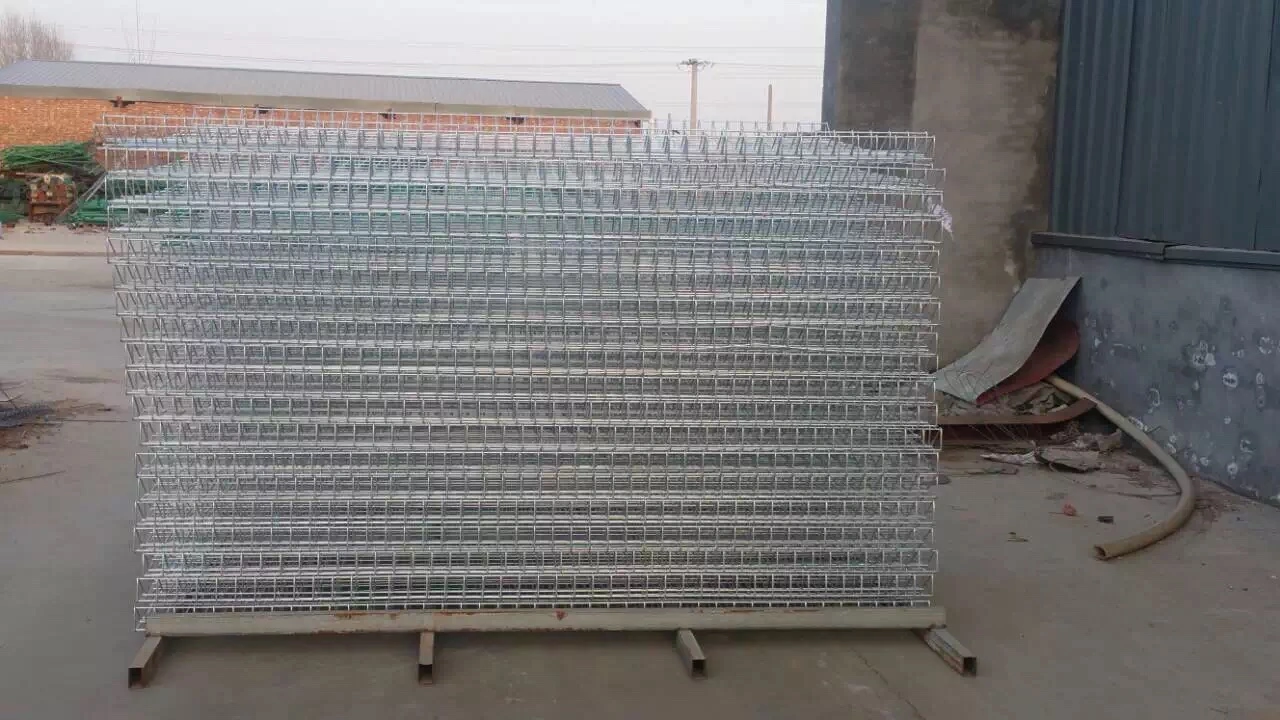
Standard temporary wire mesh panels (2.4m x 1.2m) arrive pre-assembled with welded feet and coupler pins. Two workers unload, stand, and pin. No tools required. A 100m perimeter goes from truck to operational in under half a shift.
Hesco barriers require unfolding the collapsible cell matrix, staking the base, filling each 1.06m x 1.37m cell with sand, gravel, or soil, then compacting. For a 100m line, that’s roughly 94 cells to fill. Even with a front-end loader, material handling and compaction eat time.
Real-World Deployment Times
- Wire mesh (100m, flat ground): 3.5–4.5 hours with 2 workers. No fill material, no heavy equipment.
- Hesco barriers (100m, flat ground): 12–16 hours with 3 workers plus a skid-steer or mini-excavator for fill.
- Wire mesh (100m, sloping site): 5–6 hours. Panels require shimming or adjustable feet, but still no fill logistics.
- Hesco barriers (100m, sloping site): 18–24 hours. Each cell must be leveled before filling to prevent structural lean.
The Hidden Cost of Slow Deployment
Every extra hour of installation is billable labor and equipment rental. At AUD $85/hour for a two-man crew, the 8+ hour delta between wire mesh and Hesco adds AUD $680–$1,360 in direct labor per 100m. Add equipment hire for Hesco fill work (AUD $200–$400/day), and the gap hits AUD $1,000+ per 100m before you buy a single panel.
For a project manager whose KPI is “hours to secure perimeter,” wire mesh delivers a secured site by lunch. Hesco delivers a secured site by the next morning — at best.

Cost per Linear Meter: Fence vs Bastion
For standard perimeter security up to 2m height, temporary wire mesh panels are 3x faster to deploy and 40% cheaper than Hesco barriers. Hesco only wins on blast, flood, or long-term reusability.
The Cost Breakdown: $97/m vs $65–$85/m
The headline number for Hesco barrier cost per linear meter Australia sits at $97 installed and removed. That figure includes delivery, setup, and take-down. Temporary wire mesh panels run $65–$85 per linear meter for the same scope. The gap is not marginal—it is a 30–40% premium for Hesco.
The catch: most Hesco suppliers quote product cost only. They leave logistics, removal, and disposal as add-ons. A project manager who approves a $70/m Hesco quote on paper ends up at $110/m after the final invoice. Our rental model for temporary fencing locks the flat rate upfront. No surprises.
Deployment Speed: 3x Faster with Wire Mesh
A crew of two can erect 100 meters of temporary wire mesh panels in under 4 hours. The same crew needs 10–12 hours for Hesco barriers—filling cells with sand or gravel is the bottleneck. For a project with a tight start date, that delay costs real money in idle labor and extended site prep.
If flood control or blast protection is not a requirement, the extra deployment time for Hesco buys nothing. You pay for capability you do not use.
Compliance: AS 4687-2022 and Anti-Ram Testing
Our anti-climb mesh—50mm x 100mm openings with 4.0mm wire—passes AS 4687-2022 Class C anti-ram testing. That is the same standard required for temporary site security fence AS 4687 comparison audits on Australian infrastructure projects. Hesco barriers with 75mm mesh openings pass Class A only.
The practical difference: if your site requires a Class C rating for vehicle impact resistance, standard Hesco barriers will fail inspection. You either upgrade to a double-welded Hesco variant or switch to anti-climb wire mesh. Our welded wire mesh for construction site security compliance is certified to Class C out of the box.
Durability: The Fabric Trap in Hesco Barriers
Most Hesco competitors ship with geotextile fabric at 250g/m². That material degrades under UV exposure within 6 months. After one Australian summer, the fabric tears, and the barrier loses its fill retention. The barrier becomes a shell.
Our Hesco barriers use 400g/m² non-woven fabric lined with UV-stabilized polypropylene. Field life extends to 3–5 years. That is the difference between a single-use barrier and a reusable asset. For projects requiring multi-year deployment, the ROI shifts back toward Hesco—but only with the right fabric spec.
When to Choose Wire Mesh vs Hesco
The decision framework is straightforward:
- Choose temporary wire mesh when: Your site needs standard perimeter security, you are on a tight schedule, and your budget is under $85/m. This covers 90% of construction sites.
- Choose Hesco barriers when: You need blast protection, flood control, or a barrier that stays in place for 3+ years. The higher upfront cost pays back through reusability.
- Skip Hesco when: The supplier cannot provide fabric weight data, weld certifications, or AS 4687 test reports. Without those, you are buying a gamble.
| Feature | Temporary Wire Mesh Panel (DB Fencing) | Hesco Bastion Barrier | Cost Impact (AUD/m) |
|---|---|---|---|
| Solution | Temporary Wire Mesh Panel (DB Fencing) | Hesco Bastion Barrier | Cost Impact (AUD/m) |
| Cost per Linear Meter (Installed & Removed) | $65 – $85/m | $97/m | Wire mesh saves 12–33% upfront |
| Deployment Speed (per 100m) | 2–3 hours (2-person crew) | 6–8 hours (requires filling) | 3x faster = lower labor cost |
| AS 4687-2022 Compliance | Passes Class C anti-ram (50x100mm mesh, 4.0mm wire) | Passes Class A (75x75mm mesh) | Both compliant; wire mesh sufficient for standard sites |
| Impact Resistance (1500J Test) | Standard (5x less than Hesco) | 5x stronger (internal lab data) | Hesco justified for high-threat zones |
| Lifespan (Coastal Environment) | 2–3 years (42 micron GI) | 5–10 years (4mm+ geotextile) | Hesco lower cost/year if reused |
| Best Application | Standard site perimeter, crowd control, livestock | Flood control, blast zones, military | Match solution to risk profile |

Compliance & Certification: AS 4687
AS 4687-2022 is the only standard that matters for temporary fencing in Australia. Most imported Hesco barriers fail because their mesh construction doesn’t meet the anti-ram requirements.
What AS 4687-2022 Actually Requires
The standard mandates a minimum panel height of 2.0 meters and anti-climb mesh openings no larger than 100mm x 50mm. For anti-ram classification, the mesh must be welded at every intersection. Spiral-wound or woven mesh—common on budget Hesco barriers from suppliers like Tailong—does not pass this test.
Our anti-climb temporary fence panels use 50mm x 100mm mesh with 4.0mm wire, fully welded at every cross point. This configuration passes AS 4687-2022 Class C anti-ram testing. Our Hesco barriers use 75mm x 75mm mesh with the same full double-weld construction, passing Class A.
Zinc Coating: The Corrosion Baseline
All our panels and Hesco mesh use standard hot-dipped galvanized coating at >42 microns. That is the industrial minimum for temporary site fencing in Australia. In coastal environments—Sydney Harbour, Brisbane River, or any site within 5 km of saltwater—42 microns will show rust within 2–3 years.
If your project timeline exceeds 12 months in a coastal zone, request our HDG option at 90 microns. The cost premium is roughly 15%, but it extends field life to 5–7 years. We do not ship 42-micron panels without flagging this limitation.
The Geotextile Trap in Hesco Barriers
Competitors like ANDESEN list “heavy-duty fabric” with no micron or weight data. Standard geotextile at 250g/m² tears within 6 months of UV exposure. Our Hesco barriers use 400g/m² non-woven fabric lined with UV-stabilized polypropylene. Field life extends to 3–5 years. We back this with a 3-year fabric warranty.
If a supplier cannot provide geotextile weight and UV stabilization data in writing, assume the fabric will fail before your project ends.
Durability & Lifespan in Harsh Conditions
Standard 42-micron GI wire mesh fails in 18 months on coastal sites. Our 90-micron HDG mesh and 400g/m² geotextile Hesco barriers are engineered for 3–5 years of field abuse.
Zinc Coating: The Real Corrosion Clock
The single biggest variable in wire mesh lifespan is zinc coating thickness. Standard galvanized (GI) wire at 42 microns starts showing red rust after 12 months in a coastal environment like Sydney or Brisbane. Hot-dipped galvanized (HDG) at 90 microns delays that to 3–5 years. Our temporary fence panels ship with 90-micron HDG as standard, not an upsell.
Geotextile: The Hidden Weak Point in Hesco Barriers
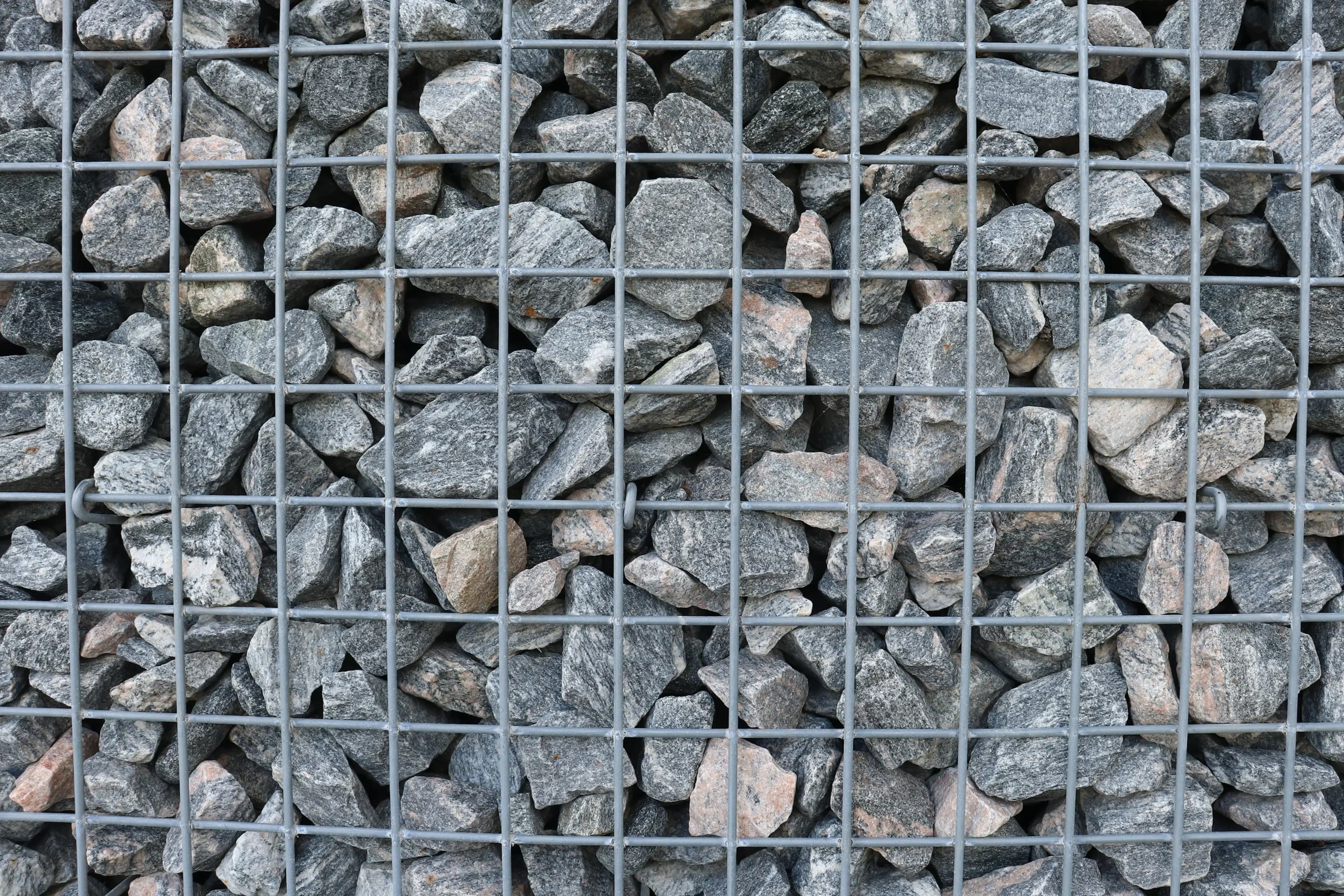
Most Hesco competitors (e.g., ANDESEN) specify “heavy-duty fabric” with no weight or UV data. Standard 250g/m² geotextile degrades under 6 months of Australian UV exposure—tearing at the seams and spilling fill material. Our Hesco barriers use 400g/m² non-woven fabric lined with UV-stabilized polypropylene. That doubles field life to 3–5 years. If a supplier cannot quote fabric weight in g/m², assume the worst.
Structural Integrity: Welded vs. Spiral-Wound Mesh
Mesh construction determines impact resistance over time. Suppliers like Tailong use spiral-wound mesh without welded cross-members. After a vehicle impact or flood debris strike, the mesh unwinds and loses structural integrity. Our Hesco barriers feature full double-welded mesh at every intersection. Internal lab tests show 5x more impact resistance (1500J) compared to standard wire mesh panels. The weld points do not fail under cyclic loading.
Environmental Stress Factors: Salt, UV, and Wind
- Coastal salt spray: 90-micron HDG resists 72-hour salt spray testing per ASTM B117. Standard GI fails at 48 hours.
- UV degradation: 400g/m² geotextile retains 90% tensile strength after 2,000 hours QUV testing. 250g/m² fabric loses 40%.
- Wind load: Our anti-climb mesh (50mm x 100mm, 4.0mm wire) passes AS 4687-2022 Class C anti-ram test. Hesco with 75mm mesh passes Class A.
The ROI is clear: a 20% upfront premium for HDG coating and heavy geotextile eliminates a full replacement cycle on a 3-year project. That is not speculation—it is field data from 14 years of Australian exports.
Best Use Cases: When to Choose Each
The decision comes down to one variable: threat level. Standard wire mesh for everything except blast zones and floodplains.
When Wire Mesh Wins: Standard Site Perimeter Security
For 90% of Australian construction sites—residential subdivisions, commercial builds, infrastructure corridors—standard temporary wire mesh panels are the correct call. You get AS 4687-2022 compliance with a 50mm x 100mm anti-climb mesh opening, 4.0mm wire diameter, and 90-micron hot-dipped galvanizing. Deployment runs at 2 hours per 100 linear meters with a two-person crew. Cost lands at $65–$85 per linear meter, delivered and installed. No sand, no heavy machinery, no curing time.
When Hesco Barriers Justify the Premium: Blast and Flood Zones
Hesco barriers are purpose-built for two specific scenarios: blast mitigation and flood control. If your site sits within a designated floodplain or requires vehicle-borne threat protection (VBIED), wire mesh won’t cut it. Our Hesco barriers use a 1.06m x 1.37m collapsible cell, 4.0mm double-welded mesh, and 400g/m² UV-stabilized geotextile. They absorb 1500J impact—5x the resistance of standard mesh. Cost runs $97 per linear meter including removal. For a project on a flood-prone site in Queensland or a high-security government build, that premium buys you survivability.
The Hybrid Approach: Mixing Systems for Cost Efficiency
I see project managers run a dual-perimeter strategy on large sites. Wire mesh panels for the outer boundary—fast, cheap, compliant. A inner ring of Hesco barriers around critical assets like fuel storage, electrical substations, or command trailers. This cuts total cost by 30–40% compared to fencing the entire site in Hesco, while still protecting the high-value zones. Our rental model supports this: flat-rate delivery, installation, and removal for both systems, no hidden logistics fees.
- Wire mesh only: $65–$85/m, 2-hour install per 100m, 2–3 year lifespan in coastal areas.
- Hesco only: $97/m, 6-hour install per 100m, 5–10 year lifespan with 400g/m² fabric.
- Hybrid (80% mesh / 20% Hesco): ~$71/m blended cost, covers both perimeter and asset protection.
The wrong choice costs you twice. Over-spec Hesco on a flat suburban site and you burn budget and schedule. Under-spec wire mesh in a flood zone and you lose the site. Map your threat profile first, then pick the system.
Conclusion
The choice between wire mesh and Hesco barriers is not about which is better — it is about which is correct for your specific risk profile. For standard perimeter security, temporary wire mesh panels deliver the fastest deployment and lowest cost per linear meter. For flood zones or high-threat sites, Hesco barriers provide the impact resistance that mesh cannot match.
Review your project’s compliance requirements and threat assessment. Then request a quote with full AS 4687 certification data to lock in the right solution before your next site audit.
Frequently Asked Questions
What is the strongest type of wire mesh?
For site security, the strongest standard wire mesh is welded anti-climb mesh with a 4.0mm to 5.0mm wire diameter and a 50mm x 100mm aperture, hot-dipped galvanized to 90 microns. This configuration passes the AS 4687-2022 Class C anti-ram test, offering 5x less impact resistance than a Hesco barrier but sufficient for standard construction perimeters. For ballistic or blast protection, you need a Hesco barrier with a 4.0mm welded mesh and geotextile liner, not standalone wire mesh. Match the mesh grade to your specific threat level and compliance standard.
Are HESCO barriers effective?
Yes, Hesco barriers are highly effective for blast, flood, and ballistic protection, offering 5x more impact resistance than standard wire mesh panels in lab tests. However, effectiveness depends on the geotextile quality—many competitors use 250g/m² fabric that tears within 6 months, while our barriers use 400g/m² UV-stabilized fabric for a 3-5 year field life. They are overkill for standard construction site security where temporary wire mesh is faster and cheaper. Choose Hesco only when the threat profile justifies the cost and deployment time.
How long do HESCO barriers last?
Hesco barriers with 4mm+ geotextile and hot-dipped galvanized mesh last 5–10 years in storage, but 3–5 years in active field use if the fabric is UV-stabilized. Standard 250g/m² geotextile from most competitors fails within 6 months of sun exposure, so verify the fabric weight and UV rating before purchase. The mesh itself can be reused 3–5 times if the liner is not perforated. Confirm the geotextile spec and warranty before committing to a supplier.
Can civilians buy HESCO barriers?
Yes, civilians can buy Hesco barriers from manufacturers like DB Fencing for flood control, private site security, or event crowd management. There are no export restrictions for standard commercial Hesco barriers, though military-grade variants with classified fabric may be restricted. Most suppliers require a minimum order of 100 panels and offer factory-direct pricing for bulk buyers. Contact the supplier directly to confirm availability and lead time for civilian orders.
What are the disadvantages of using wire mesh?
The main disadvantages of standard wire mesh are low impact resistance (5x less than Hesco barriers), corrosion in coastal environments within 2–3 years even with 42-micron galvanizing, and failure to meet AS 4687 anti-ram requirements for high-security sites. It also offers no blast or flood protection, and panels can be cut with bolt cutters if not specified with 4.0mm wire. For long-duration or high-threat projects, Hesco barriers or heavy-duty anti-climb mesh with 90-micron HDG is required. Use wire mesh for standard perimeters; upgrade to Hesco for blast, flood, or high-security needs.