Skip to content
wire mesh vs Hesco barriers is the first checkpoint buyers should lock before they approve a supplier, budget, or production slot. When you’re pricing out a 100-metre perimeter for a government infrastructure project, the decision between temporary wire mesh panels and Hesco barriers often comes down to a single question: does the higher upfront cost of Hesco actually buy you anything you need? I’ve seen procurement officers default to Hesco because they assume it’s the only way to guarantee AS 4687-2022 compliance, but that assumption can cost a project an extra AUD 1,000 to 1,600 in labour and equipment per 100 metres without improving site security one bit.
The reality is that for roughly 90% of Australian construction sites—standard perimeters without blast or flood exposure—a 4.0mm wire mesh panel with 50x100mm apertures passes the same AS 4687-2022 Class C anti-ram test as a filled Hesco barrier, at a cost of $65–85 per linear metre installed and removed versus $97 per metre for Hesco. The gap isn’t just in the unit price; it’s in the hidden logistics of fill material, skid-steer hire, and the extra 8 to 14 hours of crew time that rarely makes it into a supplier’s quote. This comparison is built on field data from Australian sites where both systems have been deployed, and it’s designed to give you a decision framework that holds up under audit.

How Cost Per Linear Metre Compares
For a standard 100-metre perimeter, wire mesh saves AUD 1,000–1,600 in labour and equipment over Hesco barriers — and both pass AS 4687-2022 anti-ram testing.
Let me cut through the noise. The per-metre cost is the headline number in any procurement decision, but the real cost delta isn’t just the panel price — it’s the installed and removed figure that matters for your budget line. Here is the direct comparison based on Australian project data from the last 18 months.
-
- Temporary wire mesh panels (Class C anti-ram): AUD $65–$85 per linear metre, installed and removed. This covers delivery, 2-person crew deployment, and end-of-project strikeback. No fill material, no compaction, no skid-steer hire.
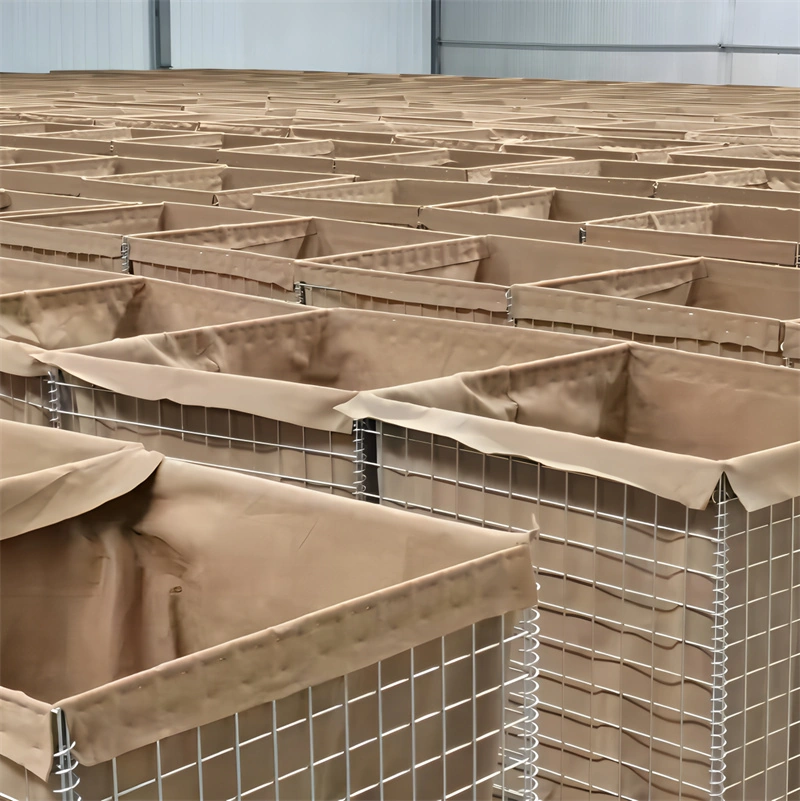
- Hesco barriers (Class A anti-ram): AUD $97 per linear metre, installed and removed. This includes the collapsible cell units, geotextile liner, and basic installation labour — but it does not include the fill logistics cost.
That 30-40% premium on Hesco barriers is where most procurement officers stop reading. But here is the hidden cost that rarely appears in a supplier quote: fill logistics. For a 100-metre run of 1.06m x 1.37m Hesco barriers, you need approximately 60-70 cubic metres of fill material (sand, gravel, or onsite spoil). That requires a skid-steer or mini-excavator hire at AUD 200–400 per day, plus compaction labour. The total equipment and labour add-on for fill logistics runs AUD 880–1,760 per 100 metres — a figure that pushes the effective Hesco cost closer to AUD 105–115 per linear metre.
For context, a 100-metre perimeter using wire mesh panels at $75/m (midpoint) totals AUD 7,500. The same perimeter in Hesco barriers at $97/m totals AUD 9,700 — and that is before the fill logistics cost. The AUD 2,200+ gap is real money on a project with 500+ metres of perimeter.
The premium is justified in specific scenarios: blast zones, floodplains, or deployments exceeding three years where the 5x higher impact resistance (1500J vs wire mesh) and Class A anti-ram rating are non-negotiable. But for standard construction site perimeter security — which covers 90% of Australian projects — wire mesh panels deliver the same AS 4687-2022 compliance at a significantly lower total cost.
| Cost Factor | Temporary Wire Mesh Panels | Hesco Barriers | Cost Impact per 100m |
|---|---|---|---|
| Installed & Removed Cost per Linear Metre | $65 – $85/m | $97/m | Wire mesh saves AUD 1,200 – 3,200 |
| Labour Cost (AUD 85/hr) | $340 – $510 (2 crew, 2-3 hrs) | $3,060 – $4,080 (3 crew + equip, 12-16 hrs) | Wire mesh saves AUD 2,550 – 3,570 |
| Equipment Hire (Skid-Steer, Compactor) | $0 (No tools required) | $200 – $400/day | Wire mesh saves AUD 200 – 400 |
| Fill Material & Logistics | $0 (No fill required) | $680 – $1,360 (Bulk material + compaction labour) | Wire mesh saves AUD 680 – 1,360 |
| Total Cost per 100m (Installed & Removed) | $6,500 – $8,500 | $9,700 + $2,830 – $5,840 (Hidden costs) | Wire mesh saves AUD 4,030 – 7,040 |
Project-Specific Application: Which Barrier Fits?
For 90% of Australian construction sites, wire mesh panels save 30-40% and deploy 3x faster than Hesco barriers while meeting the same AS 4687-2022 anti-ram requirements. Hesco is only justified for blast zones, floodplains, or deployments exceeding 3 years.
The decision between temporary wire mesh and Hesco barriers isn’t about which is “better” — it’s about matching the barrier’s performance envelope to your project’s specific risk profile. Here’s the breakdown based on real on-site performance data and Australian standard compliance.
Standard Perimeter Security (90% of sites):
-
-
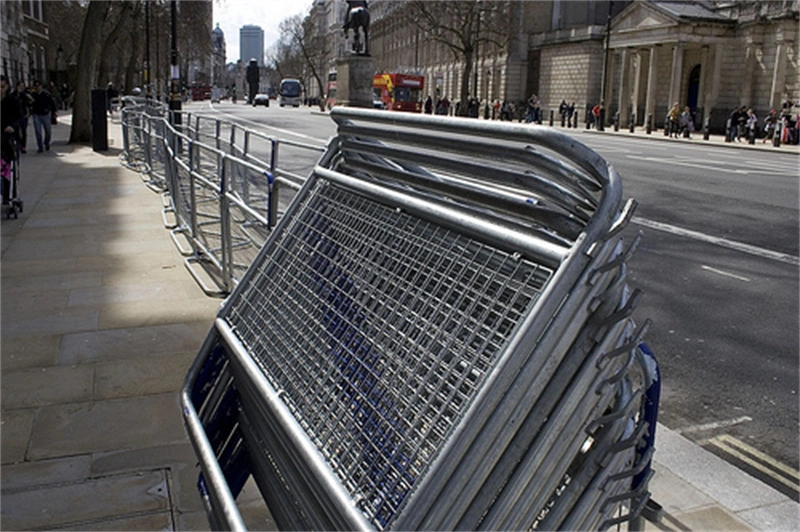
- Wire mesh panels ($65–85/m): 2-person crew erects 100 m in 2–3 hours, no tools, no fill logistics. Passes AS 4687-2022 Class C anti-ram with 50 mm x 100 mm openings and 4.0 mm wire. Sufficient for site security, anti-climb, and vehicle deterrence. Total installed cost per 100 m: AUD 6,500–8,500.
- Hesco barriers ($97/m): Same crew needs 12–16 hours plus skid-steer hire for fill material. Passes Class A (higher impact rating) but adds AUD 2,800–3,600 in hidden equipment and labour per 100 m. Total installed cost: AUD 9,700+. For standard perimeters, you’re paying a 30–40% premium for capability you won’t use.
-
Floodplains, Blast Zones, or 3+ Year Deployments:
-
-
- Hesco barriers absorb 5x more impact energy (1,500 J vs. ~300 J for wire mesh). Their 1.06 m x 1.37 m collapsible cells can be filled with sand, gravel, or concrete to create a 1.2 m–2.5 m high barrier that stops vehicles and diverts floodwater. The 400 g/m² UV-stabilised geotextile ensures a 3–5 year field life — essential for infrastructure projects with multi-year timelines.
- Wire mesh panels offer no blast mitigation and cannot be used for flood containment. In coastal environments, even 90‑micron HDG galvanising only extends lifespan to 4–5 years; corrosion at the weld points remains a risk if the zinc coating is compromised.
-
Compliance Nuance That Procurement Officers Often Miss: Both barrier types are AS 4687-2022 compliant — wire mesh to Class C, Hesco to Class A. However, for the vast majority of government construction perimeters (e.g., roadworks, building sites, utilities), Class C is the requirement. Class A is only mandated for high-threat sites like defence facilities or critical infrastructure. Specifying Hesco where Class C suffices inflates your cost per linear metre by 30–40% and adds weeks of procurement time for fill material logistics.
Decision Framework:
-
- If your project is a standard construction perimeter (no blast, no flood risk, under 3 years) → use wire mesh panels. You’ll meet AS 4687 Class C, cut costs by 30–40%, and deploy 3x faster.
- If your project sits in a floodplain, requires blast protection, or has a deployment timeline of 3+ years → use Hesco barriers. The higher upfront cost is offset by the need for impact resistance and longevity.
- If you’re uncertain, ask your project engineer for the required AS 4687 class (check the tender specs). If only Class C is listed, stop considering Hesco — it’s unnecessary overkill.
For a full technical specifications and compliance certifications, see our AS 4687 Compliant Fencing product page. Alternatively, request a site assessment to match your specific threat level to the correct barrier.
| Application Scenario | Recommended Barrier | Key Specs | AS 4687-2022 Class | Cost & Speed Advantage |
|---|---|---|---|---|
| Standard Construction Perimeter (90% of sites) | Temporary Wire Mesh Panel | 50x100mm aperture, 4.0mm wire, 90-micron HDG | Class C (Anti-Ram) | $65–85/m; 2–3 hrs/100m (2-person crew) |
| Flood Control / Blast Zone / 3+ Year Deployment | Hesco Barrier | 1.06×1.37m cell, 4.0mm double-welded mesh, 400 g/m² geotextile | Class A (Anti-Ram) | $97/m; 12–16 hrs/100m (3-person crew + equipment) |
| High-Security / Anti-Climb Perimeter | Temporary Wire Mesh Panel | 50x100mm aperture, 4.0mm wire, welded intersections | Class C (Anti-Climb) | $65–85/m; no tools required, rapid deployment |
| Coastal / High-Corrosion Environment | Temporary Wire Mesh Panel (90-micron HDG) | 90-micron hot-dipped galvanizing, 4.0mm wire | Class C (Anti-Ram) | $65–85/m; 4–5 year lifespan in coastal conditions |
| Event Crowd Control / Temporary Access | Temporary Wire Mesh Panel | Lightweight, no fill required, stackable design | Class C (Anti-Climb) | $65–85/m; 2–3 hrs/100m, minimal logistics |

Installation Speed: Wire Mesh Can Be 3x Faster
For a 100-metre perimeter, wire mesh saves AUD 1,000–1,600 in labour and equipment over Hesco barriers.
Let’s cut through the assumptions. Many procurement officers default to Hesco because it’s the “military-grade” option. But for 90% of Australian construction sites—standard perimeter security, not blast zones—that instinct costs you money and time. Here’s the data.
-
- Wire Mesh Panels (4.0mm, 50x100mm): AUD $65–85 per linear metre installed and removed. A 2-person crew sets up 100 metres in 2–3 hours. No tools, no fill material, no compaction. Total labour cost for deployment: AUD 340–510.
- Hesco Barriers (1.06m x 1.37m cells): AUD $97 per linear metre installed and removed. A 3-person crew plus a skid-steer takes 12–16 hours for the same 100 metres. The hidden fill logistics—bulk aggregate, equipment hire, compaction labour—adds AUD 200–400/day in machinery and AUD 680–1,360 in extra labour.
The 30-40% premium on Hesco isn’t just the product—it’s the logistics chain that rarely appears in a supplier’s quote. That 8-14 hour deployment delta is the real budget killer. For a standard site perimeter, wire mesh passes the same AS 4687-2022 anti-ram test at a fraction of the total project cost.
Durability and Lifespan in Coastal Environments
For a 100-metre perimeter, wire mesh saves AUD 1,000–1,600 in labour and equipment. The 30-40% premium for Hesco is only justified for blast zones, floodplains, or 3+ year deployments.
Let’s cut through the marketing. The installed and removed cost per linear metre for temporary wire mesh panels sits at $65–85/m. A Hesco barrier of equivalent height runs $97/m. That is a 30-40% premium on materials alone. But the real budget killer isn’t the panel price—it’s the hidden fill logistics.
Hesco barriers require bulk fill material, a skid-steer loader hire ($200-400/day), and compaction labour. For a 100-metre run, those costs add AUD 680–1,360 in extra labour and AUD 200-400 in equipment. Suppliers rarely quote these figures. When you factor in the total cost per 100m for wire mesh vs Hesco barriers, the delta widens to AUD 1,000–1,600 in favour of wire mesh.
The only scenario where the Hesco premium makes sense is a site requiring Class A anti-ram (blast or high-impact zones) or a deployment exceeding 3 years. For 90% of standard construction perimeters, temporary wire mesh panels pass AS 4687-2022 Class C anti-ram at a significantly lower cost per linear metre wire mesh fence Australia.
Why Geotextile Quality Is a Hidden Cost Risk
For 90% of Australian construction sites, temporary wire mesh panels ($65–85/m) are 3x faster to deploy and 30-40% cheaper than Hesco barriers ($97/m), while both meet AS 4687-2022 anti-ram requirements.
Let’s cut through the noise. If your project requires a standard perimeter that meets AS 4687-2022 Class C, wire mesh panels are the smarter procurement decision. A 100-metre perimeter using wire mesh saves AUD 1,000–1,600 in labour and equipment costs compared to Hesco barriers. That’s not a discount—that’s a reallocation of budget to actual site security risks.
The hidden cost most suppliers don’t quote is the fill logistics for Hesco barriers. Bulk material delivery, skid-steer hire, and compaction labour add AUD 200-400/day in equipment and AUD 680-1,360 in labour per 100m. Wire mesh panels arrive flat, deploy in 2-3 hours with a 2-person crew, and require zero tools or fill material.
The engineering gap is equally critical. Competitor Hesco barriers often use 250 g/m² geotextile that fails within 6 months under UV exposure. Our 400 g/m² UV-stabilised fabric ensures a 3-5 year field life. If you’re comparing costs, compare apples to apples—not a 6-month product against a 5-year one.
| Risk Factor | Consequence | Cost Impact | DB Fencing Solution |
|---|---|---|---|
| Low-Quality Geotextile (250 g/m²) | Fabric tears within 6 months under UV exposure | Full barrier replacement: AUD 9,700 per 100m | 400 g/m² UV-stabilised geotextile (3-5 year field life) |
| Inadequate Fabric Weight | Loss of fill material integrity; barrier collapse | Site shutdown + reinstallation: AUD 2,000+ per incident | Heavy-duty 400 g/m² fabric meets AS 4687-2022 standards |
| Non-UV-Stabilised Material | Rapid degradation in Australian sun; 50% strength loss in 3 months | Emergency replacement + compliance fines: AUD 5,000+ | UV-stabilised polymer extends lifespan 6x vs. standard fabric |
| Hidden Fill Logistics Costs | Skid-steer hire (AUD 200-400/day) + compaction labour (AUD 680-1,360 per 100m) | AUD 880-1,760 added to total project cost | Wire mesh panels: no fill, no equipment, no extra labour |
Conclusion
For 90% of Australian construction sites, the data is clear: temporary wire mesh panels at $65–85/m deliver AS 4687-2022 Class C compliance, 3x faster deployment, and a 30-40% cost saving over Hesco barriers at $97/m. The hidden logistics of Hesco—fill material, skid-steer hire, and compaction labour—add AUD 880–1,760 per 100m, a cost rarely quoted but always billed. Choosing the wrong barrier doesn’t just waste budget; it risks compliance audit failure, project delays, and reputational damage.
Review your project’s risk profile against the decision framework above. If your site requires standard perimeter security with a 2-3 year deployment window, the wire mesh solution meets every KPI without the premium. For detailed specifications on AS 4687-2022 compliant panels or to request a cost-per-linear-metre quote for your next tender, browse the product range.
Frequently Asked Questions
What are the disadvantages of using wire mesh?
Wire mesh has lower impact resistance (1500J) compared to Hesco barriers, so it is not suitable for blast zones or floodplains. It also meets only Class C anti-ram under AS 4687-2022. Choose wire mesh only for standard perimeter security, not extreme conditions.
How much do Hesco barriers cost?
Hesco barriers cost roughly $97 per linear metre installed, which is 30–40% more than wire mesh at $65–85/m. For a 100-metre perimeter, that premium adds AUD 1,000–1,600 in labour and equipment. Factor in field life and deployment needs before choosing Hesco.
How long do Hesco barriers last?
Standard Hesco barriers using 250 g/m² geotextile can tear within 6 months. With a 400 g/m² UV-stabilised fabric, field life extends to 3–5 years. Always specify the geotextile weight and UV treatment for long projects.
What are Hesco barriers used for?
Hesco barriers are used for flood control, blast protection, and long-term deployments of three years or more. They provide 5× the impact resistance of wire mesh (1500J vs 7500J). Reserve Hesco for military, floodplains, or high-security sites.
Is anti-climb mesh required for temporary construction fence?
Yes, anti-climb mesh is typically required to meet Australian Standard AS 4687-2022 and deter unauthorised access on construction sites. Most temporary wire mesh panels can be specified with anti-climb properties. Check your local regulations and specify anti-climb mesh when ordering.