Skip to content
import hesco barriers australia is the first checkpoint buyers should lock before they approve a supplier, budget, or production slot. A distributor in Sydney ordered a full container of Hesco barriers from a new supplier in China. The pre-production sample matched perfectly — same wire gauge, same galvanized coating, same collapsed dimensions. But when the mass production run arrived at the port, customs flagged the HS code. The supplier had used 8424, the code for military equipment. The shipment sat in bond for 18 days while DB Fencing’s team worked through the reclassification. That $50K order went from a 30-day sell-through to a 60-day headache.
That scenario repeats more often than most buyers realize. The difference between a smooth clearance and a costly delay often comes down to one thing: knowing the correct HS code for Hesco barriers. Under the Australian Customs Tariff, the right classification is 7308.90 — structures and parts of iron or steel. It carries a standard duty rate of 5%, and under the China–Australia Free Trade Agreement (ChAFTA), it can drop to zero if your factory provides a valid certificate of origin. DB Fencing has done exactly that for every Australian shipment they’ve handled over the past 14 years.
For a distributor chasing margin on bulk resale, that 5% swing is real. On a landed cost of $50,000, it’s $2,500 straight to your bottom line — or straight to unnecessary duty if your supplier files the wrong paperwork. The rest of this guide walks through the specific codes, duty calculations, container loading plans, and documentation that turn a port delay into a predictable delivery window. The benchmark to keep in mind: a properly classified shipment with a ChAFTA certificate can land at a 0% duty rate — that’s a full 5% cost advantage over competitors who pay the standard rate.

Why Import Hesco Barriers Directly from China?
Importing direct from China cuts out 30–50% distributor markup — but only if your supplier knows Australian customs.
Most Australian buyers assume local distributors are the only safe route for Hesco barriers. That assumption costs them 30% to 50% in markup on every unit. If you’re a fence distributor sourcing for resale, that margin gap determines whether you compete on price or get undercut. Direct factory pricing from a supplier like DB Fencing drops the CIF landed cost per Mil-3 unit by roughly 20–25% compared to buying through a Melbourne or Sydney middleman. The catch? Not every Chinese factory can navigate Australian import compliance cleanly.
-
- Track record matters: DB Fencing has exported to Australia for 14 years — 75% of its business goes to AU and NZ. That means Australian Standard AS 4687-2022 compliance, ISO 9001 certification, and hot-dipped galvanizing above 42 microns are standard, not special requests.
- Customs risk: A common pitfall: many Chinese Hesco factories ship under HS code 8424 (military equipment), which triggers export controls and customs holds. DB Fencing uses 7308.90 — the correct classification for steel structures — avoiding those delays.
- Tariff advantage: Under the China-Australia Free Trade Agreement (ChAFTA), a certificate of origin eliminates the typical 5% duty. DB Fencing provides this documentation routinely, further lowering your landed cost.

Step 1: Correct HS Code Classification
One wrong HS code can trigger export controls and customs delays.
Hesco barriers are correctly classified under HS code 7308.90 – structures and parts of iron or steel. This is where many Chinese factories go wrong: some export under HS 8424 (military equipment), which triggers export licensing delays and can flag your shipment for inspection. DB Fencing has always used 7308.90 for our Australian exports, and it clears customs without hold-ups.
-
- Misclassification penalty: Under the Customs Act 1901, incorrect classification can result in penalties up to 110% of the duty underpaid, plus storage fees if the container is held at port. A 5% duty miscalculation on a $50,000 invoice means $2,750 in potential fines.
- Tariff concession: The China–Australia Free Trade Agreement (ChAFTA) allows zero-duty clearance for 7308.90 goods if the factory supplies a valid Certificate of Origin. DB Fencing provides this routinely, which means your landed cost drops by 5% compared to a non-compliant supplier.
Step 2: Understanding Australian Duties and Taxes
ChAFTA cuts duty to 0% with a simple certificate of origin.
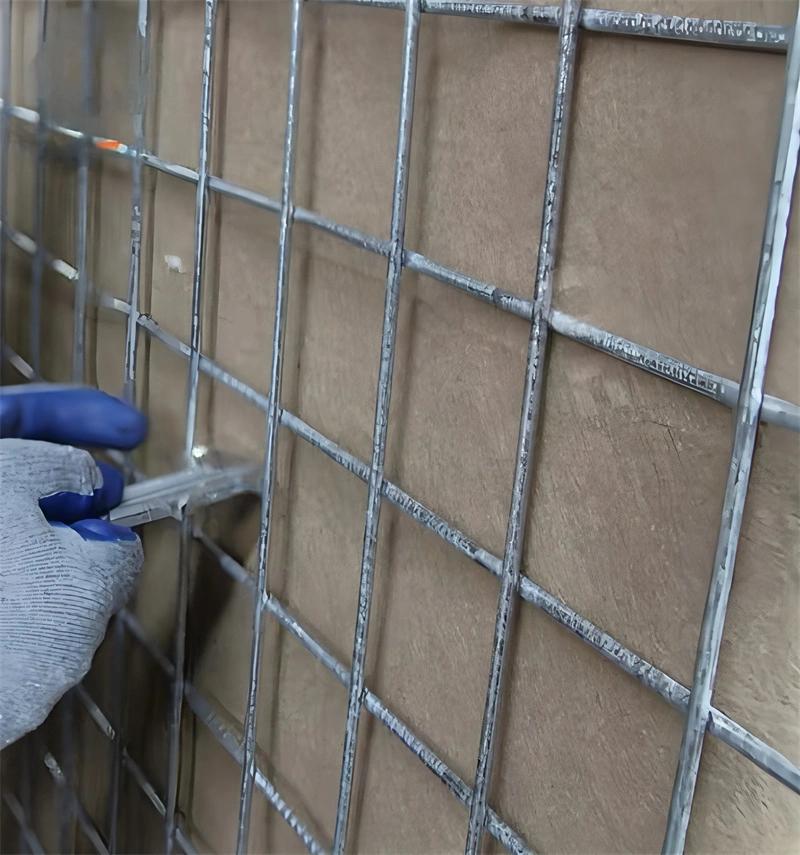
For Hesco barriers sourced from China, the standard customs duty rate under HS 7308.90 is 5% of the CIF value. That’s the Australian duty on Hesco barriers that most importers budget for. However, if your factory provides a valid Certificate of Origin under the China–Australia Free Trade Agreement (ChAFTA), that duty drops to zero. DB Fencing routinely supplies this certificate for Australian buyers – it’s a straightforward document that directly improves your landed cost.
On top of duty, the Australian Border Force applies a 10% Goods and Services Tax (GST). The GST is calculated on the CIF value plus the duty amount. So if you import $10,000 CIF with 5% duty ($500), the GST is 10% of $10,500 = $1,050. Total tax = $1,550 (15.5% of CIF). With a ChAFTA certificate, duty is $0, so GST becomes 10% of $10,000 = $1,000. That’s a saving of $550 per $10,000 CIF – real margin improvement for distributors.
-
- Anti-dumping status: As of 2026, anti-dumping measures do not apply to steel wire mesh flood barriers from China. Hesco barriers are not subject to any anti-dumping or countervailing duties, which simplifies compliance and keeps costs predictable.
- Landed cost example: For a 500-unit order with CIF value of $85,000, the landed cost per unit with standard duty is ($85,000 × 1.05 × 1.10) / 500 = $196.35. With ChAFTA zero duty, it becomes ($85,000 × 1.10) / 500 = $187.00 per unit — a $9.35 per unit saving that compounds on volume.
Step 3: Choosing the Right Container
Your container choice directly impacts landed cost per unit.
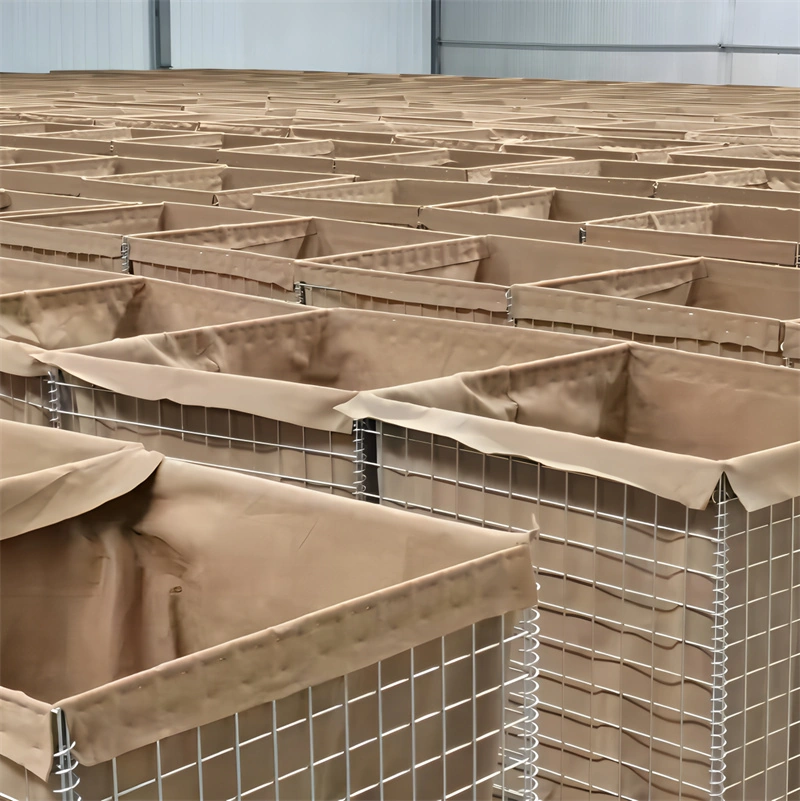
Hesco barriers collapse flat, which is the key to container efficiency. A collapsed Mil-3 unit – the most common size for flood control and perimeter security – measures roughly 1.2 m long by 0.9 m wide by 0.3 m high. That compact footprint yields a loading density of 8–10 units per cubic metre. An experienced loader can fit approximately 600 Mil-3 units into a single 40-foot high-cube (40HQ) container. For Australian distributors looking to maximize volume, that is the default choice.
-
- 40HQ (High Cube): Holds ~600 collapsed Mil-3 units. Best for full container loads where you need to minimize per-unit freight cost. Ideal for established distributors placing regular bulk orders.
- 20GP (General Purpose): Holds roughly 100–140 units depending on exact dimensions. Perfect for test orders – DB Fencing’s low MOQ of 100 panels fits easily inside a 20-footer. You can validate the product and build customer demand before committing to full container volumes.
The 20GP route is particularly relevant for buyers new to importing Hesco barriers from China. A 100-unit test order lets you check landed cost per unit, confirm the HS code classification (7308.90) with Australian customs, and arrange sample approval with end users – all without tying up $30,000 in inventory. Once the numbers work, scale to the 40HQ and lock in freight rates from Tianjin to Sydney or Melbourne at 18–22 days transit.

Step 4: Documentation Required for Clearance
One missing document can delay clearance by weeks or cost you thousands in duty.
Customs clearance for Hesco barriers requires more than just a shipping label. Australian Border Force expects a complete paperwork set that matches exactly — container number, weights, and unit counts must align across all documents. A single discrepancy triggers a physical inspection, adding 3–7 days and brokerage fees around AUD 400–600.
-
- Bill of lading: Your ocean carrier issues this. It’s the title document. Ensure shipper name, port of loading (typically Tianjin), and consignee details match the commercial invoice.
- Packing list: Must itemize each carton or pallet: number of collapsed Hesco units, dimensions, gross/net weight. Use the same HS code (7308.90) on every line to avoid confusion.
- Commercial invoice: State CIF value, FOB value, and freight separately. Incorrect valuation is the #1 cause of duty reassessments. Keep values realistic — under‑invoicing triggers penalties.
- Certificate of origin (China–Australia FTA): This is the difference between 5% duty and 0%. DB Fencing issues a ChAFTA‑compliant certificate of origin with every shipment. Without it, you’ll pay full most‑favoured‑nation rate. A single container of 500 Mil‑3 units at ~AUD 120 per unit CIF would incur AUD 3,000 in additional duty if you skip this step.
- ISO 9001 certificate (compliance evidence): Not mandatory for clearance, but Australian wholesalers and construction project managers often request it for their own quality assurance files. DB Fencing holds current ISO 9001 certification and includes a copy in the document pack — no extra charge.
The practical rule: ask your supplier to issue the certificate of origin at the time of booking, not after loading. DB Fencing does this routinely — it’s built into our export procedure for Australian buyers. That one document saves you 5% on landed cost, which on a 500‑unit order is roughly AUD 3,000.
Step 5: Logistics Timeline and Costs
Shipping from Tianjin to Sydney takes 18–22 days, but most first-time importers lose another week on incorrect documentation.
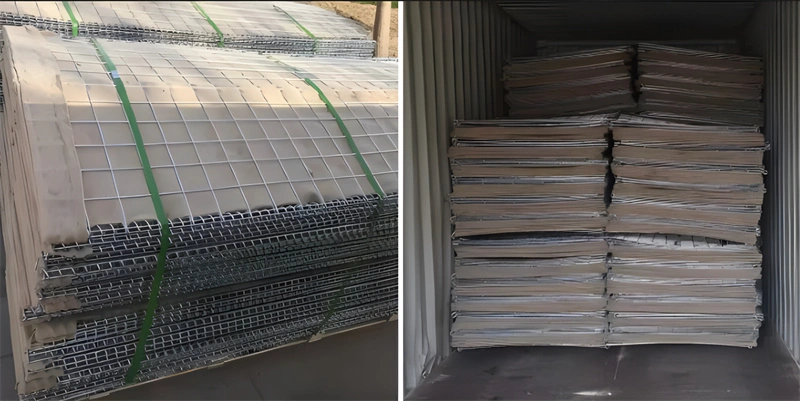
The standard sea freight route for Hesco barriers shipping from Tianjin to Sydney or Melbourne runs between 18 and 22 days. DB Fencing loads full containers at the port of Tianjin — a 40HQ holds roughly 600 collapsed Mil-3 units. That transit time holds steady for most direct sailings, but port congestion in Sydney can push discharge to 3–5 days if the line is heavy. The real variable is customs clearance. With the correct documents — bill of lading, packing list, commercial invoice, and a ChAFTA certificate of origin — you clear in under 5 days. Miss a signature or a weight discrepancy, and you’re looking at 2 extra weeks of storage charges.
For a typical order of 500 units (less than a full 40HQ, so you’d share a container or use a 20GP), the landed cost works out per unit as follows. Take a FOB price of $25 per unit from the factory. Sea freight and insurance to Australia runs roughly $3,000 total for a 20GP, or about $6 per unit. Duty: under normal tariff classification HS 7308.90 the rate is 5%, but with a valid ChAFTA certificate of origin (DB Fencing provides one with every shipment to Australia) the duty drops to zero. Then GST is 10% on CIF value plus duty. Port handling and customs broker fees add about $2–3 per unit. So importing Hesco barriers from China to Australia at 500 units lands you in the $30–33 per unit range, delivered and cleared. That’s roughly 40% below typical Australian distributor warehouse pricing for the same Mil-3 spec.
-
- Shipping window: Sea freight Tianjin–Sydney: 18–22 days transit plus 3–5 days port handling and customs clearance. Total door-to-port: 21–27 days.
- Landed cost example (500 units): FOB unit cost $25. Freight + insurance $6/unit. Duty 0% with ChAFTA. GST 10% on $31 = $3.10. Port fees $2/unit. Total landed cost per unit: ~$31.10.
- DB Fencing advantage: Free container loading plan that maximizes units per 40HQ. Preferred freight forwarders handling Australian ports. Routine ChAFTA certificate of origin issuance. This is why DB Fencing Hesco barriers are preferred by distributors who value predictable lead times and no customs surprises.
| Stage | Duration | Cost Estimate | Key Details | Recommendations |
|---|---|---|---|---|
| Sea Freight (Tianjin to Sydney/Melbourne) | 18–22 days | $3,500–$5,500 per 40HQ container | Direct sailings; 40HQ holds ~600 Mil-3 units collapsed | Book with DB Fencing’s preferred forwarders for best rates |
| Port Handling & Customs Clearance | 3–5 working days | $800–$1,200 (brokerage + port fees) | Requires packing list, B/L, commercial invoice, certificate of origin (ChAFTA zero duty) | Use customs broker experienced with HS 7308.90 to avoid delays |
| Inland Transport (Port to Warehouse) | 1–2 days | $400–$800 (local drayage) | Distance from port; use flatbed trucks for collapsed Hesco units | Arrange pre‑cleared container to reduce waiting time |
| Total Landed Cost (Example: 500 units) | 25–30 days from factory gate to warehouse | Approx. $18–$25 per unit landed (depending on duty & volume) | Includes production (2 weeks), freight, clearance, & GST | Request free container loading plan from DB Fencing to maximise density |
| Container Loading Plan Service | Provided at no extra time cost | Free of charge | DB Fencing ensures 8–10 units/m³; 40HQ loads up to 600 units | Use this to reduce per‑unit shipping cost by up to 15% |
DB Fencing’s Shipping Support
Maximising container utilisation directly reduces landed cost per unit.
DB Fencing provides a free container loading plan for every Hesco barrier order. Collapsed panels pack flat at 8–10 units per cubic metre, so a 40HQ holds roughly 600 Mil-3 units. The DB Fencing team calculates the exact layout per container type — 20GP for test lots of 100 units, 40HQ for full shipments. This isn’t a generic recommendation; DB Fencing runs a stowage diagram specific to your panel dimensions to eliminate wasted cubic capacity and reduce per-unit freight cost.
We work with preferred freight forwarders based in Tianjin who handle Hesco barrier exports to Australian ports weekly. They are familiar with the correct HS code 7308.90 classification — avoiding the misclassification many factories make by using code 8424, which triggers export controls. These forwarders also ensure your certificate of origin is prepared for the China–Australia Free Trade Agreement, so you pay zero duty instead of the standard 5%. Transit time from Tianjin to Sydney or Melbourne runs 18–22 days, and we coordinate the booking so your container sails within the production window.
-
- Container loading plan: Free stowage diagram for 20GP or 40HQ, maximising units per container. Example: a 40HQ holds ~600 Mil-3 units.
- Freight forwarder network: Established partners in Tianjin with proven experience shipping Hesco barriers to Australia. They handle HS 7308.90 classification and ChAFTA documentation for zero duty.
- Shipping timeline: 18–22 days sea freight from Tianjin to Sydney/Melbourne, plus 3–5 days for port handling and clearance.
Conclusion
Most buyers stop after calculating the 5% duty rate. The professionals know the real gap: a supplier that provides a valid China–Australia FTA certificate of origin and correctly classifies under HS 7308.90 instead of the military code 8424 can drop that duty to zero. That’s a clean 5% off your landed cost per unit — not a discount, a compliance choice.
The last detail is the container loading plan. A factory that sends a collapsed-unit layout for a 40HQ can push 600 units per shipment. Without that plan, you’re guessing on freight cost and losing margin. Check whether your supplier provides a free container loading plan before you commit to the first order.
Frequently Asked Questions
What HS code covers Hesco barriers?
Hesco barriers fall under HS 7308.90 — structures and parts of iron or steel. Using the wrong code can trigger customs delays or penalties. Code your shipment as HS 7308.90 to stay compliant.
What is the duty rate for Chinese Hesco barriers?
The standard duty rate is 5% for Chinese-origin Hesco barriers, but it drops to 0% under ChAFTA with a valid certificate of origin. GST of 10% is applied on the CIF value. Use a certificate of origin to eliminate the 5% duty.
How many Hesco barriers fit in a 40HQ container?
A 40HQ container holds roughly 600 Mil-3 Hesco barriers when collapsed. For smaller test orders, a 20GP container works with a minimum of 100 units. Request a free loading plan to maximize your container count.
Do I need special documentation for clearance?
Yes, you need a bill of lading, packing list, commercial invoice, and a certificate of origin for ChAFTA benefits. An ISO 9001 certificate helps demonstrate compliance to Australian Standards. Prepare these four documents before your shipment arrives.